
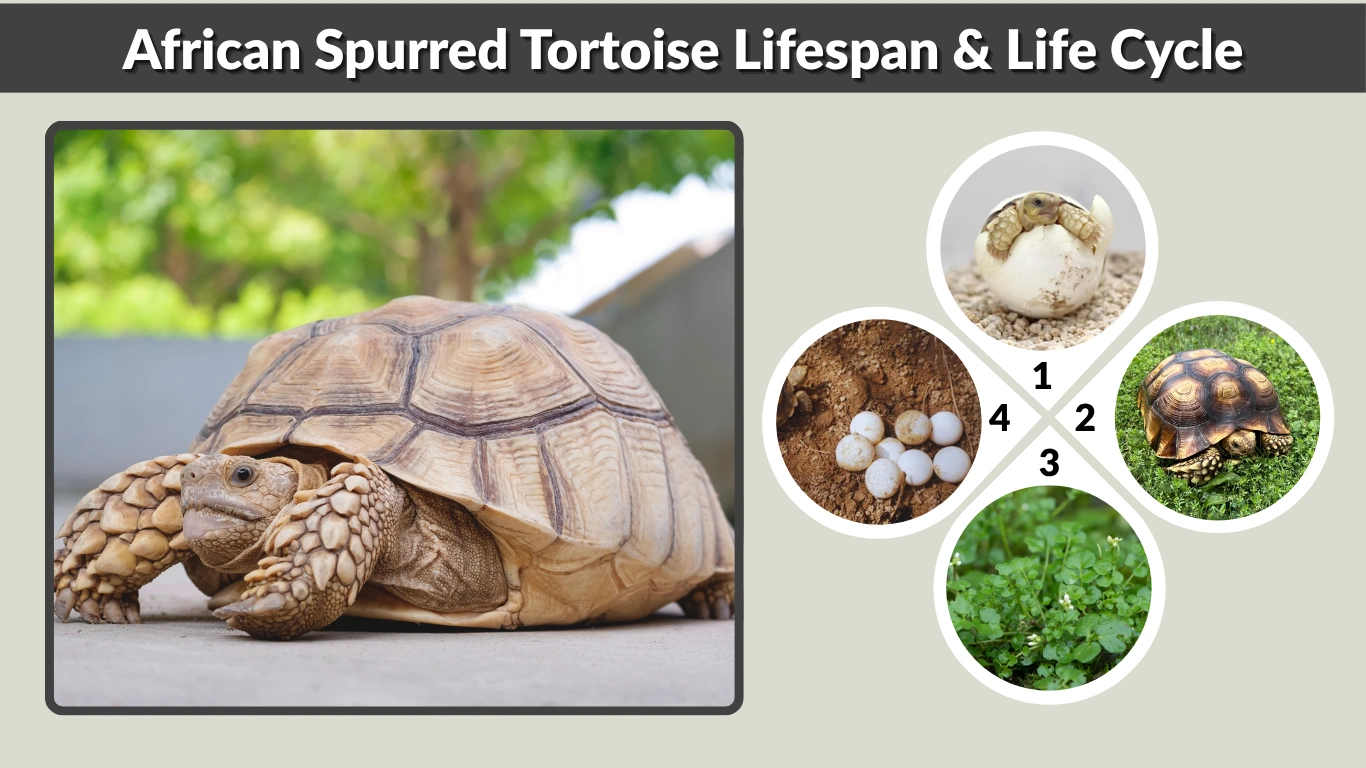
The African spurred tortoise, also known as the Sulcata tortoise (Centrochelys sulcata), is one of the most iconic and long-lived reptile species in the world. Native to the harsh Sahel region of Africa, this tortoise has adapted to extreme temperatures and dry environments with remarkable resilience. Understanding its lifespan and life cycle is essential for anyone who owns, studies, or simply admires this extraordinary reptile. The Sulcata’s journey—from egg to senior—is filled with unique biological stages that reflect its strength, longevity, and complex needs.
Species Overview
The African spurred tortoise is the third-largest tortoise species on Earth and the largest native to mainland Africa. Characterized by thick, rugged shells and strong, spurred legs used for digging burrows, these tortoises thrive in semi-arid grasslands and savannas. Adults grow rapidly during their first few years and can eventually reach 70–150 pounds, with exceptional individuals exceeding 200 pounds. Their natural lifestyle, dominated by burrowing and grazing, greatly influences their development and longevity. Their survival in harsh climates demonstrates how crucial proper care is when keeping them in captivity.
Lifespan of the African Spurred Tortoise
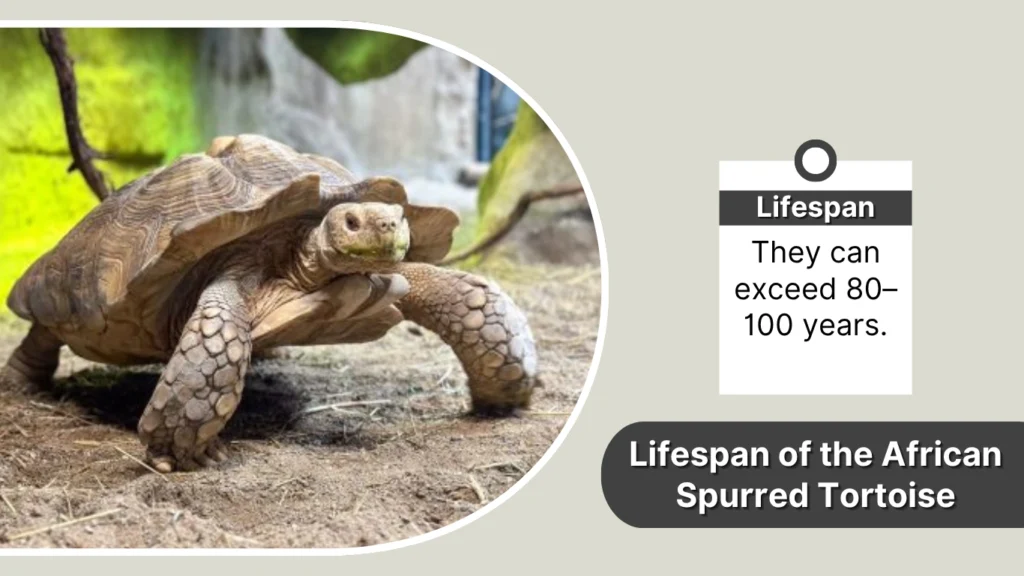
African spurred tortoises are known for their impressive lifespan, often living 50–70 years in the wild. In captivity—with proper diet, housing, and health management—they can exceed 80–100 years. Exceptional individuals have been recorded living even longer. Their longevity is tied to several factors: low metabolism, sturdy biology, and a lifestyle defined by slow, steady growth. However, this long lifespan also means that Sulcata tortoises frequently outlive their owners, making long-term planning essential. Poor care, inadequate nutrition, or improper habitat conditions can significantly shorten their life expectancy, highlighting the importance of informed, responsible ownership.
Life Cycle Stages
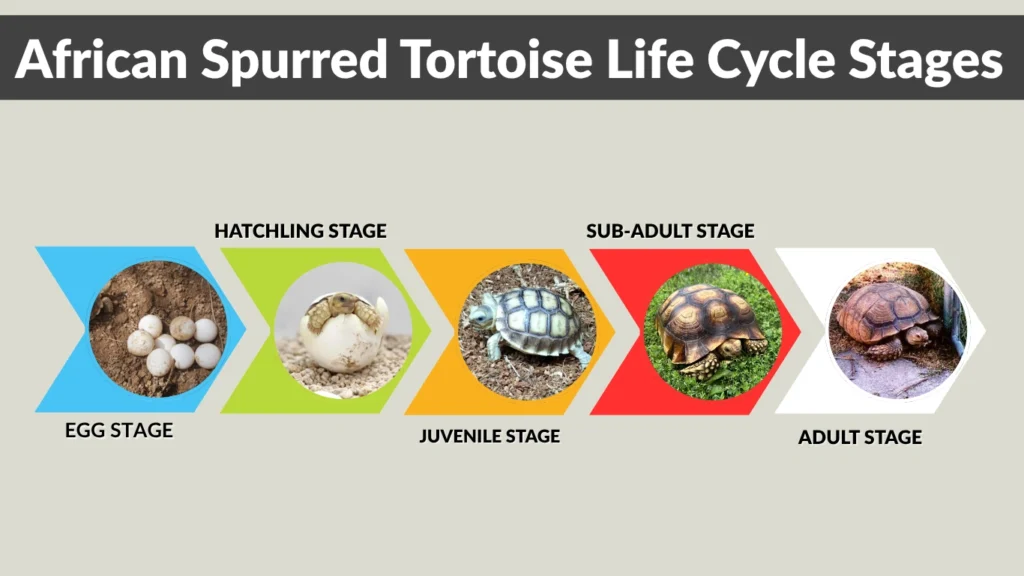
1. Egg Stage
The life cycle begins when a female Sulcata tortoise digs a nest, usually 6–10 inches deep, and lays 15–30 eggs. Incubation takes around 90–120 days, depending on environmental conditions. Temperature plays an important role in determining the sex of hatchlings—higher temperatures often produce females. In the wild, nests face significant threats from predators and unstable weather, making survival at this stage challenging.
2. Hatchling Stage
Hatchlings emerge at about 1.5–2 inches in size and are extremely vulnerable. Their shells are soft at birth and gradually harden over the first few months. Hydration is critical at this stage, as young Sulcatas are prone to dehydration in both wild and captive environments. Proper heat, UVB lighting, and access to safe water are vital for healthy shell and bone development. Early growth is typically rapid, especially when fed a high-fiber diet suitable for grazers.
3. Juvenile Stage
As juveniles, African spurred tortoises become more active and begin forming their characteristic thick shells. They typically grow several inches per year during this stage. Diet transitions to a more varied selection of grasses and leafy plants. Their growing bodies require consistent warmth, sunlight, and hydration to prevent shell deformities and metabolic issues. Behavioral changes also emerge, with juveniles becoming more independent and exploring their environments confidently.
4. Sub-Adult Stage
As Sulcata tortoises enter the sub-adult stage, their growth remains steady but begins to slow compared to their juvenile years. During this period, their shells thicken, their muscles strengthen, and their behavior becomes more territorial—especially in males. Sub-adults require ample space to roam, graze, and dig, as restricting movement can lead to stress and health issues. Proper UVB exposure, hydration routines, and a high-fiber grazing diet continue to be essential to support strong bone and shell development.
5. Adult Stage
African spurred tortoises reach adulthood around 10–15 years of age, though some may mature slightly earlier or later depending on diet and care. Adults are known for their impressive size, often weighing 70–150 pounds, and their powerful digging abilities. Wild Sulcatas create deep burrows to escape extreme heat, and captive individuals benefit greatly from access to burrowing areas or deep substrate. Reproductive maturity begins in adulthood—males develop more pronounced femoral spurs and may display dominance behaviors, while females prepare for nesting. At this stage, lifespans of 80–100 years become possible with consistent, high-quality care.
6. Senior Stage
Senior Sulcatas slow down considerably, showing signs of aging such as reduced appetite, slower movement, and increased sensitivity to cold. Their metabolism drops, and they may need softer foods and warmer temperatures to maintain comfort and health. Hydration becomes even more crucial during these years, as older tortoises are more vulnerable to kidney issues. Routine veterinary checkups help detect early signs of illness, ensuring they enjoy high-quality, comfortable senior years.
Factors Affecting Lifespan
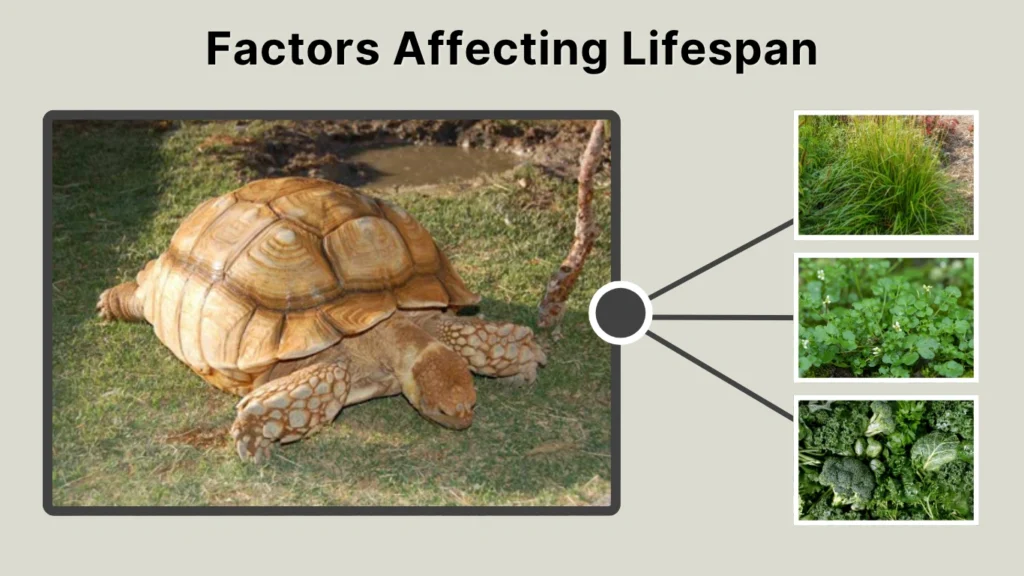
Diet & Nutrition
A proper grazing diet is the foundation of Sulcata health. High-fiber foods, such as grasses, weeds, and leafy greens, support digestion and prevent shell deformities. Excessive fruits, protein, or commercial pellets can shorten lifespan by causing metabolic bone disease, kidney stress, and pyramiding.
Habitat Conditions
Consistent warmth, low humidity, and access to sheltered areas mimic their natural environment. Outdoor enclosures with safe fencing, dry soil, and space to dig significantly extend a tortoise’s lifespan. Poor housing conditions—especially cold, damp environments—lead to respiratory infections and stress.
Health Care & Genetics
Genetics impact growth rates and longevity, but good husbandry plays a larger role. Routine health exams, parasite control, and early detection of illness promote a long, healthy life. Tortoises that begin life with proper nutrition and hydration tend to thrive well into old age.
Growth Rate Chart (Approximate)
| Age | Size (Shell Length) | Notes |
| Hatchling | 1.5–2 inches | Soft shell, rapid early growth |
| 1 Year | 5–7 inches | Needs strong UVB and hydration |
| 5 Years | 10–16 inches | Fast growth period |
| 10+ Years (Adult) | 18–30 inches | Reaches full size range |
| Senior | Varies | Growth slows, increased care needs |
How to Support a Long, Healthy Life
A Sulcata’s exceptional lifespan depends heavily on the owner’s commitment. Provide a spacious outdoor enclosure, high-fiber grazing diet, year-round warmth, UVB exposure, and safe digging opportunities. Regular soaking and hydration prevent kidney problems, while deep substrate or burrow access keeps them mentally and physically healthy. Consistent husbandry ensures they enjoy a robust, long-lived life.
Conclusion
The African spurred tortoise has one of the longest and most fascinating life cycles of any reptile. From tiny hatchlings to massive adults and wise seniors, each stage requires proper care, nutrition, and environmental support. With the right conditions, these tortoises become lifelong companions—often living for generations. Understanding their needs at every stage ensures they thrive and enjoy the remarkable longevity nature intended.
FAQs
How long do African spurred tortoises live in captivity?
In ideal conditions, African spurred tortoises often exceed 80–100 years in captivity. Proper diet, warmth, space, and hydration significantly influence their overall lifespan.
At what age do Sulcata tortoises reach adulthood?
Most Sulcatas reach adulthood between 10 and 15 years, though growth rates and maturity can vary depending on genetics and care.
How big do African spurred tortoises get at each stage?
Hatchlings are about 1.5–2 inches, juveniles grow rapidly to 10–16 inches, and adults typically reach 18–30 inches in shell length. Seniors vary based on lifelong diet and health.
What factors shorten a Sulcata tortoise’s lifespan?
Cold, damp housing, low-fiber diets, excessive protein, dehydration, and poor UVB exposure are the main causes of shortened lifespan. Stress and overcrowding may also contribute.
How can you tell the age of an African spurred tortoise?
Exact age can be difficult to determine. Size, shell growth patterns, and behavior offer clues, but only known hatch dates or breeder records provide accurate age information.