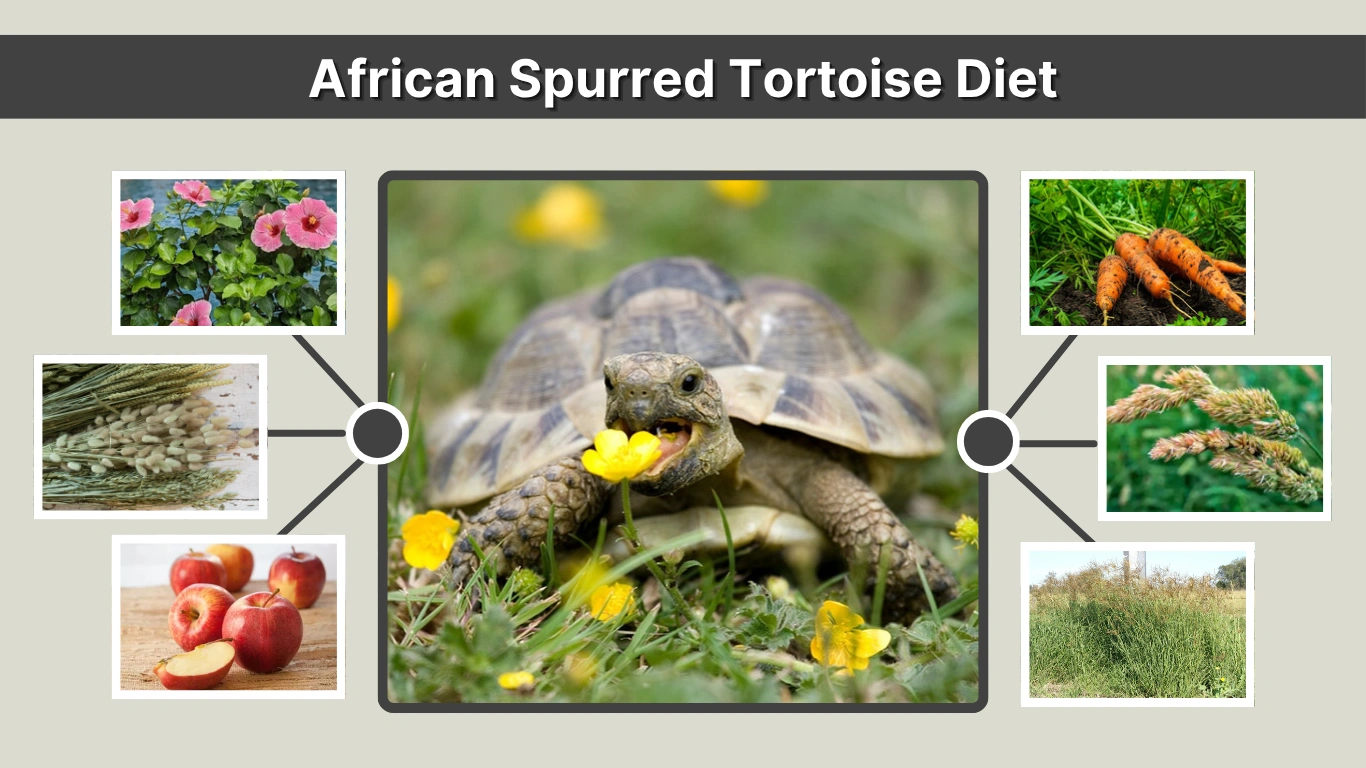
The African spurred tortoise, or Sulcata tortoise, is one of the world’s largest grazers—yet their diet is widely misunderstood. Owners often struggle to know which foods are safe, which are harmful, how often to feed them, and why they sometimes stop eating. Because diet directly affects their growth, shell health, energy levels, and lifespan, understanding what these tortoises truly eat is essential. This guide covers the first half of everything you need to know about their diet, feeding habits, safe foods, and nutritional needs.
What African Spurred Tortoises Eat in the Wild

African spurred tortoises are natural grazers. In the wild, they survive on tough grasses, dry vegetation, edible weeds, leaves, and flowers found across the Sahel region of Africa. Their digestive system is built for high-fiber, low-protein foods—very similar to a grazing animal like a cow. Because they evolved eating sparse, dry plants, their bodies function best on roughage rather than watery vegetables or sugary fruits.
Core Wild Diet Includes:
- Dried grasses
- Savanna weeds
- Hardy shrubs
- Leafy plants
- Edible flowers
- Occasional succulents
This natural grazing behavior forms the foundation for their ideal captive diet.
Primary Captive Diet (The Foods They Should Eat Daily)
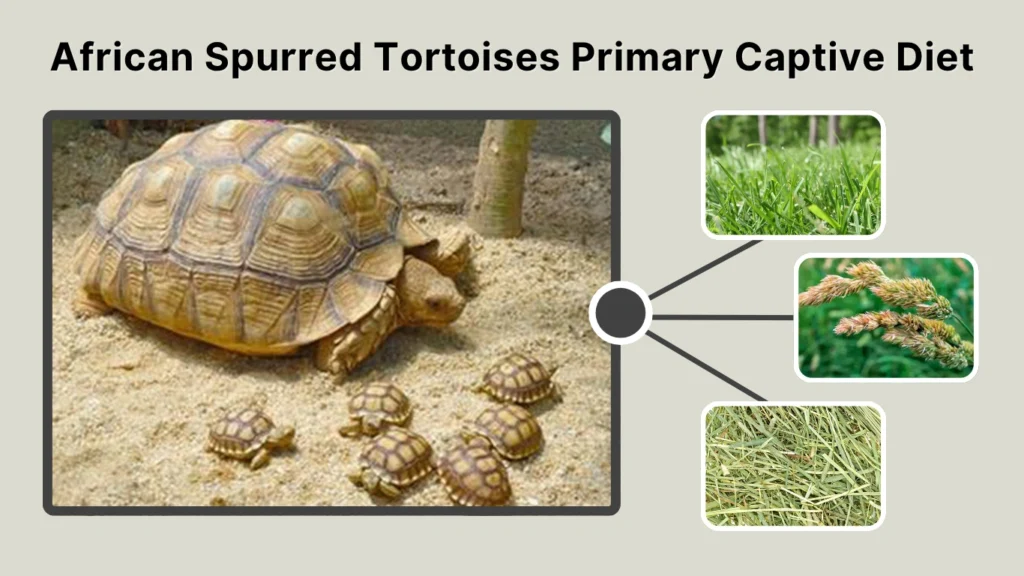
In captivity, Sulcata tortoises require a diet that mimics wild grazing as closely as possible. Grass should make up 70–80% of their total intake. Without enough fiber, they are at risk of pyramiding, digestive issues, and poor shell structure.
Daily Staple Foods
- Bermuda grass
- Orchard grass
- Timothy hay
- Meadow hay
- Wheatgrass
- Fresh yard weeds (pesticide-free)
Safe Weeds & Leaves
- Dandelion greens
- Plantain leaves
- Mulberry leaves
- Grape leaves
- Hibiscus leaves and flowers
- Collard greens
- Country greens
These foods support slow, steady growth and maintain a firm, healthy shell.
Vegetables They CAN Eat (But Only in Moderation)
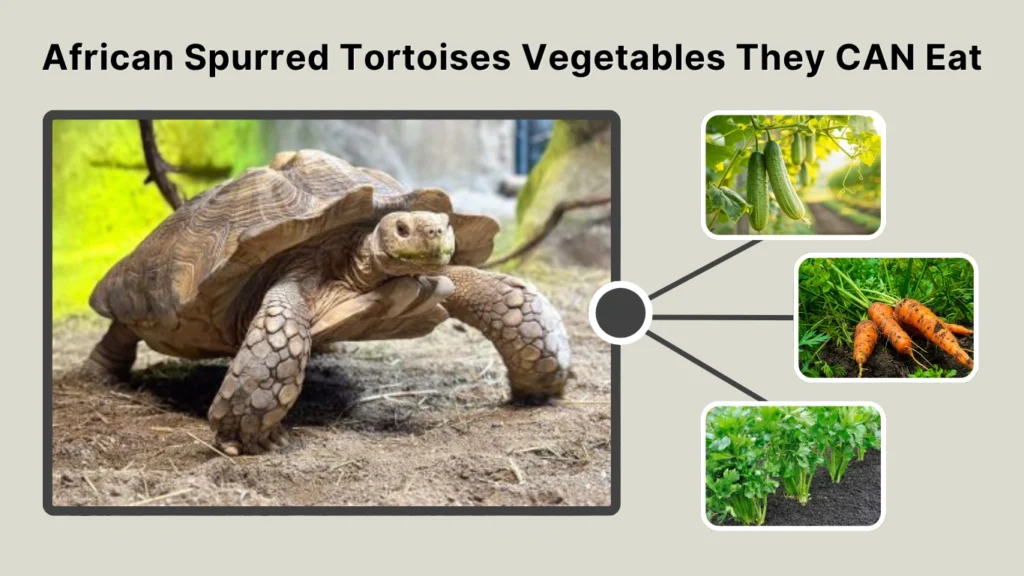
Vegetables aren’t a natural part of the African spurred tortoise’s wild diet. However, some can be offered in small amounts, especially for hydration and variety.
Safe Vegetables (Feed Sparingly)
- Cucumbers (mostly water)
- Carrots (high in sugar; small amounts)
- Celery
- Zucchini
- Pumpkin
- Kale (occasionally)
- Brussels sprouts (very limited—gassy)
Vegetables should never replace grasses or hay.
Fruits They CAN Eat (Only as Occasional Treats)
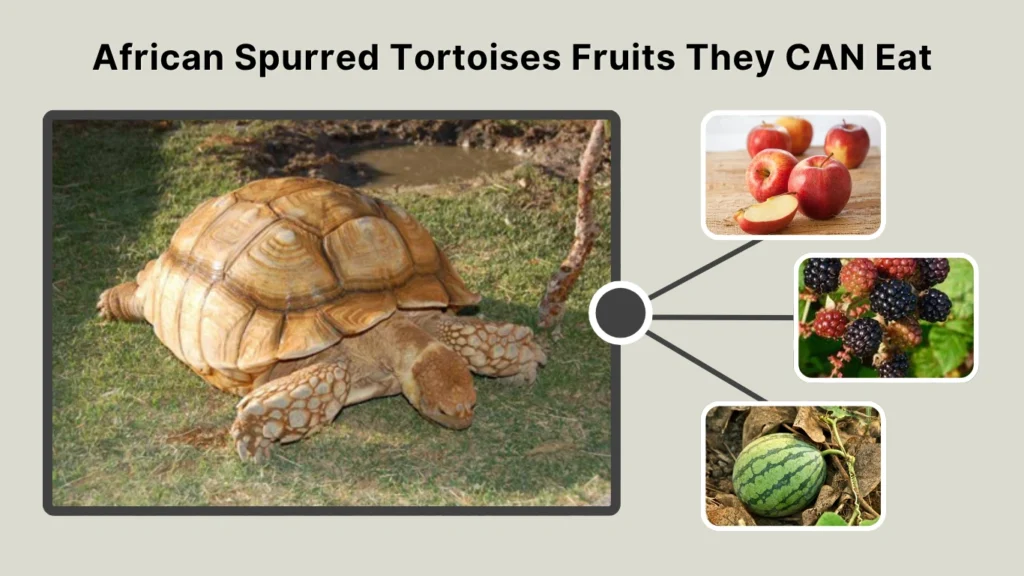
Fruits are sugary and not suitable for regular feeding. They can disrupt gut bacteria, cause diarrhea, and lead to long-term digestive issues. Fruits should be less than 5% of their diet—sometimes even less for adults.
Fruits Allowed as Rare Treats
- Apples (remove seeds)
- Green apples
- Berries (blackberries, raspberries, strawberries)
- Watermelon (mostly water; safe but limited)
- Pineapple (acidic; very small amounts)
- Bananas (high sugar; rare treat only)
Many of your listed keywords (e.g., can they eat bananas, apples, cucumbers, watermelon, strawberries) fall into this category—yes, they can, but only rarely.
Foods African Spurred Tortoises Should NOT Eat
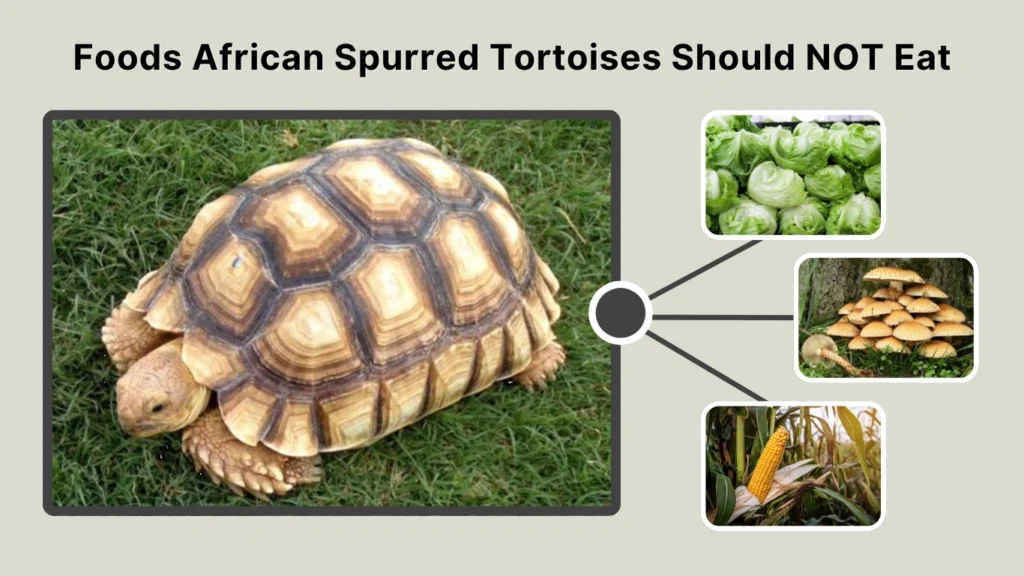
Several foods are unsafe, unhealthy, or harmful. These should be avoided entirely.
Never Feed:
- Iceberg lettuce (no nutrition)
- Mushrooms (toxic risk)
- Corn on the cob (too starchy; poor digestion)
- Spinach (binds calcium)
- Beans, peas, lentils (high protein)
- Dog/cat food (dangerous protein levels)
- Bread, pasta, human food
- Sugary or processed items
Avoiding these foods helps prevent kidney damage, shell deformities, and digestive problems.
Baby African Spurred Tortoise Diet
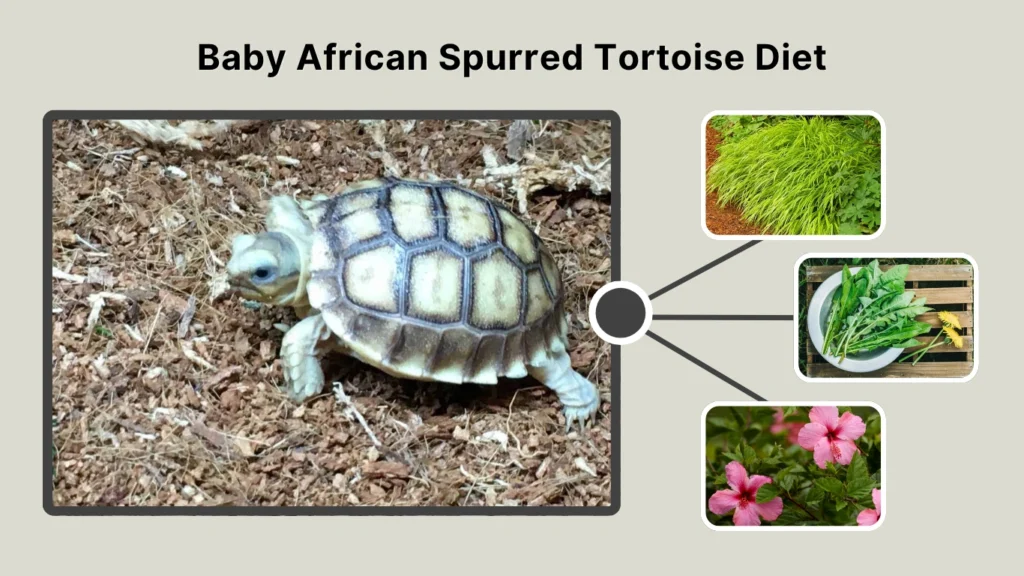
Baby Sulcata tortoises require the same high-fiber grazing diet as adults but with higher hydration and softer foods to support rapid growth. Their digestive systems are delicate, and dehydration is the most common danger for hatchlings. While grass remains essential, finely chopped greens and soft, moist weeds help them eat more easily.
Best Foods for Baby Sulcatas
- Soft grasses (finely cut)
- Dandelion greens
- Hibiscus leaves and flowers
- Young, tender weeds
- Chopped collard or mustard greens
- Occasional cactus pads (de-spined and sliced)
Babies should be soaked daily for 10–15 minutes to maintain hydration and help their kidneys develop properly.
How Often African Spurred Tortoises Eat
Unlike many reptiles that eat large meals infrequently, Sulcata tortoises are constant grazers.
Feeding Frequency by Age
- Hatchlings (0–1 year): Daily grazing + chopped greens
- Juveniles (1–5 years): Daily feeding, larger portions
- Adults: Daily grazing, free access to hay, fresh grasses, and a controlled amount of greens
- Seniors: Same as adults but with increased hydration support
Overfeeding concentrated greens can cause pyramiding, so grass should always remain the majority of their diet.
African Spurred Tortoise Not Eating (Causes & Solutions)
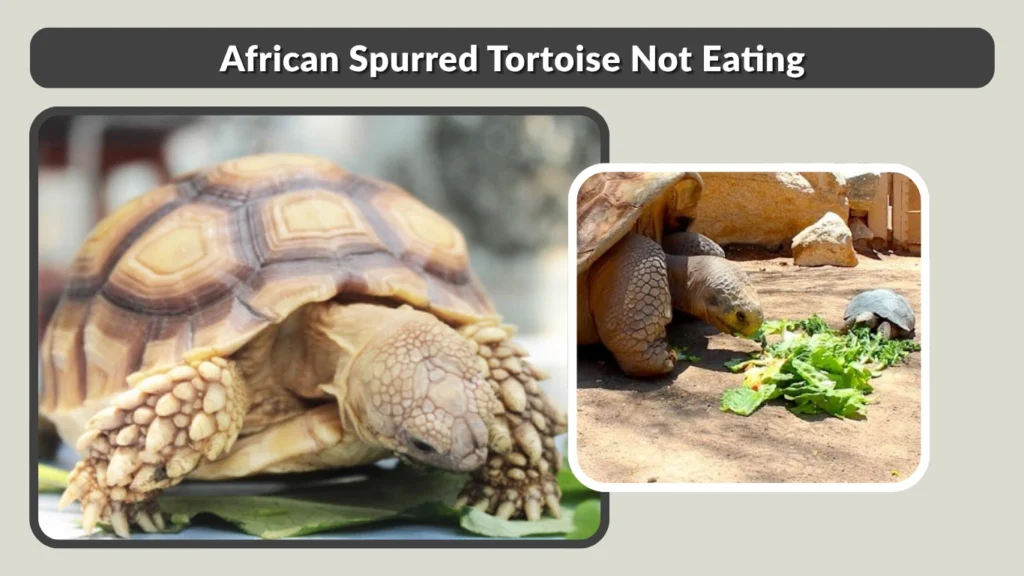
If your tortoise suddenly stops eating, don’t panic—there are several common causes.
Possible Reasons
- Temperature too low: They won’t eat if they cannot warm up properly.
- Dehydration: Leads to lethargy and loss of appetite.
- Stress: New enclosure, new home, loud noises.
- Incorrect diet: Too much fruit or watery vegetables.
- Impaction: From sand, gravel, or wrong substrate.
- Illness: Respiratory infections, parasites.
Solutions
- Provide proper temperature gradient (warm side 95–100°F).
- Soak daily for 20–30 minutes.
- Return diet to grasses and hay only.
- Reduce stress and ensure proper lighting (UVB).
- Seek veterinary care if symptoms persist.
South African Tortoise Diet vs Sulcata Diet
Some keywords relate to South African tortoises, especially the Leopard tortoise.
- Leopard tortoises eat grasses, weeds, flowers, cactus pads, and dry vegetation, similar to Sulcatas.
- The main difference: Leopard tortoises tolerate slightly more variety but still require high-fiber foods.
- Both should avoid sugary fruits, mushrooms, and high-protein foods.
This comparison helps clarify confusion between species with similar diets.
What Eats African Spurred Tortoises?
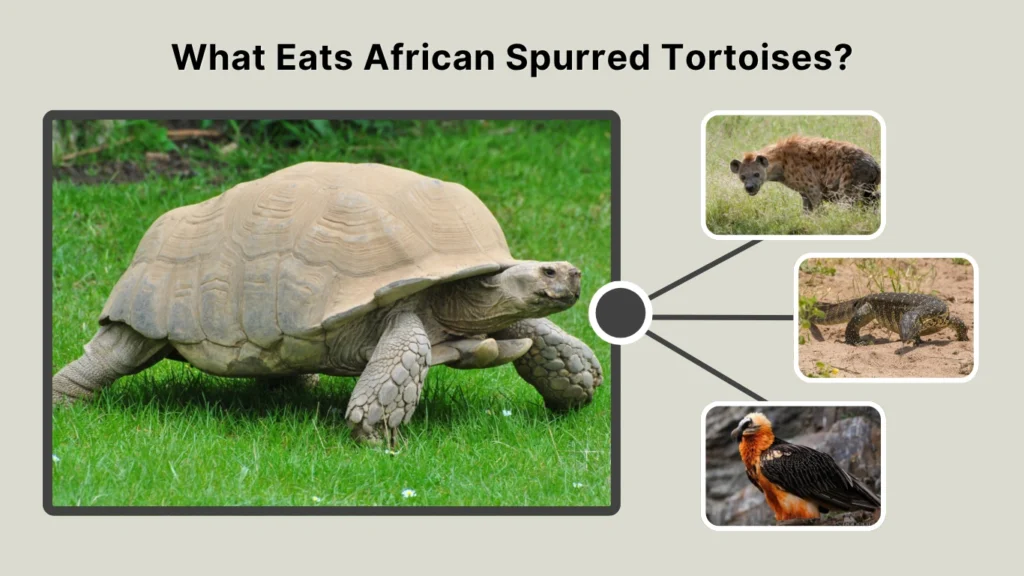
(Keyword: what eats African spurred tortoise)
While adult Sulcatas are large and rarely preyed upon, younger tortoises face many threats.
Predators
- Jackals
- Hyenas
- Monitor lizards
- Large birds of prey
- Snakes (only eat eggs—not tortoises)
Keyword Answer:
“Will an African egg-eating snake eat my tortoise?”
No. Egg-eating snakes eat eggs only. They cannot harm or swallow a tortoise.
Best Plants African Spurred Tortoises Can Eat
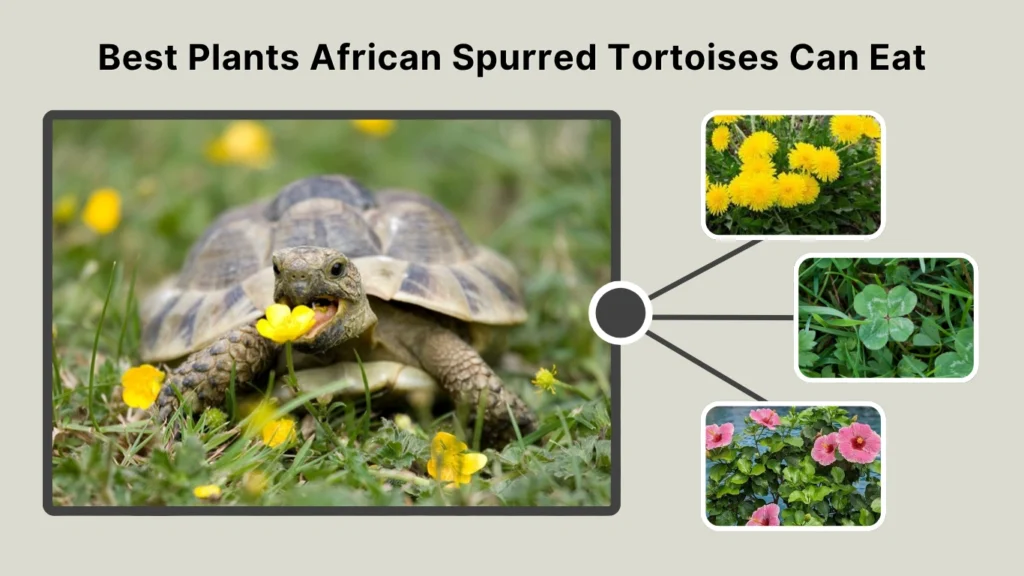
These are safe plants and weeds you can grow at home:
- Dandelion
- Clover
- Plantain
- Hibiscus
- Mulberry
- Grape leaves
- Spineless cactus pads
- Chickweed
- Bermuda grass
- Bahia grass
Avoid lilies, azaleas, foxglove, oleander, and any toxic ornamental plants.
FAQs
What is the best daily food for African spurred tortoises?
African spurred tortoises should eat mostly grasses such as Bermuda, orchard grass, and timothy hay. These provide the high fiber they need for healthy digestion and shell development.
Can African Sulcata tortoises eat fruits every day?
No. Fruits should be rare treats because they are high in sugar and can upset the tortoise’s digestive system. Offer fruits only occasionally.
Why is my African spurred tortoise not eating?
The most common causes are low temperatures, dehydration, stress, and incorrect diet. Check your heating, soak the tortoise, and return to grass-based foods.
Is lettuce safe for Sulcata tortoises?
Avoid iceberg lettuce because it lacks nutrition. Dark leafy greens like dandelion or collard greens are much healthier options.
What should baby African spurred tortoises eat?
Baby Sulcatas should eat soft grasses, tender weeds, chopped greens, and occasional hibiscus. Daily soaking is essential for hydration and healthy growth.