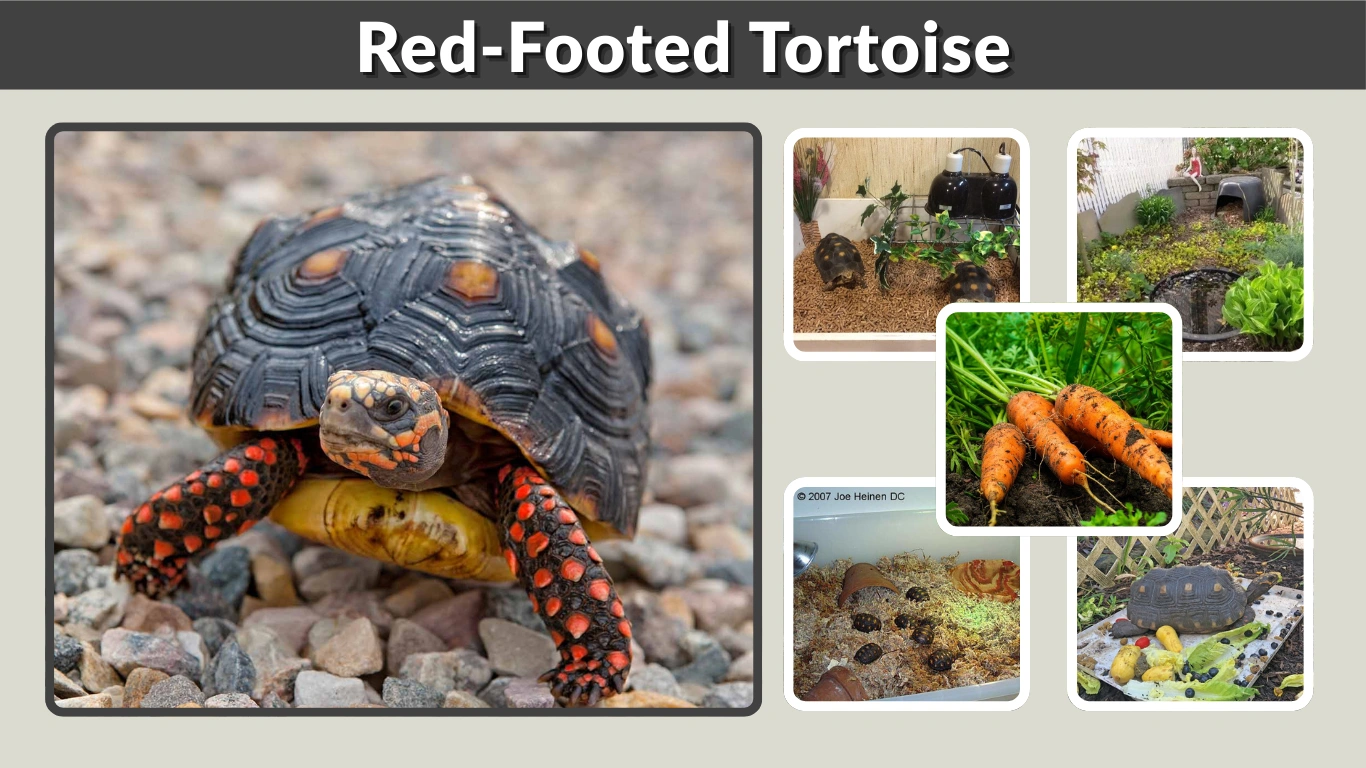
The Red-Footed Tortoise is a vibrant, medium-sized tortoise known for its colorful legs, calm temperament, and unique omnivorous diet. Popular among reptile enthusiasts, this species is adaptable enough for both beginners and experienced keepers. However, proper care requires understanding its tropical forest origins, humidity needs, diet variety, long lifespan, and enclosure design. This guide covers everything from size charts and husbandry requirements to diet safety, buying options, and Cherry Head variations, giving owners a complete overview of this remarkable tortoise.
Red-Footed Tortoise Overview
Originating from tropical forests in South America, the Red-Footed Tortoise thrives in warm, humid environments with rich vegetation and shaded areas. Unlike desert tortoises, it spends much of its time in semi-dense forest floors, moving between sunlight patches and cool hiding spots. Its colorful markings—red, yellow, and orange scales—make it one of the most easily recognized tortoises in the pet trade.
In captivity, Red-Footed Tortoises adapt well when their natural environment is replicated. They are more tolerant of varied foods than many species, and their omnivorous diet makes feeding flexible. Their behavior is generally curious and social, showing more personality and interaction than many tortoises.
These tortoises grow steadily but remain manageable in size, making them suitable for both indoor and outdoor setups depending on climate. Their long lifespan, however, means owners must commit to decades of care. By understanding their natural behaviors and environmental needs, keepers can provide a healthy, enriching habitat.
Red-Footed Tortoise Identification
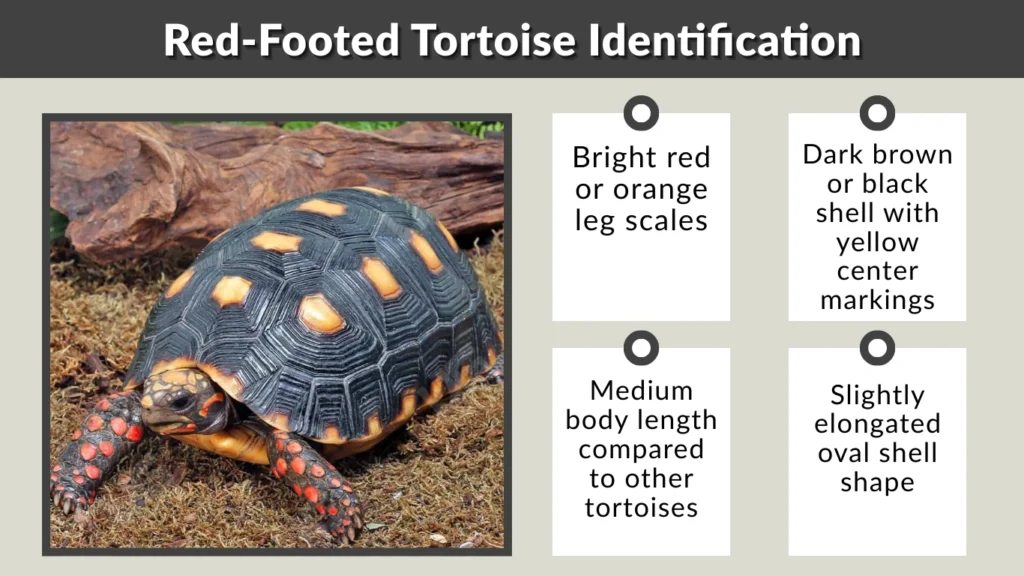
- Bright red or orange leg scales
- Dark brown or black shell with yellow center markings
- Medium body length compared to other tortoises
- Slightly elongated oval shell shape
- Naturally active and observant behavior
Red-Footed Tortoise Size & Growth
How Big Red-Footed Tortoises Get
Adult Red-Footed Tortoises typically reach 10–14 inches in length, though some individuals grow slightly larger depending on genetics and diet. They usually weigh between 8 and 20 pounds when fully grown. Their moderate size makes them a practical choice for hobbyists who cannot house massive giant species.
Full-Grown Red Foot vs Cherry Head Size
Cherry Head Red-Footed Tortoises are a small, colorful variant originating from specific regions of Brazil. They generally stay between 8–12 inches as adults, making them slightly smaller than standard Red-Footed Tortoises. Their compact size and vibrant coloration increase their popularity and price.
Male vs Female Size Differences
Males tend to have longer tails, slightly narrower bodies, and concave plastrons. Females usually grow broader and heavier to support egg-carrying capacity. While size varies among individuals, females often outweigh males in adulthood.
Red-Footed Tortoise Size Chart
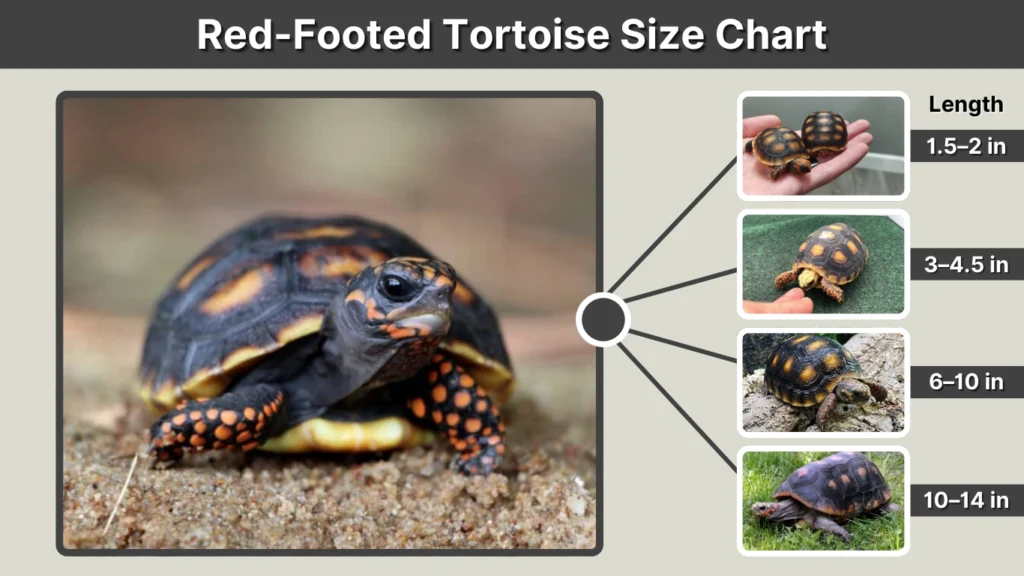
| Age | Length | Weight | Notes |
| Hatchling | 1.5–2 in | 30–45 g | Requires high humidity |
| 1 Year | 3–4.5 in | 140–190 g | Rapid early growth |
| 5 Years | 6–10 in | 2–6 lbs | Approaching adulthood |
| Adult | 10–14 in | 8–20 lbs | Full-grown size range |
Lifespan & Life Expectancy
Red-Footed Tortoises are long-lived reptiles, often reaching 40–60 years with proper care. Some individuals surpass 70 years, and documented cases show them living even longer under optimal husbandry. Their lifespan depends heavily on diet, humidity, and safe environmental conditions. Indoor-only tortoises may live slightly shorter lives due to limited space and natural sunlight exposure, while those with proper outdoor access often remain healthier and more active. Cherry Heads share the same general lifespan as standard Red-Footed Tortoises.
Red-Footed Tortoise Habitat Requirements

Red-Footed Tortoises come from warm, humid forests with dense vegetation and soft, moist earth. Their captive habitat should replicate this environment as closely as possible. High humidity—typically between 60% and 80%—is crucial for shell development and overall health. Deep substrate allows them to burrow and maintain hydration levels.
A proper habitat includes shaded hiding spots, scattered logs, plants, and mild temperature gradients. Good ventilation prevents respiratory issues, while consistent warmth supports digestion and metabolism. Creating a micro-environment similar to the forest floor helps reduce pyramiding and dehydration, two common issues in captive tortoises.
Indoor Enclosure Guide
Humidity Requirements
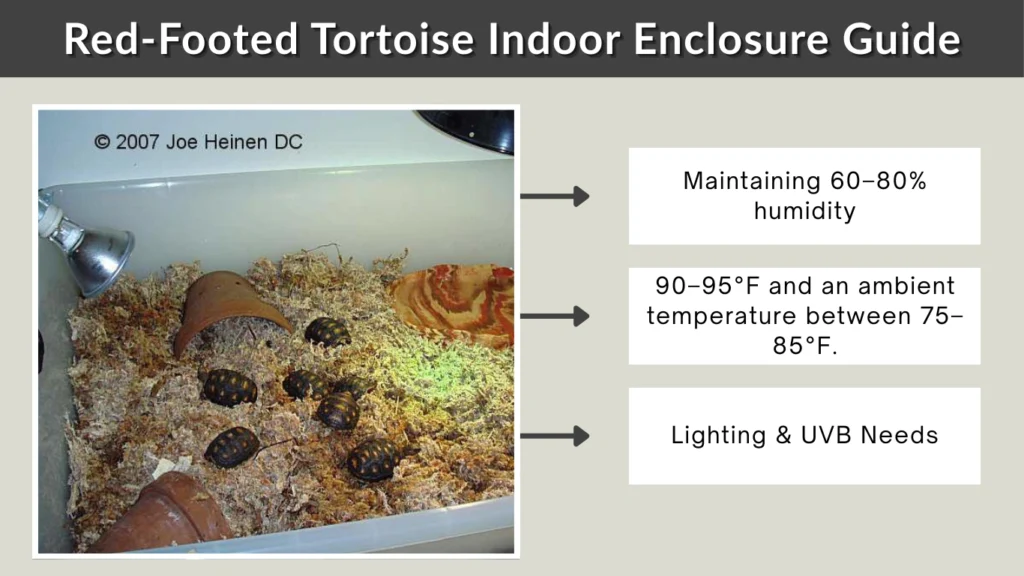
Maintaining 60–80% humidity is essential for preventing shell deformities and keeping skin healthy. Moist substrate layers, moss-filled hides, and scheduled misting are effective methods for maintaining proper moisture levels without oversaturation.
Heating & Temperature
Indoor environments should provide a basking zone of 90–95°F and an ambient temperature between 75–85°F. Nighttime temperatures can safely drop to the low 70s. Stable heat gradients help tortoises regulate their body temperature naturally and prevent digestive stress.
Substrate & Flooring
Red-Footed Tortoises thrive on substrates that retain moisture without becoming muddy or moldy. Ideal options include cypress mulch, coconut coir, soil mixes, and orchid bark. These substrates mimic the natural forest floor and help maintain humidity. Avoid sand, gravel, or dry wood chips, as they increase risks of impaction and dehydration. A deep substrate layer of at least 3–4 inches helps maintain moisture and encourages natural digging behavior.
Lighting & UVB Needs
Although Red-Footed Tortoises come from dense tropical forests, UVB exposure is still essential for metabolic bone health. Indoor setups must include high-quality UVB bulbs, ideally T5 HO tubes, positioned at the correct distance. UVB should run for 10–12 hours daily. Supplementing with full-spectrum lighting improves activity levels and maintains a healthy day-night cycle.
Outdoor Enclosure Guide
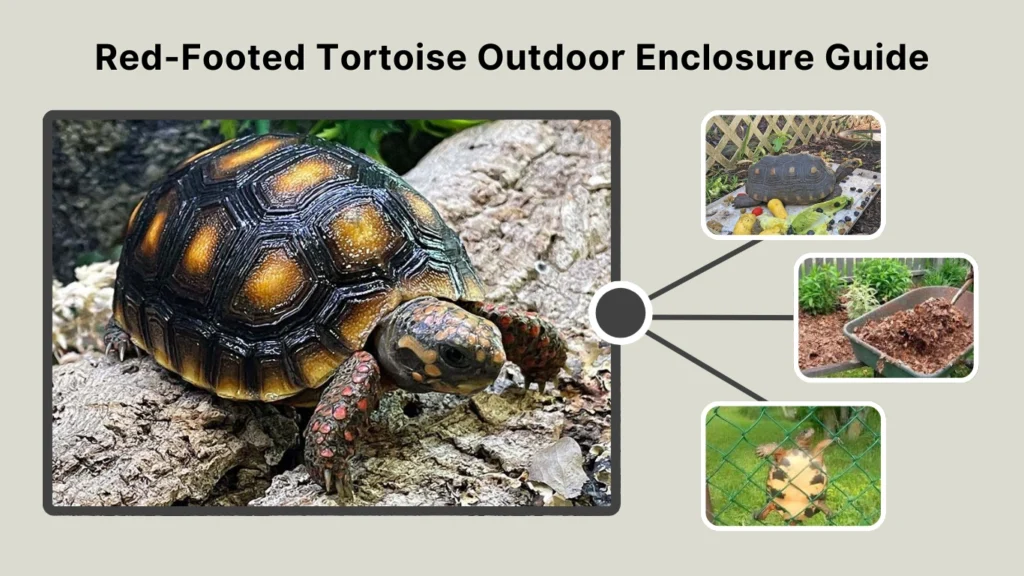
- Provide partial shade to mimic forest canopy
- Create humid zones with leaf litter and moist soil
- Use secure fencing to prevent escapes
- Ensure protection from raccoons, birds, and dogs
- Offer covered shelters for rain and wind
- Add plants and logs for natural enrichment
Cherry Head Red-Footed Tortoise Section
Cherry Head vs Regular Red Foot
Cherry Head Red-Footed Tortoises are a vibrant Brazilian variant known for brighter red coloration on the head and legs. They are typically smaller, staying around 8–12 inches as adults. Their care requirements are almost identical, but many keepers report that Cherry Heads prefer slightly higher humidity and more shaded environments. Due to rarity and stronger coloration, they tend to cost more than standard Red-Footed Tortoises.
Red Foot vs Yellow Foot Tortoise
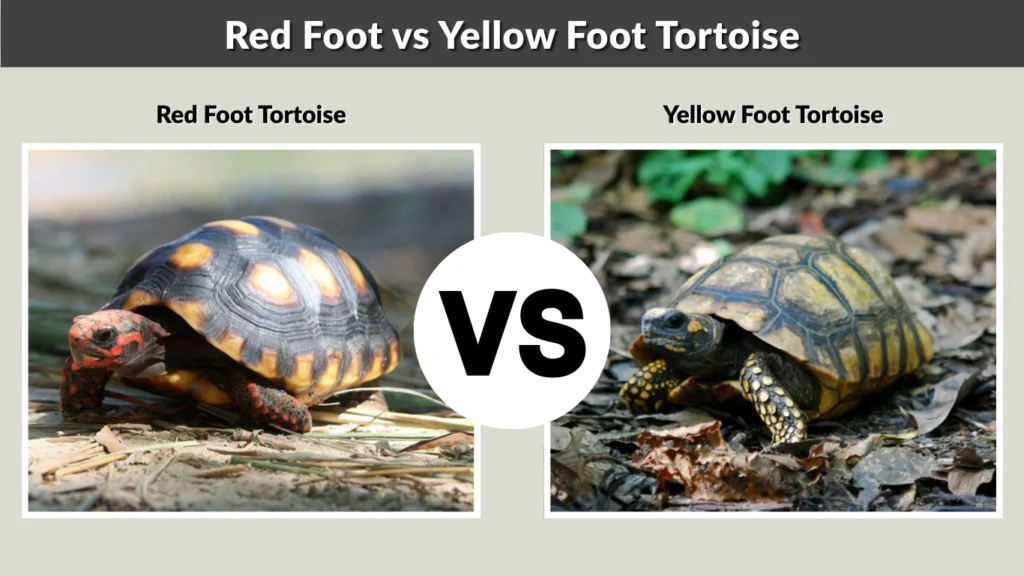
| Feature | Red Foot | Yellow Foot |
| Size | 10–14 in | 12–16 in |
| Color | Red leg scales | Yellow leg scales |
| Habitat | Tropical forests | Rainforest interior |
| Diet | Omnivorous | Similar but more fruit-heavy |
| Price | Lower | Higher |
Red-Footed Tortoise Diet Guide
Red-Footed Tortoises are one of the few tortoise species with an omnivorous diet. Their meals should include leafy greens, fruits, vegetables, fungi, and occasional protein. In the wild, they eat fallen fruits, mushrooms, flowers, carrion, and assorted vegetation. Captive diets should follow similar patterns without overfeeding sugary fruits. Variety is essential for preventing nutritional deficiencies.
A balanced approach includes leafy greens as the base—such as collards, hibiscus leaves, and dandelion greens—combined with moderate vegetables like squash and bell peppers. Fruits like papaya, mango, and berries are excellent but should be limited to avoid high sugar intake. Protein sources may include cooked egg, low-fat dog food, or insects once or twice monthly.
Mushrooms are a favorite food and can make up 5–10% of the diet. Each meal should offer moisture-rich options to help maintain hydration.
Red Foot Tortoise Diet List
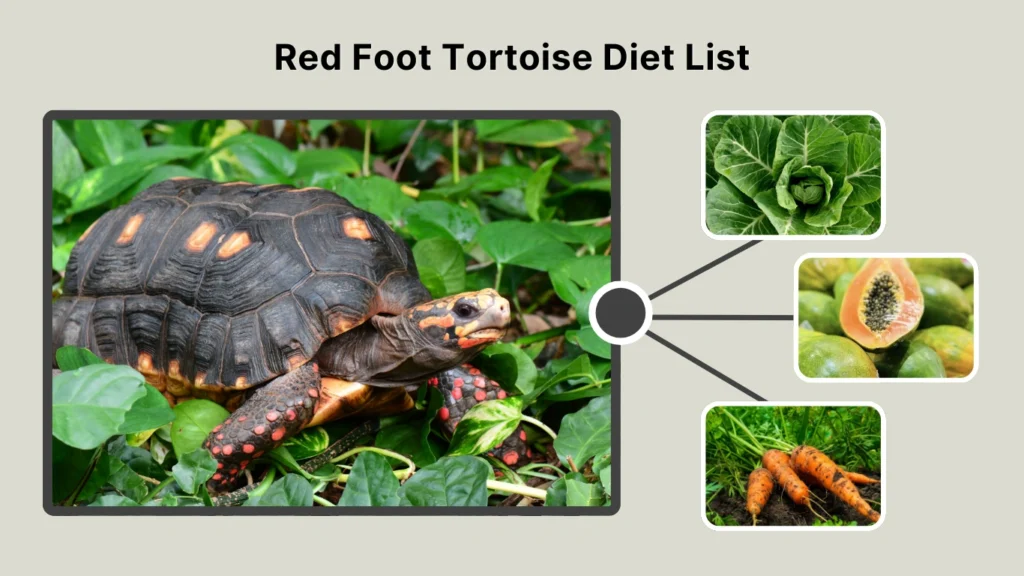
- Staple greens: collards, mustard greens, mulberry leaves
- Safe vegetables: squash, carrots, bell peppers, cactus pads
- Approved fruits: papaya, mango, berries, watermelon (limited)
- Protein: boiled egg, worms, occasional low-fat dog food
- Supplements: calcium powder 2–3 times weekly
Can They Eat…?
- Grapes – Yes, but in moderation due to high sugar
- Apples – Safe as a treat; remove seeds
- Tomatoes – Yes, occasionally; high acidity
- Bananas – Rare treat only
- Watermelon – Safe in small amounts
- Mushrooms – Excellent and recommended
- Avoid: citrus fruits, onions, salty or processed foods
Housing & Substrate Requirements
Indoor Housing
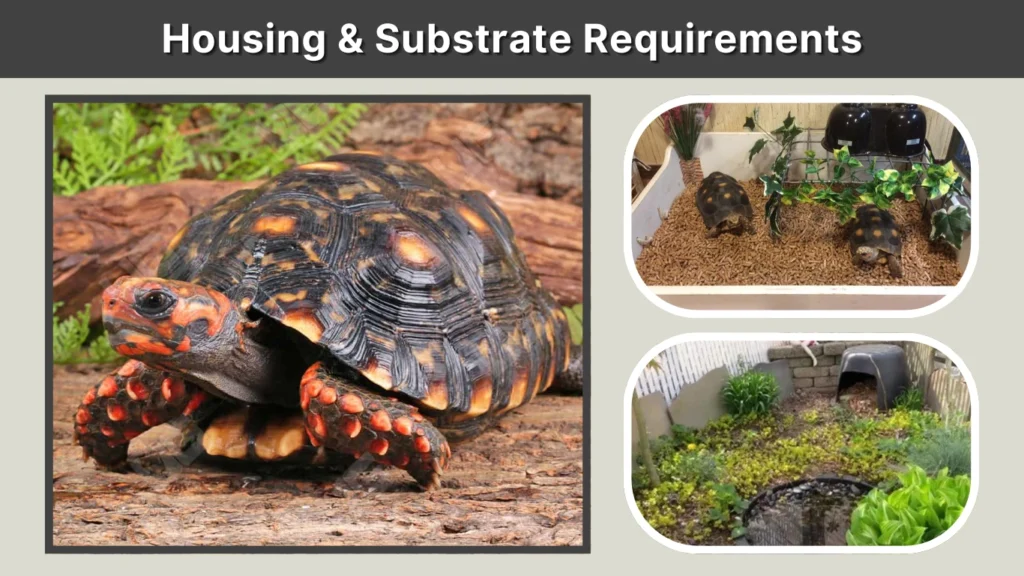
Indoor enclosures should be large, well-ventilated, and capable of maintaining humidity. Wooden tortoise tables, PVC reptile enclosures, and modified indoor pens work well. Include multiple hides and moisture zones to mimic natural forest microclimates.
Outdoor Housing
Outdoor habitats should offer shade, humidity pockets, and naturalistic elements like logs, leaves, and live plants. Secure fencing is essential to keep predators out. Seasonal climate must be considered; tropical or subtropical areas allow nearly year-round outdoor housing.
Substrate Types
Soil blends, coir, and cypress mulch are ideal for humidity retention. These substrates replicate soft forest floors and reduce the risk of shell rot when maintained correctly.
Humidity Retention Methods
Deep substrate layers, frequent misting, moss-filled hides, and partially covered indoor sections help maintain proper humidity. Good airflow prevents mold buildup.
Temperature & Humidity Requirements
- Basking: 90–95°F
- Ambient: 75–85°F
- Night: 70–75°F
- Humidity: 60–80%
- Mist twice daily in dry climates
- Provide multiple microclimates within the enclosure
Health Issues & Prevention
Common health concerns among Red-Footed Tortoises include pyramiding, dehydration, shell rot, and respiratory infections. Pyramiding is often caused by low humidity or poor diet, while shell rot results from overly wet, stagnant environments. Regular hydration, proper diet, clean enclosures, and correct temperature gradients help prevent most issues. Routine checkups with a reptile veterinarian are recommended.
Buying a Red-Footed Tortoise
Where to Buy
Red-Footed Tortoises are available through breeders, reptile expos, online sellers, and pet stores like Petco. Reputable breeders offer healthier animals with better shell quality and genetic history.
Price Ranges
- Babies: $120–$250
- Cherry Heads: $250–$500
- Juveniles: $200–$350
- Adults: $350–$600+
Prices vary based on coloration, size, age, and rarity.
What to Look for in a Healthy Tortoise
- Smooth, firm shell
- Clear eyes and nose
- Active and alert behavior
- No signs of shell rot or pyramiding
- Consistent weight and hydration
FAQs
How big do Red-Footed Tortoises get?
Red-Footed Tortoises typically grow to 10–14 inches as adults, weighing between 8 and 20 pounds. Cherry Head variants are usually slightly smaller. Growth depends on diet, humidity, temperature, and genetics. Providing proper humidity, space, and nutritional balance ensures healthy size development without shell deformities or stunted growth.
How long do Red-Footed Tortoises live?
Red-Footed Tortoises live 40–60 years on average, but many exceed 70 years with proper care. Lifespan is strongly influenced by humidity, diet, enclosure size, and overall husbandry. A well-maintained tortoise with consistent UVB exposure and a nutrient-balanced diet will enjoy a long, healthy life.
What should I feed a Red-Footed Tortoise?
Their diet includes leafy greens, vegetables, fruits, mushrooms, and occasional protein. They are naturally omnivorous in the wild. About 60% greens, 20% fruits, 10% vegetables, and 10% protein is a good balance. Avoid sugary fruits daily and always add calcium supplements to prevent metabolic bone disease.
Do Red-Footed Tortoises need high humidity?
Yes—humidity between 60–80% is crucial. These tortoises originate from humid tropical forests and rely on moisture for shell health, hydration, and growth. Maintaining humidity through deep substrate, misting, and moss-filled hides prevents pyramiding, respiratory issues, and dryness-related stress.
How much does a Red-Footed Tortoise cost?
Prices range from $120–$250 for babies and $250–$500 for Cherry Heads or larger juveniles. Adults can cost more due to rarity. Additional expenses include enclosure setup, heating, lighting, food, and vet care. Overall, Red-Footed Tortoises are moderately priced but require long-term investment.