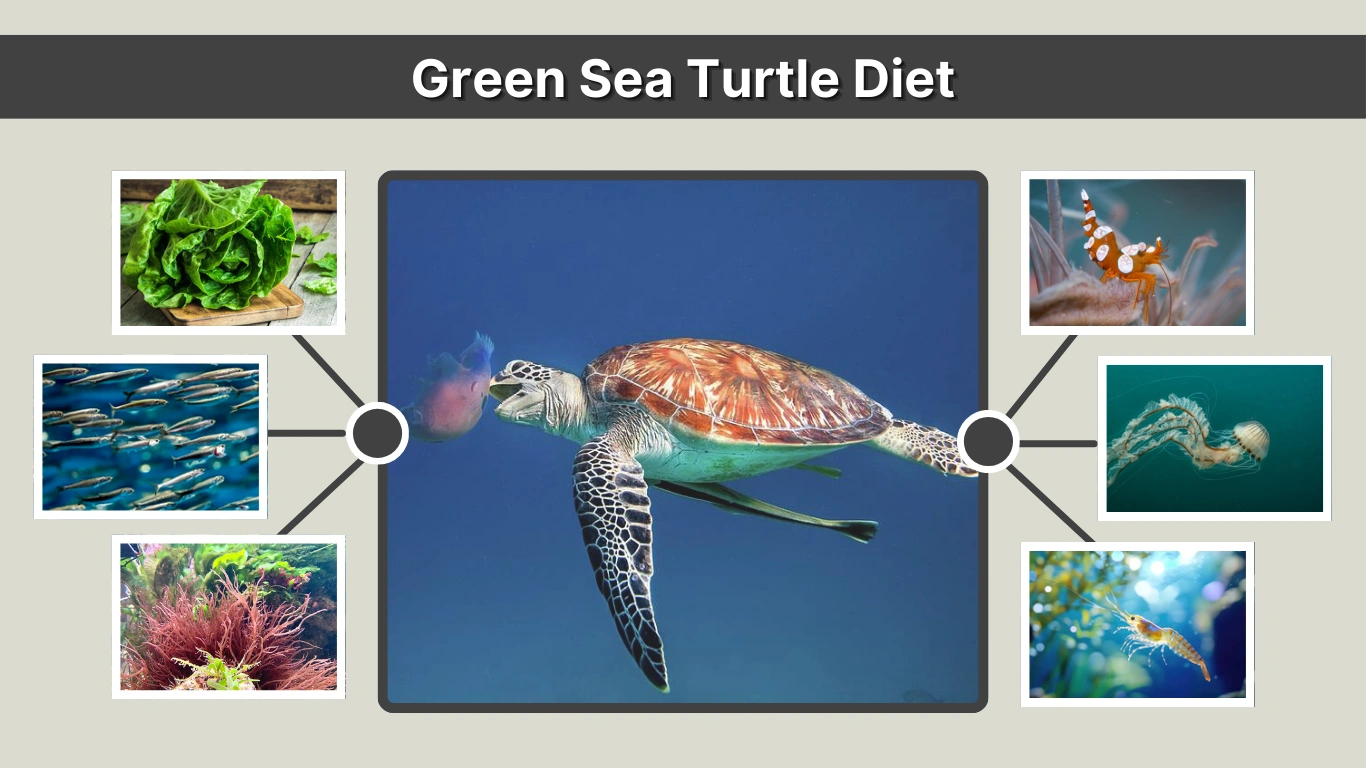
Green sea turtles have one of the most unique dietary patterns in the animal kingdom. Unlike most sea turtle species, they shift from being omnivores as hatchlings to mostly herbivores as adults. Their diet is deeply connected to their habitat, shaping where they live, how they migrate, and how they survive in the wild. Understanding what green sea turtles eat reveals how essential seagrass beds, algae, coral reefs, and open-ocean ecosystems are to their life cycle.
Identification
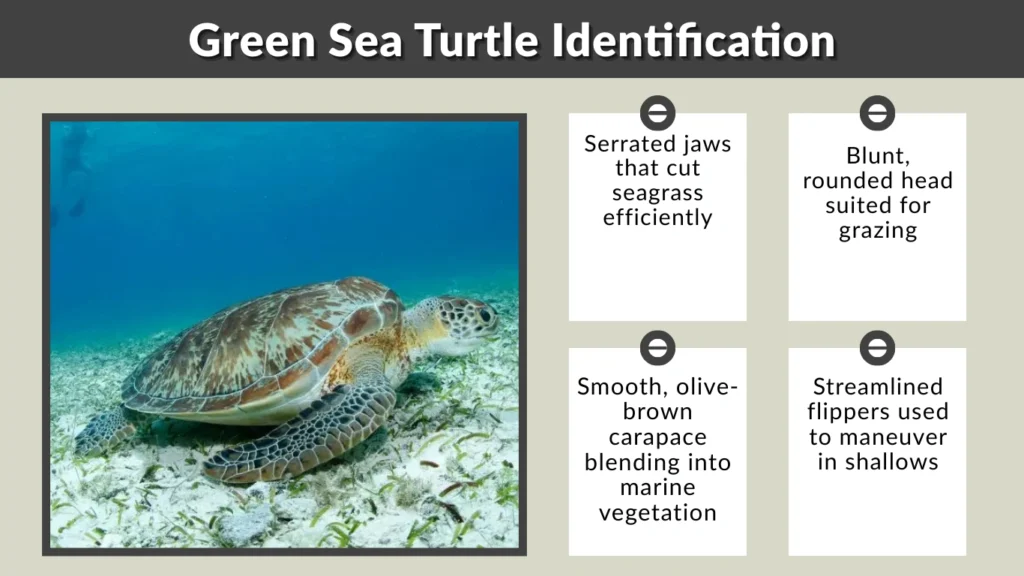
- Serrated jaws that cut seagrass efficiently
- Blunt, rounded head suited for grazing
- Smooth, olive-brown carapace blending into marine vegetation
- Streamlined flippers used to maneuver in shallows
- Slow, controlled feeding motions ideal for plant-based diets
Diet Overview
Green sea turtles undergo one of the most dramatic diet transitions among marine reptiles. When they are hatchlings and juveniles, they consume a variety of animal-based foods for rapid growth, including tiny crustaceans, jellyfish, and zooplankton. As they mature, their digestive system develops the ability to process cellulose, allowing them to shift to a nearly vegetarian diet composed mainly of seagrasses and algae.
This dietary shift influences every aspect of their behavior and habitat selection. Adults spend most of their time in shallow coastal areas where plant life is abundant, while juveniles often live in the open ocean, drifting within Sargassum seaweed mats and feeding on small marine animals. Their diet also varies by region, habitat type, and life stage, creating a highly adaptable feeding strategy across their global range.
Green sea turtles are considered ecological gardeners of the sea. By grazing seagrasses, they keep underwater meadows short and healthy, promoting new growth and supporting other marine life. Their feeding habits play a crucial role in maintaining balanced and productive coastal ecosystems worldwide.
Feeding Behavior
Green sea turtles primarily feed during daylight hours, using their strong flippers to stabilize themselves in currents or anchor against the seafloor while grazing. Their serrated lower jaws act like underwater shears, clipping seagrasses and scraping algae from rocks and reef surfaces. Juveniles, being more agile and omnivorous, chase small prey or pick animals from floating seaweed.
Turtles often return to the same feeding grounds repeatedly, creating well-maintained grazing patches. These areas become hotspots of biodiversity, attracting fish, invertebrates, and other marine animals.
Life-Stage Diet Breakdown
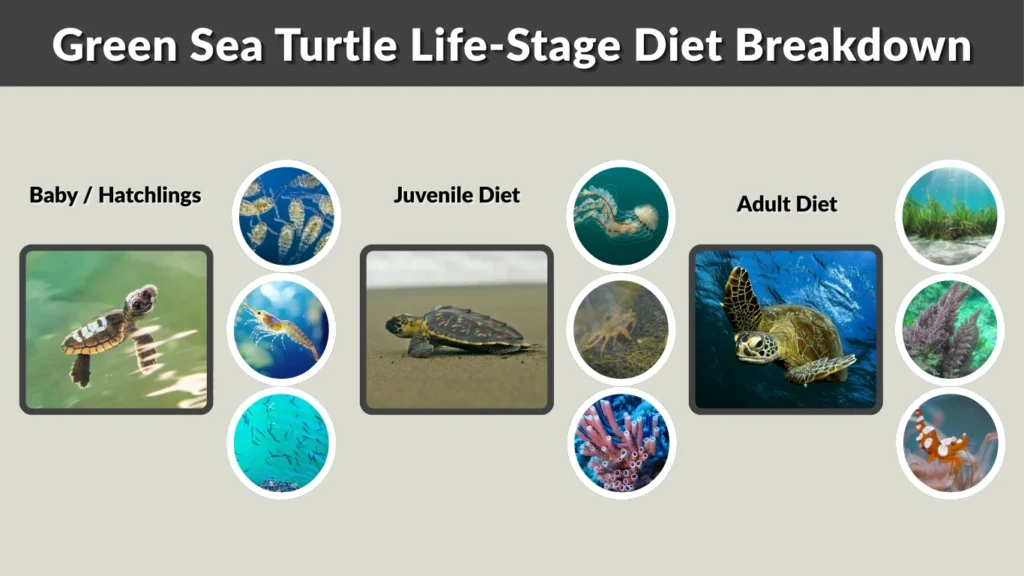
Baby / Hatchlings
Baby green sea turtles are full omnivores. After reaching the ocean, hatchlings drift within floating Sargassum mats, where they feed on:
- Zooplankton
- Small crustaceans
- Insects and larvae
- Tiny fish
- Jellyfish fragments
Their protein-rich diet helps them grow rapidly during the vulnerable early years.
Juvenile Diet
Juvenile green turtles continue eating animal-based foods but begin transitioning to algae and plants. Common juvenile foods include:
- Jellyfish
- Crabs and shrimp
- Sponges
- Small fish
- Soft marine algae
- Drift seaweeds
This is the most varied diet phase of their entire life.
Adult Diet
Adult green sea turtles are primarily herbivores. Their diet consists mostly of:
- Seagrasses
- Marine algae (green, red, and brown varieties)
- Occasionally soft invertebrates (rare)
Their herbivorous nature gives adult green turtles their name—the green coloration of their fat.
Wild Diet & Ocean Diet
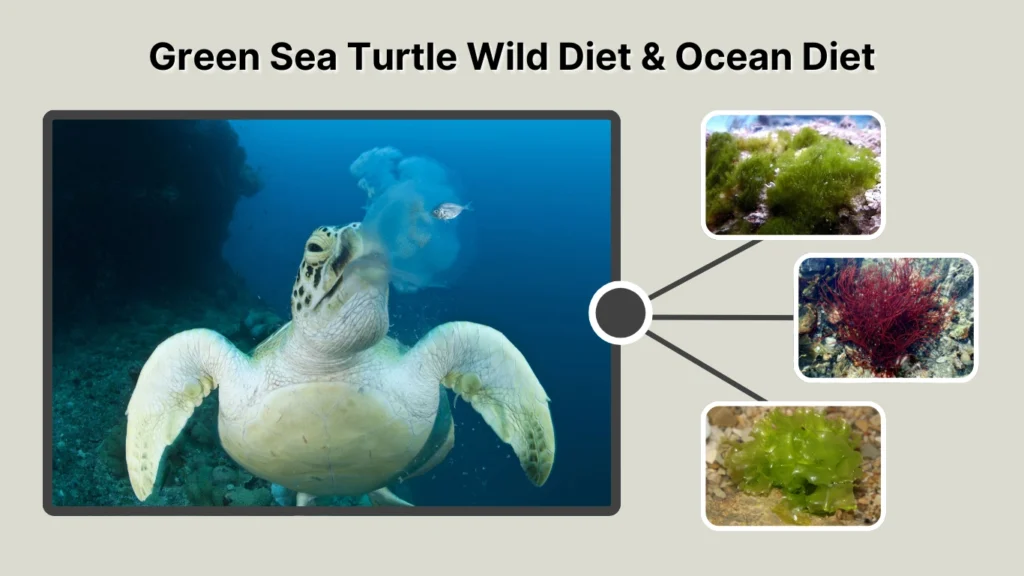
In the wild, green sea turtles eat different foods depending on whether they live in open ocean or coastal areas.
In the open ocean, juveniles feed on tiny drifting animals, insects on Sargassum, and jellyfish.
In coastal shallows, adults focus on seagrasses and algae growing on reefs, rocks, and lagoon floors. These environments supply abundant plant life essential for their energy-efficient lifestyle.
Coral Reef Diet
Green sea turtles living around coral reefs have access to a diverse plant-based diet. Common foods include:
- Turf algae
- Red algae (Gracilaria species)
- Green algae (Ulva)
- Brown algae (Sargassum, Dictyota)
- Soft marine plants attached to reef flats
Juveniles may also consume sponges or small reef invertebrates before fully transitioning to plants.
Regional Diet Differences
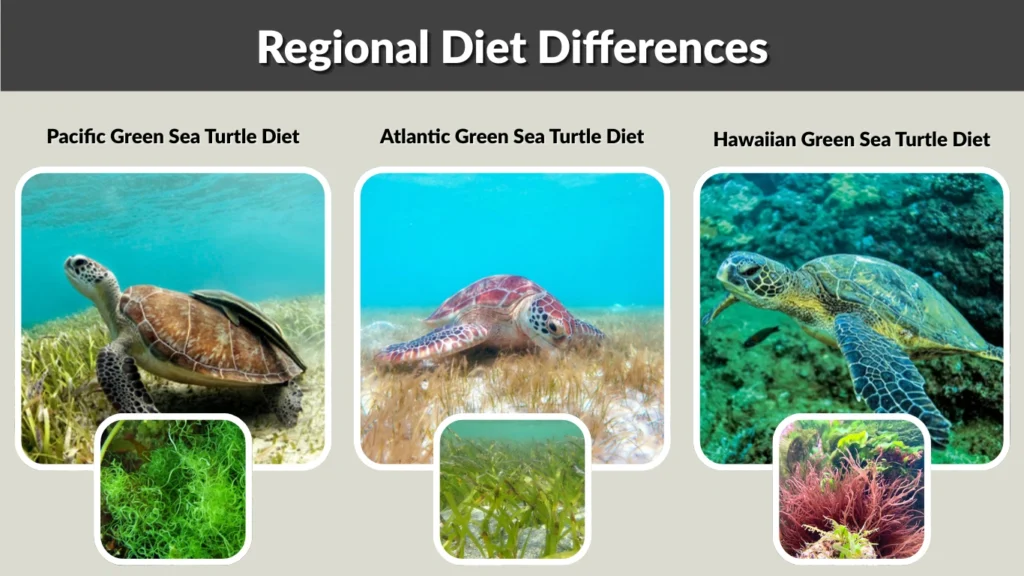
Pacific Green Sea Turtle Diet
Pacific populations eat a wide variety of algae and grasses such as:
- Gracilaria
- Ulva
- Chaetomorpha
- Sargassum
- Fine-leaf coastal grasses
Eastern Pacific turtles (e.g., Galápagos) rely heavily on marine algae.
Atlantic Green Sea Turtle Diet
Atlantic turtles commonly eat broad seagrasses, including:
- Turtle grass (Thalassia testudinum)
- Shoal grass (Halodule wrightii)
- Manatee grass (Syringodium filiforme)
- Upright algae on shallow reef flats
Hawaiian Green Sea Turtle Diet (Honus)
Honus feed mostly on a variety of Hawaiian algae known as limu, including:
- Gracilaria (ogo)
- Ulva (sea lettuce)
- Dictyota
- Acanthophora
These algae grow along volcanic coastlines and reef shelves.
Plants & Seagrasses Green Sea Turtles Eat
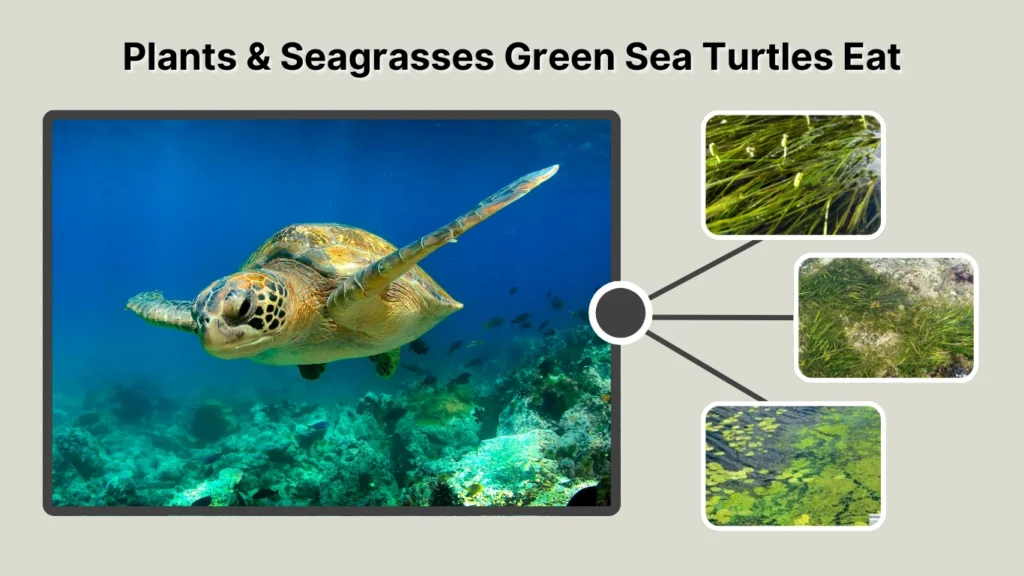
Green turtles consume a wide range of marine plants, including:
- Turtle grass
- Manatee grass
- Shoal grass
- Widgeon grass
- Eelgrass
- Microalgae
- Macroalgae (red, brown, and green species)
These underwater plants form the foundation of adult green sea turtle nutrition.
Captivity Diet (Lettuce, Veggies, Zoo-Based Feeding)
Green sea turtles in aquariums, research facilities, or rehabilitation centers have a diet carefully designed to mimic natural feeding. Since adults in the wild mostly eat marine plants, their captive menu focuses on nutrient-rich greens. Common foods include:
- Romaine lettuce
- Kale
- Mustard greens
- Collard greens
- Nori (seaweed sheets)
- Squash and zucchini
- Specially formulated sea turtle pellets
Iceberg lettuce is rarely used because it lacks nutrition. Captive diets are closely monitored to maintain shell health, proper calcium balance, and natural feeding behavior. Many facilities also provide enrichment by hiding vegetables or scattering seagrass substitutes to encourage grazing-like activity.
Diet in Minecraft
In the game Minecraft, green sea turtles have a simplified diet. They eat seagrass only, which players can harvest from underwater blocks. Feeding turtles seagrass allows breeding, creating eggs that hatch into baby turtles. While fictional, this mechanic reflects the herbivorous nature of adult turtles in real life, making the game loosely educational about their natural diet.
Complete Food List (Everything Green Sea Turtles Eat)
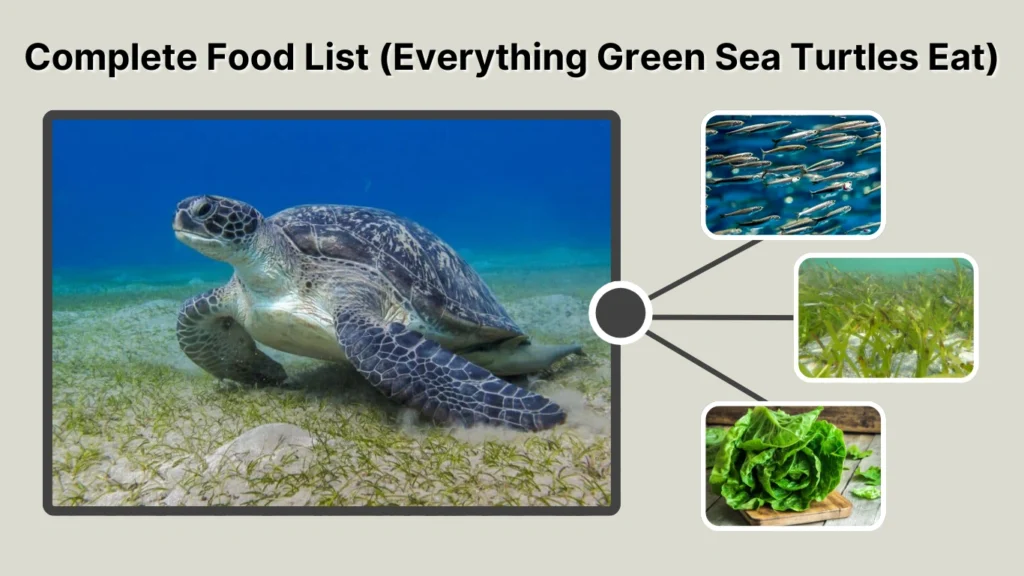
For clarity and SEO coverage, here is a complete list combining all life stages and habitats:
Animal-Based Foods (Juveniles & Hatchlings)
- Small fish
- Fish eggs
- Zooplankton
- Sea insects
- Brine shrimp
- Crabs and shrimp
- Sponges
- Jellyfish
- Sargassum insects & larvae
- Floating invertebrates
Plant-Based Foods (Adults & Older Juveniles)
- Turtle grass
- Manatee grass
- Shoal grass
- Widgeon grass
- Eelgrass
- Ulva (sea lettuce)
- Sargassum
- Gracilaria
- Dictyota
- Acanthophora
- Other red, brown, and green algae
Captivity Foods
- Romaine lettuce
- Dark leafy greens
- Aquatic plants
- Commercial turtle diets
- Edible seaweed
Do Green Sea Turtles Eat Animals or Fish?
Adult green sea turtles rarely eat animals or fish—this is a common misconception. Their serrated jaws and digestive systems are specialized for plant material. However, juveniles and hatchlings do eat small fish, tiny crustaceans, and jellyfish as part of their omnivorous early diet. Once fully grown, they become almost entirely herbivorous.
What Eats Green Sea Turtles (Predators)
Understanding diet also means understanding the food chain. Green sea turtles, despite their large size, face many predators throughout their lives.
Egg & Hatchling Predators
- Crabs
- Raccoons
- Birds (e.g., gulls, frigatebirds)
- Foxes
- Monitor lizards
- Fish near shore
Juvenile Predators
- Sharks
- Large fish
- Octopuses
- Seabirds
Adult Predators
- Tiger sharks
- Bull sharks
- Orcas
Humans have historically been major predators, though commercial hunting is now illegal in most areas.
Green Sea Turtle Diet vs. Other Sea Turtles
| Feature | Green Sea Turtle | Loggerhead | Hawksbill |
| Adult Diet | Herbivorous | Carnivorous | Sponge-specialist |
| Juvenile Diet | Omnivorous | Omnivorous | Omnivorous |
| Main Foods | Seagrass & algae | Crabs, mollusks | Sponges |
| Fish Consumption | Rare | Common | Rare |
| Reef Foraging | Moderate | Low | High |
This comparison highlights how unique the green sea turtle’s plant-based diet is among sea turtles.
FAQs
What do green sea turtles eat?
Green sea turtles eat a wide variety of foods depending on age. Hatchlings and juveniles eat zooplankton, small fish, jellyfish, and crustaceans. Adults shift to a primarily plant-based diet, feeding mostly on seagrasses and marine algae in shallow coastal habitats. Their herbivorous adult diet is unusual among sea turtles.
Do green sea turtles eat fish?
Adult green sea turtles rarely eat fish because their jaws and digestive systems are adapted for plants, not hunting. Juveniles, however, do eat small fish and animal matter while living in open-ocean habitats. This early omnivorous diet gives them the energy needed for fast growth before transitioning to plants.
What do baby green sea turtles eat?
Baby green sea turtles are omnivores. After reaching the ocean, hatchlings drift within Sargassum seaweed mats, eating zooplankton, tiny crustaceans, fish eggs, jellyfish pieces, and insects. This protein-rich diet supports rapid early development until they are large enough to transition toward algae and plant-based foods.
What do Hawaiian green sea turtles eat?
Hawaiian green sea turtles, called honu, feed primarily on Hawaiian algae known as “limu.” Common types include red algae (Gracilaria), green algae (Ulva), and brown algae species. These coastal algae thrive along volcanic shorelines and reef shelves, supplying abundant food for Hawaii’s green turtle population.
What do green sea turtles eat in captivity?
In captivity, green sea turtles are fed nutrient-rich greens such as romaine lettuce, kale, collard greens, seaweed sheets, aquatic plants, and specialized turtle pellets. Their diet is carefully balanced to mimic natural feeding and maintain shell health. Iceberg lettuce is avoided because it lacks essential nutrients.