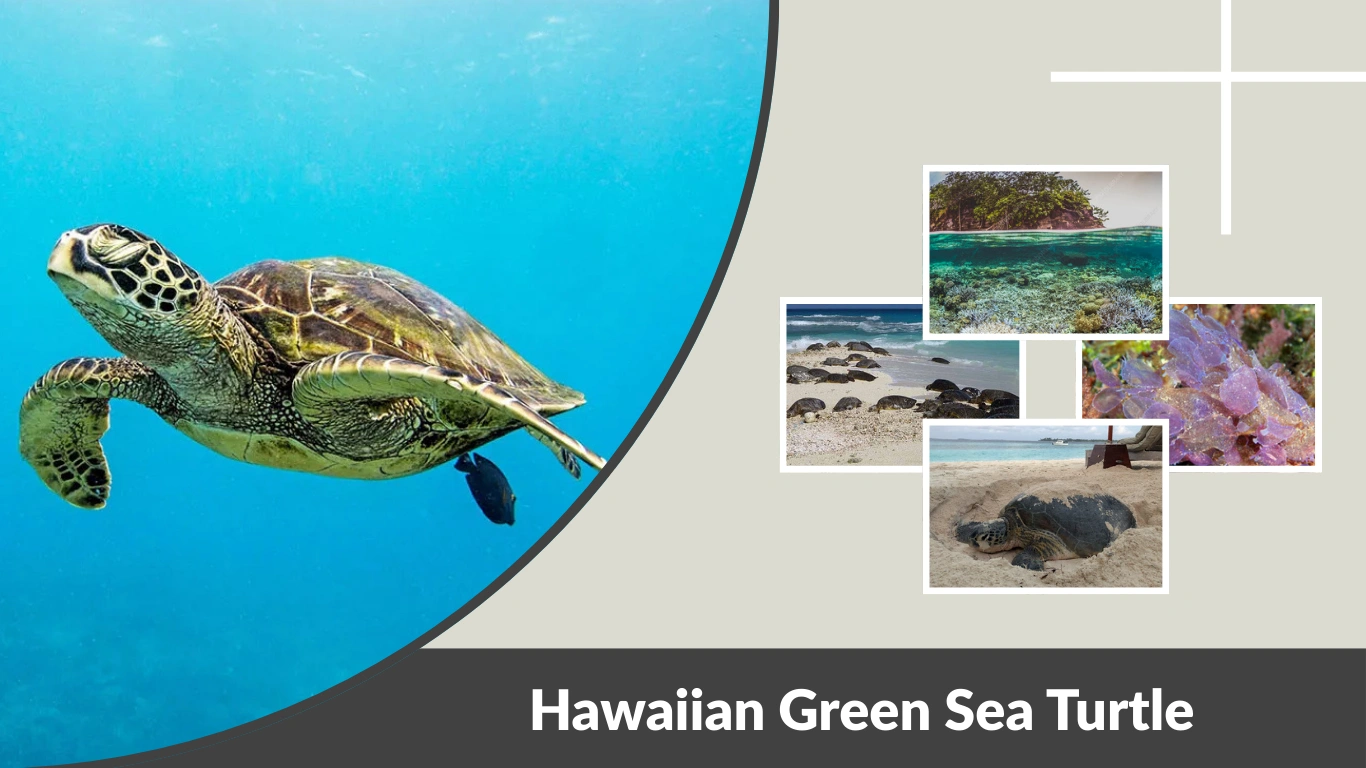
The Hawaiian green sea turtle—locally known as the honu—is one of the most iconic marine animals in the islands. Revered in Hawaiian culture and protected under U.S. law, these gentle reptiles are often seen basking on beaches, gliding through reefs, or feeding on limu along shallow shores. Their population has rebounded significantly in recent decades, yet they still face threats from disease, habitat loss, and human interaction. This guide explores their identification, biology, habits, conservation, and cultural meaning.
Identification
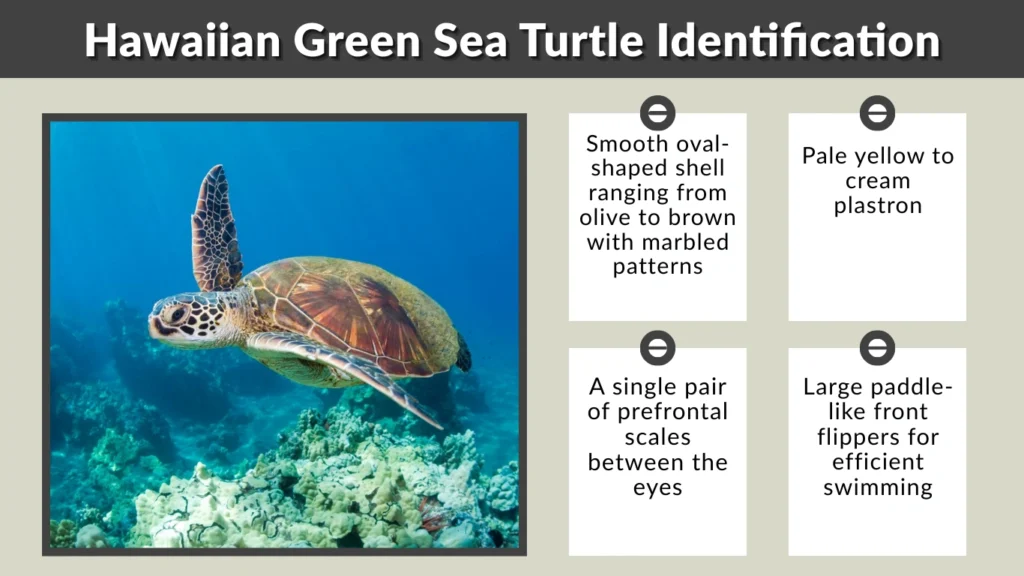
- Smooth oval-shaped shell ranging from olive to brown with marbled patterns
- Pale yellow to cream plastron
- A single pair of prefrontal scales between the eyes
- Large paddle-like front flippers for efficient swimming
- Rounded head with a serrated jawline
- Juveniles are darker and more streamlined than adults
- Carapace often covered with algae due to feeding habits
- Noticeable C-shaped dorsal profile when viewed from above
- No true teeth—sharp beak is used for grazing
- Thick, strong limbs enabling long-distance migrations
Size, Age & Lifespan
Hawaiian green sea turtles are among the largest hard-shelled turtles in the world. Adults typically measure 3–4 feet (91–122 cm) in shell length and weigh 250–400 pounds, though exceptionally large individuals can exceed 500 pounds. Their growth is slow, with juveniles taking decades to reach adult size.
Lifespan varies with environmental conditions, but most honu live 60–80 years, with some reaching 100 years. One of the most unique aspects of their biology is their late maturity, typically between 20 and 35 years, which makes population recovery slow and vulnerable to disturbance.
Scientific Classification
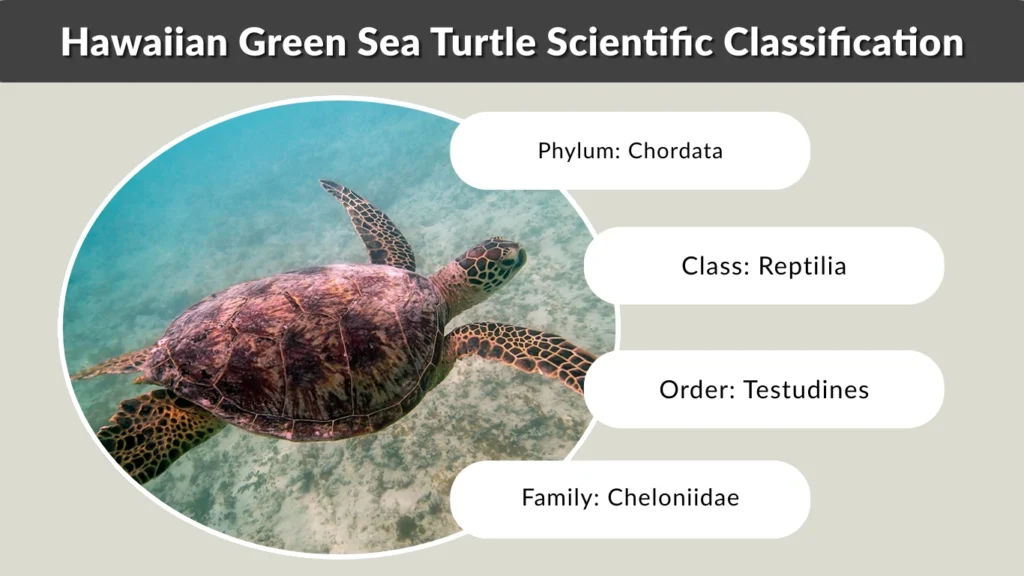
The Hawaiian green sea turtle belongs to the species Chelonia mydas, one of the seven recognized sea turtle species worldwide. Its classification is:
- Kingdom: Animalia
- Phylum: Chordata
- Class: Reptilia
- Order: Testudines
- Family: Cheloniidae
- Genus: Chelonia
- Species: mydas
In Hawaiian culture, the turtle is called “honu,” a symbol of longevity, navigation, safety, and spiritual guidance. Honu appear in chants and legends as protectors of voyagers and guardians of the shoreline.
Range & Migration
Green sea turtles inhabit shallow coastal waters across the Hawaiian Islands, including Oahu, Maui, Kauai, Molokai, Lanai, the Big Island, and smaller offshore islets. Popular viewing areas include Laniakea Beach (Oahu), Ho‘okipa (Maui), Punaluʻu (Big Island), and Hilo Bay.
Their migration patterns are impressive. Most Hawaiian honu forage around the main islands but migrate hundreds of miles to nest in the Northwestern Hawaiian Islands, particularly the French Frigate Shoals. These round-trip migrations can span over 2,000 miles and often follow traditional paths their ancestors used for centuries.
Habitat
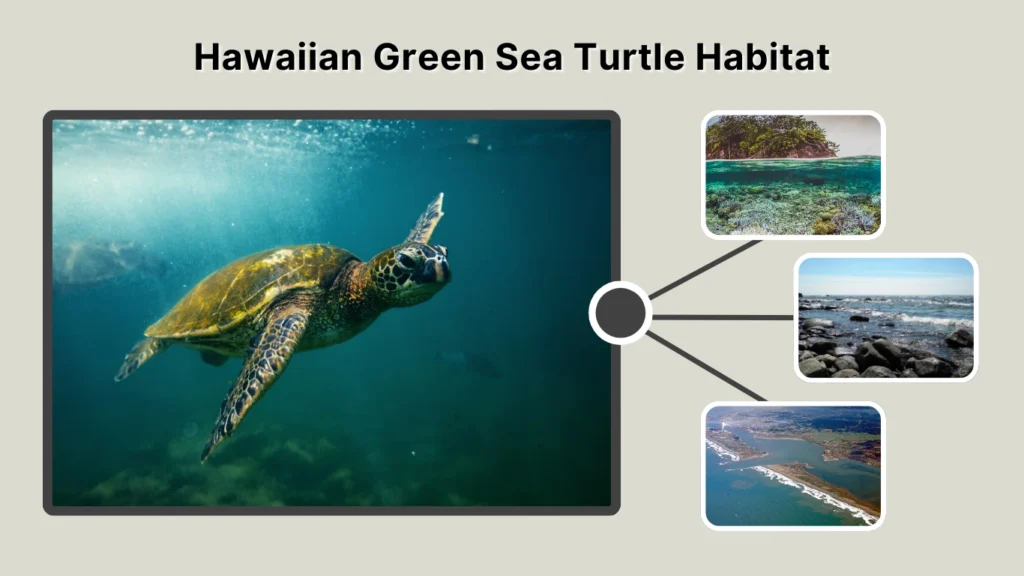
Hawaiian green sea turtles rely on multiple coastal habitats, each serving a specific purpose in their daily and seasonal lives. They thrive in:
- Shallow coral reefs
- Rocky shorelines
- Protected bays and estuaries
- Seagrass meadows
- Lava rock shelves where algae grow abundantly
The warm tropical water of Hawaii provides ideal temperatures for feeding, resting, and digesting food. Reefs offer shelter from predators such as sharks, while sandy beaches serve as key nesting grounds for returning females. Because honu depend on several interconnected habitats, coastal development and climate change pose long-term risks.
Behavior
Hawaiian green sea turtles display a mix of peaceful, predictable behaviors that make them a favorite among snorkelers and wildlife enthusiasts. During the day, they can be seen grazing on algae or gliding along reef edges, occasionally surfacing for air. Their movements are generally slow and relaxed, conserving energy for long-distance migrations or nesting cycles.
One particularly unique behavior among Hawaiian turtles is basking—resting on sandy beaches under the sun. This behavior is rare outside Hawaii and is believed to help regulate body temperature, conserve energy, and aid digestion. While basking, turtles appear calm and immobile, but they remain alert to disturbances.
Socially, honu are generally solitary except during mating season. They do not display aggression toward humans unless provoked, and they are not dangerous. However, they can become stressed when crowded, touched, or chased, which is why wildlife guidelines emphasize giving them ample space.
Diet
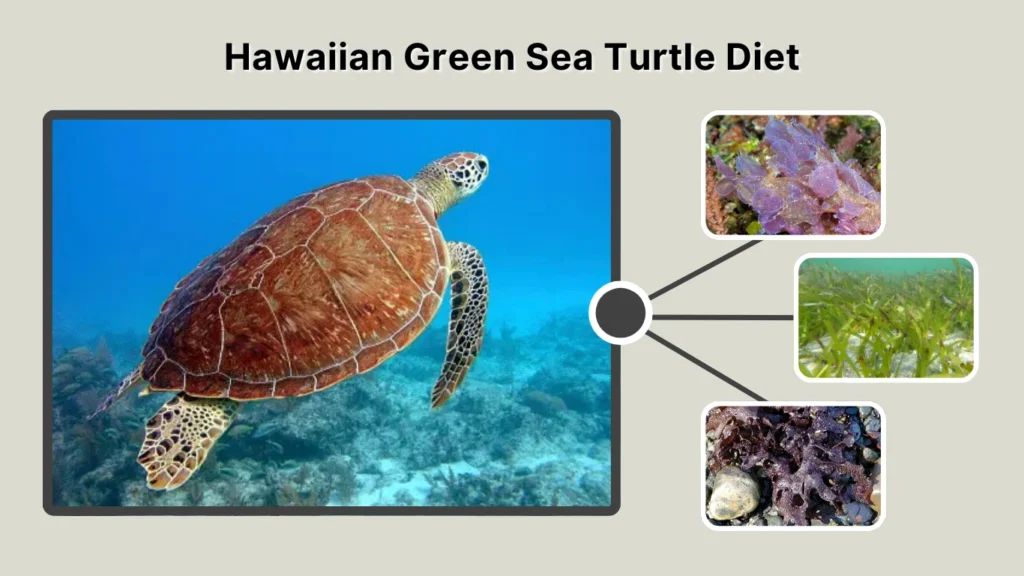
The diet of Hawaiian green sea turtles shifts dramatically as they mature. Juveniles are omnivores, feeding on crustaceans, jellyfish, and small invertebrates. Once they transition into adulthood, they become primarily herbivores, with a diet dominated by:
- Limu (Hawaiian algae species)
- Seagrass
- Marine vegetation attached to rocks
- Occasionally mangrove leaves or drifting seaweed
Their serrated beaks are specially adapted to scrape algae from rocks and coral. The greenish tint of their body fat—giving them the name “green sea turtle”—comes from years of consuming algae and seagrass.
Nesting & Breeding
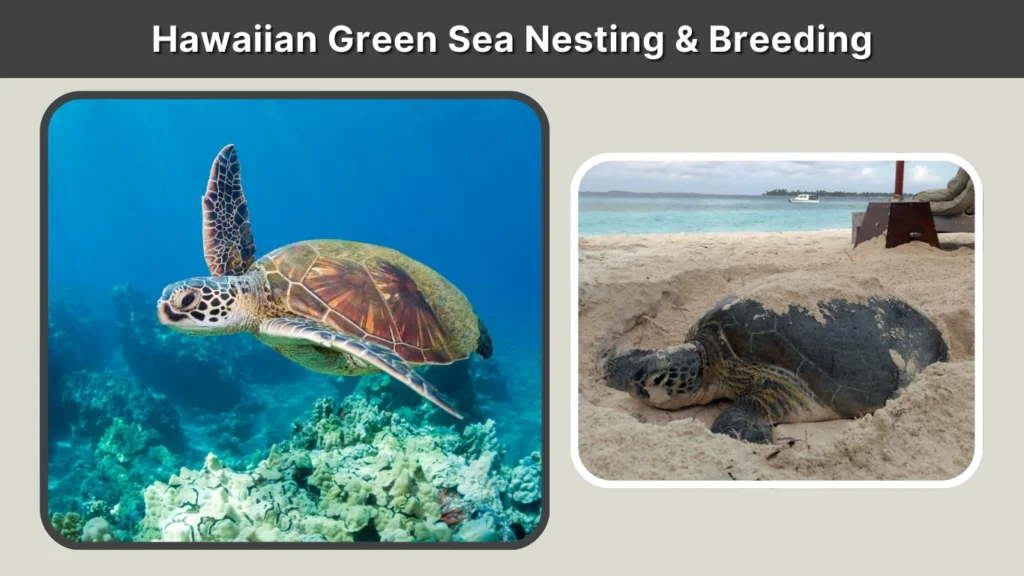
Honu nest almost exclusively in the Northwestern Hawaiian Islands, especially on remote islets like Tern Island in the French Frigate Shoals. Nesting season typically runs from May through September, with females returning to the same beaches where they were born.
A single female may lay three to five clutches per season, each containing 75–120 eggs. The eggs incubate for about two months, with hatchlings emerging at night to avoid predators. Only a tiny fraction survive to adulthood, facing threats from birds, crabs, fish, and human impact.
Adaptations
Hawaiian green sea turtles possess a remarkable suite of adaptations that allow them to thrive in ocean environments while undertaking long migrations. Their hydrodynamic shells reduce drag and enable them to glide efficiently through currents, conserving energy over great distances. With powerful front flippers, honu can swim for hours without rest, using their rear flippers for steering, stability, and digging nests.
Another key adaptation is their salt gland, located near their eyes, which allows them to excrete excess salt from seawater. This often appears as “tears” when they are on land, especially during nesting. Their sharp, serrated beaks are specialized for grazing, giving them the ability to scrape algae from rough rock surfaces with precision. These adaptations make them well suited for both coastal feeding grounds and deep-ocean journeys.
Population & Conservation Status
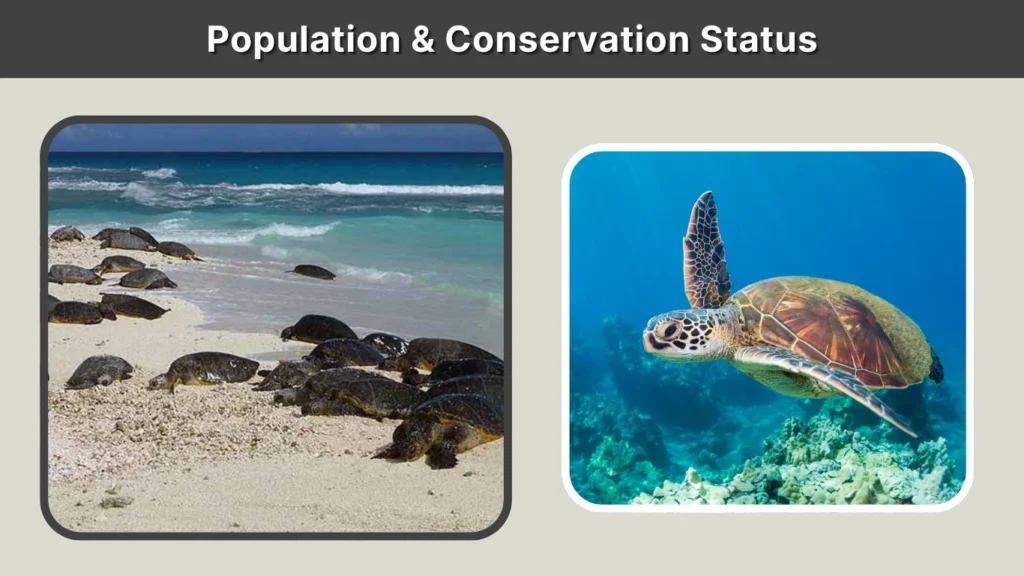
The Hawaiian green sea turtle population has experienced dramatic fluctuations over the past century. Historically abundant, their numbers plummeted during the 20th century due to overharvesting for meat and shells, as well as coastal development and fishing impacts. By the 1970s, they were placed under protection through the Endangered Species Act and Hawaii State Law.
Since then, their recovery has been a conservation success story. Populations nesting in the Northwestern Hawaiian Islands have increased by more than 500%, and sightings around the main islands are now common. Despite this progress, the species is still considered Threatened, and continued monitoring is essential.
Researchers track their numbers through aerial surveys, beach monitoring, and satellite tagging. Long-term data shows consistent population growth, though disease and climate change remain prominent concerns. Many publications include charts of their rising population trends, often illustrating the strong impact of legal protection.
Threats
Even with protection, Hawaiian green sea turtles face multiple threats:
Fibropapillomatosis (FP)
A tumor-forming disease linked to environmental pollution and warm water conditions. FP can impair vision, swimming, and feeding.
Plastic and Debris Ingestion
Turtles often mistake plastic bags, fishing line, and soft debris for jellyfish or seaweed, leading to internal blockages or malnutrition.
Boat Strikes
Shallow feeding areas overlap with boating zones, increasing the likelihood of accidental injuries.
Climate Change
Rising temperatures affect nesting beaches by altering sand composition and skewing hatchling gender ratios (temperature determines sex).
Coastal Development
Beachfront structures, lighting, and human traffic disrupt nesting behaviors and hatchling navigation.
Fishing Gear Entanglement
Ghost nets and discarded lines can trap swimming turtles, causing injury or drowning.
Though honu are resilient, continued conservation is vital to maintaining their recovery trajectory.
Human Interaction
Snorkeling and beach encounters with honu are common across Hawaii, making visitor education essential. Turtles are protected, and it is illegal to touch, disturb, or harass them. Approaching too closely can cause stress, potentially disrupting feeding or basking. Hawaii guidelines recommend maintaining at least 10 feet (3 meters) of distance in the water and 15 feet (5 meters) on beaches.
When basking on shore, honu appear calm but remain alert. Crowding or blocking their path can interfere with their natural behavior. Signs posted at popular beaches, such as Laniakea on Oahu or Ho‘okipa in Maui, remind visitors of these rules.
Some people wonder whether honu are dangerous. They are gentle and non-aggressive, and will only defend themselves if cornered or grabbed. On rare occasions, a startled turtle may deliver a strong flipper strike, but these incidents occur only when a human ignores safe-distance guidelines.
Wildlife volunteers, rescue organizations, and government programs play a major role in monitoring beaches, treating sick or injured turtles, and managing nesting sites. Respectful interaction ensures the continued health of Hawaii’s honu population.
Hawaiian Culture
In Hawaiian tradition, the honu symbolizes wisdom, protection, navigation, and peace. Many ancient stories describe turtles guiding voyagers or appearing as guardian spirits known as ‘aumākua. They are considered embodiments of safety and good fortune for travelers at sea.
Honu motifs appear in traditional tattoos, kapa designs, petroglyphs, and modern Hawaiian art. The turtle’s strong cultural significance is a major reason the Hawaiian community advocates for continued protection of nesting beaches and feeding areas.
Some chants and legends refer to the honu as protectors of children or guardians of specific water sources. Their graceful movement and longevity make them spiritual symbols of endurance and balance.
Hawaiian Green Sea Turtle vs Hawaiian Hawksbill Turtle
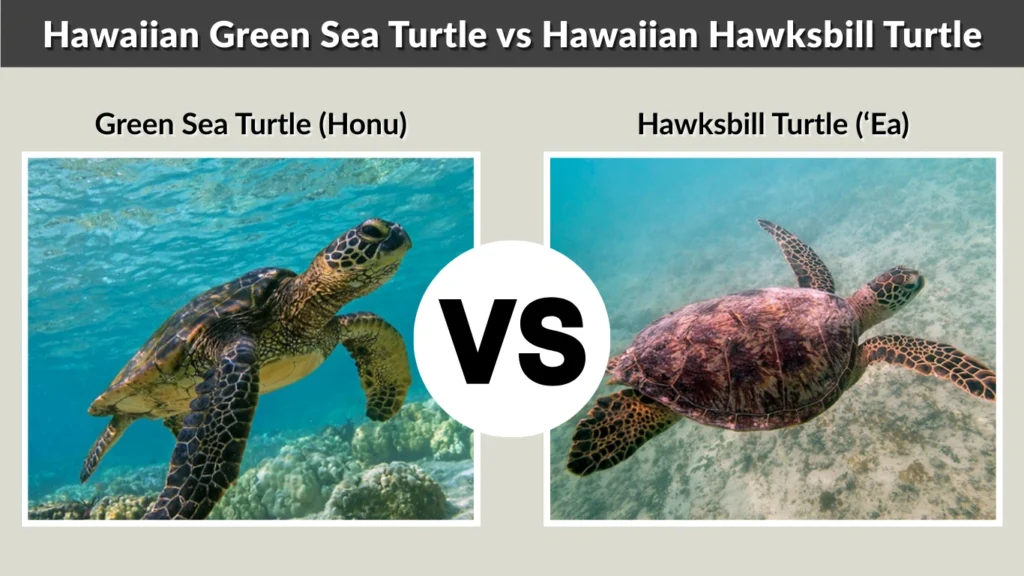
| Feature | Green Sea Turtle (Honu) | Hawksbill Turtle (‘Ea) |
| Beak Shape | Rounded with serrated edges | Sharp, hawk-like beak |
| Diet | Mainly algae and seagrass | Primarily sponges |
| Shell Structure | Smooth, single scutes | Overlapping “tortoiseshell” scutes |
| Population Status | Threatened | Critically Endangered |
| Behavior | Commonly basks on shore | Rarely seen on beaches |
FAQs
What is the Hawaiian name for the green sea turtle?
The Hawaiian name for the green sea turtle is honu, a culturally significant symbol representing navigation, protection, and longevity. Honu appear in Hawaiian mythology, chants, and art, and are regarded as spiritual guardians or ‘aumākua by many families, giving them a deeply rooted presence in traditional Hawaiian culture.
Are Hawaiian green sea turtles endangered?
Hawaiian green sea turtles were once endangered but are now classified as Threatened under the Endangered Species Act. Their population has increased dramatically thanks to decades of conservation efforts. Despite this recovery, they still face threats such as disease, ocean pollution, and habitat loss, so strict protections remain in place.
What do Hawaiian green sea turtles eat?
Adult honu are primarily herbivores, feeding on sea grasses, limu (algae), and marine vegetation found on rocks and coral reefs. Juveniles, however, have a more varied diet that includes jellyfish, small crustaceans, and invertebrates. Their serrated beaks help them efficiently graze on tough algae surfaces.
Where can you see green sea turtles in Hawaii?
Green sea turtles can be seen across all major Hawaiian Islands, especially at sites like Laniakea (Oahu), Ho‘okipa (Maui), Punaluʻu (Big Island), and Hilo Bay. They are often spotted grazing in shallow reefs or basking on beaches. Snorkelers frequently encounter honu in calm bays with abundant algae.
Are Hawaiian green sea turtles dangerous?
Honu are gentle, non-aggressive animals and are not dangerous. They typically avoid conflict and will only react defensively if cornered, grabbed, or harassed. Maintaining proper viewing distance ensures their safety and yours. Hawaii’s wildlife laws prohibit touching or disturbing sea turtles to protect their well-being.