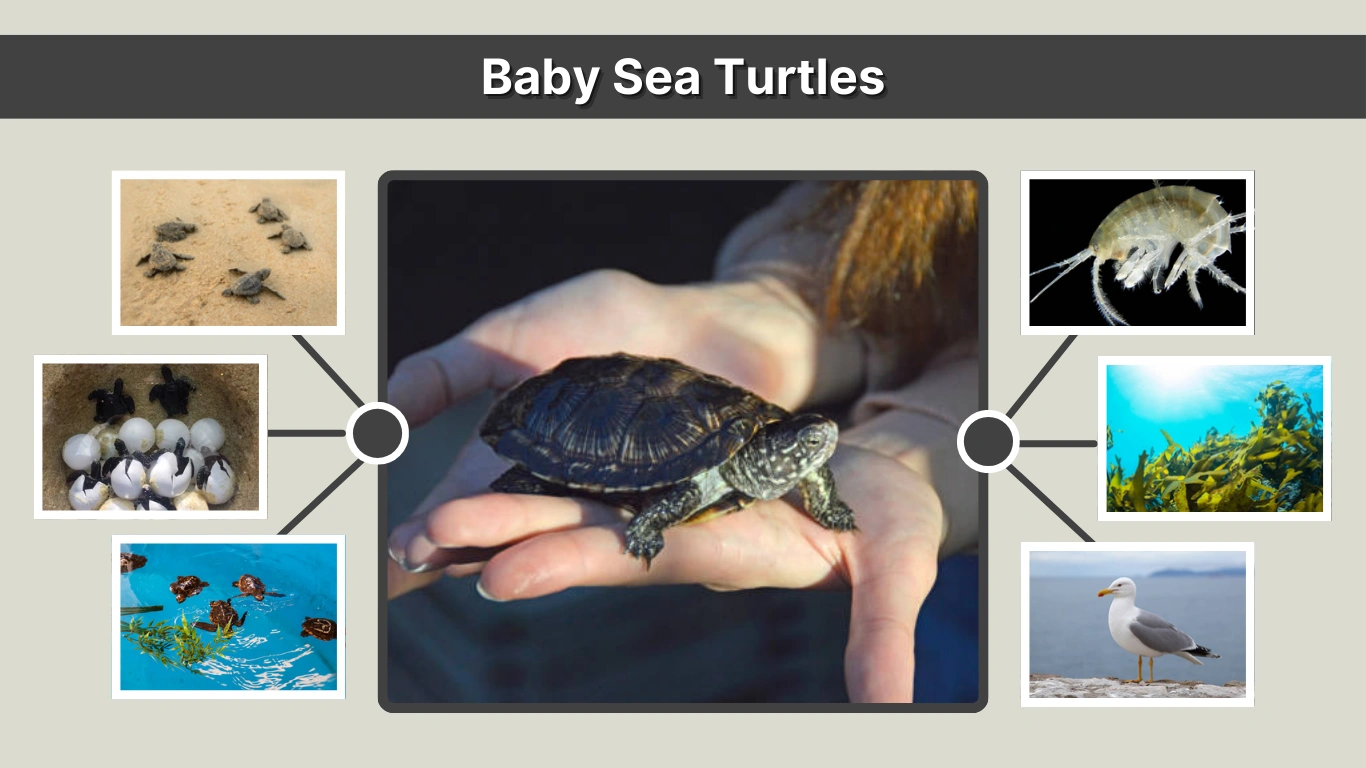
Baby sea turtles, also known as hatchlings, are among the most vulnerable and remarkable creatures in the ocean. Their journey from nest to sea is one of the most dramatic migrations in nature. Born tiny, fragile, and guided by instinct alone, they face enormous challenges during their first hours, days, and weeks of life. This guide explores how they hatch, how they navigate to the ocean, what they eat, how big they are, and why so few survive to adulthood.
How to Identify Baby Sea Turtles
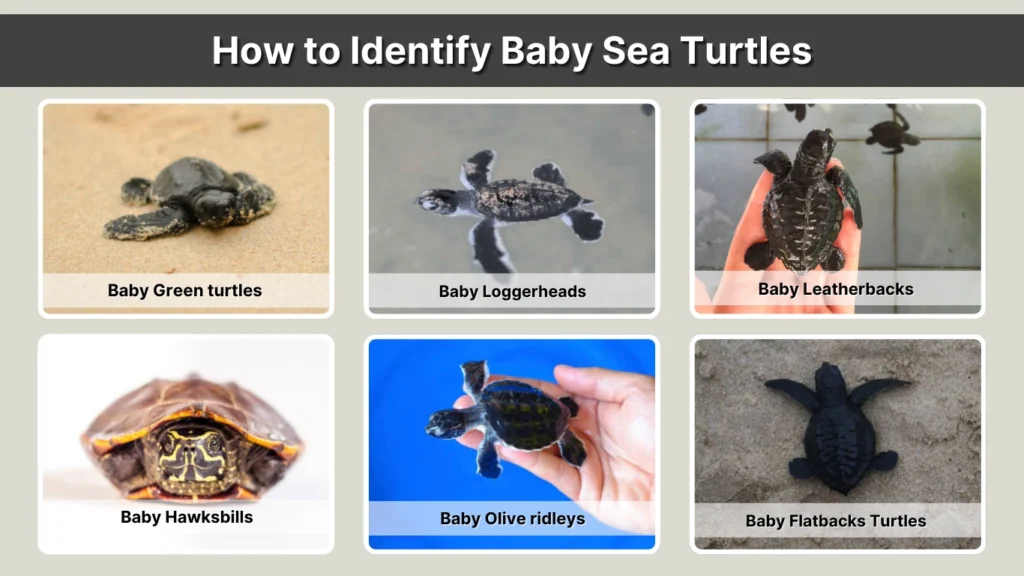
Different species of sea turtles can look surprisingly distinct even at the baby stage. While all hatchlings share a generally dark body with flippers suited for swimming, their shells, heads, and colors vary.
Identification Features
- Green turtles often have a dark, rounder shell and long front flippers.
- Loggerheads have noticeably larger heads, even as newborns.
- Leatherbacks lack hard shells; instead, they have a soft, rubbery back with white speckles.
- Hawksbills show early hints of their iconic amber-patterned scales.
- Olive ridleys and Kemp’s ridleys are smaller and lighter in weight than most other species.
- Flatbacks, found only in Australia, have pale hatchlings with unique flattened shells.
Rare exceptions like albino hatchlings stand out for their bright white or pale pink color. These individuals usually have a much lower survival rate due to their visibility and sensitivity to sunlight.
How Baby Sea Turtles Hatch
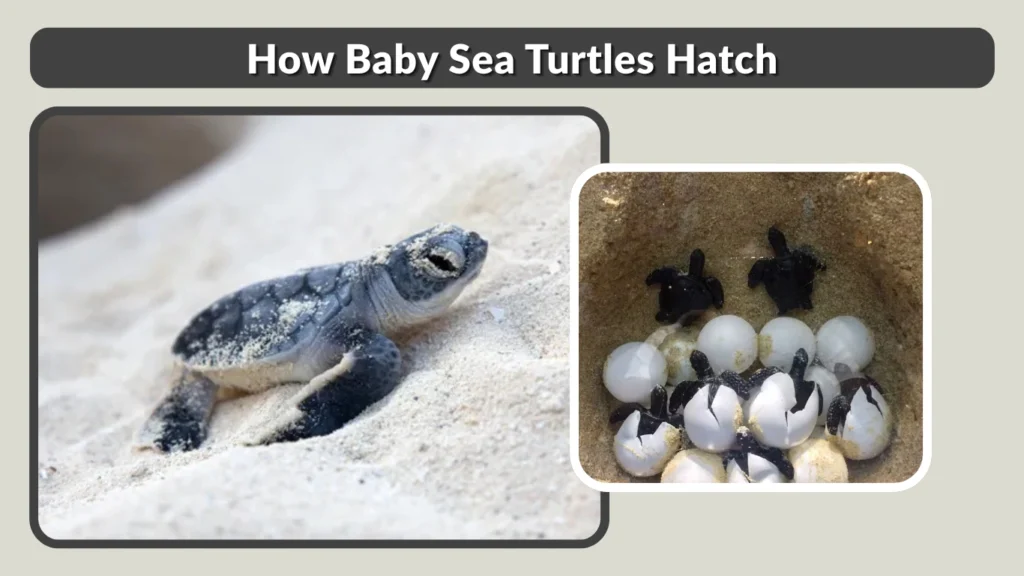
The journey begins in a nest dug by the mother turtle several weeks earlier. She covers her eggs with sand, disguises the nest, and returns to the sea—her part in parenthood now complete. Inside the nest, the eggs incubate for about two months, their development influenced by the surrounding sand temperature.
When it’s time to hatch, the babies work together. Using a combination of movement and synchronized effort, they break through their eggs and slowly climb upward through the sand. This can take several days, as the group clears a pathway to the surface.
When Hatching Happens
- Many hatchings take place at night when temperatures are cooler.
- Beaches like those in Florida have defined seasons when nesting and hatching peak.
- Daytime hatching is less common but can occur, especially in certain species.
Once they reach the surface, the hatchlings rest briefly—and then begins the most dangerous part of their early life.
The Journey to the Ocean
When baby sea turtles emerge from the sand, they immediately look for the brightest horizon, which under natural conditions is the reflection of the moon and starlight on the water. This instinct guides them straight to the sea.
As they crawl, predators such as birds, crabs, and mammals wait for the opportunity to feed. This is why the rush to the ocean is so frantic—every second counts.
Why Light Matters
Artificial lighting along coastlines can confuse hatchlings, drawing them inland instead of toward the sea. Misguided hatchlings may wander streets, fall prey to predators, dehydrate in the sun, or die from exhaustion. Many conservation programs now enforce lighting laws to protect these vulnerable newborns.
Entering the Waves
Once the hatchlings reach the surf, they dive under the first breaking wave and begin swimming with impressive determination. Despite their size, they can propel themselves far offshore using rapid “swimming frenzy” movements that last for hours.
Early Life in the Open Ocean
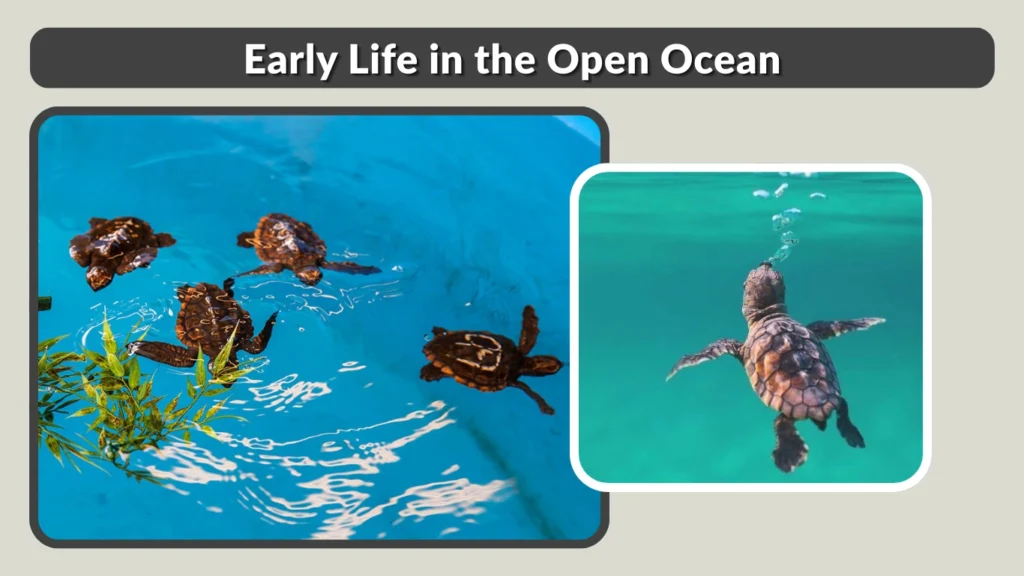
After reaching the first offshore currents, hatchlings enter a life stage often called the “lost years,” because they drift far from land and are rarely seen. During this period, they take refuge in floating seaweed mats or debris, which offer both food and camouflage.
Life in the open ocean is filled with danger. Predatory fish, larger marine animals, and unforgiving currents all threaten survival. Yet these floating havens help the babies grow more quickly while avoiding many of the predators that roam near the coast.
Survival Odds
Only a tiny fraction—often estimated as 1 in 1,000—survives to adulthood. Natural predators, storms, disease, and human-induced threats all contribute to these low survival rates.
But for those that do make it, the open ocean becomes home for several years until they mature enough to migrate back toward coastal feeding grounds.
What Baby Sea Turtles Eat
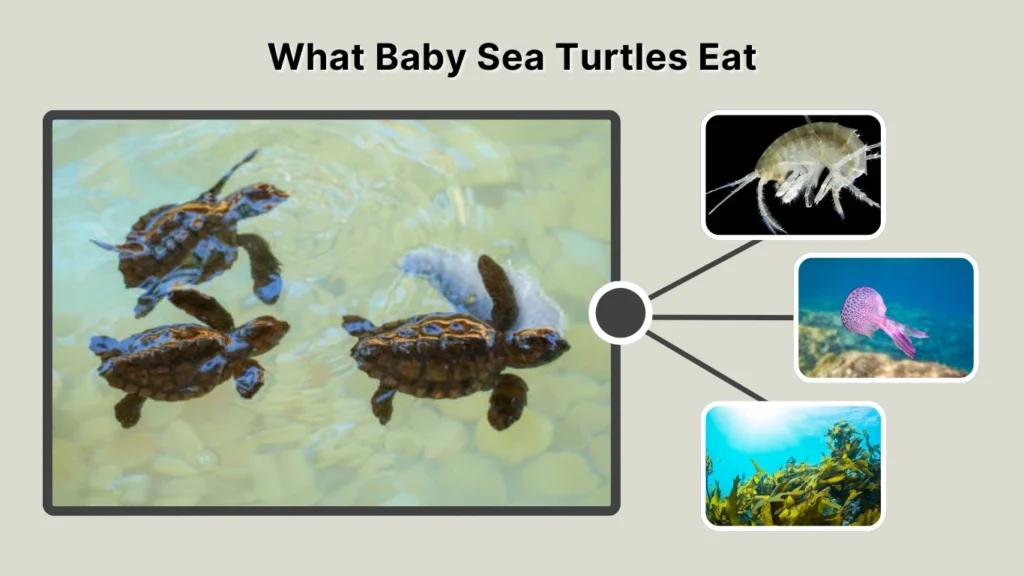
Hatchlings begin feeding soon after entering the ocean. Their diet varies by species, but most eat whatever small prey or floating food they encounter.
Common Baby Sea Turtle Foods
- Small crustaceans
- Jellyfish
- Algae and seaweed
- Sponge fragments
- Plankton
- Small invertebrates
Some species start off as omnivores and shift diets as they grow. For example, green turtles primarily eat plants as adults, but their babies consume both plants and animals. Leatherbacks, even at a young age, show a preference for soft-bodied prey such as jellyfish.
Size and Weight of Baby Sea Turtles
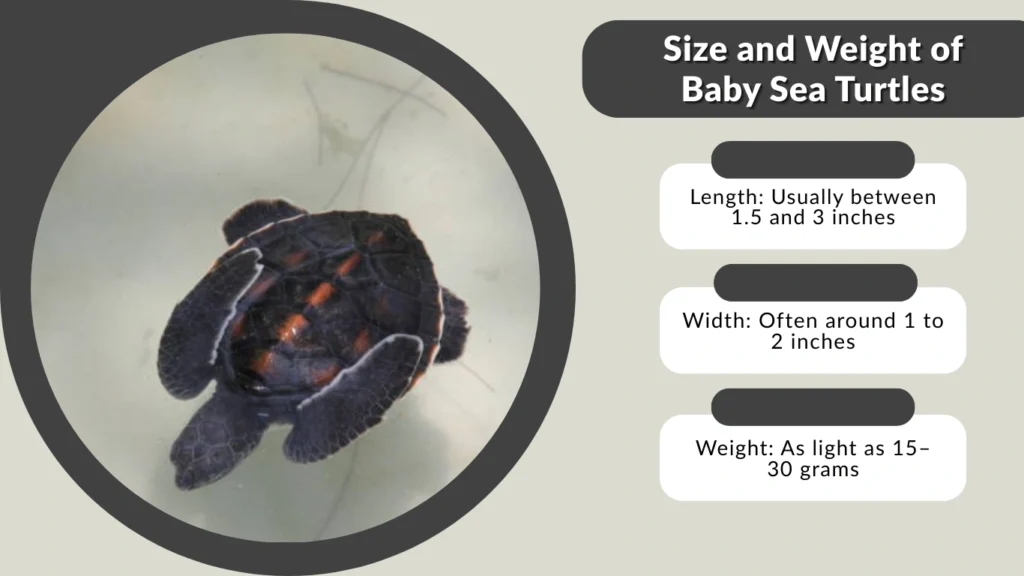
Baby sea turtles hatch remarkably small, especially considering the size they may eventually reach as adults. Hatchling size depends heavily on the species, nest temperature, and genetics.
Typical Measurements
- Length: Usually between 1.5 and 3 inches
- Width: Often around 1 to 2 inches
- Weight: As light as 15–30 grams, depending on species
Leatherback hatchlings, despite having soft shells, are often among the largest at birth. Kemp’s ridleys and olive ridleys tend to be the smallest, making them more vulnerable to predators early on.
Behaviors and Instincts
Even before emerging from the nest, baby sea turtles are programmed with instinctual behaviors designed to increase their chances of survival.
Instinctual Traits
- Light orientation: Strong attraction to the lighter horizon, typically the moonlit ocean.
- Magnetic navigation: Built-in ability to sense Earth’s magnetic fields.
- Swimming frenzy: A rapid burst of nonstop swimming during the first 24–48 hours.
- Crawling requirement: Crawling across sand before reaching water helps develop muscles for swimming.
These instincts evolve over millions of years and are critical to survival during the earliest stages of life.
Predators of Baby Sea Turtles
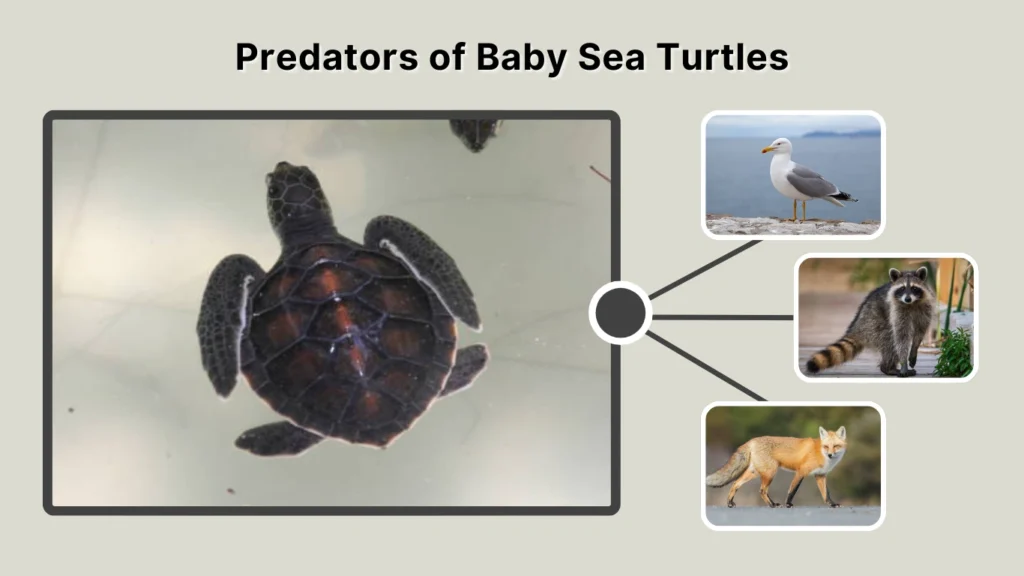
The greatest threat to hatchlings is predation, both on the beach and in the water. Their small size, slow speed on land, and lack of defense mechanisms make them easy targets.
Common Beach Predators
- Birds such as seagulls and herons
- Crabs and raccoons
- Foxes, coyotes, and stray dogs
- Ghost crabs and other shoreline creatures
Marine Predators
- Large fish
- Sharks
- Sea birds
- Octopuses
In addition to natural threats, human-related challenges like coastal development, boat traffic, and plastic pollution significantly reduce survival rates.
How Many Survive to Adulthood?
Survival rates for baby sea turtles are extraordinarily low. Only a tiny percentage of hatchlings—often estimated as 1 in 1,000—reach adulthood. Some studies suggest survival may be even lower in heavily impacted regions.
Why Survival Rates Are Low
- High predation
- Habitat loss
- Misorientation from artificial lights
- Plastic debris mistaken for food
- Climate change affecting nests
- Fishing gear entanglement
Still, those that survive become resilient adults capable of migrating thousands of miles and returning decades later to their birth beaches.
Human Interaction With Baby Sea Turtles
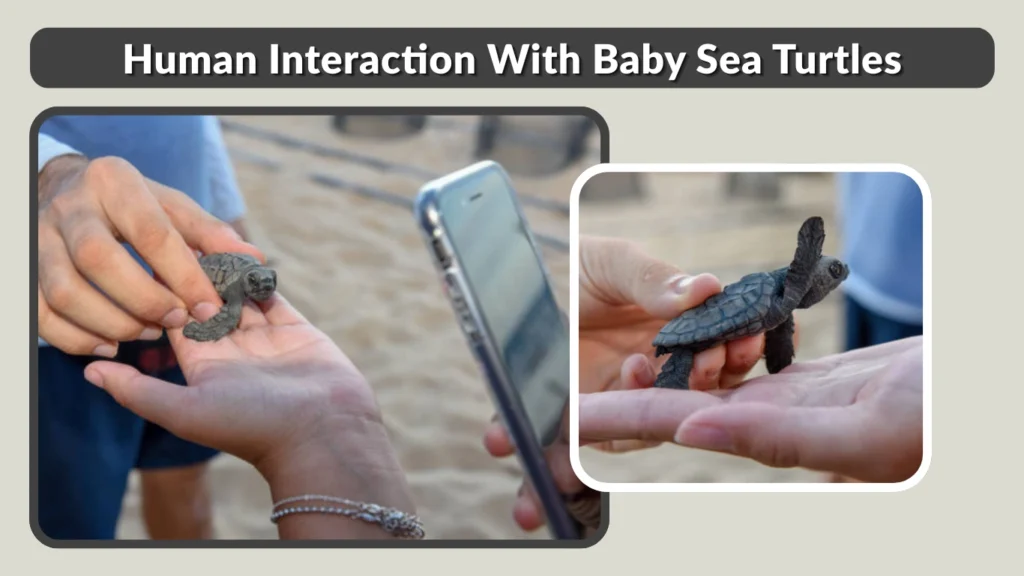
Human involvement with hatchlings has increased over time, ranging from guided releases to rescue programs. While well-intentioned, not all interactions are beneficial.
Guided Releases
In some regions, conservation groups organize supervised release events where visitors can watch hatchlings make their way to the sea. These programs aim to educate and fund conservation, but they must follow strict rules to avoid stressing the babies.
Touching or Helping Hatchlings
Most wildlife authorities advise against handling baby sea turtles unless you are part of a licensed rescue team. Even small disturbances can interfere with their orientation, imprinting process, and ability to crawl properly.
Strandings and Rescue Efforts
Cold weather events, storms, and confusion from city lights often strand hatchlings in states like Texas and Florida. Conservation groups rescue these babies, rehabilitate them, and release them back into the wild once conditions improve.
Where to See Baby Sea Turtles Hatch
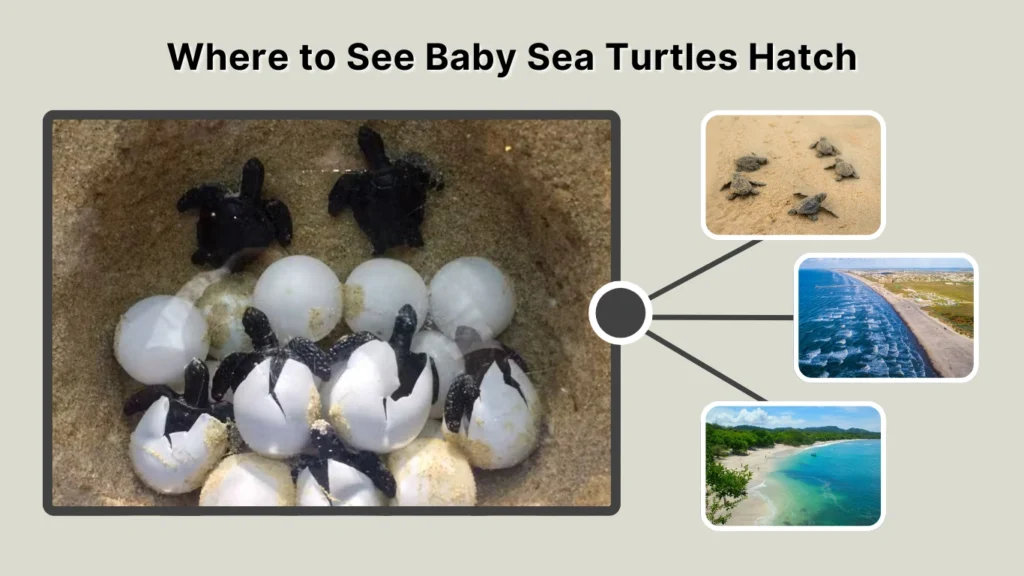
Watching baby sea turtles hatch is considered one of the most magical wildlife experiences. Several regions around the world offer opportunities to witness this natural event.
Popular Locations
- Florida beaches
- Texas Gulf Coast
- Costa Rica’s Pacific shores
- Mexico’s nesting beaches
- Australian flatback nesting sites
Many of these locations operate guided tours that educate visitors about sea turtle protection and responsible observation.
Unusual and Rare Baby Sea Turtles
While most hatchlings develop normally, rare variations do occur.
Unique Cases
- Albino hatchlings: Extremely pale and visually striking, but rarely survive long due to sun sensitivity and lack of camouflage.
- Two-headed turtles: Rare deformities that occur during development.
- Deformed shells: Caused by genetic issues or pressure inside the nest.
- Injured hatchlings: Sometimes treated in rehabilitation centers before release.
Each unusual turtle often becomes a symbol of the fragility of marine life.
Baby Sea Turtles in Art, Crafts, and Culture
Baby sea turtles are beloved symbols in artwork, crafts, and decorative items. Their simple shape and inspiring story make them popular creative subjects.
Common Creative Themes
- Drawings and paintings
- Crochet and knitting patterns
- Baby blankets, nursery décor, and shower curtains
- Jewelry and sculptures of mother-and-baby pairs
- Toys, plush figures, and collectible figurines
- Child-friendly craft kits and worksheets
Their cultural presence helps raise awareness about conservation, even among young children.
Why Baby Sea Turtles Should Not Be Sold
Despite their appeal, baby sea turtles should never be kept as pets or purchased. In many countries, owning sea turtles is illegal without a permit, and the trade harms wild populations.
Ethical and Legal Concerns
- High mortality in captivity
- Difficulty replicating natural environments
- Risk of spreading disease
- Loss of individuals needed in the wild
- Encouragement of illegal wildlife trafficking
Supporting conservation groups or adopting symbolic turtles is a safer and more ethical way to help.
Conservation Efforts Protecting Baby Sea Turtles
Many organizations around the world work tirelessly to protect these fragile creatures. Their efforts include nest monitoring, predator control, beach lighting regulations, and public education programs.
Key Protection Strategies
- Shielding nests with barriers
- Enforcing wildlife protection laws
- Managing artificial lighting on beaches
- Rescuing and rehabilitating stranded hatchlings
- Promoting eco-friendly tourism
- Reducing plastic and pollution in marine environments
These efforts have significantly improved hatchling success rates in many regions.
FAQs
What are baby sea turtles called?
Baby sea turtles are commonly called hatchlings. They earn this name because they begin life by breaking out of buried eggs and emerging from the sand.
When do hatchlings emerge?
Hatchlings typically emerge at night, when temperatures are cooler and predators are fewer. The timing varies by region, but in many tropical places, hatching season peaks in summer months.
How big are they at birth?
Most hatchlings measure only a few inches long and weigh less than 30 grams. Their small size makes them extremely vulnerable, but also surprisingly agile.
What do they eat?
Baby sea turtles feed on small marine organisms such as tiny crustaceans, jellyfish, plankton, algae, and other small invertebrates. Diet varies by species.
Why do they move toward the ocean?
They instinctively follow the brightest horizon, which under natural conditions is the light reflected off the ocean. This behavior helps guide them safely to the water.