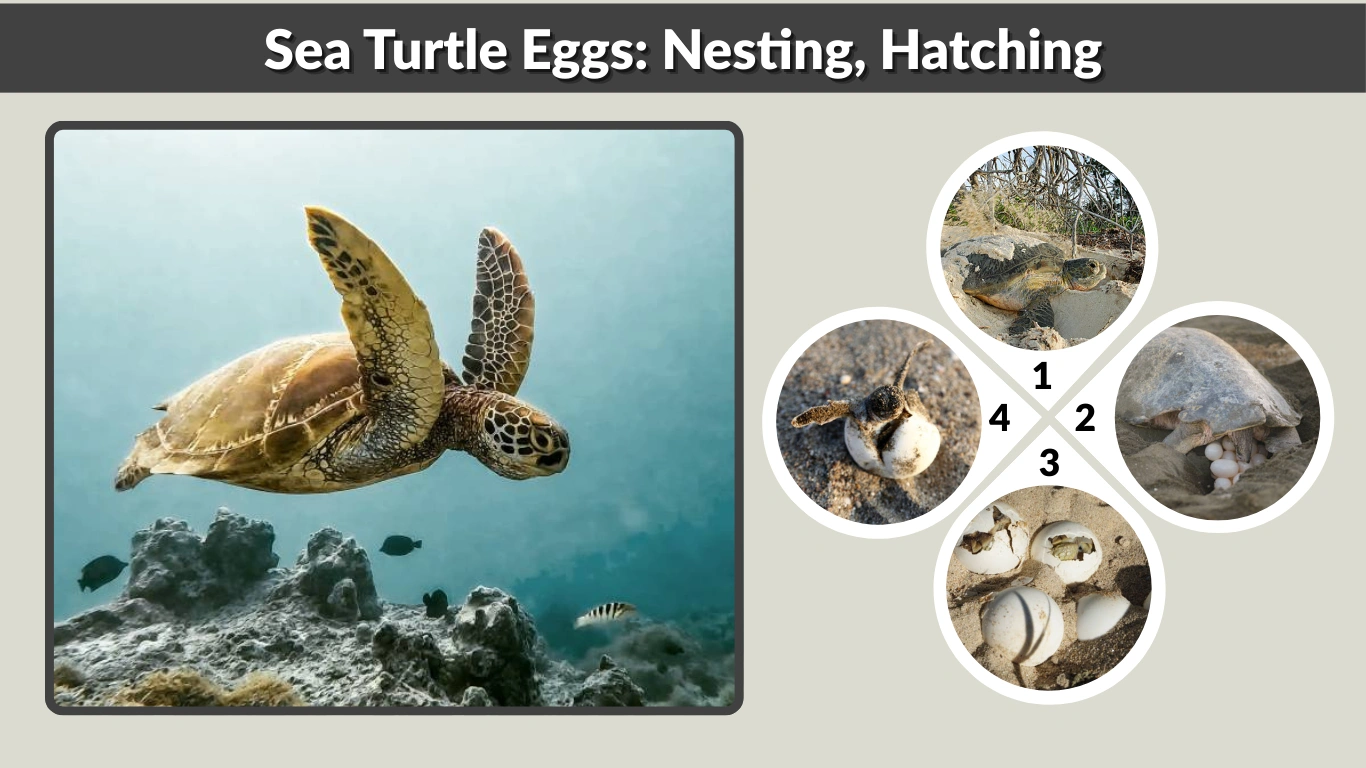
Sea turtle eggs play a crucial role in the survival of these ancient marine reptiles. Each nesting season, millions of eggs are laid on beaches around the world, yet only a tiny fraction of hatchlings survive to adulthood. Understanding where sea turtles nest, how many eggs they lay, how long they take to hatch, and what threatens them helps highlight why conservation efforts matter. This guide covers the basics of sea turtle egg appearance, nesting seasons, hatching timelines, behavior, and species differences.
Identification
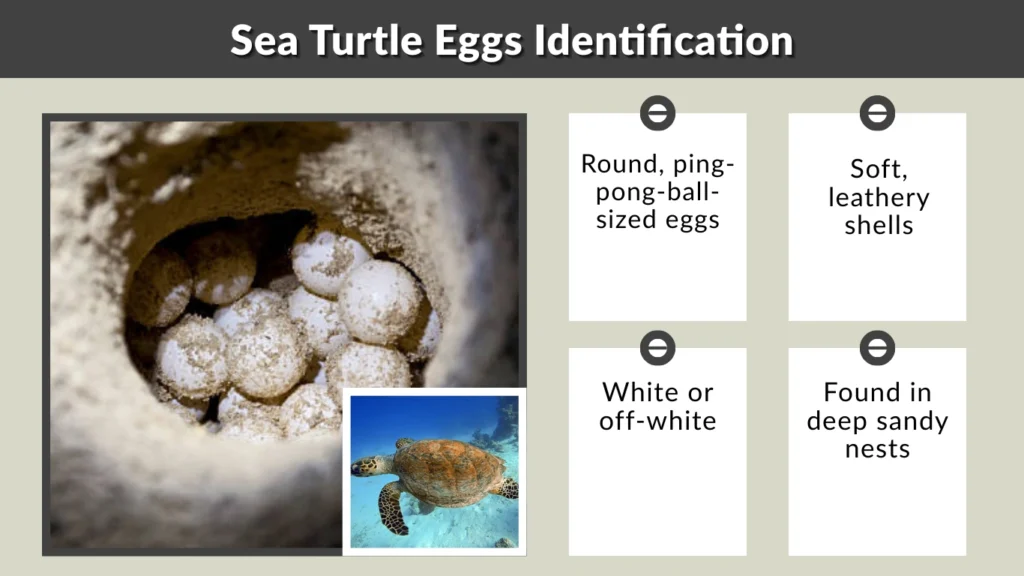
- Round, ping-pong-ball-sized eggs
- Soft, leathery shells
- White or off-white
- Found in deep sandy nests
- Laid in large clusters called clutches
Where Sea Turtles Lay Their Eggs
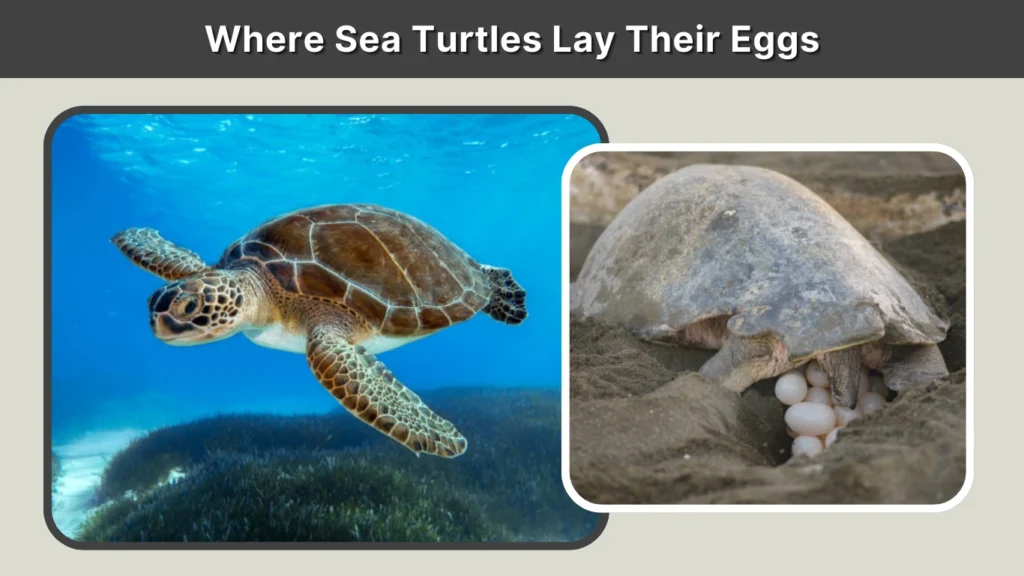
Sea turtles lay their eggs exclusively on land. Although they live almost their entire lives in the ocean, females must come ashore to nest. They choose sandy, quiet beaches—often returning to the same coastline where they were born, a behavior known as natal homing. Warm, subtropical, and tropical beaches make ideal nesting habitats.
Why They Lay Eggs on Land
Sea turtle embryos need oxygen, which diffuses through sand and into the egg. If eggs were laid underwater, embryos would suffocate. Sand also insulates nests, maintaining temperature ranges necessary for development and determining the sex of hatchlings.
Key Nesting Regions
- Florida: One of the world’s largest nesting hotspots for loggerheads, greens, and leatherbacks
- Hawaii: Green sea turtles nest mostly on remote beaches
- North Carolina: Primary habitat for loggerhead nesting
- California: Rare nesting; occasional sightings only
- Costa Rica: Massive arribadas of olive ridleys
- Japan: Traditional nesting areas for loggerheads and greens
When Sea Turtles Lay Eggs
Nesting season varies by region and species. Most sea turtles nest during the warmer months, when sand temperatures support proper embryo development.
Typical Nesting Patterns
- Peak nesting occurs at night, giving females cooler temperatures, reduced predator threat, and higher moisture in the sand.
- Many species show increased nesting activity around new or full moons, though this varies.
Regional Nesting Seasons
- Florida: March through October, depending on species
- Hawaii: Mostly May through September
- North Carolina: Late spring through summer
- Costa Rica: Olive ridley arribadas happen several times a year
Egg-Laying Behavior
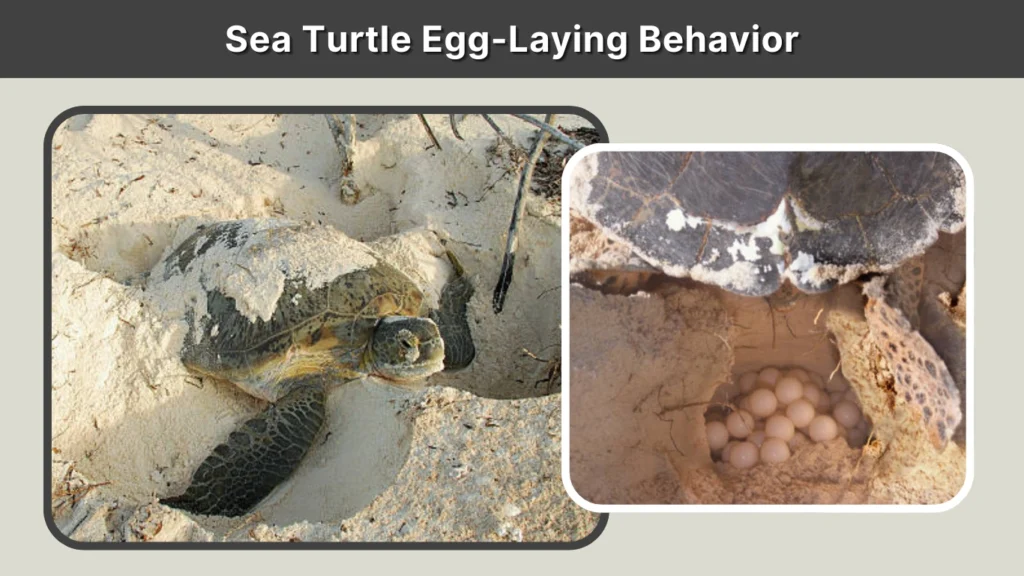
A female sea turtle’s nesting process is complex and precise. She crawls ashore, finds a suitable location above the high-tide line, and begins digging a body pit with her flippers. After creating a chamber, she deposits her eggs.
Key Behaviors
- Time to lay: Usually 20–40 minutes once digging is complete
- Burying: Mothers cover their nests with sand, sometimes creating false body pits to confuse predators
- Leaving the nest: Sea turtles do not stay with or return to their eggs—the hatchlings are entirely independent
- Tears myth: They don’t cry from emotion; fluid simply protects their eyes from salt and sand
Females may nest multiple times in one season, often returning every 2–3 years depending on the species.
How Many Eggs Sea Turtles Lay
Clutch size varies widely, but most sea turtles lay large numbers of eggs to compensate for low survival rates. Species-specific averages include:
- Green sea turtles: About 100 eggs per clutch
- Leatherbacks: Around 80 eggs, with some smaller “yolkless” eggs mixed in
- Hawksbills: Typically 120–140 eggs
- Loggerheads: About 100–120 eggs
Many females produce 3–10 clutches per season, resulting in hundreds of eggs before they return to the sea.
Sea Turtle Egg Incubation
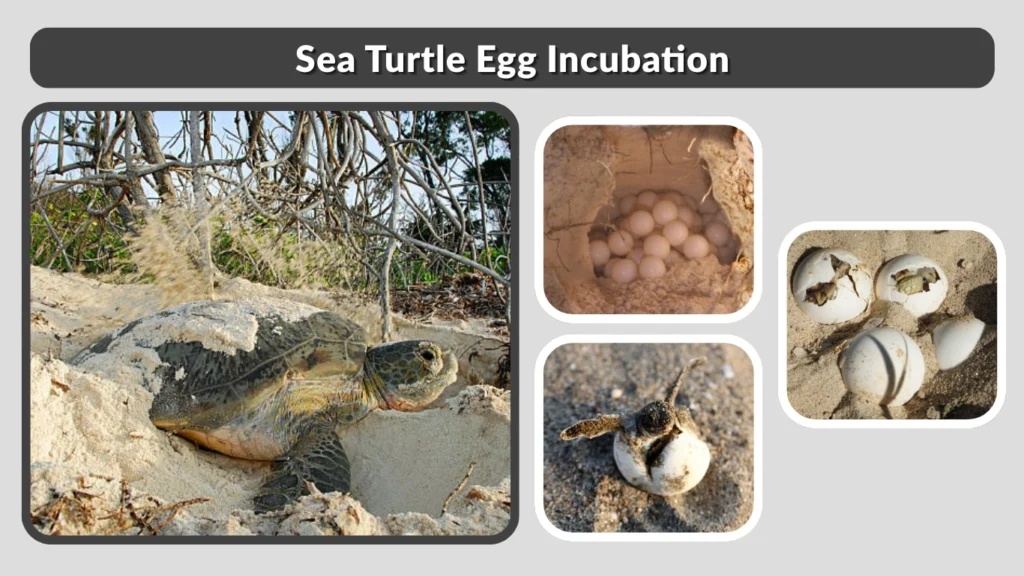
Once laid, sea turtle eggs begin a sensitive incubation period that lasts several weeks. Unlike mammals, turtles rely entirely on environmental conditions—especially sand temperature—to determine their embryos’ development speed and even the sex of the hatchlings. Warmer sand generally produces more females, while cooler sand produces more males.
Incubation Time
Most sea turtle eggs take 45 to 70 days to hatch, though factors such as rainfall, nest depth, shade, and local climate can shorten or extend this period. Leatherbacks often have slightly longer incubation times, while smaller species may hatch a bit sooner. During this stage, eggs must remain undisturbed because vibrations or trauma can disrupt embryo development.
Nest Conditions That Affect Hatching
- Temperature: Controls sex ratio and speed of growth
- Moisture: Too much rain can drown eggs; too little may dry them
- Sand quality: Fine sand retains heat well, while coarse sand cools faster
- Predators: Raccoons, crabs, dogs, and birds can dig up nests
The Hatching Process
When development is complete, hatchlings begin breaking free from their shells. They use a small temporary tooth called a caruncle to crack the soft shell. Hatching often occurs in groups that coordinate movement to push upward through the sand.
How Hatchlings Reach the Surface
After all hatchlings emerge from their shells, they rest inside the chamber to absorb remaining yolk. Then they climb toward the surface in a synchronized effort known as a “boil”, where dozens of tiny turtles burst from the sand at once. This usually happens at night, when temperatures are cooler and predators are less active.
The hatchlings use natural light reflections from the ocean to orient themselves. Artificial lighting, however, can cause disorientation, leading them inland instead of toward the water.
Threats to Sea Turtle Eggs
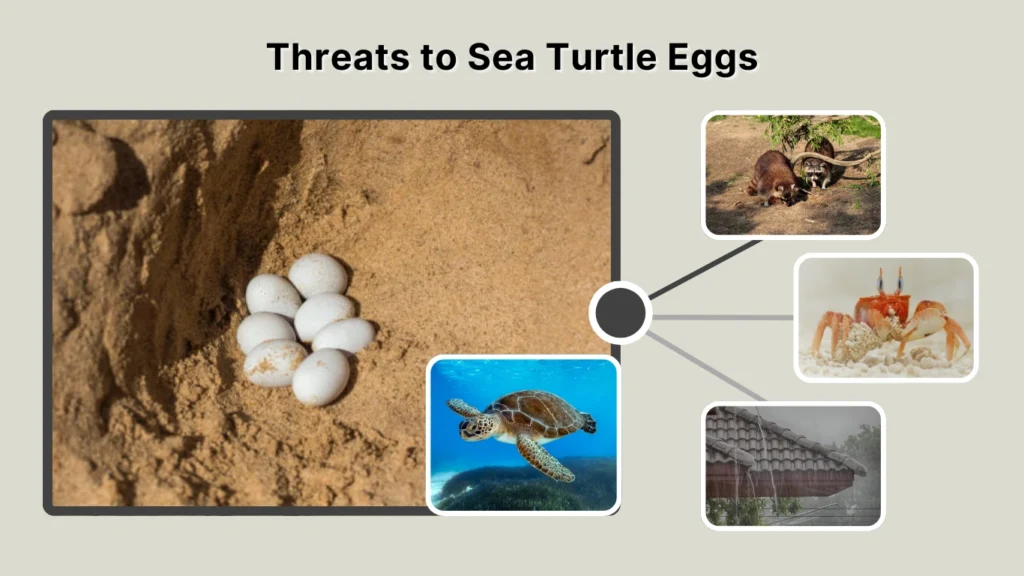
Sea turtle eggs face many dangers both natural and human-caused. Even with the mother’s efforts to hide the nest, predators often find eggs before they hatch.
Natural Threats
- Raccoons and foxes digging up nests
- Ghost crabs and birds preying on hatchlings
- Heavy rains collapsing nest chambers
- Extreme temperatures causing embryo death
Human-Related Threats
Human activity is the biggest threat to sea turtle egg survival. Beach development reduces nesting habitats, while bright artificial lighting disorients hatchlings. Beach driving compacts sand and can crush nests, and illegal harvesting of eggs remains a problem in several regions.
Legal Protection
In many countries—including the United States—sea turtle eggs are protected under federal and state laws. Destroying or disturbing a nest can result in significant penalties, including heavy fines. These protections are crucial because only about 1 in 1,000 hatchlings survive to adulthood.
Species-Specific Egg Differences
Green Sea Turtle Eggs
Green turtles typically lay large clutches with round, white eggs. They favor sandy, open beaches and return to nest every two to four years.
Leatherback Sea Turtle Eggs
Leatherbacks lay slightly fewer eggs per clutch and sometimes include “yolkless” eggs. Their nests are deeper, and incubation periods may be longer than other species.
Hawksbill Sea Turtle Eggs
Hawksbills often nest in more concealed or vegetated beach areas, and their clutches tend to contain some of the highest egg counts.
Transporting Sea Turtle Eggs
Conservationists sometimes relocate nests when they are in danger from erosion, flooding, or human activity. Transport is done carefully: eggs are lifted in the exact orientation they were found, placed in a padded container, and moved to a safer hatchery or higher beach area. Turning the eggs can damage embryos, so professionals follow strict guidelines for relocation.
Sea Turtle Eggs in Minecraft
Minecraft players encounter a simplified version of turtle nesting. Sea turtle eggs are found on beaches and can be collected only with Silk Touch. They must be placed on sand to hatch and will eventually crack and break open after several in-game days.
Minecraft Hatching Basics
- Eggs hatch faster at night
- Multiple eggs can be placed together
- Zombies, skeletons, and other mobs will try to trample eggs
- Hatchlings always return to their home beach as adults
Players can breed turtles with seagrass, prompting one turtle to dig a nest and lay eggs just like real turtles.
Conservation & Protection
Protecting sea turtle eggs is essential for the survival of all sea turtle species. Conservation groups monitor beaches, relocate nests when needed, implement lighting ordinances, and educate tourists on how to watch nesting turtles responsibly.
Best Practices for Observers
- Stay behind the turtle and remain quiet
- Avoid using flashlights or camera flashes
- Do not disturb nests or hatchlings
- Follow local wildlife guidelines
FAQs
1. How many eggs do sea turtles lay at one time?
Most sea turtles lay between 80 and 120 eggs per clutch, depending on species. Hawksbills often lay the most, while leatherbacks lay slightly fewer but may produce more clutches each season. A single female can lay several clutches in one nesting season, producing hundreds of eggs in total.
2. How long do sea turtle eggs take to hatch?
Sea turtle eggs typically hatch in 45 to 70 days, though temperature, rainfall, and sand quality can influence the incubation time. Warmer nests hatch sooner, while cooler nests take longer. Leatherbacks may require more time due to deeper nests and slower embryo development.
3. Do sea turtles return to where they were born to lay eggs?
Yes. Female sea turtles often display natal homing, returning to the same region, and sometimes the same beach, where they hatched. Researchers believe they navigate using the Earth’s magnetic field, which imprints on them as hatchlings and helps guide them decades later.
4. When do sea turtles lay eggs in Florida?
In Florida, nesting season generally runs from March through October, with variations among species. Loggerheads peak between May and August, greens typically nest in midsummer, and leatherbacks may begin nesting earlier in the spring. Florida hosts some of the highest nesting densities in the world.
5. Why do sea turtles lay eggs on land instead of in the water?
Sea turtles must lay eggs on land because embryos require oxygen supplied through sand, and eggs would suffocate underwater. Sand also provides insulation, helps regulate temperature, and allows hatchlings to emerge together. This terrestrial strategy is a survival trait that has remained unchanged for millions of years.