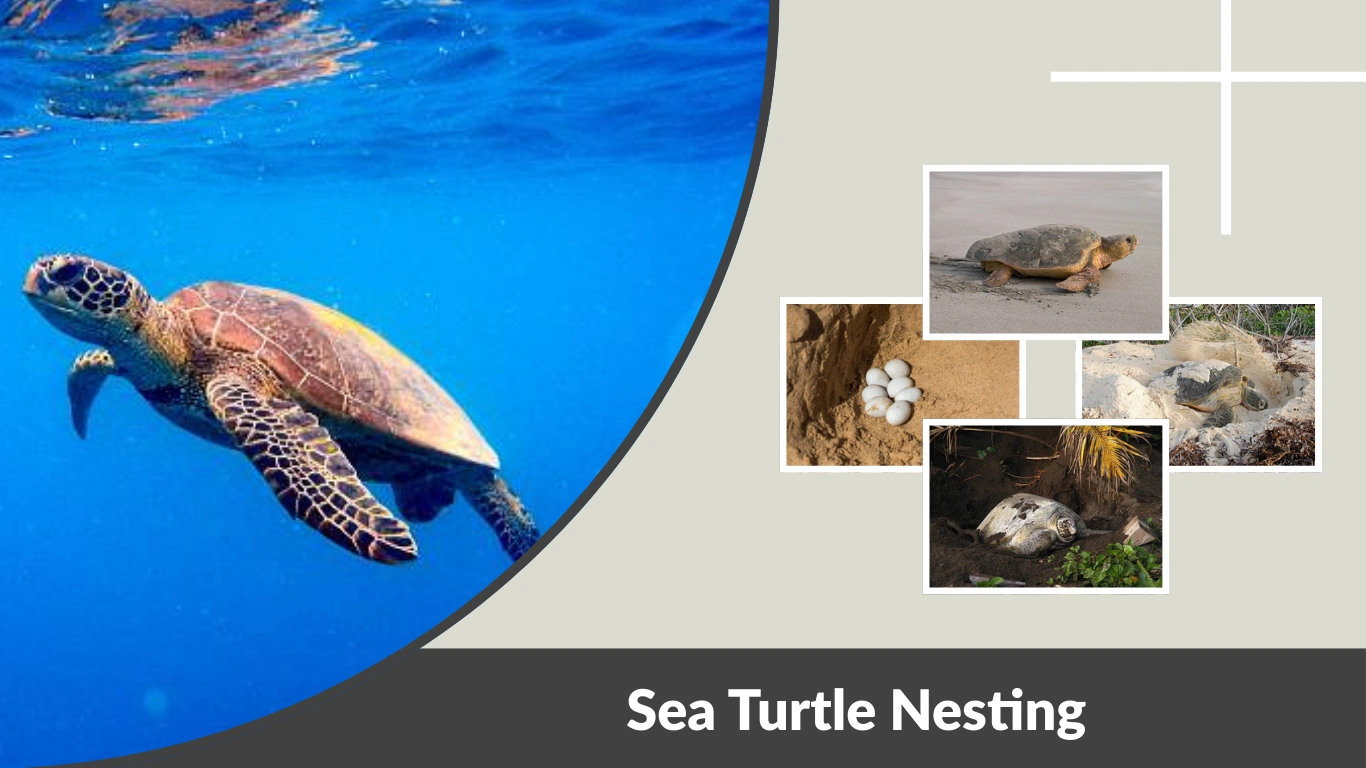
Sea turtle nesting is one of the most remarkable wildlife events on Earth. Every year, female sea turtles return to sandy beaches—often the very ones where they were born—to lay eggs that will eventually become the next generation of hatchlings. This guide explains when and where sea turtles nest, what nests look like, how nesting seasons vary by species and region, and how conservation programs protect vulnerable eggs and hatchlings.
Where Do Sea Turtles Nest?
Sea turtles nest on tropical and subtropical beaches around the world. Major nesting regions include the southeastern United States, the Caribbean, Central America, South America, West Africa, Southeast Asia, Australia, and remote islands throughout the Pacific and Indian Oceans.
While nesting ranges differ by species, all sea turtles rely on sandy shorelines with minimal disturbance, proper sand temperature, and clear access to the ocean. Many countries maintain marine protected areas to safeguard critical nesting habitat, such as those in East Kalimantan, Indonesia, where conservation efforts help protect endangered populations.
Global Sea Turtle Nesting Seasons
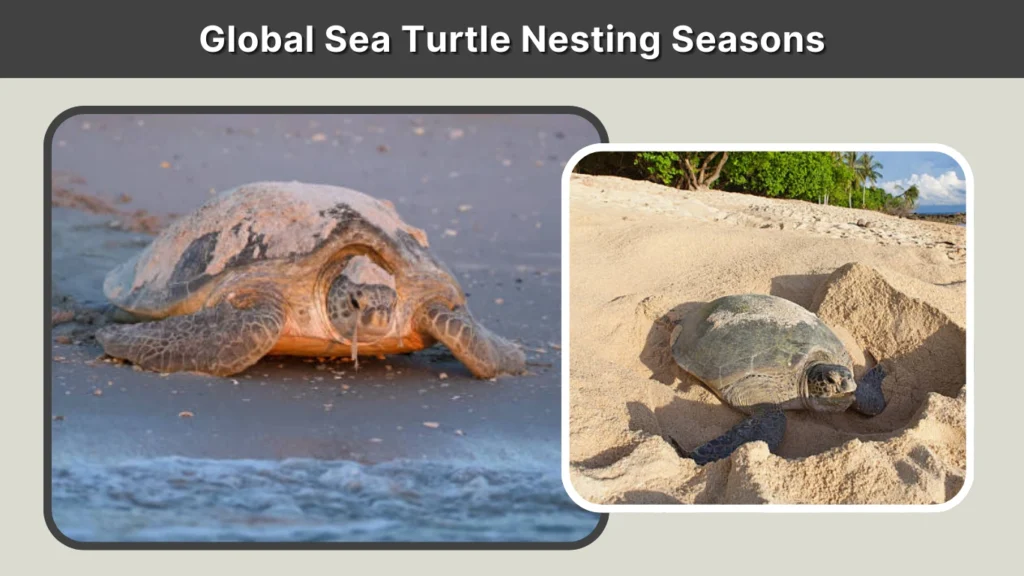
Worldwide Nesting Timing
Sea turtles typically nest between March and October, though timing varies by region and species. In warm climates closer to the equator, nesting may occur nearly year-round, while temperate zones have distinct summer seasons. A full nesting cycle—from laying to hatching—usually spans 50 to 70 days.
Many species follow similar patterns: they come ashore at night, dig a nest, and lay eggs several times per season. Individual females may deposit 2–8 nests per year but only nest every 2–3 years.
Species-Specific Nesting Seasons
Loggerhead Turtles
Nesting peaks in late spring and early summer. In the United States, May through August is the prime season, especially along Florida’s Atlantic coast.
Green Sea Turtles
Green turtles nest slightly later, often beginning in June and continuing through September. Their major nesting grounds span Florida, Hawaii, the Caribbean, and Australia.
Leatherback Turtles
Leatherbacks begin nesting earlier than other species, sometimes as early as February. Their season continues into late summer, particularly in Florida, Costa Rica, and Trinidad.
Hawksbill Turtles
Hawksbills often nest year-round in equatorial regions, with peaks varying by hemisphere. They prefer secluded beaches near coral reefs.
Olive Ridley Turtles
Known for synchronized mass nestings (arribadas), olive ridleys typically nest from July to December in places like Costa Rica and Mexico.
Kemp’s Ridley Turtles
The rarest sea turtle species nests primarily in Mexico’s Rancho Nuevo, with a season from April to July and smaller numbers in the U.S. Gulf Coast.
Flatback Turtles
Australia’s flatback turtles nest between October and March on remote northern beaches.
Sea Turtle Nesting in Florida
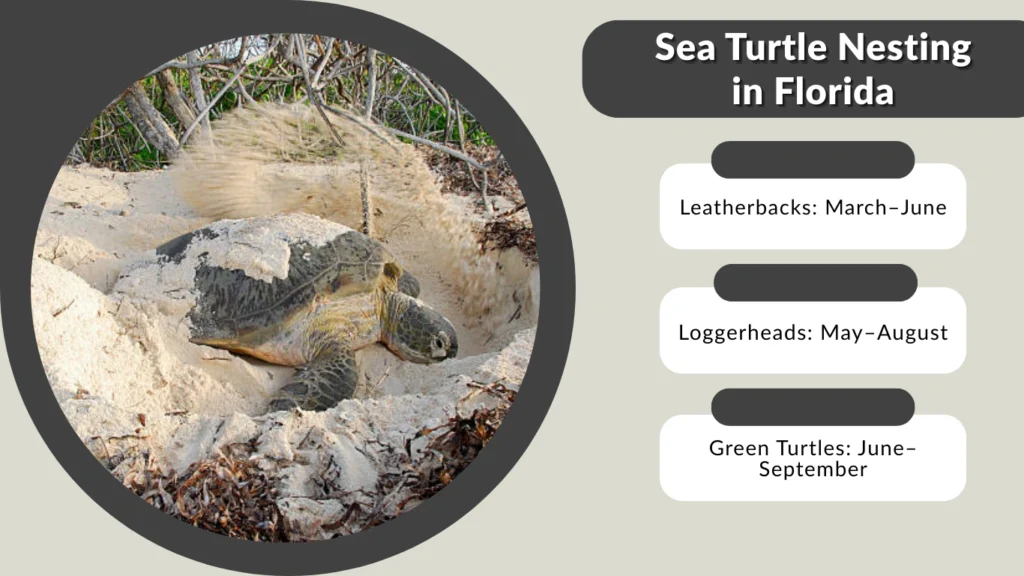
Florida is the most important sea turtle nesting region in the United States, responsible for the majority of loggerhead nests in the entire western Atlantic. The official Florida sea turtle nesting season runs from March 1 to October 31, with exact timing depending on local conditions and species patterns.
Florida Nesting Peaks
- Leatherbacks: March–June
- Loggerheads: May–August
- Green Turtles: June–September
These cycles apply consistently across recent years, including 2024 and 2025, with seasonal variations depending on water temperature and weather patterns.
Major Nesting Areas in Florida
Florida’s primary nesting zones include:
- The Atlantic coastline from Melbourne to Boca Raton
- The Gulf Coast, including Pinellas County
- The Florida Keys
- Barrier islands like Anna Maria Island
Many beaches are patrolled by volunteers and researchers who mark nests, collect data, and monitor for disturbances.
Nesting Seasons in the U.S. Southeast
Outside Florida, sea turtle nesting occurs in several key states along the Atlantic and Gulf Coast. North Carolina sees significant loggerhead activity between May and September, especially in the Outer Banks, where tropical storms like Hurricane Erin once destroyed many nests. South Carolina’s Hilton Head and Isle of Palms are also important nesting beaches. Georgia’s Jekyll Island is known for strong loggerhead nesting numbers, while Alabama hosts smaller but growing populations.
Sea Turtle Nesting in Costa Rica
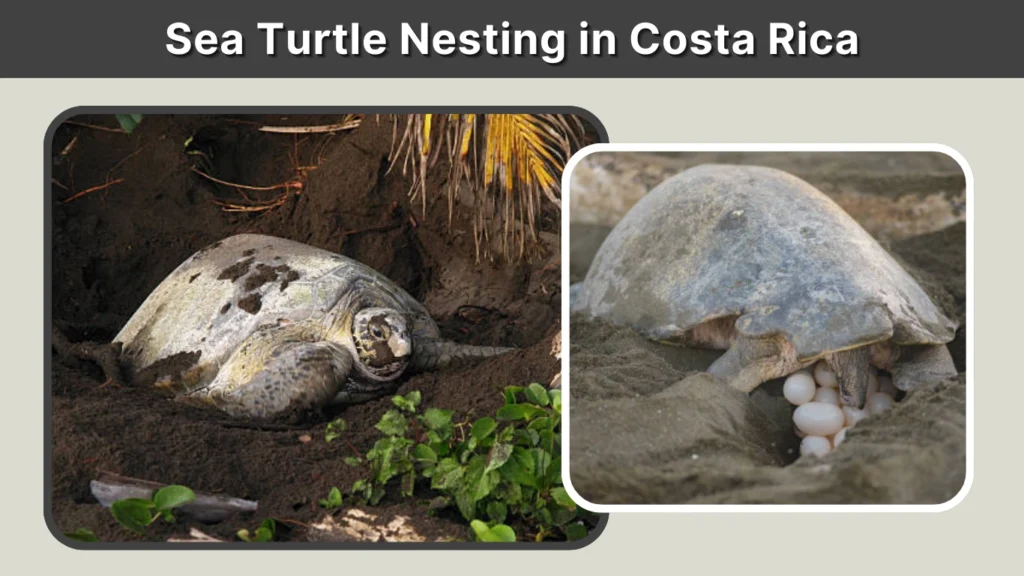
Costa Rica is one of the world’s top sea turtle nesting destinations, home to leatherbacks, greens, hawksbills, and especially the famous olive ridleys. The Pacific coast hosts the extraordinary arribadas, where tens of thousands of olive ridleys come ashore at once to nest. This typically occurs from July to December, with peak months varying slightly by year. Caribbean beaches like Tortuguero are world-renowned green turtle nesting grounds, drawing visitors, conservationists, and scientists from around the globe.
Nesting Sites in East Kalimantan (Indonesia)
East Kalimantan hosts several important marine protected areas dedicated to sea turtle nesting. These beaches support green, hawksbill, and olive ridley turtles, many of which are endangered. Protected areas such as Berau and Derawan Islands are crucial for turtle conservation.
Threats in the region include illegal egg harvesting, fishing activities, coastal development, and pollution. Conservation programs emphasize beach patrols, nest protection, community education, and monitoring hatch success. These efforts help stabilize populations in a region where many nesting sites have been historically threatened.
How Sea Turtles Build Their Nests
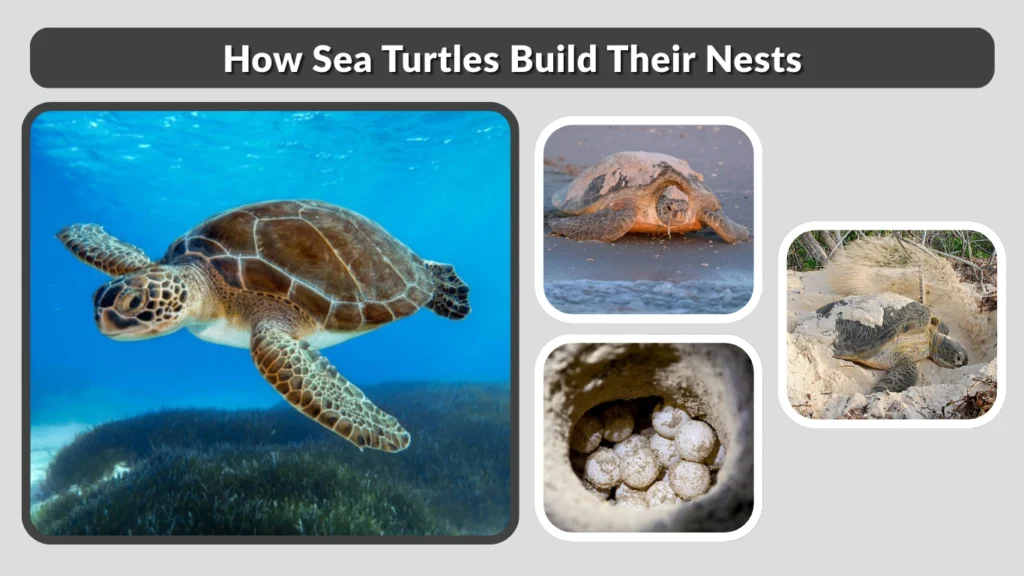
Nesting begins when a female sea turtle crawls above the high-tide line, selects a suitable patch of sand, and starts digging with her rear flippers. First she creates a broad pit called a body pit, followed by a deeper egg chamber shaped like a flask. After depositing her eggs, she carefully covers the chamber with sand and disguises the site with sweeping motions to deter predators.
Sea turtles do not return to check on nests; once the eggs are laid and the area is covered, the female immediately heads back to the ocean. While many turtles show strong natal homing—returning to the region where they hatched—they rarely return to the exact same nest site.
What a Sea Turtle Nest Looks Like
A sea turtle nest is mostly hidden beneath the sand, but there are visible clues. The body pit appears as a shallow, stirred-up patch of sand, often with tracks leading to and from the ocean. These symmetrical flipper marks help experts identify species: for example, leatherbacks leave wide, deep tracks, while loggerheads create narrower trails.
Many monitored beaches use markers such as wooden stakes, yellow tape, and ID tags to protect nests. These markers often include dates, species, and nest numbers. Learning how to read these tags helps beachgoers understand local conservation efforts.
Nest Depth, Size, and Egg Counts
Sea turtle nests vary in depth and size based on species. Loggerheads typically dig 18–24-inch-deep chambers, while leatherbacks—being much larger—often dig nests more than 3 feet deep. The width and shape of the chamber allow the female to deposit her clutch safely and support proper incubation temperatures.
Clutch size also varies widely. Small species like Kemp’s ridley lay around 80–100 eggs, while large species like leatherbacks may lay over 100 eggs per nest. Despite these high numbers, survival rates are low. On average, only 1 in 1,000 hatchlings reaches adulthood, underscoring the importance of nest protection.
Species-Specific Nesting Behavior
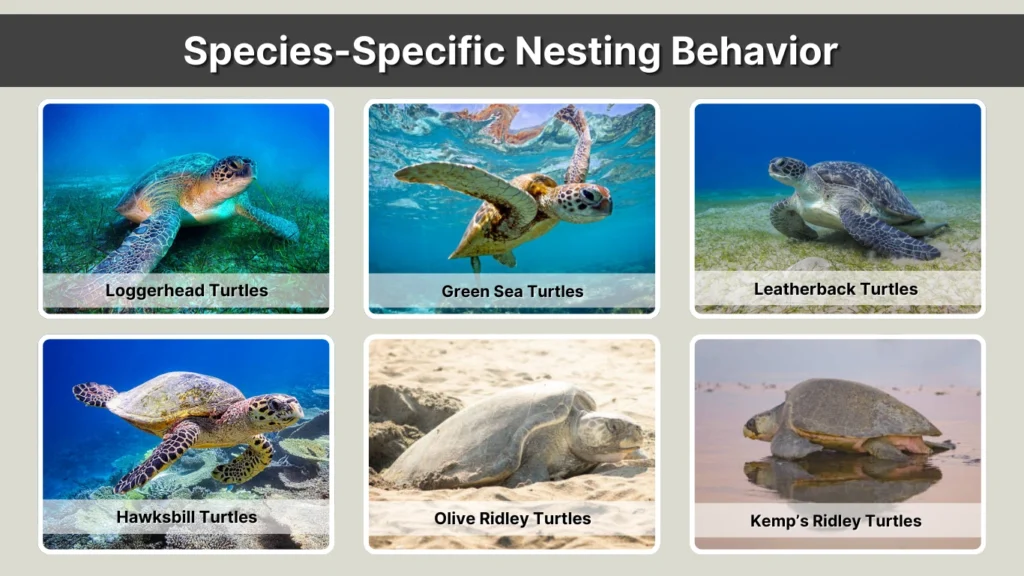
Loggerhead Turtles
Loggerheads are known for their consistent nesting habits throughout the southeastern United States. Their nests are typically shallow, with tight-packed sand and clear crawl patterns.
Green Sea Turtles
Green turtle nesting is often associated with remote, quiet beaches. Their nests are deep and require extensive digging, and females sometimes create false nests to confuse predators.
Leatherback Turtles
Leatherbacks, the largest of all sea turtles, dig extremely deep nests. Their soft-shelled eggs and long incubation periods require minimal disturbance. They often choose steep, open beaches with softer sand.
Hawksbill Turtles
Hawksbills prefer nesting near coral reefs and rocky shores. They dig smaller nests and often nest under vegetation or in secluded coves, making their nests harder to spot.
Olive Ridley Turtles
Olive ridleys are famous for arribadas, mass synchronized nesting events. Their communal nesting strategy overwhelms predators and boosts survival rates.
Kemp’s Ridley Turtles
The rarest sea turtles nest almost exclusively in northeastern Mexico. Intensive conservation programs have helped slowly rebuild their population.
Flatback Turtles
Found only in Australia, flatbacks produce fewer but larger eggs. Their nesting behavior is highly localized and sensitive to disturbances.
Protection, Laws, and Conservation Efforts
Because all sea turtle species are protected under the Endangered Species Act, disturbing a nest is a federal offense in the United States. Many states add additional protections, making it illegal to tamper with eggs, remove markers, or interfere with nesting females. Penalties can include heavy fines and jail time.
Conservation strategies include beach patrols, nest marking, hatchling release programs, and dark-sky lighting rules to prevent disorientation. Reporting nests or sightings to local wildlife agencies helps ensure they are documented and guarded. Volunteers play a vital role in gathering data and keeping beaches safe during peak nesting seasons.
FAQs
1. What does a sea turtle nest look like?
A sea turtle nest looks like a disturbed patch of sand, usually above the high-tide line. You may see a shallow body pit, flipper tracks leading to and from the ocean, and occasionally a marked area if researchers have identified it. The eggs themselves remain buried beneath the surface.
2. How deep is a sea turtle nest?
Most sea turtle nests are 18 to 24 inches deep, though larger species like leatherbacks may dig chambers over three feet deep. Depth is important because it regulates temperature, which determines hatchling sex. Deeper nests also provide better protection from predators and shifting surface sand.
3. When is sea turtle nesting season in Florida?
Florida’s nesting season runs from March 1 through October 31, with different species peaking at different times. Leatherbacks nest first, followed by loggerheads and then green sea turtles. Beaches enforce lighting restrictions and protective measures throughout this period to reduce disturbances and improve hatchling survival.
4. How many eggs are in a sea turtle nest?
A typical sea turtle nest contains 80–120 eggs, depending on species. Smaller turtles like Kemp’s ridley lay fewer eggs, while large species like leatherbacks may lay well over 100. Despite these high numbers, only a tiny fraction of hatchlings survive to adulthood, emphasizing the need for nest protection.
5. What should I do if I find a sea turtle nest?
If you discover a potential nest, keep your distance and avoid stepping on or near it. Do not touch eggs, sand, or markers. Contact local wildlife authorities—such as FWC in Florida—so they can verify and protect the site. Keeping the area dark and quiet also helps reduce disturbance.