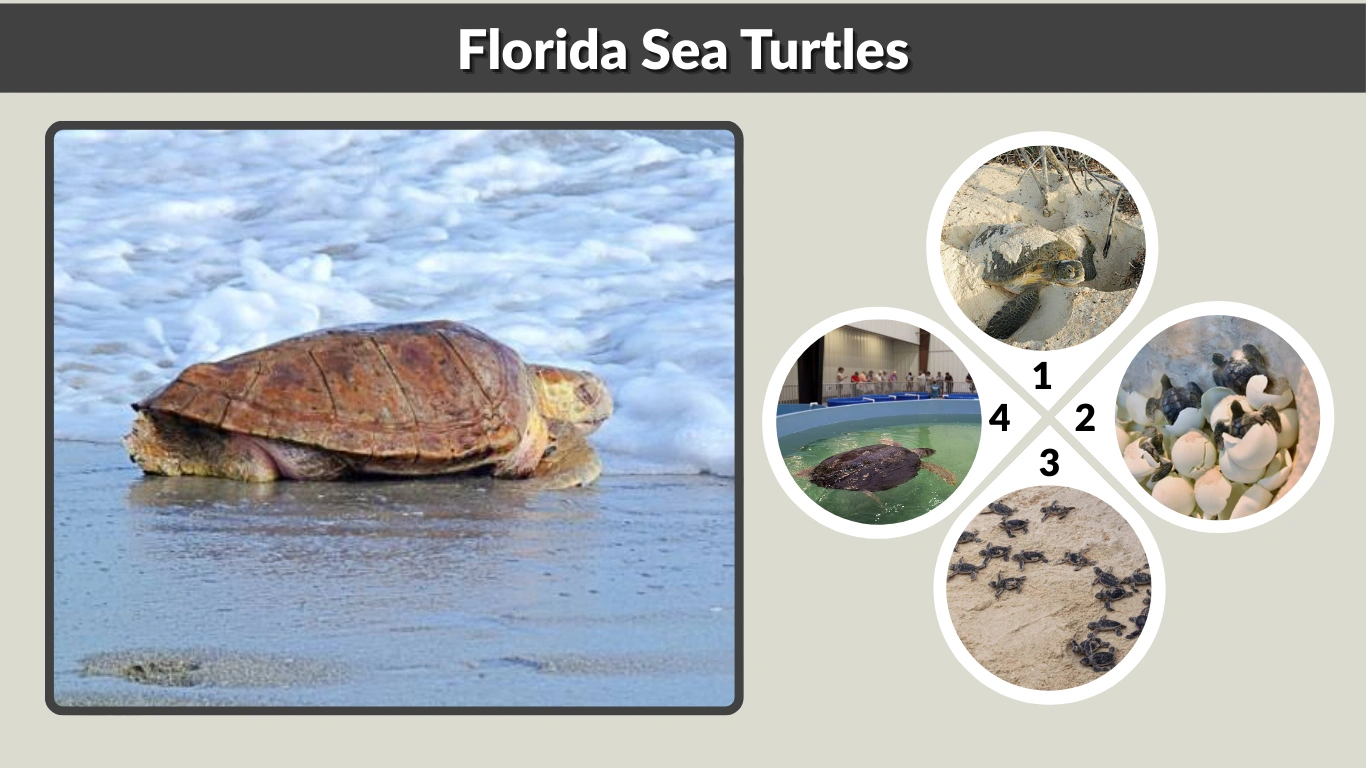
Florida is one of the world’s most important habitats for sea turtles, hosting hundreds of thousands of nests every year along both the Atlantic and Gulf coasts. Several species—including loggerhead, green, leatherback, hawksbill, and Kemp’s ridley turtles—use Florida’s beaches for nesting, hatching, and resting during migration. From the Keys to Pensacola, sea turtle activity is a major seasonal event that attracts visitors, conservation groups, and volunteers eager to witness nesting mothers and tiny hatchlings reaching the ocean.
Sea Turtle Species in Florida
Florida is home to five species of sea turtles, each with unique nesting habits and behaviors.
- Loggerhead Sea Turtle – The most common nester in Florida; responsible for the majority of the state’s nests.
- Green Sea Turtle – Increasing rapidly in numbers; common along the southeast Florida coast and in the Keys.
- Leatherback Sea Turtle – The largest turtle species; nests earlier than others and is seen along the Atlantic coast.
- Kemp’s Ridley Sea Turtle – Rare in Florida but occasionally nests along the Gulf Coast.
- Hawksbill Sea Turtle – Uncommon but seen in the Keys and South Florida waters.
These species rely on dark, quiet beaches, warm waters, and safe coastal ecosystems—making Florida a critical conservation zone.
Sea Turtle Nesting Season in Florida
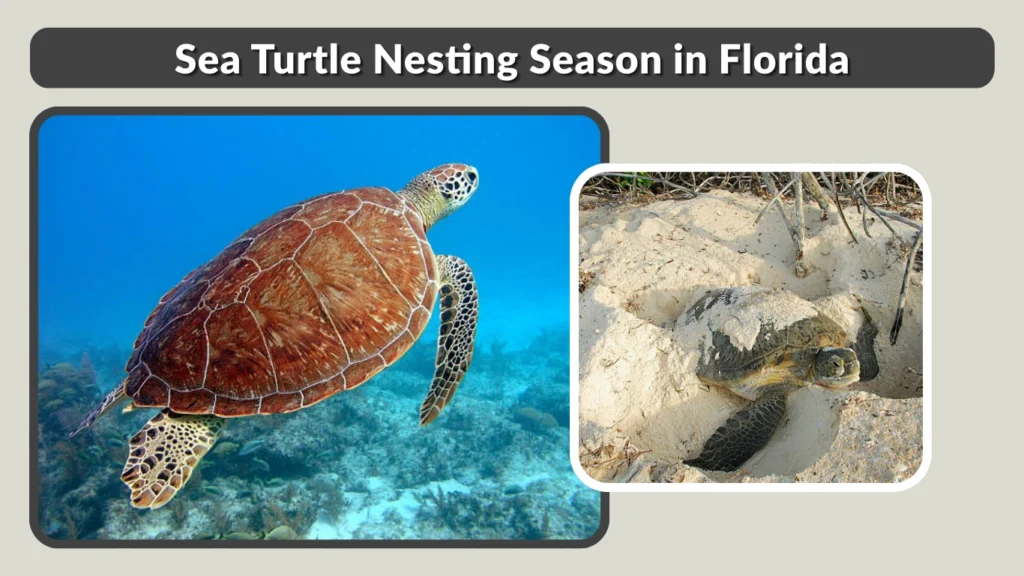
Sea turtle nesting in Florida happens every year from March through October, although exact timing varies by species and region.
General Nesting Window
- Leatherbacks: Late February through June
- Loggerheads: April through September
- Green turtles: June through September
Most nesting occurs during warm summer nights, when female turtles crawl ashore to dig nests, lay eggs, and cover them before returning to the ocean.
Nesting Season 2024 & 2025
Annual dates stay similar each year:
- 2024: March–October
- 2025: March–October
However, temperature, storms, and beach conditions may shift peak nesting activity slightly from year to year.
Where Nesting Happens
- Atlantic Coast beaches (Brevard, Martin, Palm Beach, Volusia) see the highest nesting density.
- The Florida Keys support green and loggerhead nests.
- The Gulf Coast—including Naples, Sanibel, Sarasota, Destin, and Pensacola—experiences steady but lower nesting numbers.
Florida’s nesting maps show concentrations along protected dunes, wildlife refuges, and low-light beaches.
When Do Sea Turtles Lay Eggs in Florida?
Female sea turtles lay eggs mostly at night, avoiding heat and predators. Laying typically occurs 2–5 times per season per female, depending on species and age. Loggerheads tend to nest once every 2–3 years, while greens and leatherbacks follow longer migratory cycles.
Ideal conditions include:
- Warm sand
- Low light
- Minimal human activity
- Calm tides
This behavior explains why nighttime “guided sea turtle walks” are popular in many parts of Florida, especially at Juno Beach, Melbourne Beach, and the Archie Carr National Wildlife Refuge.
Sea Turtle Hatching Season in Florida
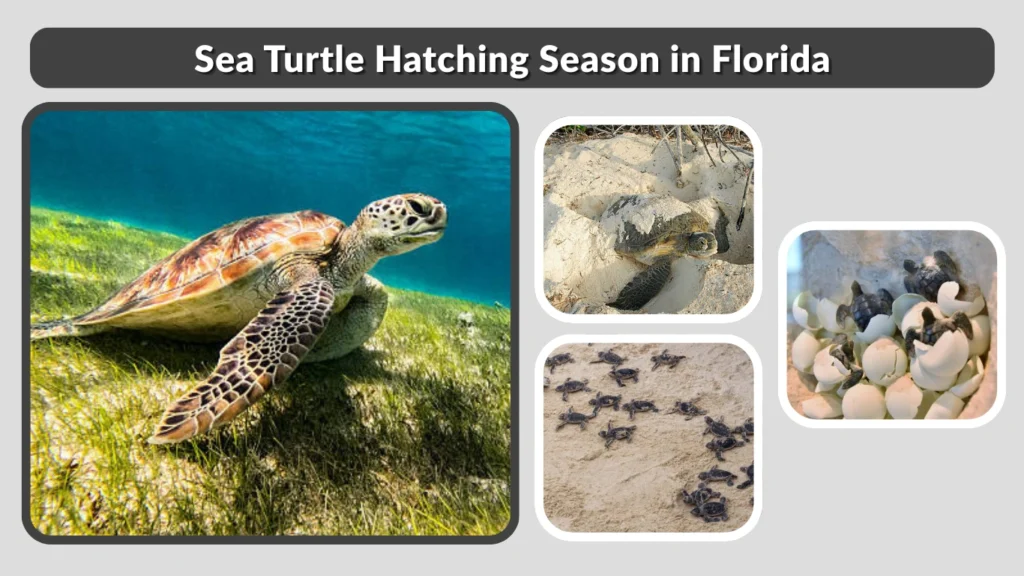
When Do Sea Turtles Hatch?
Sea turtles in Florida generally hatch from June through late October, with the peak between July and September. Hatchlings usually emerge at night when sand cools and predators are less active.
How Hatching Works
- Incubation lasts 45–70 days, depending on species and sand temperature.
- Hatchlings push upward through the sand as a group, creating a “boil” or frenzy at the surface.
- Baby turtles instinctively follow natural light reflecting off the ocean to reach the water.
This is why Florida enforces strict sea turtle lighting regulations, requiring coastal homes and businesses to reduce artificial lighting that can confuse hatchlings.
Hatching Tours (2024 & 2025)
Florida offers limited, highly regulated hatching programs in select areas:
- Archie Carr National Wildlife Refuge
- Sebastian Inlet State Park
- Juno Beach (Loggerhead Marinelife Center)
- Melbourne Beach
- Several guided programs in the Keys
Only permitted organizations may run hatching tours to protect turtles from disturbance.
Best Time to See Sea Turtles in Florida
Visitors hoping to witness nesting or hatching must plan around natural cycles:
Best Time for Nesting
- May through July along most of the Atlantic Coast
- June through August along the Gulf Coast
- Leatherbacks nest earliest (March and April)
Best Time for Hatching
- July through September statewide
- Activity may continue into October in warm years
Beaches along Brevard, Indian River, Palm Beach, and Martin counties provide some of the best chances to see both nesting mothers and hatchlings.
Where to See Sea Turtles in Florida
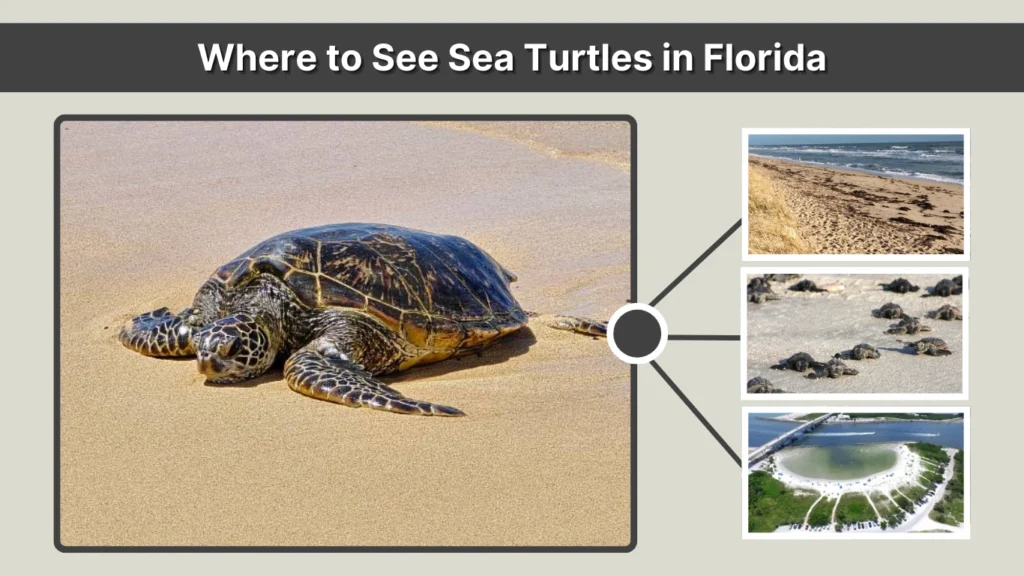
Florida offers some of the world’s best sea turtle viewing opportunities, both on nesting beaches and in clear waters where turtles forage. The best locations depend on whether you want to see nesting females, hatchlings, or turtles swimming.
Best Beaches for Nesting & Hatching
- Archie Carr National Wildlife Refuge (Melbourne / Vero Beach) – The most important loggerhead nesting area in the Western Hemisphere.
- Loggerhead Marinelife Center (Juno Beach) – Guided nesting and hatching programs.
- Sebastian Inlet State Park – Seasonal night walks and high nest density.
- Cocoa Beach & Satellite Beach – Consistent nesting each season.
- Florida Keys – Particularly Key West and Marathon areas.
- Naples, Sanibel, Sarasota – Gulf Coast nesting for loggerheads and greens.
- Destin & Pensacola – Panhandle nesting areas with increasing conservation efforts.
Where to See Swimming Sea Turtles
- Dry Tortugas National Park
- Florida Keys reefs
- Crystal River springs
- Blue Heron Bridge (Palm Beach County)
- Tortugas and Middle Keys grass beds
These calm, clear waters make Florida one of the best U.S. destinations to swim near sea turtles.
Swim With Sea Turtles in Florida
Swimming with sea turtles is legal as long as you do not touch, chase, or disturb them, since all sea turtle species are protected under federal and state law.
Best Places to Swim With Sea Turtles
- Dry Tortugas National Park – Pristine habitat.
- Key West & Marathon (Florida Keys) – Reliable nearshore sightings.
- Crystal River – Often spotted feeding in seagrass beds.
- South Florida Reefs (Boca Raton to Miami) – Frequent green turtles.
- Panhandle artificial reefs – Seasonal sightings.
Swimming Guidelines
- Keep 10 feet or more away.
- Do not block their path to the surface.
- No flashes, bright lights, or loud splashing.
- Never attempt to ride or touch a turtle.
- Avoid sunscreen chemicals harmful to reefs (use reef-safe alternatives).
Sea Turtle Hospitals & Rehabilitation Centers
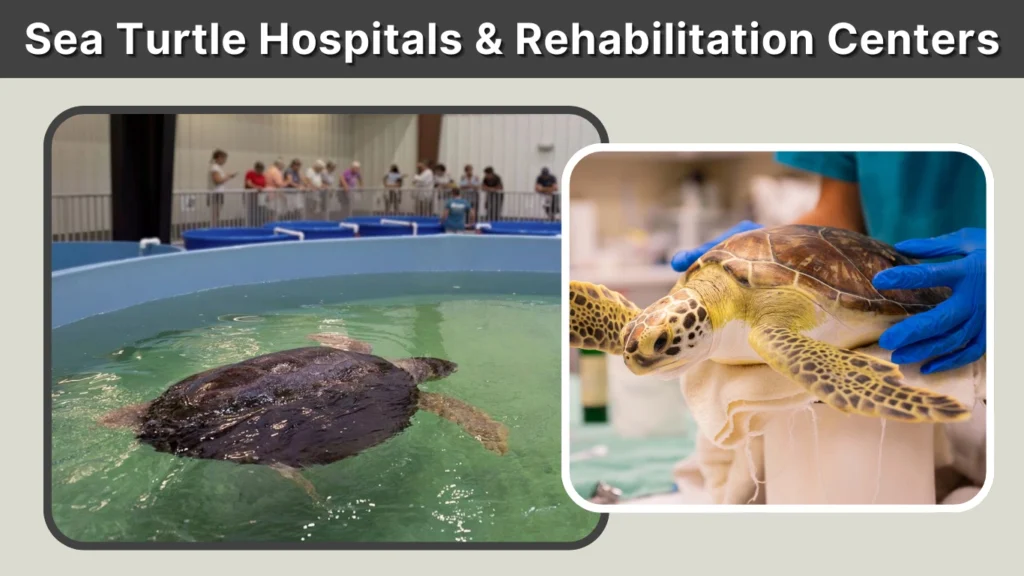
Florida hosts several major facilities dedicated to rescuing, treating, and releasing injured turtles. Many offer tours, education programs, and volunteer opportunities.
Key Rehabilitation Centers
- The Turtle Hospital – Marathon, Florida Keys
- The Florida Aquarium Sea Turtle Rehabilitation Center (Apollo Beach)
- Loggerhead Marinelife Center – Juno Beach
- Clearwater Marine Aquarium
- Mote Marine Laboratory – Sarasota
- Gulf World Marine Institute – Panama City Beach
- Marine Science Center – Ponce Inlet
These centers treat turtles injured by boat strikes, cold-stunning events, entanglement, red tide exposure, and ingesting marine debris. Many facilities release rehabilitated turtles in public events that draw large crowds.
Sea Turtle Rescue & What to Do If You Find One
If you encounter a stranded, injured, or disoriented sea turtle, you must contact Florida’s wildlife authorities.
Who to Call
- Florida Fish & Wildlife Conservation Commission (FWC): 1-888-404-FWCC
- Local sea turtle rescue centers
- County marine patrols
- Beach patrols during nesting season
What Not to Do
- Do not touch the turtle
- Do not try to move hatchlings toward the ocean
- Do not use bright lights or camera flashes
- Do not pour water on the turtle
Rescuers are trained to handle medical issues, navigation problems, or cold-stunning safely.
Florida Sea Turtle Laws & Lighting Regulations
Florida enforces strict laws to protect endangered sea turtles.
Key Regulations
- It is illegal to touch, disturb, or harass any sea turtle or its nest.
- All nests are protected under the Endangered Species Act.
- Beachgoers must stay behind nesting mothers and give them space.
- Flashlights, camera flashes, and bright phones are prohibited near turtles at night.
Lighting Rules
Coastal properties must follow Florida Sea Turtle Lighting Regulations, which require:
- Low-intensity amber or red lights
- Shielded fixtures
- Curtains or tinted windows facing the beach
- Ensuring no artificial light reaches the sand
These measures prevent hatchlings from becoming disoriented and crawling inland instead of to the ocean.
Florida Sea Turtle Conservation & Community Programs
Florida leads the nation in sea turtle conservation through:
Major Organizations
- Sea Turtle Conservancy
- Loggerhead Marinelife Center
- Mote Marine Laboratory
- The Turtle Hospital
- FWC Marine Turtle Program
Florida Sea Turtle License Plate
Purchasing the specialty plate (“Helping Sea Turtles Survive”) directly funds:
- Nest monitoring
- Habitat restoration
- Rescue operations
- Educational programs
- Scientific research
Volunteer & Job Opportunities
- Nest monitoring
- Night patrols
- Strandings and rescue support
- Rehab center internships
- Sea turtle education programs
- Seasonal conservation jobs across Florida’s coasts
Sea Turtle Behavior & Life Cycle
Sea turtles follow a complex life cycle that spans decades:
- Hatchlings emerge and swim offshore to the “floating nursery” of the Gulf Stream.
- Juveniles drift among seaweed mats, feeding on plankton and small invertebrates.
- Sub-adults settle in seagrass beds and reefs around Florida.
- Adults migrate thousands of miles but return to the same beaches to nest.
This cycle depends heavily on safe beaches, clean oceans, and proper lighting.
FAQs
When is sea turtle nesting season in Florida?
Nesting spans from March through October, with peak nesting from May to July. Leatherbacks begin earliest, often in late February, followed by loggerheads and green turtles in late spring and summer.
When do sea turtles hatch in Florida?
Hatching occurs between June and October, peaking from July to September. Hatchlings usually emerge at night when sand temperature drops.
Where can I see sea turtles in Florida?
Top spots include Archie Carr National Wildlife Refuge, Juno Beach, Sebastian Inlet, the Florida Keys, Sanibel Island, and select Panhandle beaches like Destin and Pensacola.
Is it illegal to touch a sea turtle in Florida?
Yes—Florida law and the Endangered Species Act make it illegal to touch or disturb sea turtles, hatchlings, or nests. Violations carry heavy fines.
Can you swim with sea turtles in Florida?
Yes, in areas where turtles naturally occur, such as the Keys, Dry Tortugas, and South Florida reefs. However, you must not touch, chase, or interfere with them.