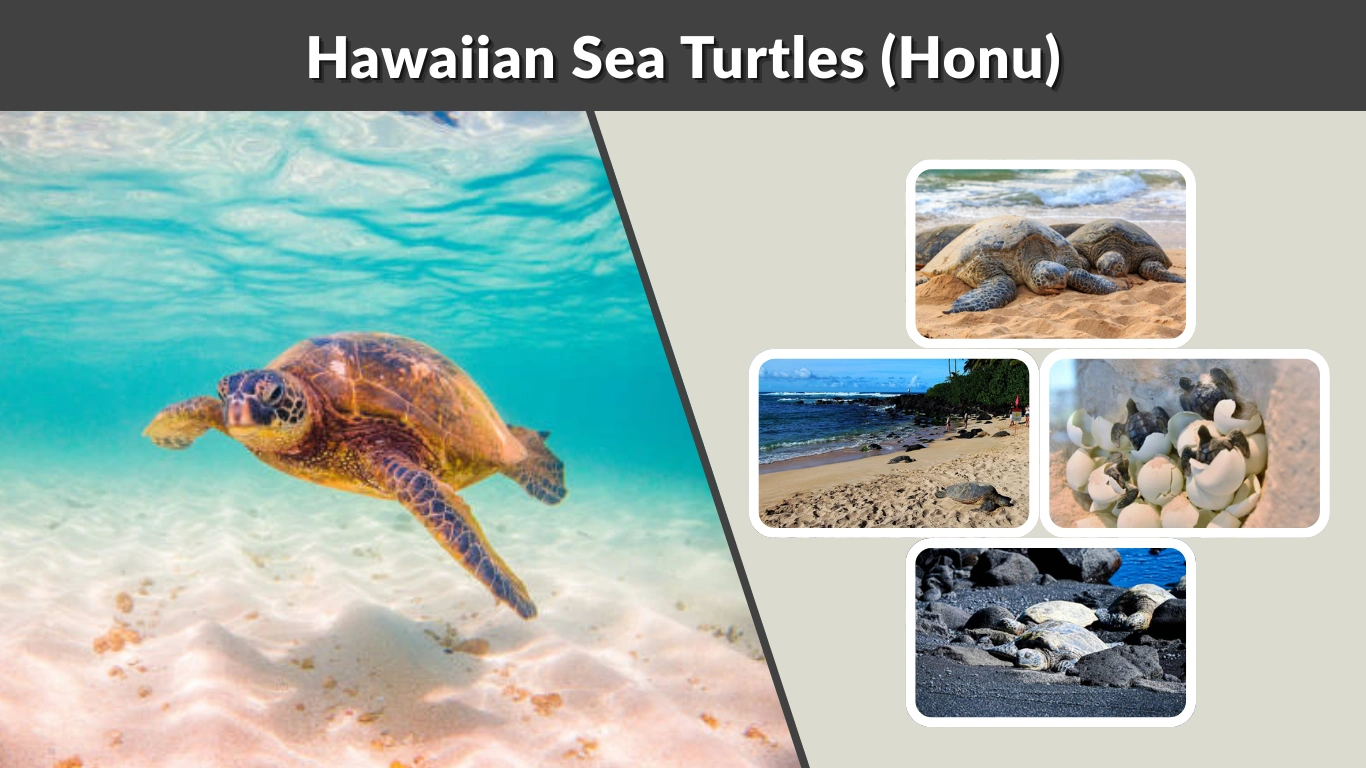
Hawaiian sea turtles—especially the beloved green sea turtle known as the Honu—are among the most iconic and culturally important animals in the Hawaiian Islands. Seen resting on beaches, gliding across reefs, or feeding along volcanic shorelines, these turtles have become symbols of good luck, longevity, navigation, and spiritual protection in Hawaiian culture. Hawaii is home to multiple sea turtle species, with year-round viewing opportunities on Oahu, Maui, Kaua‘i, and the Big Island, making it one of the world’s top sea-turtle destinations.
Types of Sea Turtles in Hawaii
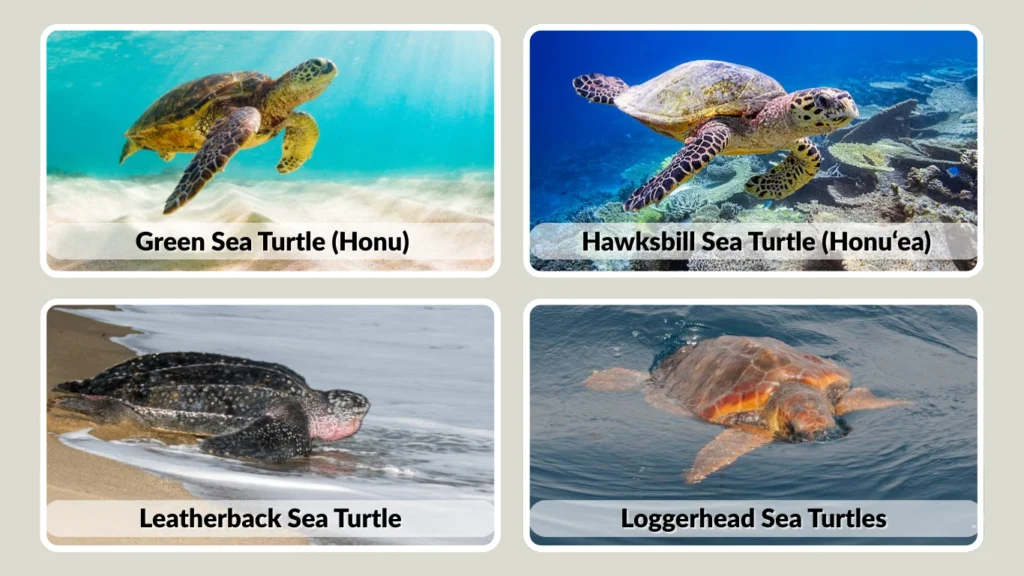
While Hawaii hosts several species, only two are commonly seen by visitors: the green sea turtle (Honu) and the hawksbill sea turtle (Honu‘ea). Other species appear offshore but rarely come close to land.
1. Green Sea Turtle (Honu)
The most recognized species in Hawaii. These turtles bask on beaches, feed along rocky coasts, and are frequently encountered during snorkeling. They are large, gentle, and slow-moving, with smooth olive or brown shells and unique facial scale patterns.
2. Hawksbill Sea Turtle (Honu‘ea)
A much rarer species with a beautifully patterned shell and a pointed beak. Hawksbills nest mainly in Maui and the Big Island. Although endangered, conservation efforts are helping stabilize populations.
3. Leatherback Sea Turtle
The world’s largest sea turtle, occasionally spotted offshore in deeper Hawaiian waters. They rarely approach beaches except during long-range migratory movements.
4. Olive Ridley & Loggerhead Sea Turtles
Uncommon visitors, usually seen far from the main islands. They are not frequent on beaches or snorkeling sites.
Green Sea Turtle (Honu): Diet, Habitat & Cultural Meaning
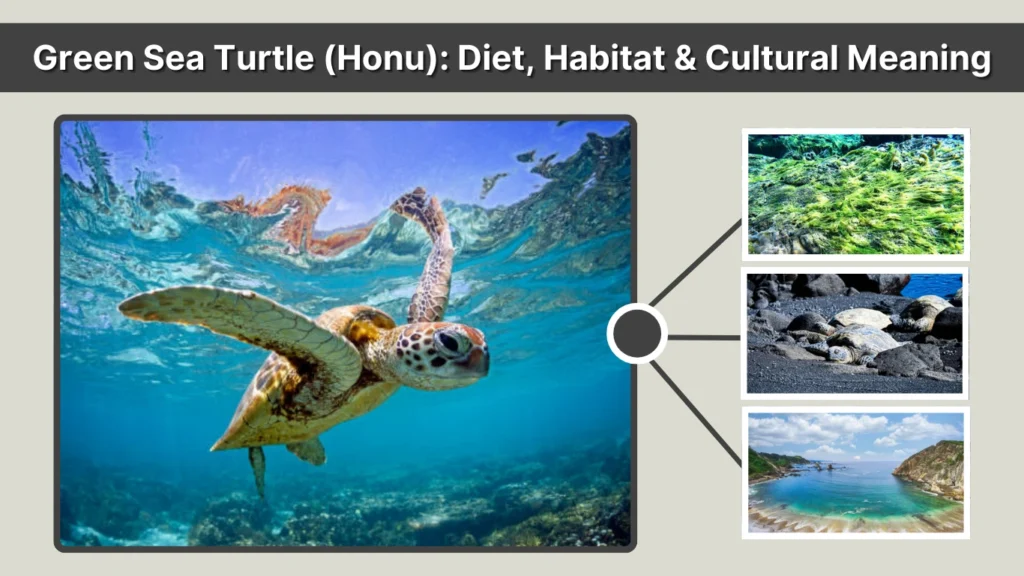
Diet: What Hawaiian Sea Turtles Eat
Green sea turtles in Hawaii are mostly herbivores. They feed on:
- Limu (Hawaiian seaweed)
- Algae growing on reef rock
- Sea grasses
- Occasionally small invertebrates
Because of their algae-grazing behavior, they help maintain reef ecosystem balance.
Habitat
Green sea turtles thrive in:
- Shallow coral reefs
- Lava rock shorelines
- Bays and calm coves
- Seagrass flats
- Warm coastal waters around all Hawaiian islands
They may spend hours resting on the ocean floor or basking on beaches, a behavior unique to Hawaiian Honu.
Cultural Significance: Honu Meaning & Symbolism
In Hawaiian culture, the Honu symbolizes:
- Longevity
- Safety & navigation
- Wisdom & protection
- Good fortune
Honu imagery appears in tattoos, traditional Hawaiian art, jewelry, and tribal symbolism. Sea turtle tattoos often represent family protection, safe travel, and spiritual guardianship.
Green sea turtles also embody the Hawaiian value of mālama i ke kai—to care for the ocean.
Hawksbill Sea Turtles (Honu‘ea)
The hawksbill is far rarer than the Honu and considered critically endangered. Their beautifully patterned shells were historically targeted for tortoiseshell jewelry, but today they are fully protected.
Where Hawksbills Occur
- Maui (primary nesting area)
- Big Island (select beaches)
- Very limited sightings on Oahu and Kaua‘i
Behavior & Ecology
Hawksbills favor coral-rich environments and feed largely on sponges. Because they nest mainly at night and in small numbers, encounters are uncommon but meaningful.
Sea Turtle Nesting & Hatching in Hawaii
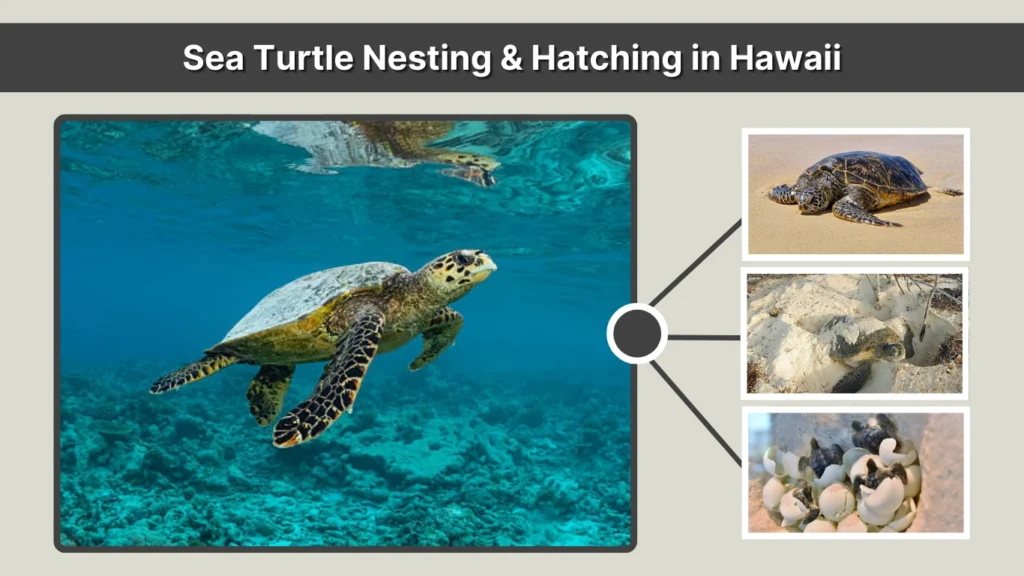
When Do Sea Turtles Lay Eggs in Hawaii?
Hawaii’s primary nester is the hawksbill sea turtle, which lays eggs during:
- May through December, peaking June–August
Green sea turtles nest far less often in Hawaii compared to other Pacific regions, but when they do, they use remote, protected beaches mainly in the Northwestern Hawaiian Islands.
When Do Sea Turtles Hatch in Hawaii?
Hatching generally occurs:
- July through January, depending on nesting dates
- Most hatchlings emerge at night to avoid predators and heat
Baby turtles usually crawl toward natural moonlight reflected on the ocean.
Sea Turtle Season in Hawaii
Hawaii is unique because sea turtles live around the islands year-round. However, certain times are better for land-based viewing.
Best Time of Year to See Sea Turtles
- April–October: peak basking season for green turtles
- Summer: nesting activity for hawksbills
- Year-round: snorkeling encounters on popular reefs
Best Time of Day
- Late morning to afternoon: turtles bask on beaches
- Morning hours: best for spotting feeding turtles in shallow reefs
- Evening: nesting hawksbills may appear on remote beaches
Where to See Sea Turtles in Hawaii
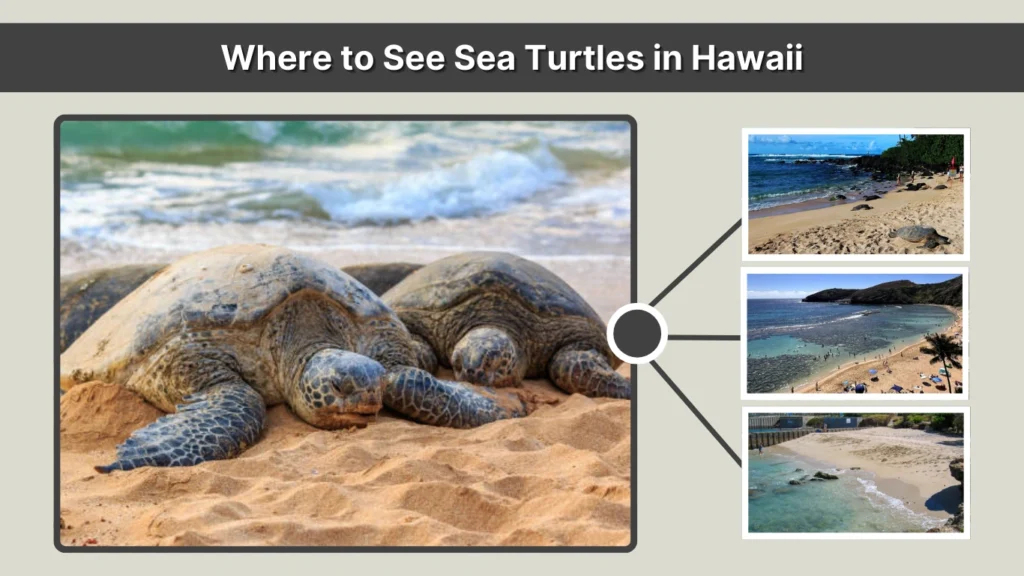
Oahu
- Laniakea Beach (Turtle Beach) – famous basking site
- Hanauma Bay – frequent snorkeling encounters
- Electric Beach (Kahe Point) – warm outflow attracts turtles
- Turtle Canyon – top snorkeling spot via boat tours
Maui
- Maluaka Beach (Turtle Town)
- Napili Bay
- Honolua Bay
- Kihei & Wailea reefs
These areas provide reliable sightings of green sea turtles and occasional hawksbills.
Big Island (Hawaiʻi Island)
The Big Island is one of the best places in the world to see Hawaiian sea turtles both in the water and on shore. At Punaluʻu Black Sand Beach, green turtles regularly bask on the warm volcanic sand, often resting for hours. Along Kona’s coastline, calm, clear bays give snorkelers incredible views of turtles grazing on algae-covered rocks. Many tour companies operate along the Kona side, offering consistent sea turtle encounters thanks to clean reefs, abundant food, and warm water. Hawksbills also nest on select Big Island beaches, particularly in protected areas managed by conservation groups.
Kauaʻi
Kauaʻi offers quieter, less crowded viewing opportunities. Poʻipū Beach is well known for its basking Honu, which rest on shore throughout the day. The island’s rocky shoreline and shallow reefs create ideal feeding areas, and snorkelers at Tunnels Beach or Anahola frequently spot turtles grazing in the morning light. While less common than on Maui or Big Island, hawksbill sea turtles occasionally appear along Kaua‘i’s north shore.
Best Places to Swim or Snorkel With Sea Turtles in Hawaii
- Turtle Town (Maluaka Beach), Maui
- Turtle Canyon, Oahu (boat tour access)
- Napili Bay, Maui
- Kahaluʻu Beach Park, Big Island
- Honolua Bay, Maui
- Poʻipū Beach snorkeling area, Kaua‘i
- Keawakapu Beach, Maui
- Magic Sands Beach, Kona
Is It Illegal to Touch Sea Turtles in Hawaii?
Hawaiian sea turtles are protected under both federal and state law. Touching, riding, feeding, chasing, or harassing a sea turtle is illegal and can lead to significant fines. Under the Endangered Species Act and Hawaiʻi state wildlife regulations, disturbing a turtle or coming too close is considered harassment. Many visitors do not realize that even approaching too near—even without touching—can constitute a violation.
Law enforcement encourages people to stay at least 10 feet (3 meters) away from any turtle, whether on the beach or in the ocean. Some situations may require even more distance, especially if the turtle is nesting, basking, or showing signs of stress. Fines for touching or disturbing sea turtles can reach $10,000 or more, depending on the offense, and repeat violations may lead to criminal charges.
Why You Can’t Touch Sea Turtles in Hawaii
- They are protected under the Endangered Species Act
- Touching causes stress or illness in turtles
- Human sunscreen can damage their shells and skin
- Interference disrupts feeding, breathing, and resting
- Touching may alter natural behavior patterns
- Turtles may abandon a basking or nesting site
- Penalties include heavy fines and legal consequences
Hawaiʻi Sea Turtle Laws & Conservation Programs
Hawaii takes sea turtle protection extremely seriously due to centuries of cultural importance and the species’ vulnerable status. Organizations like NOAA, Hawaii Wildlife Fund, and Mālama na Honu work daily to monitor nests, track turtle health, rescue injured individuals, and educate visitors. Volunteers often rope off basking turtles to prevent accidental harassment, and large “Honu protection zones” exist on beaches with high turtle activity.
In addition, local Hawaiian communities emphasize cultural respect. The Honu is considered a guardian spirit (“aumakua”) by many families, making its protection a matter of both cultural heritage and community responsibility. Conservation programs help ensure that future generations will continue to see turtles resting peacefully on the shore.
Sea Turtle Tours & Responsible Viewing Guidelines
- Keep at least 10 feet (3 meters) away
- Never block a turtle’s path to or from the ocean
- No flash photography or bright lights at night
- Do not disturb basking or nesting turtles
- Stay behind turtles rather than in front
- Follow lifeguard or volunteer instructions
- Choose eco-certified tour operators
- Avoid using harmful sunscreen (use reef-safe alternatives)
Hawaiian Sea Turtle Tattoos, Jewelry & Cultural Art
Sea turtle imagery features prominently in Hawaiian tattoos, jewelry, and traditional artwork. Honu tattoos often include Polynesian tribal elements that symbolize protection, family lineage, strength, and safe passage over oceans. Hawaiian jewelry—especially silver Honu pendants and koa wood designs—is a powerful expression of connection to the islands and their marine heritage. Many visitors choose Honu art because it represents harmony, guidance, good luck, and the spirit of the ocean.
Honu vs. Hawksbill Comparison Table
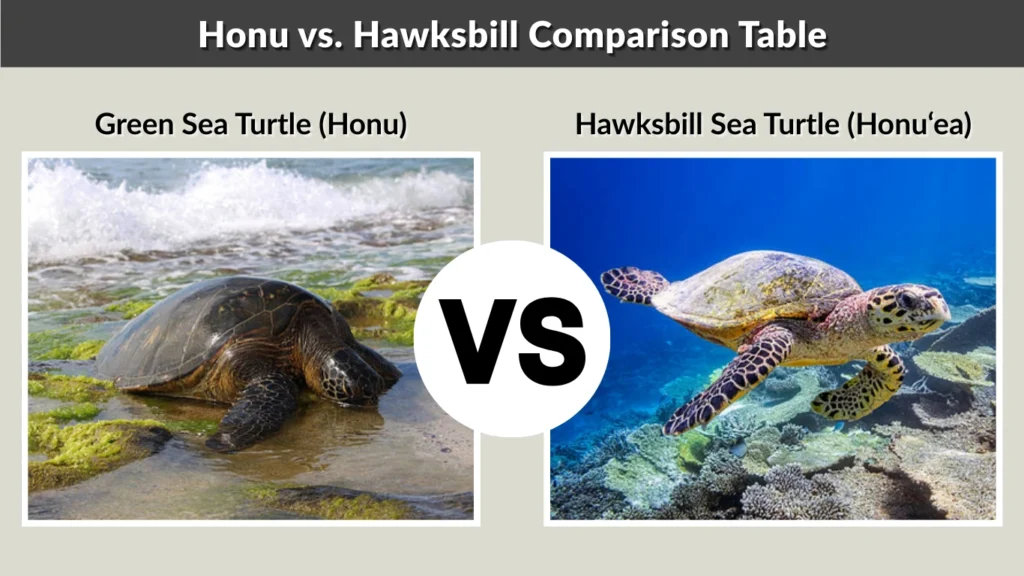
| Feature | Green Sea Turtle (Honu) | Hawksbill Sea Turtle (Honu‘ea) |
| Population | Common | Very rare |
| Shell | Smooth, round | Jagged, patterned |
| Habitat | Reefs, rocky shores | Coral-rich reef zones |
| Behavior | Basks on beaches | Rarely basks |
| Nesting | Mostly Northwestern HI | Maui & Big Island only |
FAQs
1. Are there sea turtles in Hawaii?
Yes, sea turtles live around Hawaii year-round. The green sea turtle (Honu) is extremely common, while hawksbills and leatherbacks are rarer. You can see turtles on beaches, in shallow reefs, and during snorkeling tours.
2. What is the best place to see sea turtles in Hawaii?
Top places include Laniakea Beach (Oahu), Turtle Town (Maui), Punaluʻu Black Sand Beach (Big Island), and Poʻipū Beach (Kaua‘i). These areas offer consistent sightings of basking or feeding turtles.
3. Why can’t you touch sea turtles in Hawaii?
Touching or disturbing sea turtles is illegal because they are protected under federal and state laws. Human contact causes stress, disrupts feeding, and can harm their health. Violations result in heavy fines.
4. What do Hawaiian sea turtles eat?
Green sea turtles mostly eat algae and limu (seaweed). Hawksbills feed on sponges, invertebrates, and reef organisms. Both species play essential roles in maintaining healthy reef ecosystems.
5. Can you swim with sea turtles in Hawaii?
Yes, you can swim near turtles as long as you keep a respectful distance. The best locations include Turtle Town (Maui), Kahaluʻu Beach Park (Big Island), and Hanauma Bay (Oahu). Never touch, chase, or block a turtle.