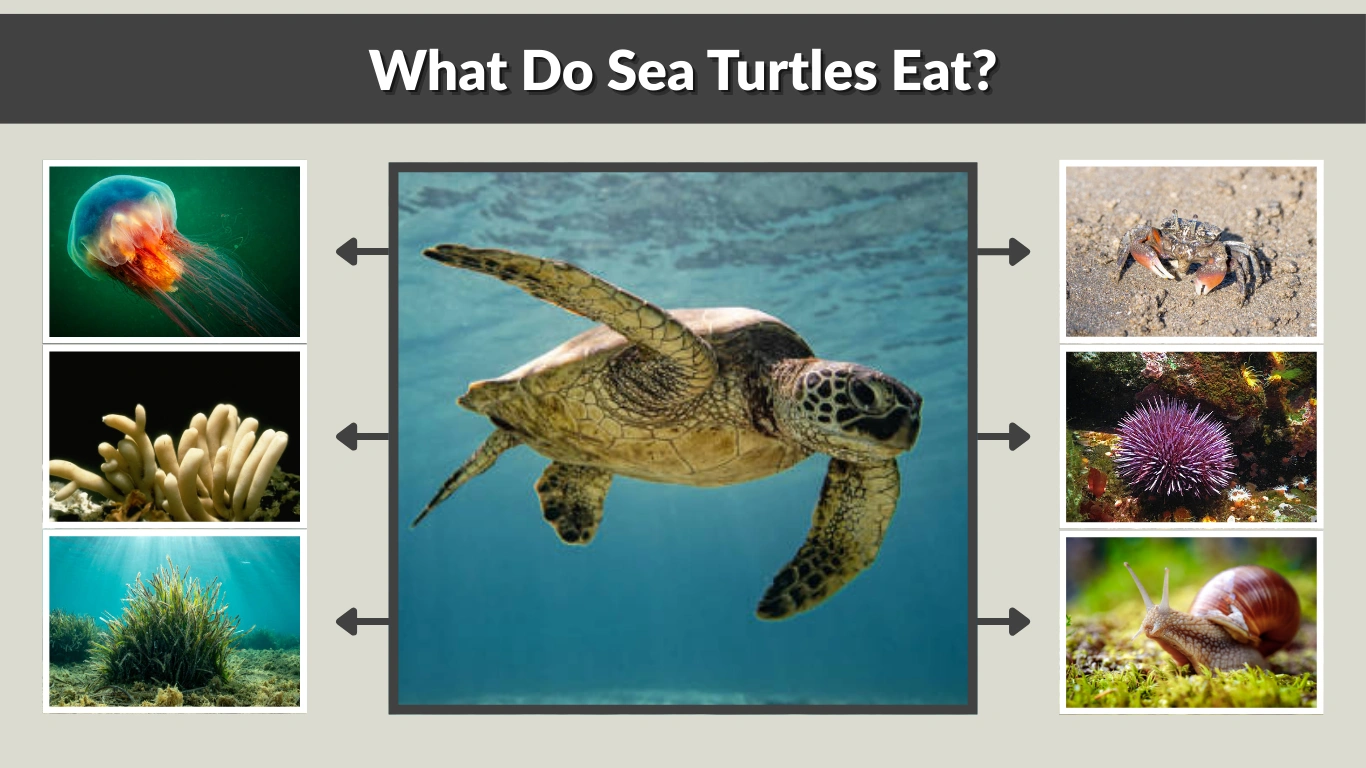
Sea turtles are among the ocean’s most diverse feeders. Some are strict carnivores, others become herbivores as adults, and a few specialize in highly specific prey such as jellyfish or sponges. What a sea turtle eats depends heavily on its species, age, habitat, jaw structure, and even the depth at which it prefers to hunt. Below, we break down 12 of the most common foods sea turtles eat, followed by detailed species-by-species diets, including leatherbacks, greens, hawksbills, loggerheads, Kemp’s ridleys, flatbacks, black sea turtles, and baby turtles.
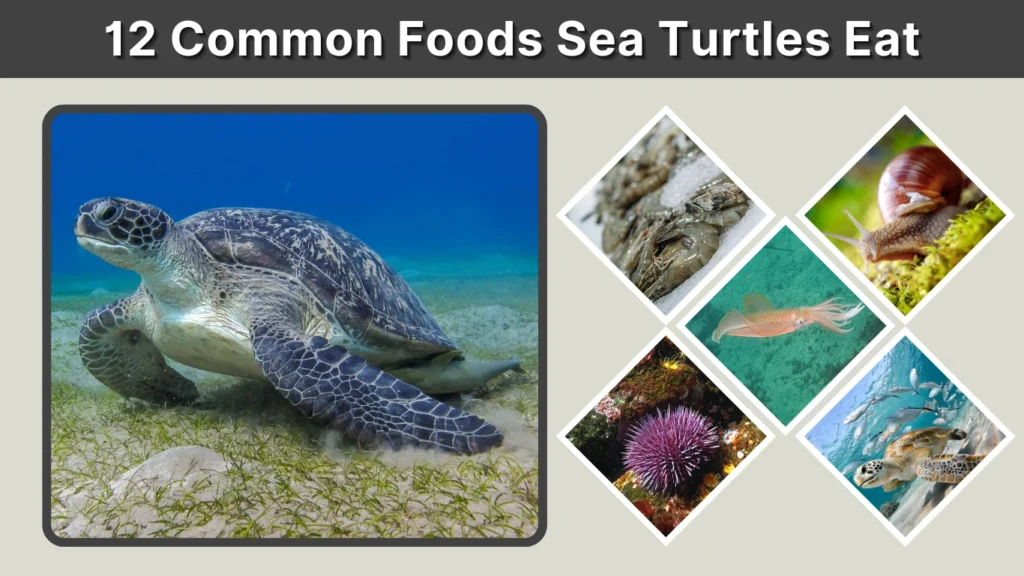
12 Common Foods Sea Turtles Eat
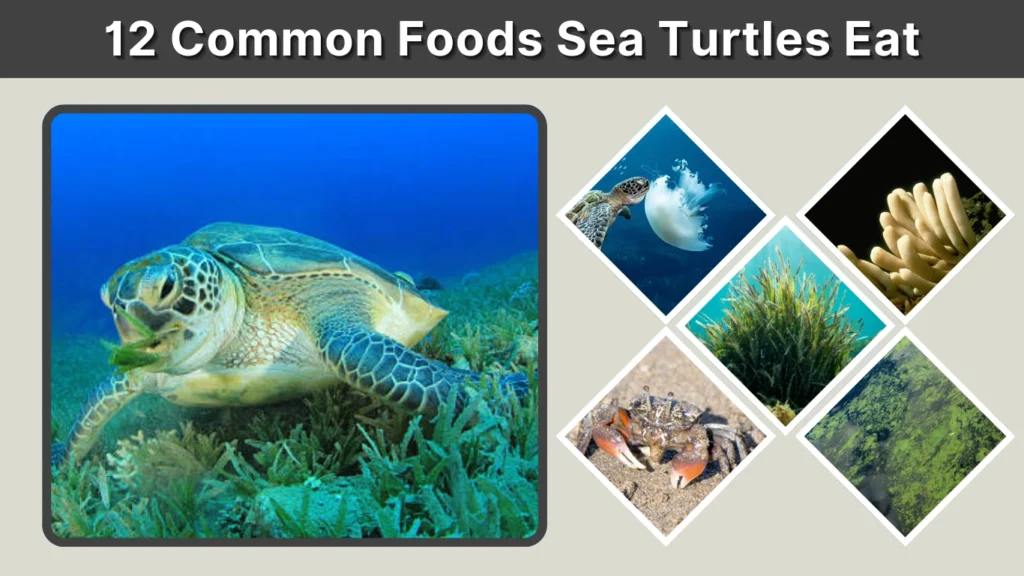
These foods appear across multiple species, although the quantity and importance vary widely.
1. Jellyfish
Jellyfish are one of the most iconic sea turtle foods, especially for leatherbacks. Leatherbacks consume hundreds of jellyfish per day, making them one of the ocean’s top jellyfish predators. Their bodies feature built-in protections—thick skin, scaly mouths, and papillae in the throat—which prevent stings from causing harm. Moon jellies, lion’s mane jellyfish, sea nettles, and cannonball jellyfish are among the species they frequently target.
2. Seagrass
Adult green sea turtles rely heavily on seagrass, making them the only mostly herbivorous sea turtle species. Seagrass provides fiber, antioxidants, vitamins, and minerals. By grazing, green turtles help maintain healthy seagrass meadows, which in turn support fish nurseries and stabilize sediment on the seafloor. Juvenile greens, however, begin as omnivores before transitioning to plant-based diets.
3. Algae
Algae, seaweed, and marine plants form a major portion of the diet of adult green turtles and black sea turtles. These plant materials offer essential nutrients and are abundant along shallow coastal reefs and rocky shorelines. Green turtles often feed on red, brown, and green algae varieties, depending on what grows locally. Hawaiian green turtles (“honu”) consume a wide range of algae species known collectively as “limu” in Hawaiian.
4. Sponges
Hawksbill sea turtles are highly specialized sponge feeders. Their narrow, pointed beaks allow them to reach into deep crevices within coral reefs. Some hawksbills consume diets made up of 70–95% sponges, including toxic sponge species that few other animals can tolerate. Although low in calories, sponges are available year-round in reef ecosystems, making them a consistent food source.
5. Crabs
Many carnivorous turtles—especially loggerheads and Kemp’s ridleys—love crabs. Their enormous jaw strength allows them to crush hard shells with ease. Blue crabs, swimming crabs, and ghost crabs are common prey. Crabs provide high-quality protein and fat, making them perfect for energy-dense diets needed by turtles living in cooler or more active habitats.
6. Shrimp
Shrimp are eaten by juvenile and adult carnivorous turtles alike. Shrimp are soft-bodied, easy to digest, and nutrient-rich. Kemp’s ridleys feed on shrimp extensively in shallow bays and estuaries. Baby sea turtles also consume shrimp larvae and small crustaceans during their first years drifting offshore.
7. Squid
Squid are a high-energy prey species for leatherbacks, loggerheads, and some green turtle juveniles. Squid provide essential amino acids and are often found in deep or midwater zones. Leatherbacks diving at night commonly encounter squid as they migrate through nutrient-rich waters.
8. Fish
While not a primary food for most adult turtles, small fish are frequently eaten by juveniles. Injured or slow-moving fish may also be taken opportunistically. Loggerheads and ridleys occasionally eat fish scraps left behind by predators or fishing activity.
9. Sea Urchins
Hawksbills sometimes feed on sea urchins when sponge availability is low. Their strong, precise beaks allow them to break through urchin spines to reach the nutrient-rich interior. Juvenile hawksbills and green turtles may also take small urchins in certain reef environments.
10. Mollusks (Clams, Snails, Whelks)
Loggerheads are especially well known for eating hard-shelled mollusks. Their jaws are designed for crushing and grinding tough prey items. Mollusks are calorie-dense and offer high mineral content from their shells and tissues. Whelks, conchs, snails, and bivalves are common targets.
11. Tunicates (Sea Squirts)
Tunicates resemble jellyfish in texture and are eaten by leatherbacks and green sea turtles. These gelatinous animals are easy for turtles to swallow and provide hydration and protein. They appear in drifting patches and can form a small but significant part of turtle diets.
12. Plankton and Tiny Invertebrates
Baby sea turtles (hatchlings) rely heavily on plankton, tiny crustaceans, copepods, fish eggs, and miniature jellyfish for their first months at sea. These foods help fuel their rapid early growth. In the open ocean, hatchlings ride currents and feed on floating “neuston” communities—small organisms living at the ocean’s surface.
Species-Specific Diets (Detailed Guide)
Different sea turtles eat different foods based on their evolutionary adaptations. Below are the major species and what each one eats.
What Does a Leatherback Sea Turtle Eat?
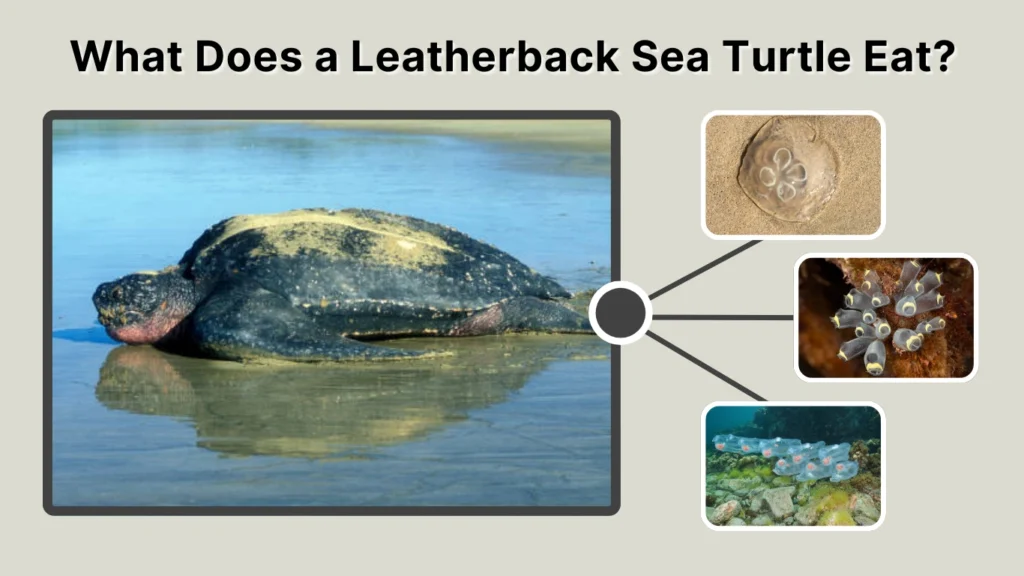
Leatherbacks are almost exclusively gelatinovores, meaning they eat jelly-like organisms. Their diet includes:
- Jellyfish (primary food, up to hundreds daily)
- Tunicates
- Salps
- Gelatinous zooplankton
Their soft, scissor-like jaws are built for slicing slippery prey, not crushing hard shells. Leatherbacks’ migratory routes follow regions with dense jellyfish blooms.
What Does a Hawksbill Sea Turtle Eat?
Hawksbills are reef specialists with sharp, bird-like beaks ideal for foraging in coral crevices. Their diet includes:
- Sponges (70–95% of diet)
- Sea anemones
- Soft corals
- Sea urchins
- Barnacles
- Small invertebrates
Hawksbills have one of the most specialized diets of any sea turtle species worldwide.
What Does a Green Sea Turtle Eat?
Green sea turtles undergo one of the most dramatic dietary shifts in the turtle family. As hatchlings, they are omnivorous, feeding on zooplankton, jellyfish, and small invertebrates. As they mature, their diet becomes almost entirely plant-based. Adult greens primarily eat:
- Seagrass
- Algae
- Seaweed
- Occasionally tunicates or sponges
- Rarely jellyfish (mostly juveniles)
Green turtles are the only mostly herbivorous sea turtle species. Their plant-rich diet adds a unique greenish tint to their body fat, which inspired their name.
What Does a Loggerhead Sea Turtle Eat?
Loggerheads possess the strongest crushing jaws of any sea turtle, enabling them to consume hard-shelled prey. Their diet consists of:
- Crabs
- Whelks and conchs
- Clams
- Hard-shelled mollusks
- Sea urchins
- Small fish
- Lobster pieces and crustaceans
- Occasional jellyfish
Their carnivorous diet reflects their powerful anatomy. Loggerheads often forage along the seafloor or near reefs where shellfish are abundant.
What Does a Kemp’s Ridley Sea Turtle Eat?
Kemp’s ridleys, the smallest sea turtle species, are energetic coastal hunters. They specialize in shallow-water foraging and prefer soft-bodied but protein-rich prey, including:
- Crabs (especially blue crabs)
- Shrimp
- Small fish
- Jellyfish
- Clams and small mollusks
Kemp’s ridleys often feed near estuaries, mudflats, and sandy bottoms where crustaceans thrive.
What Does a Flatback Sea Turtle Eat?
Flatbacks are native only to Australia and have a mixed diet consisting of:
- Sea cucumbers
- Soft corals
- Jellyfish
- Crustaceans
- Mollusks
- Sea pens
- Soft-bodied invertebrates
Flatbacks prefer shallow coastal waters and consume prey that require minimal jaw force, favoring softer organisms over hard shells.
What Does a Black Sea Turtle Eat?
The black sea turtle (a Pacific subspecies of the green turtle) shares a nearly identical diet with the green sea turtle. Their diet includes:
- Algae
- Seagrass
- Seaweed
- Marine plants
- Occasional small invertebrates
Because black turtles inhabit cooler, nutrient-rich waters, their diet is often more algae-heavy than that of tropical green turtles.
What Does a Hawaiian Green Sea Turtle Eat?
Hawaiian green turtles, known locally as honu, feed mainly on a wide variety of Hawaiian algae species called limu. Their diet includes:
- Green algae (e.g., limu kala)
- Red algae
- Brown algae
- Seagrass where available
- Occasional jellyfish or invertebrates (juveniles)
Honu are commonly seen grazing on shallow reef flats.
What Do Baby Sea Turtles Eat?
Baby sea turtles, also called hatchlings, are opportunistic carnivores during their earliest years. After emerging from the nest and reaching the open ocean, they feed on small, floating organisms that drift at the sea surface.
Common baby sea turtle foods include:
- Plankton
- Copepods
- Fish eggs
- Tiny jellyfish
- Shrimp larvae
- Small crustaceans
- Floating invertebrates
- Gelatinous zooplankton
Throughout their “lost years,” hatchlings hide within floating seaweed mats (especially Sargassum), feeding on whatever small prey is available.
What Does a Baby Green Sea Turtle Eat?
Baby green turtles start life eating:
- Small jellyfish
- Zooplankton
- Shrimp larvae
- Worms
- Tiny crabs
- Fish eggs
Only after several years do they shift toward herbivory, eventually becoming algae and seagrass grazers.