
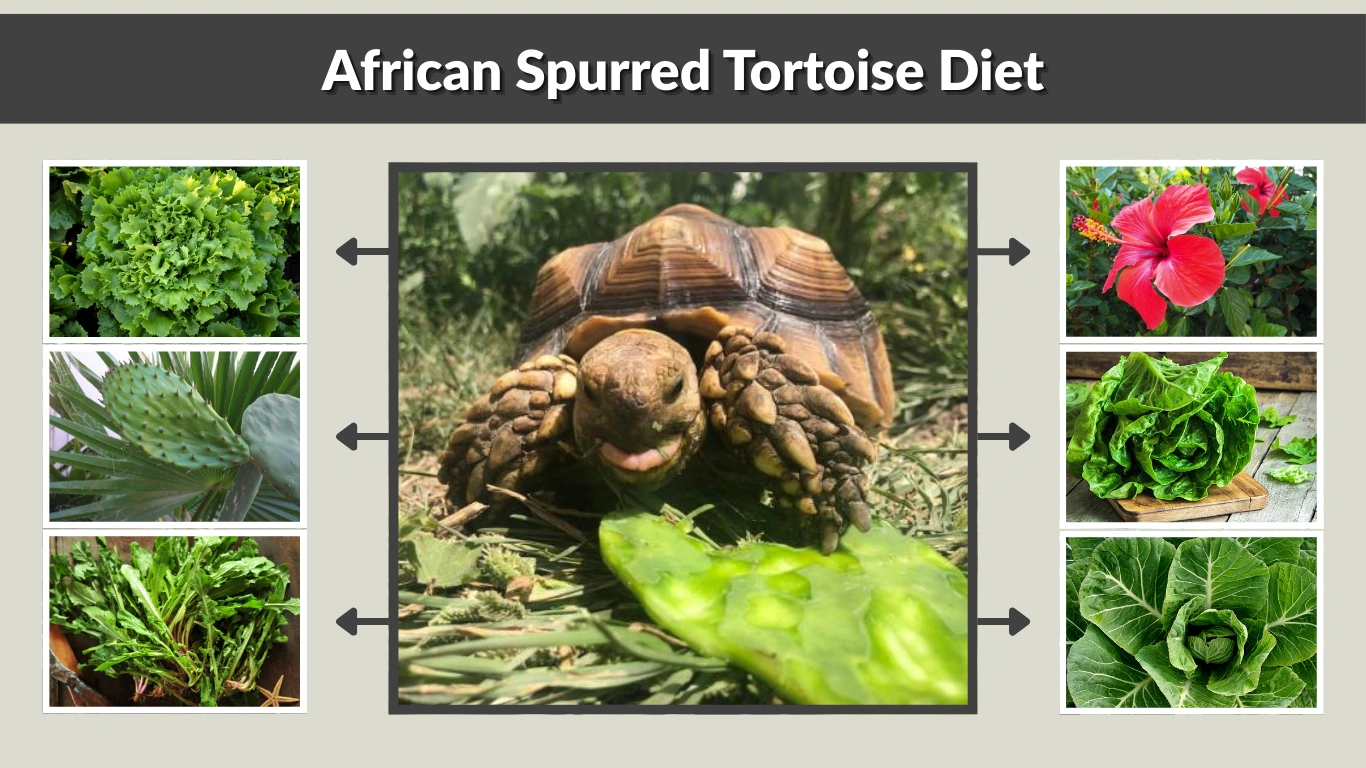
The African spurred tortoise—often called the Sulcata—is a large, desert-dwelling herbivore known for its strong appetite and high fiber needs. Diet plays a crucial role in its shell strength, bone development, digestive health, and longevity. Because Sulcatas grow rapidly and live for decades, feeding the right foods is essential. This guide explores the 12 most common foods they can safely eat and how to balance a proper diet that mimics their natural grazing habits.
Understanding the Sulcata Tortoise Diet
African spurred tortoises are natural grazers that spend most of their day consuming tough, fibrous vegetation. In the wild, they eat grasses, weeds, leaves, and dry plants that offer minimal protein and high fiber. Captive diets must follow similar principles to prevent problems such as pyramiding, obesity, and kidney issues.
A balanced Sulcata diet should contain 80–90% grasses and hays, 10–20% leafy greens, and only very small amounts of edible flowers or low-sugar plants. Foods high in protein or oxalates can be harmful, so careful selection and rotation are essential. Their digestive system relies heavily on fiber, so fruits and high-moisture foods disrupt gut balance and should be avoided.
12 Common Foods African Spurred Tortoises Can Eat
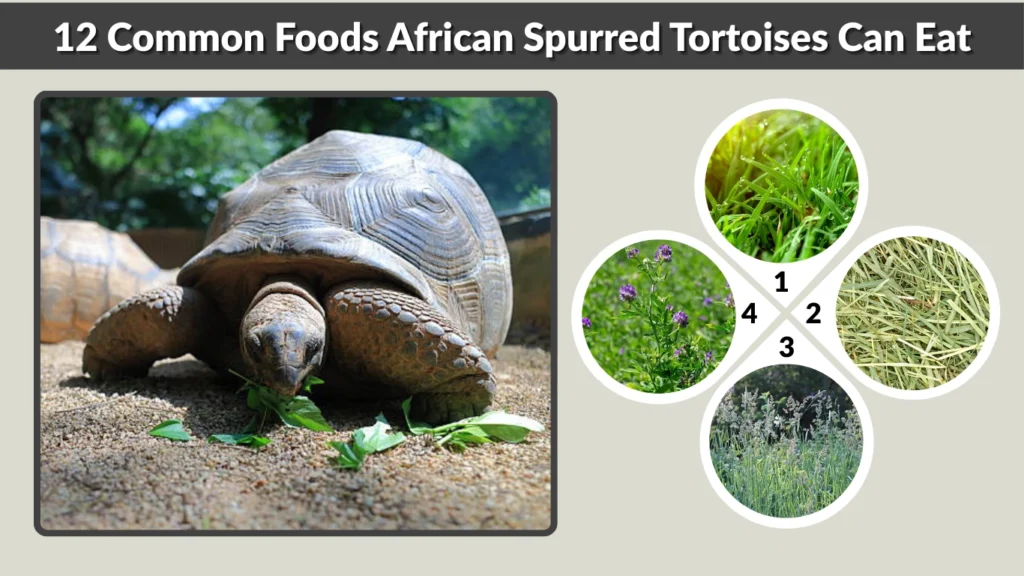
Below is an in-depth look at the first half of the 12 staple foods that suit a healthy Sulcata diet.
1. Bermuda Grass
Bermuda grass is one of the most ideal staples for a Sulcata tortoise. Its nutrient profile closely matches what they encounter in the wild—high fiber, moderate calcium, and extremely low protein. Whether fresh or grown in a grazing area, Bermuda supports proper shell growth and promotes steady digestion. Because it’s hardy, it allows for year-round grazing in warm climates, making it a dependable base of the diet.
2. Timothy Hay
Timothy hay is a commonly available, high-fiber food appropriate for daily feeding. While not as soft as fresh grasses, it encourages natural chewing, which helps wear down the tortoise’s constantly growing beak. Its low protein content makes it safer than alfalfa, and its texture supports gut motility. Offering Timothy hay in loose piles or mixing it with greens encourages regular consumption, especially in younger tortoises learning to graze.
3. Orchard Grass
Orchard grass is another excellent staple that provides variety and moisture compared to dryer hays. It is softer and more palatable, making it helpful for picky eaters. While slightly higher in nutrients than Timothy hay, it still fits the low-protein, high-fiber profile needed for Sulcata health. Feeding fresh orchard grass when available, or dried orchard hay, helps add diversity to the daily diet without disrupting nutrient balance.
4. Alfalfa (Limited Use)
Alfalfa is nutritious but should be fed sparingly due to its high protein content. Excess protein contributes to pyramiding—a deformity of the shell—and can strain the kidneys. Small pieces can be mixed into other hays for added flavor, but it should never become a staple. Adult Sulcatas may handle slightly more than young ones, but moderation remains critical. If feeding alfalfa, choose sun-dried hay over pellets to keep fiber levels higher.
5. Romaine Lettuce
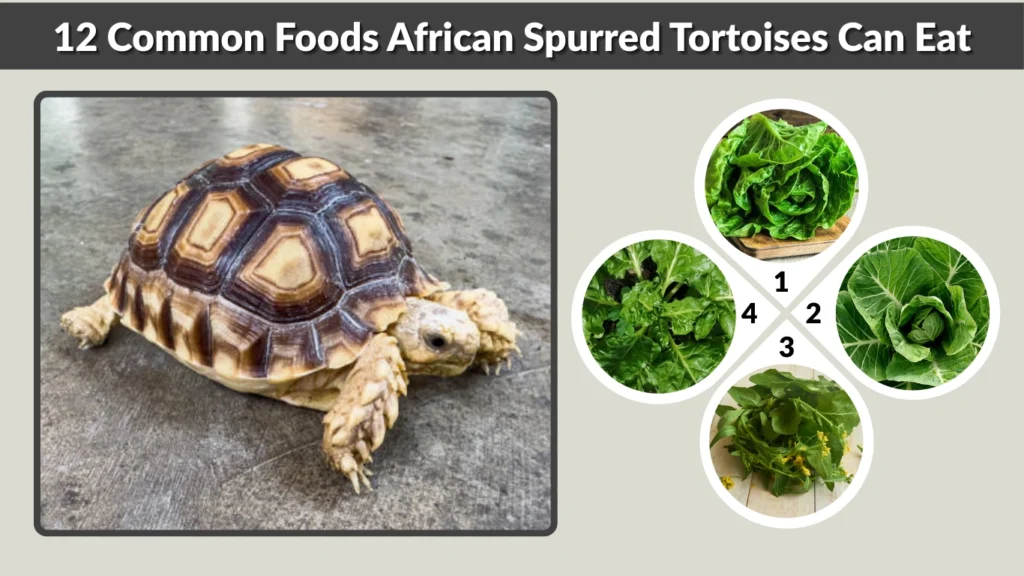
Romaine lettuce is often fed because it’s easy to find and hydrating, but it should only complement the grass-based core of the diet. While healthier than iceberg lettuce, romaine offers limited nutrition and should not replace leafy greens with higher calcium. It is useful for hydration in hot seasons and serves as a good carrier for calcium supplements. Offering romaine occasionally adds variety without diluting the nutrient-dense foods Sulcatas rely on.
6. Collard Greens
Collard greens are nutrient-rich, especially in calcium, making them a great leafy green for rotation. They support strong shell and bone development, which is especially important for growing juveniles. Their sturdy texture resembles natural vegetation and encourages healthy chewing. However, like all greens, collards should make up no more than 10–20% of the diet. Mixed with grasses and other greens, they contribute to a balanced, mineral-rich diet.
7. Mustard Greens
Mustard greens offer excellent nutritional value, adding calcium, fiber, and vitamins to the diet. Their slightly spicy taste makes them appealing to many tortoises, encouraging good eating habits. However, mustard greens contain moderate oxalates, so they should be rotated rather than fed daily. Mixing them with collards, turnip greens, and grasses helps create a nutrient-balanced meal without overwhelming the digestive system.
8. Turnip Greens
Turnip greens are one of the best dark, leafy options for Sulcatas due to their high calcium-phosphorus ratio. They support bone and shell health while offering fiber for gut function. Because they are low in oxalates, they serve as a safer option for regular rotation compared to spinach or kale. Their mild flavor and soft texture also make them suitable for juvenile tortoises that may be transitioning from commercial diets to natural vegetation.
9. Dandelion Greens
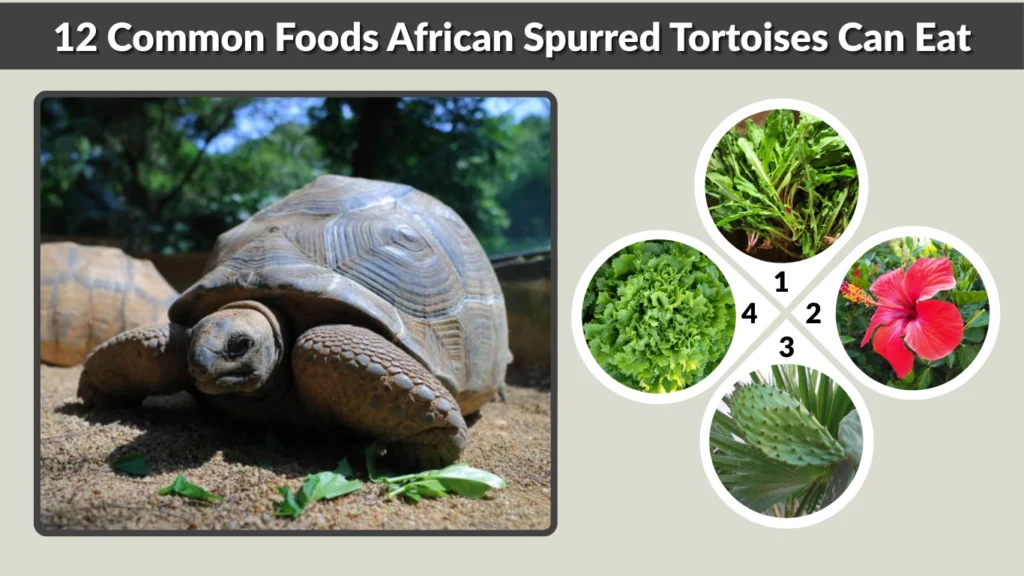
Dandelion greens are a natural, nutrient-dense favorite for Sulcatas. They are rich in calcium, vitamins A and C, and fiber. Whether purchased or harvested from a pesticide-free yard, they provide excellent enrichment because they mimic wild foraging behavior. The entire plant—leaves, stems, and flowers—can be fed, but moderation is still important due to their slightly diuretic properties. Always ensure wild dandelions come from untreated areas.
10. Hibiscus Leaves & Flowers
Hibiscus plants offer both nutrition and enrichment. The leaves are packed with fiber, and the brightly colored flowers add natural variety to the diet. Many owners grow hibiscus shrubs specifically for tortoise feeding. This plant is low in oxalates and safe for routine rotation, making it an excellent addition to outdoor enclosures. Both fresh leaves and fallen flowers can be offered, supporting natural grazing tendencies.
11. Cactus Pads (Prickly Pear)
Prickly pear cactus pads provide hydration, fiber, and calcium, making them a well-rounded food option. Once cleaned of spines, the pads can be cut into strips or served whole to encourage natural tearing and chewing behaviors. The fruit is edible but should be avoided due to high sugar content. Cactus pads are especially useful during warm months when tortoises need extra moisture without the risks associated with fruit.
12. Endive or Escarole
Endive and escarole are excellent leafy greens for frequent rotation because they are low in oxalates and rich in water and fiber. Their mild flavor makes them widely accepted, even by selective eaters. These greens help diversify the nutrient profile of meals without overwhelming the diet with moisture or sugars. They pair well with grasses, hays, and calcium-rich greens such as collards and turnip greens.
Daily Feeding Guidelines
A healthy Sulcata diet consists of 80–90% grasses and hays, forming the foundation of daily meals. Leafy greens should make up the remaining 10–20% as rotational supplements rather than primary nutrition. Adult Sulcatas typically graze freely, while juveniles may require structured feedings once or twice daily. Fresh water should always be available, even though the species primarily obtains moisture from plants. Regular calcium supplementation is recommended, especially for growing tortoises and those kept indoors.
Foods to Avoid
Certain foods can harm Sulcata tortoises due to improper nutrient profiles. Fruits should be avoided because Sugars disrupt gut bacteria and can cause digestive distress. High-oxalate greens such as spinach, beet greens, and kale bind calcium and lead to deficiencies. Dog food, cat food, and other protein-rich items are extremely dangerous, causing rapid growth deformities and organ strain. Toxic plants—such as azaleas, lilies, and oleander—must also be fully excluded from enclosures and grazing zones.
Sample Weekly Meal Plan
Monday: Bermuda grass + collard greens
Tuesday: Orchard grass + dandelion greens
Wednesday: Timothy hay + endive
Thursday: Bermuda grass + mustard greens
Friday: Orchard hay + turnip greens
Saturday: Mixed grasses + hibiscus leaves
Sunday: Bermuda grass + cactus pads (prepared)
Rotate as needed based on availability, always keeping grasses as the primary food source.
How to Grow or Source the Best Foods
Owners can grow safe grasses like Bermuda or orchard grass directly in tortoise enclosures for natural grazing. Container gardens are ideal for producing endive, collards, and dandelions year-round. When foraging outdoors, ensure all plants come from areas free of pesticides, herbicides, and automotive runoff. Many stores also offer organic hays and tortoise-safe greens, making it easy to maintain a consistent and healthy diet.
Signs of Poor Diet
Indicators of an imbalanced diet include pyramiding of the shell, lethargy, slow growth, and irregular stool. High-protein diets often result in rapid but unhealthy growth, while insufficient fiber causes digestive stasis. Dehydration may appear as dry stool or sunken eyes. Any of these symptoms should prompt immediate dietary correction and, if severe, a consultation with a reptile veterinarian.
FAQ
What is the best everyday food for a Sulcata tortoise?
The ideal everyday food for a Sulcata is a mix of high-fiber grasses such as Bermuda, orchard grass, and Timothy hay. These closely match their natural grazing diet and support healthy shell growth, digestion, and hydration. Leafy greens should be rotational supplements, not daily staples.
Can African spurred tortoises eat fruit?
No—fruit should be avoided entirely. The Sulcata digestive system isn’t designed to process sugars, which can disrupt gut bacteria, cause diarrhea, and lead to long-term health problems. Even small amounts can be harmful, so fruits are best removed from the diet altogether.
How much should a baby Sulcata tortoise eat?
Baby Sulcatas should be fed once or twice a day with a strong emphasis on grasses, chopped hays, and a small amount of leafy greens. Because they grow rapidly, calcium intake and hydration are essential. Provide shallow soaking opportunities several times a week to support digestion and shell development.
What grasses grow best for Sulcata tortoises?
Bermuda, orchard grass, and Timothy are among the best choices because they’re hardy, high in fiber, and nutritionally appropriate. Many keepers also plant native drought-tolerant grasses for additional grazing options. These grasses thrive in warm climates and allow tortoises to feed naturally throughout the day.
Do Sulcata tortoises need calcium supplements?
Yes—most captive Sulcatas benefit from calcium supplementation, especially juveniles and indoor tortoises that lack natural UVB exposure. A dusting of calcium carbonate on greens several times a week supports strong shell formation. Be sure supplements contain no added phosphorus, which can upset the mineral balance.