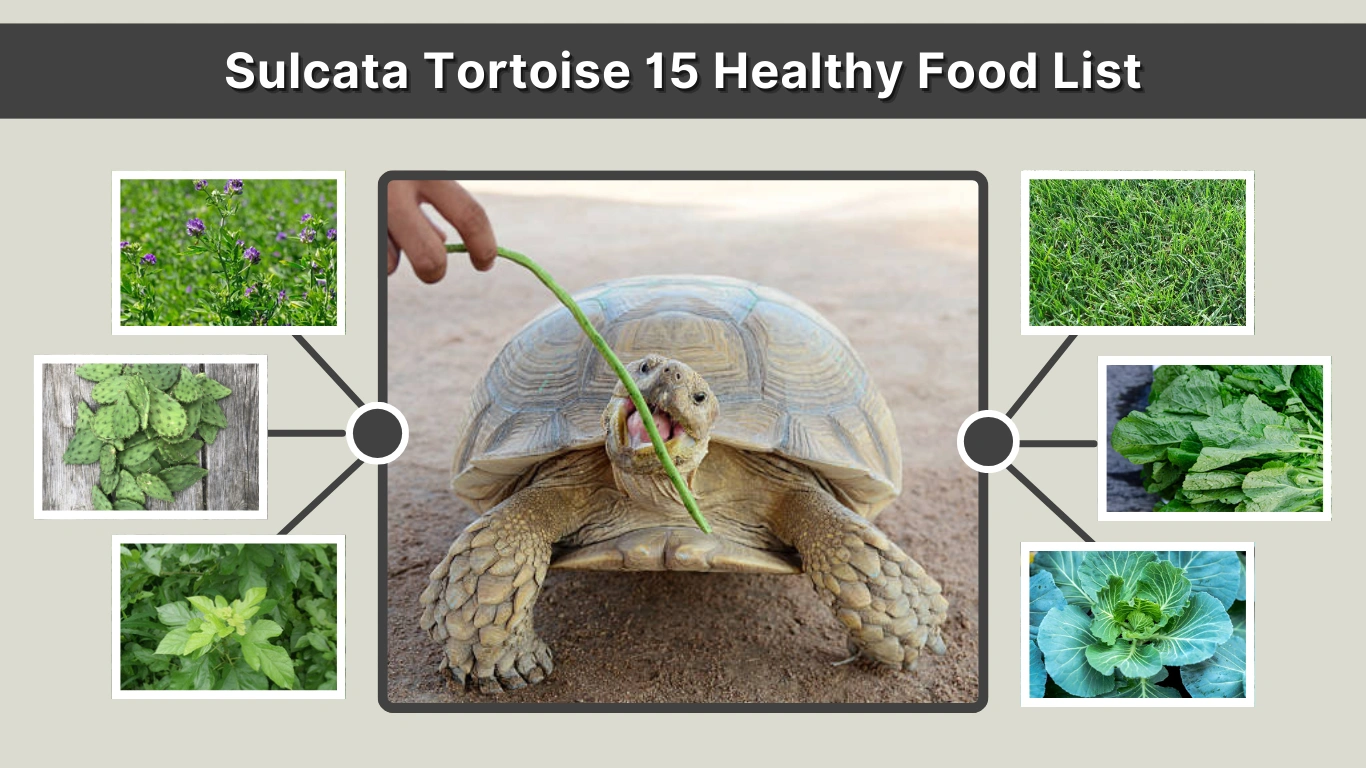
A proper diet is essential for keeping a Sulcata tortoise healthy, active, and growing correctly. In the wild, these tortoises spend most of their time grazing on fibrous grasses and hardy plants. Providing the right foods at home helps support digestion, prevents shell problems, and ensures strong bone development. Below is a carefully selected list of healthy, safe foods that closely match a Sulcata tortoise’s natural diet and promote long-term well-being.
1. Bermuda Grass (Cynodon dactylon)
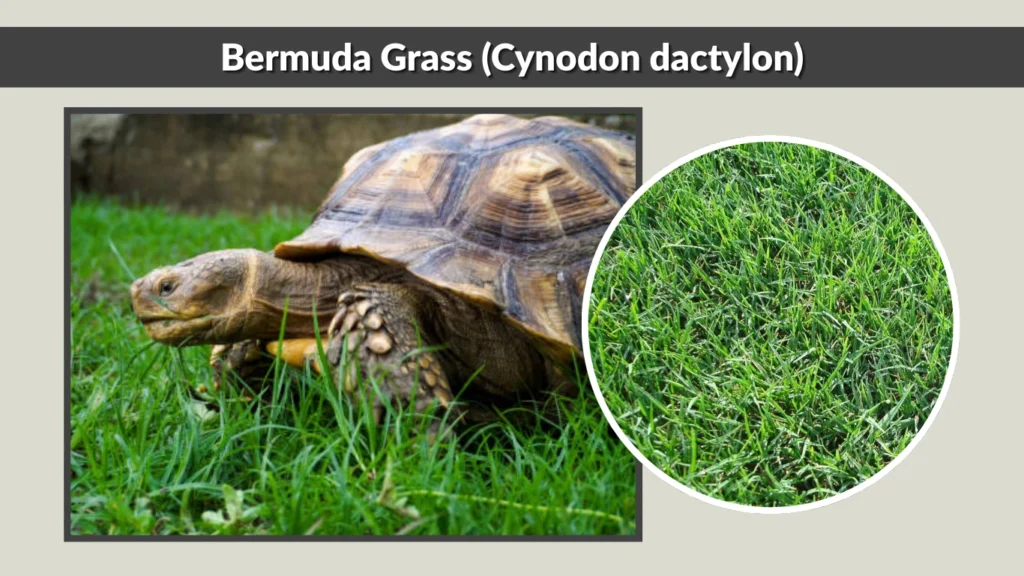
Bermuda grass is one of the most natural and ideal staple foods for a Sulcata tortoise. It closely matches what they eat in the wild—dry, fibrous grasses that support proper digestion, shell growth, and long-term health.
Health Benefits
- High fiber content supports healthy digestion
- Helps prevent obesity and shell pyramiding
- Promotes strong shell and bone development
- Maintains proper gut movement
How to Feed
Offer fresh, pesticide-free Bermuda grass daily. It can be fed freshly cut or as dried grass hay. Make sure it is clean and free from chemicals or lawn treatments.
Feeding Tips
Mix Bermuda grass with other safe grasses or leafy greens for variety. Always provide fresh water alongside and avoid feeding grass that is too young or overly soft.
2. Timothy Hay
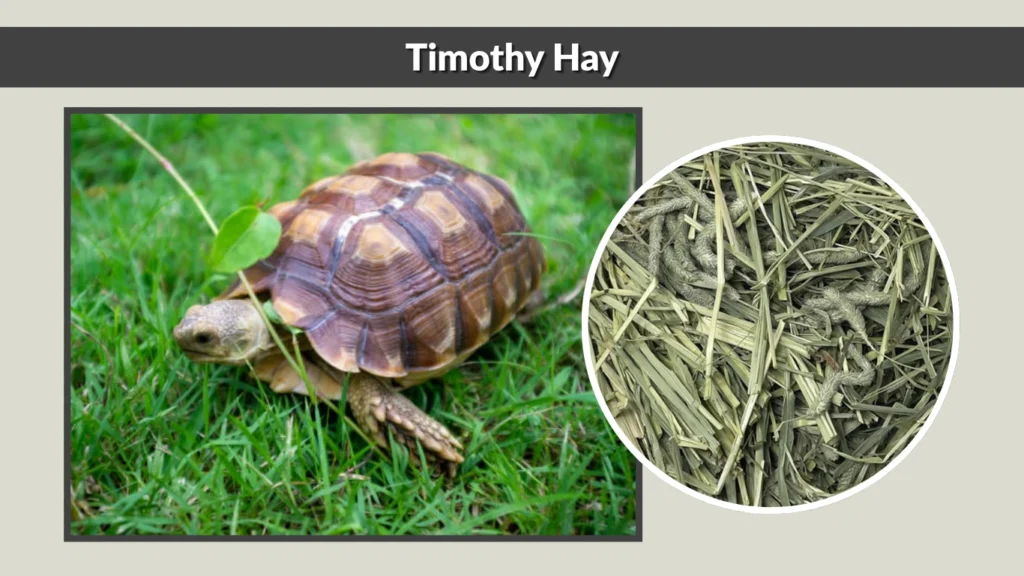
Timothy hay is an excellent grass-based food that supports a Sulcata tortoise’s digestive system and mimics their natural grazing diet. It is especially useful when fresh grass is not available.
Health Benefits
- Very high fiber for proper digestion
- Supports healthy shell growth
- Helps wear down the beak naturally
- Reduces risk of digestive problems
How to Feed
Provide Timothy hay dry and clean, placed directly on the ground or in a feeding area. It can be offered daily as a main or supplemental food.
Feeding Tips
Lightly mist the hay to increase palatability if needed. Always choose fresh-smelling hay with no mold or dust.
3. Orchard Grass
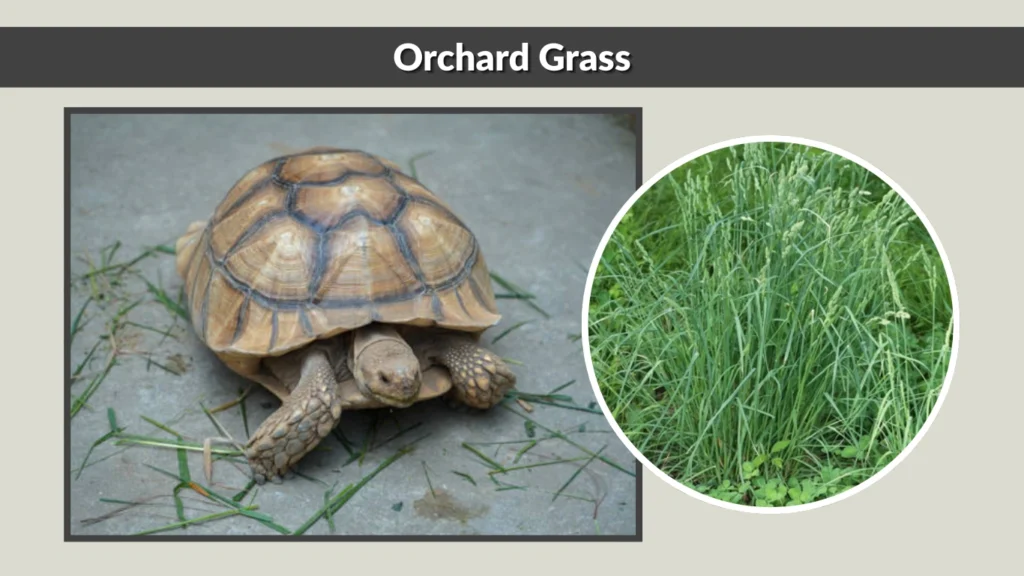
Orchard grass is a soft but fibrous grass that Sulcata tortoises readily accept. It adds variety to the diet while still meeting their nutritional needs.
Health Benefits
- Good fiber for gut health
- Encourages natural grazing behavior
- Supports steady growth without excess protein
- Helps maintain healthy weight
How to Feed
Feed fresh-cut orchard grass or dried orchard grass hay. Ensure it is free from pesticides and contaminants.
Feeding Tips
Rotate orchard grass with other safe grasses to avoid dietary boredom. Avoid feeding grass that is too young or overly lush.
4. Dandelion Greens
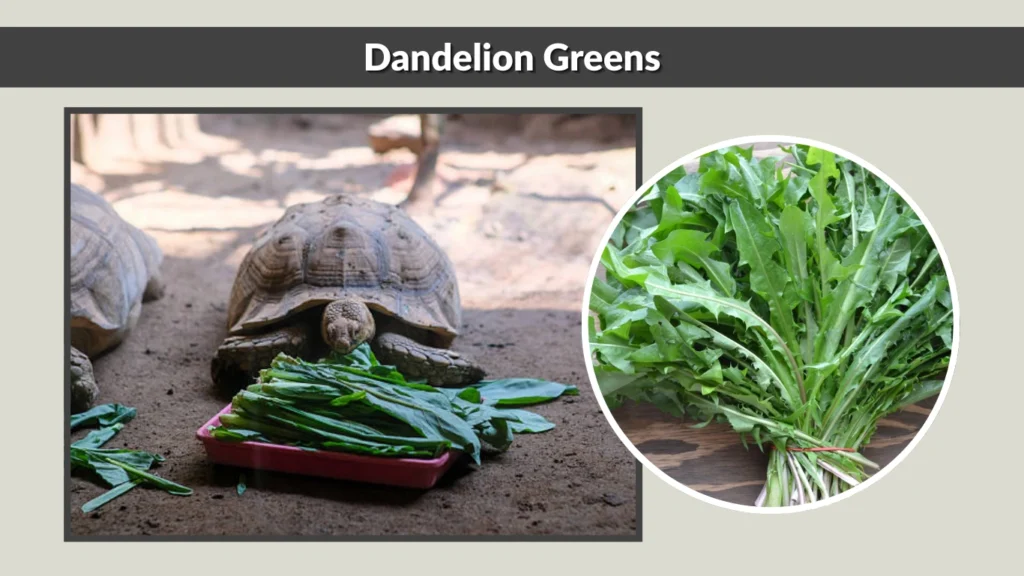
Dandelion greens are a nutritious leafy green that Sulcata tortoises can enjoy as part of a balanced diet. They are commonly found and closely resemble natural forage plants.
Health Benefits
- Rich in calcium for shell strength
- Supports healthy digestion
- Provides essential vitamins A and K
- Helps maintain overall vitality
How to Feed
Offer fresh, thoroughly washed dandelion greens. They can be fed several times per week mixed with grasses.
Feeding Tips
Use only pesticide-free plants. Avoid feeding large amounts every day to keep calcium-to-phosphorus balance healthy.
5. Collard Greens
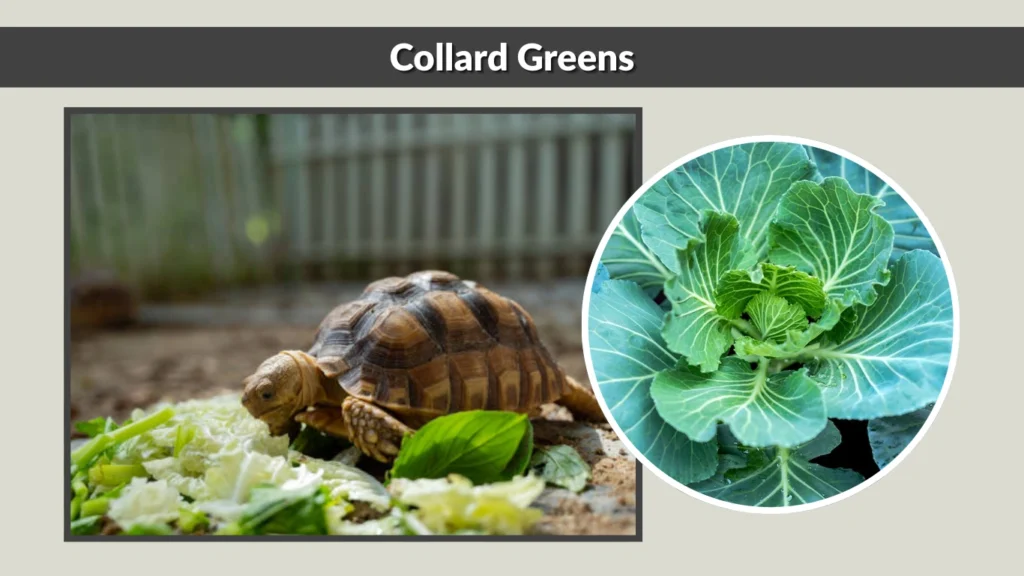
Collard greens are a hardy, calcium-rich green that works well as an occasional supplement to a grass-based Sulcata diet.
Health Benefits
- High calcium supports bone and shell health
- Provides important vitamins and minerals
- Supports muscle and nerve function
- Boosts overall nutrition
How to Feed
Chop collard greens into manageable pieces and mix with grasses or hay. Feed in moderation, not as a daily staple.
Feeding Tips
Rotate collard greens with other leafy greens to prevent over-reliance on one food source.
6. Mustard Greens
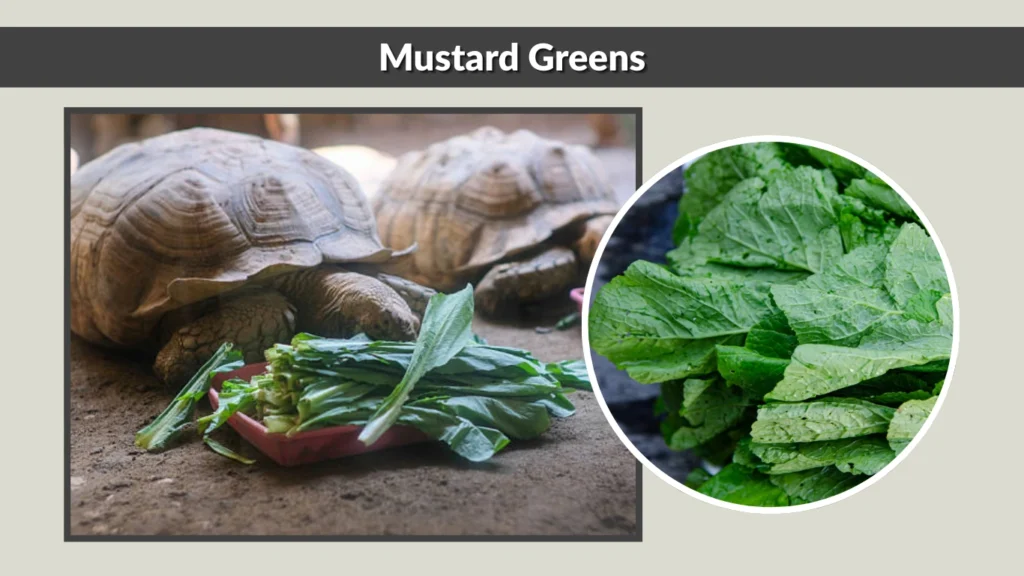
Mustard greens are a flavorful leafy green that can be safely included in a Sulcata tortoise’s diet. They add nutritional variety alongside grasses and hay.
Health Benefits
- Good source of calcium for shell health
- Provides vitamins A and C
- Supports immune function
- Aids healthy digestion
How to Feed
Serve fresh, washed mustard greens chopped into bite-sized pieces. Feed a few times per week mixed with grasses.
Feeding Tips
Avoid daily feeding to prevent excess oxalates. Always rotate with other safe greens.
7. Turnip Greens
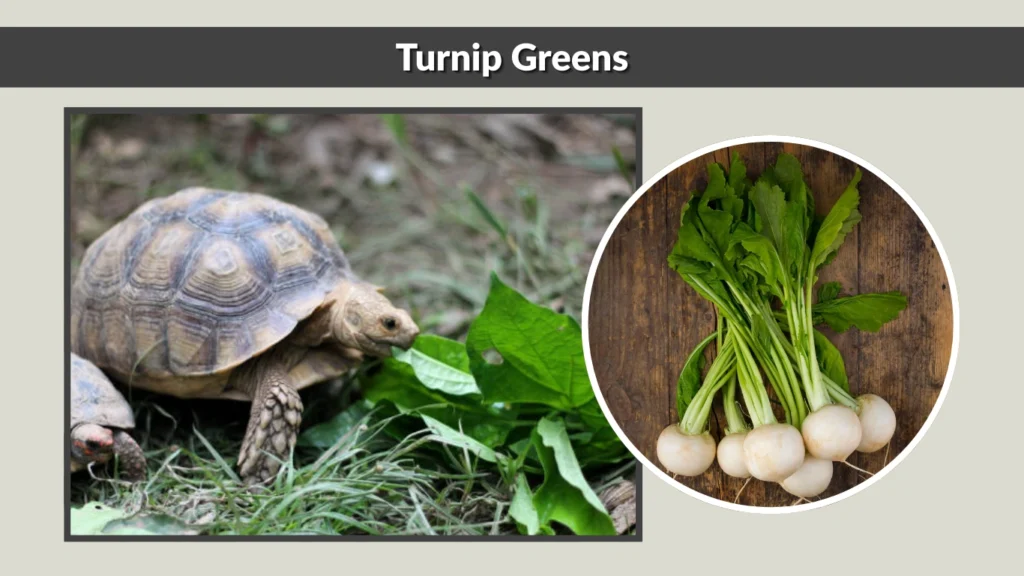
Turnip greens are another calcium-rich leafy green that complements a grass-based Sulcata diet when fed properly.
Health Benefits
- Supports strong bones and shell growth
- High fiber aids digestion
- Contains essential vitamins and minerals
- Helps maintain healthy metabolism
How to Feed
Offer fresh turnip greens, finely chopped, and mixed with hay or grass. Feed in moderation.
Feeding Tips
Balance turnip greens with other greens and grasses to avoid nutritional imbalance. Always ensure greens are pesticide-free.
8. Endive
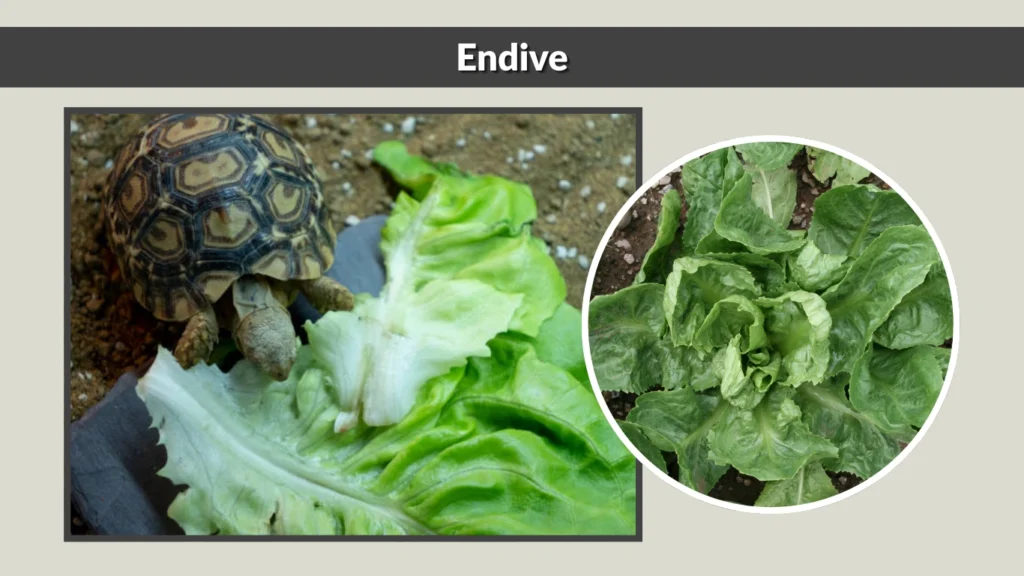
Endive is a soft, leafy green that is easy for Sulcata tortoises to eat and digest. It works well as a supplemental green alongside a grass-heavy diet.
Health Benefits
- Low in oxalates and safe for regular rotation
- Provides hydration due to high moisture content
- Supports digestive health
- Contains essential vitamins
How to Feed
Serve fresh endive leaves, washed and chopped. Feed a few times per week mixed with grasses or hay.
Feeding Tips
Do not rely on endive alone—combine it with fibrous foods to maintain proper digestion.
9. Escarole
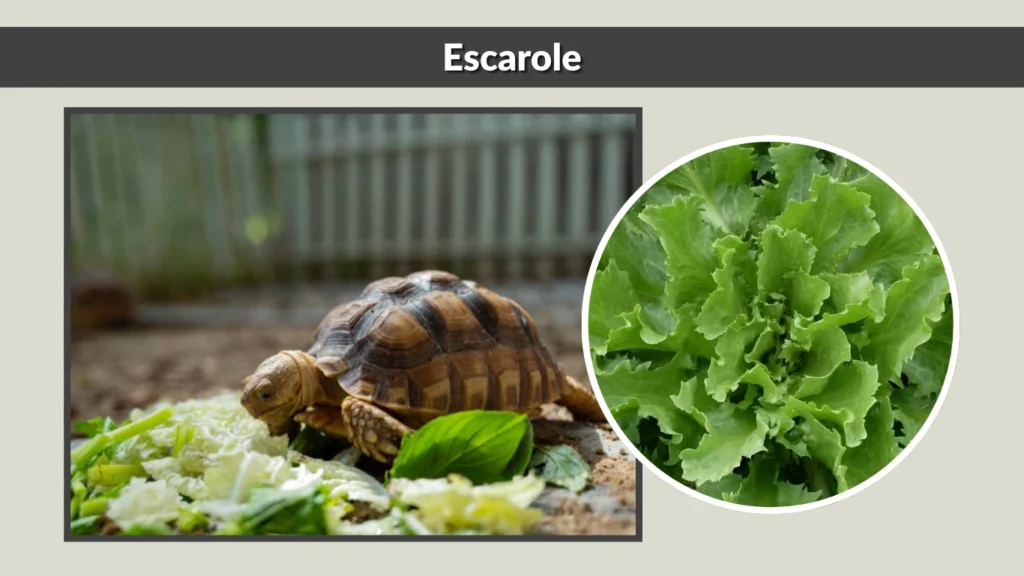
Escarole is closely related to endive and offers similar nutritional value. It adds variety and encourages appetite in Sulcata tortoises.
Health Benefits
- Good source of fiber
- Supports gut health
- Provides vitamins A and K
- Helps maintain balanced nutrition
How to Feed
Offer fresh escarole leaves, cleaned and cut into manageable pieces. Feed in moderation.
Feeding Tips
Rotate escarole with other leafy greens and grasses to keep the diet diverse and balanced.
10. Hibiscus Leaves
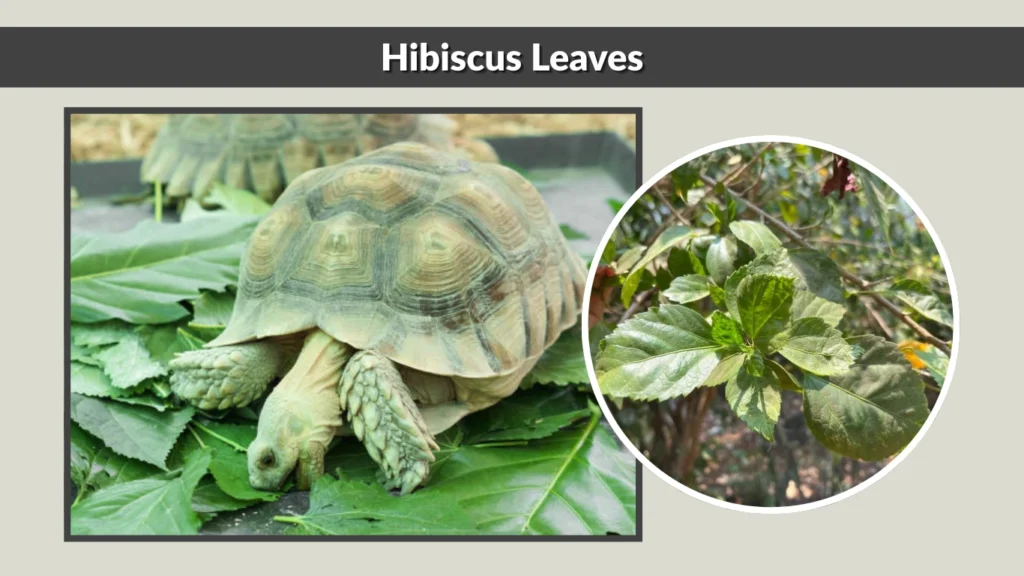
Hibiscus leaves are a natural, safe food that Sulcata tortoises often enjoy. They closely resemble plants found in their native habitat and can be fed fresh.
Health Benefits
- High fiber supports digestion
- Provides natural vitamins and minerals
- Supports shell and bone health
- Encourages natural foraging behavior
How to Feed
Offer fresh, pesticide-free hibiscus leaves. They can be fed several times per week, either alone or mixed with grasses.
Feeding Tips
Only use leaves from untreated plants. Flowers can also be fed occasionally, but leaves should be the main portion.
11. Mulberry Leaves
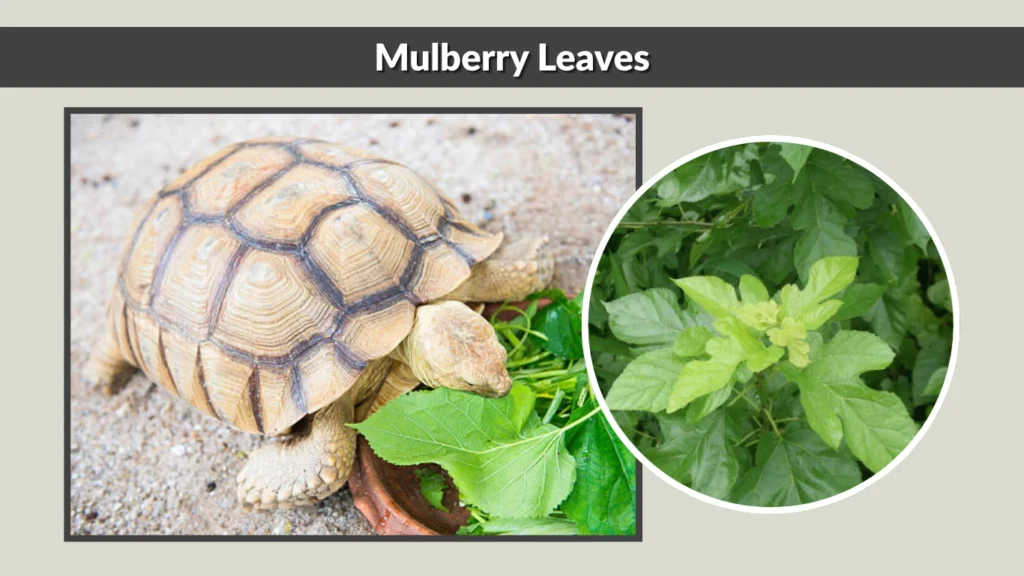
Mulberry leaves are an excellent natural forage option for Sulcata tortoises. They are highly nutritious and well accepted.
Health Benefits
- Rich in calcium for strong shell growth
- Good fiber content aids digestion
- Supports steady, healthy growth
- Helps maintain overall vitality
How to Feed
Serve fresh mulberry leaves, washed and whole or torn into smaller pieces. Feed as part of a rotating diet.
Feeding Tips
Avoid feeding dried or old leaves. Use young to mature leaves from chemical-free trees only.
12. Grape Leaves
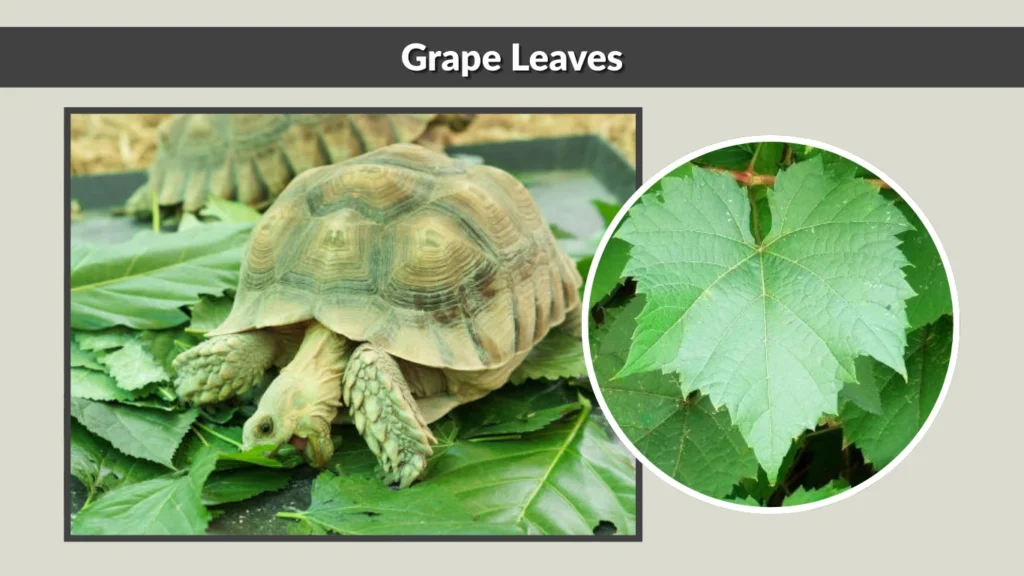
Grape leaves are a safe and nutritious leafy food that can be included in a Sulcata tortoise’s diet. They are fibrous and closely match natural forage plants.
Health Benefits
- Good fiber for healthy digestion
- Contains calcium for shell support
- Helps maintain gut balance
- Encourages natural grazing behavior
How to Feed
Offer fresh, thoroughly washed grape leaves. They can be fed a few times per week mixed with grasses or hay.
Feeding Tips
Use only pesticide-free leaves. Avoid grape fruit and vines treated with chemicals.
13. Prickly Pear Cactus Pads (Opuntia)
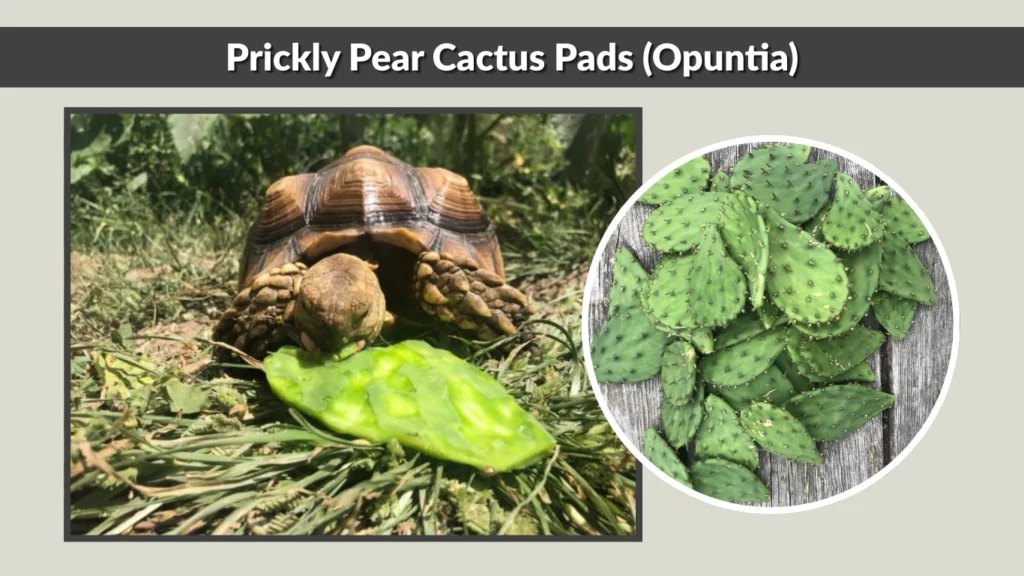
Prickly pear cactus pads are one of the best natural foods for Sulcata tortoises. They are commonly eaten in the wild and provide both nutrition and hydration.
Health Benefits
- Excellent calcium content for shell health
- Provides hydration naturally
- Supports digestion and gut health
- Helps prevent dehydration
How to Feed
Remove spines completely, then chop or slice the cactus pads before feeding. Serve fresh.
Feeding Tips
Feed regularly but in rotation with grasses. Always ensure all spines are removed to prevent mouth injury.
14. Plantain Weeds (Broadleaf Plantain)
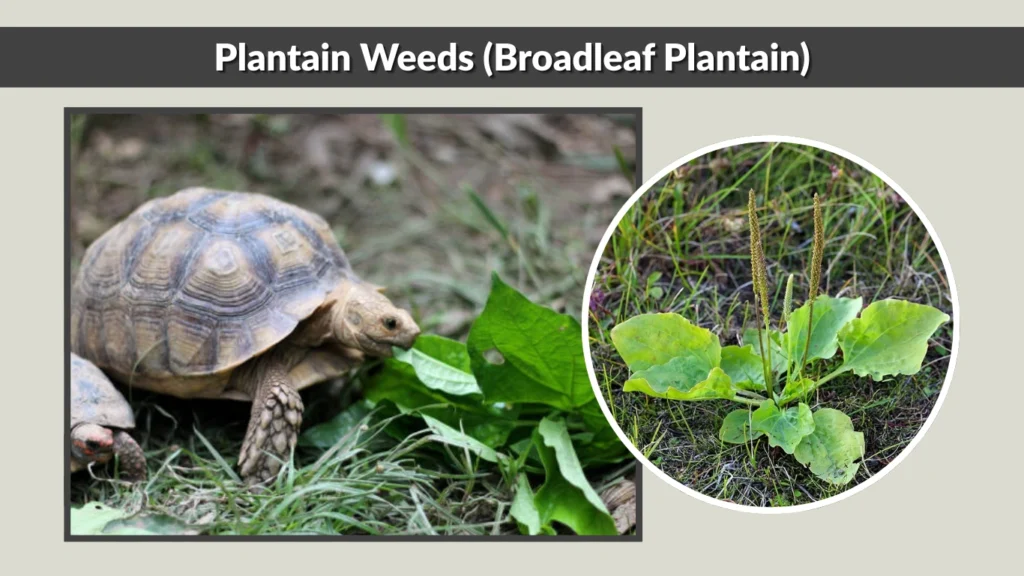
Plantain weeds are a common wild forage plant that Sulcata tortoises can safely eat. They are tough, fibrous, and closely resemble natural grazing foods.
Health Benefits
- High fiber supports healthy digestion
- Good calcium content for shell strength
- Supports natural gut movement
- Helps maintain healthy weight
How to Feed
Offer fresh, washed plantain leaves collected from pesticide-free areas. Feed mixed with grasses or hay.
Feeding Tips
Only harvest from clean areas away from roads or chemicals. Rotate with other weeds and greens.
15. Alfalfa Hay
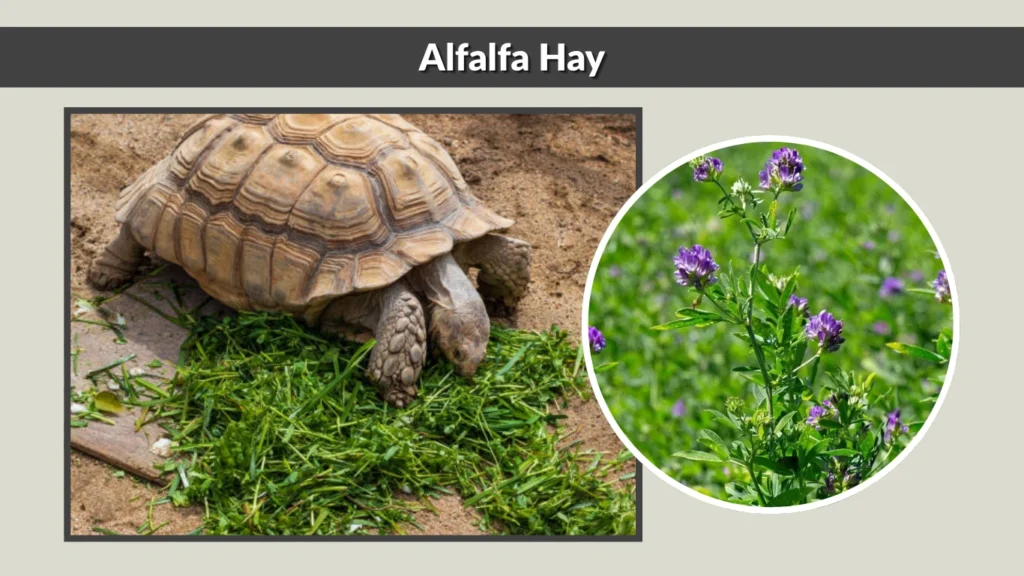
Alfalfa hay can be used as an occasional supplement in a Sulcata tortoise’s diet. While nutritious, it should not replace grass hay as a staple.
Health Benefits
- High calcium supports bone and shell health
- Provides protein for growth (especially juveniles)
- Adds dietary variety
- Supports overall nutrition
How to Feed
Feed alfalfa hay in small amounts, mixed with grass hay. Best suited for young or growing tortoises.
Feeding Tips
Avoid frequent feeding for adults due to high protein levels. Always balance with low-protein grasses.