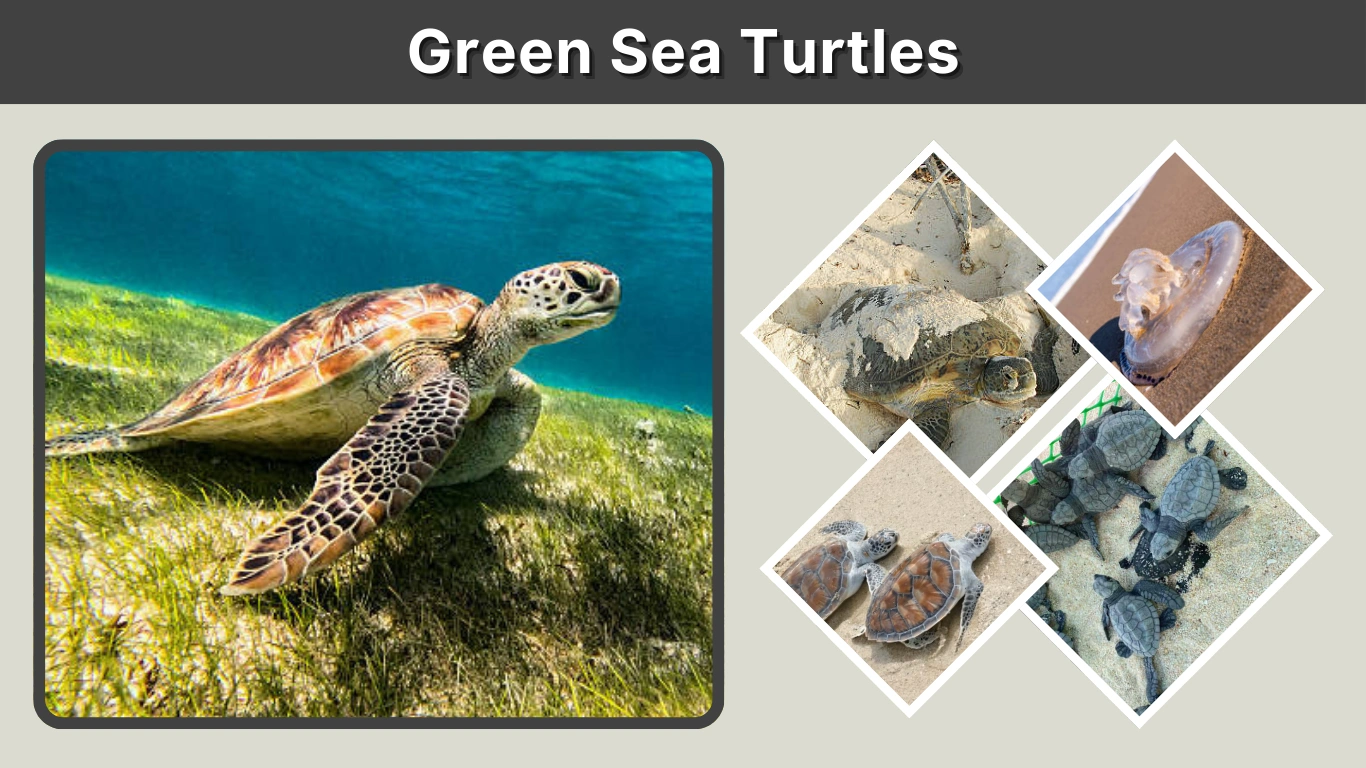
Green sea turtles are one of the most well-known and widely distributed sea turtle species in the world. They are named not for the color of their shells, but for the greenish fat found beneath their skin, which comes from their plant-based diet. These ancient marine reptiles have existed for more than 100 million years and play a critical role in maintaining healthy ocean ecosystems. Found in warm oceans across the globe, green sea turtles are both ecological guardians and powerful symbols of ocean conservation.
What Is a Green Sea Turtle?
The green sea turtle is a large marine reptile belonging to the family Cheloniidae. Its scientific name is Chelonia mydas. Unlike most other sea turtles that remain largely carnivorous throughout life, adult green sea turtles are primarily herbivores. This unique feeding behavior shapes not only their biology, but also entire coastal ecosystems.
Green sea turtles are strong swimmers, capable of traveling thousands of kilometers between feeding areas and nesting beaches. They spend most of their lives in the ocean, coming ashore only when females lay eggs. Because they rely on both healthy beaches and productive seagrass meadows, their survival depends on multiple interconnected marine habitats.
Scientific Classification
Green sea turtles are reptiles, meaning they breathe air, are cold-blooded, and lay eggs on land. They belong to the order Testudines and the family Cheloniidae, which includes most hard-shelled sea turtles. Within this family, Chelonia mydas is the only living species of the genus Chelonia. Their streamlined bodies, powerful front flippers, and lightweight shells are all adaptations for life in open water.
Why They Are Called “Green”
The name “green sea turtle” does not describe the shell, which is usually brown, olive, or gray with radiating patterns. Instead, it refers to the greenish color of the turtle’s body fat. This coloration develops because adult green sea turtles eat mostly seagrasses and algae. The pigments from these plants accumulate in their tissues, giving the fat a green tone that early naturalists used for naming the species.
Identification and Physical Features
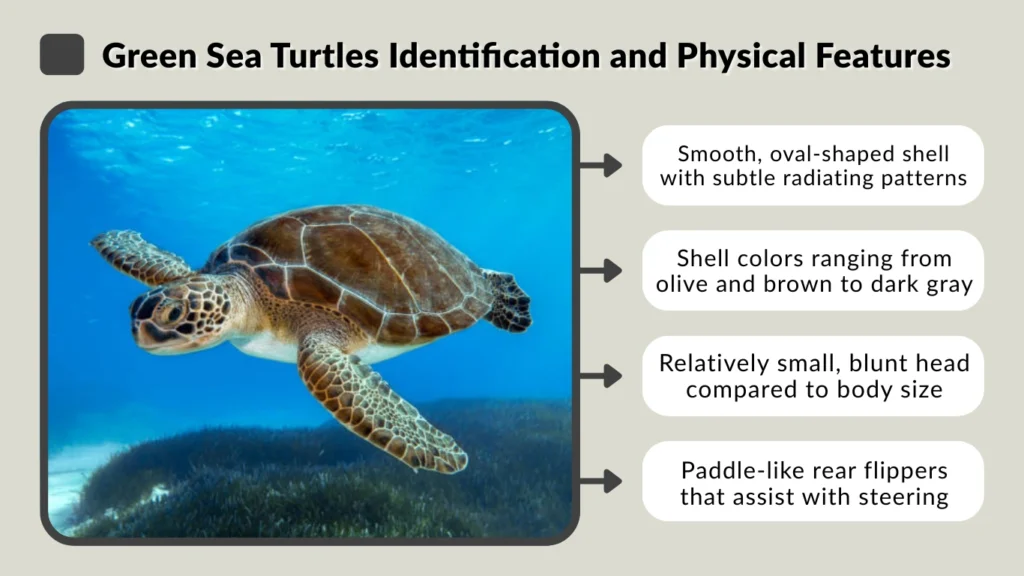
Green sea turtles are among the largest hard-shelled sea turtles. Adults typically measure 3 to 4 feet (90–120 cm) in shell length and can weigh between 250 and 400 pounds (113–180 kg), although some individuals grow even larger.
- Smooth, oval-shaped shell with subtle radiating patterns
- Shell colors ranging from olive and brown to dark gray
- Relatively small, blunt head compared to body size
- One pair of scales between the eyes, a key identifying feature
- Long, powerful front flippers used for long-distance swimming
- Paddle-like rear flippers that assist with steering
- Streamlined body adapted for efficient ocean travel
- Juveniles often darker, becoming lighter and more patterned with age
Their beak is finely serrated, an adaptation that helps them tear seagrasses and scrape algae from rocks. Males and females look similar, but adult males usually have longer tails and more curved claws on their front flippers, which help them grip females during mating.
Habitat and Global Distribution
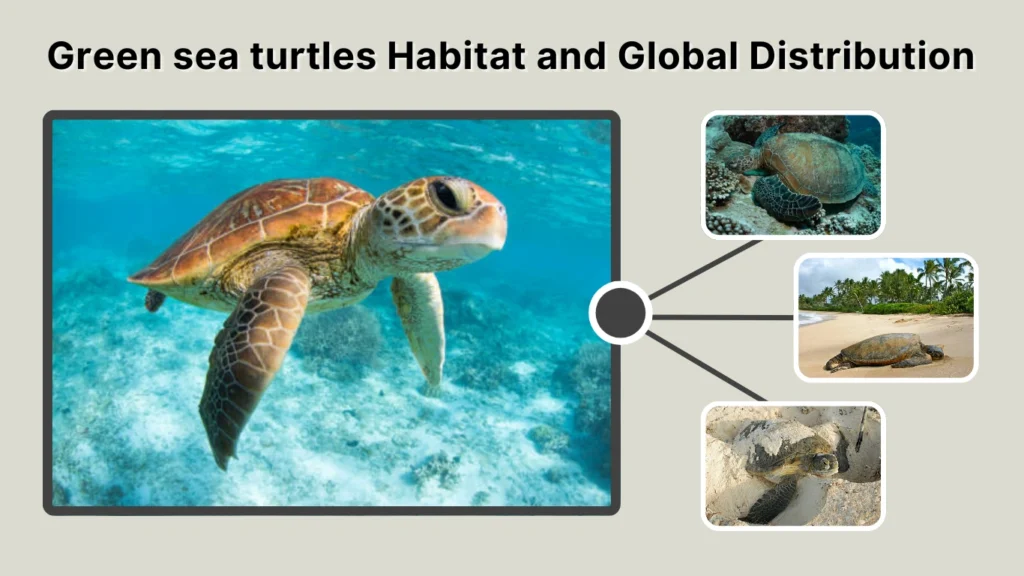
Green sea turtles live in tropical and subtropical oceans worldwide. They are commonly found in shallow coastal waters, lagoons, bays, and around coral reefs where seagrass and algae are abundant. Unlike some species that prefer deep ocean habitats, green sea turtles spend much of their adult life grazing in near-shore feeding grounds.
Ocean Regions They Inhabit
Populations of green sea turtles exist in the Atlantic, Pacific, and Indian Oceans. They are commonly seen along the coasts of the Caribbean, Central and South America, Southeast Asia, northern Australia, East Africa, and many Pacific islands. While they prefer warm waters, some individuals travel into cooler regions during seasonal migrations.
Nesting Beaches
Female green sea turtles return to sandy beaches to lay eggs, often the same beaches where they were born decades earlier. Nesting beaches are typically located in tropical regions with soft sand above the high-tide line. Well-known nesting areas include parts of Florida, Costa Rica, Mexico, Oman, Indonesia, and Australia. These beaches must remain dark, quiet, and undisturbed for successful reproduction.
Migration Patterns
Green sea turtles are famous for their long migrations. Some populations travel more than 2,000 miles between feeding areas and nesting sites. They navigate using Earth’s magnetic field, ocean currents, and possibly visual cues. These migrations connect distant ecosystems, making green sea turtles true global travelers of the oceans.
Green Sea Turtle Diet
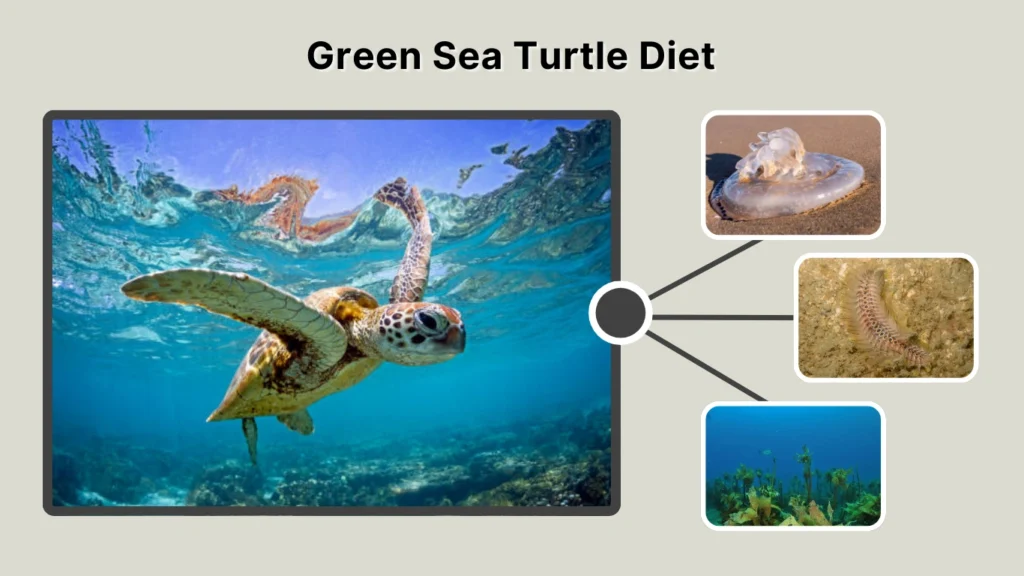
One of the most distinctive features of green sea turtles is their diet shift as they mature. Hatchlings and small juveniles are omnivorous, feeding on jellyfish, small invertebrates, and algae while living in open-ocean habitats. As they grow, they gradually move into coastal areas and transition to a mostly plant-based diet.
What Baby Green Sea Turtles Eat
Young green sea turtles consume a mixed diet of plankton, small crustaceans, jellyfish, and floating algae. This protein-rich food supports their rapid early growth and survival in the open ocean.
What Adult Green Sea Turtles Eat
Adults feed primarily on seagrasses and marine algae. By grazing constantly, they trim seagrass blades, which stimulates healthier growth and increases the productivity of seagrass meadows. This grazing behavior benefits many other marine species that depend on these habitats.
Feeding Behavior
Adult green sea turtles are slow, steady grazers. They use their strong jaws and finely serrated beaks to tear seagrass and scrape algae from rocks and coral surfaces. Most feeding takes place in shallow coastal waters where sunlight allows seagrass beds to grow. Green sea turtles often return to the same feeding grounds repeatedly, sometimes for decades. Their constant grazing prevents seagrass from becoming overgrown, improves nutrient flow, and keeps these underwater meadows healthy and productive.
Life Cycle of a Green Sea Turtle
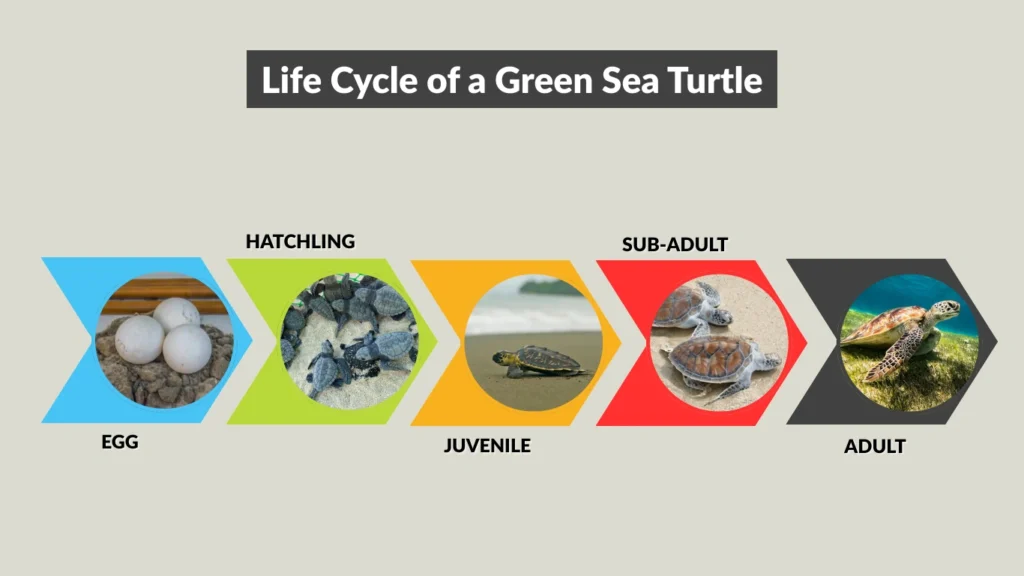
The life cycle of a green sea turtle is long, complex, and filled with danger. Only a very small number of hatchlings survive to adulthood.
- Egg stage: Females dig deep nests in warm sand and lay around 80 to 120 soft-shelled eggs.
- Hatchling stage: After about 45 to 70 days, hatchlings emerge and rush to the ocean, guided by moonlight.
- Juvenile stage: Young turtles drift in ocean currents, living among floating seaweed and feeding on small organisms.
- Sub-adult stage: As they grow, they move into coastal habitats and begin shifting toward a plant-based diet.
- Adult stage: Adults settle into feeding grounds, migrating periodically to breeding and nesting areas.
Green sea turtles grow slowly and may take 20 to 50 years to reach sexual maturity. Many live 60 years or more in the wild.
Reproduction and Nesting Behavior
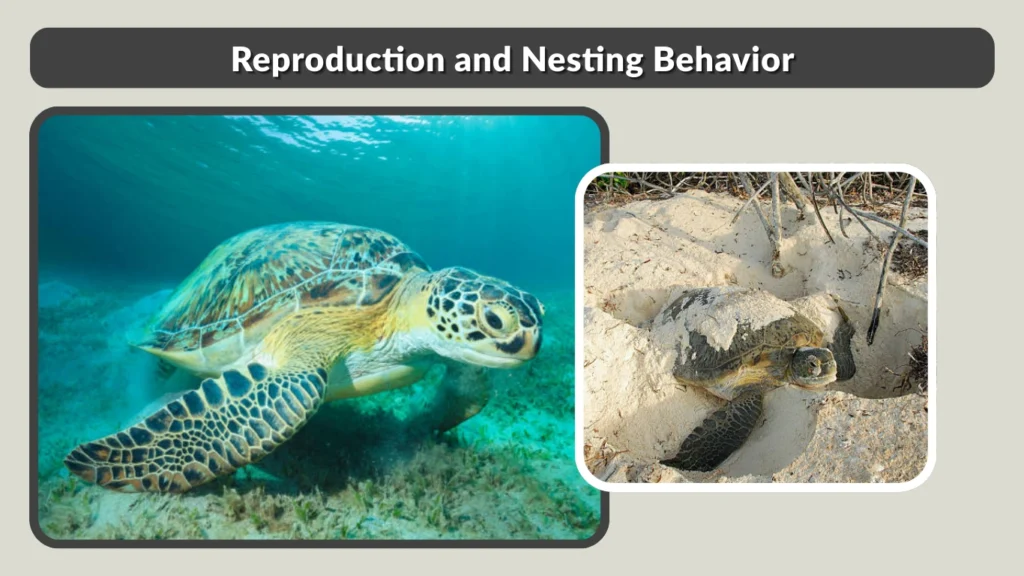
Green sea turtles mate in the ocean, usually near nesting beaches. Males may compete for access to females, and a single female can mate with multiple males during a breeding season. She can store sperm and use it to fertilize several nests.
Mating in the Ocean
Mating typically occurs in warm, shallow waters. Males use their curved claws to grip the female’s shell while floating at the surface. After mating, females return to shore several times in a season to lay eggs.
Nesting Process
At night, the female crawls onto the beach, digs a deep body pit, then creates an egg chamber using her rear flippers. After laying her eggs, she carefully covers the nest with sand and disguises the area before returning to the sea. She provides no further care.
Incubation and Hatching
Eggs incubate in warm sand for several weeks. Sand temperature determines the sex of the hatchlings—warmer sand produces more females, while cooler sand produces more males. When the hatchlings emerge, they scramble toward the ocean, facing predators immediately.
Predators and Natural Threats
Green sea turtles face predators throughout their lives, especially during their earliest stages.
- Egg predators: Raccoons, crabs, birds, and monitor lizards
- Hatchling predators: Seabirds, fish, crabs, and reef predators
- Juvenile predators: Large fish and sharks
- Adult predators: Mainly large sharks and killer whales
- Natural defenses: Hard shells, camouflage, and large body size
Despite these defenses, most green sea turtles never reach adulthood.
Conservation Status and Human Threats
Green sea turtles are currently listed as Endangered globally. While some populations are slowly recovering, many remain under severe threat.
Pollution and Plastic
Green sea turtles often mistake plastic bags for jellyfish or ingest fishing debris. Plastic can block their digestive systems, cause starvation, or release harmful toxins.
Fishing and Bycatch
Accidental capture in fishing nets and longlines is one of the leading causes of death. Boat strikes also injure or kill many turtles in busy coastal waters.
Climate Change Impact
Rising temperatures affect nesting beaches and skew hatchling sex ratios. Sea-level rise and stronger storms erode nesting beaches, reducing suitable habitat.
Importance to Marine Ecosystems
Green sea turtles are considered a keystone species because of their powerful influence on marine environments.
- Maintaining healthy seagrass beds
- Improving seagrass nutrient content
- Supporting fish and invertebrate communities
- Stabilizing coastal sediments
- Acting as indicators of ocean health
Without green sea turtles, seagrass ecosystems can become overgrown, less productive, and less capable of supporting marine biodiversity.
Green Sea Turtle vs Other Sea Turtles
Green sea turtles differ from most other sea turtles mainly in diet and body shape. While species like loggerheads and ridleys remain carnivorous, green sea turtles become primarily herbivorous as adults. They also have smoother shells and smaller heads relative to body size. These differences reflect their specialized grazing lifestyle and shallow-water feeding habits.
Interesting Facts About Green Sea Turtles
Green sea turtles can hold their breath for several hours while resting. They can sense Earth’s magnetic field to navigate across oceans. Some populations migrate thousands of miles between feeding and nesting grounds. Despite their size, they are graceful swimmers, using their front flippers like wings to “fly” through the water.
FAQs
Are green sea turtles endangered?
Yes, green sea turtles are listed as endangered worldwide. Their populations have declined due to egg harvesting, habitat loss, fishing bycatch, plastic pollution, and climate change. Conservation programs, protected nesting beaches, and fishing regulations are helping some populations slowly recover.
How long do green sea turtles live?
Green sea turtles are long-lived animals. Most scientists estimate their lifespan to be 60 to 80 years, and possibly longer. They grow slowly and may take several decades to reach sexual maturity, which makes population recovery a slow process.
What do green sea turtles eat most?
Adult green sea turtles eat mostly seagrasses and marine algae. This plant-based diet is unusual among sea turtles. Young turtles eat a mixed diet of small animals and algae before gradually shifting to mostly vegetation as they grow.
Where are green sea turtles commonly found?
Green sea turtles live in tropical and subtropical oceans around the world. They are commonly found near coastlines, coral reefs, bays, and seagrass meadows in regions such as the Caribbean, Pacific islands, Southeast Asia, Australia, and East Africa.
Why are green sea turtles important to oceans?
Green sea turtles help maintain healthy seagrass beds by grazing regularly. This improves seagrass growth, supports fish populations, and stabilizes coastal ecosystems. Their presence indicates a balanced marine environment and contributes to overall ocean biodiversity.