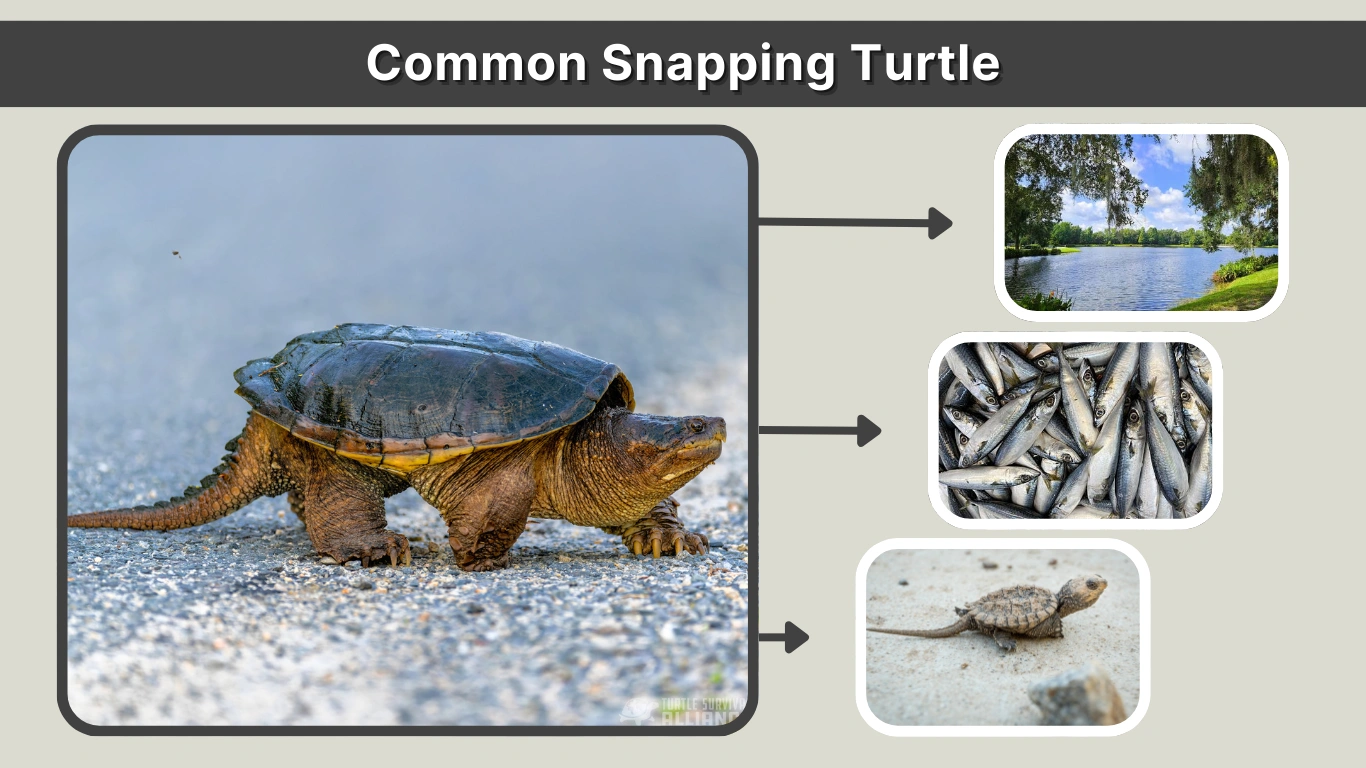
The common snapping turtle is one of the most powerful and misunderstood freshwater turtles in North America. Known for its aggressive appearance, sharp beak, and strong bite, this ancient reptile has earned a fearsome reputation. However, common snapping turtles are not naturally aggressive toward humans and usually snap only when threatened on land. These turtles are highly adaptable, capable of surviving in a wide range of aquatic environments, from quiet ponds to slow-moving rivers. With a massive body, long tail, and prehistoric look, the common snapping turtle has remained largely unchanged for millions of years, making it a fascinating subject for wildlife enthusiasts and researchers alike.
Common Snapping Turtle Scientific Name and Classification
The scientific name of the common snapping turtle is Chelydra serpentina. It belongs to the family Chelydridae, which includes snapping turtles known for their powerful jaws and defensive behavior. Unlike many other turtles, common snapping turtles cannot fully retract their heads into their shells, which explains their reliance on snapping as a primary defense mechanism. There are several subspecies recognized across North America, but all share similar physical traits and behaviors. Among freshwater turtles, common snapping turtles stand out due to their size, strength, and longevity.
How to Identify a Snapping Turtle
Common Snapping Turtle Identification Features
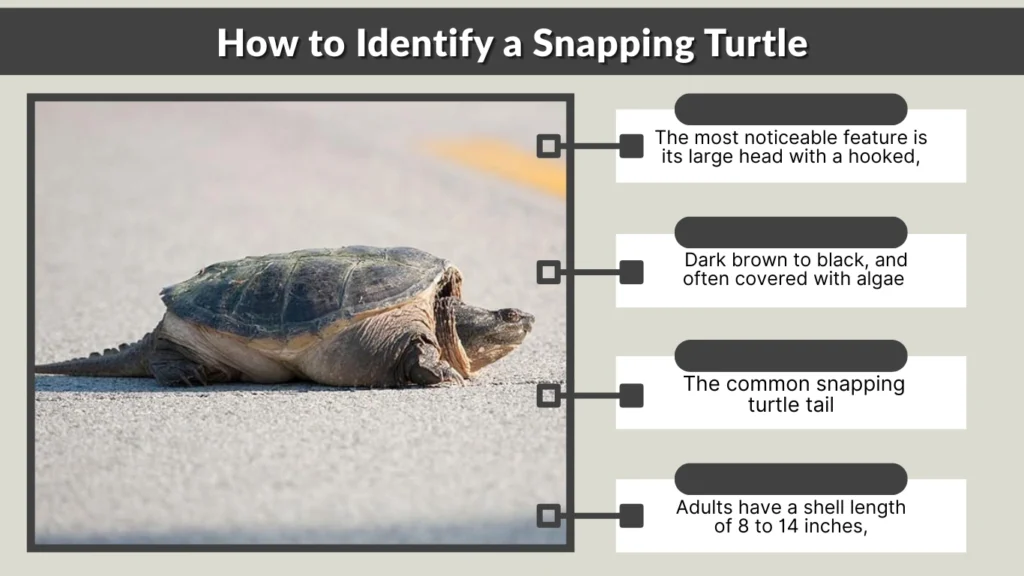
Learning how to identify a snapping turtle is important, especially in regions where multiple turtle species coexist. The most noticeable feature is its large head with a hooked, parrot-like beak. The shell is rough, dark brown to black, and often covered with algae, helping the turtle blend into muddy waters.
One of the clearest identification markers is the common snapping turtle tail, which is long, thick, and lined with saw-toothed ridges that resemble a small dinosaur’s tail. The legs are muscular with sharp claws designed for digging and gripping. Compared to softshell or painted turtles, common snapping turtle identification is relatively easy due to their bulky build and intimidating posture when threatened.
Common Snapping Turtle Size and Weight
The common snapping turtle size varies depending on age, sex, and habitat. On average, adults have a shell length of 8 to 14 inches, but larger individuals can exceed this range. Male snapping turtles are generally larger than females and have longer tails.
In terms of mass, the common snapping turtle weight typically ranges from 10 to 35 pounds, though exceptionally large specimens may weigh over 50 pounds. A large common snapping turtle can look much heavier due to its thick neck, broad shell, and muscular limbs. These turtles grow slowly, taking many years to reach full size, which contributes to their long lifespan and resilience in the wild.
Largest and Giant Common Snapping Turtles
Stories of giant common snapping turtles often circulate online, sometimes exaggerating their true size. While myths claim snapping turtles can weigh over 100 pounds, verified records show that the largest common snapping turtle specimens usually weigh between 50 and 75 pounds. These massive individuals are rare and are typically found in environments with abundant food and minimal human disturbance. Even at realistic sizes, a giant common snapping turtle is an impressive animal, capable of dominating its freshwater ecosystem.
Common Snapping Turtle Habitat and Range
Where Do Common Snapping Turtles Live?
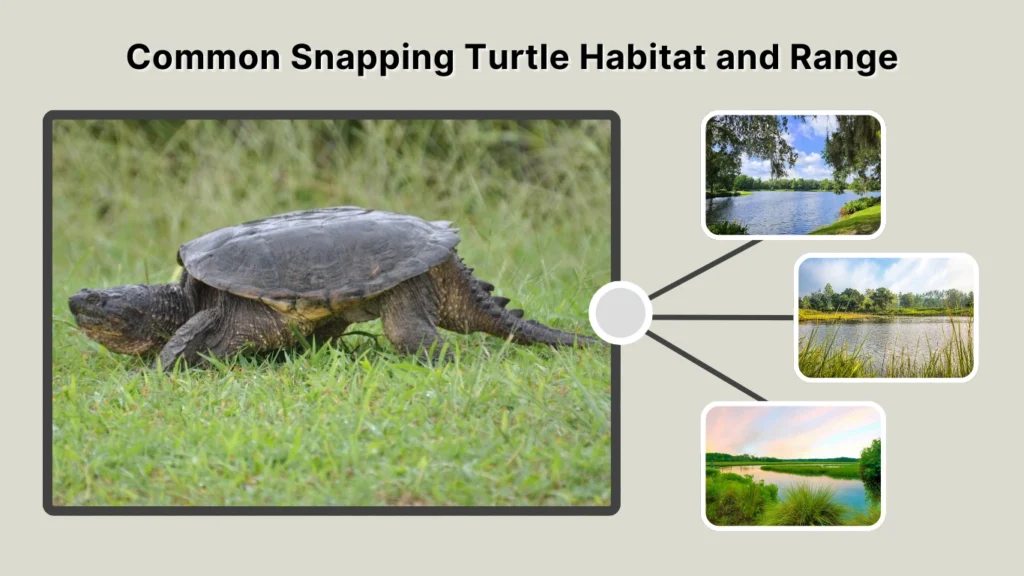
The common snapping turtle habitat includes a wide variety of freshwater environments such as lakes, ponds, marshes, swamps, rivers, and slow-moving streams. They prefer muddy bottoms where they can bury themselves and remain hidden while waiting for prey. These turtles are highly tolerant of cold water and poor water quality, allowing them to thrive where other turtle species may struggle.
The common snapping turtle range extends across much of North America, from southern Canada through the eastern and central United States and down into parts of Mexico. The Florida common snapping turtle is commonly found in freshwater systems throughout the state, though it avoids saltwater habitats. This wide distribution highlights the species’ adaptability and survival skills.
Common Snapping Turtle Diet
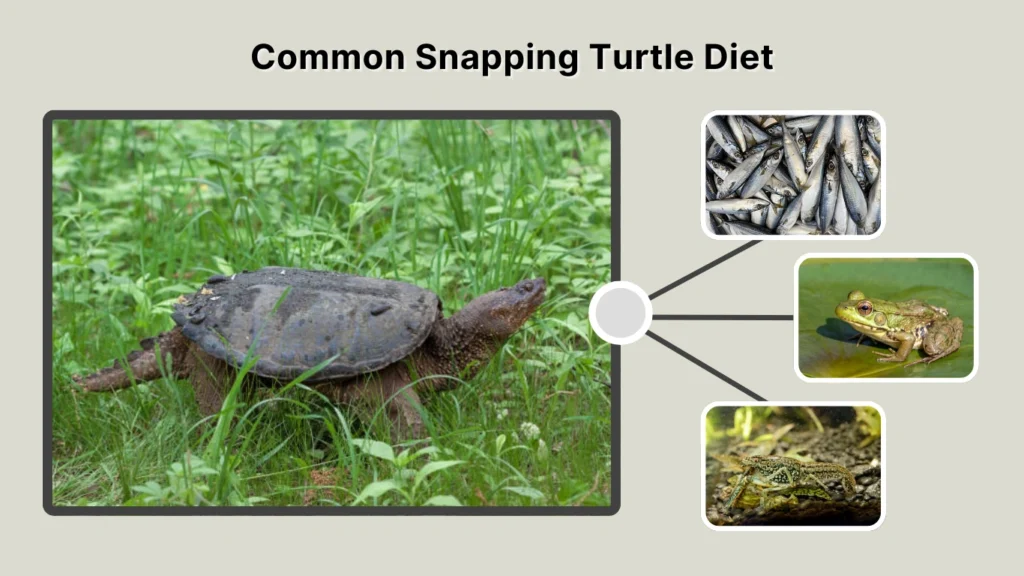
The common snapping turtle diet is highly opportunistic, making it an important part of aquatic ecosystems. These turtles are omnivores and will eat almost anything they can catch or scavenge. Their diet includes fish, frogs, insects, crayfish, snails, small mammals, birds, aquatic plants, and carrion.
Rather than actively chasing prey, snapping turtles often use an ambush strategy, lying motionless on the bottom until prey comes within reach. This feeding behavior helps conserve energy and allows even older turtles to feed effectively.
Common Snapping Turtle Bite and Behavior
The common snapping turtle bite is one of the main reasons this species has such a fearsome reputation. On land, snapping turtles feel vulnerable because they cannot fully pull their head into their shell. As a result, they may hiss, lunge, or snap when approached. Their powerful jaws and sharp beak are capable of inflicting serious injuries, which is why handling a snapping turtle is strongly discouraged.
In the water, however, common snapping turtles behave very differently. They are generally calm and non-aggressive, preferring to swim away rather than confront threats. Despite popular belief, snapping turtles do not actively attack humans. Most bites occur when people attempt to move or provoke them. Understanding their defensive behavior helps reduce unnecessary fear and promotes safer coexistence.
Common Snapping Turtle Predators
Adult common snapping turtles have very few natural enemies due to their large size, thick shells, and aggressive defense mechanisms. However, younger turtles face many threats. Common snapping turtle predators primarily target eggs, hatchlings, and juveniles.
Natural predators include raccoons, foxes, skunks, birds of prey, snakes, and large fish. Humans are also one of the greatest threats, both through habitat destruction and vehicle collisions when turtles cross roads during nesting season. While only a small percentage of hatchlings survive to adulthood, those that do often live long, stable lives in the wild.
Common Snapping Turtle Life Cycle
Common Snapping Turtle Eggs and Nesting
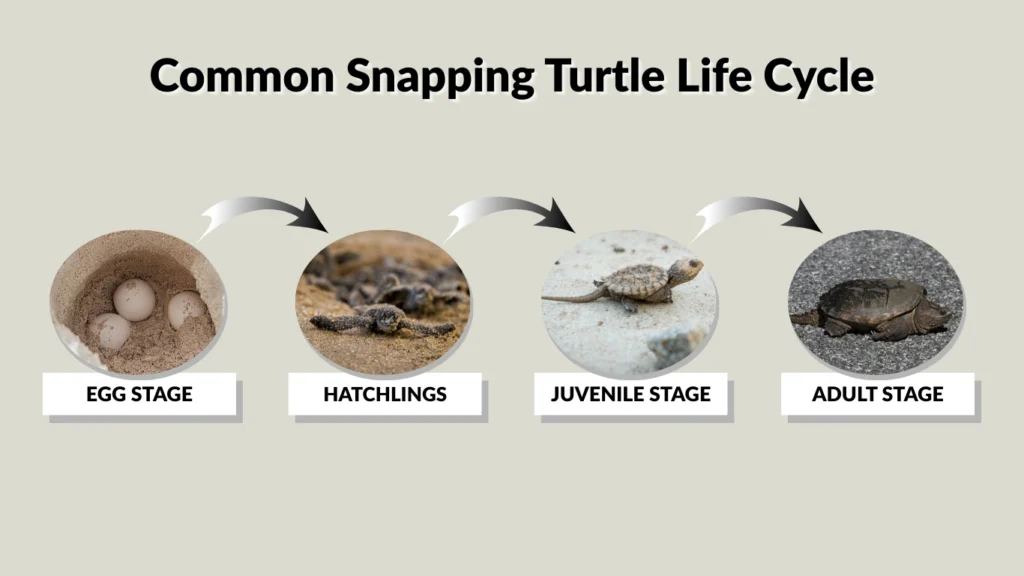
Female snapping turtles leave the water in late spring or early summer to lay their eggs. Using their strong hind legs, they dig nests in sandy or loose soil, often near roadsides or open areas with sunlight. A single clutch may contain 20 to 50 common snapping turtle eggs, depending on the size and age of the female.
After laying the eggs, the female covers the nest and returns to the water, providing no further care. The eggs incubate for approximately 9 to 18 weeks, with temperature playing a key role in determining the sex of the hatchlings.
Baby Common Snapping Turtle and Hatchling Stage
A baby common snapping turtle is tiny compared to the massive adults but already displays the species’ characteristic attitude. Common snapping turtle hatchlings typically measure only 1 to 2 inches in shell length and weigh just a few grams. Despite their size, they may snap when threatened, showing instinctive defensive behavior from birth.
Survival rates are extremely low at this stage. Predators, environmental conditions, and human activity greatly reduce the number of young turtles that reach adulthood. Those that survive grow slowly over many years, eventually becoming dominant aquatic predators.
Common Snapping Turtle Lifespan
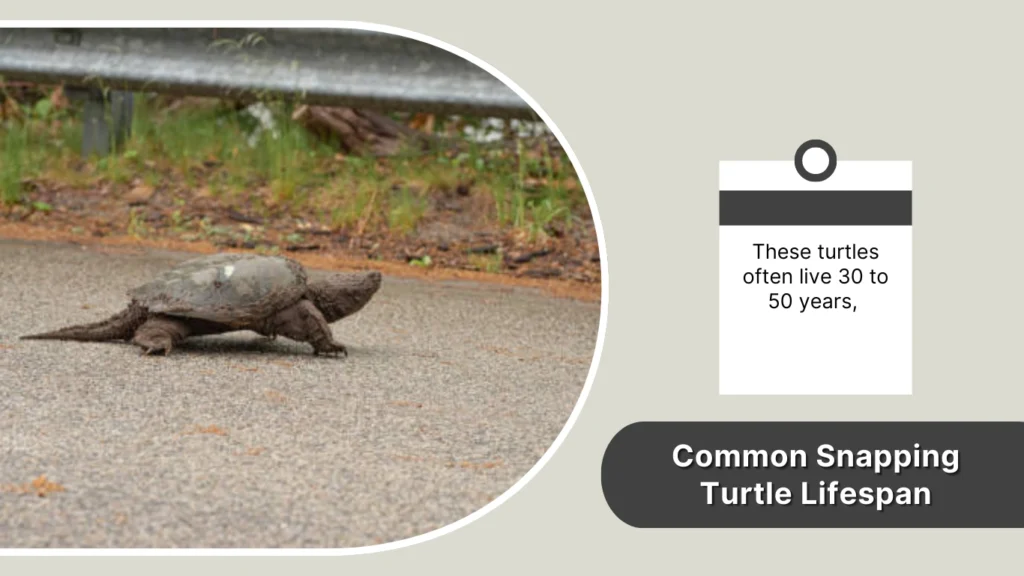
The common snapping turtle lifespan is remarkably long. In the wild, these turtles often live 30 to 50 years, with some individuals believed to exceed 70 years. Their slow growth rate, tough shells, and adaptability contribute to their longevity. Because they mature late, it can take over a decade for a snapping turtle to reach reproductive age, making adult survival critical for population stability.
Common Snapping Turtle Care and Pet Considerations
Although some people are curious about common snapping turtle care, this species is not suitable for most pet owners. A common snapping turtle pet requires a very large enclosure, powerful filtration systems, and specialized care. Their aggressive defensive behavior, rapid growth, and strong bite make them dangerous to handle.
In many regions, keeping snapping turtles as pets is illegal or heavily regulated. Even when legally owned, they often outgrow home setups and become difficult to manage. For these reasons, common snapping turtles are best appreciated in the wild or in professional wildlife facilities rather than as household pets.
Interesting Common Snapping Turtle Facts
There are many fascinating common snapping turtle facts that highlight how unique this species is. Snapping turtles can absorb oxygen through specialized tissues near their cloaca, allowing them to remain underwater for long periods, especially during winter. They are among the most cold-tolerant reptiles, sometimes remaining active beneath ice-covered water.
Their lineage dates back millions of years, earning them the nickname “living fossils.” Despite their intimidating appearance, snapping turtles play a vital role in maintaining healthy aquatic ecosystems by controlling prey populations and cleaning up carrion.
Conclusion
The common snapping turtle is a powerful, ancient, and highly adaptable species that plays an essential role in freshwater ecosystems. From the vulnerable baby common snapping turtle to the massive largest common snapping turtle, each stage of life reflects resilience and survival. While their bite and appearance may seem intimidating, these turtles are not aggressive by nature and deserve respect and protection. Understanding their habitat, diet, behavior, and life cycle helps foster appreciation and coexistence with one of North America’s most remarkable reptiles.