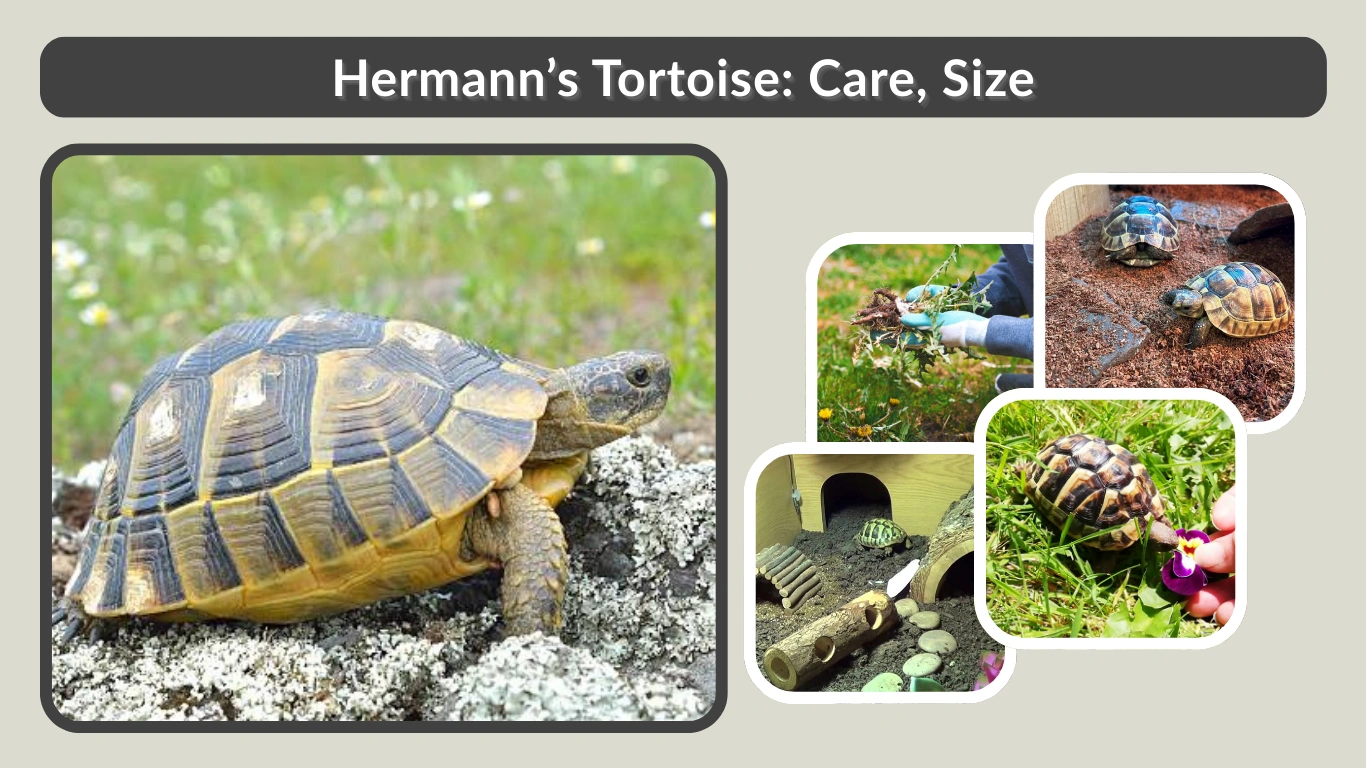
Hermann’s tortoise is one of the most popular small tortoise species kept as a pet, and for good reason. Native to southern Europe, this hardy and slow-moving reptile is known for its manageable size, attractive shell patterns, and long lifespan. Hermann’s tortoises are generally calm, curious, and well suited to captivity when proper care is provided. Because they can live for several decades, owning one is a long-term commitment rather than a short-term hobby. Understanding their natural behavior, habitat, and care requirements is essential for anyone interested in keeping or learning about this fascinating tortoise.
Hermann’s Tortoise Scientific Name and Classification
The scientific name of Hermann’s tortoise is Testudo hermanni. It belongs to the family Testudinidae, which includes all true land-dwelling tortoises. Unlike turtles, Hermann’s tortoises are not adapted for swimming and spend their lives entirely on land. They are named after the German naturalist Johann Hermann, who first described the species in the 18th century. Hermann’s tortoise is considered one of the smallest and most cold-tolerant Mediterranean tortoises, which contributes to its popularity among reptile keepers.
Types of Hermann’s Tortoise
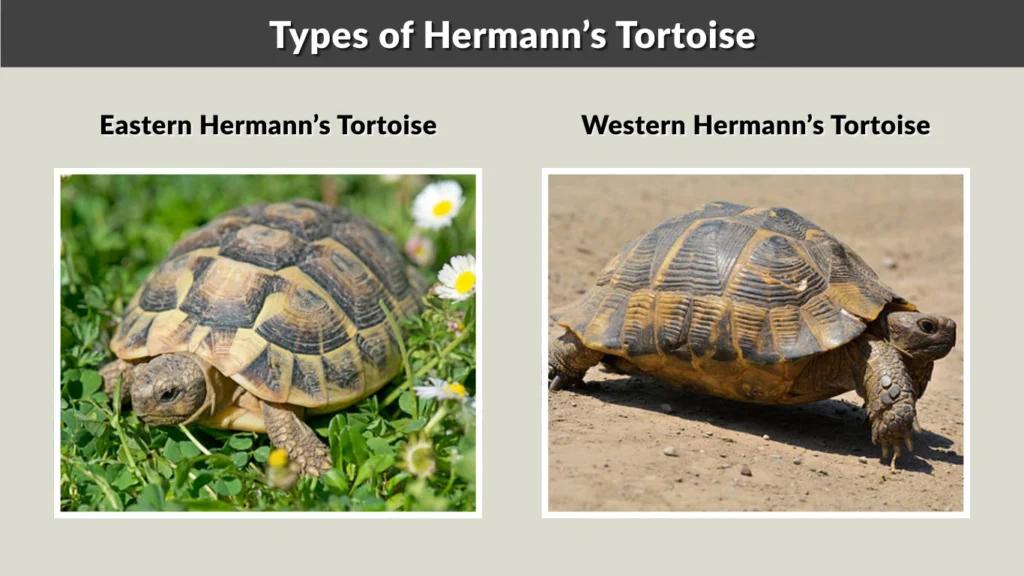
There are two main recognized subspecies of Hermann’s tortoise, each with distinct physical traits and geographic origins.
Eastern Hermann’s Tortoise
The eastern Hermann’s tortoise (Testudo hermanni boettgeri) is generally larger than its western counterpart. It typically has a lighter shell coloration with less contrast between yellow and black markings. This subspecies is found in countries such as Greece, Bulgaria, Romania, and parts of the Balkans. Eastern Hermann’s tortoises tend to grow faster and reach a larger adult size, making them slightly more demanding in terms of enclosure space.
Western Hermann’s Tortoise
The western Hermann’s tortoise (Testudo hermanni hermanni) is smaller and more brightly colored. Its shell often displays bold yellow and black patterns, making it especially attractive. This subspecies is native to regions such as southern France, Italy, and parts of Spain. Due to its smaller size and striking appearance, the western Hermann’s tortoise is often preferred by pet owners.
Hermann’s Tortoise Identification
Proper Hermann’s tortoise identification is important, as this species is sometimes confused with Greek or Russian tortoises. One of the most reliable identification features is the shell pattern, which consists of yellow scutes with dark black markings. The underside of the shell, or plastron, usually has two continuous black stripes running lengthwise.
Another key feature is the tail. Hermann’s tortoises have a small but noticeable horny spur at the tip of the tail, which helps distinguish them from similar species. The Hermann’s tortoise shell is oval and moderately domed, providing protection while still allowing good mobility on land.
Hermann’s Tortoise Size and Weight
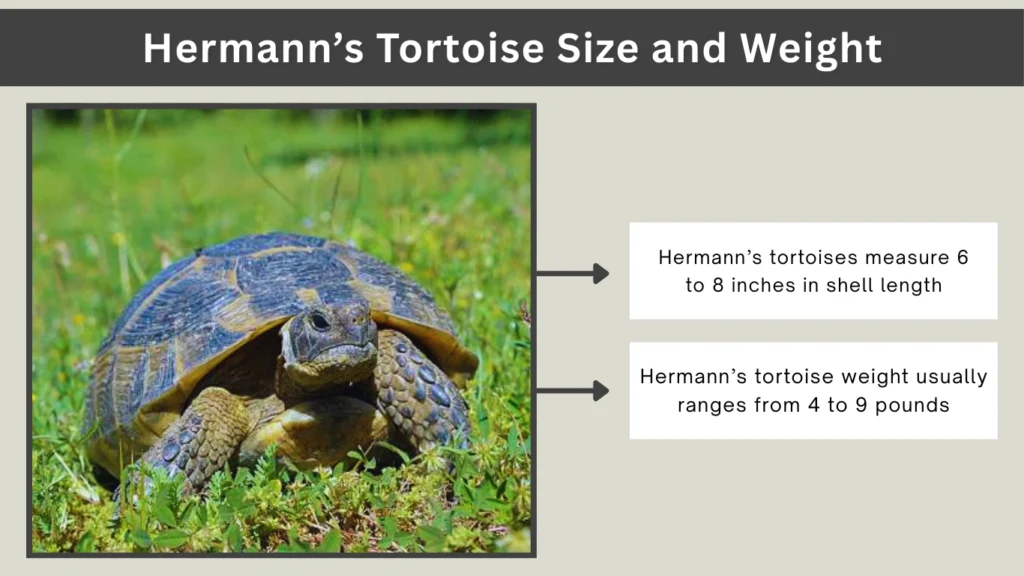
The Hermann’s tortoise size depends on subspecies, sex, and overall care. On average, adult Hermann’s tortoises measure 6 to 8 inches in shell length. Females are typically larger than males, as they need extra body space for egg development.
In terms of mass, the Hermann’s tortoise weight usually ranges from 4 to 9 pounds when fully mature. A full grown Hermann’s tortoise grows slowly and may take 10 to 15 years to reach adult size. Proper diet and enclosure conditions play a major role in healthy growth and shell development.
Hermann’s Tortoise Habitat and Natural Range
The natural Hermann’s tortoise habitat consists of dry, sunny landscapes such as Mediterranean woodlands, scrublands, grasslands, and rocky hillsides. These environments provide plenty of vegetation for grazing as well as warm temperatures for basking.
The Hermann’s tortoise range includes parts of southern Europe, particularly Spain, France, Italy, Greece, and the Balkan Peninsula. Seasonal changes in these regions have shaped the species’ behavior, including periods of reduced activity during colder months. This natural adaptation allows Hermann’s tortoises to tolerate cooler temperatures better than many other tortoise species.
Hermann’s Tortoise Diet
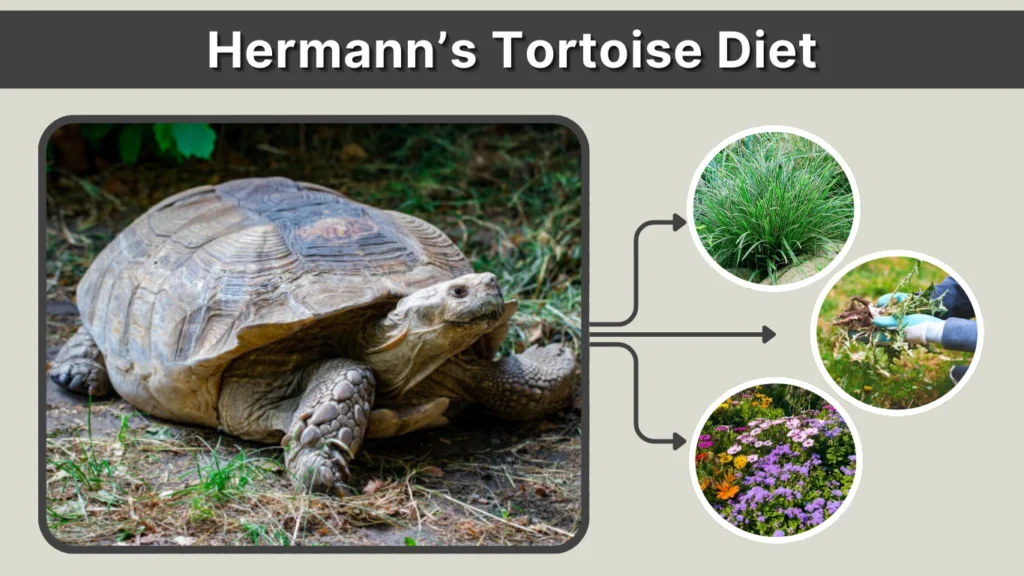
The Hermann’s tortoise diet is strictly herbivorous and closely tied to its natural habitat. In the wild, these tortoises feed on a variety of grasses, weeds, leaves, and flowers. Common foods include dandelion greens, plantain, clover, and hibiscus leaves.
A proper diet in captivity should be high in fiber and calcium while low in protein and sugar. Fruits should be offered sparingly, if at all, as excessive sugar can cause digestive problems. Providing a natural, plant-based diet is one of the most important factors in maintaining long-term health.
Hermann’s Tortoise Lifespan
The Hermann’s tortoise lifespan is one of the main reasons this species is considered a serious long-term commitment. In captivity, with proper care, Hermann’s tortoises commonly live 40 to 60 years, and some individuals are known to live even longer. In the wild, lifespan can vary depending on environmental conditions, predators, and food availability. Their slow metabolism and steady growth rate contribute significantly to their longevity. Because they can outlive their owners, potential keepers should consider long-term care plans before acquiring a Hermann’s tortoise.
Hermann’s Tortoise Care and Enclosure Setup

Providing proper Hermann’s tortoise care is essential for maintaining health and preventing common problems. Whether kept indoors or outdoors, the enclosure must closely replicate the tortoise’s natural environment.
Enclosure Requirements
A suitable Hermann’s tortoise enclosure should be spacious, secure, and well-ventilated. Outdoor enclosures are ideal in warm climates, as they allow natural sunlight and grazing. Indoor enclosures require strong UVB lighting to support calcium absorption and shell health. The substrate should be a mix of soil, sand, and natural materials that allow for digging and burrowing.
Temperature and Humidity
Hermann’s tortoises need a basking area with temperatures between 90–95°F (32–35°C) and a cooler zone around 70–75°F (21–24°C). Nighttime temperatures can safely drop but should not fall too low. Humidity should remain moderate, as overly damp conditions can lead to respiratory infections.
Baby Hermann’s Tortoise and Breeding
Hermann’s Tortoise Eggs
Breeding typically occurs in spring and early summer. Females lay 2 to 6 Hermann’s tortoise eggs per clutch, often producing multiple clutches in a season. Eggs are buried in warm soil and incubate for approximately 60 to 90 days, depending on temperature.
Baby Hermann’s Tortoise and Hatchlings
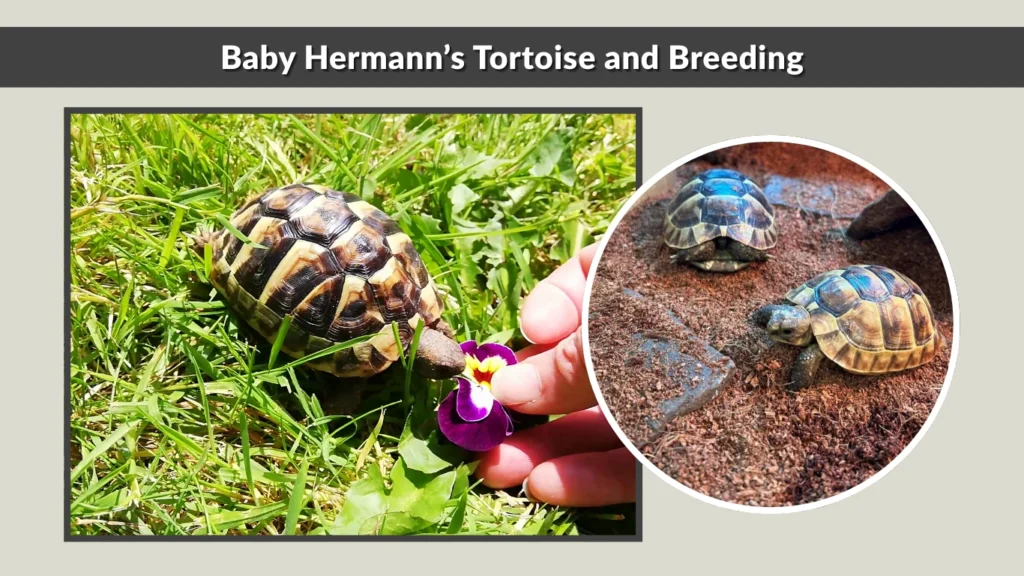
A baby Hermann’s tortoise is small and delicate, usually measuring about 1.5 to 2 inches at hatching. Hermann’s tortoise hatchlings require higher humidity than adults to ensure proper shell growth. Young tortoises should be housed separately from adults and provided with shallow water dishes and finely chopped greens. Early care is critical for preventing shell deformities and dehydration.
Hermann’s Tortoise Health Problems
Like all reptiles, Hermann’s tortoises are susceptible to certain health issues if care is inadequate. Common Hermann’s tortoise health problems include shell pyramiding, which is often caused by improper diet or low humidity. Respiratory infections may occur if temperatures are too low or conditions are too damp.
Parasites, metabolic bone disease, and eye infections can also affect Hermann’s tortoises. Regular observation, proper nutrition, and access to UVB lighting significantly reduce the risk of illness. Veterinary care from a reptile specialist is recommended if signs of lethargy, nasal discharge, or abnormal shell growth appear.
Is Hermann’s Tortoise a Good Pet?
For the right person, Hermann’s tortoise can be an excellent companion. When asking is Hermann’s tortoise a good pet, the answer depends largely on expectations and commitment. These tortoises are quiet, low-odor, and relatively hardy, making them appealing to reptile enthusiasts.
However, they require ample space, consistent care, and a long-term commitment that may span decades. They are not interactive in the traditional sense and do not enjoy frequent handling. Those willing to meet their needs will find Hermann’s tortoise to be a rewarding and fascinating pet.
Interesting Hermann’s Tortoise Facts
There are many intriguing facts that highlight the uniqueness of this species. Hermann’s tortoises are known to recognize familiar surroundings and may even learn simple routines. They are capable of brumation, a reptile form of hibernation, during colder months. Despite their slow pace, they are surprisingly strong climbers and can navigate uneven terrain with ease. Their patterned shells also serve as natural camouflage in dry, grassy environments.