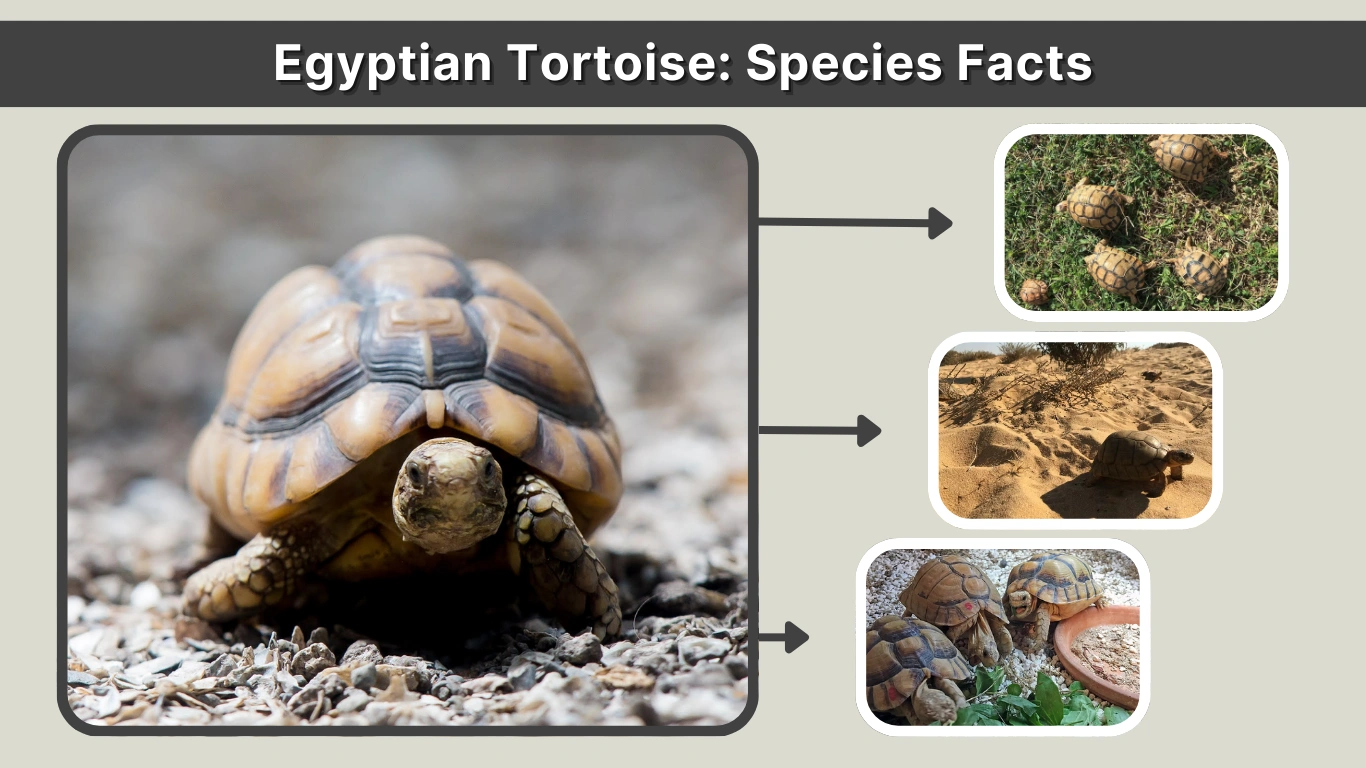
The Egyptian tortoise (Testudo kleinmanni) is one of the smallest and rarest tortoise species in the world. Native to the arid regions of North Africa, this tiny desert tortoise is known for its pale shell, gentle nature, and extreme sensitivity to environmental changes. Due to habitat loss and illegal wildlife trade, the Egyptian tortoise is now considered critically endangered in the wild. Despite its small size, it requires very specific care, making it a challenging but fascinating species for experienced reptile keepers and conservationists alike.
What Is the Egyptian Tortoise?
The Egyptian tortoise, scientifically known as Testudo kleinmanni, is a small terrestrial tortoise species belonging to the family Testudinidae. It is also sometimes called the Kleinmann’s tortoise, named after the person who first described the species in the 19th century. This tortoise is native to the desert regions of Egypt, Libya, and parts of Israel.
Among all tortoise species, the Egyptian tortoise holds the title of being one of the smallest. Its compact size and pale coloration are natural adaptations that help it survive in hot, dry desert environments. Unfortunately, these same traits have made it a target for illegal pet trade, significantly reducing its wild population over the past several decades.
Physical Characteristics
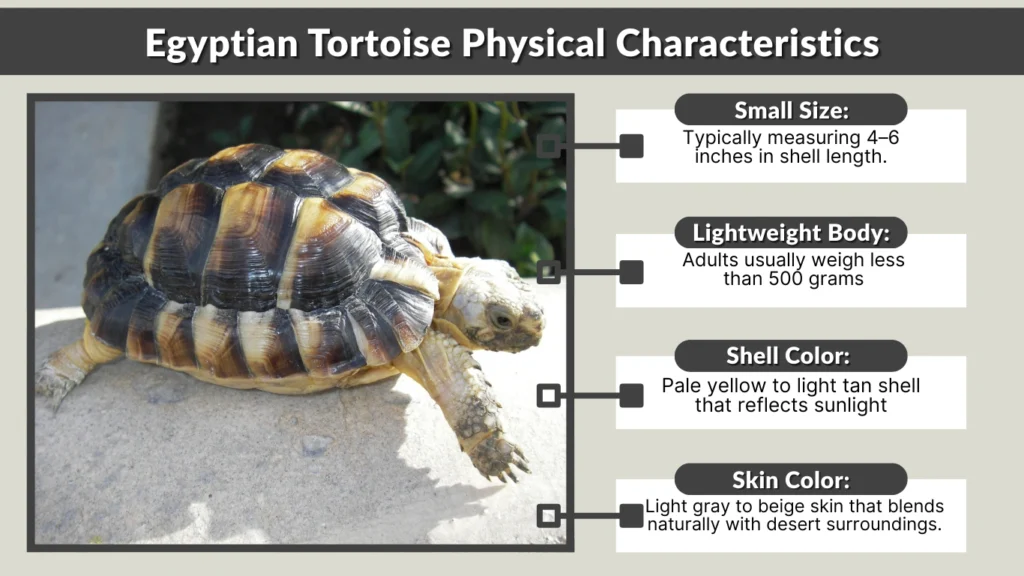
The Egyptian tortoise has several distinct physical features that help it survive in hot, arid desert environments. Despite its small size, it is well adapted to life in dry climates.
- Small Size: One of the smallest tortoise species, with adults typically measuring 4–6 inches in shell length.
- Lightweight Body: Adults usually weigh less than 500 grams, making them easy to distinguish from larger tortoise species.
- Shell Color: Pale yellow to light tan shell that reflects sunlight and reduces overheating.
- Shell Shape: Smooth, slightly domed shell that provides protection while allowing easy movement.
- Skin Color: Light gray to beige skin that blends naturally with desert surroundings.
- Strong Limbs: Sturdy legs with short claws designed for walking on dry, sandy terrain rather than digging.
- Sexual Dimorphism: Females are generally larger and broader than males, with a more rounded shell.
Natural Habitat and Distribution
Native Range
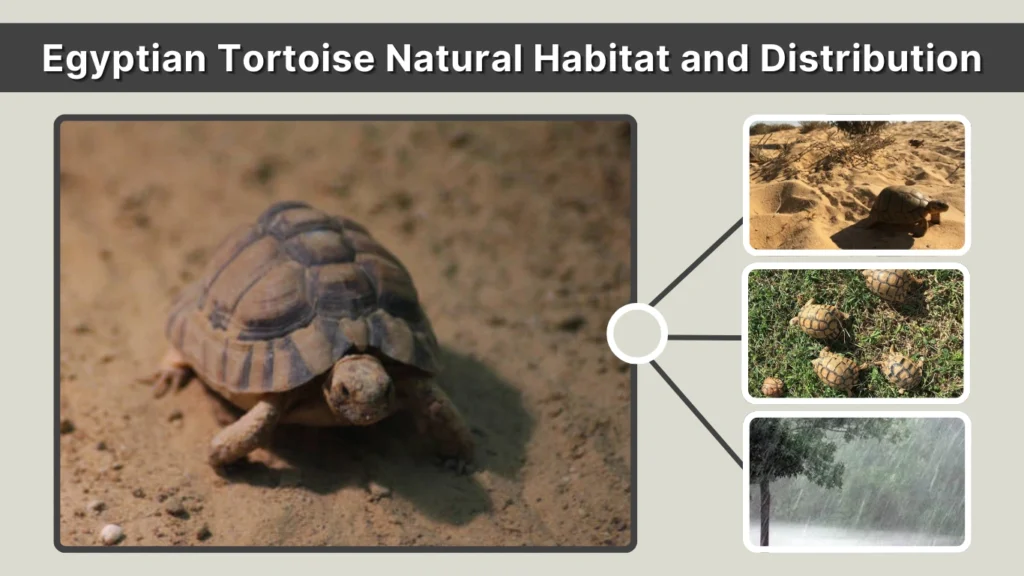
Historically, the Egyptian tortoise was found across northern Egypt, eastern Libya, and parts of the Middle East along the Mediterranean coast. Today, its range has been drastically reduced, with only small, fragmented populations remaining in the wild.
Urban development, agriculture, and illegal collection have all contributed to the decline of its natural habitat. As a result, sightings of Egyptian tortoises in the wild have become extremely rare.
Climate and Environmental Conditions
The Egyptian tortoise lives in hot, arid desert environments characterized by low rainfall and high daytime temperatures. Summers can be extremely hot, while winters are mild but still dry. These tortoises are most active during cooler parts of the day, such as early morning and late afternoon.
Their natural environment has very low humidity, which is a crucial factor to consider when keeping them in captivity. Excess moisture can quickly lead to health problems, making proper habitat replication essential.
Behavior and Temperament
Egyptian tortoises are generally calm, shy, and non-aggressive. They tend to be slow-moving and spend much of their time resting or basking. In the wild, they rely on camouflage and stillness to avoid predators rather than speed or aggression.
When kept in captivity, they can become stressed easily, especially if handled too often or exposed to loud noises and sudden changes. They are best observed rather than handled, and they thrive in quiet, stable environments. Understanding their sensitive nature is key to keeping them healthy and stress-free.
Egyptian Tortoise Diet
Diet in the Wild
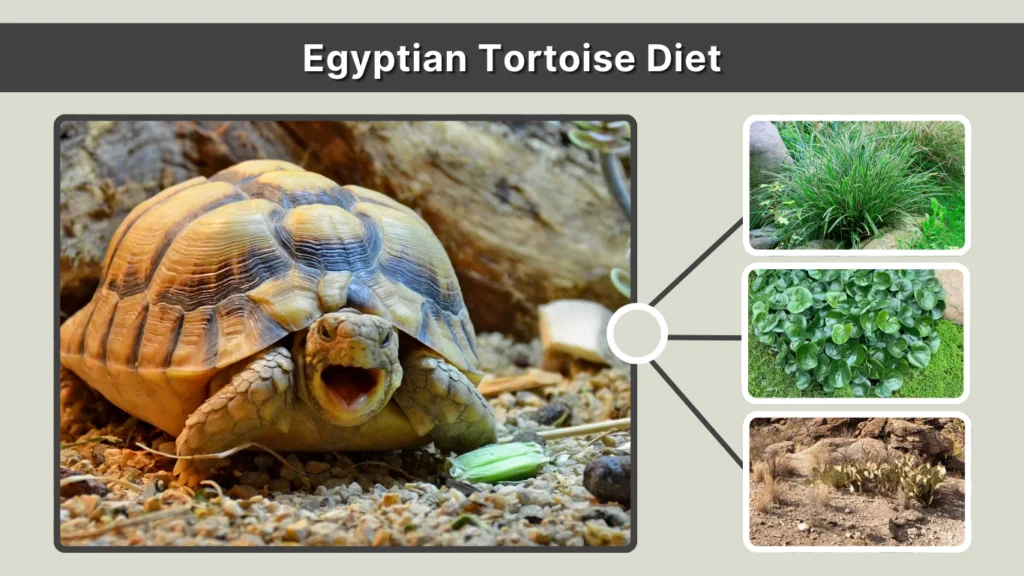
In the wild, Egyptian tortoises feed primarily on dry grasses, leafy plants, and small desert vegetation. Their diet is naturally low in protein and high in fiber, which supports proper digestion and shell health. Seasonal availability of plants influences what they eat, and they are adapted to survive on minimal water intake.
Diet in Captivity
When kept in captivity, the Egyptian tortoise must be fed a diet that closely mimics what it would eat in the wild. A high-fiber, low-protein diet is essential for maintaining proper digestion and shell development. Suitable foods include grasses, dandelion greens, plantain leaves, hibiscus leaves, and other pesticide-free leafy greens.
Fruits should be avoided or offered only on very rare occasions, as excess sugar can disrupt digestion. Foods high in protein, such as legumes or animal matter, should never be fed. Calcium supplementation is important, especially for growing juveniles and breeding females. A cuttlebone or powdered calcium supplement can help prevent metabolic bone disease.
Fresh water should always be available, even though Egyptian tortoises drink infrequently. Occasional shallow soaking can also help with hydration, provided the environment remains dry afterward.
Egyptian Tortoise Care Requirements
Enclosure Setup
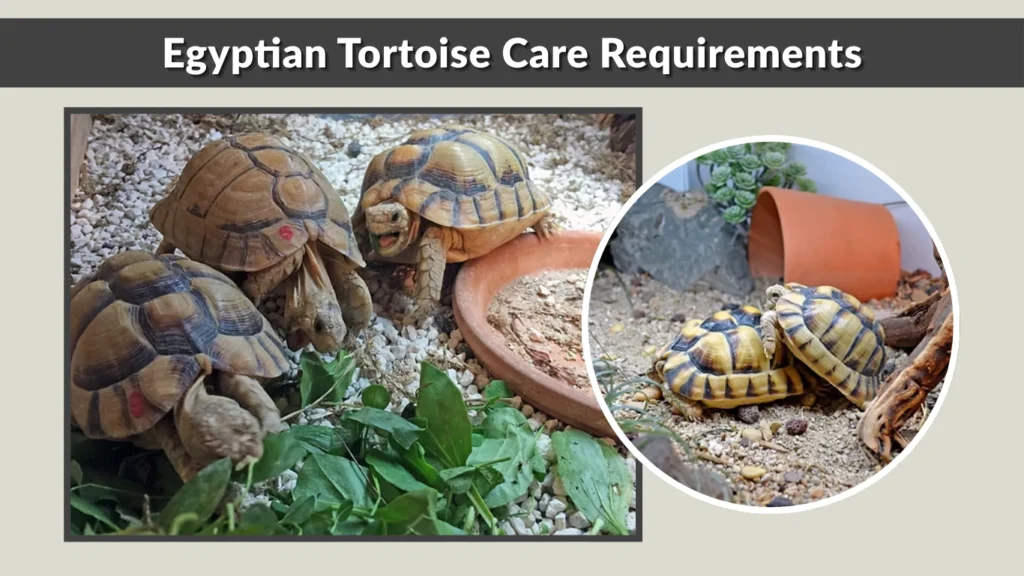
Egyptian tortoises can be housed indoors or outdoors, depending on climate and legal regulations. Indoor enclosures should be spacious enough to allow natural movement and exploration, despite the tortoise’s small size. A well-ventilated enclosure with a solid base is recommended.
The substrate should remain dry and can include a mix of sand and soil or fine gravel. Hiding spots made from rocks or shelters are essential, as these tortoises prefer secure, shaded areas where they can retreat and feel safe. Outdoor enclosures must be escape-proof and protected from predators and excessive moisture.
Temperature and Lighting
Proper temperature regulation is critical for Egyptian tortoise health. A basking area should be maintained between 90–95°F (32–35°C), while the cooler side of the enclosure should remain around 75–80°F (24–27°C). Nighttime temperatures can drop slightly but should not fall below 70°F (21°C).
UVB lighting is essential for calcium absorption and overall shell health. A high-quality UVB bulb should be used and replaced regularly according to manufacturer guidelines. Without proper lighting, Egyptian tortoises are at high risk of developing serious skeletal issues.
Humidity and Hydration
Unlike many other tortoise species, the Egyptian tortoise requires very low humidity. Humidity levels should generally stay below 40%. Excess moisture can lead to respiratory infections and shell problems.
While the enclosure should remain dry, hydration is still important. Shallow water dishes and occasional supervised soaking provide necessary moisture without raising environmental humidity.
Lifespan and Health
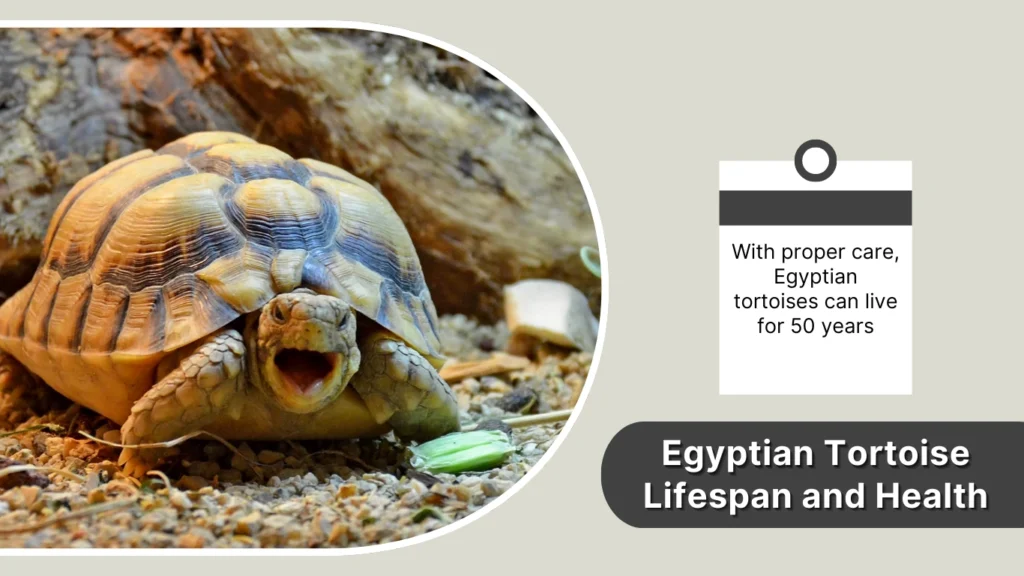
With proper care, Egyptian tortoises can live for 50 years or more in captivity. Their long lifespan means owning one is a serious, long-term commitment. Consistent care, correct diet, and a stable environment play a major role in their longevity.
Common health issues include respiratory infections, shell deformities, and metabolic bone disease, most often caused by improper humidity, diet, or lighting. Regular observation and early intervention are key to preventing serious problems. Any signs of lethargy, appetite loss, or abnormal shell growth should be addressed by a reptile-experienced veterinarian.
Conservation Status and Legal Protection
The Egyptian tortoise is classified as critically endangered due to habitat destruction and illegal wildlife trade. Urban expansion, agricultural development, and poaching have dramatically reduced wild populations.
International trade of Egyptian tortoises is strictly regulated under CITES (the Convention on International Trade in Endangered Species). In many countries, owning one without proper documentation is illegal. Ethical ownership involves supporting captive-bred individuals from reputable breeders and never purchasing wild-caught specimens.
Conservation programs and breeding initiatives aim to protect remaining populations and raise awareness about the species’ fragile status.
Is the Egyptian Tortoise a Good Pet?
While the Egyptian tortoise is small and visually appealing, it is not an ideal pet for beginners. Its sensitivity to environmental changes and strict care requirements make it better suited for experienced reptile keepers.
For those willing to commit to proper care and legal responsibility, the Egyptian tortoise can be a rewarding species to observe. However, potential owners should carefully consider the ethical and conservation implications before acquiring one.
Conclusion
The Egyptian tortoise is a remarkable but highly vulnerable species that requires specialized care and responsible ownership. From its desert origins and unique physical traits to its strict dietary and environmental needs, this tortoise demands attention and respect. Protecting the Egyptian tortoise through ethical captive care and conservation efforts is essential to ensuring its survival for future generations.
FAQs
Are Egyptian tortoises good pets for beginners?
Egyptian tortoises are not recommended for beginners. They are extremely sensitive to changes in temperature, humidity, and diet, and even small care mistakes can lead to serious health issues. This species is better suited for experienced tortoise keepers who understand desert tortoise requirements.
How big do Egyptian tortoises get?
Egyptian tortoises are one of the smallest tortoise species in the world. Adult males usually reach about 4 to 5 inches in shell length, while females are slightly larger, growing up to 5 or 6 inches.
What temperature does an Egyptian tortoise need?
An Egyptian tortoise requires a basking temperature between 90–95°F (32–35°C), with a cooler area around 75–80°F (24–27°C). Night temperatures should not drop below 70°F (21°C) to maintain proper health.
What do Egyptian tortoises eat?
Their diet should consist mainly of grasses, weeds, and leafy greens that are high in fiber and low in protein. Foods like dandelion greens, plantain leaves, and grasses are ideal, while fruits and high-protein foods should be avoided.
Why is the Egyptian tortoise endangered?
The Egyptian tortoise is endangered due to habitat loss, urban development, and illegal wildlife trade. Overcollection for the pet trade has significantly reduced wild populations, making conservation and legal protection crucial for the species’ survival.