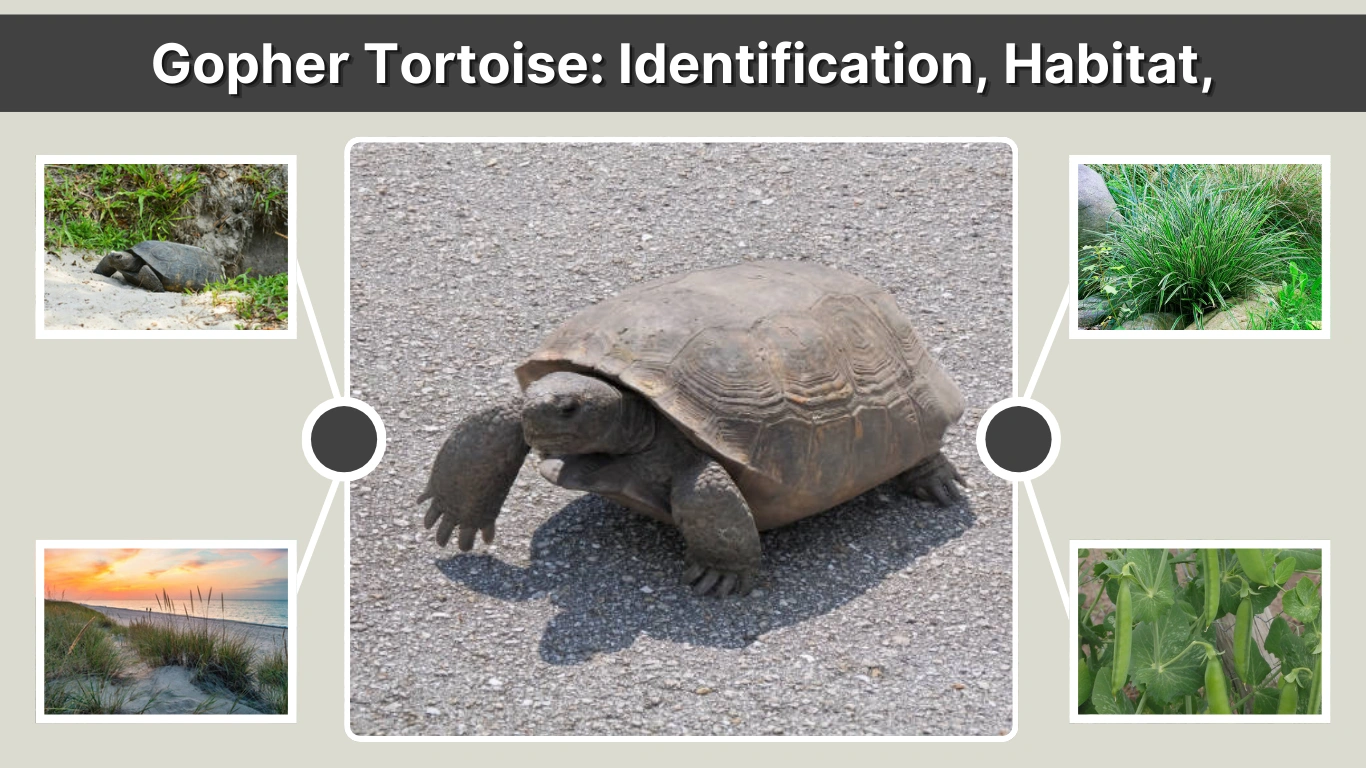
The gopher tortoise is a land-dwelling reptile native to the southeastern United States and is widely recognized for its ecological importance. Unlike aquatic turtles, this species spends most of its life on land, digging deep burrows that provide shelter not only for itself but also for hundreds of other animals. Because of this unique role, the gopher tortoise is considered a keystone species. Despite its importance, habitat loss and human activities have placed growing pressure on gopher tortoise populations, making awareness and conservation essential.
Overview of the Gopher Tortoise
The gopher tortoise (Gopherus polyphemus) belongs to the family Testudinidae and is one of the few true tortoise species found in North America. It evolved to thrive in dry, sandy environments where digging is easy and vegetation is low-growing. The species gets its name from its burrowing behavior rather than from the gopher rodent.
Gopher tortoises are slow-moving, long-lived reptiles that rely heavily on their burrows for protection from predators, extreme temperatures, and wildfires. These burrows can remain in use for decades, sometimes even generations, making them a permanent feature of the landscape.
Gopher Tortoise Identification Features
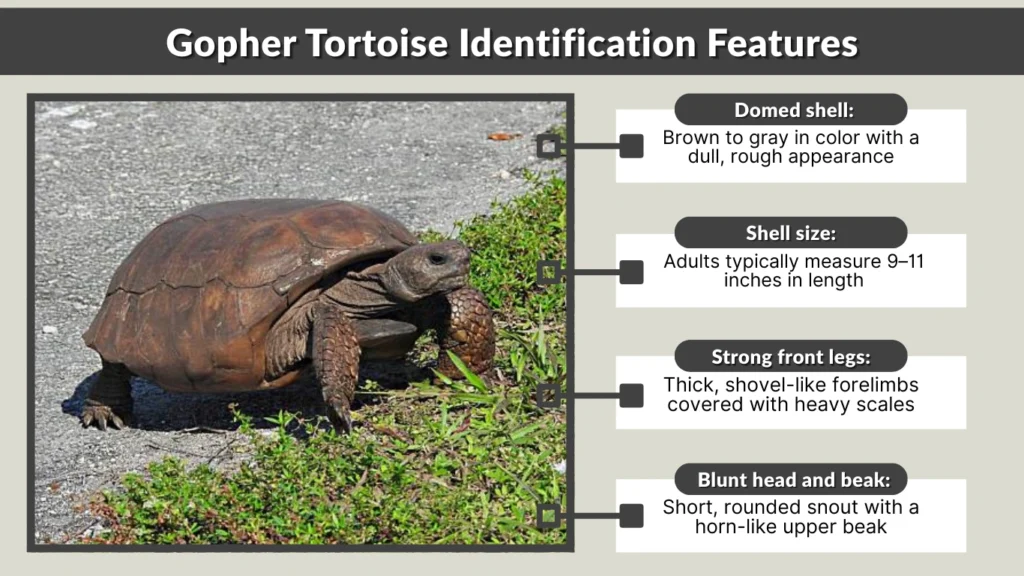
The gopher tortoise can be easily identified by its physical traits and unique burrowing behavior. Unlike turtles, it is strictly land-dwelling and has features specially adapted for digging and surviving in dry, sandy environments.
Key identification features include:
- Domed shell: Brown to gray in color with a dull, rough appearance
- Shell size: Adults typically measure 9–11 inches in length
- Strong front legs: Thick, shovel-like forelimbs covered with heavy scales
- Non-webbed feet: Column-shaped legs adapted for walking and digging, not swimming
- Blunt head and beak: Short, rounded snout with a horn-like upper beak
- Gular projection: A noticeable extension on the front of the shell, more prominent in males
- Burrow entrance: Distinctive half-moon–shaped opening with loose sand at the front
These features help distinguish the gopher tortoise from other turtles and confirm its presence even when the animal itself is not visible.
Habitat and Geographic Range
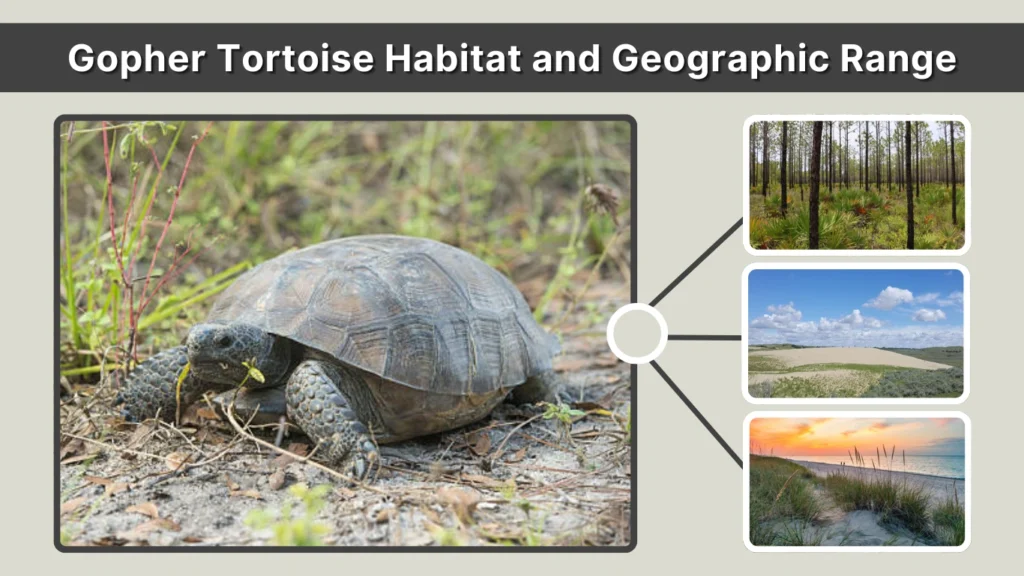
Natural Habitat Preferences
Gopher tortoises prefer dry, well-drained sandy soils that allow easy digging. These habitats typically include longleaf pine forests, oak scrub, sandhills, coastal dunes, and open grasslands. Open canopies are important because they allow sunlight to reach the ground, promoting the growth of grasses and low plants that tortoises rely on for food.
Fire plays a critical role in maintaining suitable habitat. Periodic natural or controlled fires prevent dense vegetation from taking over and help sustain the open conditions gopher tortoises need.
Geographic Distribution
Gopher tortoises are found exclusively in the southeastern United States, primarily in Florida, Georgia, Alabama, Mississippi, South Carolina, and parts of Louisiana. Florida supports the largest remaining population. However, even within this range, suitable habitat has become increasingly fragmented due to urban development, agriculture, and road construction.
Gopher Tortoise Burrows and Ecosystem Role
Burrow Structure and Depth
A gopher tortoise burrow can extend 15 to 40 feet in length and reach depths of up to 10 feet. Inside the burrow, temperatures remain relatively stable throughout the year, providing a safe refuge during extreme heat, cold snaps, and wildfires. Tortoises may spend much of their day resting in their burrows, emerging to forage or bask.
Why Gopher Tortoises Are a Keystone Species
Gopher tortoises are considered keystone species because their burrows support an entire community of wildlife. More than 350 species, including snakes, frogs, insects, mammals, and birds, use these burrows for shelter or nesting. Without gopher tortoises, many of these species would struggle to survive, leading to reduced biodiversity and weakened ecosystems.
Diet and Feeding Behavior
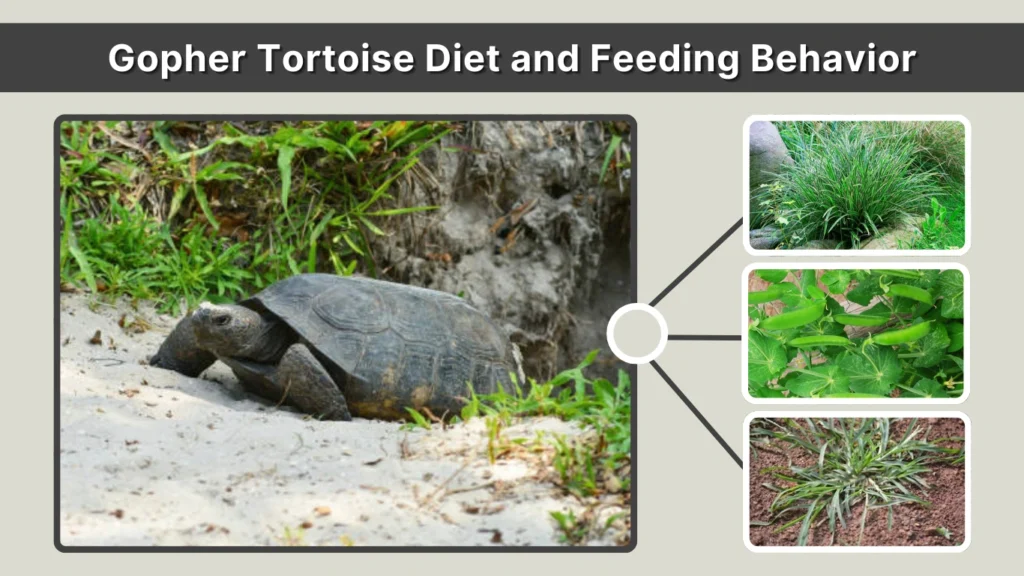
What Do Gopher Tortoises Eat?
Gopher tortoises are herbivores and feed primarily on low-growing plants found near their burrows. Their diet consists mainly of grasses, legumes, and leafy plants such as wiregrass, prickly pear cactus, and various native wildflowers. They may also eat fruits when available, which helps with seed dispersal and supports plant regeneration within their habitat.
Because gopher tortoises rely on native vegetation, healthy and well-managed habitats are essential for their survival. Areas with dense shrubs or invasive plant species often provide poor-quality food, which can negatively affect tortoise health and reproduction.
Seasonal Feeding Habits
Feeding activity changes with the seasons. During warmer months, gopher tortoises spend more time above ground grazing and basking. In cooler weather, they may remain inside their burrows for extended periods, emerging less frequently to feed. Seasonal plant availability also influences diet, with tortoises adjusting their food choices throughout the year.
Behavior and Daily Life
Activity Patterns
Gopher tortoises are primarily diurnal, meaning they are most active during the day. They typically emerge from their burrows in the morning or late afternoon to forage, bask in the sun, or move between feeding areas. During extreme heat, they often retreat underground to avoid dehydration and overheating.
Although they are capable of traveling short distances, gopher tortoises usually remain close to their burrows, which serve as a central refuge throughout their lives.
Social Behavior
Gopher tortoises are generally solitary animals. Each tortoise maintains its own burrow, although multiple burrows may be found in close proximity within suitable habitat. Interaction between individuals occurs mainly during the breeding season, when males actively seek out females.
Lifespan and Growth
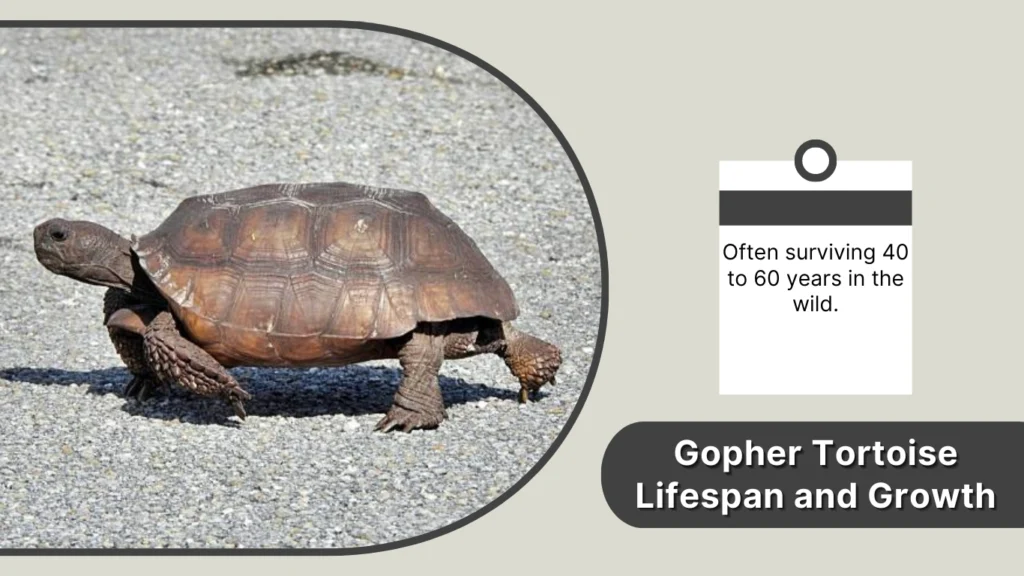
Gopher tortoises are long-lived reptiles, often surviving 40 to 60 years in the wild, with some individuals living even longer under ideal conditions. Growth is slow, especially during the early years of life. Hatchlings are small and vulnerable, making them easy targets for predators such as raccoons, foxes, and birds of prey.
As tortoises mature, their thick shells provide increased protection, improving survival rates. However, reaching reproductive age can take 10 to 20 years, which makes population recovery slow when numbers decline.
Reproduction and Life Cycle
Mating and Nesting
Breeding typically occurs in the spring and early summer. Females lay between 5 and 9 eggs in shallow nests, often near the entrance of their burrow or in nearby sandy areas. The eggs are left unattended, relying on warm soil temperatures for incubation.
Hatchlings and Early Survival
After an incubation period of about 80 to 100 days, hatchlings emerge and face immediate survival challenges. Many do not survive their first year due to predation and environmental hazards. Those that do survive gradually establish their own burrows as they grow.
Threats to Gopher Tortoises
The greatest threat to gopher tortoises is habitat loss caused by urban development, agriculture, and road construction. Vehicles pose a serious risk, especially when tortoises attempt to cross roads. Invasive plant species and fire suppression also degrade habitat quality, reducing food availability.
Conservation Status and Legal Protection
Gopher tortoises are listed as a threatened species in parts of their range. In many states, it is illegal to harm, harass, or relocate a gopher tortoise or disturb its burrow without proper authorization. Conservation programs focus on habitat protection, responsible land management, and public education.
How Humans Can Help Protect Gopher Tortoises
People can help by respecting protected habitats, driving carefully in tortoise areas, and never interfering with tortoises or their burrows. Supporting conservation organizations and land restoration projects also plays a key role in ensuring their survival.
Conclusion
The gopher tortoise is far more than a slow-moving reptile—it is a vital engineer of its ecosystem. Through its burrowing behavior, it supports countless other species and helps maintain healthy landscapes. Protecting gopher tortoises means preserving biodiversity and ensuring the long-term stability of the ecosystems they call home.
FAQs
What is a gopher tortoise?
A gopher tortoise is a land-dwelling reptile native to the southeastern United States. It is known for digging deep burrows and is considered a keystone species because many other animals depend on its burrows for shelter.
How can you identify a gopher tortoise?
Gopher tortoises can be identified by their domed brown or gray shell, strong shovel-like front legs, non-webbed feet, and distinctive half-moon–shaped burrow entrances in sandy soil.
Where do gopher tortoises live?
They live in dry, sandy habitats such as longleaf pine forests, scrublands, sandhills, and coastal dunes across the southeastern United States, especially in Florida.
What do gopher tortoises eat?
Gopher tortoises are herbivores that eat grasses, legumes, low-growing plants, and occasionally fruits found near their burrows.
Why are gopher tortoises important?
They are important because their burrows provide shelter for hundreds of other animal species, helping maintain healthy and diverse ecosystems.
Are gopher tortoises protected by law?
Yes, gopher tortoises are protected in many states. It is illegal to harm, harass, relocate them, or disturb their burrows without proper authorization.