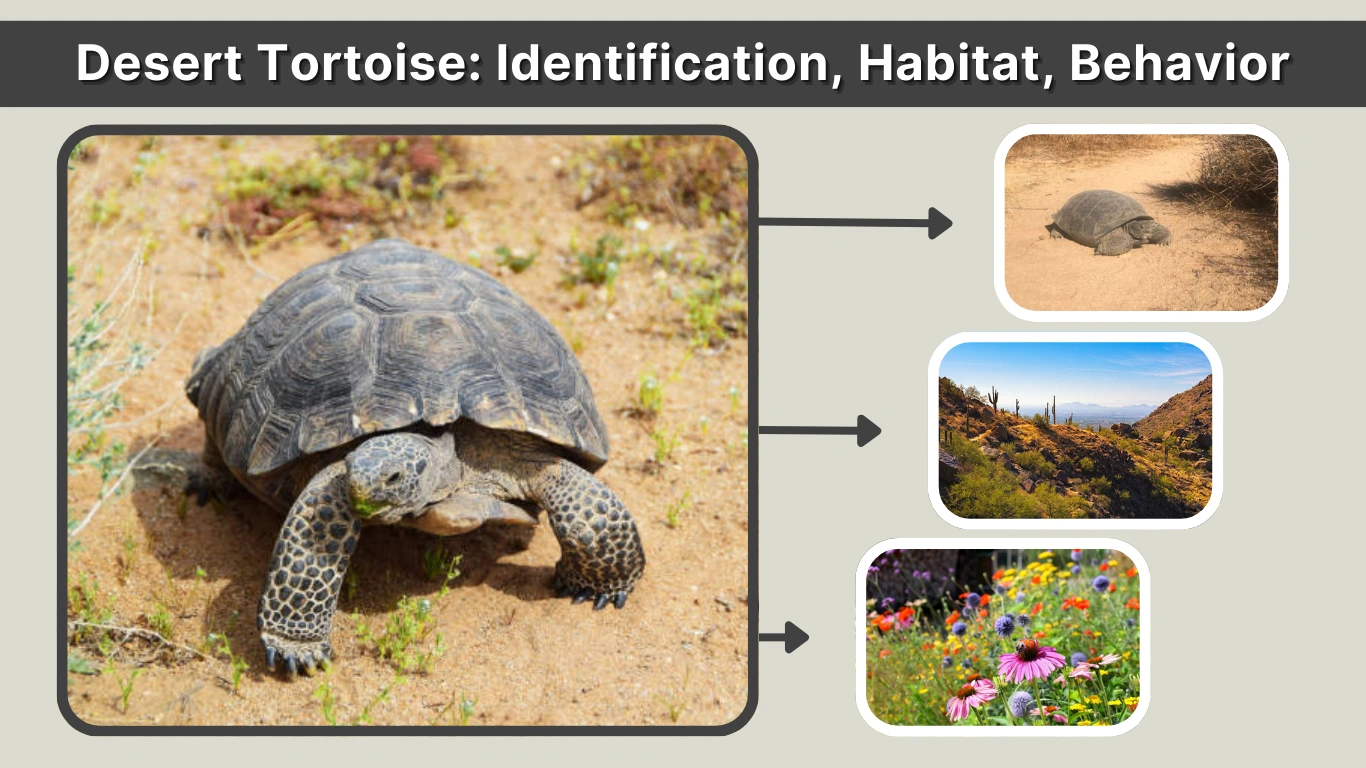
The desert tortoise is a remarkable reptile adapted to survive in some of the harshest environments in North America. Found in arid desert regions, this slow-moving land tortoise plays an important role in maintaining healthy desert ecosystems. Known for its long lifespan and burrowing behavior, the desert tortoise spends much of its life underground to escape extreme temperatures. However, habitat loss, human disturbance, and environmental changes have placed increasing pressure on desert tortoise populations, making conservation efforts more important than ever.
Overview of the Desert Tortoise
The desert tortoise (Gopherus agassizii) is a member of the family Testudinidae and is native to the southwestern United States. It is one of the best-known desert-adapted tortoises and has evolved unique physical and behavioral traits that allow it to survive intense heat and limited water availability.
Desert tortoises are primarily terrestrial and are well known for their ability to dig burrows that provide shelter from predators and extreme desert conditions. They are long-lived animals, often spending decades within the same home range. Because of their slow growth and late maturity, desert tortoise populations recover very slowly when numbers decline.
Desert Tortoise Identification Features
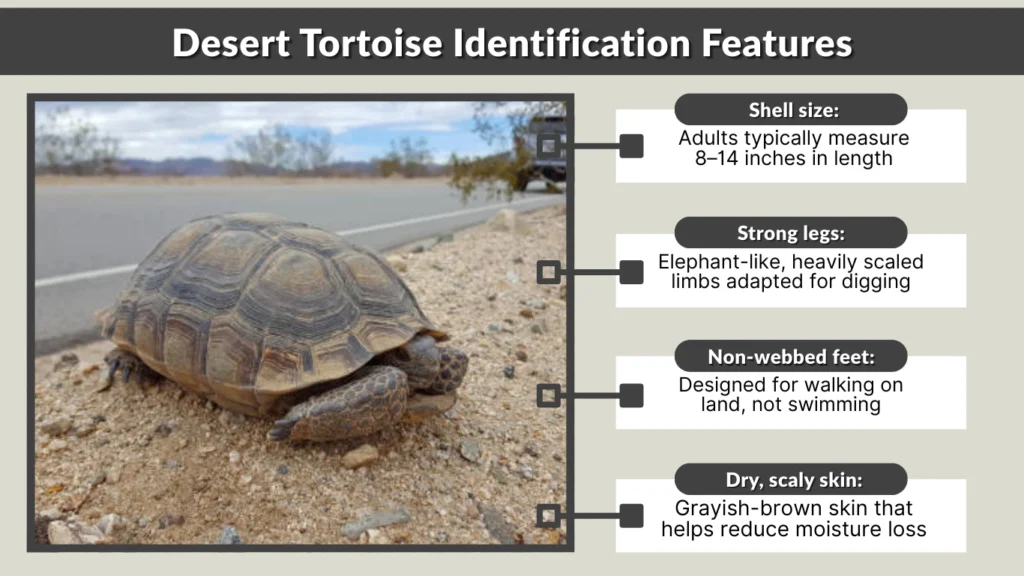
The desert tortoise is a land-dwelling reptile well adapted to hot, arid environments. It can be identified by its sturdy shell, powerful limbs, and burrowing behavior, which help it survive extreme desert conditions.
Key identification features include:
- High-domed shell: Tan to dark brown in color with a thick, rugged texture
- Shell size: Adults typically measure 8–14 inches in length
- Strong legs: Elephant-like, heavily scaled limbs adapted for digging
- Non-webbed feet: Designed for walking on land, not swimming
- Gular horn: Forward projection on the front of the shell, more prominent in males
- Dry, scaly skin: Grayish-brown skin that helps reduce moisture loss
- Burrows: Oval-shaped entrances often found at the base of shrubs or slopes
These features help distinguish the desert tortoise from other turtle and tortoise species found in desert regions.
Habitat and Geographic Range
Natural Habitat
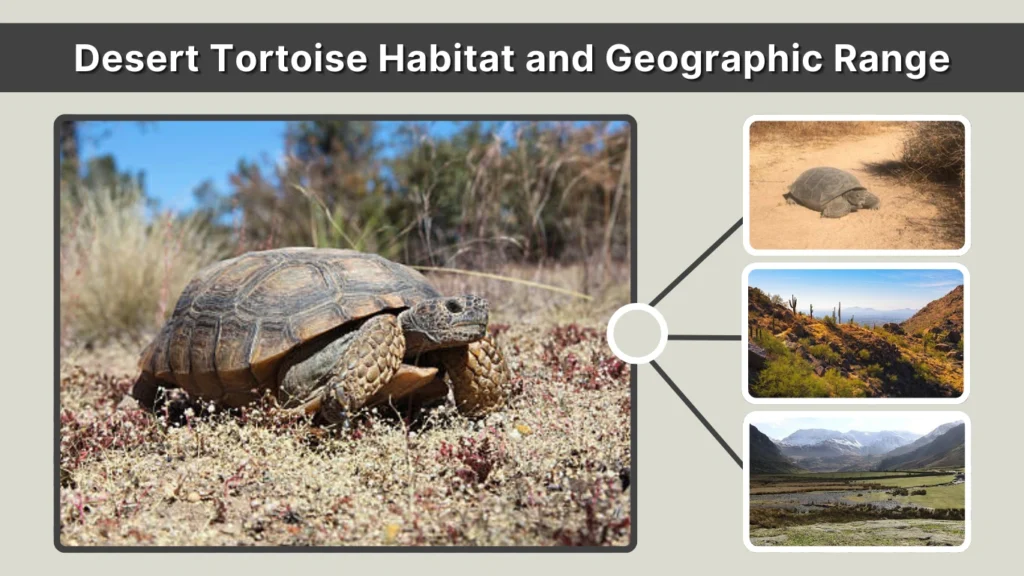
Desert tortoises inhabit arid and semi-arid environments characterized by sparse vegetation and sandy or rocky soils. Common habitats include desert flats, rocky foothills, washes, and alluvial fans. These areas support native grasses and wildflowers that provide essential food during wetter seasons.
Open landscapes are important for desert tortoises because they allow easy movement between feeding areas and burrows. Shrubs and small plants also provide shade and protection from predators.
Geographic Distribution
The desert tortoise is primarily found in the Mojave and Sonoran Deserts of the southwestern United States. Its range includes parts of California, Nevada, Arizona, and Utah. The Mojave Desert population is the most well known and has experienced significant population declines due to human activity.
Desert Tortoise Burrows and Survival Adaptations
Burrow Structure and Function
Desert tortoise burrows can extend several feet underground and may be reused for many years. These burrows maintain stable temperatures, allowing tortoises to avoid extreme summer heat and cold winter nights. A desert tortoise may spend up to 90 percent of its life inside burrows or shelters, emerging mainly to feed or reproduce.
How Desert Tortoises Survive Extreme Heat
To cope with desert conditions, desert tortoises reduce activity during the hottest months and may enter a state known as estivation. During this period, they remain underground for long periods, conserving energy and moisture. They also obtain much of their water from the plants they eat, allowing them to survive for long periods without direct access to water.
Diet and Feeding Habits
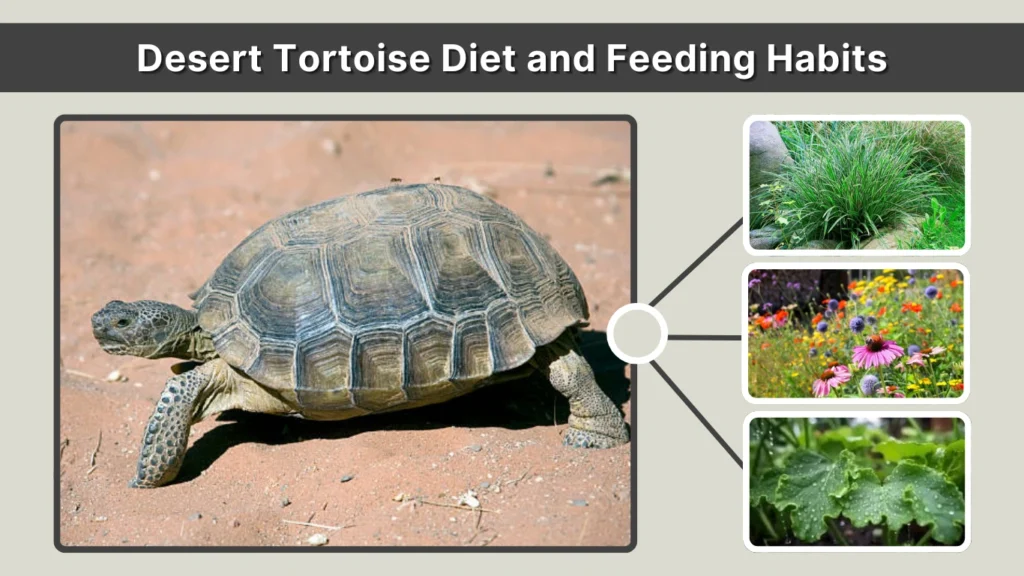
What Do Desert Tortoises Eat?
Desert tortoises are herbivores that feed on a variety of native desert plants. Their diet mainly consists of grasses, wildflowers, and leafy plants that grow after seasonal rains. Common food sources include desert dandelion, primrose, and native grasses. When available, desert tortoises may also consume cactus pads and fruits, which provide both nutrients and moisture.
A diet rich in native plants is essential for shell development and overall health. In areas where invasive plant species dominate, food quality often declines, contributing to poor nutrition and reduced reproductive success.
Seasonal Diet Changes
Feeding activity is highest in spring when desert plants are most abundant. During this period, desert tortoises actively forage to build energy reserves. As summer temperatures rise and vegetation dries out, feeding becomes less frequent. During drought conditions, desert tortoises rely heavily on stored energy and moisture, emerging only when conditions allow.
Behavior and Daily Activity
Activity Patterns
Desert tortoises are most active during mild temperatures, typically in the early morning and late afternoon. During extreme heat, they retreat to their burrows or shaded shelters to avoid overheating. Seasonal activity patterns are strongly influenced by temperature and rainfall, with increased movement during spring and fall.
In colder months, desert tortoises may become inactive for extended periods, remaining underground to conserve energy.
Social and Territorial Behavior
Desert tortoises are generally solitary animals. Each individual uses multiple burrows within its home range and may share shelters with other tortoises only occasionally. Social interactions are most common during the breeding season, when males may display aggressive behaviors such as shell ramming to compete for mates.
Lifespan and Growth
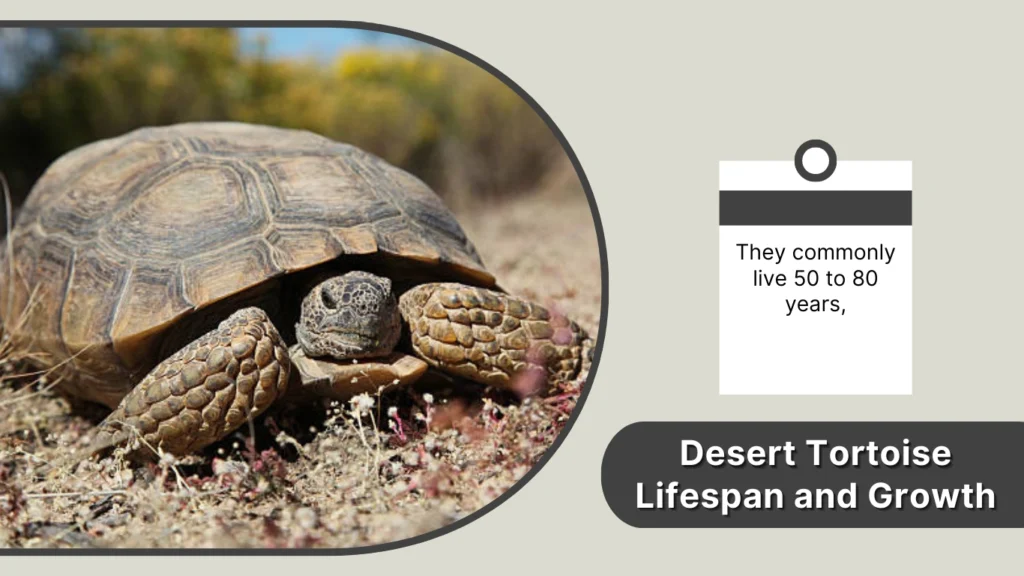
Desert tortoises are known for their long lifespan and slow growth. In the wild, they commonly live 50 to 80 years, and some individuals may live even longer. Growth is slow, and tortoises may take 15 to 20 years to reach sexual maturity.
Juvenile desert tortoises face high mortality rates due to predation and environmental stress. As they mature, their hardened shells provide greater protection, increasing their chances of survival.
Reproduction and Life Cycle
Mating and Nesting
Breeding usually occurs in spring and early fall. Females lay small clutches of 4 to 8 eggs in shallow nests dug into sandy soil, often near burrow entrances. Eggs are left unattended and rely on warm soil temperatures for incubation, which typically lasts about 90 days.
Hatchlings and Survival Challenges
Hatchlings emerge in late summer or early fall and are extremely vulnerable to predators such as ravens, coyotes, and foxes. Many hatchlings spend most of their early life hidden in shallow burrows to avoid detection. Survival rates during the first few years are low, contributing to slow population recovery.
Threats to Desert Tortoises
Desert tortoises face numerous threats, with habitat destruction being the most significant. Urban expansion, mining, and road construction fragment desert landscapes and increase mortality. Off-road vehicles can crush burrows and tortoises, while diseases such as upper respiratory tract disease have caused population declines. Climate change and prolonged drought further reduce food availability and suitable habitat.
Conservation Status and Legal Protection
The desert tortoise is listed as a threatened species under U.S. federal law. It is illegal to harm, harass, capture, or handle a desert tortoise without proper authorization. Conservation efforts focus on habitat protection, research, and public education to reduce human impact and promote long-term recovery.
How Humans Can Help Protect Desert Tortoises
People can help by staying on designated trails, avoiding desert tortoise burrows, and driving carefully in tortoise habitats. Reporting injured tortoises to wildlife authorities and supporting conservation programs also play an important role in protecting this species.
Conclusion
The desert tortoise is a symbol of resilience in harsh desert environments. Its unique adaptations allow it to survive where few animals can, yet it remains vulnerable to human activities. Protecting the desert tortoise ensures the preservation of desert ecosystems and the many species that depend on them.
FAQs
What is a desert tortoise?
A desert tortoise is a land-dwelling reptile native to the deserts of the southwestern United States. It is adapted to hot, dry environments and is known for its long lifespan and burrowing behavior.
How can you identify a desert tortoise?
Desert tortoises can be identified by their high-domed tan or brown shell, strong elephant-like legs, non-webbed feet, and oval-shaped burrow entrances in desert soil.
Where do desert tortoises live?
They live in arid and semi-arid habitats such as the Mojave and Sonoran Deserts, including parts of California, Nevada, Arizona, and Utah.
What do desert tortoises eat?
Desert tortoises are herbivores that eat native grasses, wildflowers, leafy plants, and occasionally cactus pads and fruits.
How long do desert tortoises live?
In the wild, desert tortoises commonly live 50 to 80 years, with some individuals living even longer under ideal conditions.
Are desert tortoises protected by law?
Yes, desert tortoises are protected under federal and state laws. It is illegal to harm, harass, capture, or handle them without proper authorization.