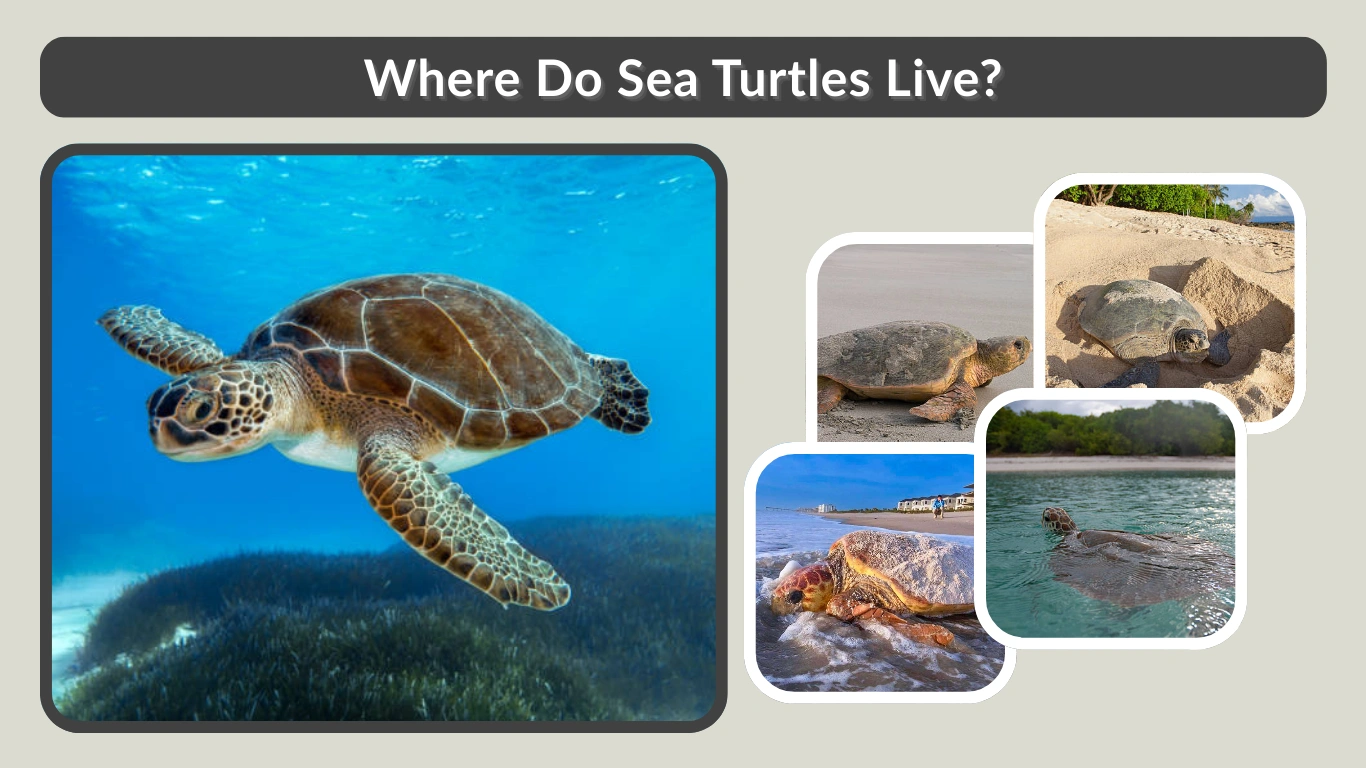
Sea turtles are some of the most fascinating marine animals on Earth. They have existed for more than 100 million years and can be found traveling across vast oceans, returning to the same beaches where they were born. Because they move so much during their lives, many people wonder: where do sea turtles actually live? The answer isn’t just one place. Sea turtles rely on a wide range of habitats, including open oceans, coastal waters, coral reefs, and sandy nesting beaches.
Understanding where sea turtles live helps explain their behavior, migration patterns, and why protecting their habitats is so important for their survival.
General Habitat of Sea Turtles
Sea turtles live primarily in marine environments, but their habitat changes throughout their life cycle. Unlike land turtles, sea turtles spend most of their lives in saltwater and only come ashore to lay eggs. Their habitats can be divided into three main categories: feeding areas, living areas, and nesting areas.
To survive, sea turtles need warm water, access to food, and relatively safe environments with fewer predators. Most species prefer tropical and subtropical waters, although some, like the leatherback sea turtle, can tolerate much colder temperatures. Because food availability and breeding needs change over time, sea turtles are highly migratory and may travel thousands of miles between habitats.
Oceans Where Sea Turtles Live
Tropical and Subtropical Oceans
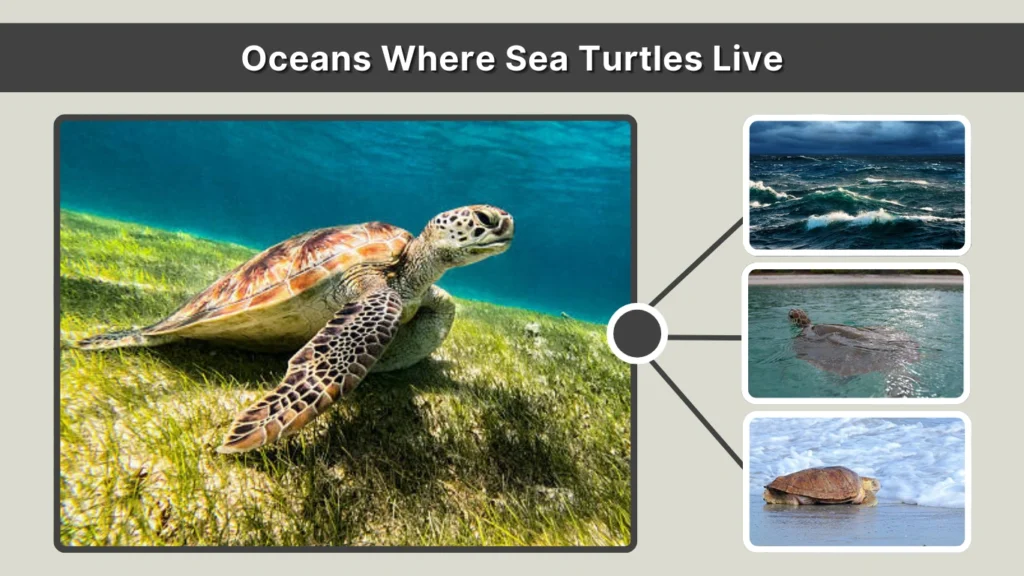
Sea turtles are found in almost every ocean in the world, as long as the water temperature is suitable. The majority of sea turtle populations live in tropical and subtropical regions of the Atlantic Ocean, Pacific Ocean, and Indian Ocean. These areas provide warm waters and abundant food sources such as jellyfish, seagrass, algae, and crustaceans.
In the Atlantic Ocean, sea turtles are commonly found along the eastern coast of the United States, the Caribbean Sea, and parts of South America and Africa. In the Pacific Ocean, they inhabit coastal areas near Central America, Australia, and Southeast Asia. The Indian Ocean is also home to large sea turtle populations, especially near island nations and coral-rich coastlines.
Water Temperature and Depth Preferences
Water temperature plays a major role in determining where sea turtles live. Most species prefer water temperatures between 70°F and 85°F (21°C to 29°C). When ocean temperatures drop, sea turtles may migrate to warmer areas or move into deeper water to regulate their body temperature.
Sea turtles can live at different depths depending on their species and life stage. While many turtles spend time in shallow coastal waters, others dive deep to find food. Leatherback sea turtles are known for diving more than 3,000 feet below the surface, making them the deepest-diving turtles in the world.
Coastal Habitats Used by Sea Turtles
Coral Reefs
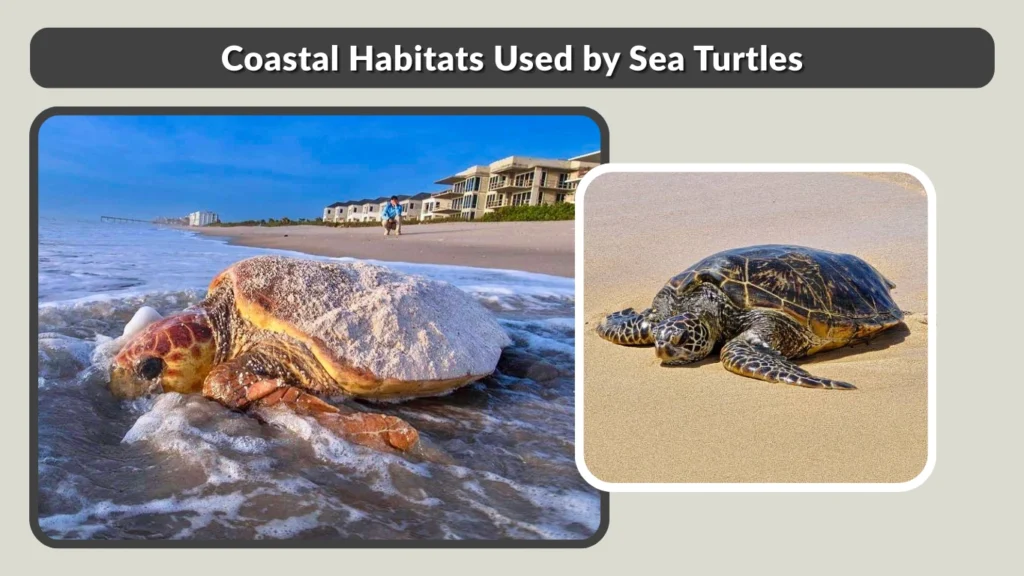
Coral reefs are one of the most important coastal habitats for sea turtles. These ecosystems provide shelter, feeding opportunities, and protection from predators. Hawksbill sea turtles, in particular, are closely associated with coral reefs, where they feed on sponges and other reef organisms.
Reefs also offer resting areas where turtles can hide in crevices and ledges. Because coral reefs are rich in biodiversity, they support the complex food chains that sea turtles depend on.
Seagrass Meadows
Seagrass meadows are another critical habitat, especially for green sea turtles. Unlike other species, adult green sea turtles are mostly herbivores and feed primarily on seagrass and algae. These shallow coastal areas provide a steady food supply and help turtles grow and maintain their health.
Seagrass habitats are usually found in calm, shallow waters near shorelines, lagoons, and bays. When green sea turtles graze on seagrass, they help keep the ecosystem healthy by preventing overgrowth and promoting new plant growth.
Bays, Lagoons, and Estuaries
Juvenile sea turtles often live in bays, lagoons, and estuaries because these areas provide calm waters and plenty of food. These protected coastal environments offer shelter from strong ocean currents and large predators, making them ideal for young turtles as they grow.
These habitats are especially important during early life stages, when survival rates are low and protection is crucial.
Life in the Open Ocean
The Pelagic Zone
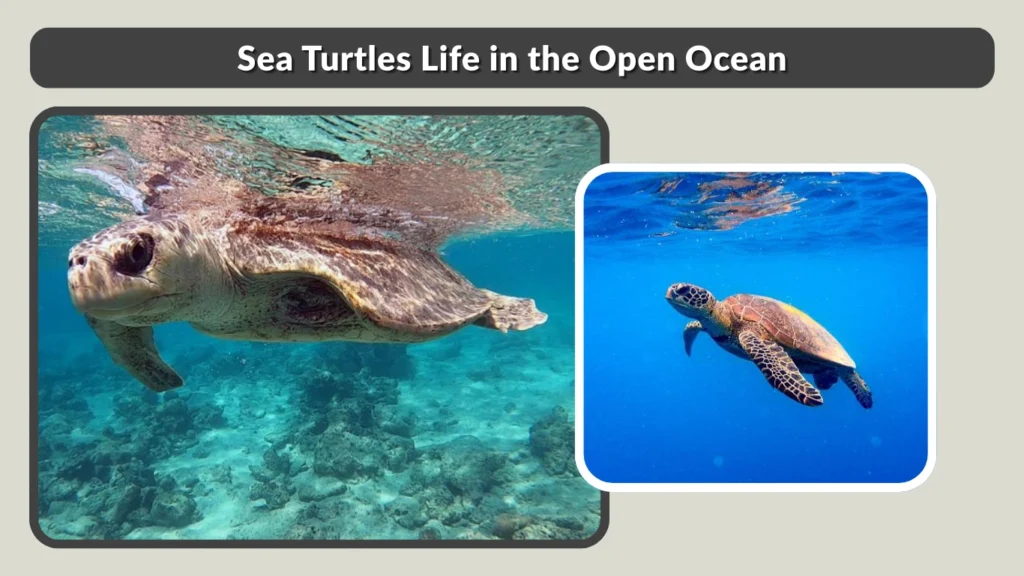
After hatching, many sea turtles spend several years living in the open ocean, an area known as the pelagic zone. This part of the ocean is far from shore and includes surface waters as well as deep-sea environments. Young sea turtles drift with ocean currents during this stage of life, which helps them spread across wide geographic areas while conserving energy.
The pelagic zone offers fewer hiding places than coastal habitats, but it provides abundant food sources such as jellyfish, small fish, and plankton. Species like loggerhead and leatherback sea turtles spend a significant portion of their lives in these open-water environments.
Floating Seaweed and Ocean Currents
Floating seaweed, especially large mats of Sargassum, plays an important role in open-ocean habitats. These floating ecosystems provide shelter, food, and camouflage for young sea turtles. Many hatchlings hide among the seaweed to avoid predators and feed on small organisms living there.
Ocean currents act as natural highways, carrying sea turtles across vast distances. These currents help turtles reach feeding grounds and, later in life, guide them back toward coastal areas where they will eventually nest.
Nesting Beaches and Land Habitat
Where Sea Turtles Lay Their Eggs
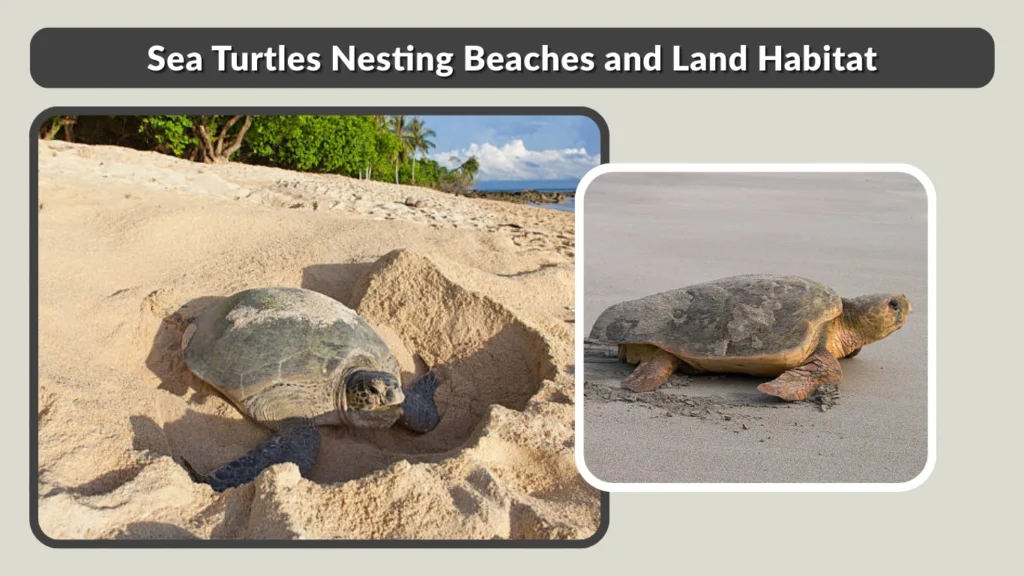
Although sea turtles spend most of their lives in the ocean, they depend on land to reproduce. Female sea turtles return to sandy beaches to lay their eggs, often traveling thousands of miles to reach the same beach where they were born. Nesting usually takes place at night, when beaches are cooler and safer from predators.
Sea turtles dig nests above the high-tide line and lay dozens to over a hundred eggs at a time. The temperature of the sand plays a crucial role in egg development and even determines the sex of the hatchlings, with warmer sand producing more females and cooler sand producing more males.
Major Nesting Locations Around the World
Sea turtle nesting beaches are found in many parts of the world, especially in warm coastal regions. Some of the most important nesting areas include Florida and the Caribbean, where large numbers of loggerhead and green sea turtles nest each year. Australia is another major nesting region, particularly for green and flatback sea turtles.
Southeast Asia, Central America, and parts of South America also support significant nesting populations. These beaches must remain dark, clean, and undisturbed to ensure successful nesting and hatching.
Sea Turtle Migration Patterns
Sea turtles are known for their incredible long-distance migrations. They move between feeding areas, breeding grounds, and nesting beaches, often crossing entire oceans. Some species travel more than 10,000 miles during their lifetime.
Scientists believe sea turtles navigate using Earth’s magnetic field, along with visual cues and ocean currents. This ability allows them to return to specific beaches and feeding grounds year after year, despite the vast size of the oceans.
Habitat Differences Among Sea Turtle Species
Green Sea Turtles
Green sea turtles prefer shallow coastal waters with abundant seagrass. As adults, they spend most of their time grazing in seagrass meadows and near coral reefs.
Loggerhead Sea Turtles
Loggerhead sea turtles are highly adaptable and live in both coastal and open-ocean habitats. They are often found near continental shelves and feed on crustaceans, mollusks, and other hard-shelled prey.
Leatherback Sea Turtles
Leatherback sea turtles are unique because they live mainly in the open ocean and can tolerate much colder water than other species. They migrate across entire ocean basins and feed primarily on jellyfish.
Threats to Sea Turtle Habitats
Sea turtle habitats face many threats, including coastal development, pollution, and climate change. Artificial lighting on beaches can confuse nesting females and hatchlings, while plastic pollution poses serious risks in both coastal and open-ocean environments. Rising temperatures also affect nesting beaches and hatchling survival.
Why Protecting Sea Turtle Habitats Is Important
Protecting sea turtle habitats helps maintain healthy marine ecosystems. Sea turtles support coral reefs, control jellyfish populations, and help keep seagrass beds healthy. Conservation efforts, such as protected nesting beaches and sustainable fishing practices, are essential for ensuring sea turtles continue to survive for future generations.
Conclusion
Sea turtles live in a wide range of habitats throughout their lives, from open oceans and coastal waters to coral reefs and sandy beaches. Their ability to travel across vast distances makes them one of the ocean’s most remarkable animals. By understanding where sea turtles live and why these habitats matter, we can better protect them and the marine ecosystems they depend on.