
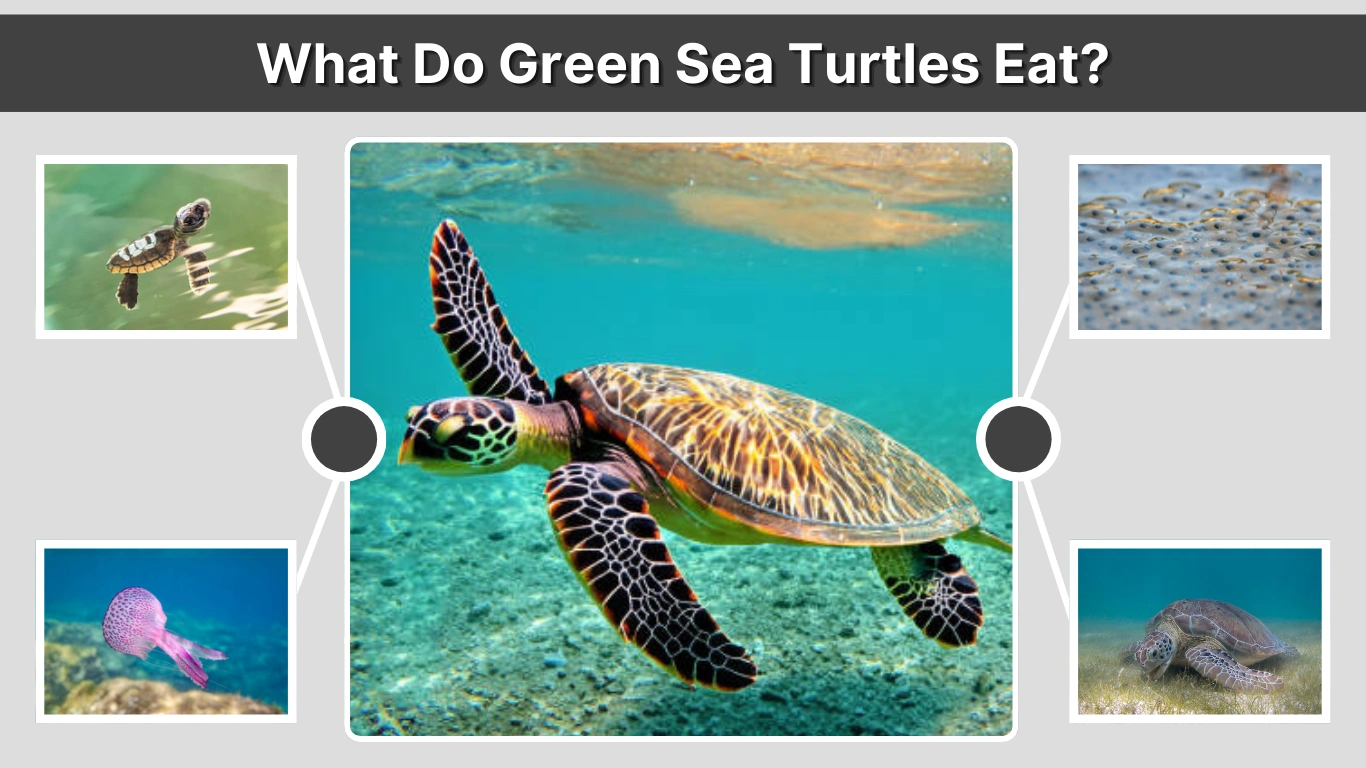
Green sea turtles are one of the most fascinating marine reptiles in the world, known not only for their size and long migrations but also for their unusual diet. Unlike most sea turtle species, green sea turtles rely heavily on plant-based food as adults. Their feeding habits play a major role in maintaining healthy ocean ecosystems, especially seagrass meadows. Understanding what green sea turtles eat helps scientists, conservationists, and ocean lovers better protect this endangered species and the habitats they depend on.
What Do Green Sea Turtles Eat?
Green sea turtles eat a variety of foods depending on their age and environment. While young green sea turtles consume both plant and animal matter, adults are primarily herbivores. Their diet mainly consists of seagrass and marine algae, making them unique among sea turtles.
This shift toward a plant-based diet is what gives green sea turtles their name. The green color does not come from their shell, but from the layer of greenish fat beneath their skin, which develops due to their algae-rich diet. Although adult green sea turtles occasionally eat small animals, plant material makes up the majority of their nutrition.
Green Sea Turtle Diet by Life Stage
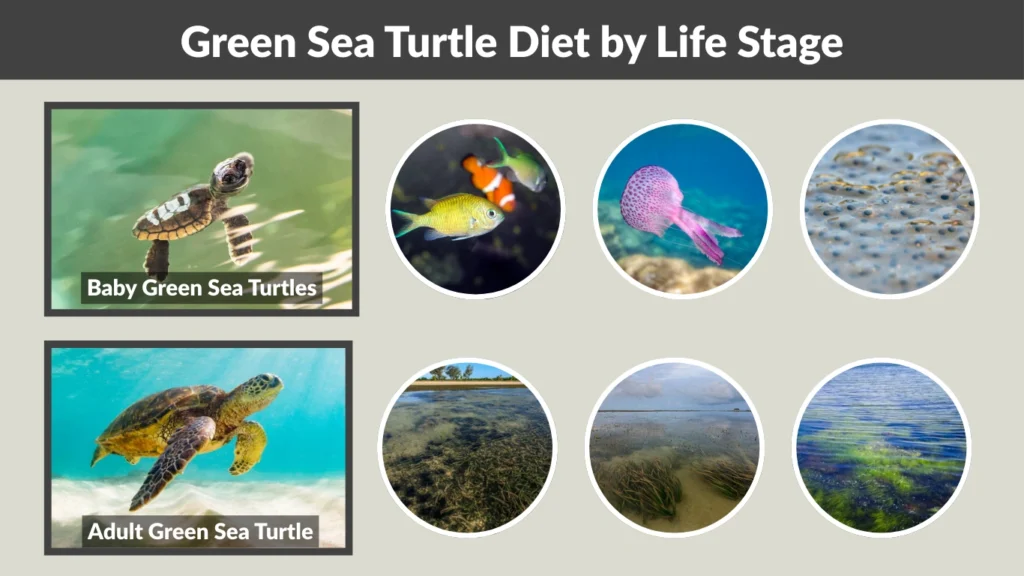
What Do Baby Green Sea Turtles Eat?
Baby green sea turtles, also called hatchlings, are not strictly herbivores. During their early years, they follow an omnivorous diet that helps them grow quickly and survive in the open ocean. Their food sources often include small invertebrates, jellyfish, fish eggs, plankton, and algae.
This varied diet provides essential protein and nutrients needed for rapid development. Since hatchlings spend their early life drifting in ocean currents, they eat whatever food is readily available. This flexibility increases their chances of survival during their most vulnerable stage.
Juvenile Green Sea Turtle Diet
As green sea turtles grow into juveniles, their diet begins to change. Juvenile green sea turtles still eat some animal matter, but they gradually increase their intake of plant-based foods. Algae becomes a major part of their diet, especially in coastal habitats.
This transition period is important because it prepares their digestive system for the largely herbivorous diet they will maintain as adults. By the time they reach near maturity, most green sea turtles rely heavily on marine plants for nutrition.
Adult Green Sea Turtle Diet
Adult green sea turtles are primarily herbivorous and feed almost entirely on seagrass and algae. They graze in shallow coastal waters where seagrass meadows are abundant. This grazing behavior helps keep seagrass beds healthy by preventing overgrowth and encouraging new plant growth.
Adult green sea turtles have specially adapted jaws that allow them to tear vegetation efficiently. Their long digestive tract also helps them process fibrous plant material, which is uncommon among marine reptiles.
Main Foods in a Green Sea Turtle’s Diet
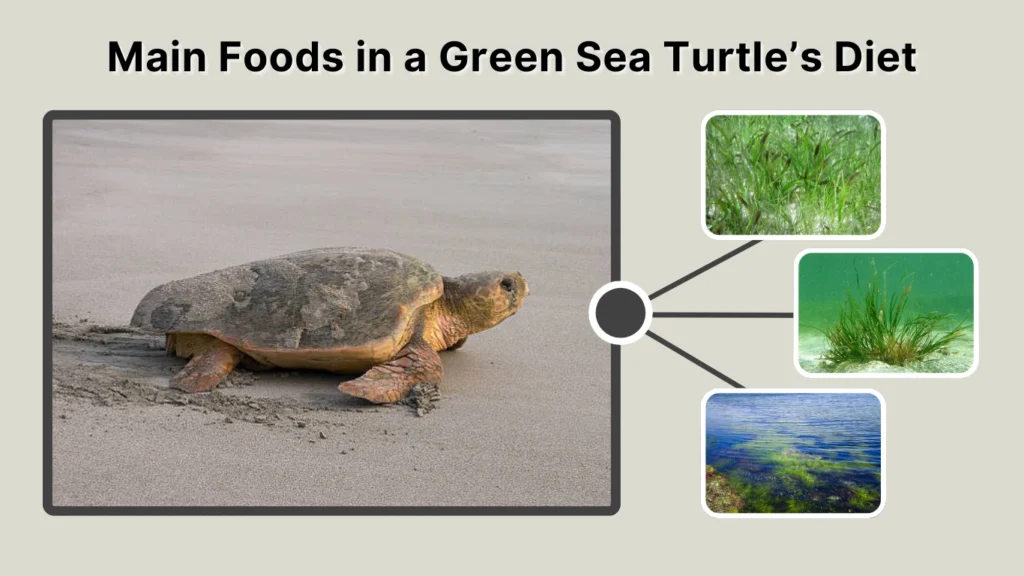
Seagrass: The Primary Food Source
Seagrass is the most important food in an adult green sea turtle’s diet. Common types include turtle grass, manatee grass, and shoal grass. These plants are rich in nutrients and provide the energy green sea turtles need to maintain their large bodies.
By grazing on seagrass, green sea turtles help maintain the health of seagrass meadows. Their feeding prevents older blades from dominating and allows younger, more nutritious shoots to grow. This benefits not only turtles but also fish, crabs, and other marine species that depend on seagrass habitats.
Marine Algae and Seaweed
In addition to seagrass, green sea turtles eat various types of marine algae and seaweed. Algae is especially important for juveniles and turtles living in areas where seagrass is scarce. Different species of algae provide essential vitamins and minerals that support overall health.
Algae consumption may vary depending on location, season, and availability. In rocky reef environments, algae often becomes the primary plant food source for green sea turtles.
Do Green Sea Turtles Eat Meat?
Although green sea turtles are known as herbivores, they do occasionally eat animal matter. This can include jellyfish, sponges, small invertebrates, and even fish eggs. However, these foods make up a very small portion of an adult turtle’s diet.
Animal matter is more commonly eaten by young turtles, while adults consume it mostly by accident while grazing on plants. Their digestive system is best suited for processing plant material rather than meat.
Feeding Habits and Behavior of Green Sea Turtles
Green sea turtles are slow, deliberate feeders that spend much of their time grazing in shallow coastal waters. They prefer areas with abundant seagrass meadows or algae-covered reefs, where food is easily accessible. These feeding grounds are often located near coral reefs, lagoons, and protected bays.
Most feeding occurs during daylight hours, although green sea turtles may also graze at night in areas with little disturbance. They often return to the same feeding locations over long periods, forming strong connections to specific habitats. This site fidelity makes them especially vulnerable to habitat destruction, as the loss of a feeding ground can severely impact their survival.
How Green Sea Turtle Diet Impacts Marine Ecosystems
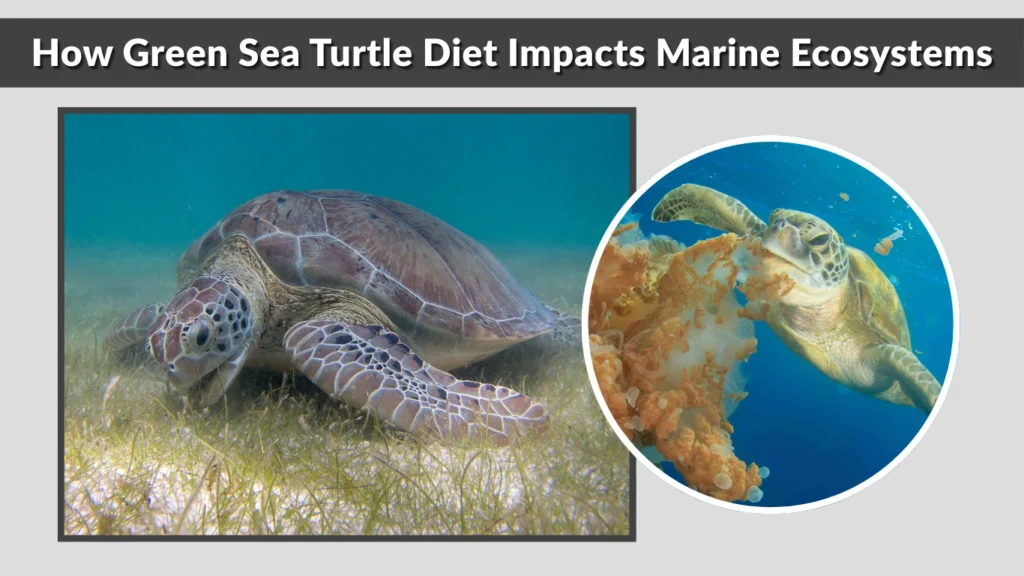
The diet of green sea turtles plays a vital role in maintaining healthy marine ecosystems. By grazing on seagrass, they prevent the plants from becoming overgrown and unhealthy. This controlled grazing encourages new growth, improves nutrient cycling, and increases the overall productivity of seagrass meadows.
Healthy seagrass beds support a wide range of marine life, including fish, crustaceans, and mollusks. These ecosystems also help stabilize the ocean floor, reduce coastal erosion, and improve water quality. Without green sea turtles, seagrass meadows can become overgrown and less effective at supporting marine biodiversity.
Green sea turtles are often referred to as “ecosystem engineers” because their feeding behavior shapes the environment around them. Their diet indirectly supports entire food webs, making them a keystone species in many coastal ecosystems.
Threats to Green Sea Turtle Food Sources
Human Activities Affecting Their Diet
Human activities pose significant threats to the food sources of green sea turtles. Coastal development can destroy seagrass meadows through dredging, boat traffic, and shoreline construction. Pollution, including agricultural runoff and plastic waste, can reduce water quality and block sunlight needed for seagrass growth.
Plastic pollution is especially dangerous, as turtles may mistake plastic bags for jellyfish or ingest debris while feeding. This can lead to injury, illness, or death, further reducing turtle populations.
Climate Change and Seagrass Loss
Climate change is another major threat to the diet of green sea turtles. Rising ocean temperatures, ocean acidification, and stronger storms can damage seagrass habitats and alter the availability of algae. Changes in water temperature may also affect the nutritional quality of the plants turtles rely on.
As seagrass meadows decline, green sea turtles are forced to travel farther to find food, increasing their risk of boat strikes and entanglement in fishing gear.
Conservation Efforts to Protect Green Sea Turtle Diet
Protecting the diet of green sea turtles is essential for their long-term survival. Conservation efforts focus on preserving seagrass meadows, reducing pollution, and establishing marine protected areas. These protected zones limit harmful human activities and allow critical feeding habitats to recover.
Many conservation programs also promote responsible boating practices and coastal management to minimize damage to seagrass beds. Research into green sea turtle feeding habits helps scientists identify key habitats that require urgent protection.
FAQs
Are Green Sea Turtles Herbivores or Omnivores?
Green sea turtles are omnivorous when young but become mostly herbivorous as adults. Their diet shifts toward seagrass and algae as they mature.
What Is the Favorite Food of Green Sea Turtles?
Seagrass is the primary and preferred food of adult green sea turtles, especially species like turtle grass.
How Often Do Green Sea Turtles Eat?
Green sea turtles feed regularly, often grazing daily when food is abundant, to meet their energy needs.
Conclusion
Green sea turtles have a unique diet that changes throughout their lives, shifting from an omnivorous diet in early stages to a primarily plant-based diet in adulthood. Their reliance on seagrass and algae makes them essential to the health of marine ecosystems. By protecting their feeding habitats and reducing human impact on the oceans, we can help ensure that green sea turtles continue to thrive for generations to come.