
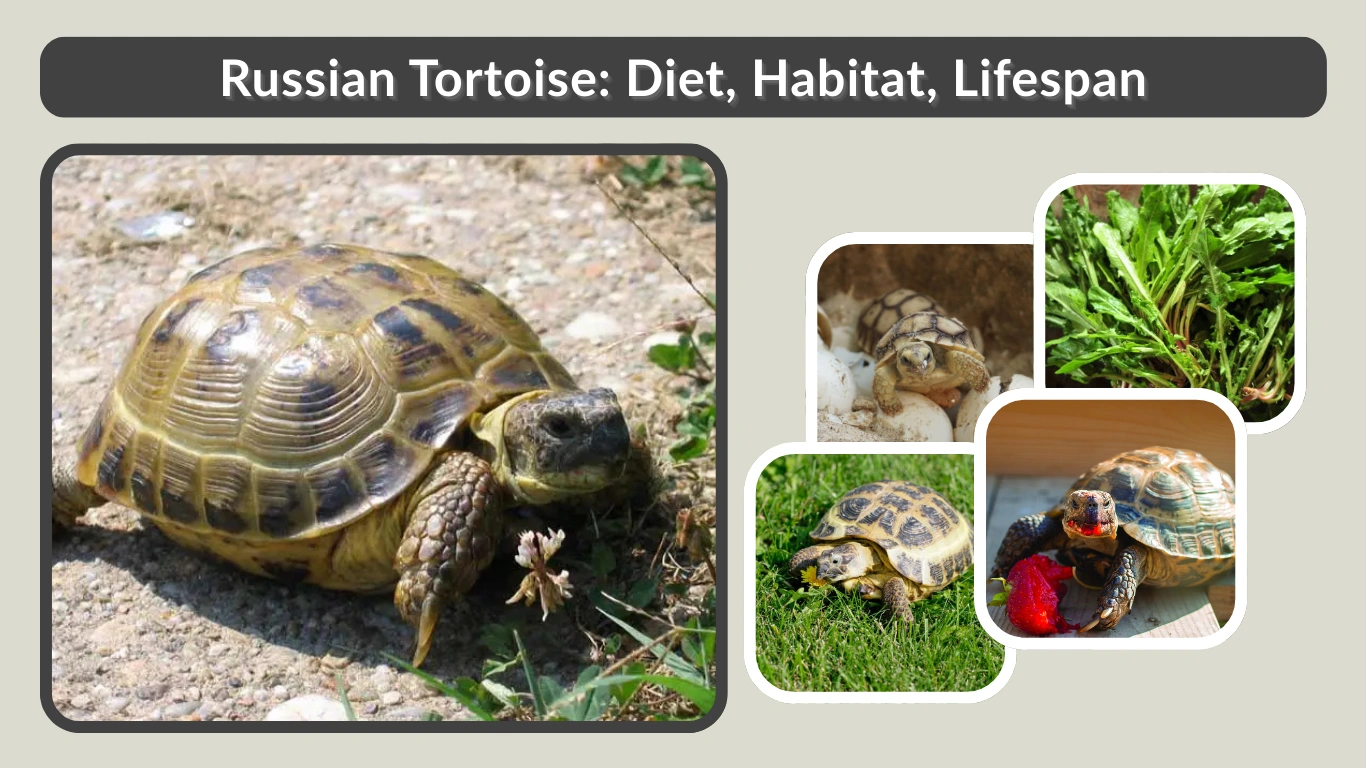
The Russian tortoise is one of the most popular pet tortoise species in the world. Known for its hardy nature and manageable size, this small tortoise can live for decades with proper care. Understanding the Russian tortoise diet, habitat needs, and lifespan is essential before bringing one home. These tortoises require specific lighting, temperature, and nutrition to thrive. In this guide, you’ll learn what Russian tortoises eat, how long they live, and how to create the ideal environment for a healthy life.
What Is a Russian Tortoise?
The Russian tortoise (Testudo horsfieldii), sometimes called the Horsfield’s tortoise or Central Asian tortoise, originates from dry regions of Central Asia. They are commonly found in Afghanistan, Pakistan, Iran, and parts of Russia and surrounding countries. Unlike tropical tortoise species, Russian tortoises are adapted to arid climates with extreme seasonal changes.
Their small size, calm temperament, and long lifespan make them attractive to reptile enthusiasts. However, they are still a long-term commitment and require proper husbandry.
Physical Characteristics
Russian tortoises are relatively small compared to other tortoise species. Adults typically measure between 4 and 10 inches in length. Females are usually larger than males.
They have a rounded, slightly flattened shell that ranges in color from tan to olive brown with darker markings. One distinctive feature is their four-toed front feet, which helps distinguish them from other tortoise species.
Temperament and Behavior
Russian tortoises are generally active during the day. They enjoy exploring their enclosure and are known for their strong burrowing instinct. In the wild, they dig extensive burrows to escape heat and cold.
While not overly affectionate, they can become accustomed to their owners and may approach for food. They are curious animals but prefer routine and stability in their environment.
Russian Tortoise Habitat (Wild vs. Captivity)
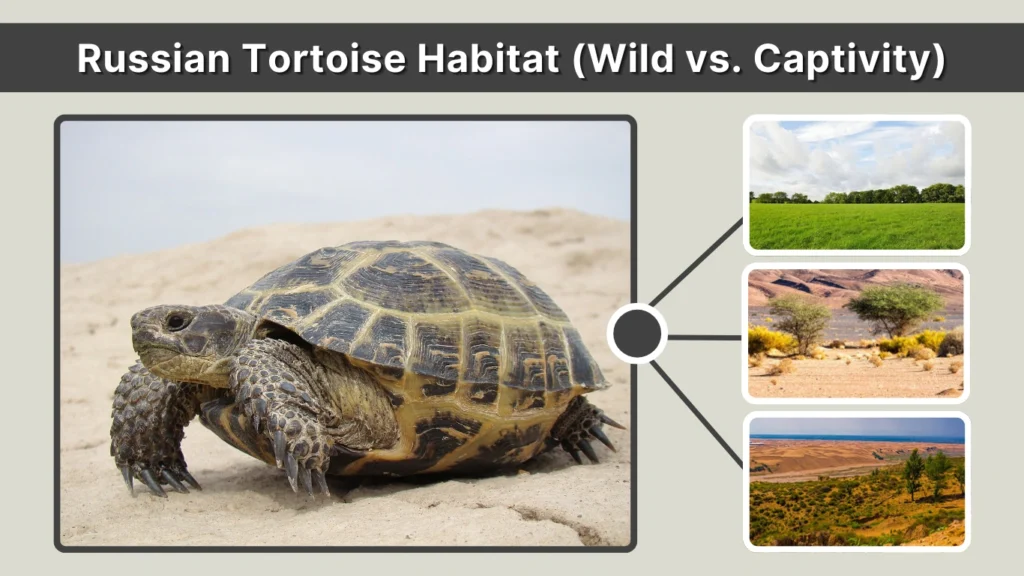
Understanding the natural Russian tortoise habitat is the key to successful care. In the wild, these tortoises live in dry, open areas with sandy or rocky soil. They experience hot summers and cold winters and often hibernate during extreme weather conditions.
When kept as pets, their enclosure should replicate these natural conditions as closely as possible.
Natural Russian Tortoise Habitat
In the wild, Russian tortoises inhabit grasslands, deserts, and semi-arid regions. The soil is usually dry and loose enough for digging. Temperatures can vary greatly between day and night.
Burrowing is essential for their survival. They dig tunnels to regulate body temperature and avoid predators. This natural behavior should be supported in captivity with appropriate substrate depth.
Indoor Habitat Setup
For indoor housing, a spacious enclosure is crucial. A tortoise table or large open-top enclosure works better than a glass aquarium because it allows better ventilation.
Provide a temperature gradient within the enclosure:
- Basking area: around 90–95°F
- Cooler side: around 70–75°F
UVB lighting is essential for calcium absorption and shell health. Without proper UVB exposure, Russian tortoises can develop serious health issues such as metabolic bone disease.
Substrate options include coconut coir, organic topsoil (chemical-free), or a soil-sand mix. The substrate should be deep enough to allow shallow digging.
Hiding spots, flat rocks, and edible plants can also enrich the enclosure and encourage natural behaviors.
Outdoor Enclosures
In suitable climates, Russian tortoises thrive outdoors. Natural sunlight provides excellent UVB exposure, which promotes strong shell growth.
Outdoor enclosures must be secure, as these tortoises are skilled diggers and escape artists. Fencing should extend several inches below ground level to prevent tunneling out.
Provide shaded areas, a dry shelter, and protection from predators. Always monitor weather conditions, as extreme cold or excessive moisture can be harmful.
Russian Tortoise Diet: What Do Russian Tortoises Eat?
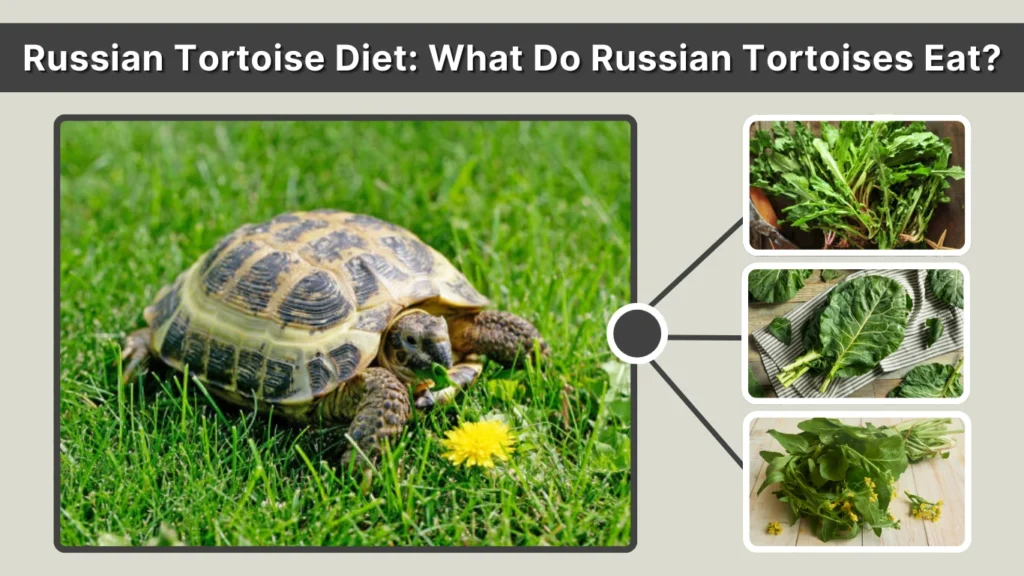
A proper Russian tortoise diet is one of the most important factors in ensuring long-term health. These tortoises are herbivores and require a high-fiber, low-protein, low-sugar diet.
Feeding them incorrectly can lead to shell deformities, digestive issues, and obesity.
Natural Diet in the Wild
In their natural habitat, Russian tortoises graze on weeds, grasses, and leafy vegetation. Their diet is simple but high in fiber and low in calories.
They consume seasonal plants and rarely encounter fruit. This is why sugary foods are not suitable for captive tortoises.
Best Foods for Pet Russian Tortoises
Pet Russian tortoises should eat a variety of leafy greens and edible plants. Suitable options include:
- Dandelion greens
- Collard greens
- Mustard greens
- Turnip greens
- Endive
- Escarole
Edible flowers such as hibiscus can also be offered occasionally. A varied diet helps ensure balanced nutrition.
Fresh food should be provided daily, and uneaten portions should be removed to maintain cleanliness.
Foods to Avoid
Certain foods can harm your tortoise and should be avoided:
- Fruit (too high in sugar)
- Iceberg lettuce (low nutritional value)
- Animal protein
- Processed foods
- Dog or cat food
High-protein diets can cause rapid growth and shell pyramiding, a common health issue in captive tortoises.
Feeding Schedule & Supplements
Russian tortoises should be fed once daily, preferably in the morning when they are most active. Offer a portion of fresh leafy greens roughly the size of their shell. Because they are natural grazers, variety is more important than large quantities.
Calcium supplementation is essential for strong shell and bone development. Lightly dust food with a calcium powder (without phosphorus) several times per week. If your tortoise does not receive strong natural sunlight, a calcium supplement with vitamin D3 may be recommended. Clean, shallow water should always be available, even though Russian tortoises get much of their hydration from leafy greens.
Russian Tortoise Lifespan: How Long Do Russian Tortoises Live?
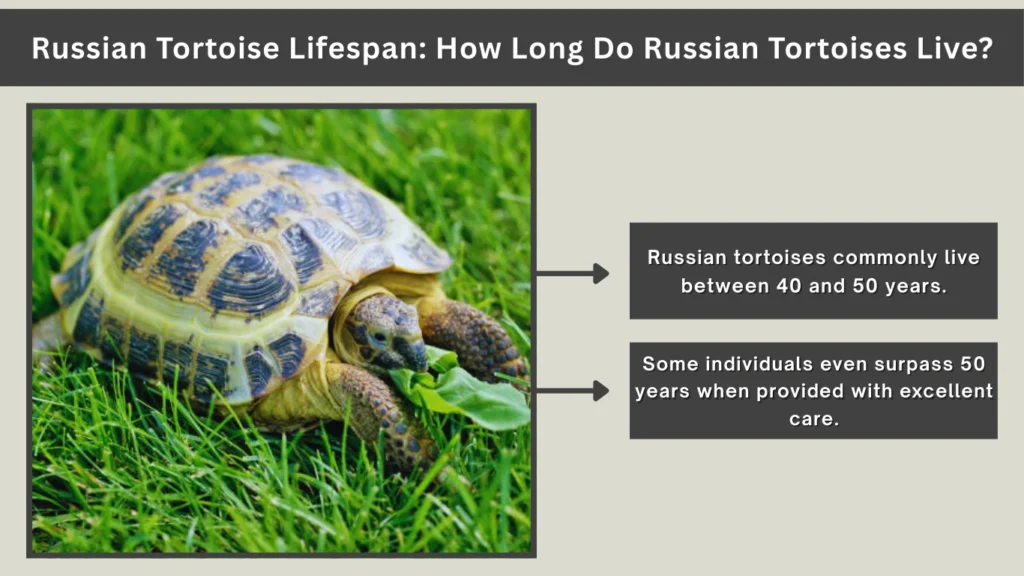
One of the most common questions new owners ask is: how long do Russian tortoises live? The answer may surprise you. With proper care, these tortoises can live for several decades, making them a long-term commitment.
Their lifespan depends largely on diet, habitat quality, lighting, and veterinary care.
Average Lifespan in Captivity
In captivity, Russian tortoises commonly live between 40 and 50 years. Some individuals even surpass 50 years when provided with excellent care.
Consistent UVB lighting, a balanced diet, and proper enclosure conditions play a major role in longevity. Poor husbandry, on the other hand, can significantly shorten their lifespan.
Lifespan in the Wild
In the wild, Russian tortoises often face harsher conditions. Predators, extreme weather, and limited food availability can reduce their lifespan.
While they are naturally resilient, environmental challenges mean that wild tortoises may not live as long as well-cared-for captive ones.
How to Help Your Russian Tortoise Live Longer
To maximize your tortoise’s lifespan:
- Provide proper UVB lighting
- Maintain correct temperature gradients
- Feed a high-fiber, low-sugar diet
- Offer calcium supplements
- Keep the enclosure clean
- Schedule periodic reptile vet checkups
Preventing obesity and shell deformities is especially important for long-term health.
Russian Tortoise Eggs and Breeding
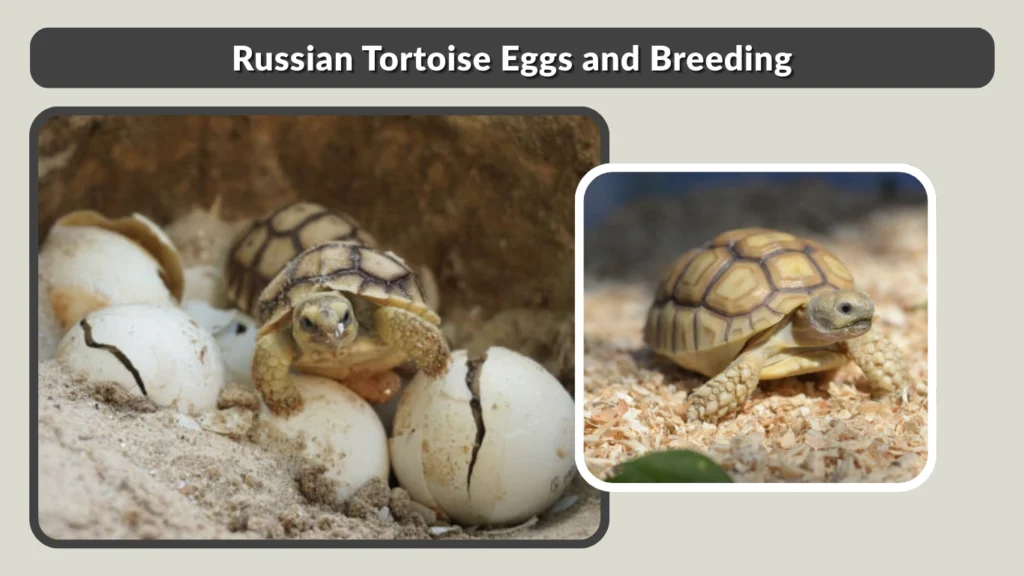
Breeding Russian tortoises requires experience and preparation. If you plan to house males and females together, it’s important to understand their reproductive behavior.
Mating Behavior
Russian tortoises typically breed in the spring after coming out of brumation (a reptile form of hibernation). Males may display more active or persistent behavior during this time.
It’s important to monitor interactions, as males can sometimes become aggressive when attempting to mate.
Russian Tortoise Eggs
Female Russian tortoises lay small clutches of eggs, usually between 2 and 6 eggs at a time. They may lay multiple clutches during a breeding season.
The eggs are oval-shaped with a hard, white shell. Females will dig a nest in soft soil to deposit their eggs and then carefully cover them.
If you suspect your tortoise is gravid (carrying eggs), ensure she has access to deep, diggable substrate to prevent egg-binding, a potentially serious condition.
Incubation and Hatching
The incubation period for Russian tortoise eggs typically ranges from 60 to 80 days, depending on temperature and humidity.
Warmer incubation temperatures can speed up development, while cooler conditions may extend it. Once hatched, baby tortoises require the same basic care as adults, including proper lighting and diet, but in a smaller, secure enclosure.
Breeding should only be attempted if you are prepared to care for hatchlings long-term.
Common Health Issues
Like all reptiles, Russian tortoises can develop health problems if their care requirements are not met.
Shell Problems
Shell deformities, such as pyramiding, are often caused by improper diet or inadequate humidity. Soft shell can result from calcium deficiency or lack of UVB exposure.
Early correction of diet and lighting usually improves shell health.
Respiratory Infections
Cold temperatures or excessive humidity can lead to respiratory infections. Symptoms include wheezing, nasal discharge, and lethargy.
Prompt veterinary attention is important if these signs appear.
Parasites
Internal parasites can affect appetite and weight. Routine fecal exams by a reptile veterinarian can help detect and treat these issues early.
Russian Tortoise Care Checklist
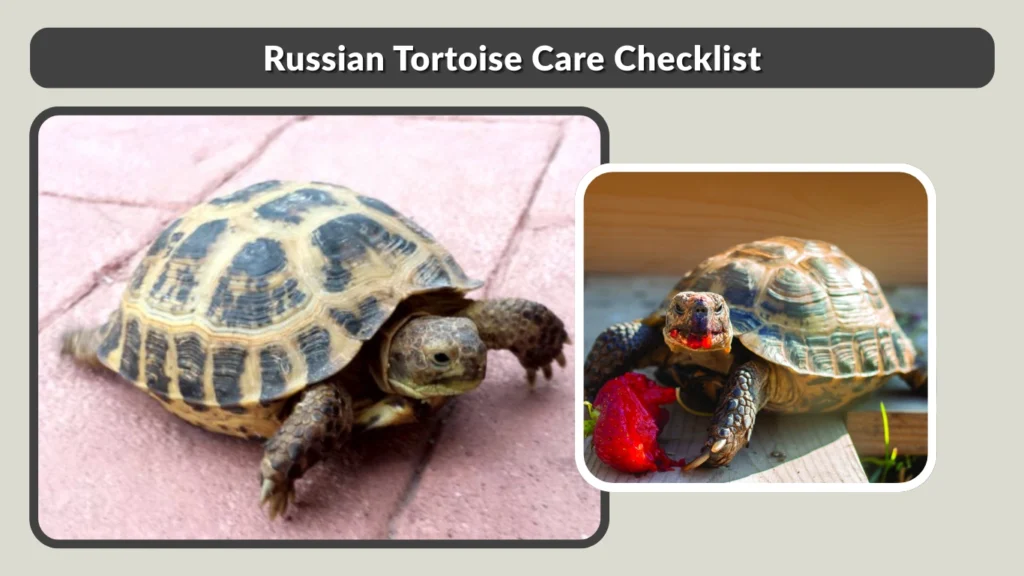
To keep your tortoise healthy and thriving:
- Provide fresh leafy greens daily
- Maintain proper basking and cool temperatures
- Ensure consistent UVB lighting
- Clean the enclosure regularly
- Monitor weight and activity levels
- Schedule annual reptile vet visits
Consistency in care is the foundation of a long, healthy life.
FAQs
How long do Russian tortoises live?
Russian tortoises typically live 40 to 50 years in captivity, and some may live even longer with excellent care. Proper diet, UVB lighting, and a clean, well-maintained habitat are the most important factors influencing their lifespan.
What do Russian tortoises eat every day?
They eat a daily diet of leafy greens and weeds such as dandelion greens, collard greens, mustard greens, and endive. Their diet should be high in fiber and low in sugar, with calcium supplementation provided regularly.
Can Russian tortoises eat fruit?
Fruit is not recommended because it contains too much sugar for their digestive system. Frequent fruit consumption can lead to digestive upset and long-term health problems. Leafy greens and weeds are much safer choices.
How many eggs do Russian tortoises lay?
Female Russian tortoises typically lay between 2 and 6 eggs per clutch and may produce more than one clutch per season. Proper nesting substrate is essential for egg-laying females.
Do Russian tortoises need UVB light?
Yes, UVB lighting is essential for calcium absorption and shell health. Without UVB exposure, tortoises can develop metabolic bone disease and other serious health issues. Natural sunlight or a high-quality UVB bulb should always be provided.