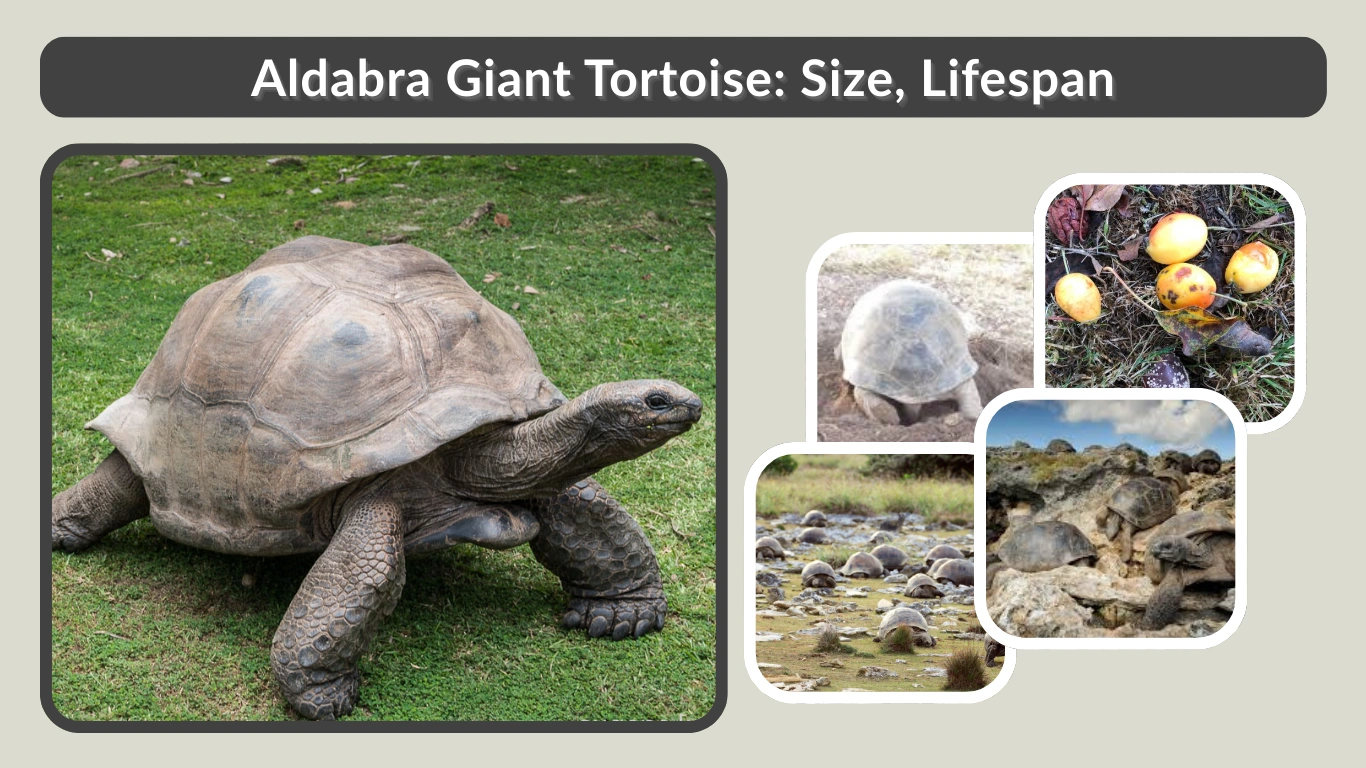
The Aldabra Giant Tortoise is one of the most impressive reptiles on Earth. Native to the remote Aldabra Atoll in the Seychelles, this massive land tortoise is known for its enormous size, remarkable lifespan, and calm temperament. Scientifically called Aldabrachelys gigantea, it is the second-largest tortoise species in the world, closely rivaling the famous Galápagos giant tortoise.
Unlike many other giant tortoise species that became extinct due to hunting and habitat destruction, the Aldabra Giant Tortoise survived largely because of its isolated island home. Today, it stands as one of the greatest conservation success stories in the reptile world.
Scientific Classification and Background
Taxonomy
The Aldabra Giant Tortoise belongs to the kingdom Animalia and the phylum Chordata. It falls under the class Reptilia and the order Testudines, which includes all turtles and tortoises. Its family is Testudinidae, the group that contains land-dwelling tortoises. The species name, Aldabrachelys gigantea, reflects both its geographic origin and its impressive size.
Over time, scientists have studied its genetic links to other Indian Ocean tortoises. While many related species disappeared centuries ago, this species survived due to its protected and isolated habitat.
Historical Discovery
Early sailors traveling through the Indian Ocean encountered giant tortoises on many islands. Unfortunately, most populations were hunted for food. The Aldabra Atoll’s remoteness helped protect its tortoises from the same fate. As a result, the Aldabra Giant Tortoise became the last surviving giant tortoise species in the Indian Ocean region.
Physical Characteristics and Size
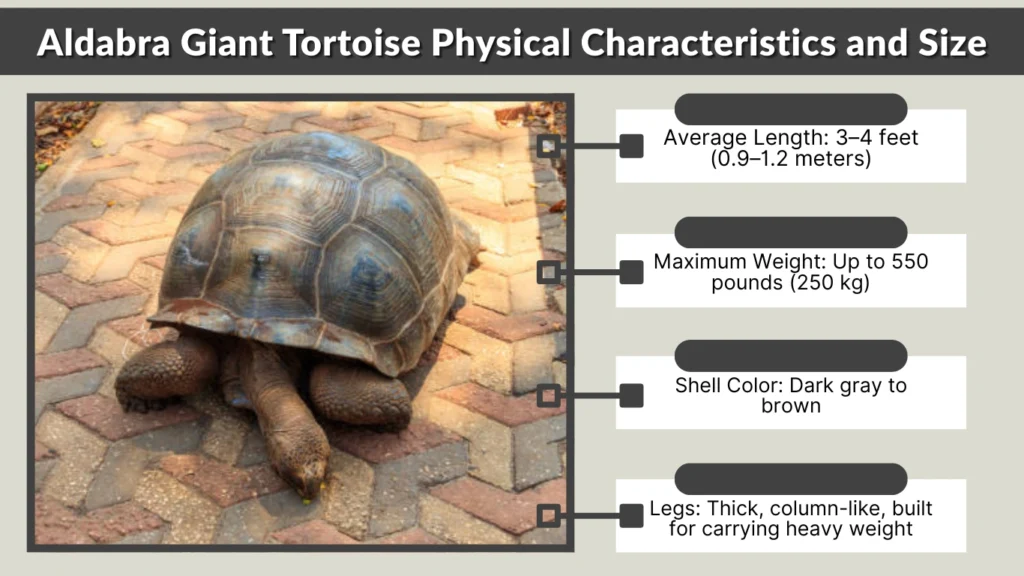
The Aldabra Giant Tortoise is one of the largest land tortoises on Earth, known for its massive body, thick limbs, and high-domed shell. Its powerful build allows it to move steadily across rough island terrain, while its strong legs support its heavy weight. Males are typically larger than females, and their impressive size is one of the species’ most defining features.
Below is a quick overview of its key physical characteristics:
- Average Length: 3–4 feet (0.9–1.2 meters)
- Maximum Weight: Up to 550 pounds (250 kg)
- Shell Type: Large, dome-shaped carapace
- Shell Color: Dark gray to brown
- Legs: Thick, column-like, built for carrying heavy weight
- Neck: Long and flexible for reaching vegetation
- Skin: Tough, scaly, and well-adapted to dry climates
- Sexual Dimorphism: Males are generally larger with longer tails
These physical traits help the Aldabra Giant Tortoise survive in its natural island habitat while contributing to its reputation as one of the world’s true reptile giants.
Natural Habitat and Distribution
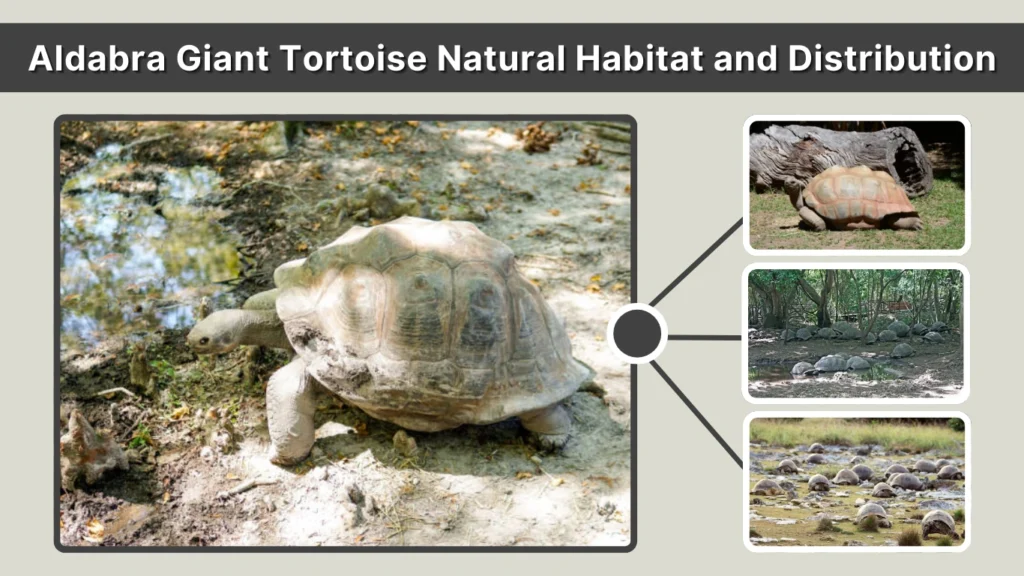
The Aldabra Atoll Ecosystem
The Aldabra Giant Tortoise primarily lives on the Aldabra Atoll, a UNESCO World Heritage Site located in the Seychelles in the Indian Ocean. This remote coral atoll consists of limestone terrain, coastal scrub, mangroves, and open grasslands.
The climate is tropical, with warm temperatures year-round and distinct wet and dry seasons. These tortoises have adapted perfectly to this environment, grazing on vegetation and traveling slowly across open landscapes.
Because the atoll is protected and largely uninhabited by humans, it provides a safe environment for tens of thousands of tortoises to roam freely.
Global Distribution Today
Although their main population remains on Aldabra Atoll, Aldabra Giant Tortoises have been introduced to other islands in the Seychelles for conservation purposes. They can also be found in select wildlife parks and zoos around the world, where they serve as ambassadors for conservation education.
Diet and Feeding Habits
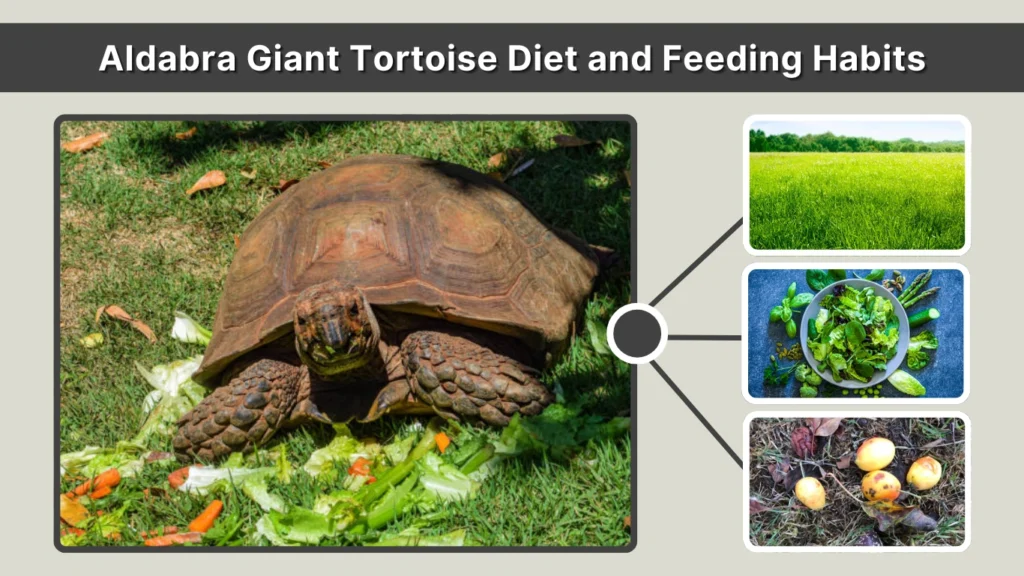
The Aldabra Giant Tortoise is strictly herbivorous. Its diet mainly consists of grasses, leaves, woody shrubs, and occasionally fallen fruits. Grazing is its primary daily activity, and it can spend many hours slowly feeding throughout the day.
During dry seasons, when food is scarce, the tortoise can survive by reducing its activity levels and relying on stored body fat and water reserves. This ability to endure harsh conditions has been key to its survival over centuries.
Additionally, these tortoises play an important ecological role. By consuming plants and dispersing seeds through their droppings, they help maintain the health and balance of their ecosystem.
Lifespan and Longevity
One of the most remarkable traits of the Aldabra Giant Tortoise is its extraordinary lifespan. These tortoises commonly live over 100 years, and many individuals are believed to reach 150 years or more under ideal conditions.
Their long lifespan is largely due to their slow metabolism, steady growth rate, and low-stress lifestyle. With few natural predators and a stable environment, they can age gradually and maintain good health for decades.
Compared to many other reptiles, the Aldabra Giant Tortoise ranks among the longest-living land animals on Earth.
Behavior and Daily Life
The Aldabra Giant Tortoise follows a simple but consistent daily routine. It is primarily diurnal, meaning it is most active during the day. Early mornings and late afternoons are typically spent grazing, while the hottest hours are reserved for resting in shaded areas or shallow depressions in the ground.
Despite their enormous size, these tortoises are generally calm and docile. They move slowly and deliberately, conserving energy whenever possible. While not highly social animals, they often gather in loose groups where food is plentiful. Males may display dominance behaviors during breeding season, but serious conflict is rare.
Their slow pace and relaxed lifestyle contribute significantly to their long lifespan and overall resilience in the wild.
Reproduction and Life Cycle
Mating and Nesting
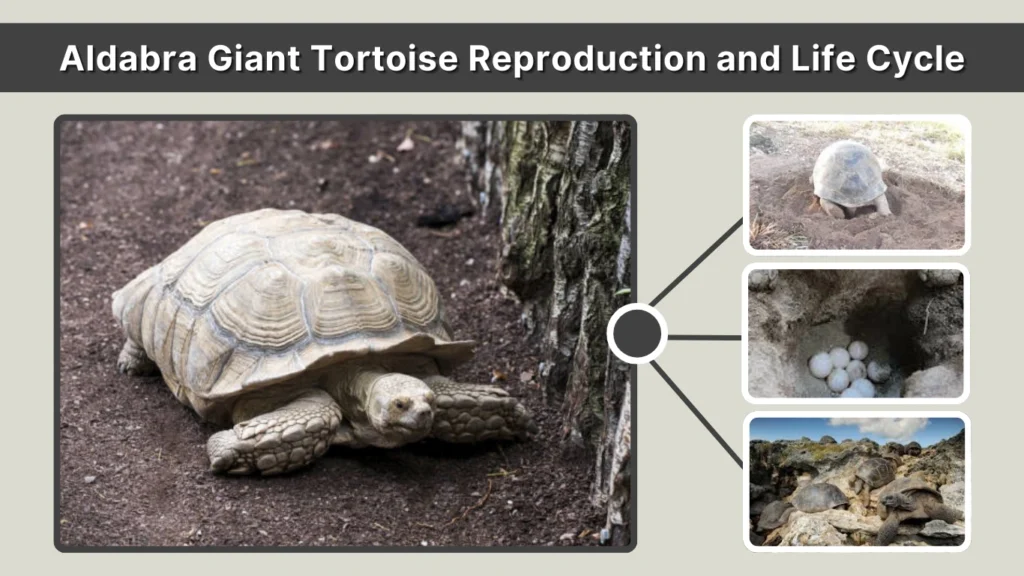
Breeding season for the Aldabra Giant Tortoise usually occurs during the wet months when food is more abundant. Males compete for females through displays of strength and size, often stretching their necks and making deep vocal sounds.
After mating, the female searches for a suitable nesting site in sandy or soft soil. She lays between 10 and 25 eggs per clutch, carefully burying them to protect them from heat and predators. The incubation period typically lasts around 3 to 8 months, depending on environmental conditions such as temperature and humidity.
Hatchlings and Growth
When hatchlings emerge, they are small and vulnerable. Unlike adults, young tortoises face threats from birds and other predators. Their small, softer shells offer limited protection in the early stages of life.
Growth is slow but steady. It can take 20 to 30 years for an Aldabra Giant Tortoise to reach full maturity. This slow development is closely linked to their extended lifespan, as species that grow slowly often live longer.
Conservation Status and Threats
The Aldabra Giant Tortoise is currently classified as Vulnerable by the International Union for Conservation of Nature (IUCN). While its population is relatively stable compared to other giant tortoise species, it still faces environmental risks.
Historically, sailors hunted giant tortoises extensively for meat, pushing many related species to extinction. Habitat destruction and introduced predators also posed serious threats. Fortunately, the isolation of Aldabra Atoll helped protect this species from complete eradication.
Today, conservation programs focus on habitat protection, scientific monitoring, and controlled breeding efforts. The Aldabra Atoll remains a protected reserve, ensuring that tens of thousands of tortoises can continue to thrive in their natural environment.
Aldabra Giant Tortoise vs Galápagos Giant Tortoise
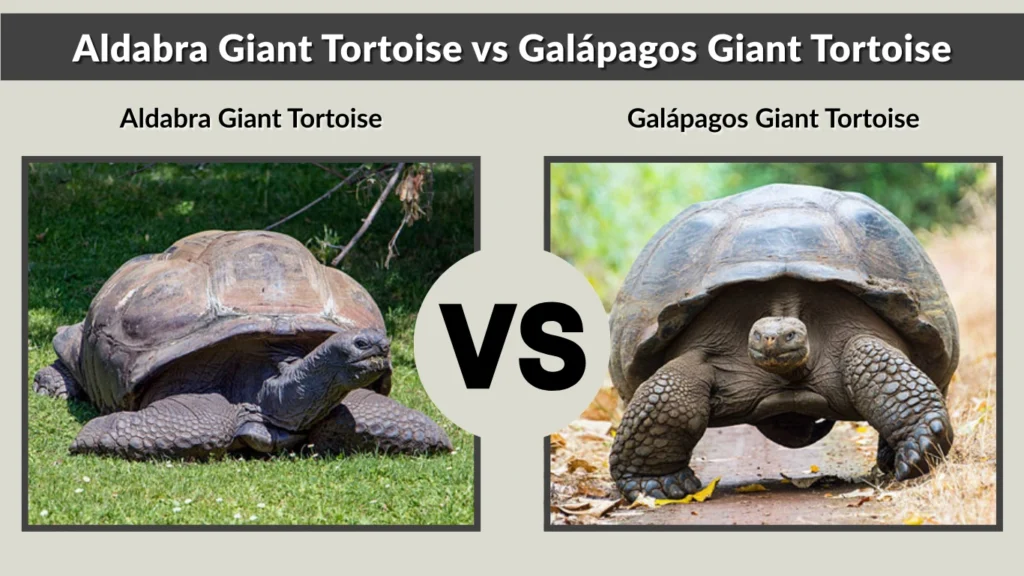
The Aldabra Giant Tortoise is often compared to the Galápagos Giant Tortoise, as both are among the largest tortoise species in the world. While the Galápagos tortoise generally holds the title as the largest, the size difference is relatively small.
Geographically, the Aldabra Giant Tortoise is found in the Indian Ocean, while the Galápagos species lives in the Pacific Ocean near Ecuador. Evolutionarily, both species developed in isolated island environments, which allowed them to grow large due to the absence of major predators.
Despite living on opposite sides of the world, their similarities highlight how island ecosystems can shape the evolution of giant reptiles.
Can Aldabra Giant Tortoises Be Kept as Pets?
Although it may be legal in some regions to own an Aldabra Giant Tortoise, keeping one as a pet is a major responsibility. These tortoises require enormous outdoor space, specialized diets, and long-term care that can last over a century.
Their size alone makes them unsuitable for most households. Additionally, ethical considerations come into play, as removing wildlife from conservation programs can negatively impact species protection. For most people, observing these tortoises in protected environments or accredited zoos is the best option.
FAQs
How long do Aldabra giant tortoises live?
Aldabra Giant Tortoises commonly live over 100 years, and many individuals are believed to reach 150 years or more. Their slow metabolism and low-stress lifestyle contribute significantly to their remarkable longevity.
How big can an Aldabra tortoise grow?
Adult males can reach up to 4 feet in length and weigh as much as 550 pounds. Females are slightly smaller but still among the largest tortoises in the world.
Where do Aldabra giant tortoises live?
They are native to the Aldabra Atoll in the Seychelles, located in the Indian Ocean. Some populations also live on nearby islands and in conservation facilities worldwide.
What do Aldabra giant tortoises eat?
They are herbivores that mainly consume grasses, leaves, shrubs, and occasionally fruit. Their grazing habits help maintain the balance of their ecosystem.
Are Aldabra giant tortoises endangered?
They are currently listed as Vulnerable, but their population is stable thanks to strong conservation efforts and habitat protection.
Conclusion
The Aldabra Giant Tortoise is a living symbol of resilience, longevity, and successful conservation. Native to the remote Aldabra Atoll, this remarkable reptile has survived centuries of environmental change and human impact. With its massive size, gentle temperament, and lifespan that can exceed a century, it remains one of the most fascinating land animals on Earth.
Protecting this species ensures that future generations can continue to witness one of nature’s true giants slowly roaming its island home.