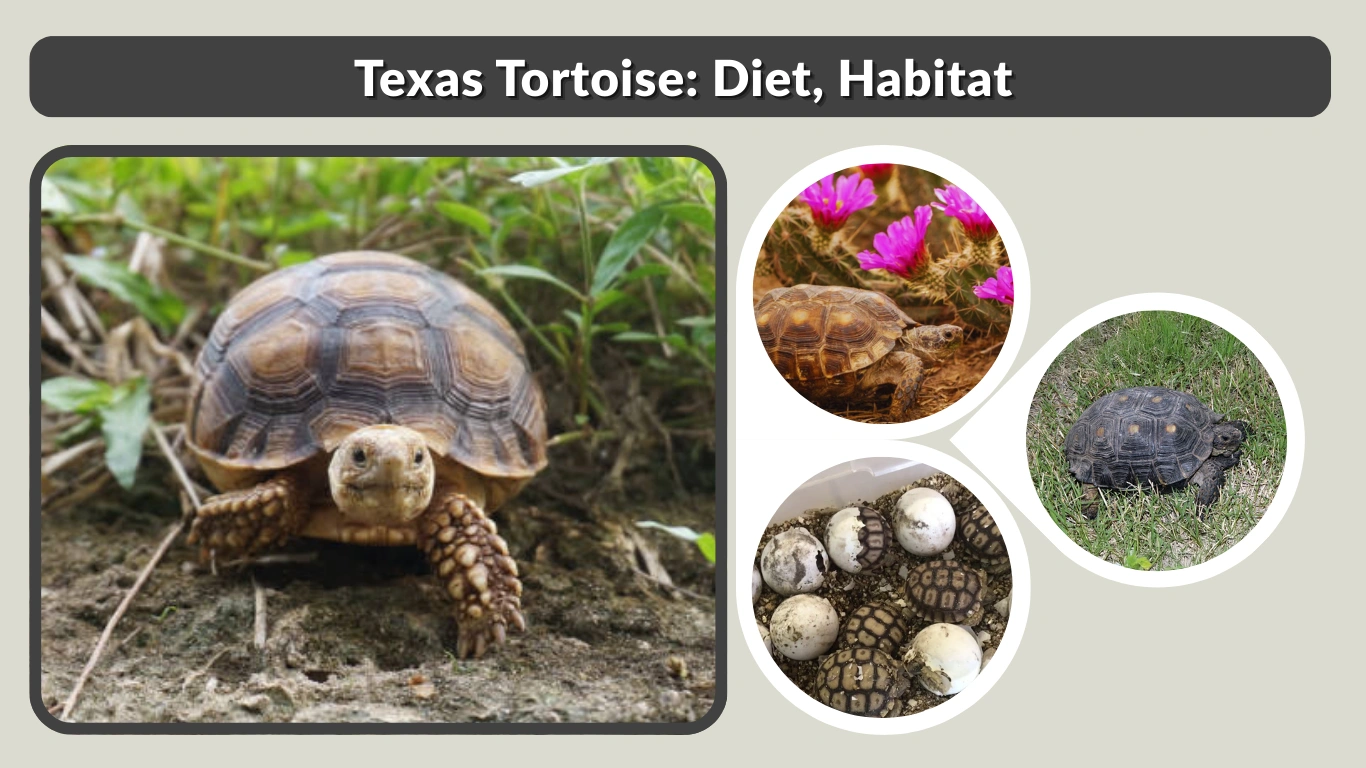
The Texas tortoise (Gopherus berlandieri), also known as Berlandier’s tortoise, is the only native tortoise species found in Texas. This small, land-dwelling reptile lives primarily in South Texas and parts of northeastern Mexico. Unlike larger desert tortoises found in the western United States, the Texas tortoise prefers brushlands and thorny scrub habitats.
Although it may look tough with its domed shell and sturdy legs, the Texas tortoise faces growing threats from habitat loss and human activity. Because of these challenges, it is protected under Texas state law. Learning about the Texas tortoise’s diet, habitat, lifespan, and reproduction helps highlight why this unique reptile plays an important role in the region’s ecosystem.
Texas Tortoise Facts and Identification
Quick Facts
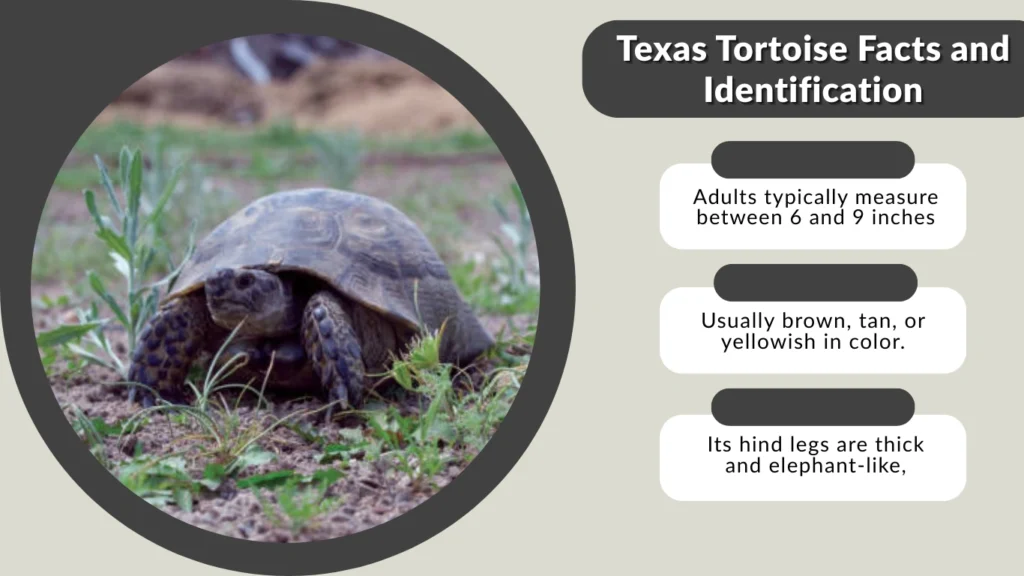
The Texas tortoise is relatively small compared to other North American tortoises. Adults typically measure between 6 and 9 inches in shell length and weigh around 8 to 15 pounds. Their compact size makes them well adapted to navigating dense brush and scrub vegetation.
This species is primarily diurnal, meaning it is active during the day. It spends much of its time foraging for food or resting in shaded areas to avoid extreme heat. Unlike some tortoise species, the Texas tortoise does not dig deep burrows but may use shallow scrapes or natural cover for shelter.
One interesting fact is that it is the only tortoise species native to Texas, making it an important symbol of the state’s native wildlife.
How to Identify a Texas Tortoise
The Texas tortoise has a high-domed shell that is usually brown, tan, or yellowish in color. The shell often has darker markings in the center of each scute (the individual sections of the shell).
Its hind legs are thick and elephant-like, designed to support its body on land. The front legs are strong and covered in protective scales. Males and females can look similar, but males typically have longer tails and a slightly concave underside of the shell, which helps during mating.
These physical traits help distinguish the Texas tortoise from other turtles or tortoises found in nearby regions.
Texas Tortoise Habitat
Natural Environment
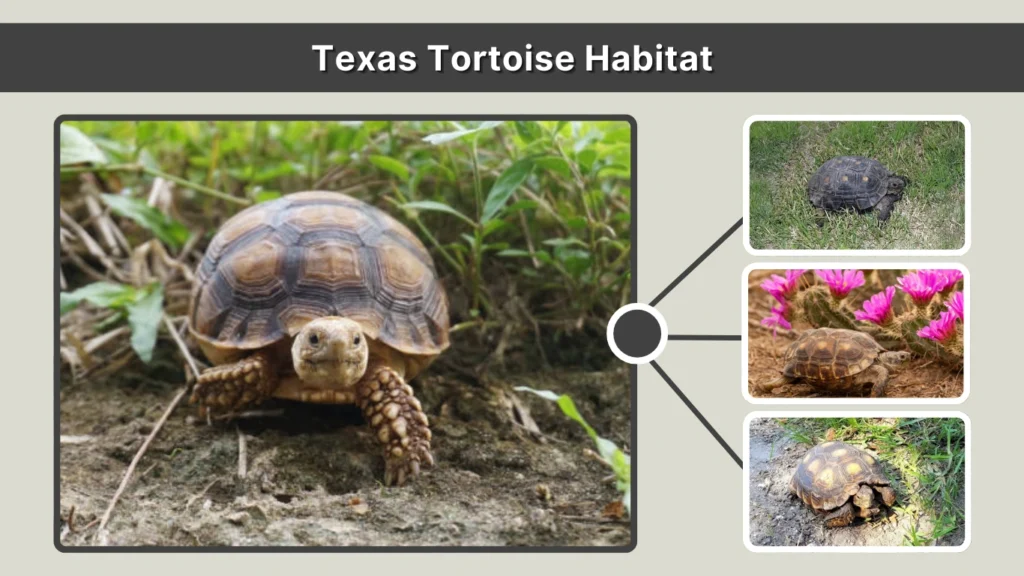
The Texas tortoise thrives in semi-arid environments, particularly in South Texas brushlands. It prefers thornscrub habitats filled with mesquite, prickly pear cactus, and native grasses. Sandy or loose soils are important because they allow the tortoise to create shallow resting spots and nests.
Unlike desert tortoises that rely heavily on burrows, the Texas tortoise often shelters beneath vegetation or in natural depressions. Dense plant cover helps protect it from predators and extreme heat.
The warm climate of South Texas suits this reptile well. However, extreme weather events and prolonged drought can impact food availability and survival.
Geographic Range
The Texas tortoise is primarily found in the Rio Grande Valley and surrounding coastal plains of southern Texas. Its range extends into northeastern Mexico, where similar brushland habitats exist.
Unfortunately, urban development, agriculture, and road construction have fragmented much of its natural habitat. As cities expand and land is cleared, the tortoise’s living space continues to shrink.
Texas Tortoise Diet
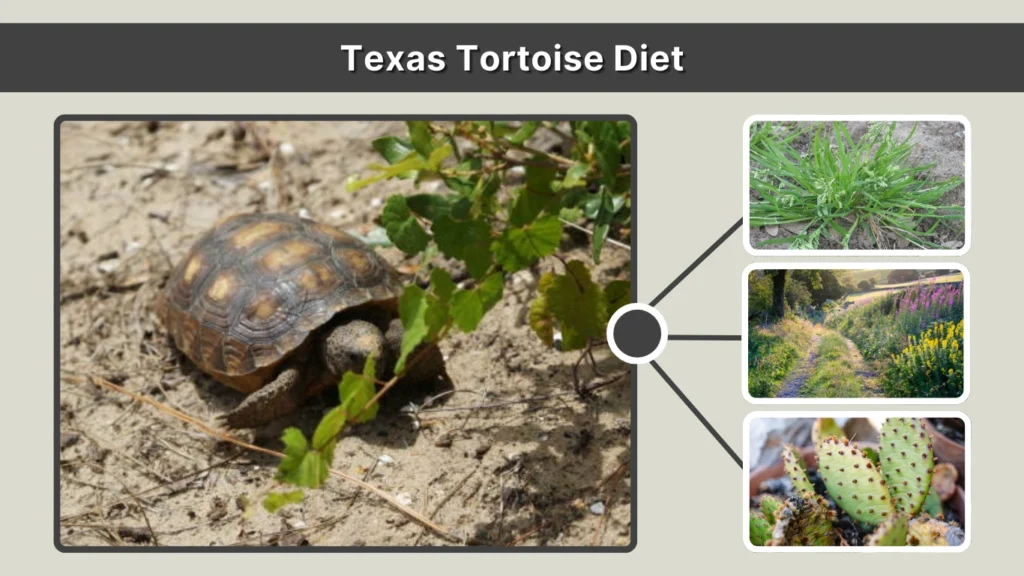
The Texas tortoise is strictly herbivorous. Its diet mainly consists of native grasses, wildflowers, cactus pads, and fruits—especially prickly pear cactus. During certain seasons, cactus fruit becomes a major food source.
This tortoise obtains most of its water from the plants it eats, which allows it to survive in relatively dry environments. After rainfall, it may also drink from temporary puddles.
Feeding habits can change with the seasons. In spring, wildflowers and tender grasses are abundant. In summer, cactus pads and fruits become more important. By consuming fruits and later dispersing seeds through its droppings, the Texas tortoise plays a valuable role in maintaining plant diversity within its habitat.
Texas Tortoise Lifespan and Growth
The Texas tortoise has a relatively long lifespan for its size. In the wild, individuals can live between 40 and 60 years, although some may live longer under ideal conditions.
Growth is slow, especially during the early years. Hatchlings are small and vulnerable, and it may take 10 to 15 years for a Texas tortoise to reach full maturity. Their slow growth rate is common among tortoise species and often correlates with longer lifespans.
Several factors influence longevity, including habitat quality, availability of food, and protection from predators and human threats. Because they grow slowly and reproduce at a limited rate, population recovery can take many years if numbers decline.
Texas Tortoise Eggs and Reproduction
Mating Season
The breeding season for the Texas tortoise usually begins in spring and can extend into early summer. During this time, males become more active and may travel longer distances in search of females. Courtship often involves gentle nudging, circling, and occasional shell bumping.
Males use their slightly concave plastron (the underside of the shell) to mount females during mating. While these interactions can appear aggressive, serious injury is uncommon. Breeding activity typically increases after rainfall, when food is more abundant and environmental conditions are favorable.
Nesting and Eggs
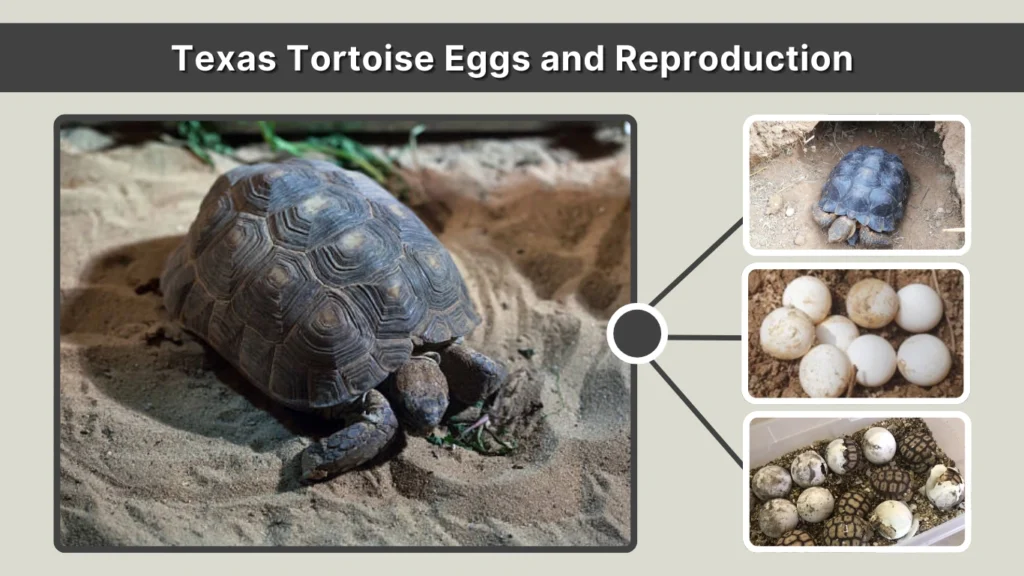
After mating, the female searches for a suitable nesting site in loose, sandy soil. She digs a shallow nest using her hind legs and lays a small clutch of eggs, usually between 1 and 5 per season. Compared to many reptiles, this is a relatively low number, which makes population growth slow.
The eggs are round to slightly oval and have a hard, leathery shell. Once laid, the female carefully covers them with soil and leaves them to incubate naturally. The incubation period generally lasts between 80 and 120 days, depending on temperature and moisture levels.
Hatchlings
When hatchlings emerge, they are only a few inches long and highly vulnerable to predators such as birds, raccoons, and snakes. Their shells are softer than those of adults, offering limited protection.
Young tortoises grow slowly and rely heavily on vegetation for cover. It may take a decade or more for them to reach maturity. Because clutch sizes are small and juvenile survival rates can be low, protecting adult tortoises is especially important for maintaining stable populations.
Is the Texas Tortoise Endangered?
Conservation Status
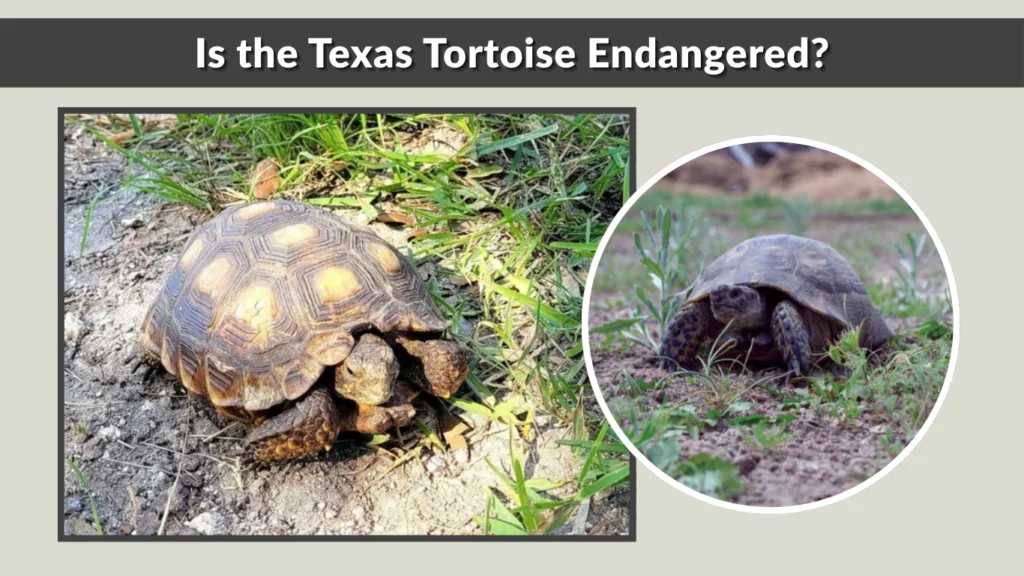
The Texas tortoise is not federally listed as endangered in the United States, but it is classified as a threatened species in Texas. This means it is legally protected under state law. It is illegal to collect, harm, or sell Texas tortoises without special permits.
The species’ limited geographic range and slow reproductive rate make it especially vulnerable to environmental changes.
Major Threats
One of the biggest threats to the Texas tortoise is habitat loss. Urban expansion, agricultural development, and land clearing have significantly reduced brushland ecosystems in South Texas.
Road mortality is another serious issue. Because tortoises move slowly and often cross roads, many are injured or killed by vehicles. Illegal collection for the pet trade has also harmed local populations in the past.
Climate change and prolonged drought may further impact food availability and nesting success.
Conservation Efforts
Conservation efforts focus on habitat protection, public education, and enforcement of wildlife laws. Landowners are encouraged to preserve native brush and avoid harming tortoises found on their property.
Wildlife agencies in Texas work to monitor populations and promote awareness about the species’ protected status. Community education plays a key role in reducing illegal collection and encouraging responsible land use.
Can You Keep a Texas Tortoise as a Pet?
In Texas, it is illegal to collect a Texas tortoise from the wild or sell one without proper authorization. Even if someone finds a tortoise on their property, they are generally required to leave it undisturbed.
Keeping a wild Texas tortoise as a pet can harm local populations and disrupt the natural ecosystem. These tortoises are best appreciated in their natural habitat. Protecting them in the wild ensures that future generations can continue to observe this unique native species.
FAQs
What does a Texas tortoise eat?
The Texas tortoise is herbivorous and feeds on native grasses, wildflowers, cactus pads, and prickly pear fruit. It obtains most of its water from the plants it consumes, allowing it to survive in semi-arid environments.
Where do Texas tortoises live?
Texas tortoises live primarily in South Texas, especially in the Rio Grande Valley and surrounding brushlands. Their range also extends into northeastern Mexico. They prefer thornscrub habitats with sandy soil and dense vegetation.
How long do Texas tortoises live?
In the wild, Texas tortoises typically live between 40 and 60 years. Their slow growth rate and stable environment contribute to their relatively long lifespan compared to many other reptiles.
How many eggs does a Texas tortoise lay?
A female Texas tortoise usually lays between 1 and 5 eggs per clutch. The eggs incubate for approximately 80 to 120 days before hatching.
Is the Texas tortoise endangered?
The Texas tortoise is listed as threatened in Texas and is protected by state law. Although not federally endangered, it faces risks from habitat loss, road mortality, and human activity.
Conclusion
The Texas tortoise is a small but remarkable reptile that represents an important part of South Texas wildlife. From its herbivorous diet and brushland habitat to its slow growth and long lifespan, this species is uniquely adapted to its environment.
However, habitat loss and human activity continue to threaten its survival. Because it reproduces slowly and has a limited range, conservation efforts are essential. By respecting wildlife laws and protecting native habitats, we can help ensure that the Texas tortoise remains a lasting symbol of the region’s natural heritage.