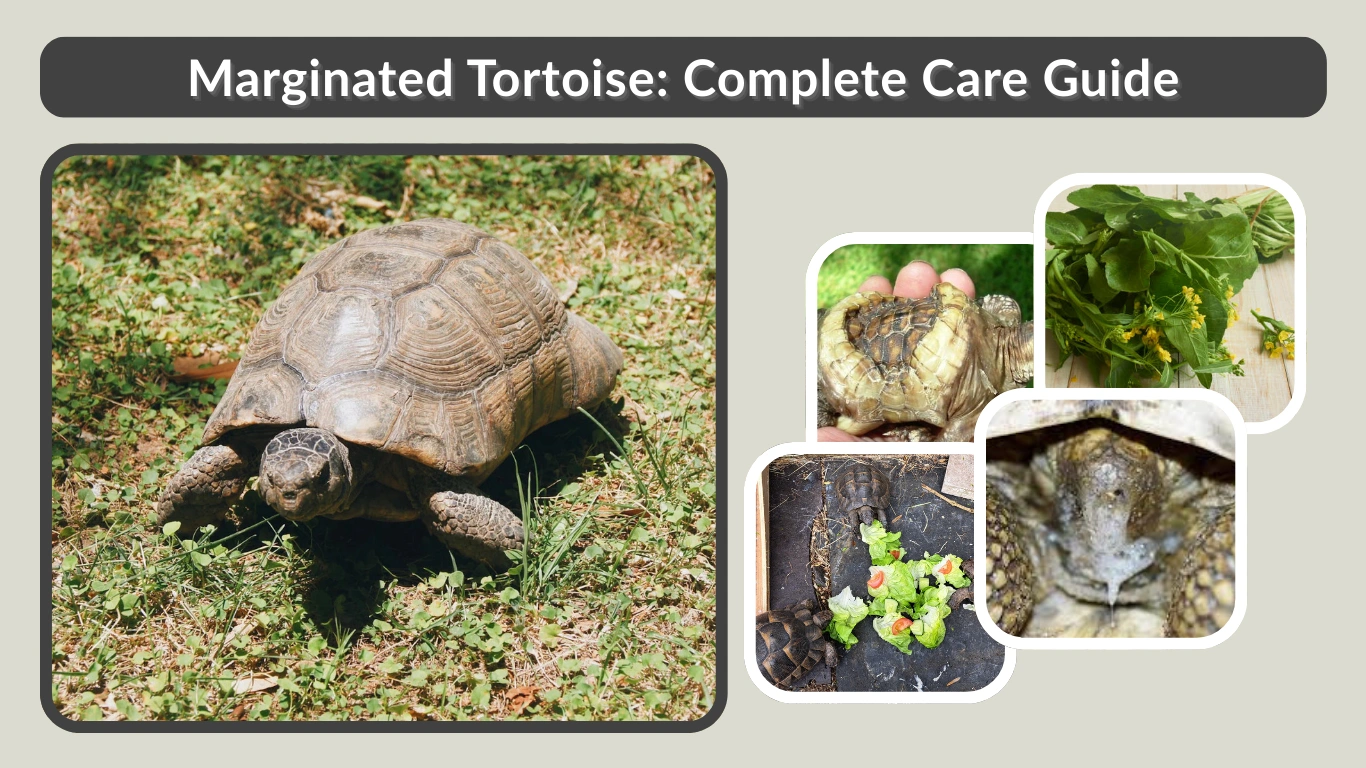
The Marginated Tortoise (Testudo marginata) is the largest species of Mediterranean tortoise and a favorite among reptile enthusiasts. Known for its striking flared shell and hardy nature, this tortoise has become increasingly popular as a long-term companion. However, owning one requires proper knowledge of its size, lifespan, enclosure needs, and diet. In this complete guide, you’ll learn everything you need to know about Marginated Tortoise care, including habitat setup, behavior, and essential health considerations.
What Is a Marginated Tortoise?
The Marginated Tortoise is a terrestrial reptile native to Southern Europe. It belongs to the Testudinidae family and is closely related to the Greek tortoise and Hermann’s tortoise. Despite these similarities, it stands out due to its larger size and unique shell shape.
Scientific Name and Classification
- Scientific name: Testudo marginata
- Family: Testudinidae
- Type: Mediterranean tortoise species
This species is often confused with other Mediterranean tortoises, but its distinctive rear shell flaring makes identification easier.
Natural Habitat and Origin
Marginated tortoises are primarily found in:
- Greece
- Southern Italy
- The Balkans
They inhabit dry, rocky hillsides and scrublands with a Mediterranean climate. Summers are hot and dry, while winters are cooler with moderate rainfall. Understanding this natural environment is essential because captive care should mimic these conditions as closely as possible.
Marginated Tortoise Size and Physical Characteristics
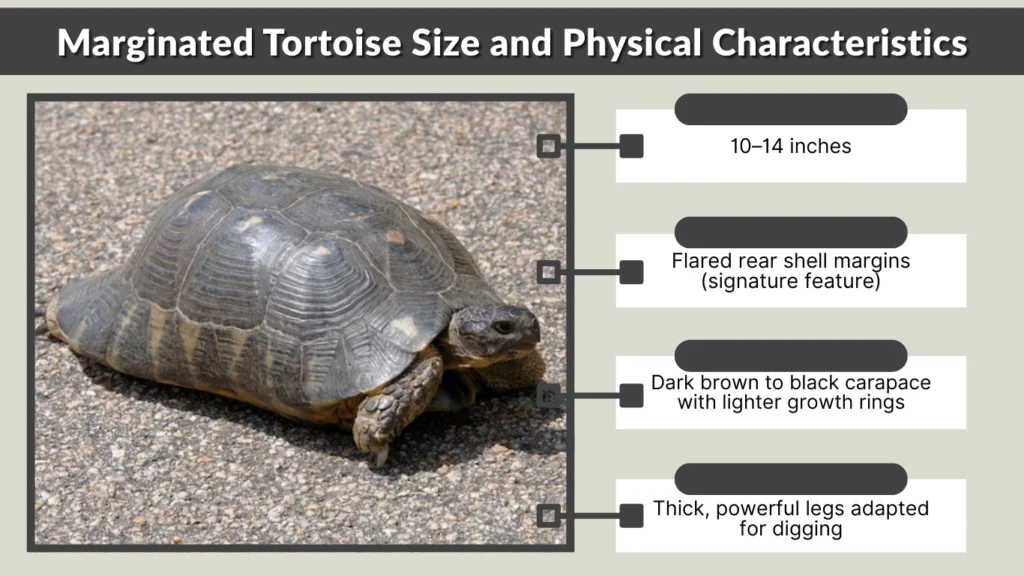
The Marginated Tortoise is the largest of the Mediterranean tortoise species, known for its impressive size and striking shell shape. Compared to Greek or Hermann’s tortoises, it has a longer body and a dramatic flared rear shell that gives it a “skirted” appearance. Its sturdy build and bold coloration make it one of the most visually distinctive tortoises kept as pets.
Size Overview
- Average adult length: 10–14 inches
- Weight range: 6–11 pounds
- Growth rate: Slow and steady over 8–10 years
- Males: Slightly larger with longer tails
- Females: Slightly smaller with flatter plastrons
Some well-cared-for males may grow even larger under optimal conditions.
Key Physical Characteristics
- Flared rear shell margins (signature feature)
- Dark brown to black carapace with lighter growth rings
- Thick, powerful legs adapted for digging
- Slightly elongated, oval-shaped shell
- Strong, dome-shaped upper shell
Their size and unique shell design not only make them stand out visually but also reflect their adaptation to dry, rocky Mediterranean environments.
Marginated Tortoise Lifespan
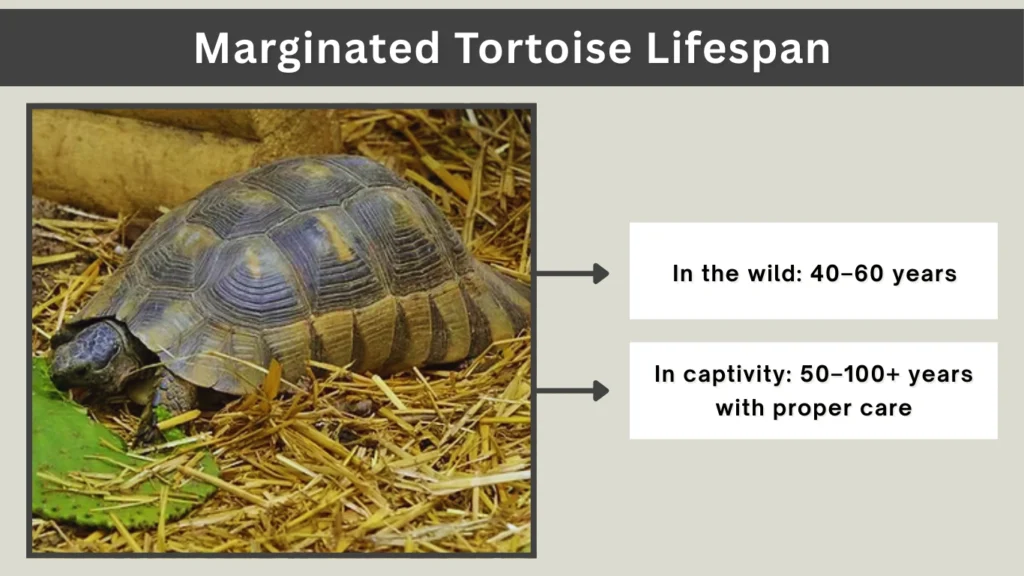
If you’re considering ownership, be prepared for a long commitment. The Marginated Tortoise lifespan is impressive.
- In the wild: 40–60 years
- In captivity: 50–100+ years with proper care
Some individuals have even surpassed a century.
Factors That Affect Lifespan
Several factors determine how long a marginated tortoise will live:
- Proper UVB lighting
- Balanced, high-fiber diet
- Adequate enclosure space
- Routine veterinary care
- Safe hibernation practices
Poor diet or inadequate lighting can significantly shorten lifespan. Because of their longevity, marginated tortoises are often considered lifetime pets that may outlive their owners.
Marginated Tortoise Temperament and Behavior
Marginated tortoises are generally calm and hardy reptiles. While they are not affectionate in the traditional sense, they can become familiar with their owners and may approach during feeding times.
Personality Traits
- Mostly docile
- Active during the day (diurnal)
- Enjoy basking and exploring
- May dig burrows
They are independent animals and do not require constant interaction. However, frequent gentle handling when young can help them become more accustomed to humans.
Compatibility
Housing multiple tortoises together can sometimes lead to dominance behavior, especially between males. If keeping more than one, adequate space is essential.
Are Marginated Tortoises Good Pets?
They can make excellent pets for experienced reptile keepers or committed beginners willing to research thoroughly. Their hardy nature makes them somewhat forgiving compared to more delicate reptile species, but they still require specialized lighting, space, and diet.
Marginated Tortoise Care Guide
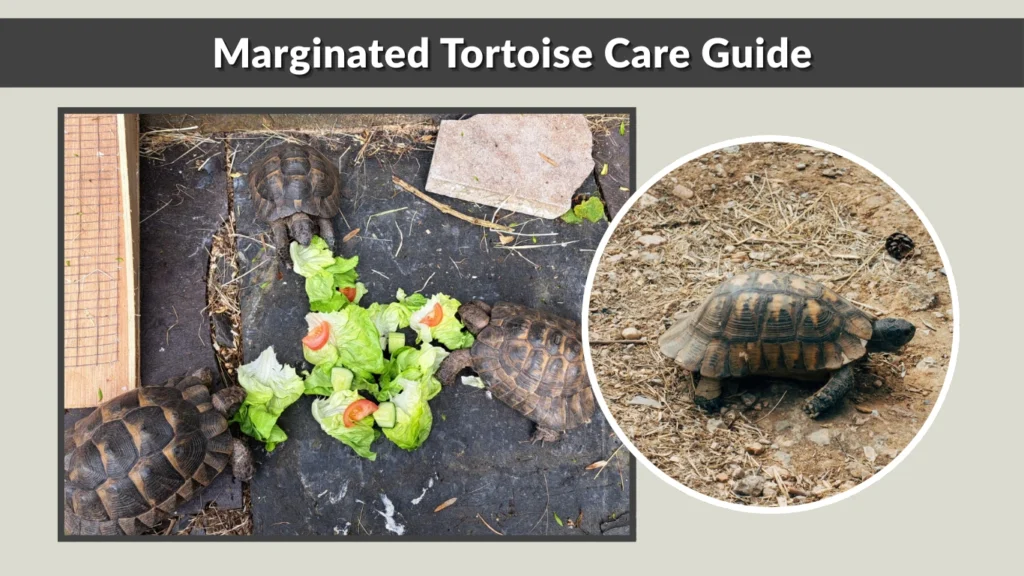
Providing proper care is crucial for ensuring a healthy, long-lived tortoise. Their environment must replicate the Mediterranean climate as closely as possible.
Enclosure Setup
Indoor Enclosure
Indoor housing is common, especially in cooler climates. Important considerations include:
- Minimum enclosure size of at least 6–8 feet in length for adults
- Use of natural substrates like soil or coconut coir
- Multiple hiding spots
- A basking area with heat source
Aquariums are generally too small for adult marginated tortoises. Large tortoise tables or custom-built enclosures work better.
Outdoor Enclosure
Outdoor housing is ideal in suitable climates because it provides natural sunlight. Key features should include:
- Secure fencing to prevent escape
- Protection from predators
- Dry areas to prevent excessive moisture
- Shaded sections for cooling
Natural sunlight is far superior to artificial lighting and promotes healthier shell growth.
Temperature and Lighting Requirements
Proper temperature gradients are essential.
- Daytime ambient temperature: 75–85°F
- Basking spot: 90–95°F
- Nighttime temperature: Above 65°F
UVB lighting is critical for calcium absorption and preventing metabolic bone disease. Indoor tortoises should receive 10–12 hours of UVB exposure daily.
Humidity Needs
Marginated tortoises prefer relatively dry conditions compared to tropical species. However, humidity still plays an important role in healthy shell development.
- Ideal humidity for adults: 40–60%
- Slightly higher humidity for juveniles to prevent pyramiding
- Proper ventilation to avoid respiratory infections
A shallow water dish should always be available for drinking and occasional soaking. Overly damp enclosures can lead to shell rot or fungal issues, so maintaining a balanced environment is essential.
Marginated Tortoise Diet
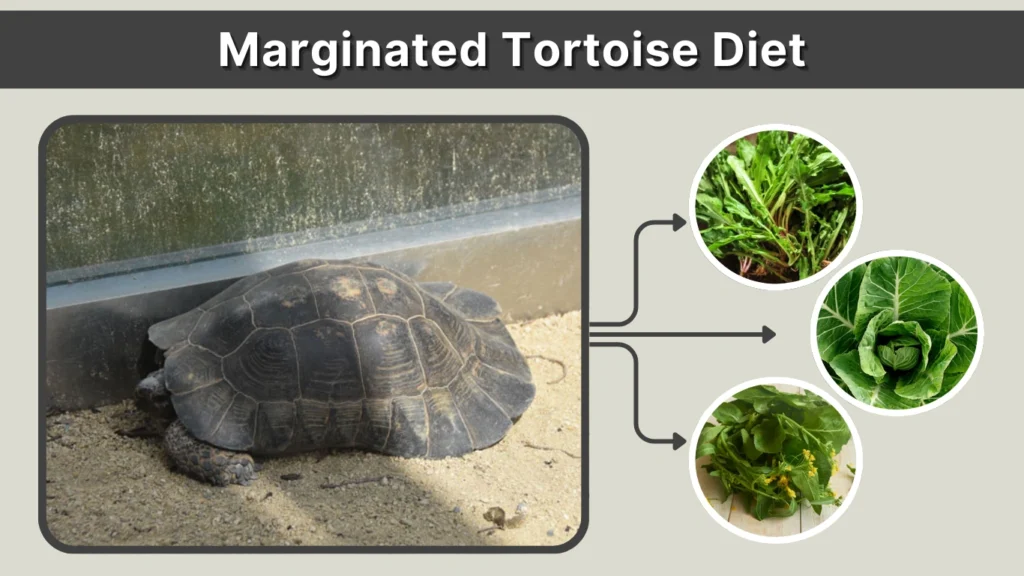
Diet is one of the most important aspects of proper Marginated Tortoise care. These tortoises are strictly herbivorous and require a high-fiber, low-protein diet to stay healthy.
What Do Marginated Tortoises Eat?
In the wild, they graze on weeds, grasses, and leafy plants. In captivity, their diet should consist mainly of:
- Dandelion greens
- Collard greens
- Mustard greens
- Turnip greens
- Plantain weeds
- Hibiscus leaves
Grasses and edible weeds should form the foundation of their diet. Variety is key to ensuring balanced nutrition.
Fruit should only be offered occasionally, if at all, as excess sugar can cause digestive issues.
Foods to Avoid
Certain foods can harm marginated tortoises and should be avoided:
- High-protein foods (dog or cat food)
- Dairy products
- Processed human food
- Iceberg lettuce (low nutritional value)
- Excess fruit
A poor diet can lead to metabolic bone disease and abnormal shell growth.
Supplements
Calcium supplementation is often necessary, especially for indoor tortoises.
- Calcium powder (2–3 times weekly)
- Vitamin D3 if UVB exposure is limited
Proper supplementation supports strong shell and bone development, particularly in growing juveniles and egg-laying females.
Hibernation (Brumation)
Marginated tortoises naturally undergo brumation, a reptile form of hibernation, during colder months.
Healthy adults can safely brumate for 8–12 weeks under controlled conditions. However, not all tortoises should hibernate.
When to Avoid Brumation
- Juveniles under 2–3 years old
- Sick or underweight tortoises
- Individuals without veterinary clearance
Before brumation, tortoises should be gradually cooled and fasted to empty their digestive systems. Improper hibernation can be dangerous, so preparation and monitoring are critical.
Common Health Problems
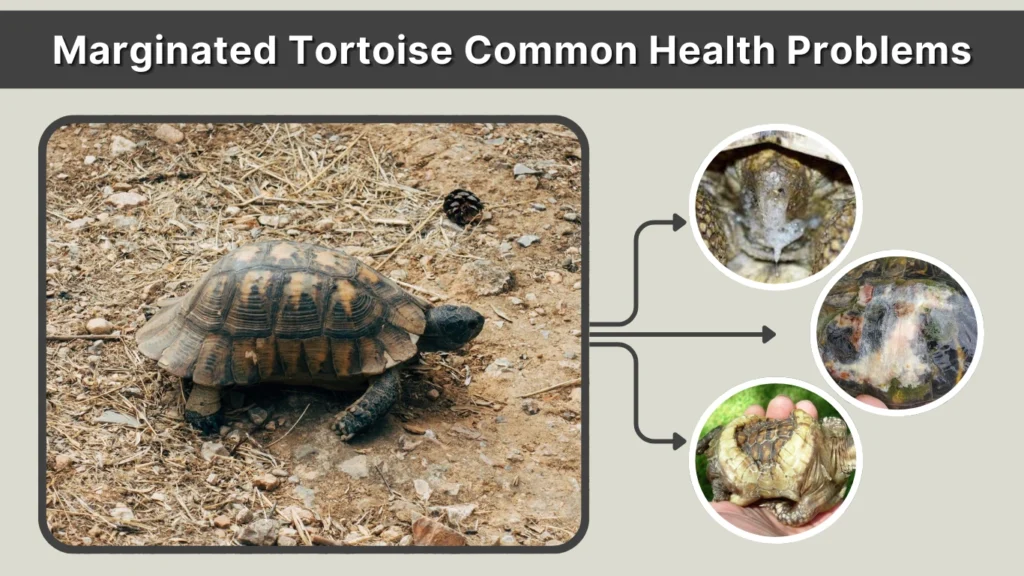
Even hardy species like the Marginated Tortoise can experience health issues.
Respiratory Infections
Often caused by improper humidity or cold temperatures. Symptoms include wheezing, nasal discharge, and lethargy.
Shell Rot
Typically results from excessive moisture and poor hygiene.
Metabolic Bone Disease (MBD)
Caused by lack of UVB light or insufficient calcium. Signs include soft shell, deformities, and weakness.
Parasites
Internal parasites may cause weight loss or digestive issues.
Regular checkups with a reptile veterinarian can prevent minor issues from becoming serious problems.
Marginated Tortoise Price and Buying Guide
If you are considering purchasing one, it’s important to understand the costs involved.
Average Price
- Hatchlings: $150–$300
- Juveniles and adults: $300–$500+
Price depends on age, breeder reputation, and bloodline.
Ongoing Costs
Beyond the initial purchase, owners should budget for:
- Large enclosure setup
- UVB lighting replacements
- Fresh greens and food
- Veterinary care
Always purchase from reputable breeders who provide health records and proper documentation. Avoid wild-caught tortoises whenever possible.
Pros and Cons of Owning a Marginated Tortoise
Before committing, it’s helpful to weigh the advantages and challenges.
Pros
- Extremely long lifespan
- Hardy and resilient species
- Calm temperament
- Beautiful, unique shell shape
Cons
- Requires large enclosure space
- Long-term commitment (potentially lifelong)
- Specialized heating and lighting needs
- Veterinary care can be costly
Owning a marginated tortoise is rewarding, but it requires dedication and long-term planning.
FAQs
How big do marginated tortoises get?
Marginated tortoises typically grow between 10 and 14 inches long and can weigh up to 11 pounds. Males may grow slightly larger than females. Their distinctive flared shell makes them appear even larger compared to other Mediterranean tortoise species.
What do marginated tortoises eat?
They eat a high-fiber, plant-based diet consisting mainly of leafy greens, weeds, and grasses. Dandelion greens, collards, and mustard greens are excellent choices. Fruit should be limited, and high-protein or processed foods should be avoided.
How long do marginated tortoises live?
With proper care, marginated tortoises can live 50 to 100 years or more in captivity. Their long lifespan makes them a serious long-term commitment for any potential owner.
Are marginated tortoises good for beginners?
They can be suitable for dedicated beginners willing to research proper care. Their hardy nature helps, but they still require specific lighting, diet, and enclosure conditions.
Do marginated tortoises need UVB light?
Yes, UVB lighting is essential for calcium absorption and preventing metabolic bone disease. Indoor tortoises require 10–12 hours of UVB exposure daily to maintain proper bone and shell health.
Conclusion
The Marginated Tortoise is a remarkable Mediterranean species known for its impressive size, unique shell shape, and extraordinary lifespan. While they are hardy and relatively calm reptiles, they require proper housing, a high-fiber diet, UVB lighting, and long-term commitment. With the right care and preparation, a marginated tortoise can become a lifelong companion. Before purchasing one, ensure you are fully prepared to meet its needs for decades to come.