
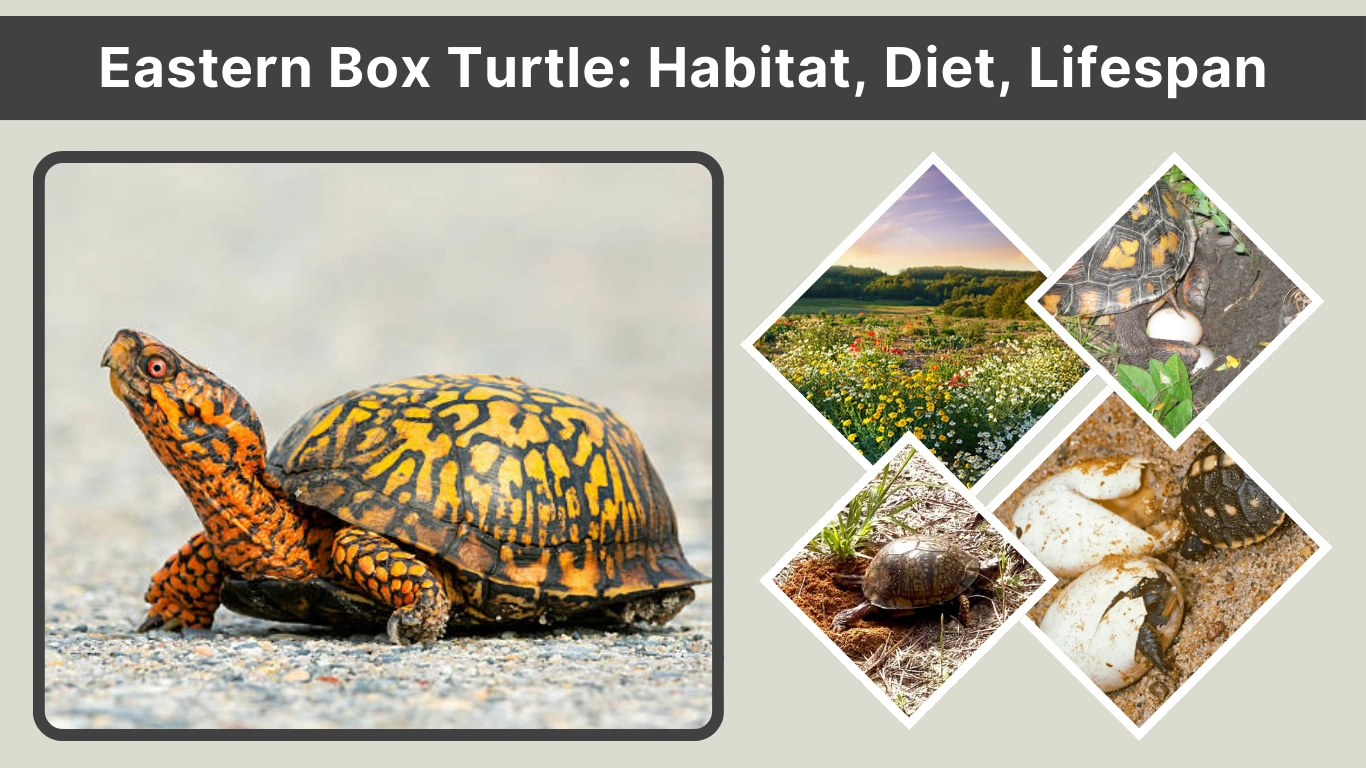
The eastern box turtle (Terrapene carolina carolina) is one of North America’s most recognizable land turtles. Known for its high-domed shell and unique hinged underside, this small but sturdy reptile can completely close itself inside its shell for protection. Native to the eastern United States, it thrives in forests, meadows, and wetlands. With a remarkably long lifespan and fascinating behaviors, the eastern box turtle has become a favorite among wildlife enthusiasts and reptile lovers alike.
Eastern Box Turtle Overview
Scientific Classification
The eastern box turtle belongs to the family Emydidae, a group of turtles commonly found in freshwater and terrestrial environments. Its scientific name, Terrapene carolina carolina, identifies it as a subspecies of the common box turtle. The genus name Terrapene refers to small land turtles native to North America.
Unlike many turtles that spend most of their lives in water, the eastern box turtle is primarily terrestrial. Although it may soak in shallow water or damp soil, it prefers land-based habitats.
Why It’s Called a Box Turtle
The eastern box turtle gets its name from its remarkable hinged plastron (the bottom part of its shell). This hinge allows the turtle to pull its head, legs, and tail inside and completely close its shell like a box. Once sealed, the shell becomes a strong barrier against predators.
This ability provides excellent protection from animals such as raccoons, foxes, and birds. The tight closure is one of the key features that distinguishes box turtles from other turtle species.
Quick Eastern Box Turtle Facts
- Average Size: 4–7 inches long
- Habitat Type: Terrestrial (land-dwelling)
- Diet: Omnivorous
- Lifespan: 30–50+ years
- Distinct Feature: Hinged shell that fully closes
These traits make the eastern box turtle both unique and well adapted to its environment.
Eastern Box Turtle Identification
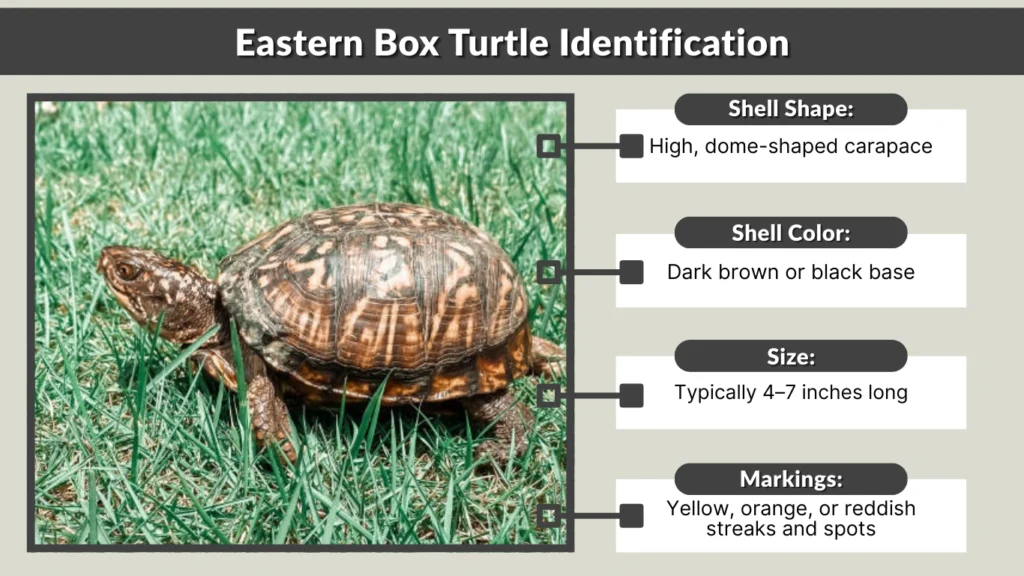
The eastern box turtle is easy to recognize once you know what to look for. Its high-domed shell, bright markings, and unique hinged underside make it stand out from other North American turtles. Unlike aquatic turtles, it has sturdy, elephant-like legs adapted for walking on land. Each turtle’s shell pattern is slightly different, which makes individual identification possible in some cases.
Key Identification Features
- Shell Shape: High, dome-shaped carapace
- Shell Color: Dark brown or black base
- Markings: Yellow, orange, or reddish streaks and spots
- Plastron: Hinged bottom shell that fully closes
- Size: Typically 4–7 inches long
- Eyes (Males): Often red or orange
- Eyes (Females): Usually brown or yellow
- Tail (Males): Longer and thicker
- Legs: Stout, clawed feet adapted for land
These features make the eastern box turtle one of the most distinctive and recognizable terrestrial turtles in North America.
Eastern Box Turtle Habitat
Natural Geographic Range
The eastern box turtle is found throughout much of the eastern and southeastern United States. Its range extends from Maine and Michigan in the north, down to Florida in the south, and west to Texas and parts of the Midwest.
Because of this wide distribution, eastern box turtles can adapt to a variety of climates, from cooler northern forests to warm southern woodlands.
Preferred Environment
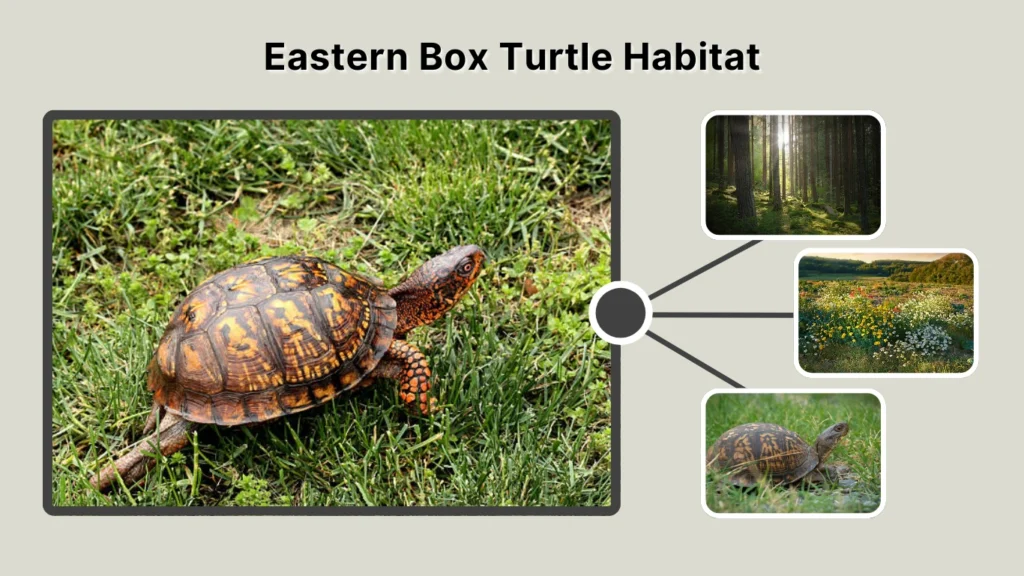
Eastern box turtles prefer moist, wooded areas with plenty of leaf litter and soft soil. Forests, meadows, grasslands, and swamp edges provide ideal living conditions. They need access to shallow water for soaking and hydration, but they do not rely on deep bodies of water like aquatic turtles.
They often hide under logs, fallen leaves, or burrow slightly into the soil to regulate their body temperature and avoid predators. A humid environment is especially important for maintaining healthy skin and shell condition.
Seasonal Behavior
Eastern box turtles are most active during warm, humid weather, especially in spring and early summer. During hot, dry periods, they may become less active and seek shelter in shaded areas.
In colder regions, they undergo brumation (a reptile form of hibernation) during winter. They dig shallow burrows or use natural cover to protect themselves from freezing temperatures. Once spring arrives and temperatures rise, they emerge to feed and search for mates.
Eastern Box Turtle Diet
What Do Eastern Box Turtles Eat?
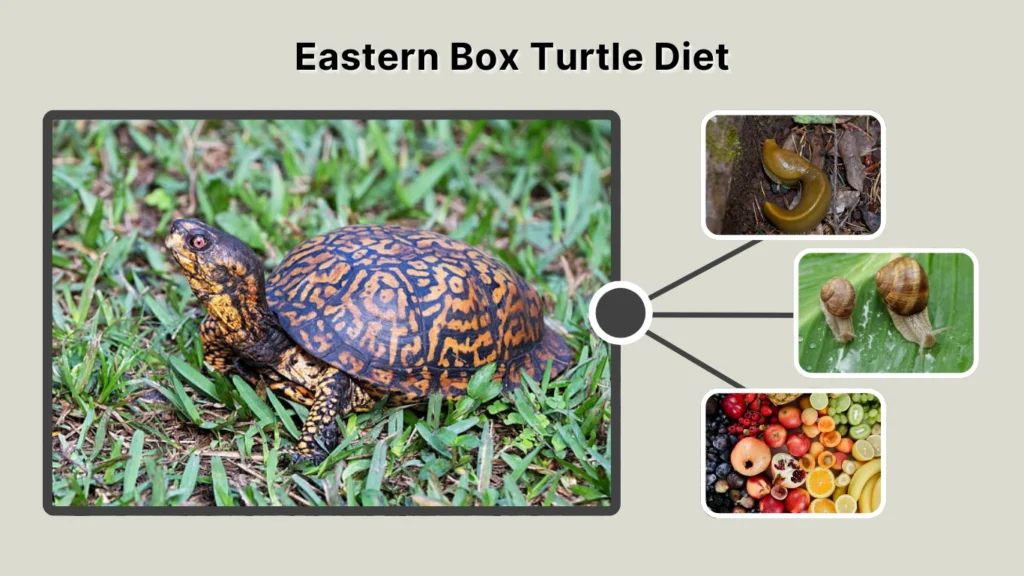
Eastern box turtles are omnivores, meaning they eat both plants and animals. Their varied diet helps them survive in changing environments.
Common foods include:
- Insects such as beetles and grasshoppers
- Earthworms and slugs
- Snails
- Berries and fruits
- Mushrooms
- Leafy greens
This balanced diet provides essential nutrients for growth and long-term health.
Diet Changes With Age
Young eastern box turtles tend to eat more protein-rich foods, such as insects and worms, which support rapid growth. As they mature, their diet gradually includes more plant material, although they continue to eat animal matter throughout their lives.
This flexible feeding behavior allows them to adapt to seasonal food availability in their habitat.
Eastern Box Turtle Lifespan
How Long Do Eastern Box Turtles Live?
Eastern box turtles are known for their impressive longevity. In the wild, they commonly live between 30 and 50 years, but many individuals surpass that range. Some documented cases suggest that eastern box turtles can live 75 years or even over 100 years under favorable conditions.
Their slow metabolism, protective shell, and adaptable diet all contribute to their long lifespan. However, survival depends heavily on habitat quality and protection from threats.
Lifespan in Captivity vs Wild
In captivity, eastern box turtles may live longer if they receive proper care, balanced nutrition, and protection from predators. A stable environment reduces many natural risks they face in the wild.
In contrast, wild turtles encounter dangers such as road traffic, habitat destruction, predators, and disease. Human activity is one of the biggest factors reducing wild populations and shortening average lifespans.
Eastern Box Turtle Eggs and Hatchlings
Mating Season
Eastern box turtles typically mate in the spring and early summer. Males may follow females persistently during courtship, using gentle nudges or movements to gain attention. Fertilization occurs internally, and females can store sperm for several months before laying eggs.
Nesting and Egg Details
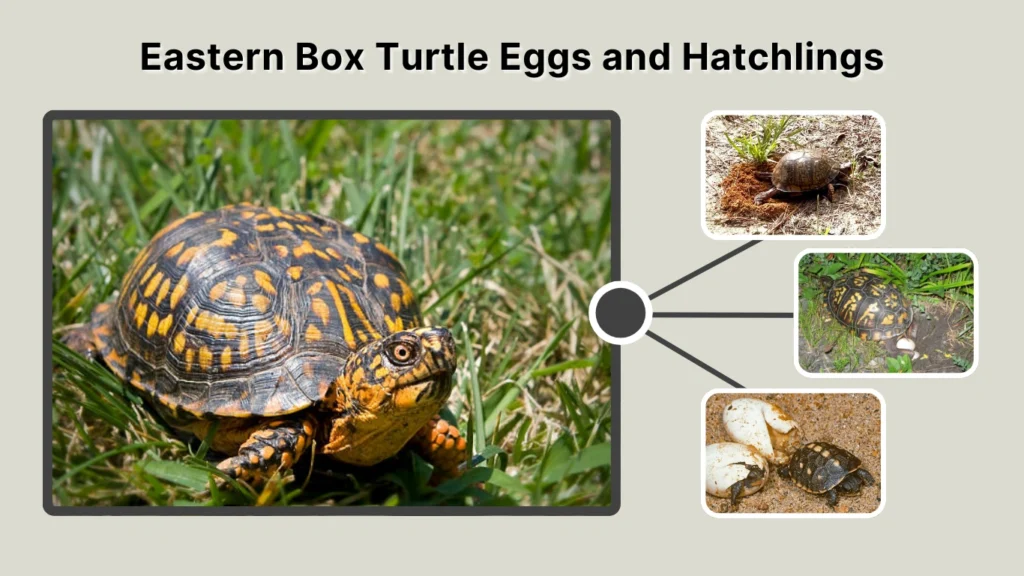
Females lay their eggs between late spring and mid-summer. They search for loose, sandy, or soft soil where they can dig a small nest using their hind legs. A typical clutch contains 3 to 8 eggs, although numbers can vary.
The eggs are white, oval-shaped, and have soft, leathery shells. After laying the eggs, the female carefully covers the nest with soil and leaves, providing natural camouflage. She does not return to care for them.
The incubation period usually lasts 70 to 90 days, depending on temperature and environmental conditions.
Eastern Box Turtle Hatchling
When hatchlings emerge, they are only about 1 inch long. Their shells are softer and more flexible than those of adults. Hatchlings often have brighter and more defined markings.
Young turtles face many survival challenges. Predators such as raccoons, skunks, birds, and snakes may dig up nests or prey on hatchlings. Only a small percentage survive to adulthood, which makes each successful hatch especially important for population stability.
Eastern Box Turtle Care (Pet Guide)
Is It Legal to Keep One?
Laws regarding eastern box turtle ownership vary by state. In many areas, it is illegal to collect wild turtles due to conservation concerns. If keeping one as a pet is permitted, it is best to obtain a captive-bred turtle from a reputable breeder.
Removing turtles from the wild can harm local populations because they reproduce slowly and live long lives.
Enclosure Setup
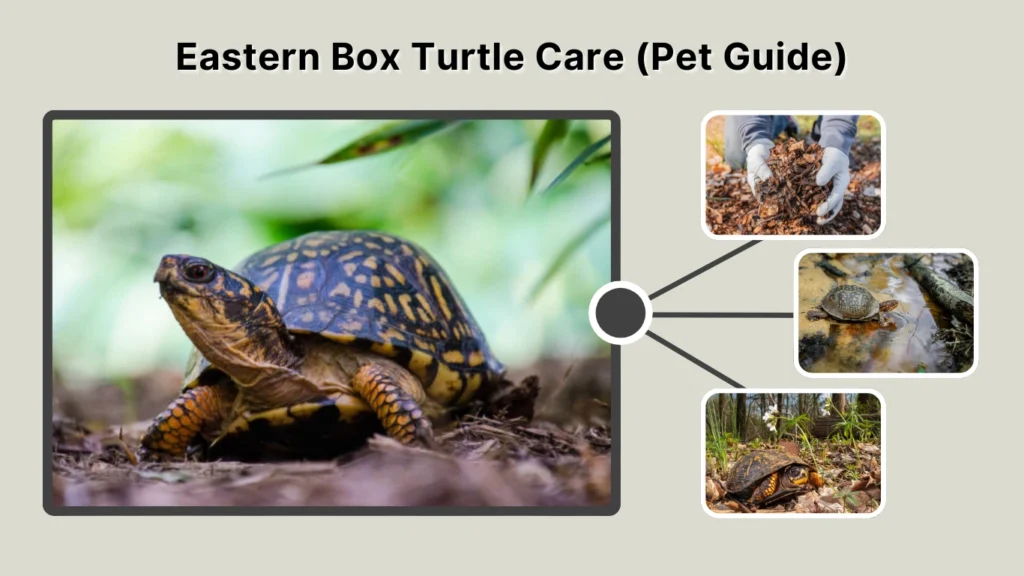
Eastern box turtles thrive best in spacious outdoor enclosures that mimic their natural habitat. The enclosure should include:
- Moist soil or leaf litter
- Hiding spots such as logs or plants
- Access to shallow water for soaking
- Areas of shade and sunlight
Maintaining proper humidity is essential, as dry conditions can lead to health problems. Indoor enclosures require careful temperature and humidity control.
Proper Diet in Captivity
A balanced omnivorous diet is crucial for captive turtles. Suitable foods include:
- Earthworms and insects
- Leafy greens
- Fruits such as strawberries or melon (in moderation)
- Occasional mushrooms
Calcium supplementation is important to maintain strong shell growth. Processed human foods should always be avoided.
Common Health Issues
Eastern box turtles may experience health problems if not properly cared for. Common issues include:
- Shell rot caused by excess moisture or infection
- Respiratory infections from cold or damp conditions
- Dehydration due to low humidity
Regular observation and proper habitat maintenance help prevent most health concerns.
Conservation and Threats
Habitat Loss
Urban development, agriculture, and deforestation have reduced suitable habitats for eastern box turtles. Fragmented landscapes make it difficult for turtles to find food, mates, and safe nesting areas.
Road Mortality
Because box turtles move slowly and often cross roads during nesting season, vehicle collisions are a major threat. Many adult turtles are killed each year by traffic.
Illegal Collection
The pet trade has also contributed to population declines. Removing adult turtles from the wild disrupts breeding cycles and weakens local populations.
How to Help
You can support eastern box turtle conservation by:
- Leaving wild turtles in their natural habitat
- Helping turtles safely cross roads in the direction they are traveling
- Protecting woodland habitats
- Supporting wildlife conservation programs
Small actions can make a meaningful difference in protecting this long-lived species.
FAQs
What do eastern box turtles eat?
Eastern box turtles are omnivores. They eat insects, worms, snails, fruits, berries, mushrooms, and leafy greens. Their diet changes with age, with juveniles eating more protein and adults consuming more plant material.
How long do eastern box turtles live?
Eastern box turtles commonly live 30–50 years in the wild, but many individuals can live much longer. Some have been known to reach 75 years or more, especially in protected environments.
Where do eastern box turtles live?
They are found throughout the eastern and southeastern United States. They prefer moist forests, meadows, grasslands, and woodland edges with access to shallow water.
How can you identify an eastern box turtle?
Eastern box turtles have a high-domed shell with yellow or orange markings and a hinged plastron that allows them to close completely. Males often have red eyes, while females typically have brown eyes.
How many eggs does an eastern box turtle lay?
A female eastern box turtle usually lays between 3 and 8 eggs per clutch. The eggs incubate for about 70–90 days before hatchlings emerge.