
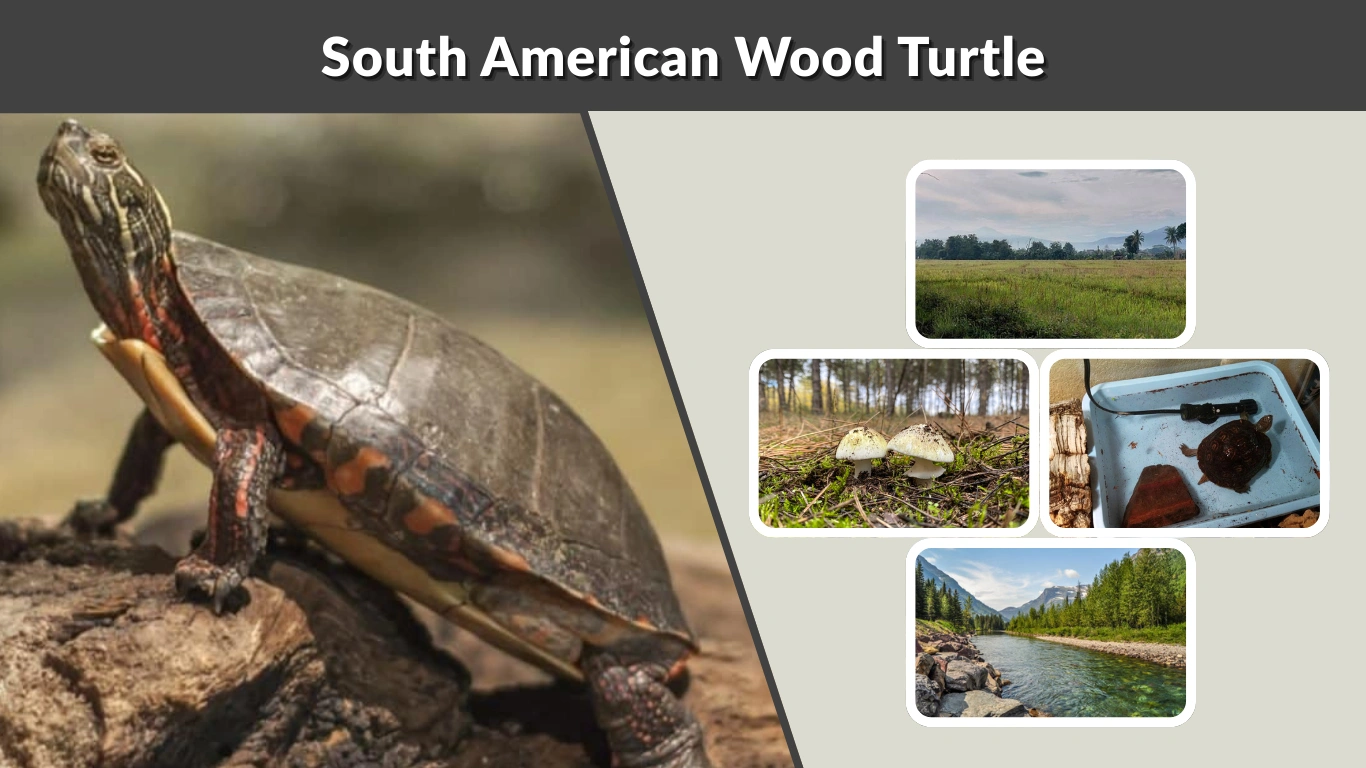
The South American wood turtle is a fascinating tropical species known for its patterned shell, forest-dwelling habits, and adaptability to humid environments. Native to parts of South America, these turtles are often confused with North American wood turtles, but they belong to a different genus and thrive in warmer climates. Whether you’re researching South American wood turtle habitat, size, diet, or general species information, this guide provides a detailed look at their biology, distribution, and natural behavior.
What Is a South American Wood Turtle?
The term “South American wood turtle” commonly refers to tropical wood turtles within the genus Rhinoclemmys, a group of semi-terrestrial turtles found in Central and South America. Unlike the North American wood turtle (Glyptemys insculpta), these species are adapted to warm, humid ecosystems.
They are considered semi-terrestrial, meaning they spend time both on land and near shallow freshwater sources. While they can swim, they are not fully aquatic turtles. Instead, they forage on forest floors and along riverbanks.
South American wood turtles are admired for:
- Decorative shell patterns
- Active daytime behavior
- Omnivorous diet
- Strong adaptability to tropical conditions
Scientific Name & Taxonomy
Understanding South American wood turtle taxonomy helps clarify their classification.
They belong to:
- Order: Testudines
- Family: Geoemydidae
- Genus: Rhinoclemmys
Several species within Rhinoclemmys are found in South America. The wood turtle scientific name varies depending on the exact species, but they all share similar traits such as domed shells and terrestrial tendencies.
This distinguishes them from North American wood turtles, which belong to a completely different genus and inhabit cooler temperate climates.
Physical Description
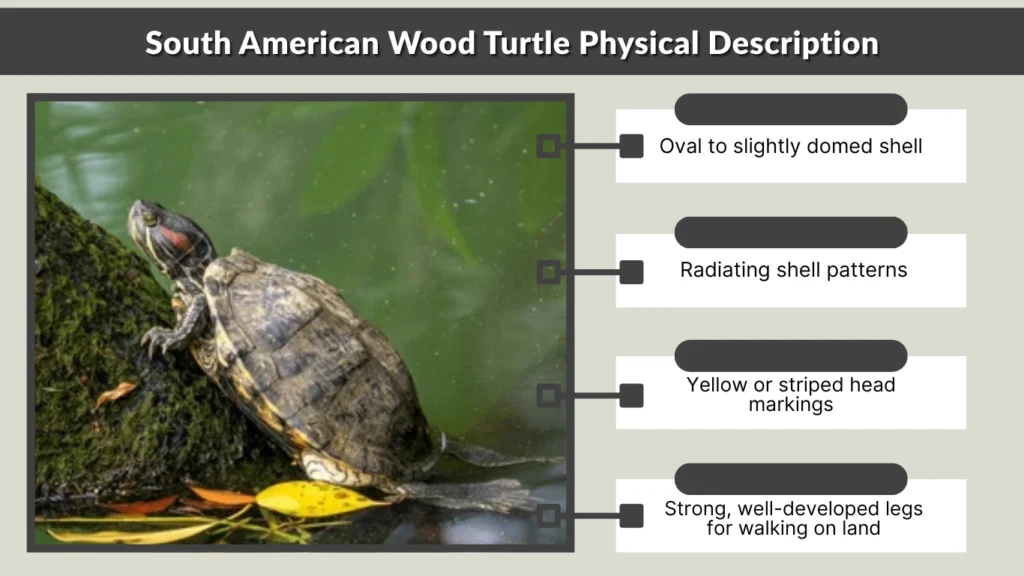
South American wood turtles are medium-sized with sturdy, dome-shaped shells. Their carapace (upper shell) is typically brown or olive with radiating yellow, orange, or cream-colored lines.
Common physical traits include:
- Oval to slightly domed shell
- Radiating shell patterns
- Yellow or striped head markings
- Strong, well-developed legs for walking on land
The plastron (underside of the shell) is often lighter in color with darker seams. Their earthy coloration helps them blend into forest leaf litter, providing natural camouflage from predators.
If viewing a South American wood turtle image, you will notice the geometric shell patterns that make them visually striking compared to many other turtle species.
South American Wood Turtle Habitat
Natural Habitat
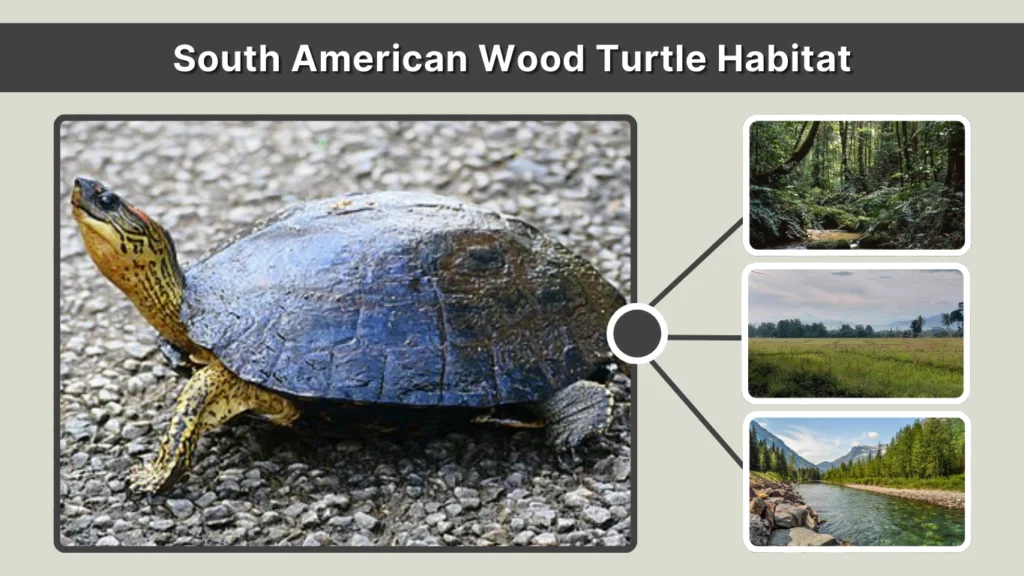
The South American wood turtle habitat consists mainly of:
- Tropical rainforests
- Humid lowland forests
- Riverbanks and stream edges
- Wetland margins
These turtles prefer environments with dense vegetation and high moisture levels. They rely on both terrestrial and aquatic zones for feeding and thermoregulation.
Although they can enter shallow water, they do not inhabit deep lakes like many aquatic turtles. Instead, they use shallow streams and forest puddles primarily for soaking and cooling.
Climate Preferences
South American turtle species within the wood turtle group thrive in:
- Warm temperatures between 75–85°F
- High humidity levels
- Regions with regular rainfall
Because they originate from tropical climates, they are not tolerant of cold conditions. Exposure to low temperatures can weaken their immune system and lead to respiratory infections.
Humidity plays a crucial role in shell health and hydration. In the wild, leaf litter and moist soil help maintain proper moisture levels.
Geographic Distribution
South American wood turtles are found in various regions throughout northern and western South America. Depending on the species, they may inhabit:
- Colombia
- Ecuador
- Peru
- Venezuela
- Northern Brazil
Their distribution overlaps with other South American turtle species, particularly those that inhabit rainforest ecosystems.
A South American wood turtle range map would show concentrations in tropical rainforest belts and river basins rather than dry savannas or mountainous regions.
South American Wood Turtle Size
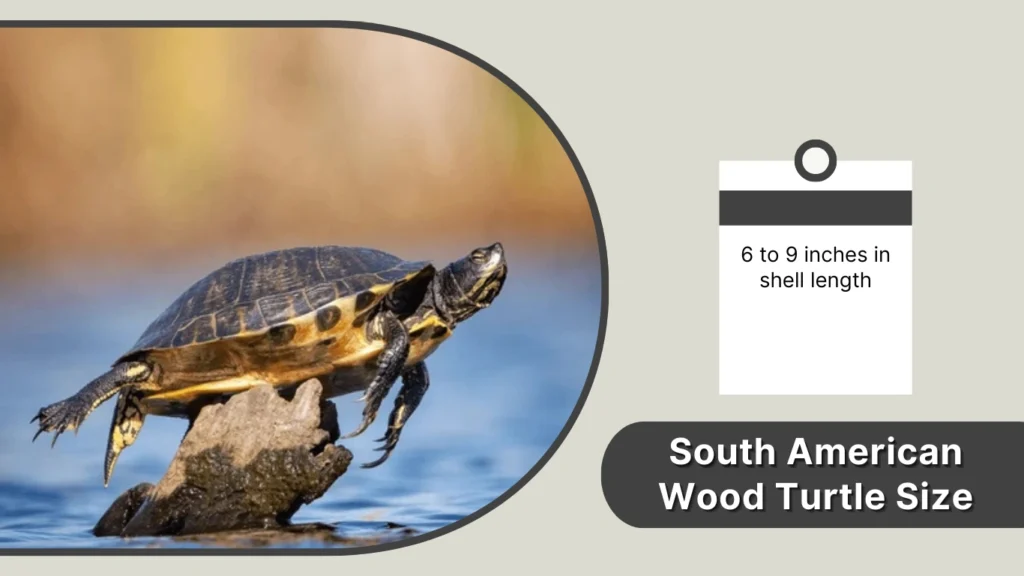
South American wood turtle size varies slightly by species, but most adults reach:
- 6 to 9 inches in shell length
Females are often slightly larger than males, though the size difference is not extreme.
Growth depends on:
- Diet quality
- Temperature
- UVB exposure
- Overall health
In ideal conditions, juveniles grow steadily during their first few years before reaching adult size.
Behavior & Activity Patterns
South American wood turtles are generally active during the day. They spend time exploring forest floors, searching for fallen fruit, insects, and vegetation.
Behavioral traits include:
- Foraging across leaf litter
- Climbing low vegetation
- Soaking in shallow water
- Seeking shelter under logs or plants
They are alert and responsive, making them interesting to observe in both wild and controlled environments.
Diet & Feeding Habits
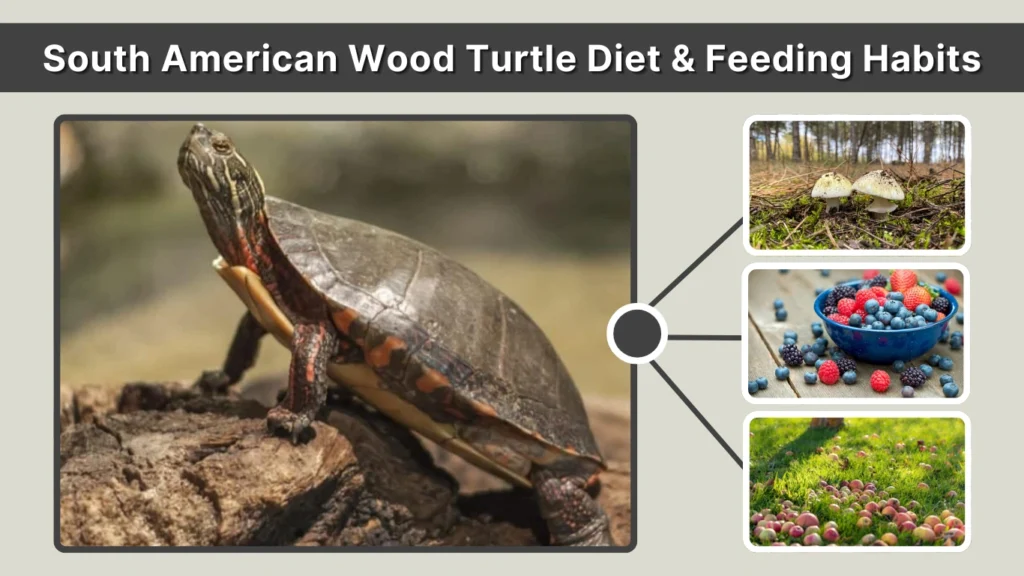
South American wood turtles are omnivores with a flexible diet that reflects seasonal food availability in tropical forests.
In the Wild
Their natural diet includes:
- Fallen fruits
- Berries
- Mushrooms
- Leafy vegetation
- Insects
- Earthworms
- Snails and other small invertebrates
Fruit plays a larger role in their diet compared to many North American turtle species. As they move through forest habitats, they may help disperse seeds, contributing to ecosystem balance.
In Captivity
If kept in captivity, their diet should closely mimic natural variety:
- Dark leafy greens (collard, mustard, dandelion)
- Small portions of tropical fruits (papaya, mango, banana)
- Earthworms or mealworms
- Occasional high-quality turtle pellets
- Calcium supplementation
Fruit should be offered in moderation to prevent digestive issues. A balanced mix of plant and protein sources supports healthy shell growth and long-term vitality.
South American Wood Turtle Care Guide
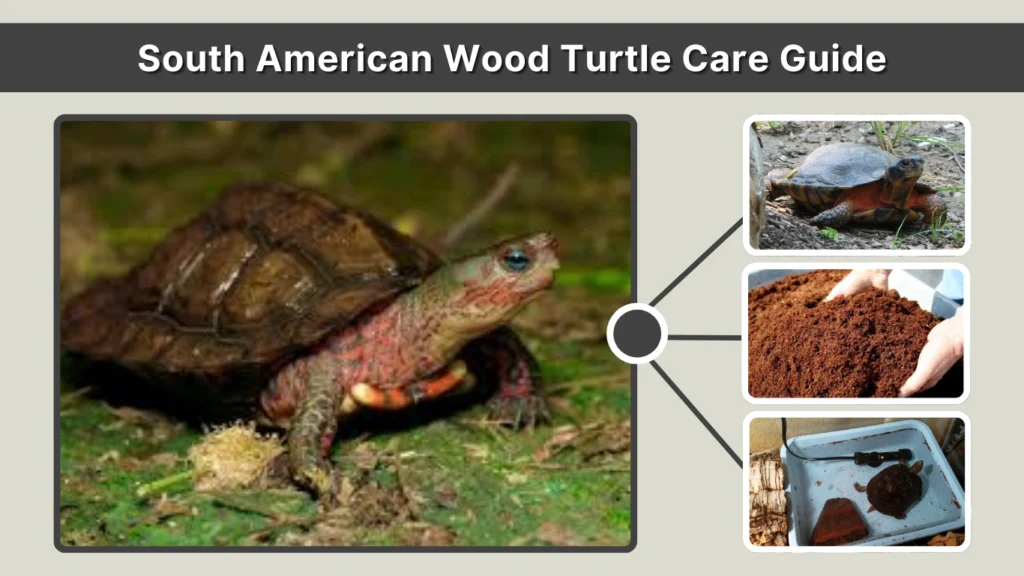
Providing proper South American wood turtle care requires replicating their tropical habitat conditions.
Enclosure Setup
Because they are semi-terrestrial, they need more land area than water.
A suitable enclosure should include:
- Large floor space for walking
- Moist substrate such as coconut fiber or soil
- Shallow water dish for soaking
- Hiding areas with plants or logs
- Good airflow to prevent mold buildup
Outdoor enclosures may be suitable in warm climates, but temperature stability is critical.
Temperature & Humidity
Maintaining the correct environment is essential:
- Ambient temperature: 75–85°F
- Basking spot: 88–90°F
- Humidity level: 60–80%
UVB lighting is necessary indoors to prevent metabolic bone disease. Without proper UVB exposure, turtles can develop shell deformities and weakened bones.
High humidity supports healthy skin and shell condition, but excessive dampness without ventilation may cause fungal problems.
Common Health Issues
South American wood turtles are hardy when properly cared for, but poor environmental conditions can cause health problems.
Common issues include:
- Respiratory infections from low temperatures
- Shell rot from unsanitary conditions
- Nutritional deficiencies from improper diet
- Parasites, especially in wild-caught turtles
Routine enclosure cleaning and regular veterinary exams significantly reduce health risks.
South American Wood Turtle for Sale
You may occasionally find a South American wood turtle for sale through exotic reptile breeders. However, buyers must exercise caution.
Important considerations include:
- Purchase only captive-bred individuals
- Verify breeder documentation
- Check local and international wildlife laws
- Avoid wild-caught turtles
Many wood turtle species are regulated under CITES agreements. Illegal trade contributes to population decline and habitat stress.
Prices vary depending on age, species rarity, and breeder reputation.
Conservation Status
The conservation status of South American wood turtles varies by species, but habitat destruction remains the primary threat.
Major concerns include:
- Deforestation
- Agricultural expansion
- Illegal wildlife trade
- River pollution
Tropical rainforest ecosystems are under increasing pressure, which directly impacts South American turtle species. Protecting forest habitats is essential for long-term survival.
FAQs
How big do South American wood turtles get?
South American wood turtles typically grow between 6 and 9 inches in shell length. Females may be slightly larger than males. Growth rate depends on diet quality, temperature, and UVB exposure. Proper nutrition and stable environmental conditions are important for reaching full adult size.
Are South American wood turtles good pets?
They can be suitable for experienced reptile keepers who understand tropical humidity and temperature requirements. They require spacious enclosures, proper lighting, and consistent care. Because of their environmental needs and long lifespan, they are not ideal for beginners without reptile experience.
What do South American wood turtles eat?
They are omnivores and eat a mix of fruits, leafy greens, insects, worms, and small invertebrates. In captivity, their diet should include dark leafy greens, limited fruit, protein sources like earthworms, and calcium supplementation for healthy shell development.
Are South American wood turtles endangered?
Conservation status varies by species, but habitat destruction and illegal wildlife trade are major threats. Many are protected under international wildlife regulations. Protecting rainforest habitats and preventing illegal collection are essential for maintaining stable populations.
How long do South American wood turtles live?
With proper care, South American wood turtles can live 20 to 30 years or more. Lifespan depends on environmental conditions, nutrition, and access to veterinary care. Stable temperature, correct humidity, and UVB lighting play a key role in long-term health.