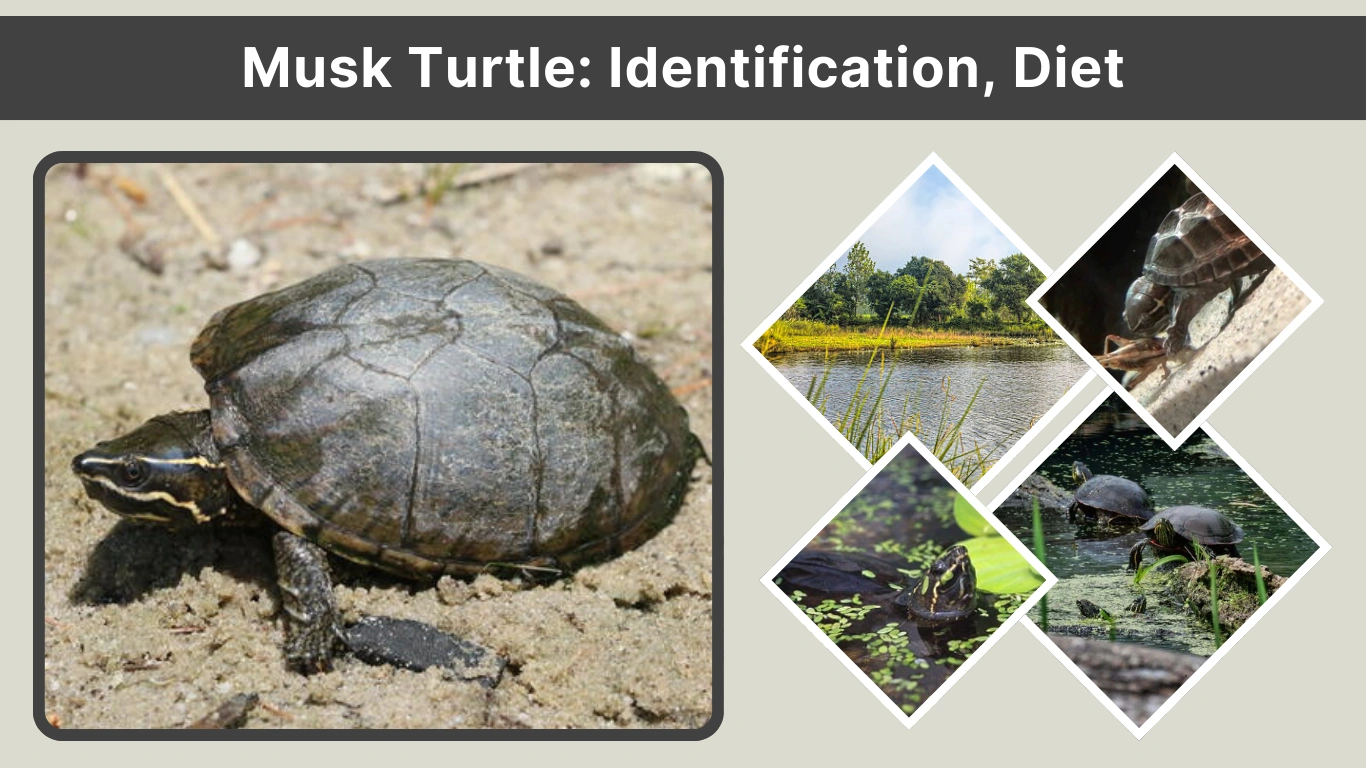
Musk turtles are small freshwater turtles native to North America and are best known for the strong odor they release when threatened. Often called “stinkpots,” these turtles belong to the genus Sternotherus and are popular among reptile enthusiasts because of their compact size and hardy nature. Despite their small appearance, musk turtles have fascinating behaviors, unique physical traits, and long lifespans. In this guide, you’ll learn how to identify a musk turtle, where they live, what they eat, and how they behave in the wild and captivity.
Musk Turtle Identification
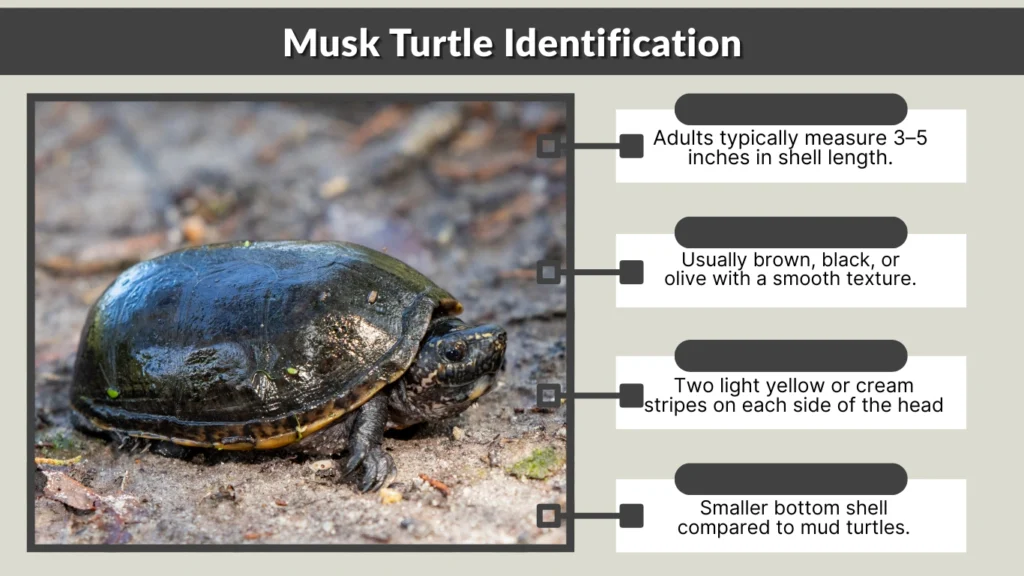
Musk turtle identification is fairly simple once you know the key features to look for. These small freshwater turtles have distinct physical traits that separate them from mud turtles and other aquatic species. Their compact size, dark shell, and unique head markings are the most noticeable characteristics. Below is a quick overview of the main identifying features.
Key Identification Features
- Small Size: Adults typically measure 3–5 inches in shell length.
- Dark, Domed Shell: Usually brown, black, or olive with a smooth texture.
- Reduced Plastron: Smaller bottom shell compared to mud turtles.
- Head Stripes: Two light yellow or cream stripes on each side of the head (common musk turtle).
- Pointed Snout: Slightly elongated nose adapted for aquatic feeding.
- Long Tail in Males: Males have thicker, longer tails that extend beyond the shell edge.
- Musk Glands: Release a strong odor when threatened.
These features make musk turtles relatively easy to identify, especially when comparing them to similar-looking species in the same habitat.
Musk Turtle Habitat
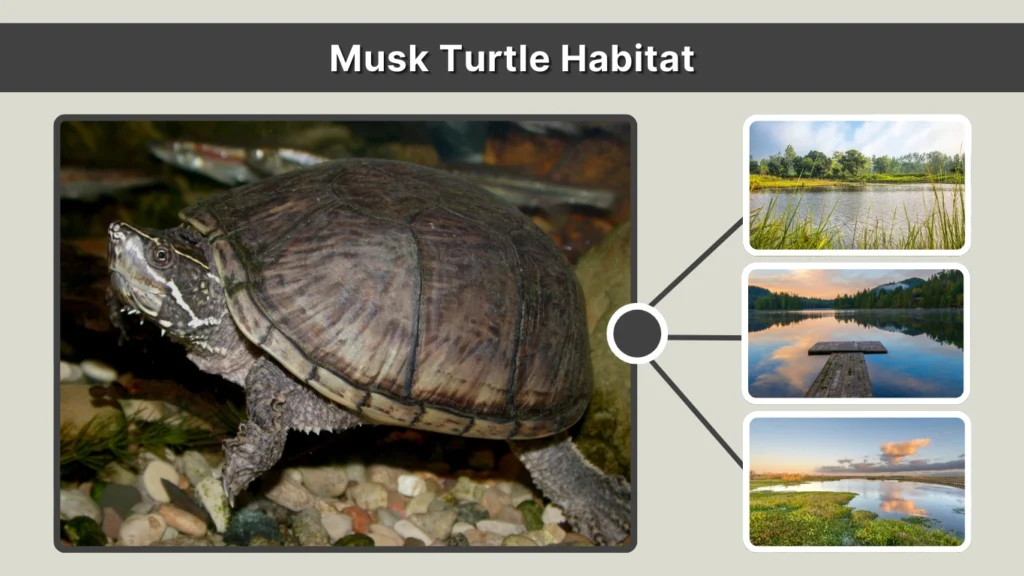
Understanding musk turtle habitat helps explain many of their behaviors. These turtles are highly aquatic and prefer calm freshwater environments.
Natural Geographic Range
Musk turtles are native to the eastern and southeastern United States. Their range extends from southern Canada down through Florida and west toward Texas and parts of the Midwest. They are widespread and adaptable, which contributes to their stable populations in many areas.
Preferred Aquatic Environments
Musk turtles thrive in slow-moving or still freshwater habitats. Common locations include:
- Ponds
- Lakes
- Swamps
- Marshes
- Slow-moving rivers and streams
They prefer water with muddy or sandy bottoms where they can easily search for food. Submerged logs, aquatic vegetation, and shallow areas provide shelter and feeding opportunities. Because they are bottom-walkers rather than strong swimmers, they usually stay in shallow water where they can comfortably reach the surface for air.
Basking and Land Behavior
Unlike painted turtles and sliders, musk turtles do not bask in the sun as frequently. They may climb onto partially submerged logs or branches, but they typically prefer to remain in the water. Despite their small size, musk turtles are surprisingly good climbers and can scale low branches overhanging the water.
They rarely travel far on land, except during nesting season when females leave the water to lay eggs in soft soil near the shoreline.
Musk Turtle Diet
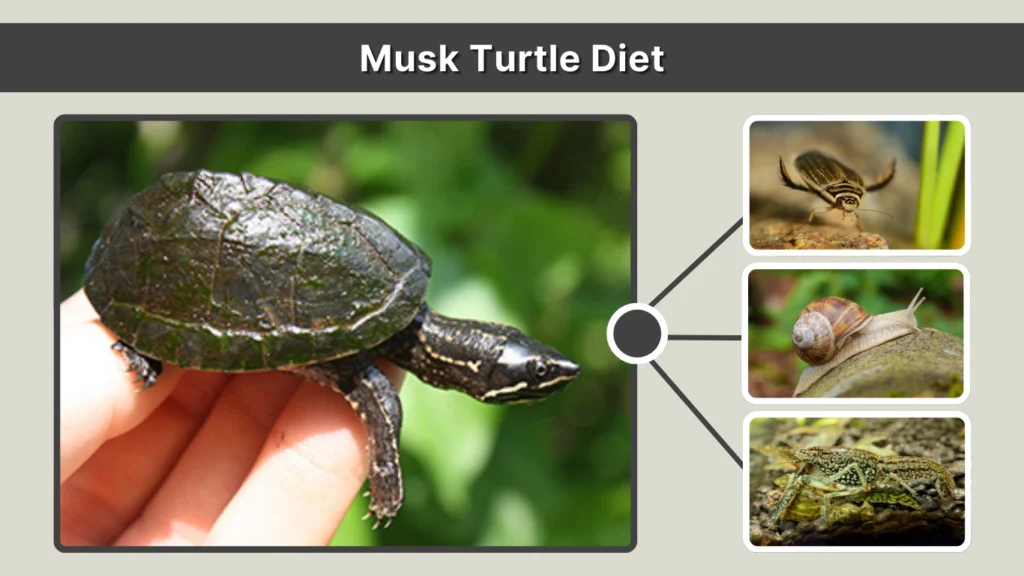
The musk turtle diet is primarily carnivorous, although they are technically omnivores. Their feeding habits are closely tied to their aquatic lifestyle.
What Do Musk Turtles Eat in the Wild?
In their natural habitat, musk turtles feed mostly on animal-based foods. Their diet commonly includes:
- Aquatic insects
- Snails
- Crayfish
- Small fish
- Tadpoles
- Worms
They are also known to scavenge carrion, which means they will eat dead animals they find underwater. Their strong jaws are especially useful for crushing the shells of snails and small crustaceans. While they occasionally consume small amounts of plant matter, vegetation is not a major part of their diet.
Because they forage along the bottom of ponds and streams, musk turtles are considered opportunistic feeders. They eat what is readily available in their environment.
What Do Musk Turtles Eat in Captivity?
In captivity, musk turtles require a balanced diet that closely mimics their natural feeding habits. High-quality commercial turtle pellets should serve as the main staple, as these are formulated to provide essential nutrients.
Additional protein sources may include:
- Earthworms
- Mealworms
- Bloodworms
- Shrimp
- Small feeder fish (occasionally)
Leafy greens such as romaine lettuce or aquatic plants can be offered in small amounts, but protein should remain the primary focus. Calcium supplementation is important to support healthy shell growth, especially for young turtles.
Feeding Frequency
Juvenile musk turtles grow quickly and typically need to be fed once per day. Adults can be fed every other day to prevent obesity. Overfeeding is a common mistake in captivity, so portion control is essential for maintaining long-term health.
Musk Turtle Behavior
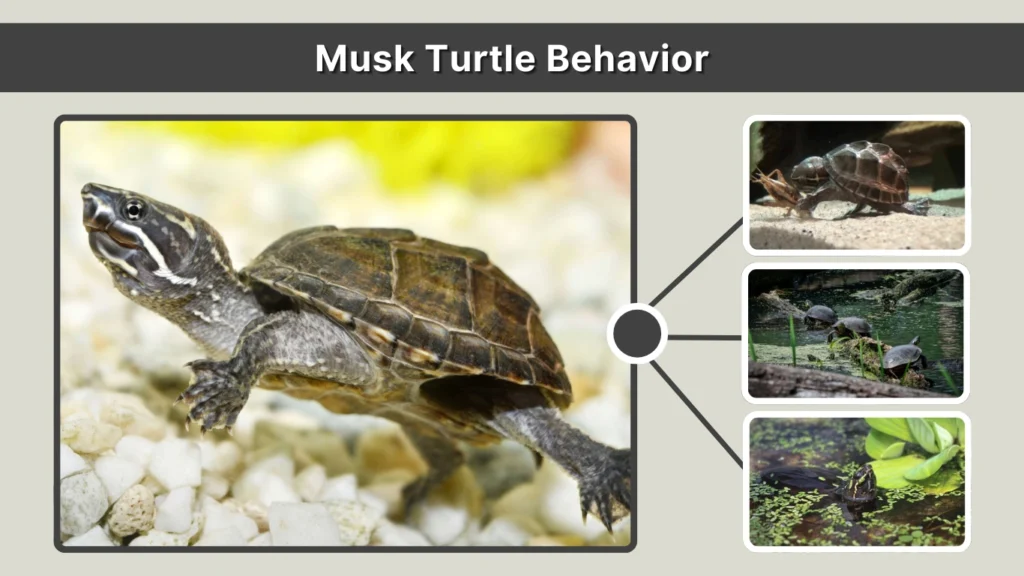
Musk turtle behavior is one of the most interesting aspects of this species. Although small, they are bold, adaptable, and well suited to life underwater.
Aquatic Lifestyle
Musk turtles are highly aquatic and spend most of their lives in the water. Unlike stronger swimming species, they are often described as “bottom-walkers.” Instead of constantly swimming in open water, they prefer to crawl along the bottom of ponds or streams while searching for food.
They typically stay in shallow areas where they can easily stretch their necks to the surface for air. Because they feel safer underwater, they rarely venture far onto land except for nesting.
Defensive Behavior
When threatened, musk turtles rely on a unique defense mechanism. They release a foul-smelling liquid from glands located along the edge of their shell. This musky odor can deter predators and is the reason behind their nickname, “stinkpot.”
In addition to releasing musk, they may attempt to bite if handled roughly. While not aggressive by nature, they can be defensive when they feel unsafe. In captivity, regular gentle handling often reduces this behavior over time.
Activity Patterns
Musk turtles are primarily nocturnal, meaning they are most active at night. They forage after dark, searching for insects, snails, and other small prey. During the day, they may rest under submerged logs, rocks, or aquatic vegetation.
Despite not basking frequently, they are surprisingly skilled climbers. They may climb partially submerged branches to rest just above the waterline. This climbing ability sometimes surprises owners who assume such small turtles are poor climbers.
Musk Turtle Lifespan
The musk turtle lifespan is longer than many people expect. With proper care, these small turtles can live for decades.
Lifespan in the Wild
In natural environments, musk turtles typically live between 20 and 30 years. However, their lifespan can be shortened by predators, habitat destruction, pollution, and road accidents during nesting migrations.
Young hatchlings are especially vulnerable to birds, raccoons, and large fish. As they grow older and their shells harden, their survival rate improves significantly.
Lifespan in Captivity
In captivity, musk turtles can live 40 years or more when properly cared for. Clean water, correct tank setup, balanced nutrition, and UVB lighting all play essential roles in extending their lifespan.
Poor water quality is one of the biggest health risks for captive turtles. Dirty water can lead to shell infections, respiratory problems, and other illnesses. With responsible care and occasional veterinary checkups, a musk turtle can be a long-term commitment similar to owning a dog or cat.
Mud Turtle vs Musk Turtle
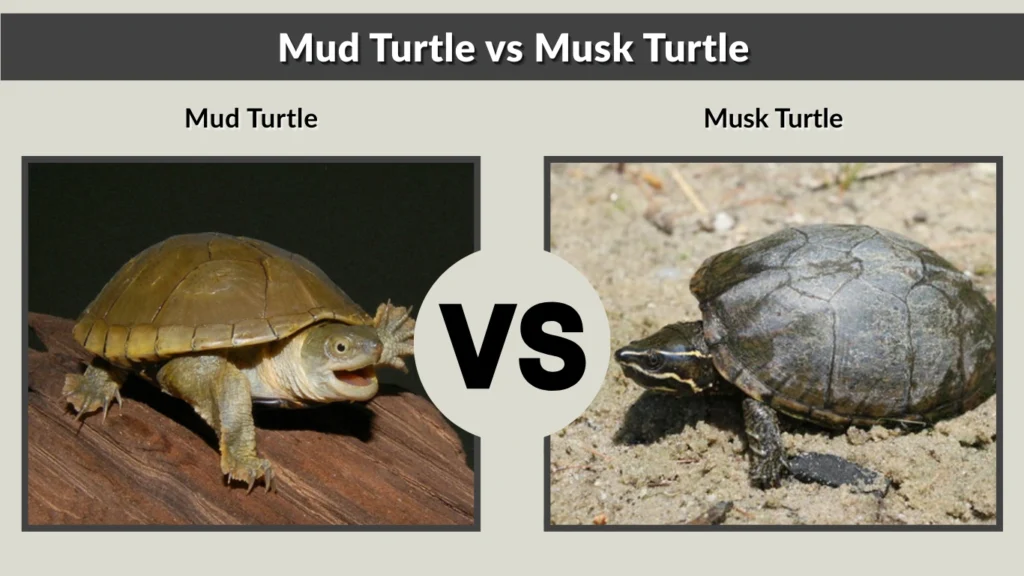
Because they belong to the same family, mud turtles and musk turtles are often confused. Understanding the differences can help with proper identification.
Key Physical Differences
One of the main differences lies in the plastron. Mud turtles generally have a larger, more developed plastron that offers better protection. Musk turtles, on the other hand, have a much smaller plastron, leaving more of their body exposed.
Musk turtles often display two light stripes on their heads, while mud turtles may have less distinct markings. Additionally, musk turtles tend to have slightly more domed shells.
Behavioral Differences
Mud turtles are more likely to spend time on land compared to musk turtles. Musk turtles prefer staying in the water and rarely travel far from it except for nesting.
In terms of temperament, both species can be defensive, but musk turtles are particularly known for releasing their strong-smelling musk when disturbed.
Which Makes a Better Pet?
Both species can adapt to captivity, but musk turtles are generally more popular because of their smaller size and strong aquatic habits. They require less basking space and are comfortable in moderately sized aquariums.
However, both turtles require proper filtration, UVB lighting, and a balanced diet. Potential owners should research care requirements carefully before choosing either species.
Interesting Musk Turtle Facts
Musk turtles have several fascinating traits that make them unique among freshwater turtles:
- They are nicknamed “stinkpots” due to their odor defense.
- They are among the smallest turtles in North America.
- They can remain underwater for extended periods by absorbing small amounts of oxygen through specialized tissues in their throat.
- Females typically lay between 1 and 9 eggs per clutch.
- Their strong claws allow them to grip logs and branches easily.
These features make musk turtles highly adapted to their aquatic environments.
FAQs
How big do musk turtles get?
Most musk turtles grow between 3 and 5 inches in shell length. Females may be slightly larger than males, but overall they remain small compared to many other pet turtle species.
Are musk turtles good pets?
Musk turtles can make good pets for experienced reptile owners. They are hardy and adaptable but require clean water, proper filtration, UVB lighting, and a protein-rich diet. They are not ideal for frequent handling.
Do musk turtles need UVB light?
Yes, UVB lighting is important for proper calcium absorption and shell health. Even though they bask less than other turtles, providing UVB helps prevent metabolic bone disease.
Why do musk turtles smell?
Musk turtles release a strong-smelling liquid from scent glands when they feel threatened. This defensive adaptation helps deter predators.
Can musk turtles live with other turtles?
They can sometimes cohabitate with similarly sized turtles, but space, temperament, and monitoring are crucial. Overcrowding can lead to stress and aggression.
Conclusion
Musk turtles may be small, but they are fascinating freshwater reptiles with unique adaptations. From their distinctive head stripes and defensive musk glands to their bottom-walking aquatic lifestyle, they are well suited to life in calm ponds and streams. Understanding musk turtle identification, habitat, diet, behavior, and lifespan is essential for both wildlife enthusiasts and potential pet owners. With proper care and respect for their needs, musk turtles can thrive for decades and remain a rewarding species to observe and study.