
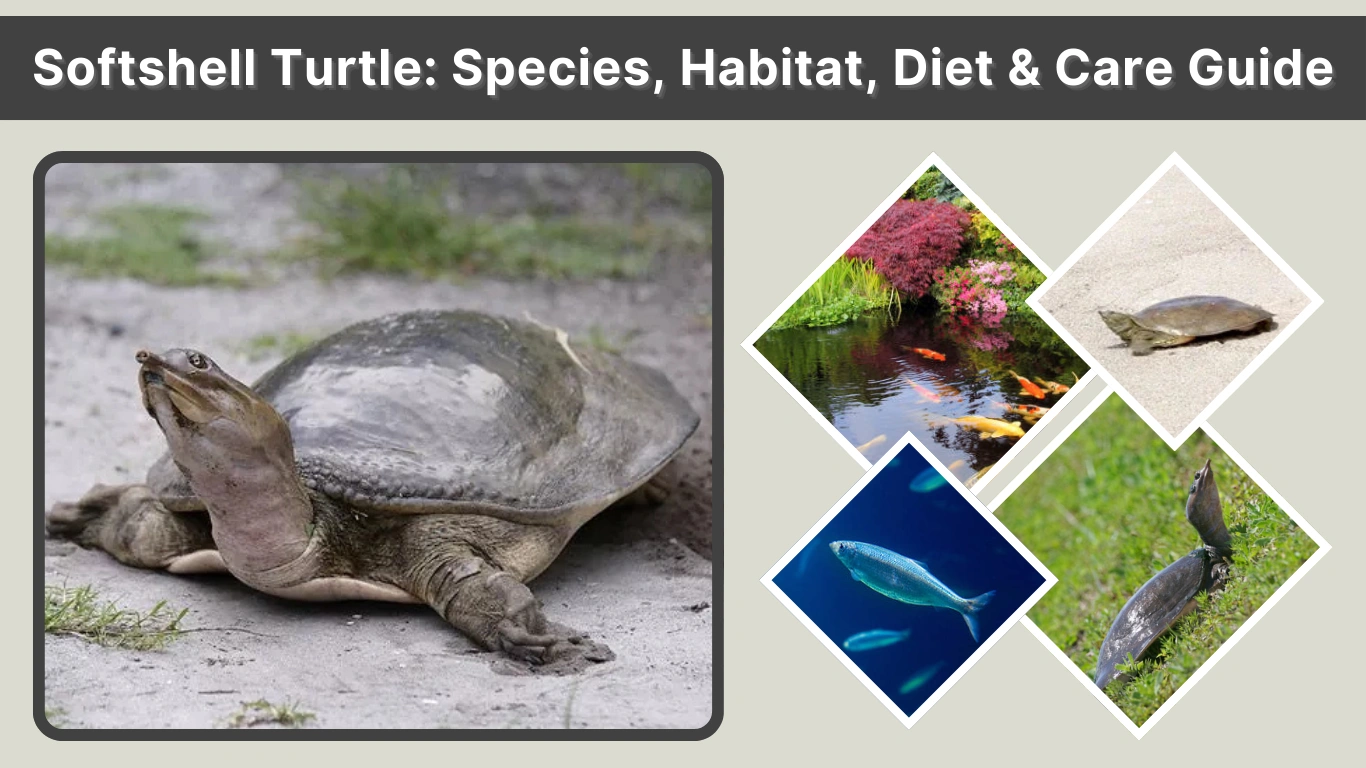
Softshell turtles are fascinating freshwater reptiles known for their flat, leathery shells and impressive speed in the water. Unlike hard-shelled turtles, they have flexible, smooth carapaces that make them lighter and more agile swimmers. Found in rivers, lakes, and ponds across North America, Asia, and Africa, these turtles are highly adapted to aquatic life. Their long necks and snorkel-like noses allow them to breathe while staying mostly submerged. With unique behavior, strong hunting skills, and distinct care needs, softshell turtles stand out among turtle species worldwide.
What Is a Softshell Turtle?
A softshell turtle is a unique type of freshwater turtle known for its flat, leathery shell and flexible body. Unlike most turtles that have hard, bony shells covered with scutes, softshell turtles belong to the family Trionychidae and have a rubbery, smooth carapace. This adaptation makes them lighter and more agile in water.
One of their most distinctive features is their long neck and snorkel-like nose. The pointed snout allows them to breathe while keeping most of their body submerged. Their webbed feet are strong and well-developed, helping them swim quickly and bury themselves in sand or mud. These turtles are highly aquatic and rarely stray far from water.
Softshell turtles differ significantly from hard-shelled species not only in appearance but also in behavior. They are generally faster, more aggressive, and better adapted for active hunting.
Types of Softshell Turtles
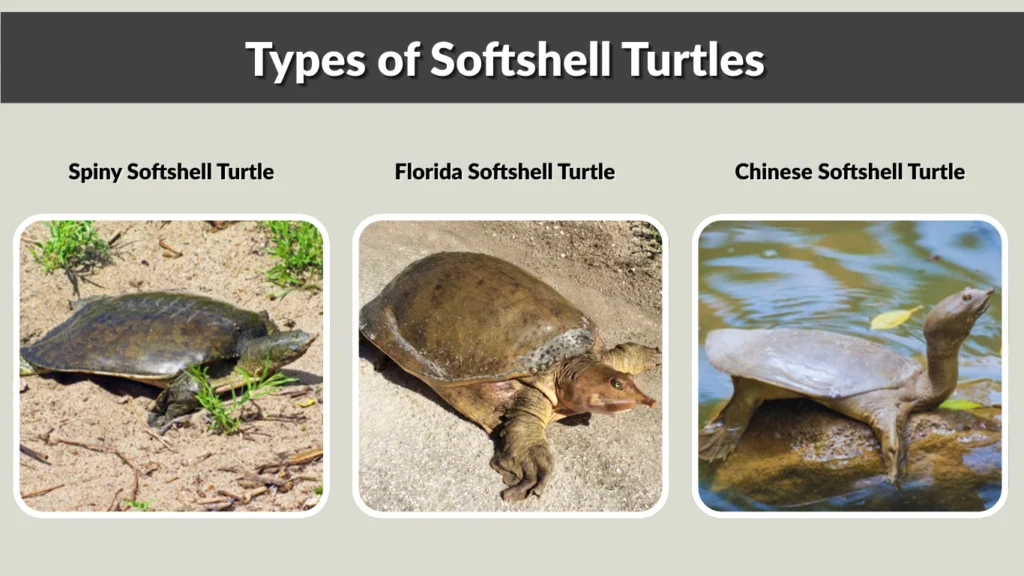
There are several species of softshell turtles found across North America, Asia, and Africa. While they share similar body structures, each species has distinct characteristics and geographic ranges.
Spiny Softshell Turtle
The spiny softshell turtle is commonly found in North America. It gets its name from the small spine-like projections along the front edge of its shell. This species typically lives in rivers, lakes, and large streams with sandy or muddy bottoms. Spiny softshell turtles are known for their speed and strong swimming abilities. Males are smaller than females, and their coloration usually blends well with sandy environments.
Florida Softshell Turtle
The Florida softshell turtle is one of the largest softshell species in North America. Females can grow significantly larger than males, sometimes reaching impressive sizes. This species is mainly found in the southeastern United States, especially in Florida’s freshwater systems.
It prefers calm bodies of water such as ponds, lakes, and slow-moving rivers. The Florida softshell turtle has a long neck and powerful jaws, making it an effective predator. Its shell is dark and smooth, helping it stay camouflaged in muddy habitats.
Chinese Softshell Turtle
The Chinese softshell turtle is native to East Asia and is widely distributed in countries like China, Korea, and Japan. It has also been introduced to other regions due to farming and trade. This species is commercially important in some Asian countries, where it is raised for food.
Chinese softshell turtles usually inhabit freshwater lakes, rivers, and rice paddies. They are adaptable and can tolerate different environmental conditions. Like other softshell turtles, they are carnivorous and rely on stealth and quick movements to capture prey.
Habitat and Natural Environment
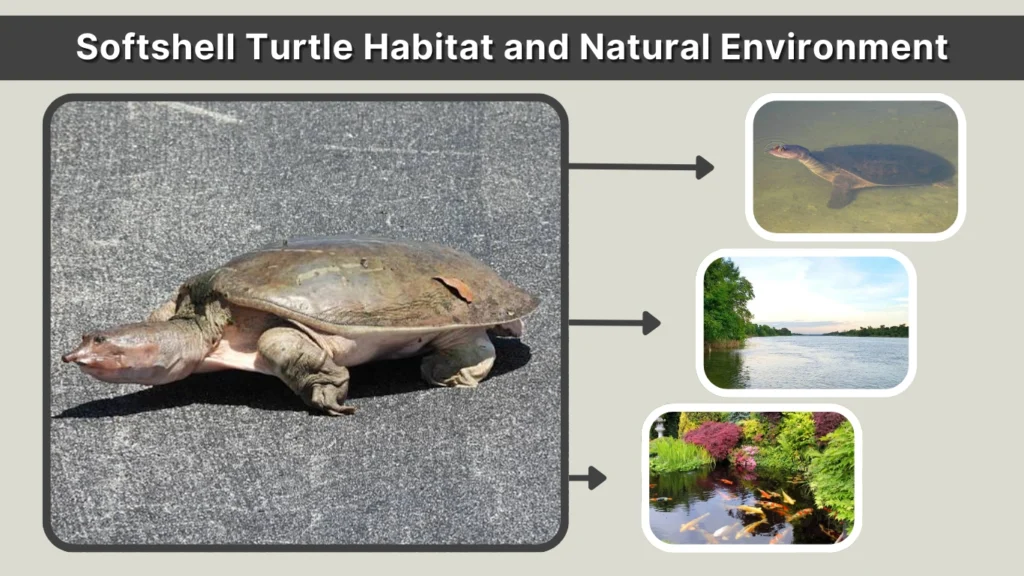
Softshell turtles are primarily freshwater animals. They thrive in rivers, lakes, ponds, and marshes with sandy or muddy bottoms. These soft substrates are essential because softshell turtles frequently bury themselves to hide from predators or ambush prey.
They are highly aquatic and spend most of their time in water. However, they do come onto land occasionally to bask in the sun. Basking helps regulate their body temperature and supports overall health. When basking, they often choose sandy banks or logs near the water.
Geographically, softshell turtles are found in North America, Asia, and parts of Africa. Their streamlined bodies and flat shells are perfectly adapted for aquatic life, allowing them to move quickly and efficiently through water.
What Do Softshell Turtles Eat?
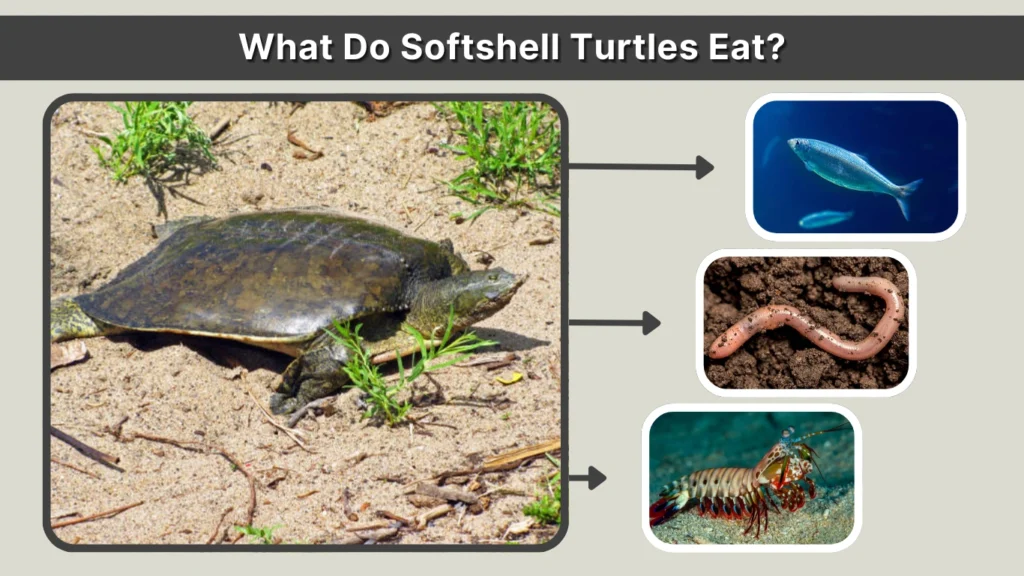
Softshell turtles are mainly carnivorous. Their diet consists of fish, insects, worms, crustaceans, and small aquatic animals. Some species may occasionally consume plant material, but animal protein makes up the majority of their diet.
These turtles are skilled ambush predators. They often bury themselves in sand or mud with only their eyes and snout exposed. When prey comes close, they strike quickly using their long neck and powerful jaws. Their speed and sharp beak-like mouth make them effective hunters.
In captivity, softshell turtles require a protein-rich diet that may include commercial turtle pellets, feeder fish, shrimp, and insects. Proper nutrition is essential for maintaining healthy growth and shell condition.
Size, Lifespan, and Growth
Softshell turtles vary in size depending on the species. In many species, females grow significantly larger than males. Some large females can reach over 18 inches in shell length, while males remain much smaller.
Their lifespan also varies. In the wild, softshell turtles can live for several decades if they avoid predators and environmental threats. In captivity, with proper care and a clean habitat, they may live 20 years or more.
Growth rates depend on factors such as diet, water quality, temperature, and overall health. Young turtles grow rapidly during their early years, especially when food is abundant. As they mature, growth slows but continues steadily throughout adulthood.
Behavior and Temperament
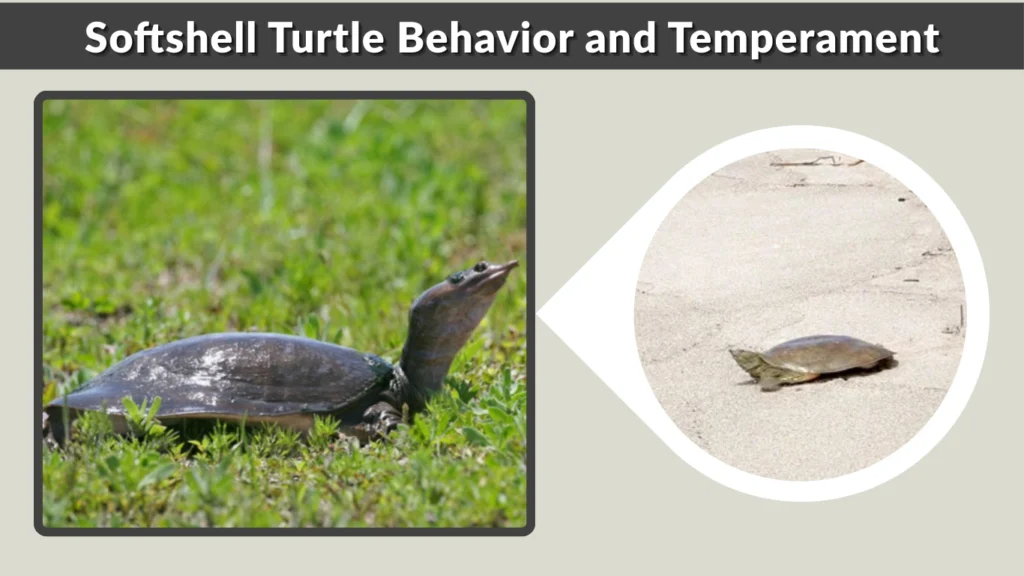
Softshell turtles are known for being fast, alert, and sometimes aggressive. Unlike many other turtle species that rely mainly on their hard shells for protection, softshell turtles depend on speed and defensive behavior. Their flat bodies and strong webbed feet make them excellent swimmers, capable of moving quickly to escape danger.
They are also highly defensive when threatened. A softshell turtle can extend its long neck surprisingly far and deliver a powerful bite. Because their shells are softer and offer less protection, they are more likely to snap or attempt to flee rather than withdraw into their shell.
Burrowing is another common behavior. These turtles often bury themselves in sand or mud with only their eyes and snout exposed. This helps them stay hidden from predators and also allows them to ambush prey. In general, they are solitary animals and do not seek interaction with humans or other turtles.
Can Softshell Turtles Be Kept as Pets?
Softshell turtles can be kept as pets, but they are not recommended for beginners. They require specific care, large enclosures, and careful handling due to their temperament.
Tank Setup Requirements
Softshell turtles need a spacious tank because they are active swimmers. A large aquarium with plenty of swimming space is essential, especially for adult females that grow much bigger than males. Clean, well-filtered water is critical since these turtles are sensitive to poor water quality.
A soft, sandy substrate is highly recommended. Gravel or rough surfaces can injure their soft plastron (underside of the shell). The tank should also include a basking area with proper lighting, including UVB light, to support shell and bone health.
Feeding and Maintenance
In captivity, softshell turtles require a protein-rich diet. High-quality turtle pellets can serve as a staple food, supplemented with insects, shrimp, earthworms, and small fish. Feeding schedules should be consistent, and leftover food should be removed promptly to maintain water cleanliness.
Water temperature must be carefully monitored, typically kept warm enough to support their metabolism. Regular tank cleaning and strong filtration systems are necessary because these turtles produce a significant amount of waste.
Challenges of Keeping One
One of the biggest challenges of owning a softshell turtle is its aggressive nature. They can bite if handled improperly, and their long necks allow them to reach farther than many people expect. Handling should be minimal and done with caution.
Additionally, some regions have regulations regarding the ownership of certain turtle species. Prospective owners should always check local laws before acquiring one. Overall, softshell turtles are better suited for experienced reptile keepers who understand their needs.
Reproduction and Life Cycle
Softshell turtles reproduce by laying eggs on land. During the nesting season, females leave the water to dig nests in sandy or loose soil, usually near the shoreline. After laying a clutch of eggs, the female covers them and returns to the water.
The incubation period varies depending on temperature and environmental conditions. Warmer temperatures typically result in faster development. Once hatched, baby softshell turtles make their way toward water on their own. Hatchlings are vulnerable to predators such as birds, raccoons, and fish, and only a small percentage survive to adulthood.
Conservation Status and Threats
The conservation status of softshell turtles varies by species. Some populations remain stable, while others face significant threats. Habitat destruction is one of the primary concerns. Pollution, waterway modification, and urban development reduce suitable nesting and feeding areas.
In certain regions, softshell turtles are hunted for food or collected for the pet trade. Overharvesting can negatively impact wild populations, especially when combined with habitat loss.
Conservation efforts focus on protecting wetlands, regulating trade, and raising awareness about the ecological importance of freshwater turtles. Protecting their habitats is essential for ensuring the survival of these unique reptiles.
FAQs
Do softshell turtles bite?
Yes, softshell turtles can bite, and their bite can be strong. Because their shells are softer than other turtles, they rely more on defensive behavior. They can extend their long necks quickly to snap at threats. It is important to handle them carefully and avoid placing hands near their head.
Why is their shell soft?
Their shell is covered with leathery skin instead of hard scutes. This lighter, flexible shell helps them swim faster and move more easily in water. Although it provides less protection than a hard shell, it supports their active and aquatic lifestyle.
How big do softshell turtles get?
Size depends on the species. Some males remain relatively small, while females of larger species can grow over 18 inches in shell length. Proper diet, habitat quality, and genetics all influence their final size.
Are softshell turtles dangerous?
Softshell turtles are not typically dangerous to humans, but they can defend themselves if threatened. Their strong jaws and quick movements mean they should be handled with caution. They are best observed rather than frequently touched.
Can they live with other turtles?
Softshell turtles are generally solitary and may show aggression toward tank mates. Housing them with other turtles can lead to stress or injury. If kept in captivity, it is usually safer to house them alone to prevent conflicts.