
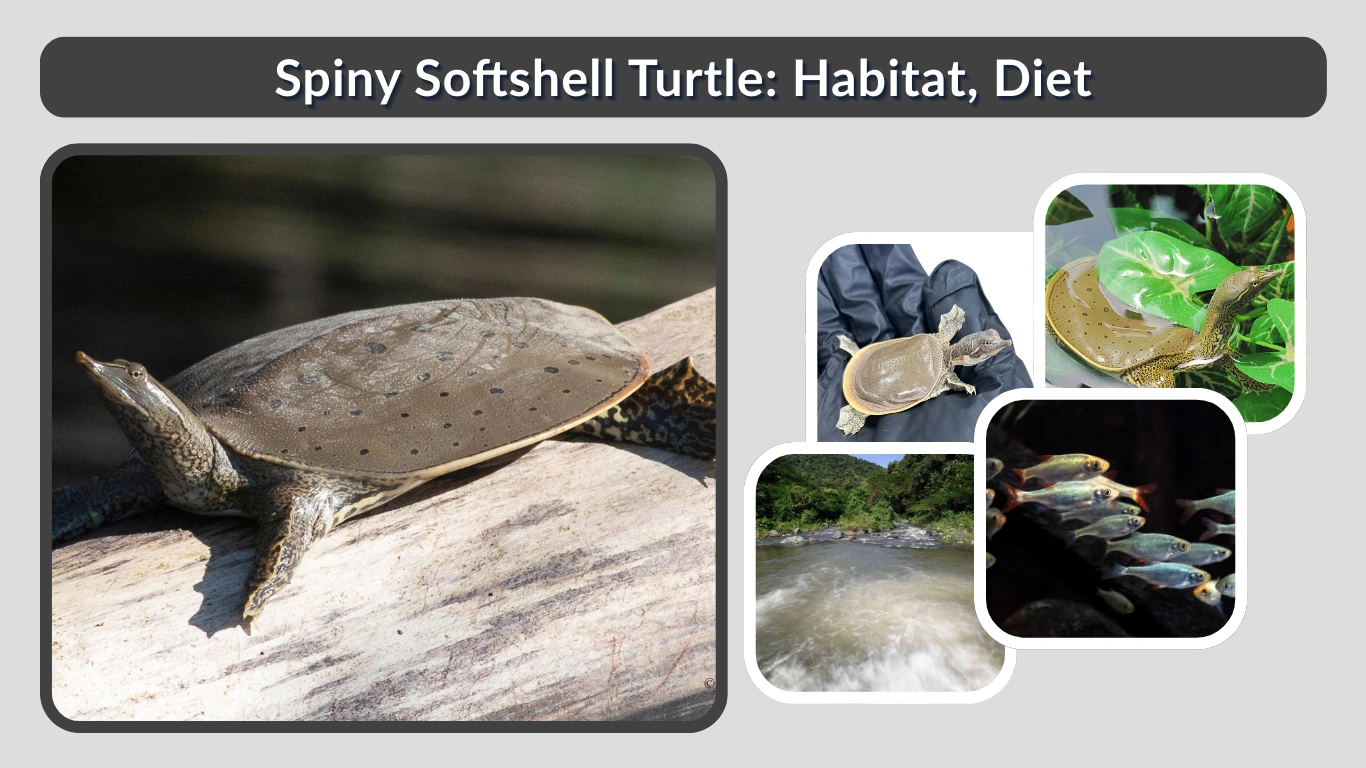
The spiny softshell turtle (Apalone spinifera) is one of North America’s most unique freshwater turtles. Unlike hard-shelled turtles, it has a flat, leathery shell and a long, snorkel-like nose that helps it breathe while staying mostly underwater. Known for its speed and agility, this species thrives in rivers, lakes, and sandy-bottom habitats. In this guide, you’ll learn how to identify a spiny softshell turtle, where it lives, what it eats, and what makes it so different from other freshwater turtles.
What Is a Spiny Softshell Turtle?
The spiny softshell turtle belongs to the family Trionychidae, a group commonly known as softshell turtles. These turtles differ from most other species because they lack the hard, scuted shell typical of box turtles or painted turtles. Instead, their shell is covered with thick, leathery skin.
The name “spiny” comes from the small, cone-like projections along the front edge of the carapace (upper shell). These tiny spines help distinguish it from closely related species like the smooth softshell turtle.
Spiny softshell turtles are native to North America and are considered one of the most widespread softshell species on the continent.
Physical Characteristics and Identification
Size and Weight
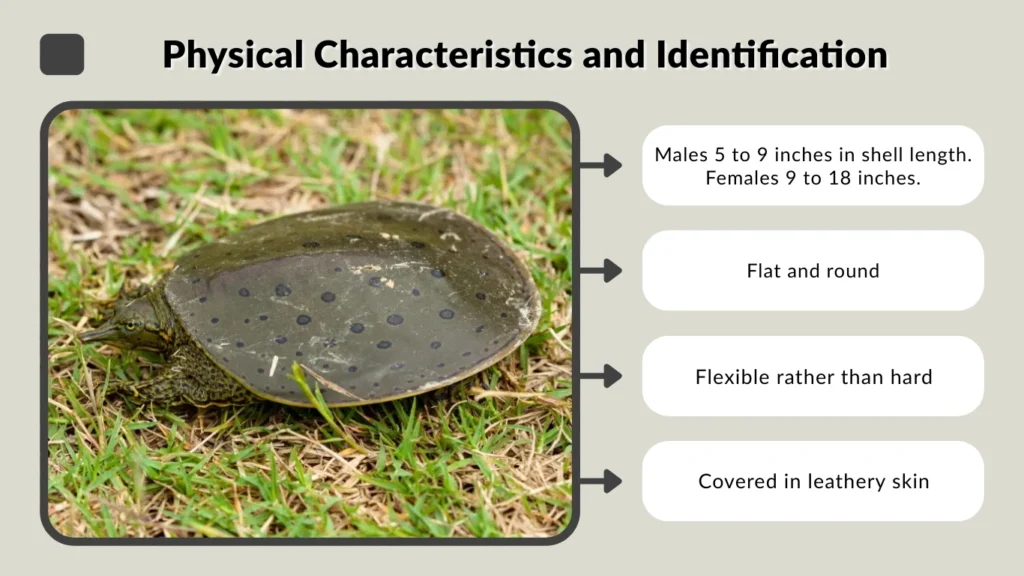
One of the most noticeable features of the spiny softshell turtle is the size difference between males and females.
- Males typically grow between 5 to 9 inches in shell length.
- Females are much larger, often reaching 9 to 18 inches.
Females can be nearly twice the size of males, which is unusual compared to many other turtle species. Their weight varies depending on age and habitat conditions, but large females can weigh several pounds.
Juveniles grow relatively quickly when food is abundant and environmental conditions are favorable.
Shell Structure and Texture
The shell of a spiny softshell turtle is:
- Flat and round
- Flexible rather than hard
- Covered in leathery skin
- Lacking visible scutes (hard plates)
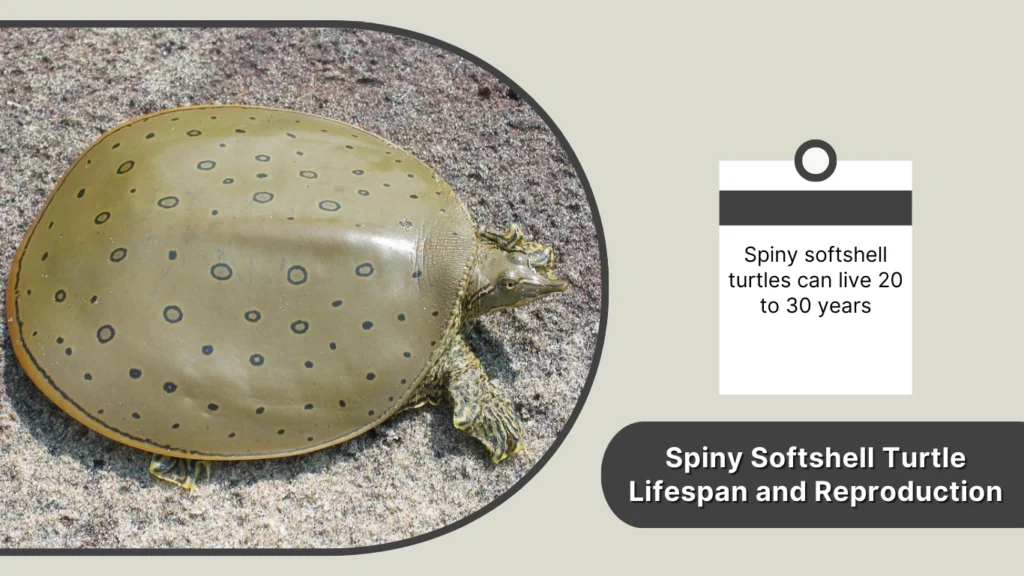
Its coloring usually ranges from olive to brown or tan. Many individuals have small dark spots or ring-like markings across the carapace, which provide excellent camouflage in sandy or muddy riverbeds.
The plastron (bottom shell) is typically light-colored, often white or pale yellow.
Male vs Female Differences
Beyond size, males and females have several visible differences:
- Tail length: Males have longer, thicker tails.
- Claw size: Males often have longer front claws.
- Color patterns: Juveniles and males may show more distinct spotting compared to adult females.
These differences help researchers and wildlife observers identify the sex of the turtle in the wild.
Habitat and Geographic Range
Where Do Spiny Softshell Turtles Live?
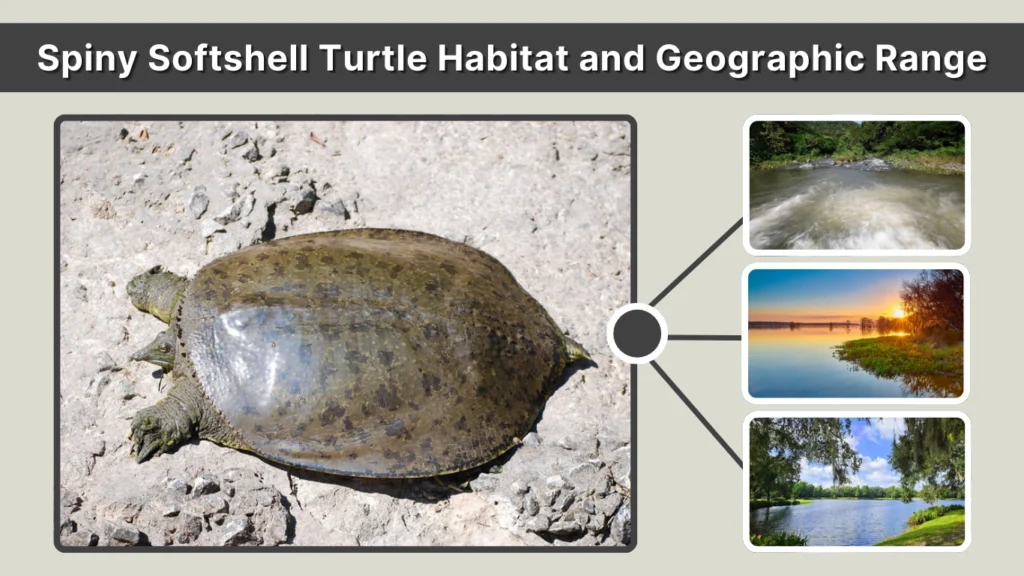
Spiny softshell turtles are widely distributed across North America. Their range includes:
- Much of the eastern and central United States
- Parts of the western U.S.
- Southern Canada
- Northern Mexico
They are especially common in river systems connected to the Mississippi River basin.
Because they tolerate a variety of freshwater environments, they have successfully adapted to many regions across the continent.
Preferred Aquatic Environment
Spiny softshell turtles prefer:
- Rivers with moderate to fast currents
- Large lakes
- Reservoirs
- Streams with sandy or muddy bottoms
They rely heavily on clean water and soft substrates. Sandy bottoms are especially important because these turtles frequently bury themselves beneath the surface.
Unlike some turtle species that spend long hours basking, spiny softshell turtles often remain in the water, surfacing only to breathe.
Basking and Burrowing Behavior
Although they are highly aquatic, spiny softshell turtles do bask occasionally. They may climb onto logs, sandbars, or riverbanks to regulate body temperature. However, they are cautious and will quickly slide back into the water if disturbed.
One of their most fascinating behaviors is burrowing. These turtles bury themselves in sand or mud, leaving only their eyes and long snout exposed. This behavior serves multiple purposes:
- Hiding from predators
- Ambushing prey
- Regulating body temperature
- Conserving energy
Their flattened bodies and soft shells make burrowing easy compared to hard-shelled turtles.
Diet and Feeding Habits
What Do Spiny Softshell Turtles Eat?
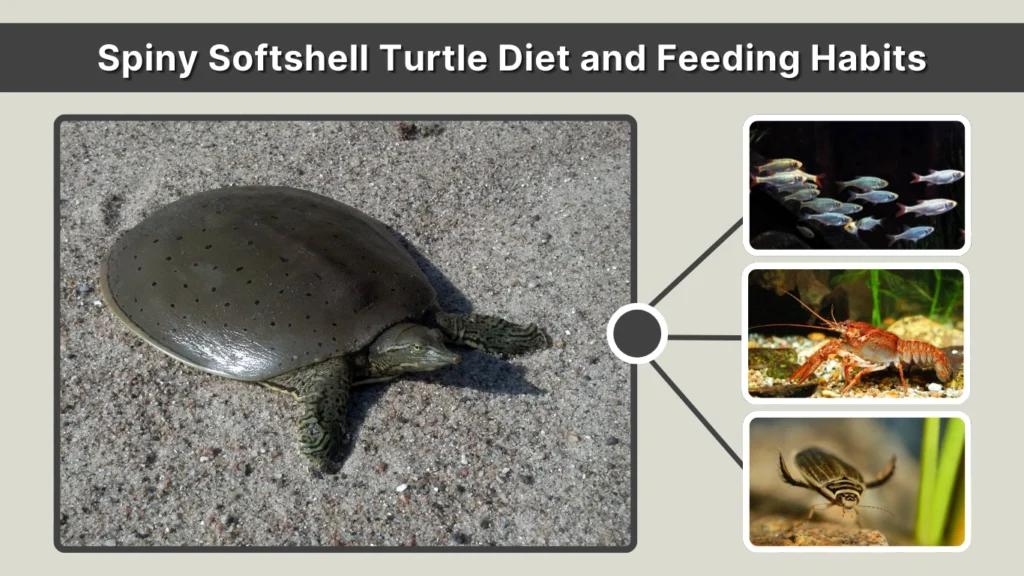
Spiny softshell turtles are primarily carnivorous. Their diet consists mainly of:
- Small fish
- Crayfish
- Aquatic insects
- Tadpoles
- Small amphibians
They are opportunistic feeders, meaning they eat what is most available in their environment.
Their long neck and powerful jaws allow them to capture fast-moving prey efficiently.
Hunting Strategy
These turtles are ambush predators. Rather than actively chasing prey for long distances, they rely on stealth and speed.
A typical hunting sequence includes:
- Burying in sand or mud.
- Remaining still and camouflaged.
- Waiting for prey to approach.
- Extending the neck rapidly to seize the target.
Their lightning-fast strike is one of their most effective survival tools.
Diet of Hatchlings vs Adults
Young spiny softshell turtles require a high-protein diet to support rapid growth. Hatchlings typically consume:
- Small aquatic insects
- Tiny crustaceans
- Insect larvae
As they grow larger, their diet expands to include bigger fish and amphibians. Adult females, due to their larger size, can handle larger prey compared to males.
Behavior and Unique Adaptations
Snorkel-Like Nose
One of the most distinctive features of the spiny softshell turtle is its long, tubular snout. This snorkel-like nose allows the turtle to breathe while keeping most of its body submerged and hidden. By extending only the tip of its snout above the water’s surface, it reduces visibility to predators and prey.
This adaptation is especially useful when the turtle is buried in sand or resting at the bottom of a river or lake.
Speed and Mobility
Unlike many slow-moving turtle species, spiny softshell turtles are surprisingly fast. Their lightweight, flexible shell reduces drag in the water, making them powerful swimmers.
They are also quick on land. When startled on a riverbank or sandbar, they can sprint rapidly toward the water. This speed helps them escape predators and human disturbance.
Their flattened body shape further enhances swimming efficiency, allowing them to glide smoothly through currents.
Can Spiny Softshell Turtles Breathe Underwater?
Spiny softshell turtles have a remarkable adaptation that allows them to absorb oxygen underwater. In addition to using their lungs, they can exchange small amounts of oxygen through specialized tissues in their throat and skin.
This ability enables them to remain submerged for extended periods, especially in cooler water where oxygen levels are higher. However, they still need to surface regularly to breathe air.
Temperament and Defense
Spiny softshell turtles are known for being more defensive than many other freshwater turtles. When threatened, they may:
- Stretch out their long necks
- Snap with powerful jaws
- Attempt to bite
Their flexible shell does not provide the same rigid protection as hard-shelled turtles, so they rely more on speed and aggression for defense.
Because of their long necks, they can reach farther than many people expect. For this reason, handling them is not recommended unless absolutely necessary and done with proper care.
Lifespan and Reproduction
How Long Do They Live?
In the wild, spiny softshell turtles can live 20 to 30 years, depending on habitat quality and predation levels. In protected environments or captivity with proper care, some individuals may live even longer.
Their survival largely depends on water quality, availability of nesting sites, and reduced human interference.
Mating and Nesting Season
Breeding typically occurs in spring and early summer. After mating, females leave the water to find suitable nesting areas, usually sandy or gravelly banks near rivers or lakes.
Using their hind legs, females dig a nest cavity where they deposit their eggs. Nesting sites are carefully chosen to provide warmth and protection.
Eggs and Hatchlings
A female may lay 4 to 30 eggs in a single clutch, depending on her size and health. Larger females generally produce more eggs.
The incubation period usually lasts about 60 to 90 days, influenced by temperature and environmental conditions. Warmer temperatures often speed up development.
Once hatched, baby turtles must make their way to water quickly. This journey is dangerous, as many hatchlings fall prey to predators before reaching safety.
Natural Predators
Spiny softshell turtles face threats at every life stage.
Common predators include:
- Raccoons (especially targeting nests)
- Skunks and foxes
- Birds of prey
- Large fish
- Snapping turtles
Eggs and hatchlings are particularly vulnerable. Adult turtles have fewer natural predators, but they still face risks from humans and habitat changes.
Can You Keep a Spiny Softshell Turtle as a Pet?
Are They Good for Beginners?
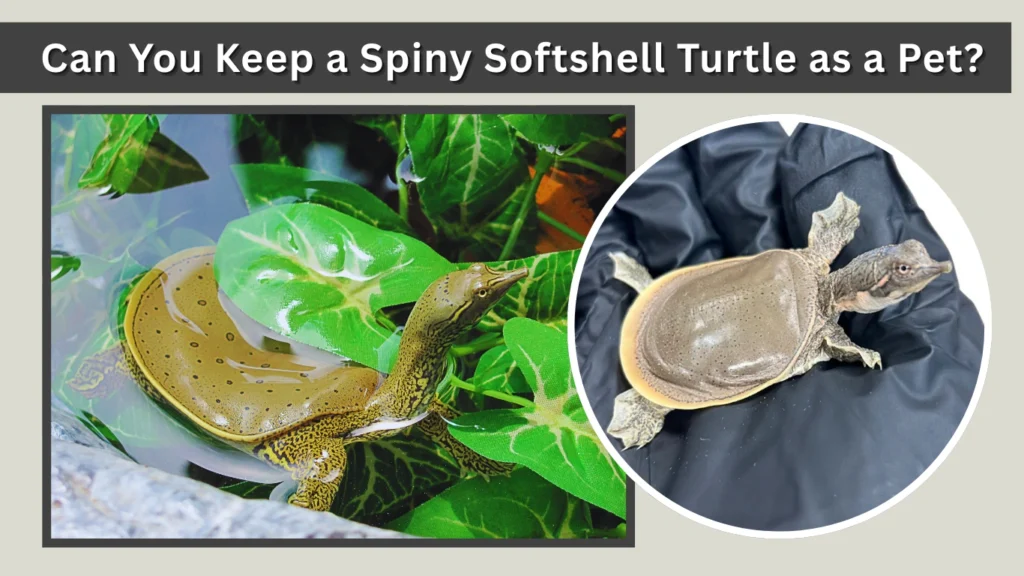
Spiny softshell turtles are generally not recommended for beginners. Their defensive nature and strong bite make them more challenging to handle than many common pet turtle species.
They also require specialized care and large enclosures, which may not be practical for inexperienced owners.
Tank Size and Setup
Because of their size and activity level, these turtles need a spacious environment.
A proper setup should include:
- A large aquarium or indoor pond
- Strong water filtration
- Clean, well-oxygenated water
- A soft sand substrate for burrowing
- A basking platform with UVB lighting
Females, due to their larger size, require significantly more space than males.
Clean water is essential, as poor water quality can lead to infections and shell problems.
Diet in Captivity
In captivity, spiny softshell turtles require a protein-rich diet. Suitable foods include:
- High-quality turtle pellets
- Feeder fish (occasionally)
- Earthworms
- Shrimp
- Insects
A varied diet helps ensure proper nutrition. Overfeeding should be avoided, as obesity can cause health issues.
Legal and Ethical Considerations
Before keeping a spiny softshell turtle, it is important to check local wildlife regulations. In some regions, collecting turtles from the wild is restricted or prohibited.
Capturing wild individuals can harm local populations and disrupt ecosystems. Responsible ownership means ensuring the turtle is legally obtained and properly cared for throughout its lifespan.
Conservation Status and Threats
The spiny softshell turtle is not currently considered globally endangered, but certain regional populations face decline.
Major threats include:
- Habitat destruction
- River pollution
- Nest disturbance
- Road mortality
- Human recreation near nesting areas
Clean freshwater ecosystems are vital to their survival. Conservation efforts often focus on protecting river habitats and nesting beaches.
Spiny Softshell Turtle vs Smooth Softshell Turtle
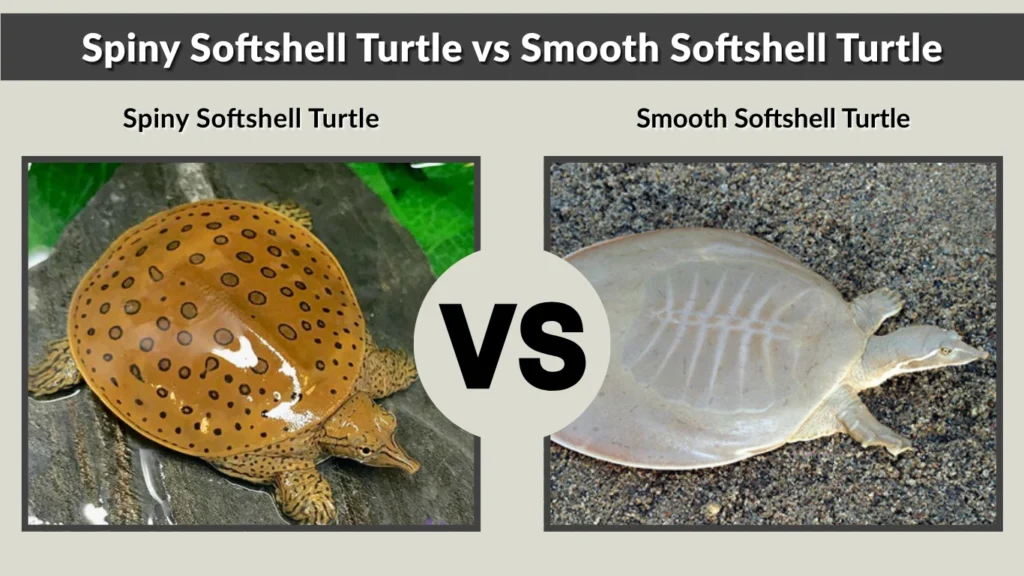
Spiny softshell turtles are often confused with smooth softshell turtles. However, there are key differences:
- Spiny softshell: Small spines along the front edge of the shell
- Smooth softshell: Lacks these spiny projections
- Range differences: Some geographic overlap but distinct distributions
- Spot patterns: Spiny softshell turtles often show more visible spotting
Careful observation of the shell edge is usually the easiest way to tell them apart.
Interesting Facts About the Spiny Softshell Turtle
- Females grow much larger than males.
- They can remain buried in sand with only their nose visible.
- They are among the fastest freshwater turtles.
- Their lineage dates back millions of years.
Conclusion
The spiny softshell turtle is a fascinating freshwater reptile known for its flexible shell, impressive speed, and unique breathing adaptations. Found across much of North America, it thrives in clean rivers and lakes with sandy bottoms. Although adaptable and widespread, it still faces threats from pollution and habitat loss. Understanding this species not only highlights its remarkable biology but also emphasizes the importance of protecting healthy freshwater ecosystems for future generations.