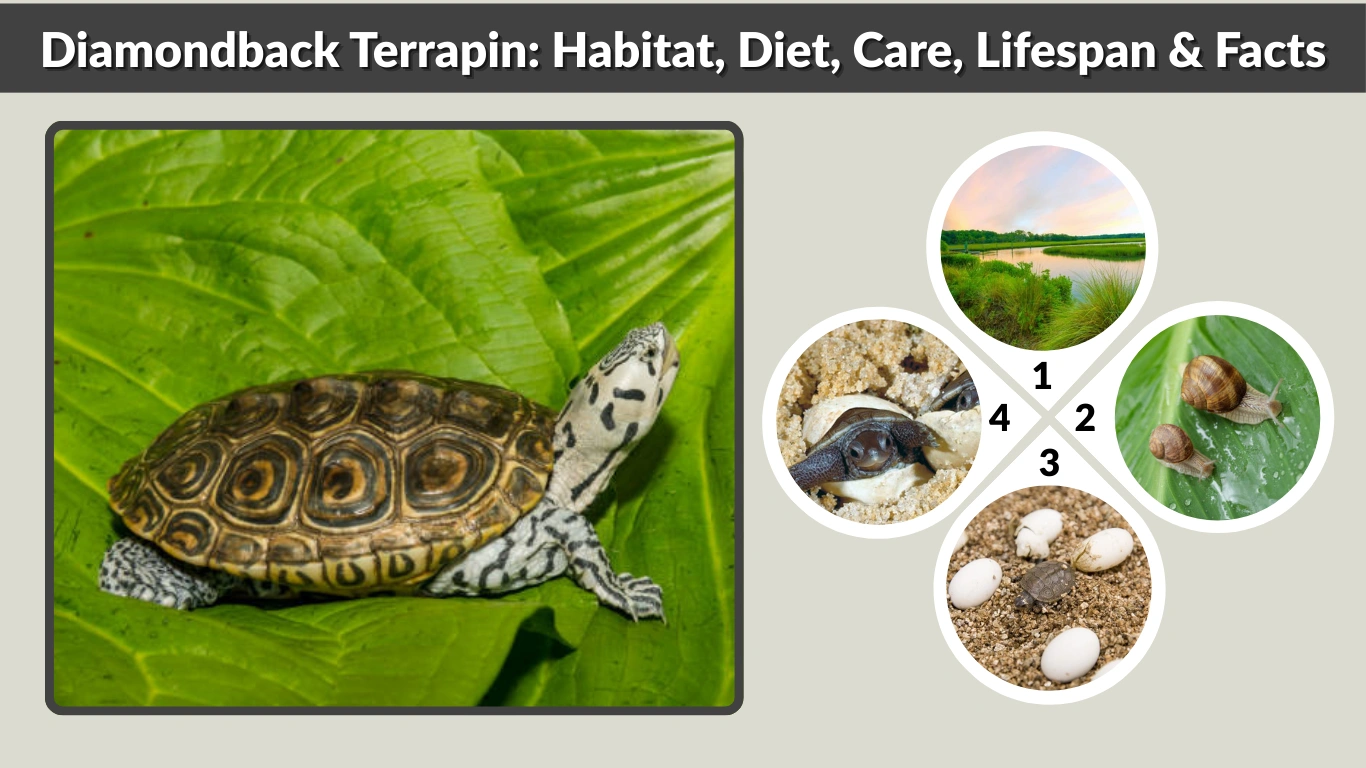
The diamondback terrapin is a unique coastal turtle species found along the eastern and southern United States. Unlike most turtles, it lives exclusively in brackish water—a mix of saltwater and freshwater—making it one of the most specialized turtles in North America. Known for the beautiful diamond-shaped patterns on its shell, the diamondback terrapin is both fascinating in the wild and challenging as a pet. In this guide, you’ll learn about its habitat, diet, care requirements, lifespan, and reproduction.
What Is a Diamondback Terrapin?
Scientific Name and Classification
The scientific name of the diamondback terrapin is Malaclemys terrapin. It is the only turtle species in North America that lives exclusively in brackish water environments. There are several recognized subspecies, which vary slightly in coloration and geographic range. Despite these differences, all share similar habitat preferences and behaviors.
Terrapins belong to the family Emydidae, which includes many pond and marsh turtles. However, what sets them apart is their ability to tolerate varying salinity levels in coastal ecosystems.
Physical Appearance
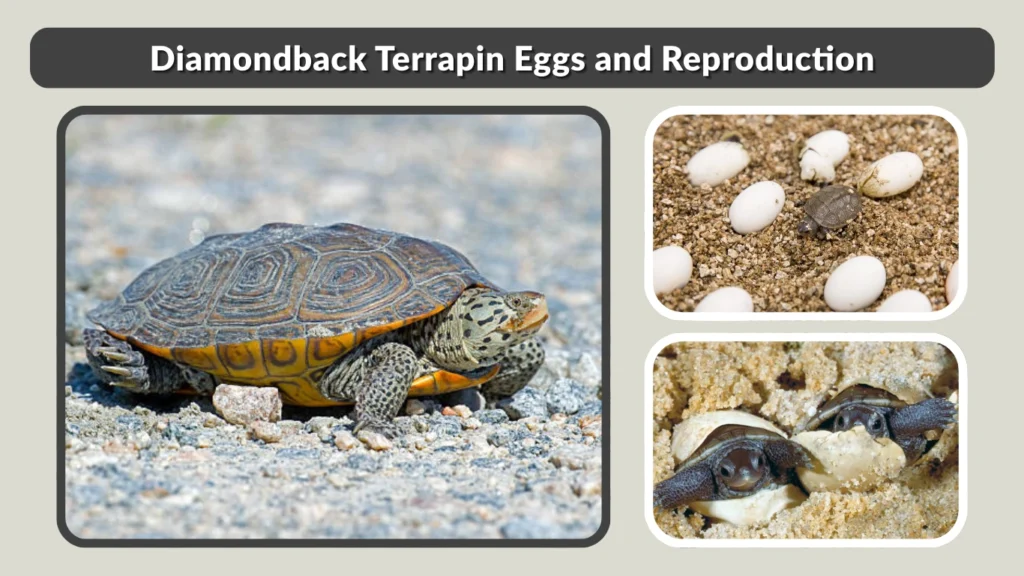
The diamondback terrapin gets its name from the distinctive diamond-shaped patterns on the scutes (plates) of its shell. Shell colors range from gray and brown to olive tones. The skin often features speckled or spotted patterns in black, white, or gray, giving each turtle a slightly unique appearance.
They have strong, webbed feet designed for swimming in tidal waters. Their powerful jaws are specially adapted for crushing hard-shelled prey like snails and crabs.
Size Differences Between Males and Females
One of the most noticeable characteristics of the diamondback terrapin is sexual dimorphism. Females are significantly larger than males. Adult females typically measure between 6 to 9 inches in shell length, while males are much smaller, averaging 4 to 5.5 inches.
Females also have broader heads and stronger jaws, which help them crush larger shellfish. Males, on the other hand, tend to have longer tails relative to their body size.
Diamondback Terrapin Habitat
Natural Habitat in the Wild
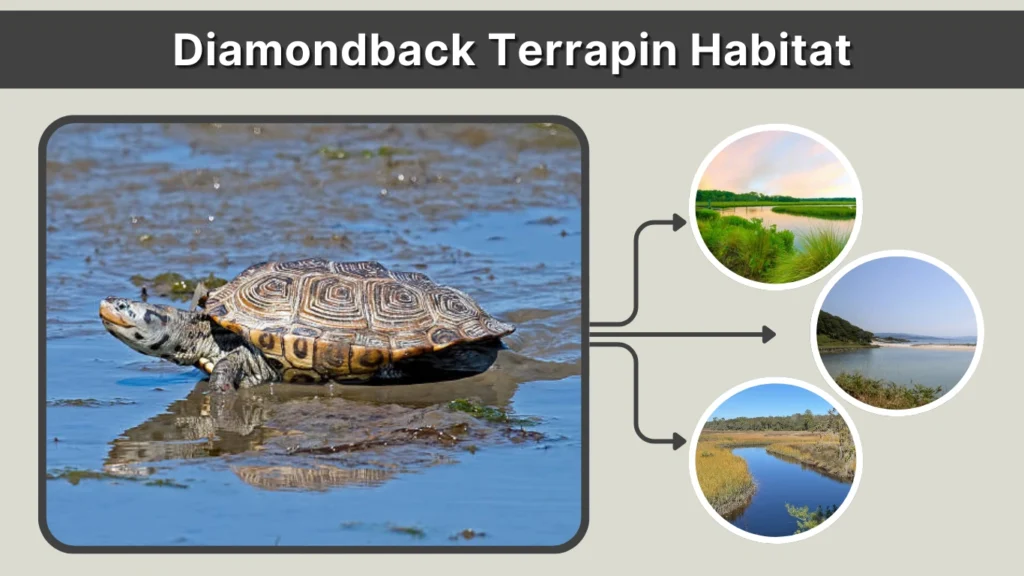
The natural habitat of the diamondback terrapin includes salt marshes, estuaries, coastal lagoons, and tidal creeks. These turtles are commonly found along the East Coast and Gulf Coast of the United States, from Massachusetts down to Texas.
Brackish water environments provide an ideal balance of salt and freshwater. Terrapins often bask on mudflats, marsh banks, or rocks during low tide. They are excellent swimmers and are well adapted to the changing tides of coastal ecosystems.
Why Brackish Water Is Important
Brackish water is essential to the survival of the diamondback terrapin. Their bodies are specially adapted to handle moderate salinity levels. They have salt glands that help regulate excess salt intake, allowing them to thrive in estuarine conditions.
Although they can tolerate short periods in freshwater, long-term freshwater living may cause health issues. Likewise, full-strength saltwater environments are generally too harsh without access to freshwater sources. The balance found in marshes and estuaries is critical for their overall health.
Habitat Setup in Captivity
Creating the right habitat for a pet diamondback terrapin can be challenging. A large aquarium is necessary, with adult females often requiring tanks of at least 75–100 gallons due to their size.
The water should be slightly brackish, which requires carefully measured marine salt mixes—not table salt. A strong filtration system is essential because terrapins are messy eaters. In addition, they need a dry basking area equipped with a heat lamp and UVB lighting to support shell and bone health.
Maintaining proper temperature, salinity, and cleanliness is vital to prevent health problems.
Diamondback Terrapin Diet
What Do Diamondback Terrapins Eat in the Wild?
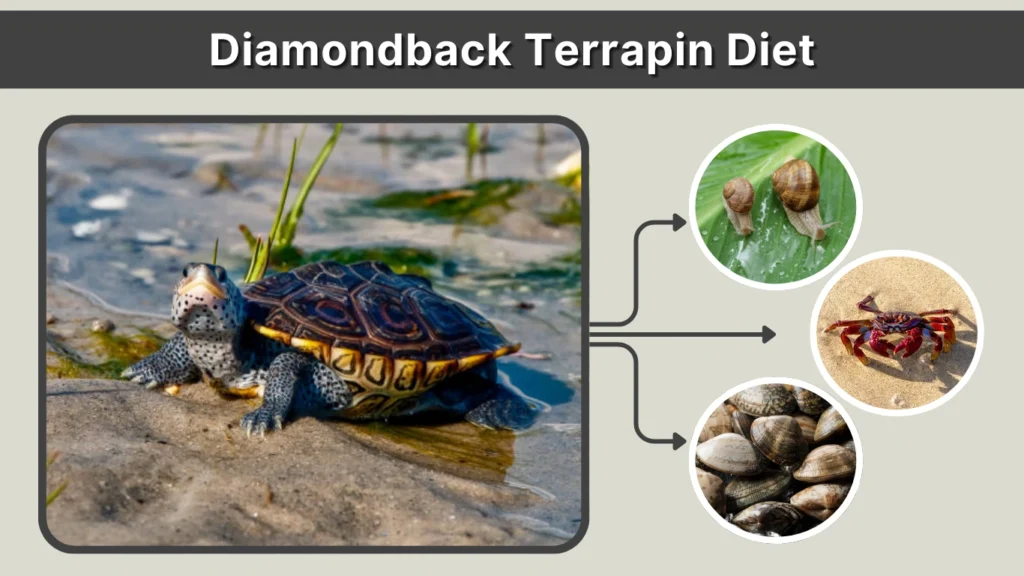
In their natural habitat, diamondback terrapins primarily feed on hard-shelled prey. Their diet includes snails, crabs, clams, mussels, and small aquatic invertebrates. Occasionally, they may consume small fish or plant matter, but they are mainly carnivorous.
Their strong jaws allow them to crush shells with ease, making mollusks a key part of their diet. This feeding behavior also helps maintain balance in marsh ecosystems by controlling snail and crab populations.
Feeding a Pet Diamondback Terrapin
In captivity, a diamondback terrapin’s diet should closely mimic what it would eat in the wild. High-quality commercial turtle pellets can serve as a nutritional base. Supplementing with fresh or frozen seafood—such as shrimp, snails, or small pieces of fish—provides necessary protein.
Calcium supplementation is especially important to prevent shell deformities. Cuttlebone or calcium powder can be added to their diet. Some terrapins may accept leafy greens occasionally, though protein should remain the primary focus.
Feeding Schedule
Juvenile diamondback terrapins require more frequent feeding than adults because they are growing rapidly. Young terrapins can be fed once daily, while adults typically do well eating every other day. Portion sizes should be appropriate to their head size—generally, an amount of food equal to the size of their head is a good guideline.
Overfeeding can lead to obesity and poor water quality in captivity. Removing uneaten food promptly helps maintain a clean tank and reduces the risk of bacterial growth.
Diamondback Terrapin Care Guide
Are Diamondback Terrapins Good Pets?
A diamondback terrapin can be a rewarding but demanding pet. They are best suited for experienced reptile keepers due to their specific habitat and salinity needs. Unlike some freshwater turtles, terrapins require careful monitoring of water conditions, proper lighting, and a balanced diet.
Potential owners should also check local regulations. In some states, collecting wild terrapins or keeping them as pets may be restricted or require permits. Additionally, terrapins are long-lived reptiles, so owning one is a commitment that can last several decades.
Tank Maintenance and Cleaning
Proper tank maintenance is one of the most important aspects of diamondback terrapin care. Because they consume protein-rich foods like seafood, they tend to produce significant waste. A high-quality canister filter or similarly powerful filtration system is highly recommended.
Partial water changes should be done weekly, replacing about 20–30% of the tank water. Salinity levels must be checked regularly using a hydrometer to ensure consistency. Water temperature should generally remain between 75–80°F, while the basking area should reach around 85–90°F.
Clean basking platforms and tank decorations periodically to prevent algae buildup and bacterial growth.
Common Health Problems
Like many aquatic turtles, diamondback terrapins can experience health issues if their environment is not properly maintained. Shell rot is a common problem caused by dirty water or insufficient basking opportunities. It may appear as soft spots, discoloration, or foul-smelling areas on the shell.
Respiratory infections can develop if water temperatures are too low. Symptoms include wheezing, lethargy, or difficulty swimming. Vitamin deficiencies, particularly a lack of calcium or UVB exposure, can lead to soft shells or metabolic bone disease.
Monitoring behavior, appetite, and shell condition regularly helps detect problems early.
Diamondback Terrapin Lifespan
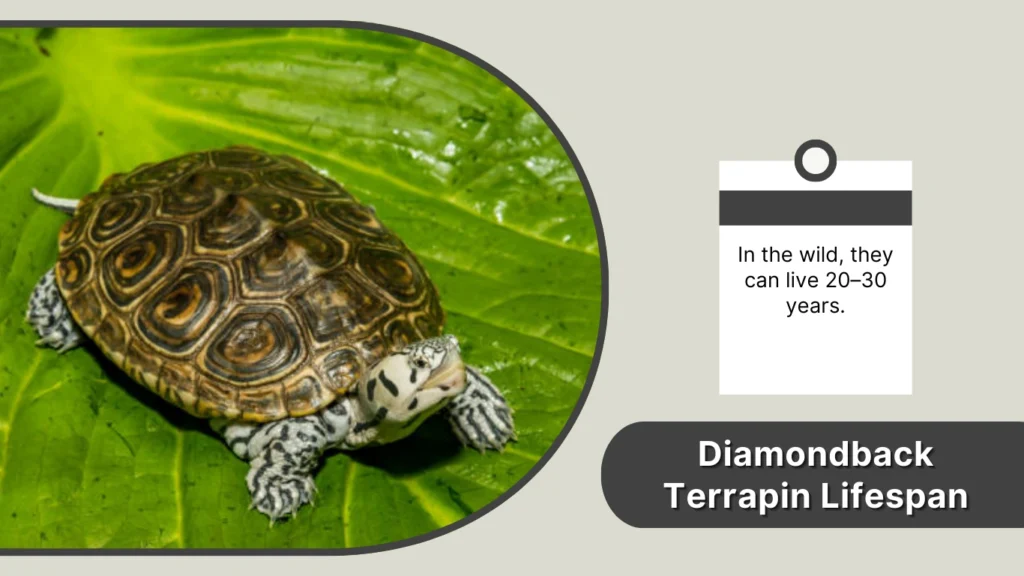
The diamondback terrapin has a relatively long lifespan compared to many other reptiles. In the wild, they can live 20–30 years, though survival rates are lower due to predators, habitat destruction, and human-related threats.
In captivity, with proper care and nutrition, diamondback terrapins can live 25 to 40 years or even longer. Factors that influence lifespan include diet quality, water conditions, lighting, veterinary care, and stress levels.
Providing a stable habitat, balanced nutrition, and routine maintenance significantly increases the chances of a long, healthy life.
Diamondback Terrapin Eggs and Reproduction
Mating Season
Diamondback terrapins typically mate in the spring and early summer. Courtship and mating occur in the water. After mating, females may store sperm for some time before laying eggs.
Nesting Behavior
Gravid (pregnant) females leave the water to find suitable nesting sites on sandy or loose soil, often above the high-tide line. Nesting usually takes place during late spring and summer, sometimes at night.
A female may lay between 4 and 20 eggs per clutch, depending on her size and health. She digs a shallow nest using her hind legs, deposits the eggs, and then carefully covers them before returning to the water.
Incubation and Hatching
The incubation period generally lasts 60 to 90 days. One fascinating fact about diamondback terrapin eggs is that temperature determines the sex of the hatchlings. Warmer nest temperatures typically produce females, while cooler temperatures produce males.
Hatchlings face numerous threats, including predators like raccoons, birds, and crabs. Many do not survive to adulthood, which is why conservation efforts are so important for maintaining stable populations.
Interesting Diamondback Terrapin Facts
The diamondback terrapin holds the title of Maryland’s official state reptile. Historically, it was heavily harvested for turtle soup in the late 19th and early 20th centuries, leading to population declines.
It is the only turtle species in the United States that lives exclusively in brackish water. Their powerful jaws are perfectly adapted for crushing shellfish, and their webbed feet make them strong swimmers in tidal currents.
Unfortunately, they face modern threats such as habitat destruction, road mortality during nesting season, and accidental drowning in crab traps. Conservation programs now use special devices on crab traps to reduce terrapin deaths.
FAQs
How big do diamondback terrapins get?
Adult diamondback terrapins show strong size differences between males and females. Males typically grow to about 4–5.5 inches in shell length, while females are much larger, reaching 6–9 inches. Females also have broader heads and stronger jaws compared to males.
Can diamondback terrapins live in freshwater?
Diamondback terrapins are adapted to brackish water, which is a mix of saltwater and freshwater. While they can tolerate freshwater for short periods, long-term freshwater living may cause health issues. They thrive best in environments that mimic natural coastal salinity levels.
What do diamondback terrapins eat?
In the wild, diamondback terrapins mainly eat snails, crabs, clams, and other hard-shelled invertebrates. In captivity, they can be fed high-quality turtle pellets along with seafood like shrimp and small fish, plus proper calcium supplementation.
How long do diamondback terrapins live?
In the wild, diamondback terrapins typically live 20–30 years, depending on environmental conditions and threats. With proper care in captivity, they can live 25–40 years or even longer, making them a long-term commitment as pets.
Are diamondback terrapins good pets?
Diamondback terrapins can make rewarding pets for experienced reptile keepers. However, they require brackish water, strong filtration, UVB lighting, and a carefully managed diet. Their long lifespan and specific habitat needs make them better suited for dedicated owners.
Conclusion
The diamondback terrapin is a remarkable turtle species uniquely adapted to life in brackish coastal environments. From its diamond-patterned shell to its specialized diet of shellfish, this turtle plays an important role in marsh ecosystems. While it can be kept as a pet, proper diamondback terrapin care requires commitment, experience, and careful habitat management.
Understanding their habitat, diet, lifespan, and reproduction not only helps pet owners provide better care but also encourages conservation awareness to protect wild populations for generations to come.