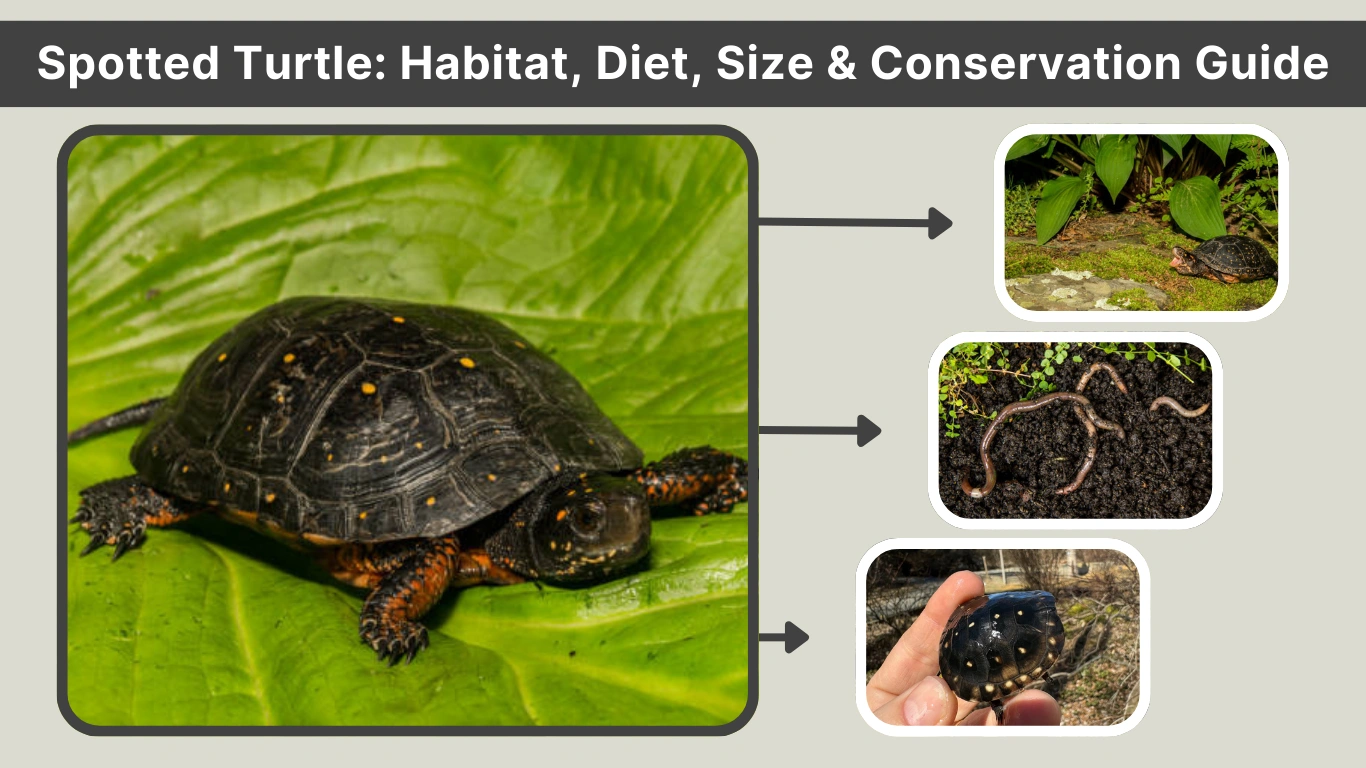
The spotted turtle (Clemmys guttata) is one of North America’s most recognizable freshwater turtles. With its smooth black shell decorated by bright yellow spots, this small reptile stands out among wetland species. Native to the eastern United States and parts of southern Canada, the spotted turtle depends heavily on clean, shallow wetlands for survival. Unfortunately, habitat loss and illegal collection have caused population declines in many areas. In this guide, you’ll learn about the spotted turtle’s appearance, habitat, size, diet, and behavior.
What Is a Spotted Turtle?
The spotted turtle is a small semi-aquatic turtle species belonging to the family Emydidae. It is known for its compact body size and distinctive shell markings. Unlike larger pond turtles, this species rarely grows beyond a few inches long, making it one of the smallest turtles in its range.
Scientific Classification
- Scientific name: Clemmys guttata
- Family: Emydidae
- Common name: Spotted turtle
It is closely related to other North American pond turtles but is unique enough to be placed in its own genus, Clemmys.
Physical Appearance
The most striking feature of the spotted turtle is its glossy black carapace (upper shell), which is covered with bright yellow or orange spots. The number of spots varies widely. Some turtles may have only a few spots per scute, while others appear heavily dotted.
The plastron (bottom shell) is typically yellow or orange with darker markings. Their skin is dark gray or black with small yellow or orange spots that match the shell. Many individuals also have a bright orange or yellow chin and throat, adding to their vivid appearance.
How to Identify a Spotted Turtle
Spotted turtles are relatively small compared to painted turtles or snapping turtles. Adults usually measure between 3 and 5 inches in shell length. Their smooth, rounded shell and bold yellow spots make identification fairly easy.
Males and females can be distinguished by subtle differences. Males often have brown or tan eyes and a concave plastron, while females typically have orange eyes and a flatter bottom shell.
Spotted Turtle Habitat and Geographic Range
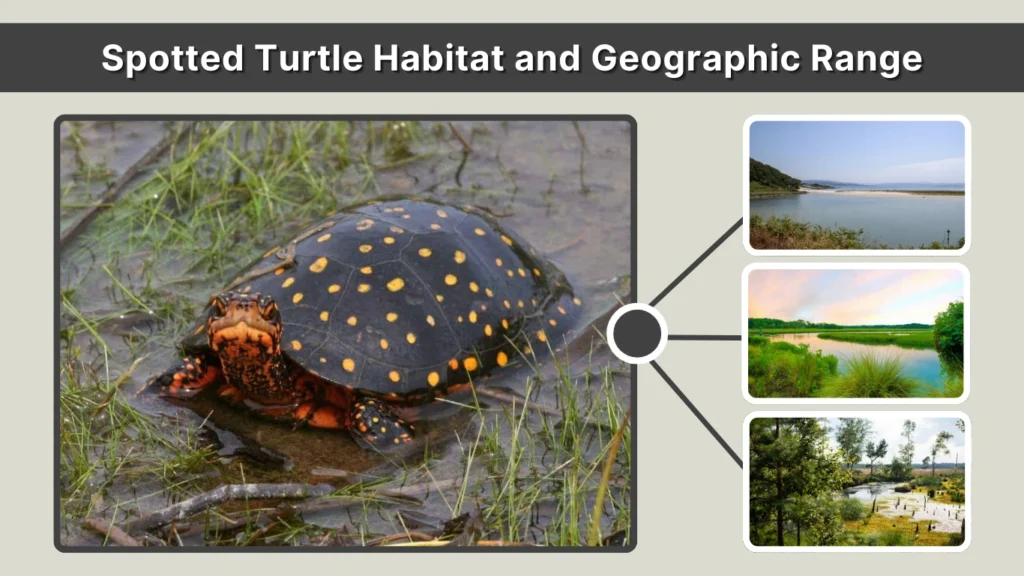
Spotted turtles rely on shallow freshwater environments. They are strongly associated with wetlands and areas that provide both water and basking sites.
Natural Habitat
This species prefers:
- Marshes
- Wet meadows
- Swamps
- Bogs
- Shallow ponds
- Slow-moving streams
Spotted turtles thrive in clean, unpolluted wetlands with soft, muddy bottoms and abundant vegetation. They often move between shallow water and land, especially during feeding or nesting.
Because they are semi-aquatic, they require a mix of aquatic and terrestrial habitats. Logs, grass hummocks, and low vegetation provide ideal basking spots where they can warm themselves in the sun.
Geographic Distribution
The spotted turtle’s range extends across eastern North America. In the United States, it can be found from parts of Florida northward through the Atlantic coastal states and westward into the Great Lakes region. Small populations also occur in southern Canada, particularly in Ontario.
However, their distribution is patchy. Even within suitable regions, populations may be isolated due to habitat fragmentation.
Seasonal Habitat Changes
Spotted turtles adjust their activity depending on the season. In early spring, they are highly active and frequently seen basking in open wetlands. During extremely hot summer months, they may become less active and seek cooler areas, sometimes entering a period of dormancy known as aestivation.
In winter, they hibernate in mud at the bottom of wetlands or beneath vegetation, where temperatures remain stable and above freezing.
Spotted Turtle Size and Physical Characteristics
The spotted turtle is considered one of the smallest turtles in North America. Adults typically measure between 3 and 5 inches (7–13 cm) in shell length. Most individuals weigh only a few ounces, making them lightweight compared to many other freshwater species.
Hatchlings are extremely small, often measuring just about 1 inch long. As they grow, their yellow spots become more visible and defined. Growth is gradual, and it can take several years for a turtle to reach full maturity.
Sexual dimorphism is noticeable but subtle. Males usually have longer, thicker tails and a slightly concave plastron, which helps during mating. Females tend to be slightly larger and have shorter tails. Eye color can also differ, with males often displaying brown eyes and females showing brighter orange tones.
What Do Spotted Turtles Eat?
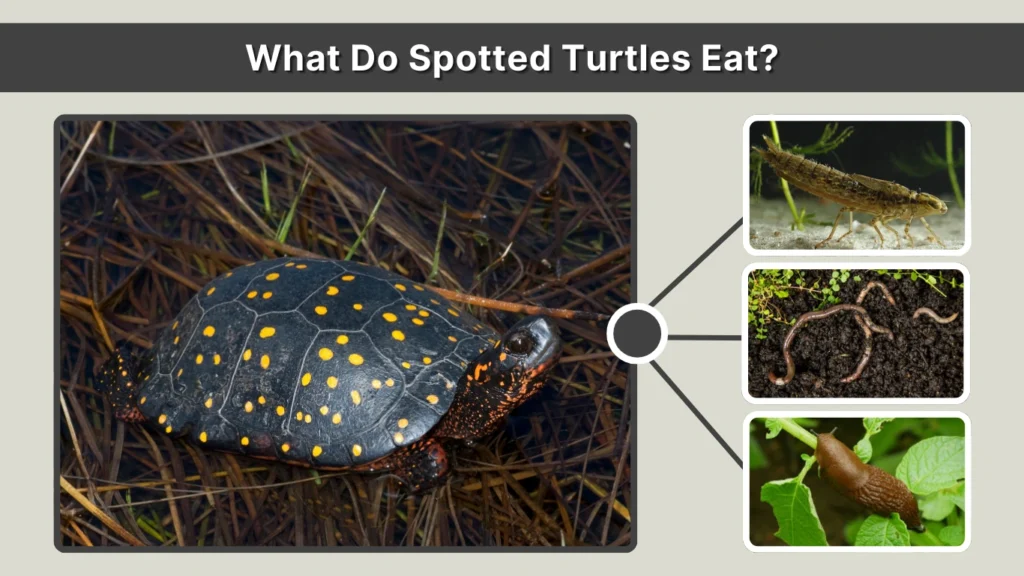
Spotted turtles are opportunistic omnivores, meaning they eat both animal and plant matter. Their diet changes slightly depending on availability and season.
Diet in the Wild
In their natural habitat, spotted turtles feed on a variety of small prey, including:
- Aquatic insects
- Earthworms
- Slugs
- Snails
- Small crustaceans
- Tadpoles
They may also consume small amounts of plant material, such as algae or aquatic vegetation. However, animal protein makes up a large portion of their diet, especially in younger turtles that require extra nutrients for growth.
Spotted turtles usually forage in shallow water or along muddy edges, using their keen sense of sight to locate moving prey.
Feeding Behavior
These turtles are primarily active during the day, which means they hunt and forage in daylight hours. They are patient feeders and may slowly stalk small prey before snapping it up. Because they inhabit shallow wetlands, their feeding areas are often close to vegetation that provides both cover and hunting opportunities.
Their small size limits them to relatively small prey, but their varied diet allows them to adapt to different wetland environments.
Behavior and Daily Activity
Spotted turtles are primarily diurnal, meaning they are most active during the day. In early spring, they can often be seen basking in groups on logs, grass clumps, or muddy banks. Basking helps regulate their body temperature, improve digestion, and maintain overall health.
Although they may gather in favorable basking spots, spotted turtles are generally shy and secretive. When disturbed, they quickly slip into the water or hide beneath vegetation. Their dark coloration provides natural camouflage in muddy wetlands.
Unlike some larger turtle species, spotted turtles usually maintain relatively small home ranges. They tend to remain within a specific wetland area as long as food and shelter are available. However, seasonal movements may occur when searching for nesting sites or overwintering spots.
Spotted Turtle Lifespan and Reproduction
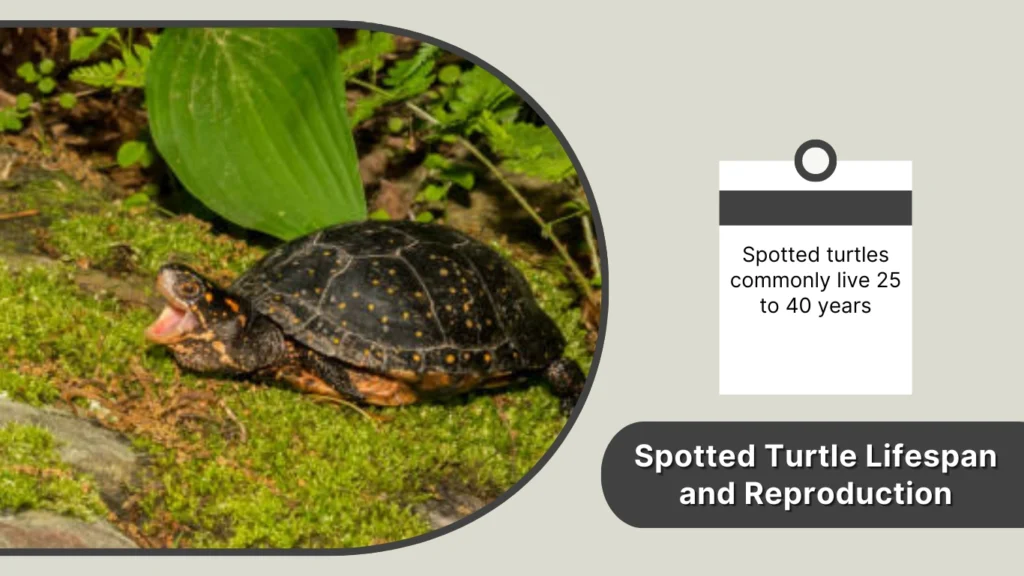
Spotted turtles are long-lived reptiles, especially considering their small size. Their slow growth and delayed maturity are typical traits of many turtle species.
Lifespan
In the wild, spotted turtles commonly live 25 to 40 years, though some individuals may live even longer under ideal conditions. In captivity, with proper nutrition, veterinary care, and a well-maintained habitat, they can exceed 40 years.
Their long lifespan makes adult survival especially important for population stability. Because they reproduce slowly, the loss of mature individuals can significantly impact local populations.
Breeding Season
Mating usually occurs in early spring, shortly after turtles emerge from winter hibernation. Males actively search for females during this period.
Females lay small clutches of eggs, typically between 3 and 7 eggs, in soft soil or sandy areas near wetlands. Nesting often takes place in late spring or early summer. The female digs a shallow nest using her hind legs, deposits the eggs, and then carefully covers them.
Hatchling Survival
After an incubation period that can last several weeks, hatchlings emerge. Baby spotted turtles are extremely vulnerable to predators such as raccoons, birds, snakes, and larger fish.
Because nest predation rates are high, only a small percentage of hatchlings survive to adulthood. This low survival rate makes habitat protection crucial for sustaining populations.
Are Spotted Turtles Endangered?
Spotted turtles face numerous threats across their range. As a result, they are considered vulnerable, threatened, or endangered in many states and provinces.
Conservation Status
While the exact classification varies by location, many regions list the spotted turtle as a species of conservation concern. Population declines have been documented in areas where wetlands have been drained or fragmented.
Because they require clean, stable wetland ecosystems, they are particularly sensitive to environmental changes.
Major Threats
The biggest threats to spotted turtles include:
- Habitat destruction: Wetland drainage for agriculture and development
- Road mortality: Turtles crossing roads during nesting season
- Illegal pet trade: Collection from the wild
- Pollution: Contaminated water sources
Illegal collection is especially harmful because adult turtles are often targeted. Removing breeding adults from the wild significantly reduces population recovery potential.
Conservation Efforts
Conservation efforts focus on wetland protection and habitat restoration. Many states have laws that prohibit capturing or selling spotted turtles without permits.
Wildlife agencies and conservation groups also work to monitor populations, restore degraded wetlands, and educate the public about protecting this species. Preserving intact wetland ecosystems benefits not only spotted turtles but also many other plant and animal species.
Can You Keep a Spotted Turtle as a Pet?
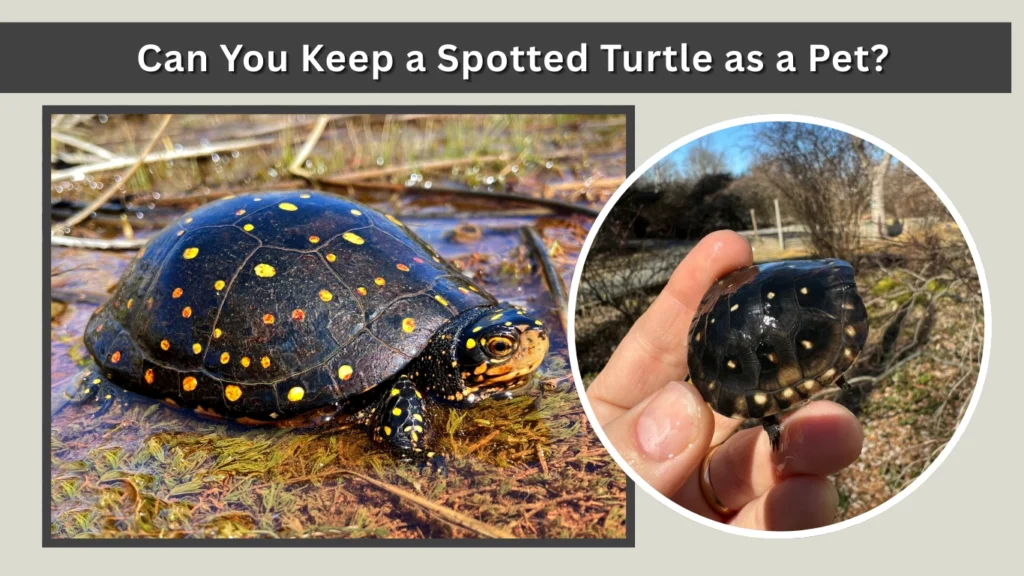
In many areas, it is illegal to collect spotted turtles from the wild due to their protected status. Anyone considering ownership should carefully research local laws.
Even where legal, spotted turtles require specialized care. They need a shallow aquatic setup with clean, filtered water and a dry basking area equipped with proper UVB lighting. Their enclosure should mimic a natural wetland environment with both land and water sections.
Because wild populations are declining, responsible pet owners should only obtain captive-bred individuals from reputable breeders. Removing turtles from the wild contributes to population loss and ecosystem imbalance. For many people, supporting conservation efforts may be a better choice than keeping one as a pet.
Interesting Facts About Spotted Turtles
- Each spotted turtle has a unique pattern of yellow spots.
- They are among the smallest turtles in North America.
- Their bright throat coloration can help distinguish males from females.
- They are considered an indicator species, meaning their presence reflects healthy wetland ecosystems.
- Despite their small size, they can live for several decades.
FAQs
How big do spotted turtles get?
Spotted turtles typically grow between 3 and 5 inches in shell length, making them one of the smallest turtle species in North America. Females are often slightly larger than males. Their compact size and smooth, spotted shell make them easy to distinguish from larger pond turtles.
What do spotted turtles eat?
Spotted turtles are omnivores that mainly eat insects, worms, snails, slugs, and small aquatic animals. They may also consume small amounts of plant material. In captivity, their diet usually includes turtle pellets, live insects, and leafy greens to ensure balanced nutrition.
Where do spotted turtles live?
Spotted turtles live in shallow freshwater wetlands such as marshes, swamps, bogs, and wet meadows. Their range extends across eastern North America, including parts of the United States and southern Canada. They prefer clean water and areas with plenty of vegetation.
Are spotted turtles rare?
In many regions, spotted turtles are considered threatened or endangered due to habitat loss and illegal collection. While they may still be locally common in protected wetlands, overall populations have declined, making conservation efforts increasingly important.
Can you legally own a spotted turtle?
Ownership laws vary by state and province. In many areas, collecting spotted turtles from the wild is illegal. If ownership is allowed, only captive-bred turtles should be purchased from reputable sources to avoid harming wild populations.
Conclusion
The spotted turtle is a small but remarkable species that plays an important role in North America’s wetland ecosystems. Its distinctive yellow-spotted shell and long lifespan make it a fascinating reptile, yet habitat destruction and illegal collection threaten its survival. Protecting wetlands, respecting wildlife laws, and supporting conservation programs are essential steps in ensuring that future generations can continue to encounter this unique and beautiful turtle in the wild.