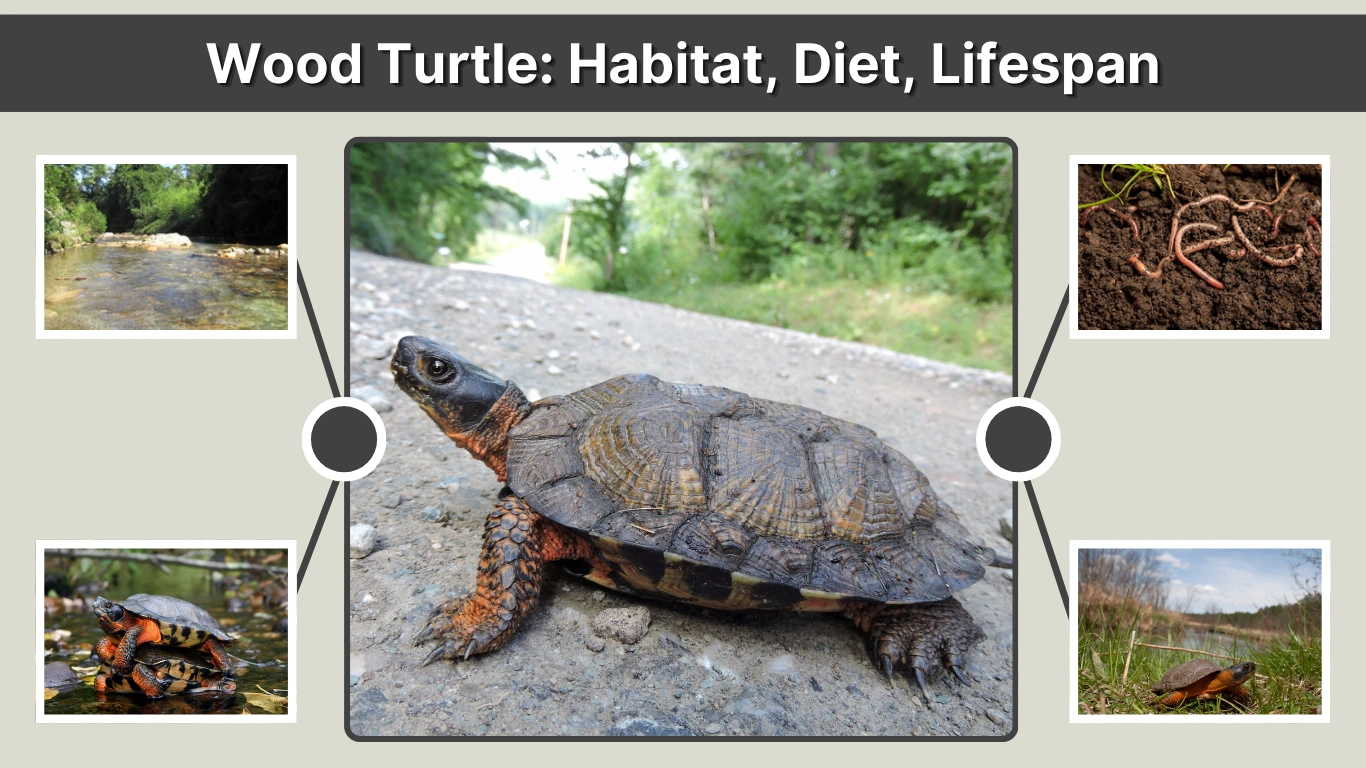
The wood turtle (Glyptemys insculpta) is one of North America’s most fascinating freshwater turtles. Known for its beautifully sculpted shell and bright orange markings, this semi-aquatic species spends time both in rivers and on land. Unlike many turtles, wood turtles are highly active and even display unique foraging behaviors. However, habitat loss and human activity have placed growing pressure on their populations. In this guide, you’ll learn about the wood turtle’s appearance, habitat, diet, and lifespan.
What Is a Wood Turtle?
The wood turtle is a medium-sized freshwater turtle native to North America. It belongs to the family Emydidae, which includes several pond and marsh turtles. Its scientific name, Glyptemys insculpta, refers to the deeply carved, sculpted pattern on its shell — one of its most defining features.
Scientific Classification
- Scientific name: Glyptemys insculpta
- Family: Emydidae
- Common name: Wood turtle
Wood turtles were once grouped with the genus Clemmys, but modern research placed them in the genus Glyptemys, alongside the bog turtle. They are closely related to other North American freshwater turtles but differ significantly in behavior and habitat use.
Physical Appearance
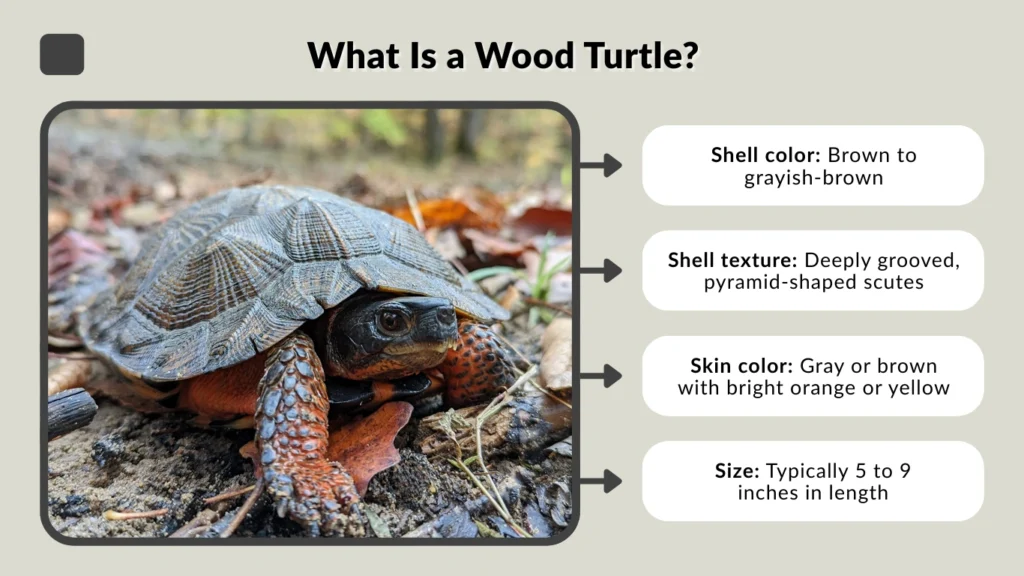
The wood turtle is easily recognized by its rugged, sculpted shell. Each scute (the individual plates on the shell) forms a raised, pyramid-like pattern, giving it a carved or chiseled appearance.
Key physical features include:
- Shell color: Brown to grayish-brown
- Shell texture: Deeply grooved, pyramid-shaped scutes
- Plastron (bottom shell): Yellow with dark blotches
- Skin color: Gray or brown with bright orange or yellow markings on the neck and legs
- Size: Typically 5 to 9 inches in length
Adult wood turtles are medium-sized compared to other freshwater species. Males usually grow larger than females and have longer, thicker tails.
How to Identify a Wood Turtle
Identifying a wood turtle becomes easier once you know what to look for. The most distinctive trait is the sculpted carapace (top shell). Unlike smoother-shelled turtles, the wood turtle’s shell appears almost carved from wood, which explains its common name.
Another identifying feature is its brightly colored limbs. The orange or yellow pigmentation on the neck and legs contrasts sharply with the darker shell. Additionally, wood turtles lack the hinged plastron found in box turtles, making it easier to distinguish between the two species.
Wood Turtle Habitat and Range
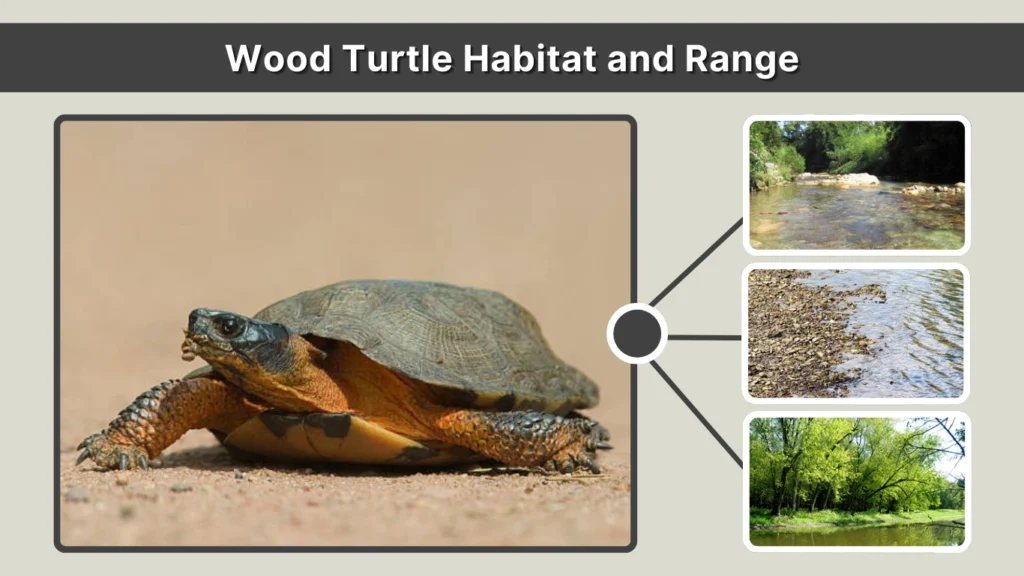
Wood turtles are semi-aquatic, meaning they rely on both water and land environments. They are most commonly found near clean, flowing streams but may travel considerable distances on land during warmer months.
Natural Habitat
Wood turtles prefer:
- Clear, slow-moving rivers and streams
- Sandy or gravel river bottoms
- Forested floodplains
- Meadows and open woodlands near water
Unlike many aquatic turtles that remain in water year-round, wood turtles frequently forage on land during spring and summer. They are strong walkers and may travel far from water in search of food.
Clean water is essential for their survival. Pollution, sedimentation, and habitat disturbance can severely impact local populations.
Geographic Range
The wood turtle’s range extends across parts of northeastern North America. In the United States, they are commonly found in:
- New England
- The Great Lakes region
- Parts of the Midwest
Their range also extends into southeastern Canada, including Ontario, Quebec, and nearby provinces.
Although they were once more widespread, their distribution has become fragmented due to habitat loss and human development.
Seasonal Movement
Wood turtles adjust their behavior based on the seasons.
- Winter: They overwinter underwater, burying themselves in riverbanks or stream bottoms to avoid freezing temperatures.
- Spring and Summer: They become more terrestrial, exploring nearby forests and fields.
- Fall: Activity decreases as temperatures drop, and they return to aquatic habitats.
Females typically nest in sandy or gravelly areas along riverbanks in late spring or early summer.
Wood Turtle Diet and Feeding Behavior
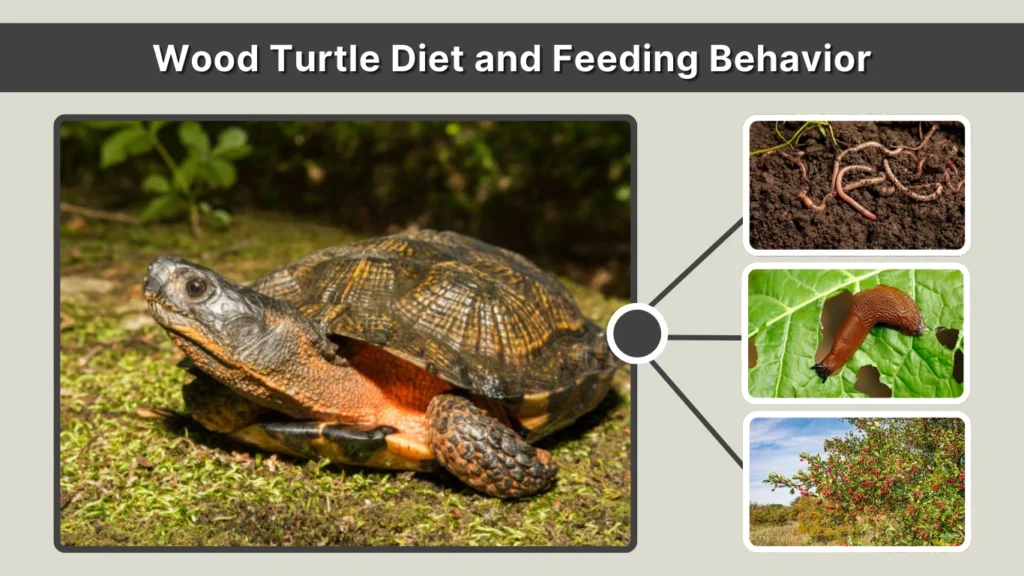
Wood turtles are omnivores, meaning they eat both plant and animal matter. Their varied diet plays an important role in maintaining balanced ecosystems.
What Do Wood Turtles Eat?
In the wild, wood turtles consume a wide range of foods, including:
- Earthworms
- Insects
- Slugs
- Berries
- Leaves and grasses
- Mushrooms and fungi
They occasionally eat small amphibians or carrion if available. Their flexible diet allows them to adapt to seasonal changes in food availability.
Juvenile turtles tend to eat more protein-rich foods, while adults consume a more balanced mix of plant and animal material.
Unique Hunting Technique
One of the most fascinating behaviors of wood turtles is “worm stomping.” The turtle taps or stomps its front feet against the ground, mimicking the vibrations of rainfall. Earthworms, sensing the vibrations, rise to the surface — where the turtle quickly eats them.
This behavior demonstrates the species’ intelligence and adaptability. Few reptiles show such deliberate foraging strategies.
Wood Turtle Lifespan and Reproduction
Wood turtles are known for their long lifespan and slow development. Like many turtle species, they take years to mature, which makes population recovery difficult when numbers decline.
How Long Do Wood Turtles Live?
In the wild, wood turtles commonly live 40 to 60 years, and some individuals may live even longer under ideal conditions. Their long lifespan is balanced by slow growth and late maturity. Most wood turtles do not reach sexual maturity until they are 14 to 18 years old.
Because they reproduce slowly and rely on high adult survival rates, the loss of mature turtles has a major impact on local populations.
Breeding Season
Wood turtles typically mate in spring and fall, often in or near shallow water. Courtship behavior may involve nudging, circling, or gentle biting. Males generally pursue females and may compete with other males during breeding season.
After mating in spring, females begin searching for suitable nesting sites. They prefer sandy or gravelly banks exposed to sunlight, often near rivers or streams.
Nesting and Hatchlings
Females usually lay 5 to 12 eggs in early summer. The eggs incubate for approximately 60 to 80 days, depending on temperature and environmental conditions.
Hatchlings emerge in late summer or early fall. Unfortunately, survival rates are low. Eggs and young turtles are vulnerable to predators such as raccoons, skunks, foxes, and birds. Habitat disturbance and flooding can also destroy nests.
Because so few hatchlings survive to adulthood, protecting mature turtles is essential for maintaining stable populations.
Wood Turtle Conservation Status
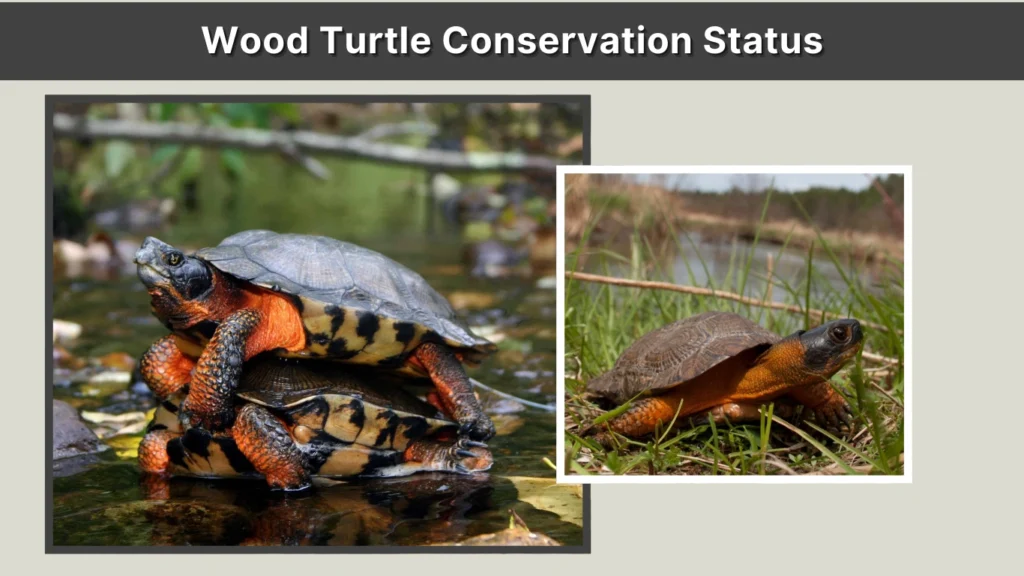
Wood turtles are considered a species of conservation concern throughout much of their range. Although they still exist in various regions, their numbers have declined significantly over the past several decades.
Are Wood Turtles Endangered?
The wood turtle is currently listed as Endangered or Threatened in many U.S. states and parts of Canada. Globally, it is classified as Endangered due to widespread population decline.
Legal protections vary by region, but in many areas it is illegal to collect, harm, or sell wood turtles without proper permits.
Major Threats
Several factors contribute to wood turtle population decline:
- Habitat destruction from agriculture, urban development, and logging
- Road mortality, especially during nesting season
- Illegal collection for the pet trade
- Agricultural machinery, which can injure turtles in fields
- Predation on eggs and juveniles
Because wood turtles travel on land during warm months, they are particularly vulnerable to human-related threats.
Conservation Efforts
Conservation programs focus on:
- Protecting river corridors and nesting habitats
- Monitoring wild populations
- Public education campaigns
- Road-crossing awareness initiatives
Individuals can help by avoiding disturbance of nesting areas, reporting illegal collection, and supporting habitat conservation projects.
Can You Keep a Wood Turtle as a Pet?
Although wood turtles are attractive and intelligent reptiles, keeping one as a pet is often discouraged — and in many places, illegal.
Legal Considerations
In numerous states and provinces, wood turtles are protected by law. Capturing wild individuals without authorization is illegal and harmful to already declining populations.
Anyone considering ownership must check local wildlife regulations carefully and ensure the turtle is legally obtained from a licensed source, if permitted at all.
Care Requirements
Wood turtles require:
- A large enclosure with both dry land and shallow water
- Clean, filtered water
- Basking areas with proper heat and UVB lighting
- A balanced omnivorous diet
- Seasonal environmental adjustments
Their long lifespan means owners must be prepared for decades of care.
Ethical Concerns
Removing turtles from the wild contributes to population decline. Because wood turtles reproduce slowly, even small-scale collection can have lasting ecological effects.
For most people, observing wood turtles in their natural habitat — without disturbing them — is the best option.
Interesting Wood Turtle Facts
Wood turtles are considered among the more intelligent turtle species. Their problem-solving ability is evident in behaviors like worm stomping.
Additional interesting facts include:
- Their shell rings can sometimes help estimate age.
- They have strong homing instincts and may return to the same overwintering site each year.
- They are more terrestrial than many freshwater turtles.
- Their sculpted shell becomes more pronounced as they age.
- They can travel surprisingly long distances over land.
FAQs
Where do wood turtles live?
Wood turtles live in northeastern North America, including parts of the United States and southeastern Canada. They prefer clean, slow-moving rivers and streams but spend significant time on land during warmer months in nearby forests, meadows, and floodplains.
What do wood turtles eat?
Wood turtles are omnivores that eat earthworms, insects, berries, leaves, mushrooms, and occasionally small amphibians. Their diet changes with the seasons, and juveniles typically consume more protein than adults.
How long do wood turtles live?
Wood turtles commonly live between 40 and 60 years in the wild. They grow slowly and reach maturity late, often not reproducing until their mid-teens.
Are wood turtles endangered?
Yes, wood turtles are considered endangered or threatened in many regions due to habitat loss, road mortality, and illegal collection. Conservation efforts aim to protect their habitats and stabilize populations.
How can you help protect wood turtles?
You can help by avoiding disturbance of nesting areas, never collecting wild turtles, reporting illegal wildlife trade, and supporting local habitat conservation initiatives.
Conclusion
The wood turtle is a remarkable and long-lived species known for its sculpted shell, intelligence, and unique behaviors. Found along clean rivers and nearby forests, it plays an important ecological role. However, habitat destruction and human activity continue to threaten its survival. Protecting natural habitats and respecting wildlife laws are essential steps in ensuring future generations can appreciate this extraordinary turtle in the wild.