
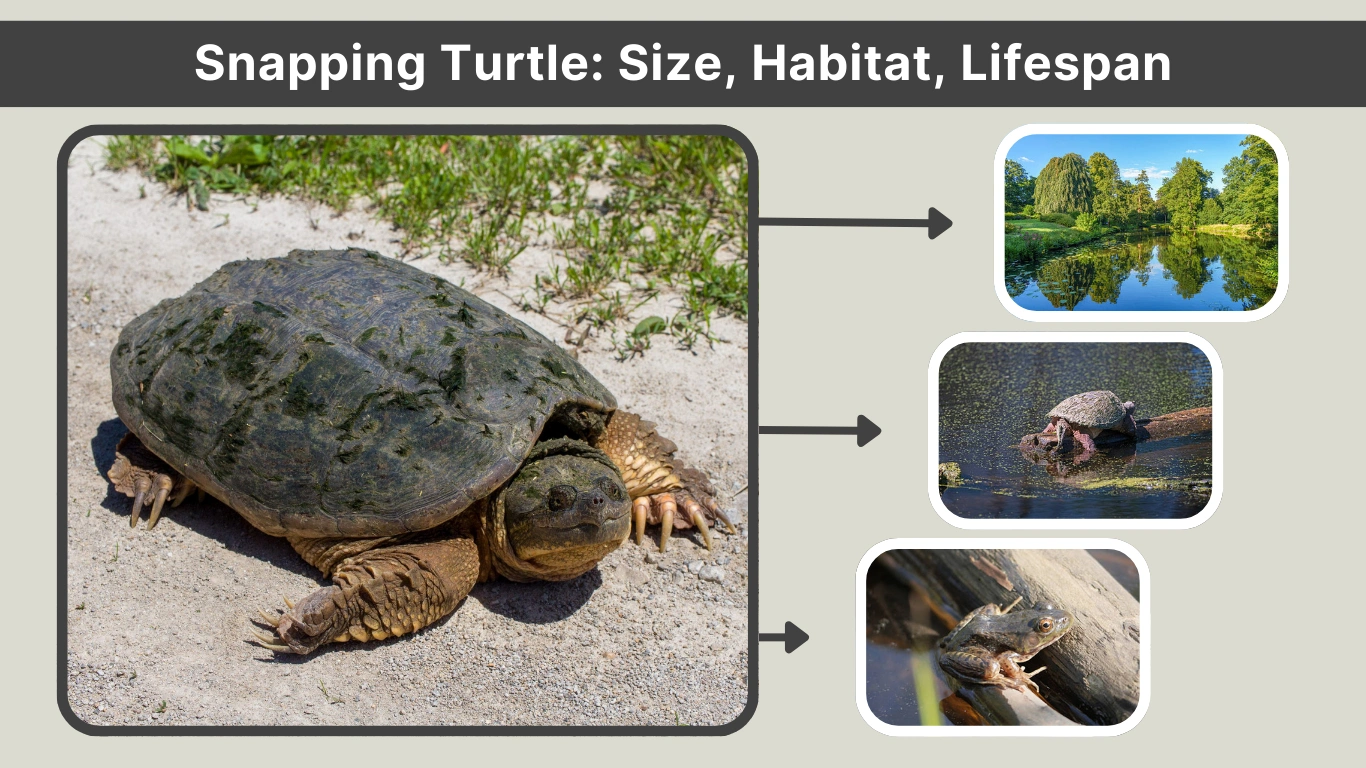
The snapping turtle is one of North America’s most fascinating and misunderstood reptiles. Known for its prehistoric appearance, powerful jaws, and defensive temperament, this freshwater turtle has earned a reputation for being aggressive. In reality, snapping turtles are highly adaptable survivors that play an important role in aquatic ecosystems. There are two main species—the common snapping turtle and the alligator snapping turtle—each with unique traits. This guide explores their size, habitat, diet, and behavior.
What Is a Snapping Turtle?
A snapping turtle is a large freshwater turtle belonging to the family Chelydridae. These turtles are best known for their strong bite, rugged shell, and thick, muscular tails. Unlike many other turtles, snapping turtles cannot fully retract their heads and limbs into their shells, which explains their tendency to rely on snapping as a defense mechanism.
Snapping turtles have existed for millions of years and are often described as “living fossils” because of their dinosaur-like features. They are primarily aquatic and spend most of their lives in water, only coming onto land to lay eggs or move between bodies of water.
Scientific Classification
- Kingdom: Animalia
- Class: Reptilia
- Order: Testudines
- Family: Chelydridae
There are two living species:
- Common snapping turtle (Chelydra serpentina)
- Alligator snapping turtle (Macrochelys temminckii)
Both species share similar defensive traits but differ significantly in size and appearance.
Common vs. Alligator Snapping Turtle
The common snapping turtle is more widespread and found throughout much of North America. It has a smoother shell and a more streamlined appearance.
The alligator snapping turtle, on the other hand, is much larger and has a heavily ridged shell with three pronounced keels. Its head is massive, and it features a worm-like appendage on its tongue used to lure prey.
In terms of size, the alligator snapping turtle is the largest freshwater turtle in North America, sometimes weighing over 150 pounds, while the common snapping turtle typically weighs between 10 and 35 pounds.
Snapping Turtle Size and Physical Characteristics
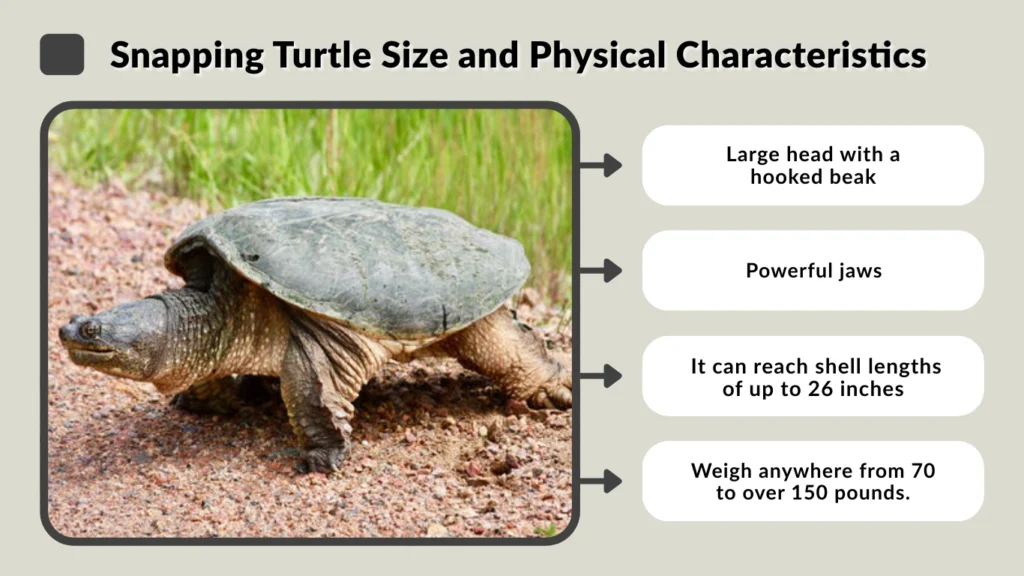
Snapping turtles are known for their impressive size and powerful build. Their strong jaws and thick limbs make them formidable animals in both appearance and function.
How Big Do Snapping Turtles Get?
The common snapping turtle usually has a shell length between 8 and 18 inches. Adults commonly weigh between 10 and 35 pounds, although some can grow larger under ideal conditions.
The alligator snapping turtle is significantly bigger. It can reach shell lengths of up to 26 inches and weigh anywhere from 70 to over 150 pounds. Rare individuals have been recorded at even heavier weights.
Growth depends on food availability, habitat quality, and environmental conditions. Snapping turtles grow slowly but steadily throughout their lives.
Distinctive Physical Features
Snapping turtles have several features that set them apart from other turtles:
- Large head with a hooked beak – Designed for gripping and tearing food
- Powerful jaws – Capable of delivering a serious bite
- Long, saw-toothed tail – Almost as long as their shell
- Rugged shell – More pronounced ridges in alligator snapping turtles
Unlike box turtles, snapping turtles cannot fully hide inside their shells. Their plastron (bottom shell) is relatively small, leaving parts of their body exposed. This anatomical trait explains why snapping turtles rely on aggression when threatened.
Bite Force and Defensive Adaptations
One of the most talked-about traits of snapping turtles is their bite. While exact bite force measurements vary, their jaw strength is powerful enough to cause serious injury. Their sharp, beak-like mouths can easily crush bones and cut through flesh.
On land, snapping turtles may appear highly aggressive. However, this behavior is primarily defensive. Because they cannot fully retreat into their shells, they hiss, lunge, and snap when they feel threatened.
In water, they are generally calmer and more likely to swim away from danger rather than attack.
Snapping Turtle Habitat and Distribution
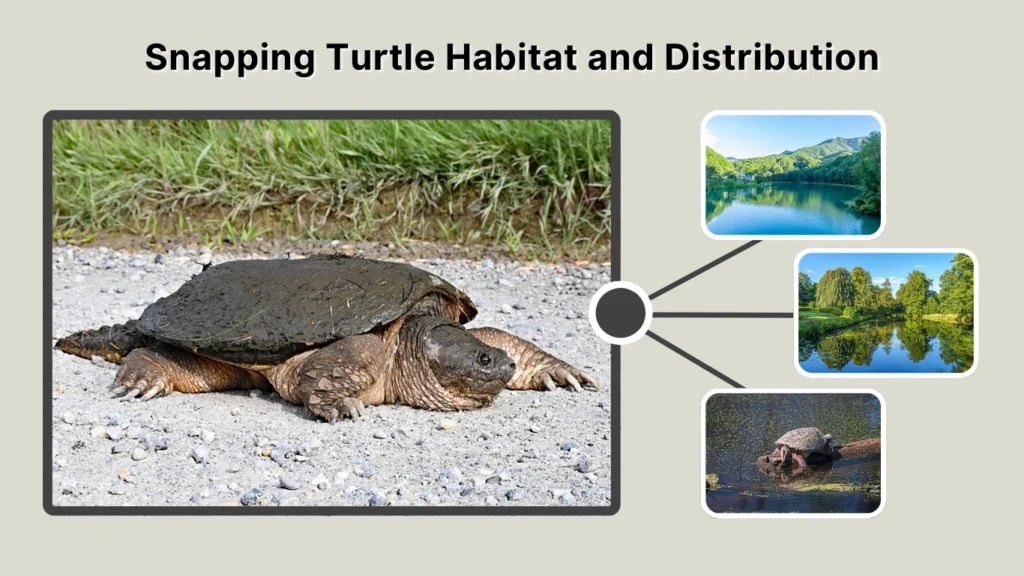
Snapping turtles are highly adaptable and can thrive in a variety of freshwater environments. Their ability to tolerate different water conditions has contributed to their wide distribution.
Where Do Snapping Turtles Live?
The common snapping turtle is found throughout much of the United States, southern Canada, and parts of Central America. It has one of the largest geographic ranges of any North American turtle.
The alligator snapping turtle has a more limited range, primarily living in the southeastern United States. It prefers river systems that drain into the Gulf of Mexico.
Both species are freshwater turtles and are rarely found in saltwater environments.
Preferred Living Conditions
Snapping turtles typically inhabit:
- Lakes
- Ponds
- Rivers
- Marshes
- Slow-moving streams
They prefer bodies of water with muddy bottoms and abundant vegetation. Mud provides excellent camouflage and protection while they wait to ambush prey.
Although primarily aquatic, snapping turtles sometimes bask in shallow water or along the shoreline. However, they bask less frequently than many other turtle species.
Seasonal Movements and Hibernation
In colder climates, snapping turtles enter a period of winter dormancy known as brumation. During this time, they bury themselves in mud at the bottom of ponds or rivers.
Remarkably, snapping turtles can survive for months with minimal oxygen by slowing their metabolism. This adaptation allows them to endure harsh winters in northern regions.
Females travel onto land during late spring or early summer to lay eggs. They may journey surprisingly long distances from water to find suitable nesting sites with soft soil.
What Do Snapping Turtles Eat?
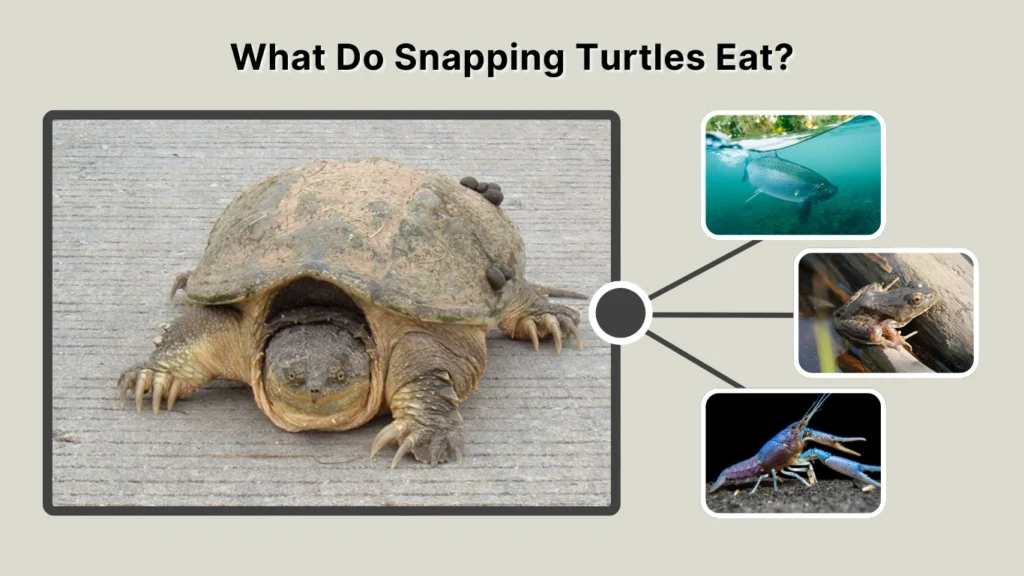
Snapping turtles are opportunistic omnivores, meaning they eat both animal and plant matter. Their varied diet helps them survive in different freshwater habitats and makes them important contributors to ecosystem balance.
Diet in the Wild
In their natural environment, snapping turtles feed on a wide range of prey, including:
- Fish
- Frogs and other amphibians
- Small turtles
- Snakes
- Aquatic insects
- Crayfish
- Small mammals
- Birds
- Aquatic plants
- Carrion (dead animals)
Young snapping turtles tend to eat more animal protein to support growth. Adults continue to consume animals but also eat a significant amount of vegetation. Because they scavenge as well as hunt, snapping turtles help clean up decaying matter in lakes and rivers.
Hunting Techniques
Snapping turtles are ambush predators. Rather than actively chasing prey, they remain motionless and wait for the perfect moment to strike. Their dark, rough shells and muddy coloration help them blend into the bottom of rivers and ponds.
The alligator snapping turtle uses a unique hunting method. It has a worm-like appendage on its tongue that it wiggles to attract fish. When curious prey swim close enough, the turtle snaps its jaws shut with incredible speed.
Common snapping turtles rely more on stealth and quick lunges. Their strong neck muscles allow them to extend their heads rapidly when striking.
Feeding Behavior in Captivity
In captivity, snapping turtles require a balanced diet of protein and plant matter. Fish, insects, leafy greens, and specially formulated turtle pellets are commonly provided. Because they grow large and produce significant waste, maintaining proper tank filtration is essential for their health.
Behavior and Temperament
Snapping turtles are often labeled as aggressive, but their behavior is largely misunderstood.
Are Snapping Turtles Aggressive?
In water, snapping turtles are usually shy and avoid confrontation. If approached while swimming, they are more likely to retreat than attack.
On land, however, they can become defensive. Since they cannot fully hide inside their shells, they rely on snapping, hissing, and lunging to scare off threats. This defensive display has contributed to their fierce reputation.
Most bites occur when someone attempts to handle or provoke the turtle.
Interaction With Humans
Snapping turtles generally prefer to be left alone. Problems arise when humans try to pick them up, especially by the tail, which can injure the turtle and increase the risk of a bite.
If encountered crossing a road, it is safest to guide the turtle from behind using a long object while keeping hands away from its head. Giving them space is always the best approach.
Lifespan and Reproduction
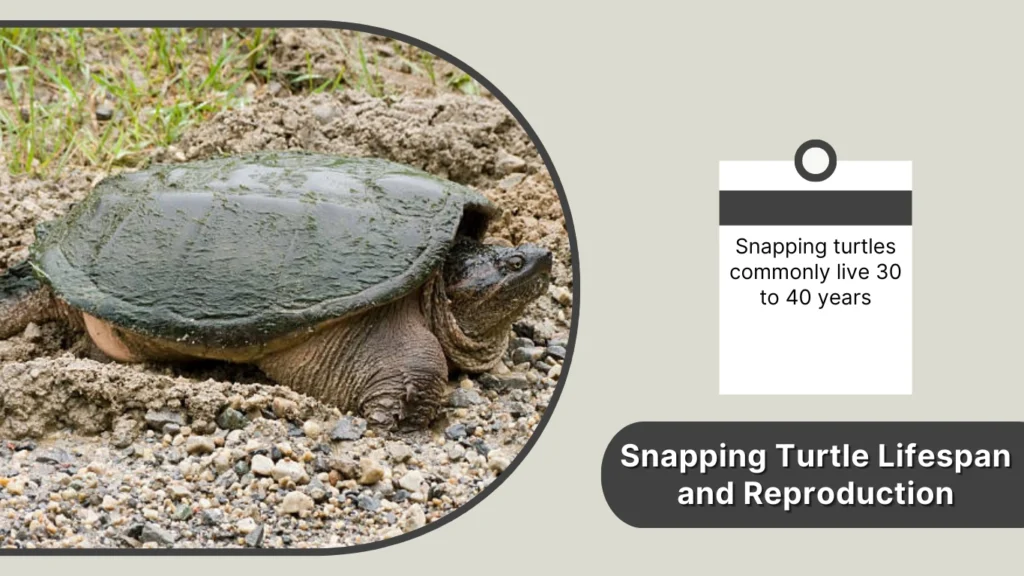
Snapping turtles are long-lived reptiles with slow maturation rates.
How Long Do Snapping Turtles Live?
In the wild, snapping turtles commonly live 30 to 40 years, though some individuals may live much longer. In captivity, with proper care and protection from predators, they can sometimes exceed 50 years.
Their long lifespan contributes to stable populations, but it also means that habitat destruction can have long-term impacts.
Breeding and Nesting
Mating usually occurs in the spring. Females leave the water in late spring or early summer to dig nests in sandy or soft soil.
A female snapping turtle may lay between 20 and 40 eggs, depending on her size and species. After laying the eggs, she covers the nest and returns to the water, providing no further parental care.
The eggs incubate for about 9 to 18 weeks. Temperature plays a role in determining the sex of the hatchlings.
Baby Snapping Turtles
Baby snapping turtles are small but fully independent at birth. They resemble miniature versions of adults, complete with sharp beaks and strong instincts.
Unfortunately, many hatchlings fall prey to raccoons, birds, and fish. Only a small percentage survive to adulthood, which is why producing a large number of eggs is crucial for population survival.
Are Snapping Turtles Dangerous?
Snapping turtles can cause injury if handled improperly, but they are not naturally aggressive toward humans.
Their bite can be strong enough to cause serious cuts and, in rare cases, broken fingers. However, bites usually happen when someone attempts to pick up or corner the animal.
The safest response when encountering a snapping turtle is to keep a respectful distance. Allow it to move on its own and avoid interfering with nesting females.
Ecological Importance and Conservation
Snapping turtles play a vital role in freshwater ecosystems.
Role in the Ecosystem
As both predators and scavengers, snapping turtles help control fish and amphibian populations. They also consume dead animals, preventing the spread of disease and keeping waterways cleaner.
Their presence is often a sign of a healthy aquatic environment.
Conservation Status
The common snapping turtle is generally stable across much of its range. However, habitat destruction, pollution, road mortality, and illegal collection pose threats.
The alligator snapping turtle faces greater conservation concern in some regions due to overharvesting and habitat loss. Conservation efforts include legal protections, habitat restoration, and public education.
Protecting wetlands and freshwater systems is essential for ensuring the survival of these ancient reptiles.
FAQs
How strong is a snapping turtle’s bite?
A snapping turtle’s bite is extremely powerful due to its strong jaw muscles and sharp beak. While exact bite force varies, it is strong enough to cause deep cuts and serious injuries. Most bites occur when the turtle feels threatened or is handled improperly.
How can you tell the difference between the two species?
The alligator snapping turtle is larger and has a heavily ridged shell with three distinct keels. It also has a worm-like lure on its tongue. The common snapping turtle has a smoother shell and a more widespread range.
Can snapping turtles be kept as pets?
Snapping turtles are not ideal pets for most people. They grow large, live for decades, and require spacious enclosures with strong filtration. In some areas, permits or restrictions apply to owning them.
How big can a snapping turtle grow?
Common snapping turtles usually weigh up to 35 pounds, while alligator snapping turtles can exceed 150 pounds under optimal conditions. Size depends on species, habitat, and food availability.
What should you do if you encounter one?
If you encounter a snapping turtle, keep your distance and allow it to move freely. Do not attempt to handle it. If it is crossing a road, you may gently guide it from behind while avoiding its head and jaws.