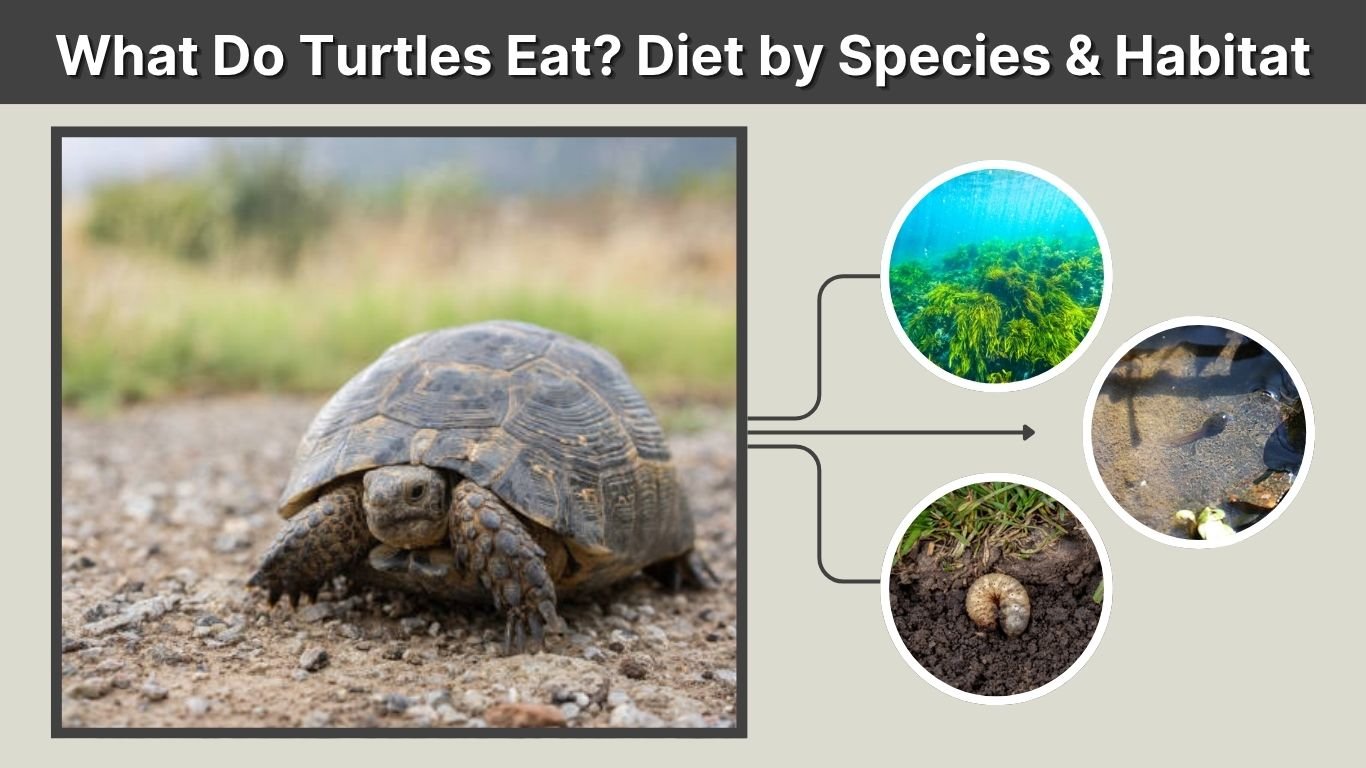
Turtles have diverse diets that vary depending on their species, habitat, and life stage. Some turtles are herbivores that feed mainly on plants, while others are carnivores or omnivores that eat a mix of animals and vegetation. From ocean-dwelling sea turtles to land-based box turtles and freshwater species, each has unique feeding habits. Understanding what turtles eat helps with proper pet care, conservation efforts, and general knowledge about their role in ecosystems.
What Do Eat? (Quick Overview)
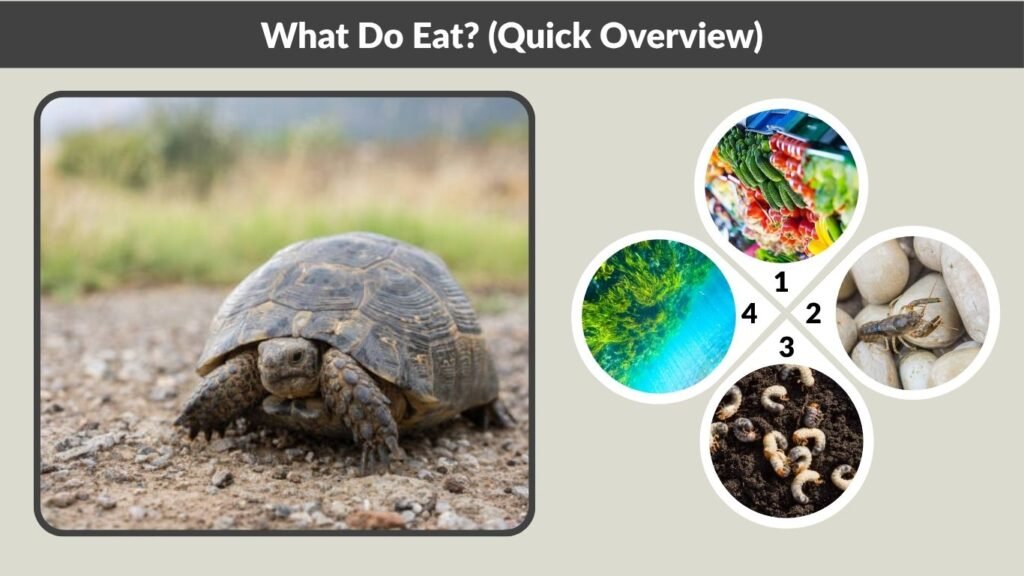
Turtles eat a wide range of foods, and their diet depends largely on where they live and what species they belong to. Some turtles graze on plants, while others actively hunt small animals. Many species are opportunistic feeders, meaning they eat whatever food is available in their environment.
Common Foods Turtles Eat:
- Leafy greens and aquatic plants
- Insects and worms
- Small fish and crustaceans
- Fruits and vegetables
- Commercial turtle food (for pets)
Types of Turtles and Their Diet Differences
Turtles can be broadly grouped into three categories based on where they live: sea turtles, freshwater turtles, and land turtles. Each group has developed feeding habits suited to its environment. Sea turtles rely on marine food sources, freshwater turtles consume a mix of plant and animal matter, and land turtles mostly eat vegetation. These differences are shaped by availability of food, physical adaptations, and nutritional needs.
What Do Sea Turtles Eat?
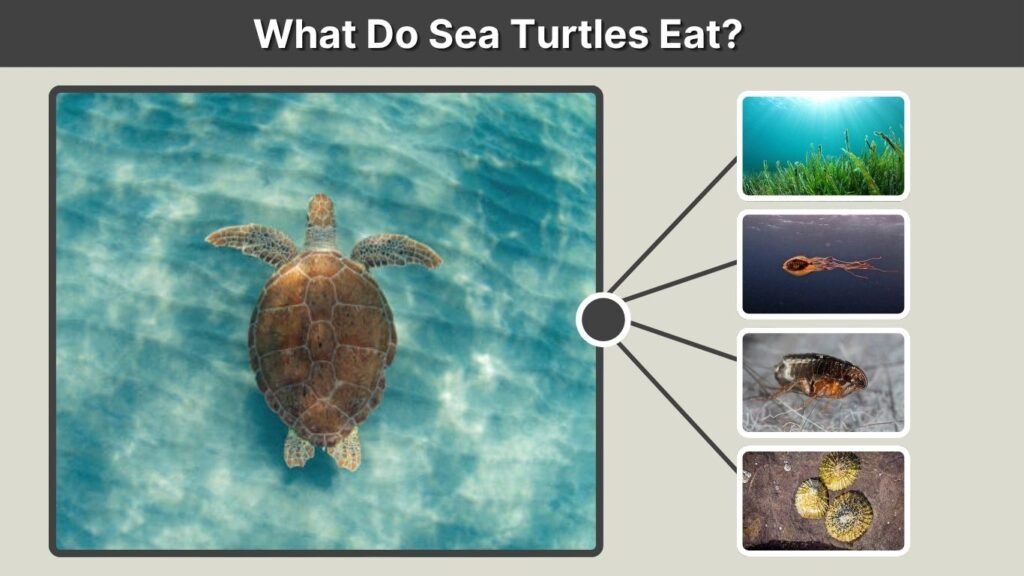
Sea turtles have specialized diets depending on their species, and they play important roles in maintaining ocean ecosystems. Their feeding habits are closely tied to their physical features, such as jaw strength and beak shape.
Green Sea Turtles
Green sea turtles are mostly herbivorous as adults. They primarily feed on seagrass and algae, which helps maintain healthy marine ecosystems by preventing overgrowth. Their grazing behavior is essential for the balance of seagrass beds.
Leatherback Sea Turtles
Leatherback turtles have a unique diet compared to other sea turtles. They mainly eat jellyfish and other soft-bodied organisms. Their flexible jaws and throat structures allow them to consume gelatinous prey that other turtles cannot eat.
Hawksbill Sea Turtles
Hawksbill turtles feed mainly on sponges found in coral reefs. This diet helps control sponge populations and supports coral health. They also eat small invertebrates living within reef systems.
Loggerhead Sea Turtles
Loggerhead turtles are known for their powerful jaws, which allow them to crush hard-shelled prey. Their diet includes crabs, mollusks, and other shellfish commonly found on the ocean floor.
What Do Freshwater Turtles Eat?
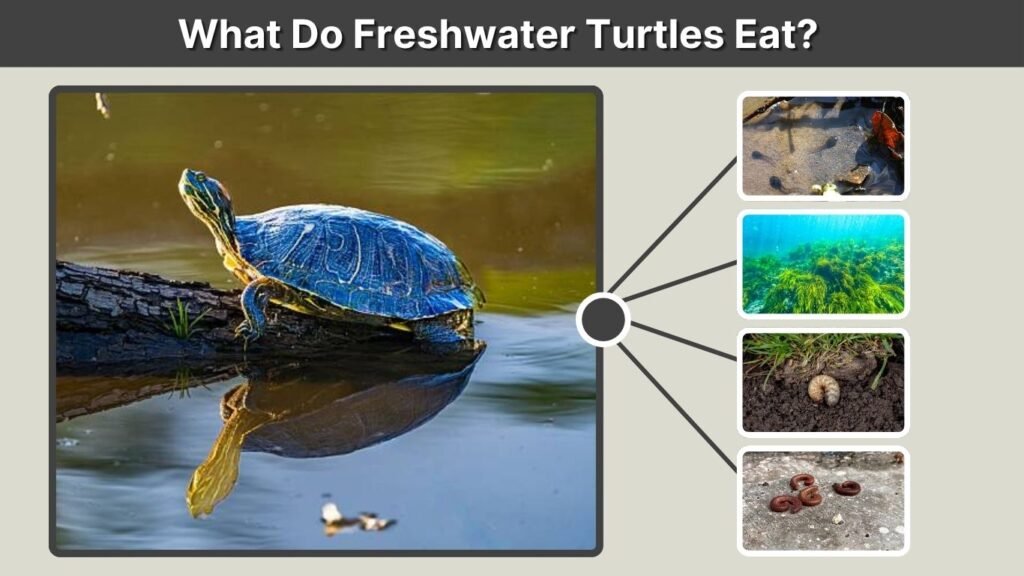
Freshwater turtles are generally omnivores, meaning they eat both plants and animals. Their diet can vary depending on their age, size, and environment. Younger turtles tend to eat more protein, while adults may include more plant matter in their diet.
Typical Diet Includes:
- Small fish and tadpoles
- Aquatic plants and algae
- Insects and larvae
- Snails and worms
Common Examples
Freshwater turtles such as red-eared sliders, painted turtles, and snapping turtles all have varied diets. Red-eared sliders often eat a mix of plants and protein, painted turtles consume insects and vegetation, while snapping turtles are more carnivorous and prefer fish and other animals.
What Do Land Turtles Eat? (Box Turtles & Tortoises)
Land turtles, including box turtles and tortoises, have diets that are mostly plant-based. However, some species like box turtles are omnivorous and include animal protein in their meals. Their diet reflects what is available in their terrestrial habitats.
Diet Includes:
- Fruits and berries
- Leaves and grasses
- Mushrooms and flowers
- Insects (especially for box turtles)
What Do Baby Turtles Eat?
Baby turtles have different dietary needs compared to adults. They require more protein to support rapid growth and development. In the wild, baby turtles often eat small insects, larvae, and tiny aquatic animals that are easy to catch. As they grow, many species gradually shift toward a more plant-based diet, especially herbivorous turtles like green sea turtles.
Feeding frequency is also higher for young turtles, as they need consistent energy for growth. Their diet must be balanced to ensure proper shell development and overall health.
What Do Pet Turtles Eat?
Pet turtles require a carefully managed diet to stay healthy in captivity. Unlike wild turtles, they depend entirely on their owners for proper nutrition. A balanced diet should include both plant-based foods and protein sources, depending on the species.
Recommended Foods:
- Leafy greens like kale and lettuce
- Commercial turtle pellets
- Live or dried insects
- Calcium-rich supplements
What Do Turtles Eat in the Wild
In the wild, turtles feed based on availability, habitat, and seasonal changes. They are opportunistic eaters, meaning they adapt their diet to whatever food sources are present in their environment. Freshwater turtles may hunt small fish, insects, and amphibians, while also grazing on aquatic plants. Land turtles rely more on vegetation, fruits, and occasional insects.
Sea turtles follow highly specialized diets depending on their species, often feeding in specific areas like seagrass beds or coral reefs. Wild turtles do not have a fixed diet; instead, they adjust their feeding habits based on climate, migration patterns, and food abundance. This adaptability helps them survive in diverse ecosystems.
Foods Turtles Should Not Eat
Not all foods are safe for turtles, especially in captivity. Feeding the wrong foods can lead to health problems, poor shell development, and even death. It is important to avoid items that turtles cannot properly digest or that lack nutritional value.
Avoid Feeding:
- Processed human foods
- Dairy products
- Sugary snacks
- Toxic plants
What Vegetables and Fruits Can Turtles Eat?
Turtles can safely eat a variety of vegetables and fruits, especially herbivorous and omnivorous species. These foods provide essential vitamins, minerals, and hydration. However, fruits should be given in moderation due to their natural sugar content.
Safe Choices:
- Leafy greens
- Carrots and squash
- Apples and berries
- Cucumbers
FAQs
What do turtles eat in the wild?
Turtles in the wild eat a natural mix of plants and animals depending on their habitat. Freshwater turtles often consume fish, insects, and plants, while land turtles eat fruits and vegetation, and sea turtles feed on algae, jellyfish, or marine organisms.
Are turtles herbivores or carnivores?
Turtles can be herbivores, carnivores, or omnivores depending on the species. Many freshwater turtles are omnivores, sea turtles vary by species, and most land tortoises are primarily herbivorous.
What do baby turtles eat?
Baby turtles usually eat more protein-rich foods such as insects, larvae, and small aquatic animals. This supports their rapid growth before some species shift toward a more plant-based diet as adults.
Can turtles eat human food?
Turtles can eat some fresh fruits and vegetables, but processed or cooked human food should be avoided. These foods may lack proper nutrients or contain harmful ingredients for turtles.
How often should turtles be fed?
Feeding frequency depends on age and species. Young turtles often eat daily, while adult turtles may eat every one to three days depending on their metabolism and activity level.
Conclusion
Turtles have a wide variety of diets that depend on their species, habitat, and stage of life. From plant-eating sea turtles to omnivorous freshwater species and mostly herbivorous land turtles, each type has unique nutritional needs. Understanding what turtles eat is important for proper care, especially for pet owners, and for protecting natural ecosystems where turtles play a vital role.