
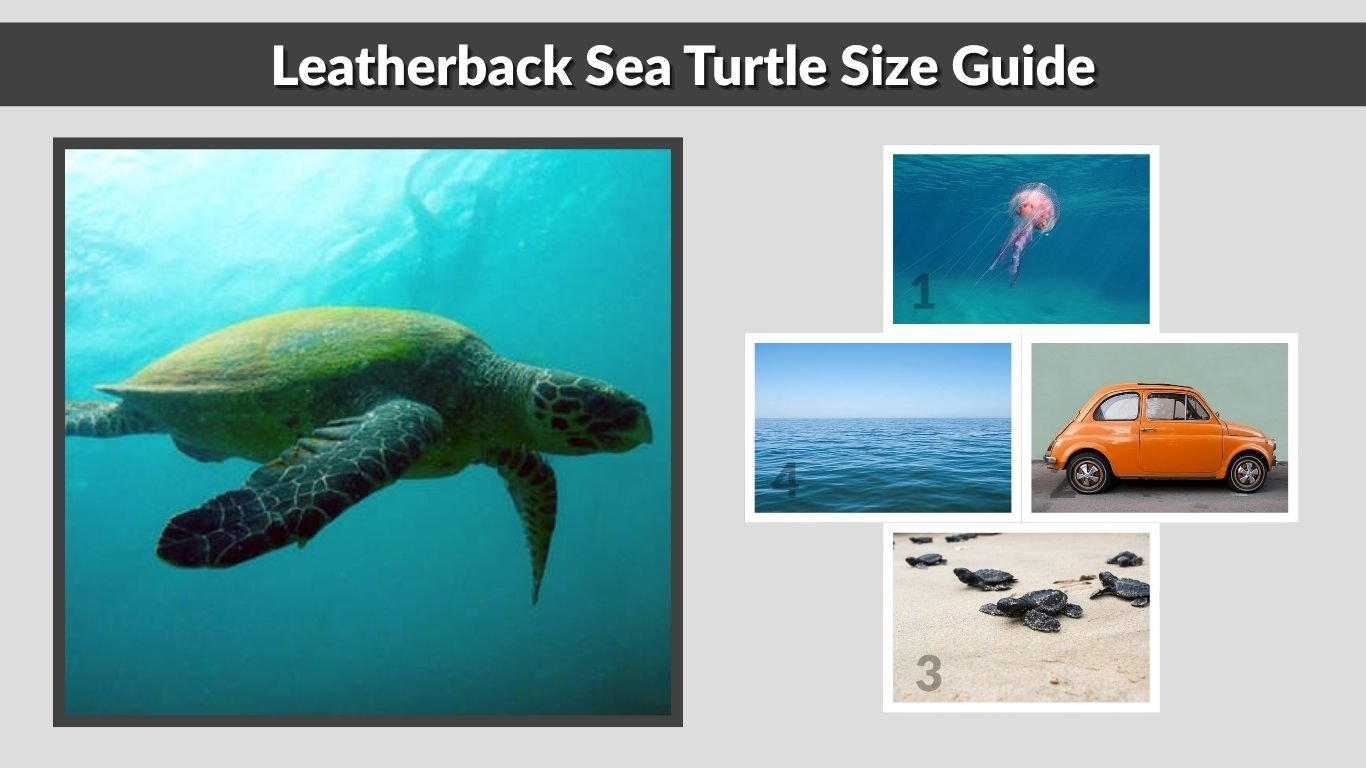
The leatherback sea turtle is the largest sea turtle in the world and one of the most impressive marine reptiles. Its massive size often surprises people, leading to common questions like “how big is a leatherback sea turtle?” or “what is the size of a leatherback sea turtle compared to humans?”
If you’re curious about leatherback sea turtle size, this guide will help you understand its length, weight, growth stages, and how it compares to other animals and objects.
What Is the Size of a Leatherback Sea Turtle
Leatherback sea turtles are known for their enormous size compared to other sea turtles. On average, they can grow between 1.5 to 2 meters (5 to 7 feet) in length.
Their size makes them the largest living sea turtle species and one of the largest reptiles in the ocean. Unlike other turtles, they do not have a hard shell, which allows them to grow larger and move more efficiently in deep water.
The average size of a leatherback sea turtle can vary depending on factors like habitat, diet, and age, but they are always significantly larger than most other sea turtles.
Leatherback Sea Turtle Size and Weight
Average Size
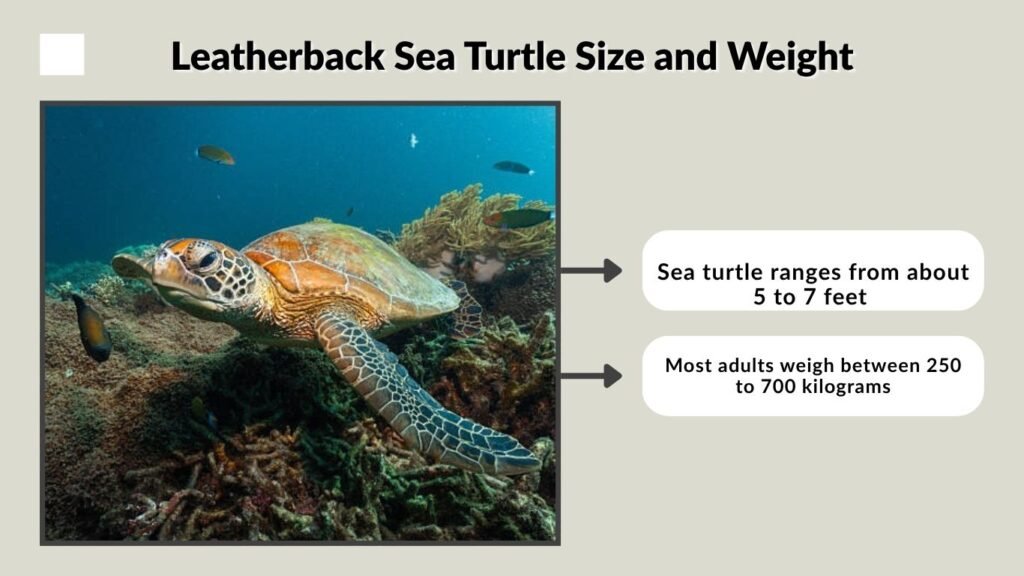
The average length of a leatherback sea turtle ranges from about 5 to 7 feet (1.5 to 2 meters) from head to tail. Their shell, known as the carapace, is slightly shorter but still very large.
Unlike hard-shelled turtles, the leatherback’s shell is flexible and covered with leathery skin, which contributes to its unique shape and size.
Weight Range
Leatherback sea turtles are also extremely heavy. Most adults weigh between 250 to 700 kilograms (550 to 1,500 pounds).
Some individuals can grow even heavier depending on their environment and food availability. Their large body mass helps them survive in cold ocean waters by retaining heat.
Largest and Giant Leatherback Sea Turtle Size
Biggest Recorded Size
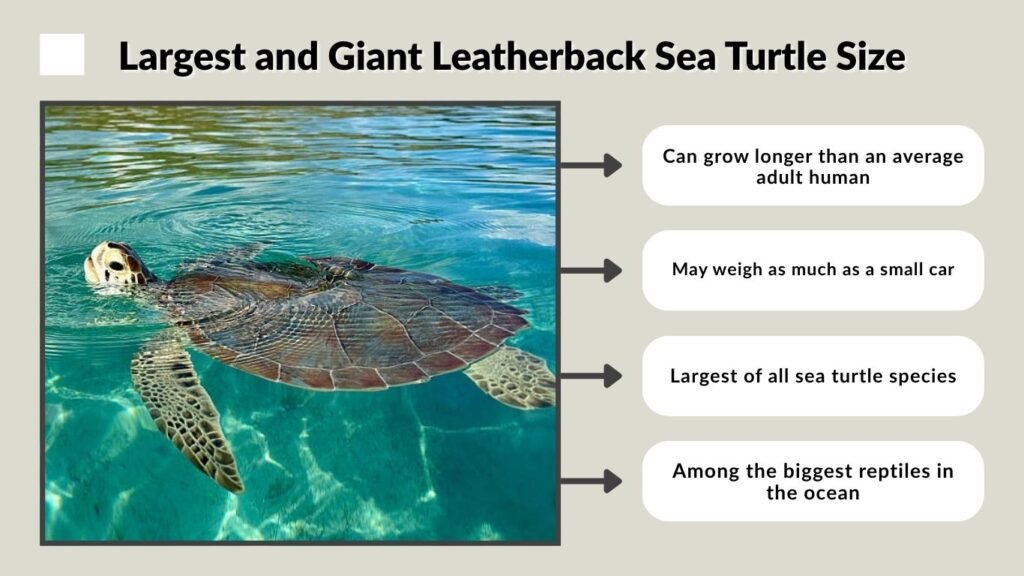
The largest leatherback sea turtles ever recorded are truly massive. Some have reached lengths of over 2.5 meters (around 8 feet) and weighed more than 900 kilograms (about 2,000 pounds).
These giant individuals are rare but show just how large this species can grow under ideal conditions.
Giant Leatherback Facts
- Can grow longer than an average adult human
- May weigh as much as a small car
- Largest of all sea turtle species
- Among the biggest reptiles in the ocean
- Capable of deep ocean travel due to size
Leatherback Sea Turtle Size by Life Stage
Baby (Hatchling) Size
Baby leatherback sea turtles are very small compared to adults. At birth, they are usually about 5 to 7 cm (2 to 3 inches) long.
Despite their tiny size, they must immediately make their way to the ocean and begin surviving on their own.
Juvenile Growth
As they grow, leatherback turtles increase in size rapidly. Juveniles spend most of their time in the open ocean, feeding and developing.
Their growth rate depends on food availability, especially jellyfish, which is their main diet.
Adult Size
Fully grown leatherback sea turtles reach their maximum size after several years. Adults are significantly larger and stronger, allowing them to travel long distances and dive deep into the ocean.
Their large size plays a key role in their survival and ability to adapt to different ocean environments.
Leatherback Sea Turtle Size Comparison
Leatherback Sea Turtle vs Human
| Feature | Leatherback Sea Turtle | Human |
| Length | 5–7 feet (up to 8 feet) | 5–6 feet |
| Weight | 550–1,500+ pounds | 60–90 kg (130–200 lbs) |
| Body Type | Wide, heavy, streamlined | Upright, lighter |
An adult leatherback sea turtle can be as long as or even longer than a human, but it is much heavier and bulkier.
Leatherback Sea Turtle vs Car
| Feature | Leatherback Sea Turtle | Small Car |
| Length | Up to 8 feet | 10–14 feet |
| Weight | Up to 2,000 pounds | 2,000–3,000 pounds |
While slightly shorter than a small car, a giant leatherback sea turtle can weigh nearly as much as one, making it an incredibly large marine animal.
Leatherback Sea Turtle vs Other Turtles
| Species | Average Size | Weight |
| Leatherback Sea Turtle | 5–7 feet | 550–1,500 lbs |
| Green Sea Turtle | 3–4 feet | 300–400 lbs |
| Loggerhead Turtle | 3–3.5 feet | 250–350 lbs |
| Tortoise (land) | 2–4 feet | 100–500 lbs |
Leatherback sea turtles are significantly larger than other sea turtles and most tortoises, making them the true giants of the turtle world.
Male vs Female Leatherback Sea Turtle Size
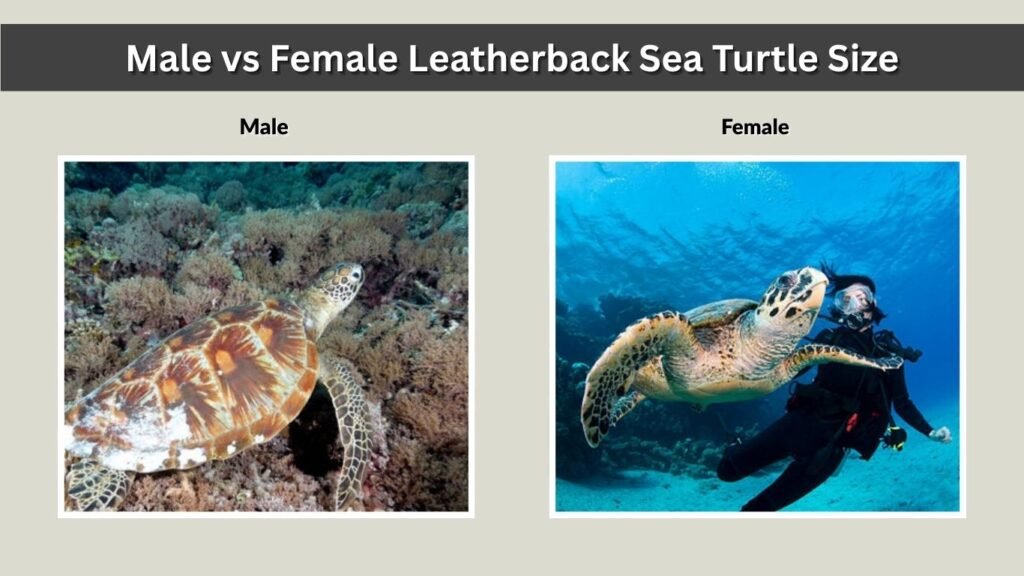
Leatherback sea turtles show only slight differences in size between males and females. Unlike some other turtle species, the variation is not extreme, but there are still noticeable differences.
Size Differences
- Females are generally slightly larger than males
- Females need larger bodies for egg production
- Males have longer tails for reproduction
- Overall body size remains similar
While the difference is not dramatic, females often appear bulkier due to their reproductive role.
Leatherback Sea Turtle Egg and Clutch Size
Egg Size
Leatherback sea turtle eggs are relatively small compared to the size of the adult. Each egg is about 5 to 6 cm (2 to 2.5 inches) in diameter and has a soft, leathery shell instead of a hard one.
These eggs are well adapted to survive in sandy nesting environments.
Clutch Size
A single nesting female can lay a large number of eggs at once.
- Typically 60 to 100 eggs per clutch
- Some nests may contain additional smaller eggs
- Multiple clutches may be laid in one season
This high number helps increase the chances of survival, as many hatchlings do not reach adulthood.
Leatherback Sea Turtle Population Size
Leatherback sea turtles have experienced population declines over the years due to threats like pollution, fishing nets, and habitat loss.
The global population size is estimated to be in the tens of thousands, but numbers vary by region. Some populations are critically endangered, while others show signs of recovery.
Conservation efforts are ongoing to protect nesting beaches and reduce human impact on their environment.
Why Leatherback Sea Turtles Grow So Large
Leatherback sea turtles have unique biological features that allow them to reach such large sizes.
- Lack of a hard shell allows greater flexibility and growth
- High-fat body helps maintain warmth in cold waters
- Diet rich in supports large body mass
- Adapted for long-distance ocean travel
Their size is a key advantage, helping them survive in deep and cold ocean environments.
Interesting Size Facts
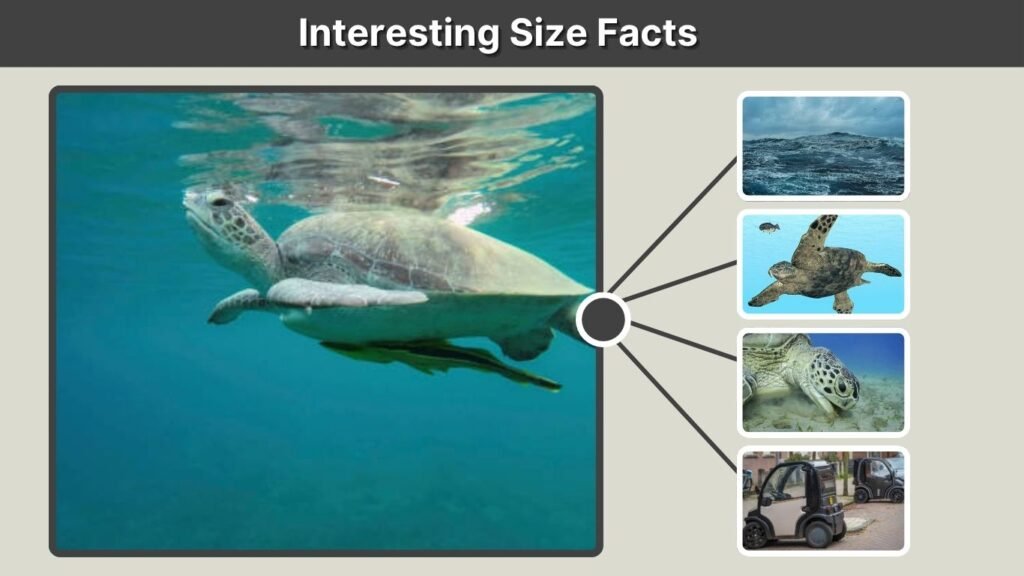
Leatherback sea turtles are full of fascinating size-related facts that make them unique among marine animals.
- Largest sea turtle species in the world
- Can dive deeper than most other turtles
- Size helps them travel across entire oceans
- Some individuals rival small vehicles in weight
These features make them one of the most impressive creatures in the marine ecosystem.
FAQs
How big is a leatherback sea turtle
Leatherback sea turtles are the largest sea turtles, typically growing between 5 to 7 feet in length. Some individuals can exceed 8 feet, making them one of the biggest marine reptiles. Their large size helps them survive in deep ocean environments.
What is the weight of a leatherback sea turtle
Most leatherback sea turtles weigh between 550 and 1,500 pounds. However, some giant individuals can weigh over 2,000 pounds. Their heavy body mass helps them retain heat and travel long distances in cold ocean waters.
How big are baby leatherback sea turtles
Baby leatherback sea turtles are very small, measuring only about 2 to 3 inches in length at birth. Despite their tiny size, they must quickly reach the ocean and begin surviving independently in a challenging environment.
How does a leatherback sea turtle compare to a human
An adult leatherback sea turtle can be as long as or even longer than an average human. However, it is much heavier and wider, making it significantly more massive than a person despite similar length.
What is the largest leatherback sea turtle ever recorded
The largest recorded leatherback sea turtle measured over 8 feet in length and weighed more than 2,000 pounds. These rare giants highlight how large this species can grow under ideal environmental conditions.