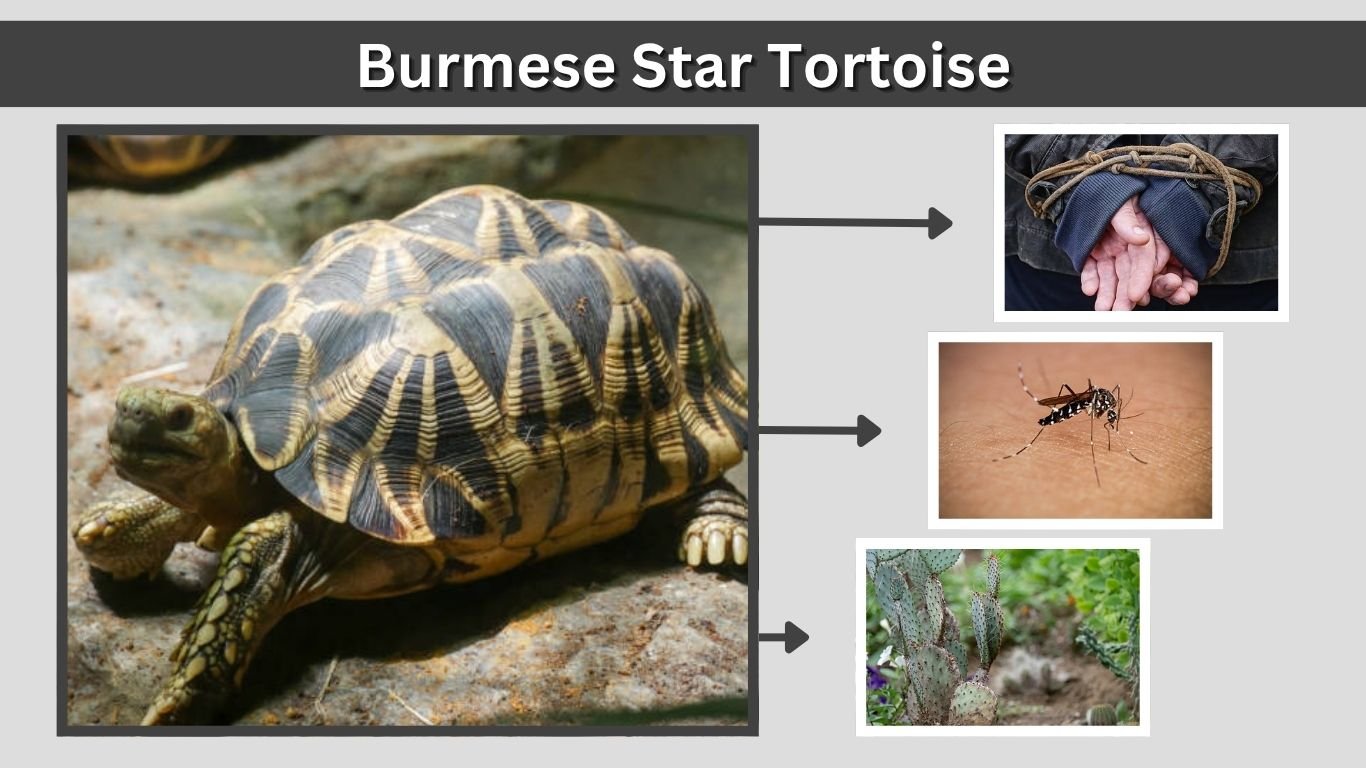
The Burmese star tortoise is a rare and visually striking species native to Myanmar, known for its beautiful star-patterned shell and calm nature. Due to its endangered status, it has gained attention from conservationists and reptile enthusiasts alike. Caring for this tortoise requires a proper understanding of its diet, habitat, and environmental needs. This guide covers everything you need to know, including size, lifespan, feeding habits, and essential care tips to help ensure a healthy and long life.
What Is a Burmese Star Tortoise?
The Burmese star tortoise (Geochelone platynota) is a terrestrial tortoise species found primarily in the dry regions of Myanmar. It is one of the most visually unique tortoises, recognized by its radiating star-like patterns on the shell. These markings not only provide camouflage in the wild but also make the species highly sought after.
Scientific Classification
- Scientific name: Geochelone platynota
- Belongs to the Testudinidae family
- Closely related to Indian star tortoises
Native Habitat
- Dry forests and scrublands in Myanmar
- Seasonal climates with warm temperatures
- Areas with sparse vegetation and open ground
Key Characteristics
- Distinct star-shaped shell patterns
- Dome-shaped carapace with sharp contrast lines
- Strong limbs adapted for walking on dry terrain
Burmese Star Tortoise Size and Growth
Understanding the size and growth pattern of this tortoise is important for proper care and enclosure planning.
How Big Do Burmese Star Tortoises Get?
- Adults typically reach 10 to 12 inches in shell length
- Females are often slightly larger than males
- Weight varies depending on diet and environment
Growth Rate and Maturity
- Hatchlings grow slowly compared to other species
- Growth depends heavily on diet and temperature
- They usually reach maturity in 7 to 10 years
Lifespan of Burmese Star Tortoises
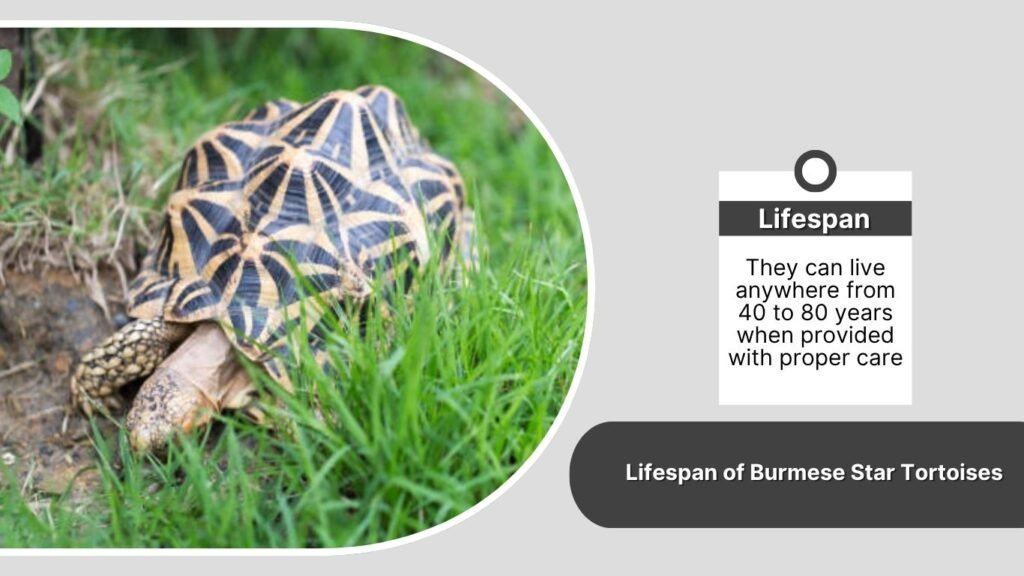
The Burmese star tortoise is known for its long lifespan, making it a long-term commitment for any owner. In captivity, they can live anywhere from 40 to 80 years when provided with proper care. Factors such as balanced nutrition, suitable enclosure conditions, and access to UVB lighting significantly influence their longevity. In the wild, their lifespan may be shorter due to predators and environmental threats, but conservation efforts have helped improve survival rates.
Burmese Star Tortoise Diet and Food
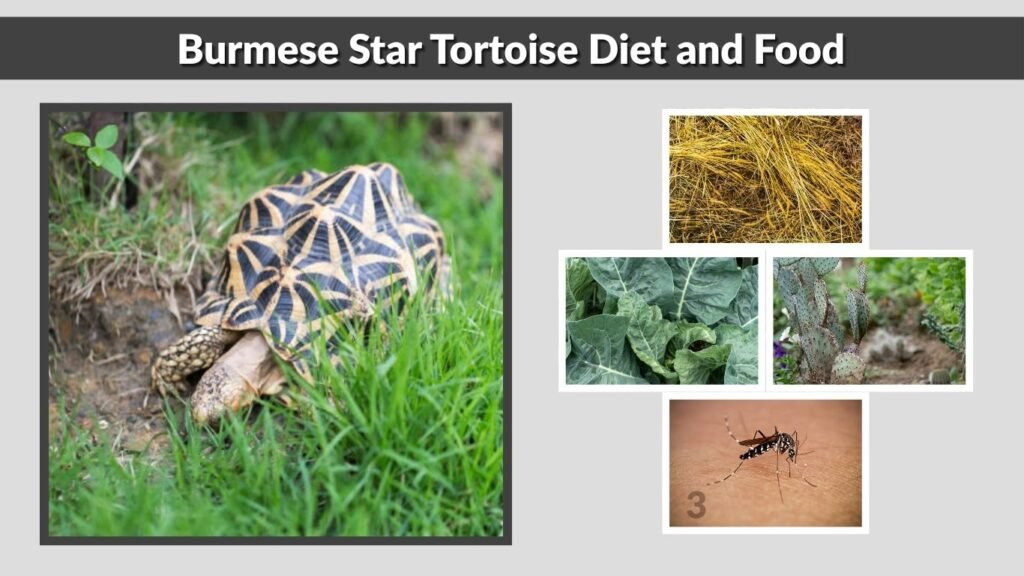
A proper diet is essential for maintaining health, shell strength, and steady growth. Burmese star tortoises are primarily herbivores and require a high-fiber diet.
What Do Burmese Star Tortoises Eat?
- Grasses and hay as the main diet
- Leafy greens such as dandelion and collard greens
- Vegetables like squash and cactus pads
Supplements and Nutrition
- Calcium powder for strong shell growth
- UVB exposure to help absorb calcium
- Occasional vitamins if needed
Foods to Avoid
- High-protein foods like meat or insects
- Excess fruit, which can upset digestion
- Processed or chemically treated plants
Burmese Star Tortoise Habitat and Enclosure Setup
Creating the right habitat is crucial for the health of a Burmese star tortoise. In the wild, they live in dry, warm environments, so their enclosure should reflect similar conditions. Unlike tropical tortoises, they do not require high humidity, but they still need access to fresh water and shaded areas. Proper temperature gradients allow them to regulate body heat, while UVB lighting supports bone and shell development. A well-designed enclosure ensures comfort, safety, and long-term well-being.
Burmese Star Tortoise Care Guide
Providing proper care ensures that your Burmese star tortoise remains healthy and active throughout its long life. Their needs are specific, especially when it comes to temperature, enclosure, and daily maintenance.
Temperature and Lighting
- Daytime temperatures should range between 28–32°C
- Nighttime temperatures should not drop below 22°C
- Provide a basking spot with slightly higher heat
- UVB lighting is essential for calcium absorption
Enclosure Requirements
- Spacious enclosure to allow movement
- Dry substrate such as soil mixed with sand
- Shelter or hide area for security
- Access to shallow water for drinking
Behavior and Personality
- Generally shy and prefers minimal disturbance
- Active during cooler parts of the day
- May become more confident with regular care
Burmese Star Tortoise Price and Buying Guide
Owning a Burmese star tortoise requires careful planning, especially due to its endangered status and legal protections. Prices vary depending on age, size, and availability, and buyers should always prioritize ethical and legal sources.
Average Price
- Hatchlings may cost between $300 and $800
- Adults can exceed $1,000 depending on size
- Prices vary based on breeder reputation and lineage
Where to Buy
- Licensed reptile breeders
- Certified exotic pet dealers
- Conservation breeding programs
Legal and Ethical Considerations
- Protected under wildlife conservation laws
- Permits may be required in some regions
- Always choose captive-bred tortoises
Burmese Star vs Indian Star Tortoise
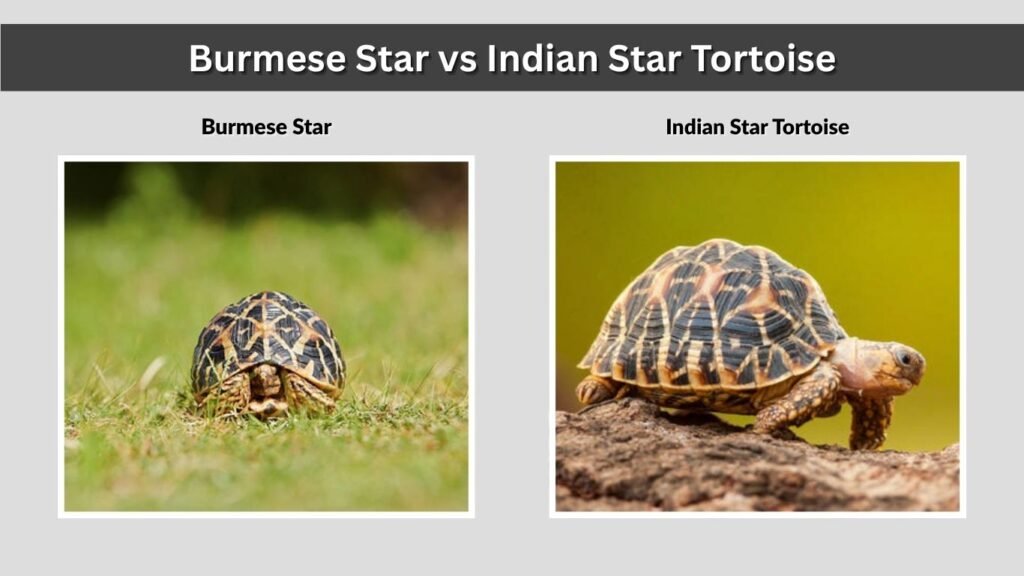
The Burmese star tortoise is often compared to the Indian star tortoise due to their similar appearance. However, they differ in several important ways that affect care and suitability for owners.
Key Differences
- Burmese star tortoise is generally larger
- Shell patterns are more bold and pronounced
- Native regions are completely different
Care Differences
- Burmese star prefers drier conditions
- Indian star tolerates slightly higher humidity
- Temperature ranges may vary slightly
Conservation Status and Threats
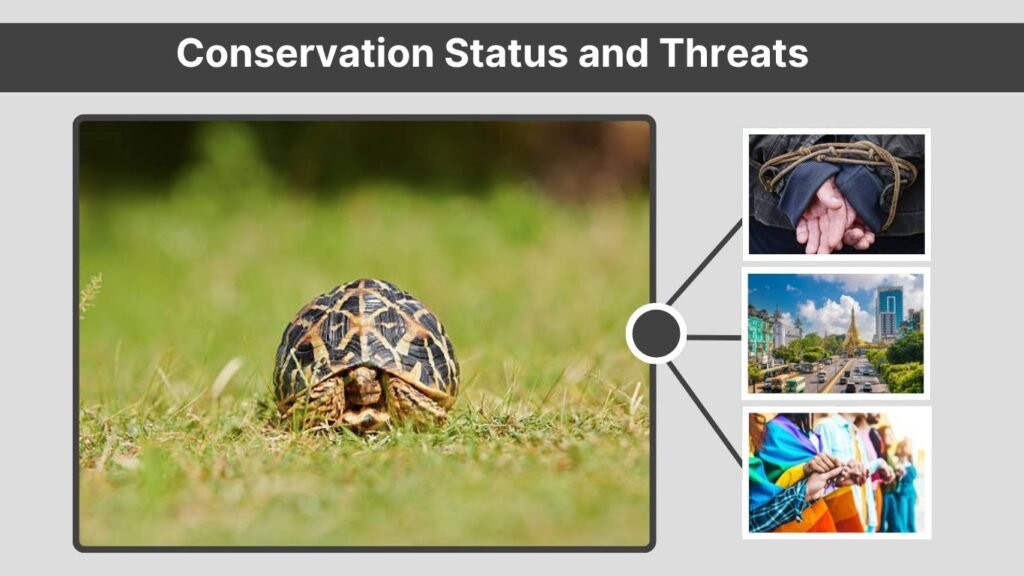
The Burmese star tortoise is considered critically endangered, mainly due to illegal wildlife trade and habitat destruction. In the past, wild populations declined drastically, bringing the species close to extinction. However, conservation programs and captive breeding efforts have helped reintroduce individuals back into protected areas in Myanmar. Continued awareness and strict regulations are essential to ensure the survival of this rare tortoise in the wild.
Burmese Star Tortoise Facts
- One of the rarest tortoises in the world
- Native only to Myanmar
- Recognized for its striking star-patterned shell
- Can live for several decades with proper care
- Plays an important role in its natural ecosystem
FAQs
How big do Burmese star tortoises get?
Burmese star tortoises typically grow between 10 and 12 inches in shell length. Females are often slightly larger than males, especially when fully mature and well cared for.
How long do Burmese star tortoises live?
They can live between 40 and 80 years with proper care. Their lifespan depends heavily on diet, habitat conditions, and access to proper lighting and veterinary support.
What do Burmese star tortoises eat daily?
Their daily diet mainly consists of grasses, leafy greens, and vegetables. Calcium supplements are also important to support shell growth and overall health.
Why is the Burmese star tortoise endangered?
They are endangered due to illegal poaching, habitat loss, and the exotic pet trade. Conservation programs are working to restore their population in the wild.
Where does the Burmese star tortoise live?
They are native to Myanmar, where they inhabit dry forests and grassland areas with warm temperatures and relatively low humidity.