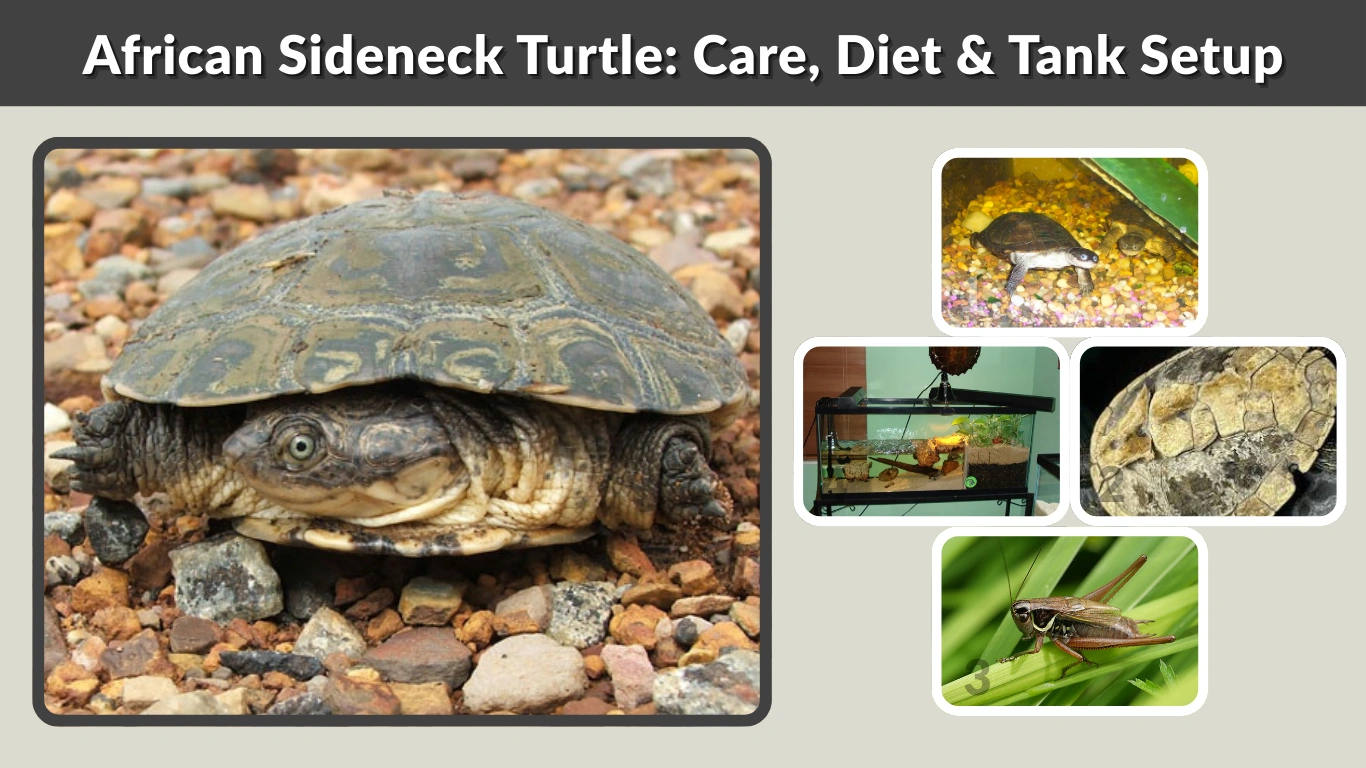
The African Sideneck Turtle is a unique freshwater species known for its sideways neck movement and hardy nature. Native to Sub-Saharan Africa, this turtle has become a popular pet due to its manageable temperament and fascinating behaviors. However, owning one requires proper tank setup, lighting, diet, and long-term commitment. In this guide, you’ll learn everything you need to know about their size, lifespan, personality, and essential care requirements.
What Is an African Sideneck Turtle?
The African Sideneck Turtle (Pelomedusa subrufa), also called the African helmeted turtle, is a freshwater species belonging to the Pleurodira suborder. Unlike most turtles that retract their heads straight back into their shells, sideneck turtles bend their necks sideways under the shell’s edge — which is how they get their name.
They are semi-aquatic reptiles, meaning they spend most of their time in water but still require access to a dry basking area. Their hardy nature and adaptability make them a popular choice among reptile enthusiasts.
Natural Habitat and Distribution
African Sideneck Turtles are native to Sub-Saharan Africa and are commonly found in:
- Slow-moving rivers
- Marshes and wetlands
- Ponds and temporary pools
They are highly adaptable and can survive in seasonal water sources, sometimes even burrowing into mud during drought periods. Their natural environment is warm, which explains their need for heated water and basking areas in captivity.
African Sideneck Turtle Size and Appearance
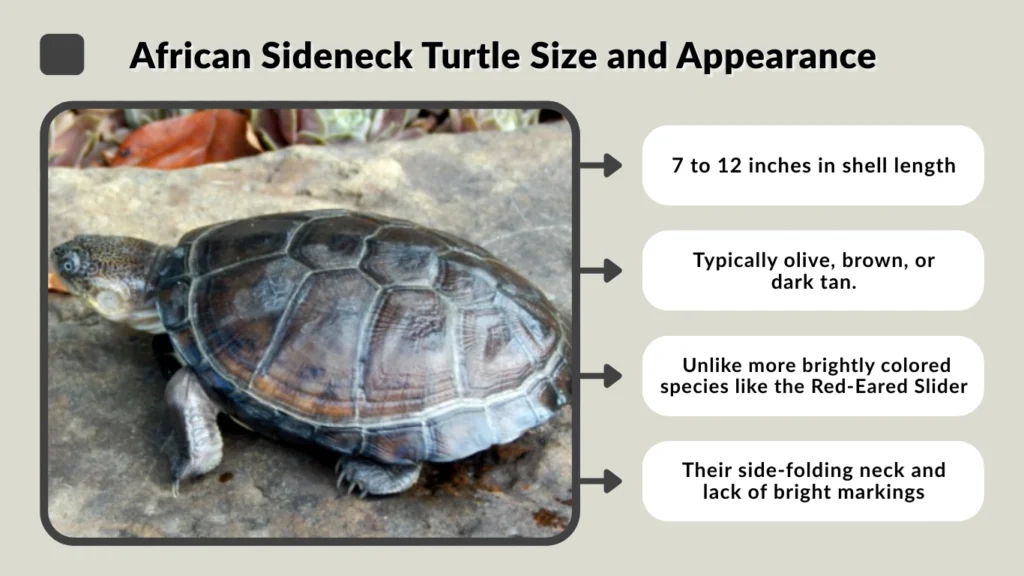
These turtles have a distinctive, slightly flattened shell and a broad, helmet-shaped head. Their webbed feet make them strong swimmers, and their long neck is one of their most noticeable features.
How Big Do African Sideneck Turtles Get?
Adult African Sideneck Turtles typically grow between:
- 7 to 12 inches in shell length
Females are usually larger than males. Growth depends heavily on diet, habitat conditions, and overall care. Hatchlings start at just about 1–1.5 inches and grow steadily during their first few years.
Proper nutrition and adequate tank space play a major role in healthy development.
Shell Color and Distinct Features
Their shell (carapace) is typically olive, brown, or dark tan. The underside (plastron) is usually lighter in color. Unlike more brightly colored species like the Red-Eared Slider, African Sidenecks have more muted, natural tones.
Their side-folding neck and lack of bright markings make them easy to distinguish from other common pet turtles.
African Sideneck Turtle Lifespan
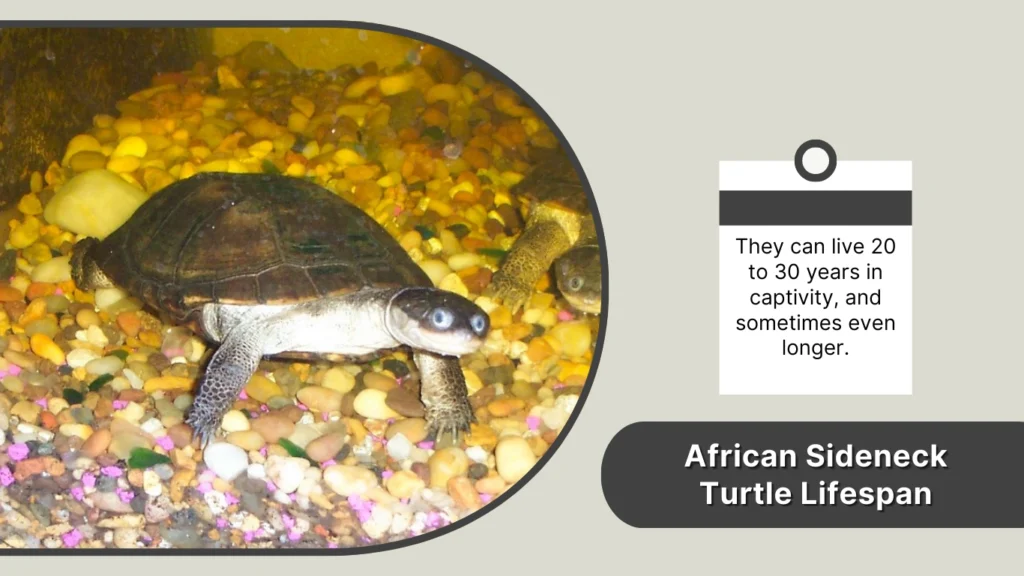
African Sideneck Turtles are long-lived reptiles. With proper care, they can live 20 to 30 years in captivity, and sometimes even longer.
In the wild, lifespan may be shorter due to predators, environmental stress, and food scarcity.
Factors That Affect Lifespan
Several key factors determine how long your turtle will live:
- Consistent clean water and strong filtration
- Proper UVB lighting for shell and bone health
- Balanced omnivorous diet
- Adequate tank size
- Regular health monitoring
Poor water quality and lack of UVB lighting are among the most common reasons for preventable health issues.
African Sideneck Turtle Temperament and Behavior
African Sideneck Turtles are generally calm but can be cautious. They may become more active during feeding time and often swim energetically when comfortable in their environment.
They are not highly social animals but can recognize routine and may become accustomed to their owner’s presence.
Are African Sideneck Turtles Aggressive?
They are not typically aggressive but may snap if they feel threatened. Like most turtles, they prefer minimal handling. Frequent handling can cause stress and should be limited.
Signs of stress include:
- Refusal to eat
- Constant hiding
- Excessive basking or lethargy
Providing a secure and properly set-up tank helps reduce defensive behavior.
African Sideneck Turtle Tank Setup
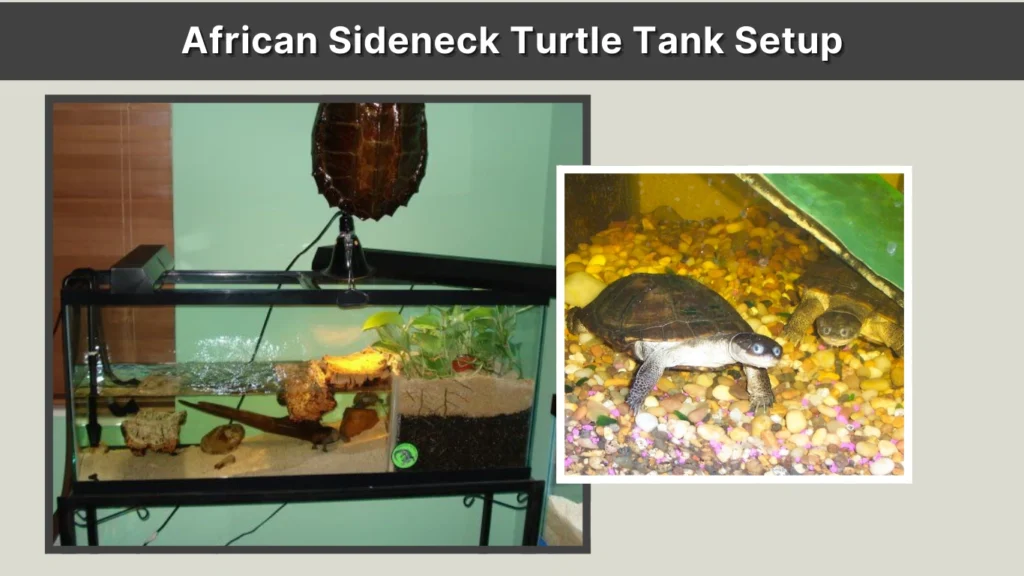
A proper tank setup is the foundation of good turtle care. Since they are semi-aquatic, their enclosure must support both swimming and basking.
Tank Size Requirements
For healthy growth and comfort:
- Hatchlings need at least a 20–30 gallon tank
- Adults require 75 gallons or more
Bigger is always better when it comes to aquatic turtles. Limited space can lead to stress and poor water quality.
Water Conditions
Clean, warm water is essential. Ideal water temperature should be:
- 75–80°F (24–27°C)
A strong canister or high-capacity filter is recommended because turtles produce significant waste. Without proper filtration, ammonia buildup can quickly lead to illness.
Water depth should allow full swimming while still enabling easy access to the surface for breathing.
Basking Area and Lighting
African Sideneck Turtles require a completely dry basking platform where they can climb out of the water.
You’ll need:
- A UVB light to support calcium absorption
- A heat lamp creating a basking spot of 90–95°F (32–35°C)
UVB exposure helps prevent metabolic bone disease and shell deformities.
African Sideneck Turtle Diet
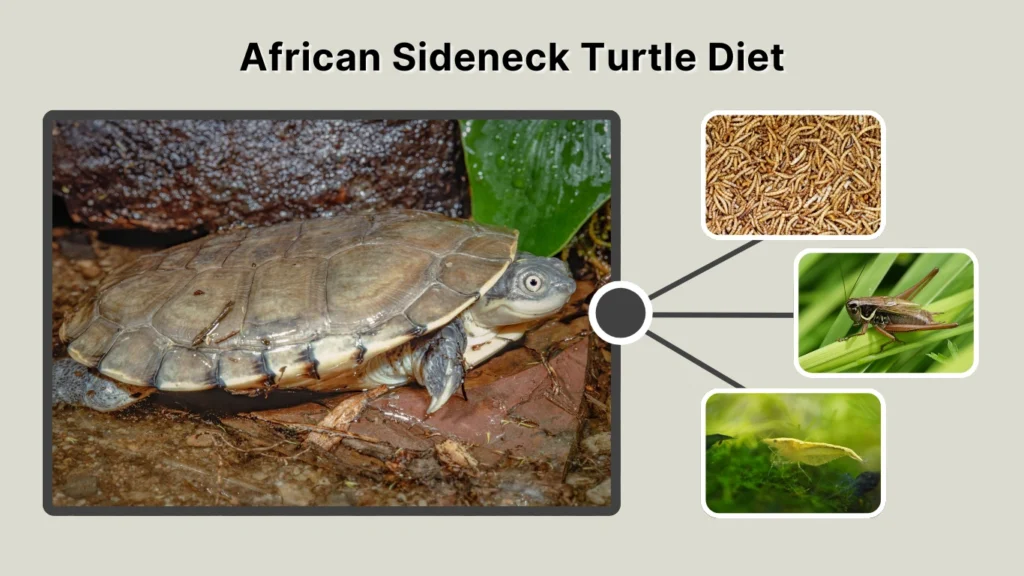
African Sideneck Turtles are omnivores, meaning they eat both animal protein and plant matter. A balanced diet is essential for proper growth, strong shell development, and long-term health.
In the wild, they feed on insects, small fish, aquatic invertebrates, and plant material. In captivity, their diet should closely mimic this natural variety.
What Do African Sideneck Turtles Eat?
A healthy captive diet should include:
- High-quality commercial turtle pellets (staple food)
- Live or frozen insects such as mealworms, crickets, and bloodworms
- Small feeder fish (occasionally)
- Leafy greens like romaine lettuce, dandelion greens, and collard greens
- Aquatic plants
Protein is especially important for hatchlings and juveniles, while adults benefit from a more balanced ratio of protein and vegetation.
Feeding Schedule by Age
Feeding frequency depends on age:
- Hatchlings: Feed daily with small portions
- Juveniles: Feed once daily
- Adults: Feed every other day
Offer only as much food as they can eat within 10–15 minutes. Overfeeding can lead to obesity and poor water quality.
Foods to Avoid
Avoid feeding:
- Processed human food
- Dairy products
- Fatty meats
- Iceberg lettuce (low nutritional value)
A calcium supplement may also be recommended to support shell strength, especially if UVB exposure is limited.
Common Health Problems
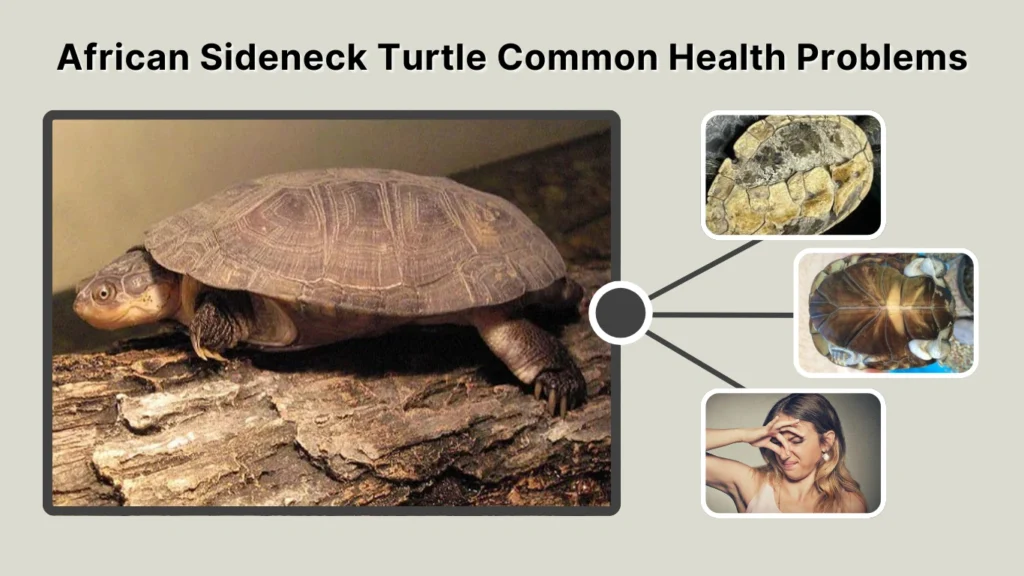
Like most aquatic turtles, African Sidenecks are hardy but still prone to certain health issues if care standards are not maintained.
Early detection and proper habitat maintenance are key to prevention.
Shell Rot
Shell rot is a bacterial or fungal infection often caused by dirty water or lack of proper basking.
Symptoms include:
- Soft spots on the shell
- Discoloration
- Foul odor
Maintaining clean water and ensuring a dry basking area greatly reduces risk.
Respiratory Infections
Respiratory infections are commonly linked to cold water temperatures or poor tank hygiene.
Signs include:
- Wheezing
- Open-mouth breathing
- Lopsided swimming
- Lethargy
If symptoms appear, veterinary care is necessary.
Vitamin A Deficiency
Vitamin A deficiency can occur with an unbalanced diet.
Symptoms may include:
- Swollen eyes
- Loss of appetite
- Skin issues
Providing a varied diet with leafy greens and quality pellets helps prevent this issue.
African Sideneck Turtle Price and Ownership Costs
The average price of an African Sideneck Turtle typically ranges from $50 to $150, depending on age, size, and breeder reputation.
However, the turtle itself is often the least expensive part of ownership.
Initial Setup Costs
You should budget for:
- Tank (75+ gallons for adults)
- High-quality filter
- UVB lighting
- Heat lamp
- Basking platform
- Water heater
- Thermometers
Initial setup can cost $300–$800 or more, depending on equipment quality.
Ongoing Costs
Monthly expenses may include:
- Food
- Replacement bulbs
- Water treatments
- Occasional veterinary visits
Owning a turtle is a long-term financial commitment.
Where to Buy
Consider purchasing from:
- Reputable breeders
- Specialized reptile stores
- Rescue organizations
Avoid wild-caught turtles whenever possible, as captive-bred turtles are generally healthier and better adapted to life in captivity.
Pros and Cons of Owning an African Sideneck Turtle
Before bringing one home, it’s important to weigh the advantages and challenges.
Pros
- Hardy and adaptable species
- Unique sideways neck movement
- Long lifespan
- Fascinating aquatic behavior
Cons
- Large tank requirements
- Strong filtration needed
- Can be messy
- Long-term commitment (20+ years)
They are best suited for owners prepared to invest time, space, and consistent care.
FAQs
How big do African Sideneck Turtles get?
Most adults grow between 7 and 12 inches in shell length, with females typically being larger than males.
Do African Sideneck Turtles need UVB light?
Yes. UVB lighting is essential for calcium absorption and preventing metabolic bone disease.
Can they live with other turtles or fish?
They may coexist with certain tank mates, but aggression and competition can occur. Housing them alone is often safest.
How often should the tank be cleaned?
Partial water changes should be done weekly, with regular filter maintenance to maintain water quality.
Are they good pets for beginners?
They can be suitable for beginners who are prepared to provide proper tank space, filtration, and lighting. Their care requirements are manageable but should not be underestimated.