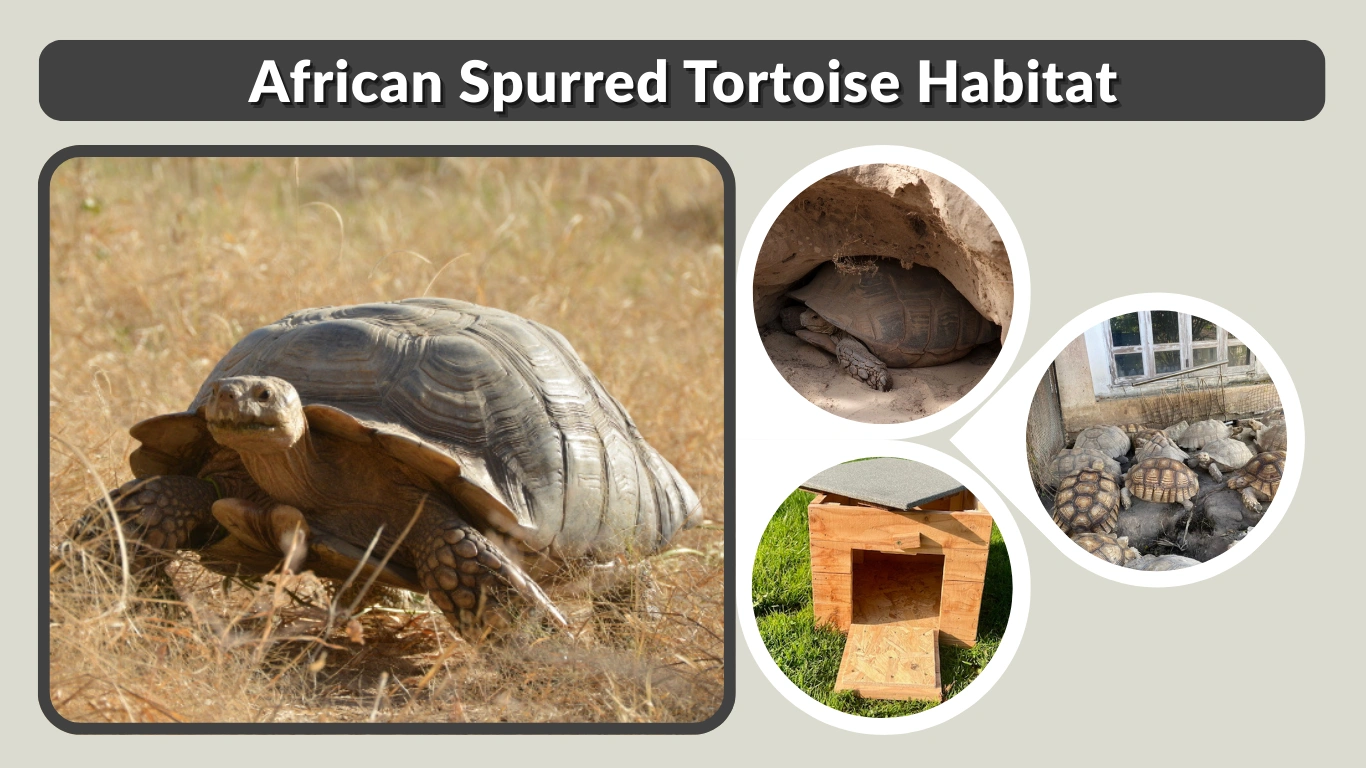
The African Spurred Tortoise, or Sulcata, thrives in warm, semi-arid environments that mimic its natural Sahel habitat. Many owners underestimate how quickly they grow and the amount of space they require. Proper habitat design ensures healthy growth, prevents stress, and supports natural burrowing behavior. This guide explores natural habitat conditions, indoor and outdoor enclosures, essential environmental elements, and size-based space requirements. It’s built around real search intent to help new and experienced owners provide an ideal living setup.
Understanding the African Spurred Tortoise Habitat
In the wild, African Spurred Tortoises inhabit the southern edge of the Sahara Desert, where temperatures stay high and rainfall is minimal. Their environment is open, dry, and filled with hard-packed soil ideal for burrowing. This natural terrain plays a major role in shaping their captive care needs.
These tortoises spend a large portion of the day digging or resting in burrows, where cooler underground temperatures help regulate their body heat. This instinct must be supported in captivity by providing deep substrate and sheltered areas. Without proper burrowing opportunities, digestive, behavioral, and temperature-related problems can occur.
The Sahel’s extreme day-and-night temperature differences also influence Sulcata care. They require warm basking zones, cooler shaded areas, and steady UVB exposure to replicate sunlight. Understanding these natural patterns creates a more stable, stress-free captive habitat.
African Spurred Tortoise Habitat Facts
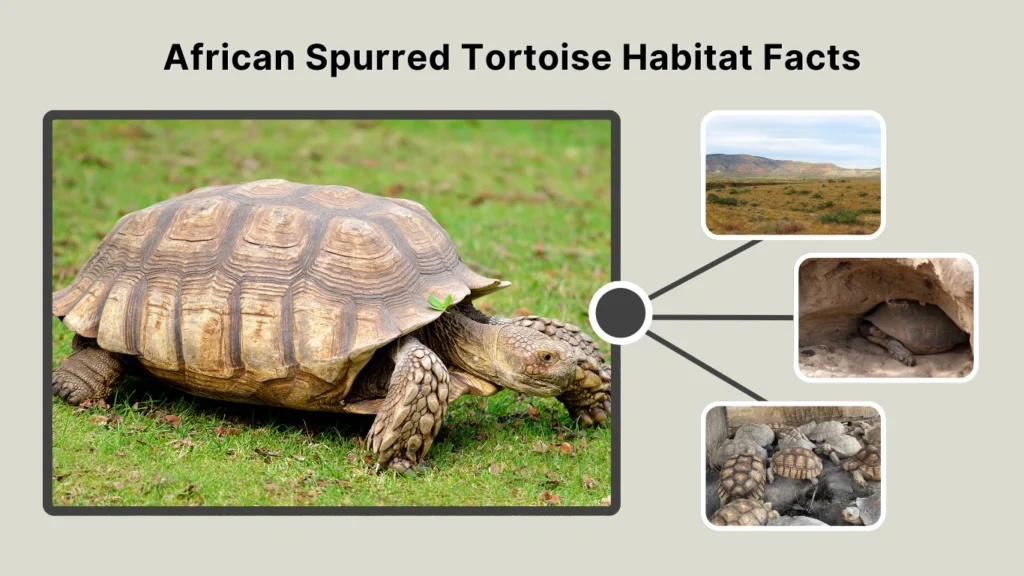
- Native to semi-arid grasslands near the Sahara
- Known for digging long burrows to escape heat
- Require strong heat gradients in captivity
- Thrive in spacious, open outdoor enclosures
- Sensitive to high humidity and improper substrate
Enclosure Requirements for African Spurred Tortoises
Substrate Needs
A proper substrate must allow burrowing while preventing collapse. Hard-packed soil, clay mixes, and sandy loam mimic the natural environment well. Loose sand and mulch should be avoided because they increase the risk of impaction and respiratory issues, especially in young tortoises.
Heat and Temperature Zones
A basking area of 95–105°F is essential for digestion and shell development. The cooler area should range between 75–85°F. Night temperatures may safely drop to 70–75°F. Creating a gradient helps the tortoise regulate body temperature naturally.
Lighting and UVB
UVB is crucial for calcium absorption and preventing metabolic bone disease. Tortoises must receive 10–12 hours of UVB daily. Outdoor setups naturally provide this; indoor enclosures must use high-quality UVB bulbs positioned correctly.
Humidity Management
Sulcatas are highly sensitive to humidity imbalances. Too much humidity can cause shell rot and respiratory infections, while too little affects hydration. Ideal humidity for juveniles is slightly higher than adults, usually around 40–50%, while adults do best at 30–40%.
African Spurred Tortoise Habitat Map & Space Planning
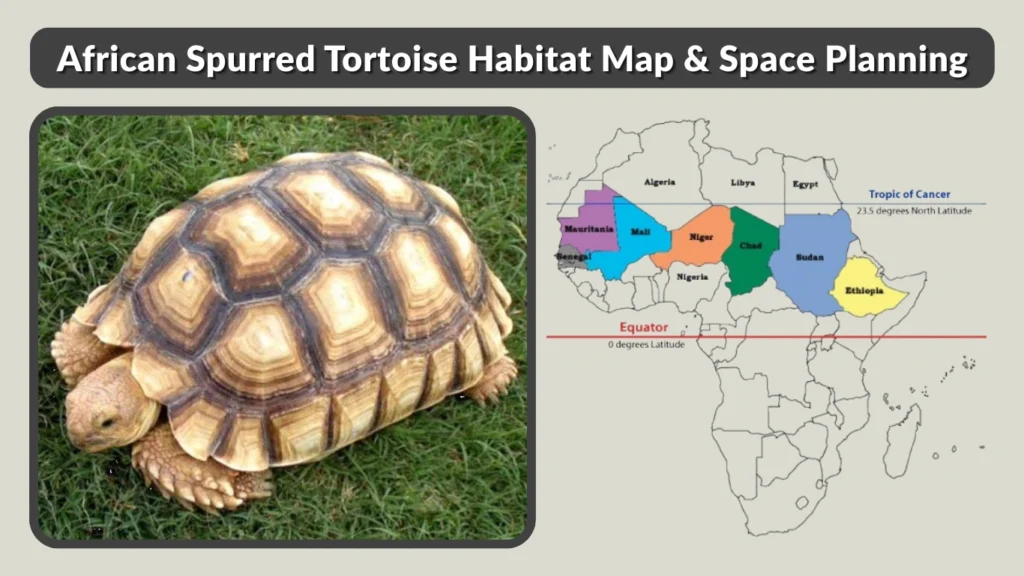
Mapping their natural range helps owners understand how much open land these tortoises are used to. The Sahel region offers endless roaming space, prompting the need for large outdoor pens in captivity. Sulcatas do not thrive in cramped areas, and restricted movement leads to stress and abnormal shell development.
A habitat map also highlights temperature and climate patterns. Captive setups must include warm basking zones, shade areas, and optional burrowing spots that simulate underground cooling chambers. Outdoor environments should be built with climate in mind—regions with cold winters require insulated tortoise houses or indoor seasonal housing.
Space planning is crucial as Sulcatas can reach 80–100+ pounds. Owners should consider long-term layout designs that allow for growth and natural behaviors. Early planning prevents costly rebuilds and ensures the tortoise remains comfortable throughout its life.
Outdoor Enclosure Guide
- Provide a minimum of 100+ sq. ft. for adults
- Use secure fencing at least 18–24 inches high
- Prevent escape by digging fencing 8–12 inches underground
- Offer shaded zones for cooling
- Provide strong shelters for rain and wind protection
Indoor Sulcata Enclosure Setup
Temperature Control
Indoor enclosures require stable heating to maintain proper day and night temperatures. Ceramic heat emitters, radiant heat panels, and controlled basking bulbs help create a warm environment. Owners should place thermometers at both warm and cool ends of the enclosure to ensure consistent temperature gradients all day.
Flooring and Substrate
Indoor flooring must support natural movement while preventing slipping or injury. A mixture of compacted soil, coconut coir, and clay-based substrates works well for juveniles. Avoid newspaper, carpet, or smooth tiles because they offer no burrowing support and may cause joint problems.
UVB Placement
In indoor setups, UVB bulbs must be placed at the manufacturer’s recommended distance to ensure safe and effective exposure. High-output T5 UVB tubes generally work best for large enclosures. Replace bulbs every 6–12 months because UV output decreases long before the light burns out.
Ventilation and Air Quality
Proper airflow prevents respiratory issues, especially in humid climates. Indoor habitats should have well-ventilated lids or side panels to keep fresh air circulating. Avoid airtight enclosures, as they trap heat and moisture.
African Spurred Tortoise House Options
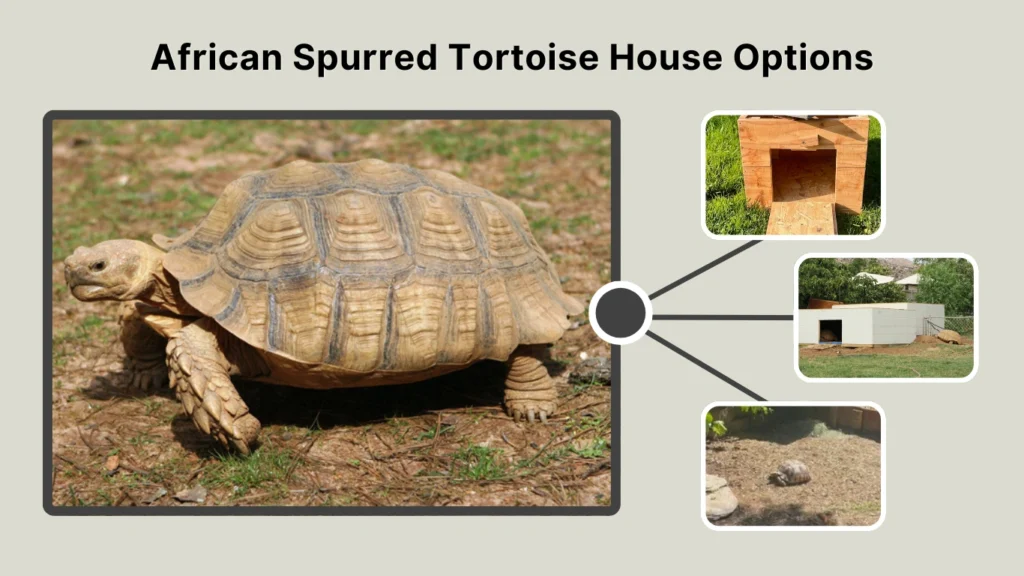
Wooden Tortoise House
Wooden houses are durable and offer excellent insulation. They retain heat well and can be weatherproofed for outdoor use. Many owners customize wooden houses to include heating panels for cold nights.
Plastic or Resin Houses
Lightweight and easy to move, plastic shelters are moisture-resistant and simple to clean. These are ideal in warm climates where heating is less critical. However, they may not insulate as well as wooden options.
Insulated Outdoor Shelters
In cooler regions, insulated shelters help maintain safe nighttime temperatures. These shelters may include radiant heat panels, thermostats, and deep bedding to simulate burrows. Proper insulation ensures that adults can remain outside longer each year.
African Spurred Tortoise Size Chart
| Age | Average Length | Average Weight | Recommended Habitat Size |
| Hatchling | 2–3 in | 30–40 g | Small indoor brooder |
| 1 Year | 6–8 in | 1–2 kg | 4×4 ft indoor space |
| 5 Years | 12–16 in | 10–20 kg | Medium outdoor pen |
| Adult | 24–30 in | 40–80+ kg | 100+ sq. ft outdoor habitat |
Size by Age & Habitat Needs
African Spurred Tortoises grow rapidly during their first five years, doubling or tripling in size annually. During this period, owners must continually expand enclosure space to prevent mobility issues. Restricting movement can lead to stunting and improper shell development.
As they approach adulthood, growth slows, but their space needs continue rising. Adult Sulcatas require large outdoor areas to roam, graze, and dig shallow burrows. Enclosures that mimic the open plains of the Sahel help reduce stress and support healthy behavior.
Male Sulcatas may grow slightly larger than females, though both sexes reach impressive sizes. Planning ahead ensures the tortoise avoids confinement and maintains physical and mental well-being. Habitat upgrades should be expected every year for the first few years.
African Spurred Tortoise Planet Zoo
- The game accurately shows their digging behavior.
- Space requirements are larger in reality than shown in-game.
- Planet Zoo teaches temperature zoning effectively.
- Game habitats provide inspiration but must be scaled for real size.
Common Habitat Mistakes to Avoid
- Creating enclosures that are too small
- Allowing high humidity levels
- Using soft, collapsible substrates
- Ignoring the need for burrowing space
- Poor ventilation in indoor habitats
FAQs
What is the ideal habitat for an African Spurred Tortoise?
These tortoises thrive in warm, semi-arid environments with plenty of sun, a deep substrate for burrowing, and strong temperature gradients. Outdoor enclosures work best for adults because they allow natural movement, exposure to sunlight, and healthy thermal regulation throughout the day.
How big should an enclosure be for a Sulcata tortoise?
Hatchlings can begin in small indoor enclosures, but adults require 100+ square feet outdoors. Large pens help accommodate their rapid growth and natural behavior. Enclosures should include basking zones, shaded areas, and secure fencing to prevent escapes.
What substrate is best for a Sulcata habitat?
The best substrate replicates their natural Sahel environment, such as compacted soil mixed with clay or sandy loam. This type supports burrowing without collapsing. Avoid loose sand or mulch because they increase the risk of impaction and respiratory issues.
Can African Spurred Tortoises live indoors full-time?
Adults should not live indoors permanently due to their large size and environmental needs. Juveniles can be housed indoors, but adults must be moved outside to allow grazing, natural UV exposure, and larger habitat space. Indoor housing should be considered temporary or seasonal.
What temperature does a Sulcata tortoise need?
Sulcatas require a basking temperature of 95–105°F and a cooler zone between 75–85°F. Nighttime temperatures may drop to 70–75°F. These gradients help the tortoise regulate its body temperature, support digestion, and maintain overall health.