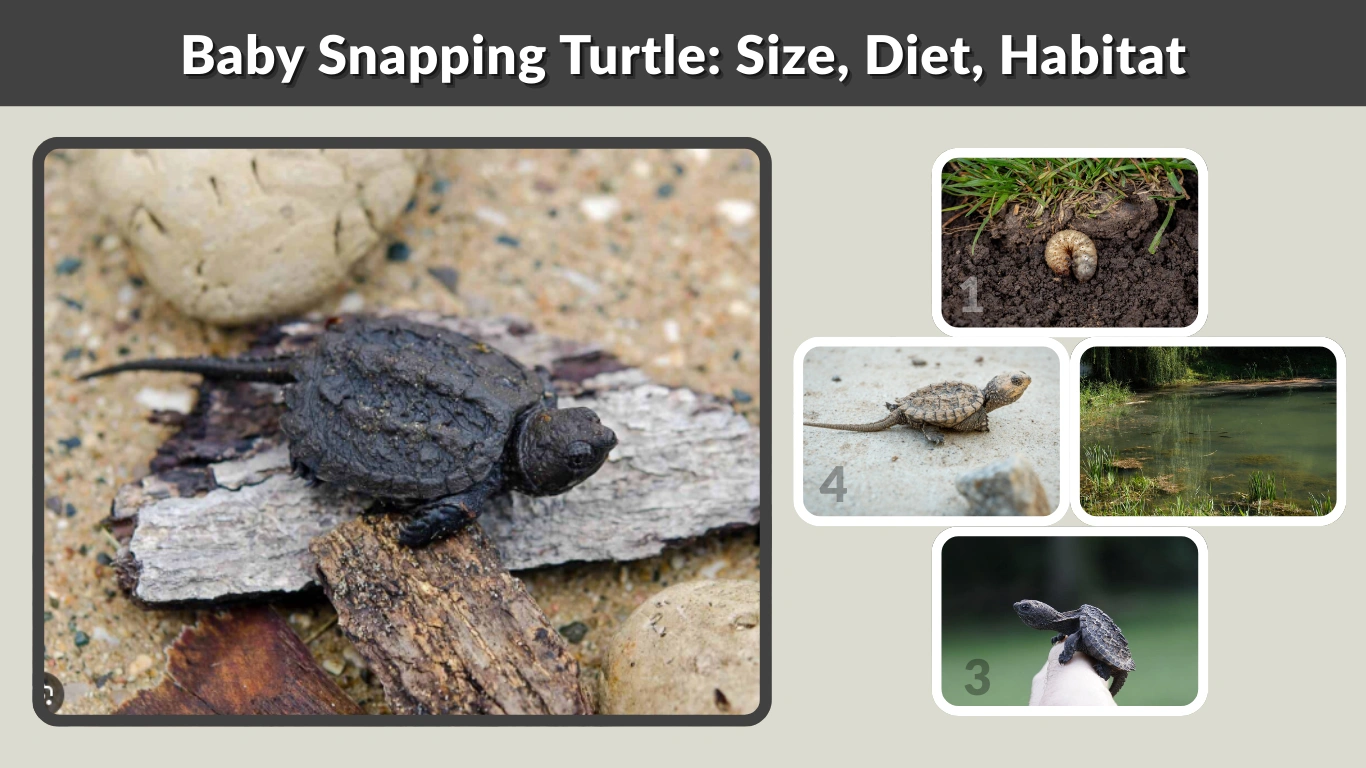
A baby snapping turtle may look small and harmless, but it already carries the instincts and features of a powerful freshwater predator. These tiny hatchlings are independent from the moment they emerge from their eggs, equipped with sharp beaks, strong jaws, and natural survival skills. Found in ponds, lakes, and wetlands across North America, baby snapping turtles grow slowly into large, long-lived reptiles. This guide explores their size, appearance, diet, habitat, and early-life behavior.
What Is a Baby Snapping Turtle?
A baby snapping turtle is a newly hatched member of the snapping turtle family, Chelydridae. Like adults, hatchlings are freshwater turtles known for their strong bite and defensive temperament. There are two main species:
- Common snapping turtle (Chelydra serpentina)
- Alligator snapping turtle (Macrochelys temminckii)
Although small at birth, baby snapping turtles already resemble miniature versions of adults. They are fully independent and receive no parental care after hatching.
Common vs. Alligator Snapping Turtle Hatchlings
Baby common snapping turtles typically have smoother, rounder shells and slimmer heads. They are more widespread and found throughout much of the United States and southern Canada.
Baby alligator snapping turtles look more rugged, even at a young age. Their shells feature noticeable ridges (called keels), and their heads appear larger and more triangular. This species is mainly found in the southeastern United States.
Even as hatchlings, subtle physical differences help distinguish the two species.
Baby vs. Adult Snapping Turtles
The most obvious difference between baby and adult snapping turtles is size. Hatchlings measure only about 1 to 2 inches in shell length, while adults can grow well over a foot long.
In addition to size, baby snapping turtles have slightly softer shells that harden as they mature. Their defensive behavior, however, is present from the beginning. Even a tiny hatchling will snap if it feels threatened.
How Big Is a Baby Snapping Turtle?
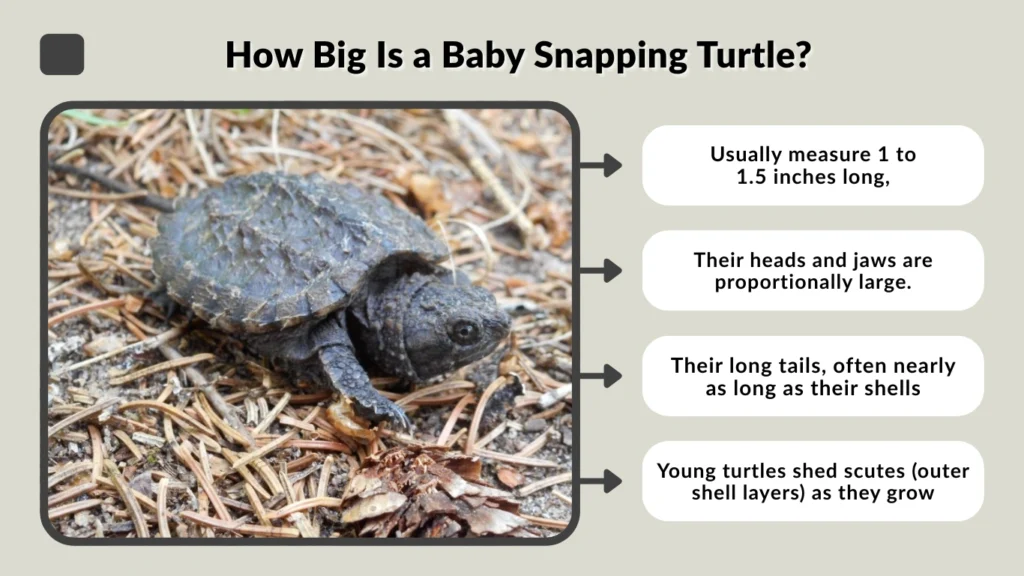
Baby snapping turtles are surprisingly small at birth, especially considering how large they eventually become.
Size at Birth
When they first hatch, baby snapping turtles usually measure 1 to 1.5 inches long, roughly the size of a golf ball. They weigh only a few grams.
Despite their small size, their heads and jaws are proportionally large. This allows them to begin feeding on live prey almost immediately. Their long tails, often nearly as long as their shells, are another noticeable feature.
Growth During the First Year
During the first year of life, baby snapping turtles grow steadily if food is abundant and environmental conditions are favorable. Access to protein-rich prey, warm water temperatures, and safe shelter all influence growth rate.
Young turtles shed scutes (outer shell layers) as they grow, allowing the shell to expand. Growth is fastest during warm months and slows during colder seasons.
However, snapping turtles are slow-maturing reptiles. It can take several years before they reach full adult size.
When Do They Reach Adulthood?
Snapping turtles do not become fully mature for many years. Depending on the species and environment, sexual maturity may take 8 to 20 years.
This slow growth pattern makes early survival critical. Only a small percentage of hatchlings survive long enough to reach adulthood.
Baby Snapping Turtle Appearance
Although tiny, baby snapping turtles already display the rugged features that make the species so recognizable.
Shell Characteristics
At birth, the shell (carapace) is slightly softer than that of an adult but still protective. The shell is usually dark brown, olive, or gray, helping the hatchling blend into muddy water and vegetation.
In baby alligator snapping turtles, three raised ridges run along the top of the shell. These ridges are more pronounced than in common snapping turtles.
The underside of the shell, called the plastron, is relatively small. This limited coverage leaves parts of the body exposed, which explains why snapping turtles rely heavily on snapping for defense.
Head, Beak, and Tail Features
One of the most noticeable traits of a baby snapping turtle is its oversized head. Even at a young age, it has a sharp, hooked beak designed for gripping prey.
The neck is flexible and strong, allowing quick forward strikes. The long tail, often almost equal in length to the shell, has a slightly saw-toothed appearance.
These features make baby snapping turtles look prehistoric, similar to tiny dinosaurs in both shape and movement.
How to Identify a Baby Snapping Turtle
To identify a baby snapping turtle, look for:
- A large head compared to body size
- A long, thick tail
- A rugged or ridged shell
- A sharp, hooked beak
Unlike many other baby turtles, snapping turtles tend to have a more aggressive defensive posture when approached.
What Do Baby Snapping Turtles Eat?
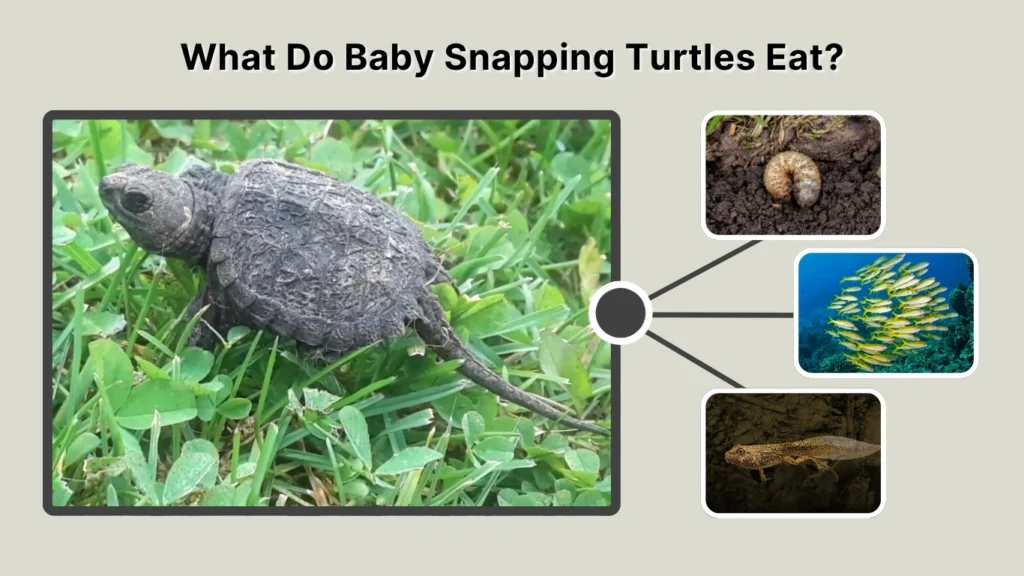
Baby snapping turtles are omnivorous but rely heavily on animal protein during their early growth stages.
Natural Diet in the Wild
In the wild, hatchlings feed on small aquatic organisms such as:
- Insects and insect larvae
- Tiny fish
- Tadpoles
- Worms
- Small crustaceans
They may also nibble on aquatic plants, but protein-rich prey is essential for proper growth.
Because they are opportunistic feeders, baby snapping turtles eat whatever appropriately sized food is available in their environment.
Hunting and Feeding Behavior
Even as hatchlings, snapping turtles are instinctive hunters. They use an ambush strategy, remaining still and waiting for prey to come within striking distance.
When an insect or small fish swims close enough, the turtle quickly extends its neck and snaps its jaws shut. This rapid strike is surprisingly fast for such a small animal.
Their natural camouflage helps them remain hidden from both predators and prey.
Feeding Baby Snapping Turtles in Captivity
If a baby snapping turtle is raised in captivity, it requires a balanced and protein-rich diet. Suitable foods may include small feeder fish, earthworms, insects, and high-quality commercial turtle pellets formulated for aquatic species.
Hatchlings should be fed small portions once daily, ensuring the food is appropriately sized to prevent choking. Clean water is extremely important, as snapping turtles produce a significant amount of waste. Poor water quality can quickly lead to health problems such as shell infections or respiratory illness.
Because snapping turtles grow large and live for decades, long-term care requires careful planning and commitment.
Habitat of Baby Snapping Turtles
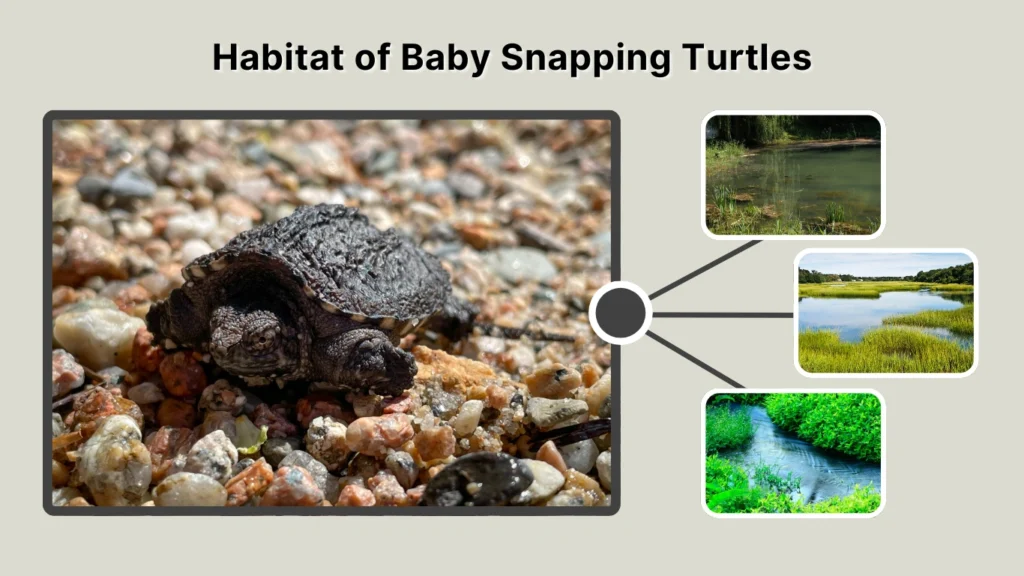
Baby snapping turtles are freshwater reptiles that depend on shallow, protected aquatic environments for survival.
Where Do Hatchlings Live?
After hatching, baby snapping turtles instinctively move toward the nearest water source. They typically settle in:
- Shallow ponds
- Wetlands and marshes
- Slow-moving streams
- Edges of lakes and rivers
Shallow water with dense vegetation provides protection from predators. Muddy bottoms allow hatchlings to bury themselves for camouflage and safety.
Both common and alligator snapping turtle hatchlings prefer calm freshwater habitats rather than fast-flowing rivers during early life stages.
Nesting and Hatching Process
Female snapping turtles lay eggs on land, usually in sandy or soft soil during late spring or early summer. A single nest may contain 20 to 40 eggs, depending on the size of the mother.
The eggs incubate for approximately 9 to 18 weeks. Temperature plays a role in determining the sex of the hatchlings. Once ready, the baby turtles use a small egg tooth to break through the shell.
After emerging, hatchlings dig their way to the surface and quickly head toward water. They receive no parental guidance and must survive on instinct alone.
Survival Strategies
Life is extremely dangerous for baby snapping turtles. Many predators, including birds, raccoons, foxes, and large fish, prey on hatchlings.
To improve their chances of survival, baby snapping turtles rely on:
- Camouflage to blend with mud and plants
- Remaining still when threatened
- Quick snapping motions to deter small predators
Only a small percentage of hatchlings survive to adulthood, making each successful turtle an important part of the ecosystem.
Behavior and Temperament
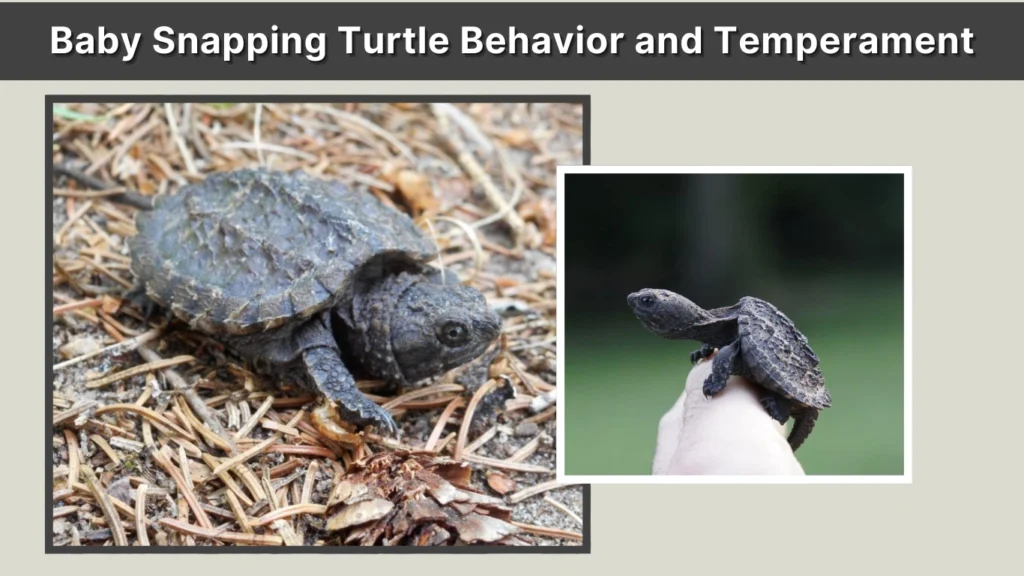
Baby snapping turtles may be small, but they are not timid.
Are Baby Snapping Turtles Aggressive?
Baby snapping turtles are defensive rather than aggressive. When picked up or cornered, they often hiss, lunge, or snap. This reaction is instinctive and necessary for survival in the wild.
Unlike many other baby turtles that retreat into their shells, snapping turtles cannot fully withdraw their heads and limbs. As a result, snapping is their primary defense mechanism.
In water, however, hatchlings are usually more likely to swim away than confront a threat.
Do Baby Snapping Turtles Stay With Their Mother?
No, baby snapping turtles are completely independent from birth. After laying eggs, the mother returns to the water and provides no further care.
Hatchlings must find food, avoid predators, and navigate their environment on their own. This independence is typical of most turtle species.
Interaction With Humans
If you encounter a baby snapping turtle, it is best to observe without handling it. Even a small hatchling can deliver a painful bite.
If the turtle is crossing a road, you may gently guide it in the direction it was heading, keeping your hands away from its head. Avoid relocating it far from its original habitat, as it likely knows where it needs to go.
Lifespan and Survival Rate
Snapping turtles are long-lived reptiles, but early survival is challenging.
Early Life Challenges
The first year is the most dangerous period in a snapping turtle’s life. Predation, habitat loss, pollution, and road mortality significantly reduce survival rates.
Because so many hatchlings are lost, females lay large clutches of eggs to ensure that at least some offspring survive.
Lifespan if They Survive
If a baby snapping turtle reaches adulthood, it may live 30 to 40 years or more in the wild. Some individuals, especially in protected environments, can live even longer.
Their slow growth and long lifespan mean that healthy wetlands and freshwater systems are essential for sustaining stable populations.
What to Do If You Find a Baby Snapping Turtle
Found in Your Yard
If you find a baby snapping turtle in your yard, it is likely traveling to water after hatching. In most cases, the best action is to leave it alone. Moving it far from its path may reduce its chances of survival.
Found on a Road
If safe to do so, you can gently guide the turtle across the road in the direction it was heading. Use an object such as a stick or wear gloves to avoid direct contact with its head.
Should You Keep It as a Pet?
Keeping a baby snapping turtle as a pet is generally not recommended. They grow large, require spacious enclosures, and can live for decades. In some regions, permits or legal restrictions apply.
In most situations, allowing a baby snapping turtle to remain in its natural habitat is the best choice for both the animal and the ecosystem.
FAQs
How small is a baby snapping turtle?
A baby snapping turtle typically measures 1 to 1.5 inches in shell length at birth, about the size of a golf ball. Despite their small size, they already have strong jaws and defensive instincts.
What do baby snapping turtles eat?
They mainly eat small aquatic animals such as insects, tadpoles, worms, and tiny fish. Protein is especially important during early growth stages.
Are baby snapping turtles dangerous?
While not aggressive, they can deliver a painful bite if handled. It is best to avoid picking them up and observe from a safe distance.
How long do baby snapping turtles live?
If they survive early life challenges, snapping turtles can live 30 to 40 years or longer in the wild.
Can you raise a baby snapping turtle at home?
It is possible but not ideal for most people. They require long-term care, large habitats, and proper permits in some areas.