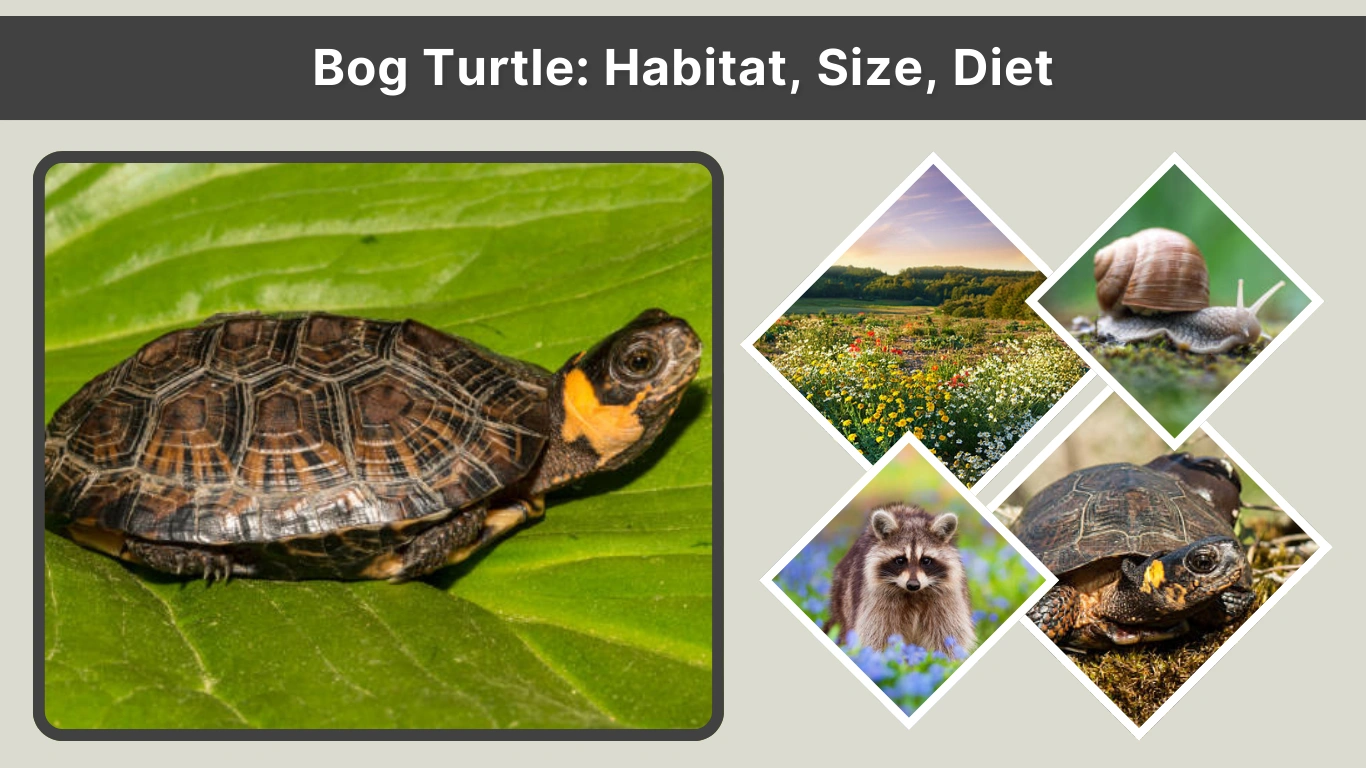
The bog turtle (Glyptemys muhlenbergii) is the smallest turtle species in North America and one of the rarest reptiles in the United States. Measuring only a few inches long, this tiny turtle lives in specialized wetland habitats that are increasingly disappearing. Because of habitat loss, illegal collection, and environmental changes, the bog turtle is now federally protected. Despite its small size, it plays an important role in maintaining healthy wetland ecosystems. Understanding its characteristics, habitat, and behavior is key to helping conserve this remarkable species.
What Is a Bog Turtle?
Scientific Classification and Background
The bog turtle belongs to the family Emydidae, which includes many North American pond and marsh turtles. Its scientific name, Glyptemys muhlenbergii, honors Gotthilf Heinrich Ernst Muhlenberg, a botanist who first documented the species.
Bog turtles are native to the eastern United States and are divided into two main populations: a northern group and a southern group. These populations are geographically separated and face slightly different environmental pressures. Over time, habitat fragmentation has made their distribution increasingly patchy and isolated.
Why the Bog Turtle Is Unique
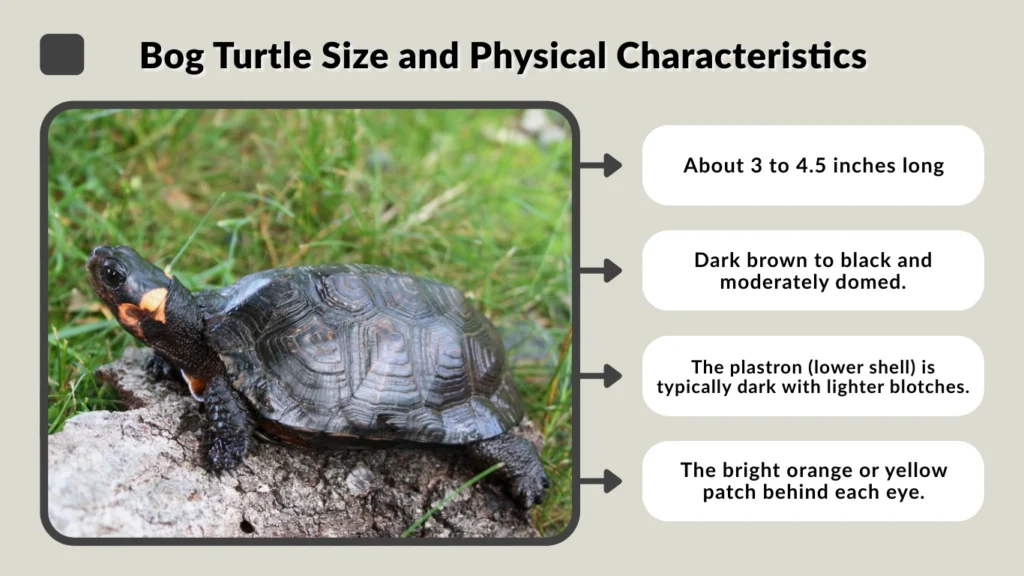
What makes the bog turtle especially unique is its size and distinct appearance. Adults typically measure between 3 and 4.5 inches in length, making them the smallest turtles in North America.
They are easily identified by the bright orange or yellow patch located on each side of their neck. This colorful marking contrasts sharply with their dark brown or black shell. The shell itself is slightly domed and may have subtle ridges (keels) running along its surface.
In addition to its physical features, the bog turtle is considered an indicator species. This means its presence signals a healthy wetland ecosystem. When bog turtle populations decline, it often reflects broader environmental problems affecting the habitat.
Bog Turtle Size and Physical Characteristics
How Big Does a Bog Turtle Get?
Adult bog turtles typically grow to about 3 to 4.5 inches long. Most weigh around 3 to 4 ounces, roughly comparable to the weight of a small apple. Their extremely small size helps them navigate dense wetland vegetation and soft muddy substrates.
Because they are so small, bog turtles are sometimes mistaken for juvenile turtles of other species. However, even fully grown adults remain compact throughout their lives.
Shell and Body Features
The bog turtle’s carapace (upper shell) is dark brown to black and moderately domed. Some individuals may display faint lighter markings or growth rings, particularly when young. As turtles age, these rings may become less visible.
The plastron (lower shell) is typically dark with lighter blotches. Their skin is generally dark brown or black, which helps them blend into muddy wetland environments.
The most distinctive feature remains the bright orange or yellow patch behind each eye. This marking likely plays a role in species recognition during mating season.
Differences Between Male and Female Bog Turtles
Male and female bog turtles show subtle physical differences. Males usually have longer, thicker tails, with the vent positioned farther from the body. Females tend to have slightly shorter tails and may grow marginally larger to accommodate egg development.
The plastron of males is often slightly concave, which helps during mating, while females typically have a flatter underside.
Bog Turtle Habitat and Geographic Range
Where Do Bog Turtles Live?
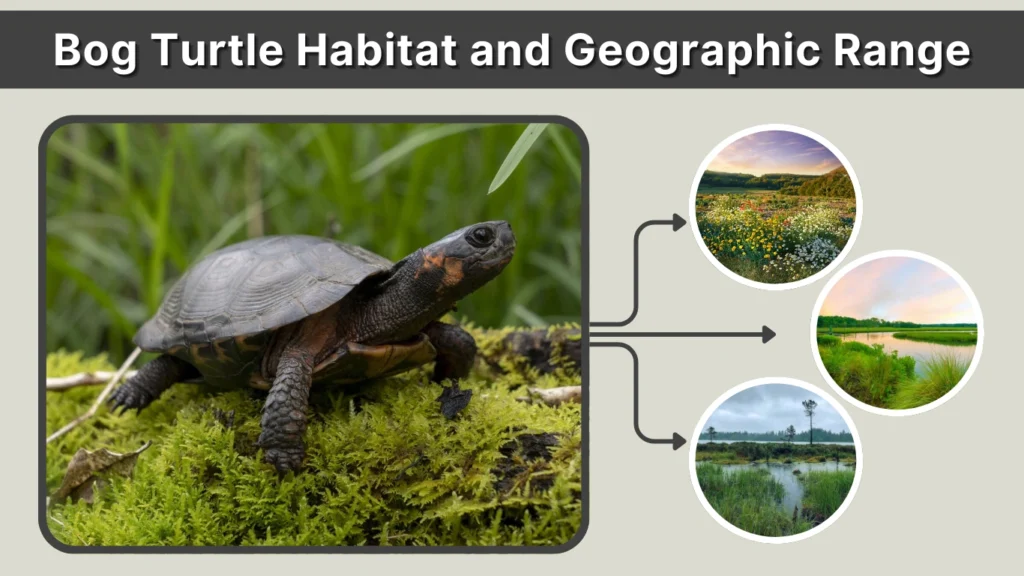
Bog turtles are found only in the eastern United States. The northern population ranges from parts of New York, Massachusetts, and Connecticut down through Pennsylvania and New Jersey. The southern population is located in the Appalachian region, including areas of North Carolina, South Carolina, Tennessee, and Georgia.
These two populations are separated by hundreds of miles, making genetic exchange difficult. Because their habitat requirements are so specific, bog turtles are not evenly distributed even within these states.
Ideal Habitat Conditions
Bog turtles prefer spring-fed wetlands with soft, muddy bottoms and shallow water. They are commonly found in wet meadows, marshes, and open bogs with slow-moving groundwater.
Unlike many other turtle species, bog turtles favor areas with low-growing vegetation such as sedges, grasses, and mosses rather than heavily forested wetlands. An open canopy allows sunlight to warm the shallow water and soil, creating suitable basking and nesting conditions.
They often burrow into soft mud or hide among thick vegetation to avoid predators and extreme temperatures.
Why Wetlands Are Critical for Survival
Wetlands provide everything bog turtles need to survive. The muddy substrate offers protection during winter hibernation, while shallow water areas supply abundant food sources.
During colder months, bog turtles brumate by burying themselves in mud or muskrat burrows, where temperatures remain relatively stable. In spring and summer, wetlands provide safe nesting areas and basking spots.
When wetlands are drained, developed, or polluted, bog turtles lose not only shelter but also food and breeding grounds. This heavy dependence on a very specific habitat type is one of the main reasons the species is so vulnerable to environmental change.
Bog Turtle Diet and Feeding Behavior
What Do Bog Turtles Eat?
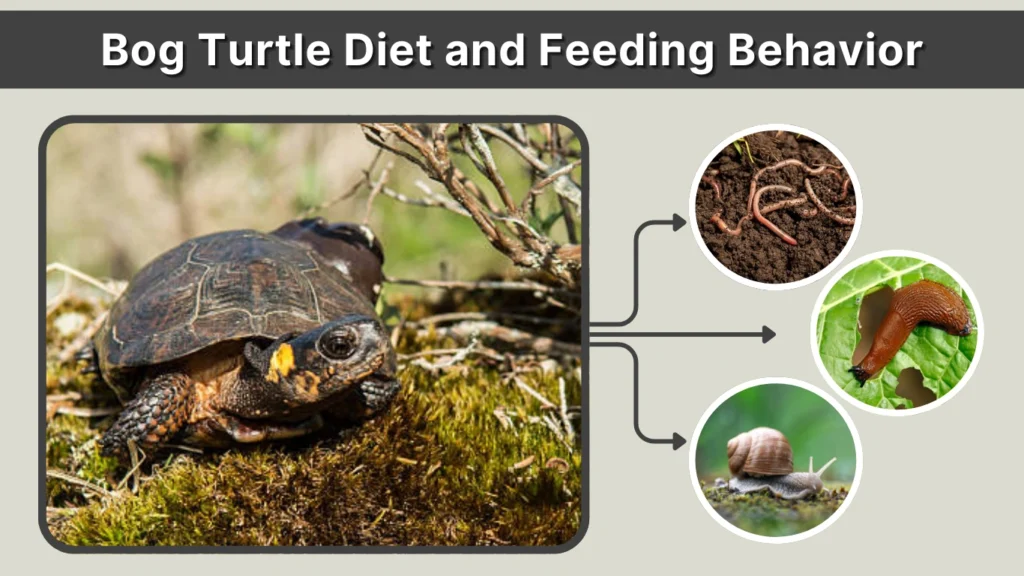
Bog turtles are primarily carnivorous and feed on a variety of small invertebrates found in wetland environments. Their diet typically includes insects, beetles, worms, snails, slugs, spiders, and small crustaceans. Occasionally, they may consume seeds or plant material, but animal prey makes up the majority of their nutrition.
Because their habitats are rich in insect life and aquatic invertebrates, bog turtles usually have steady access to food during the warmer months. Hatchlings and juveniles rely heavily on tiny insects and larvae that live in shallow water and damp soil.
Hunting and Feeding Habits
Bog turtles are opportunistic feeders, meaning they eat what is readily available. They forage slowly through shallow water, mud, and low vegetation, using their keen sense of smell and sight to locate prey.
They are most active during the day, especially in the morning and early afternoon when temperatures are warm but not extreme. Feeding activity decreases during very hot or very cold periods. As temperatures drop in late fall, their metabolism slows, and they prepare for winter brumation.
Behavior, Reproduction, and Lifespan
Seasonal Activity Patterns
Bog turtles are active primarily from April through October. During this time, they bask in sunlight to regulate their body temperature, forage for food, and seek mates. Basking is essential because turtles are ectothermic (cold-blooded) and rely on external heat sources to remain active.
In winter, bog turtles enter a state of brumation, similar to hibernation. They bury themselves in soft mud, often near groundwater seeps or in muskrat tunnels, where temperatures remain above freezing. This allows them to survive cold conditions with minimal energy use.
Breeding and Nesting
Mating typically occurs in spring, although it can also happen in fall. After mating, females search for slightly elevated, sunny areas within their wetland habitat to lay eggs.
Nesting usually takes place between late May and early July. A female lays a small clutch of one to six eggs in a carefully dug nest in soft soil. The eggs incubate for about six to ten weeks, depending on temperature and environmental conditions.
Hatchlings generally emerge in late summer or early fall. Because of their small size, young turtles are especially vulnerable to predators and environmental hazards.
How Long Do Bog Turtles Live?
Bog turtles can live 20 to 40 years in the wild, although survival rates vary depending on habitat quality and predation pressure. Their slow growth and low reproductive rate mean that population recovery can take many years. Even small declines in adult populations can have significant long-term impacts.
Predators and Natural Threats
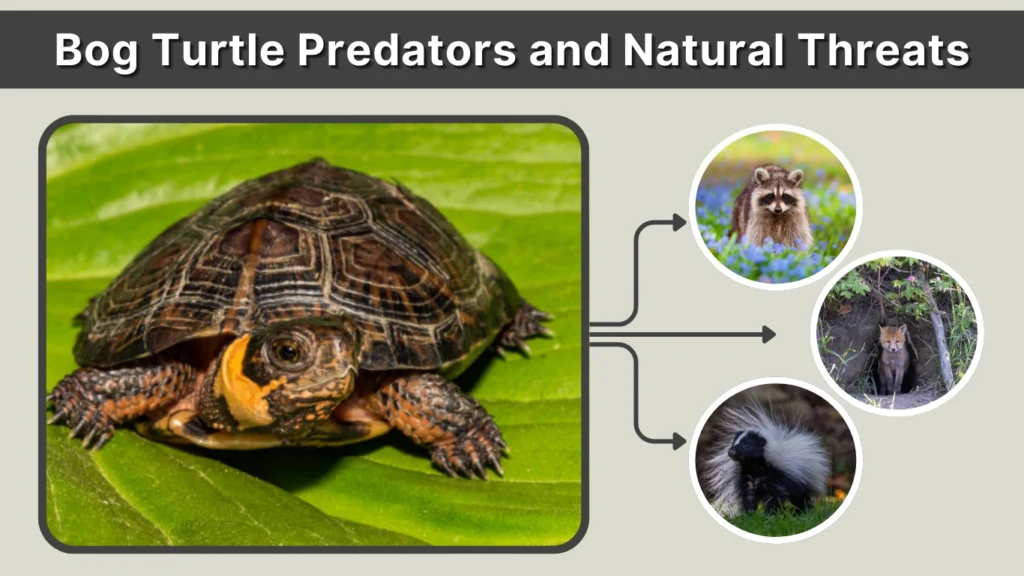
Bog turtles face threats from both natural predators and environmental factors. Raccoons, foxes, skunks, snakes, and large birds may prey on eggs, hatchlings, and occasionally adults. Nest predation is particularly common, as eggs are easy targets for mammals.
Flooding can destroy nests, while drought can reduce the availability of suitable wetland habitat. Because bog turtles live in shallow wetlands, changes in water levels can significantly affect their survival.
Why Is the Bog Turtle Endangered?
Habitat Loss and Wetland Destruction
The primary reason bog turtles are endangered is habitat loss. Wetlands have historically been drained for agriculture, road construction, and urban development. As wetlands disappear or become fragmented, bog turtle populations become isolated.
Small, separated populations are more vulnerable to disease, genetic problems, and local extinction.
Illegal Collection and Pet Trade
Another major threat is illegal collection. Because of their small size and distinctive markings, bog turtles are highly sought after in the exotic pet trade. Removing even a few individuals from a small population can cause serious long-term damage.
Strict laws now protect bog turtles, but illegal poaching still occurs in some areas.
Climate Change and Environmental Shifts
Climate change poses additional risks. Altered rainfall patterns, increased droughts, and rising temperatures can change wetland ecosystems. These shifts may reduce suitable habitat or disrupt nesting and feeding cycles.
Since bog turtles rely on very specific environmental conditions, even minor changes can have significant effects.
Bog Turtle Conservation Efforts
Legal Protection Status
The bog turtle is federally listed under the U.S. Endangered Species Act. The northern population is classified as threatened, while the southern population is listed as endangered. These protections make it illegal to harm, collect, or trade the species without proper authorization.
Habitat Restoration Programs
Conservation organizations and government agencies work to protect and restore wetlands that support bog turtles. Efforts include controlling invasive plants, maintaining open meadow conditions, and preventing wetland drainage.
In some areas, controlled grazing is used to keep vegetation low and suitable for turtle habitat.
Research and Monitoring
Biologists regularly monitor known populations to track numbers and health. Nest protection programs help increase hatchling survival rates. Public education campaigns also play a role in raising awareness about the importance of wetland conservation.
Bog Turtle vs. Spotted Turtle: Key Differences
Bog turtles are sometimes confused with spotted turtles due to their similar size and overlapping habitats. However, spotted turtles have distinct yellow spots across their shells, while bog turtles lack these markings and instead display bright orange patches behind their eyes.
Spotted turtles are generally slightly larger and may occupy a wider variety of wetland habitats. Careful observation of shell pattern and neck markings helps distinguish the two species.
Conclusion
The bog turtle may be small, but its ecological importance is significant. As the smallest turtle in North America, it depends entirely on fragile wetland ecosystems for survival. Habitat destruction, illegal collection, and environmental change have pushed this species to the brink.
Protecting wetlands, supporting conservation programs, and increasing public awareness are essential steps in ensuring that future generations can continue to encounter this rare and remarkable turtle in the wild.