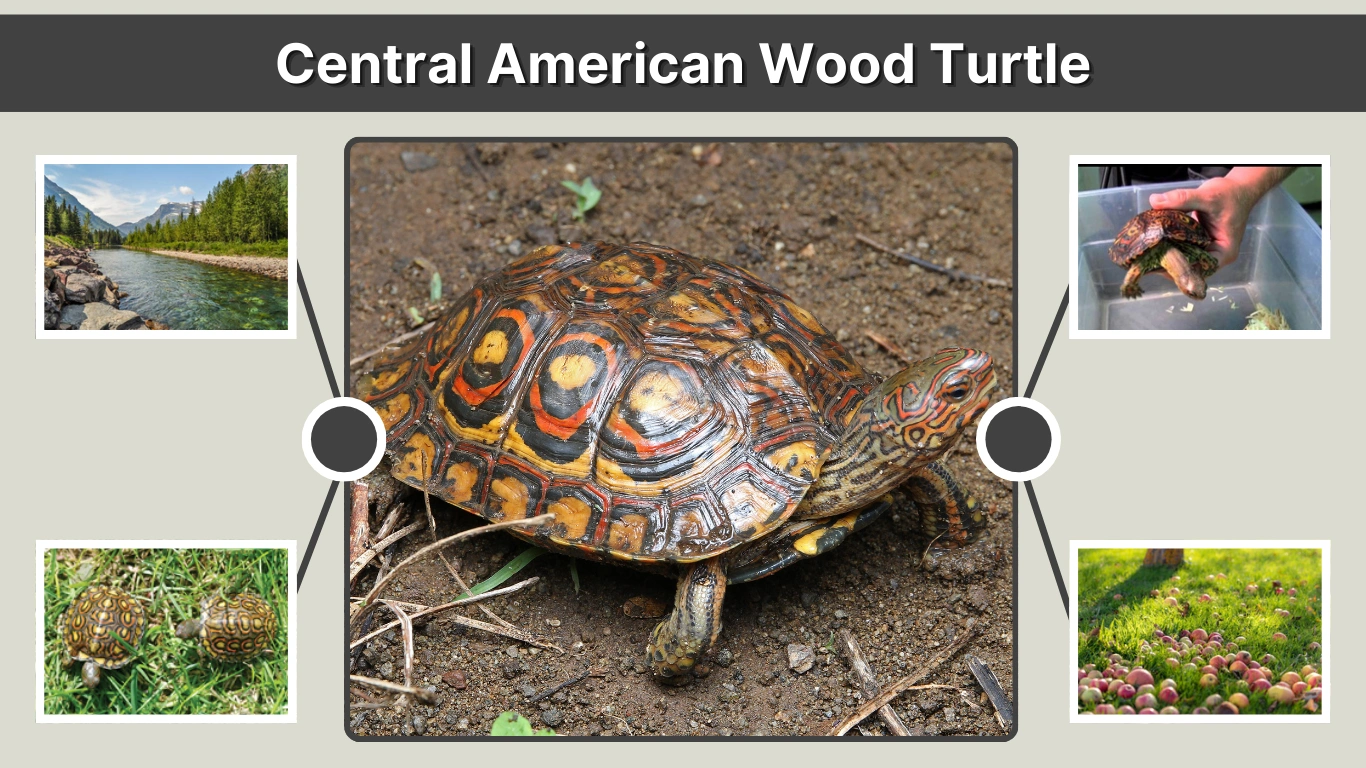
The Central American wood turtle is a striking tropical species known for its ornate shell patterns, terrestrial habits, and adaptability to humid forest environments. Popular among reptile enthusiasts, this turtle differs significantly from its North American relatives in climate preference, behavior, and care needs. Understanding the Central American wood turtle habitat, size, taxonomy, and conservation status is essential before considering ownership. This guide explores everything you need to know about Central American wood turtles, from their natural environment to proper captive care.
Central American Wood Turtle Overview
The Central American wood turtle refers to tropical wood turtle species native to parts of Central America, particularly Mexico and neighboring regions. They are semi-terrestrial turtles that spend time both on land and near freshwater sources.
These turtles are admired for:
- Beautifully patterned shells
- Alert and active behavior
- Omnivorous diet
- Strong climbing ability
Unlike fully aquatic turtles, Central American wood turtles prefer moist forest floors and shallow streams rather than deep water habitats.
Scientific Name & Taxonomy
Understanding Central American wood turtle taxonomy helps clarify how this species fits into the turtle family tree.
They belong to:
- Order: Testudines
- Family: Geoemydidae
- Genus: Rhinoclemmys
Several species within the Rhinoclemmys genus are commonly referred to as wood turtles in Central America.
They differ from the North American wood turtle (Glyptemys insculpta), which belongs to a different genus and occupies cooler climates.
Because of this taxonomic distinction, care requirements and habitat preferences are not identical between North American and Central American wood turtles.
Physical Description
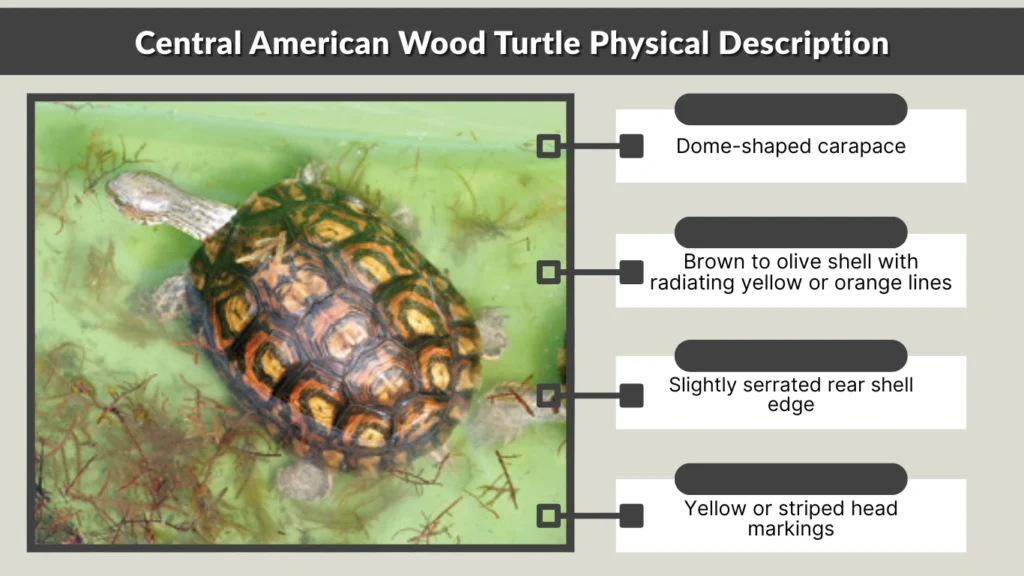
A Central American wood turtle is medium-sized and known for its ornate shell markings.
Key physical features include:
- Dome-shaped carapace
- Brown to olive shell with radiating yellow or orange lines
- Slightly serrated rear shell edge
- Yellow or striped head markings
The plastron (underside of the shell) is usually lighter in color with darker seams. Their patterned shell gives them a highly decorative appearance, which contributes to their popularity in the reptile trade.
If viewing a Central American wood turtle image, you will notice the intricate geometric patterns on the shell, which vary slightly between individuals.
Central American Wood Turtle Habitat
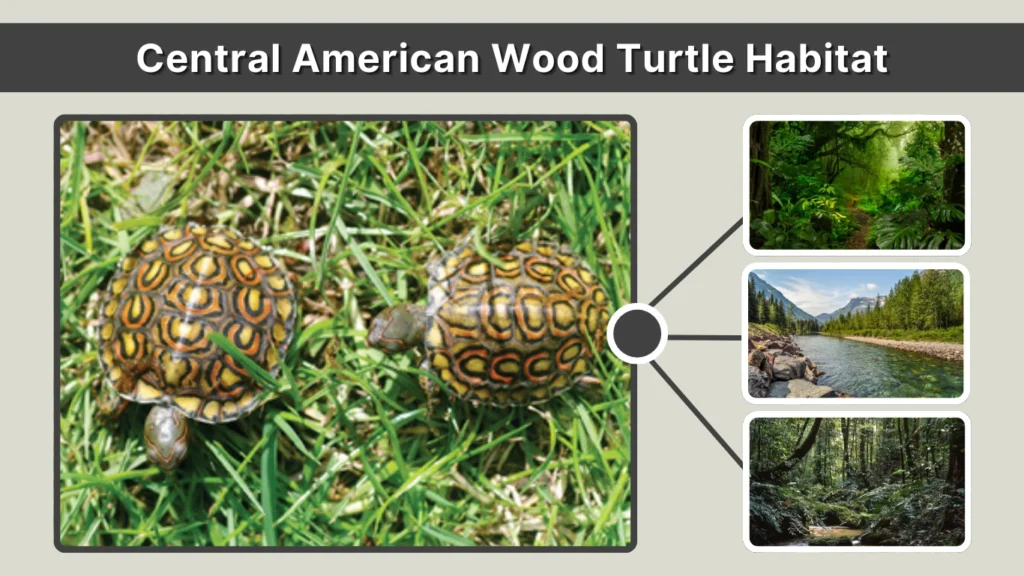
Natural Habitat
The Central American wood turtle habitat consists primarily of:
- Tropical rainforests
- Humid woodland areas
- Riverbanks and forest streams
- Lowland jungle environments
They prefer moist environments with plenty of leaf litter and vegetation for cover.
Unlike aquatic turtles, they do not spend most of their time swimming. Instead, they forage on the forest floor and enter shallow water to soak or regulate temperature.
Climate Preferences
These turtles thrive in:
- Warm temperatures (75–85°F)
- High humidity levels
- Stable tropical climates
Because they originate from tropical regions, they do not tolerate cold temperatures well. This is one of the biggest differences between Central American and North American wood turtles.
Central American Wood Turtle Size
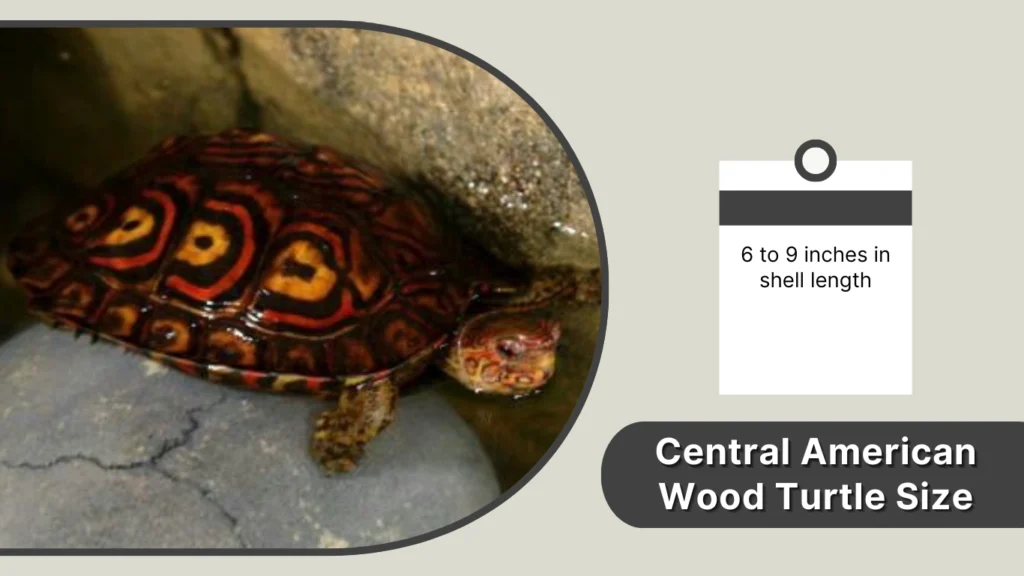
Central American wood turtle size varies depending on species within the Rhinoclemmys genus, but most adults reach:
- 6 to 9 inches in shell length
Females are often slightly larger than males, though size differences are not extreme.
Growth rate depends on:
- Diet quality
- Temperature
- Overall health
- Access to proper UVB lighting
In captivity, a balanced diet and proper enclosure setup help ensure steady and healthy growth.
Central American Ornate Wood Turtle
The Central American ornate wood turtle is a commonly referenced variant known for especially vivid shell patterns. The term “ornate” highlights the detailed radiating lines and brighter coloration on the carapace.
Ornate Central American wood turtles often display:
- More pronounced yellow or orange shell streaks
- Stronger head striping
- Higher contrast shell markings
While appearance may vary slightly, care requirements remain generally the same across related species.
Central American Wood Turtle Care
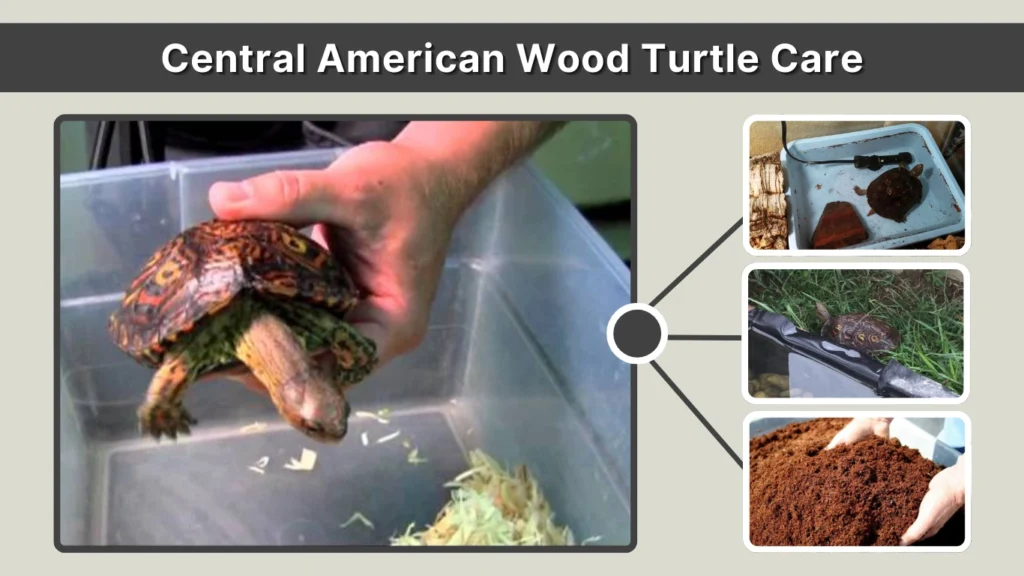
Proper Central American wood turtle care requires attention to environmental conditions that replicate their tropical habitat.
Enclosure Setup
A suitable enclosure should include:
- A spacious terrestrial area
- Access to shallow water for soaking
- Moist substrate such as coconut fiber or soil
- Hiding spots and vegetation
Because these turtles are active and exploratory, floor space is more important than water depth.
Temperature & Humidity
Maintaining correct environmental conditions is critical:
- Daytime temperature: 75–85°F
- Basking area: 88–90°F
- High humidity (60–80%)
UVB lighting is essential for proper calcium metabolism and shell development.
Improper humidity can lead to respiratory infections or shell issues, so consistent monitoring is important.
Diet & Feeding
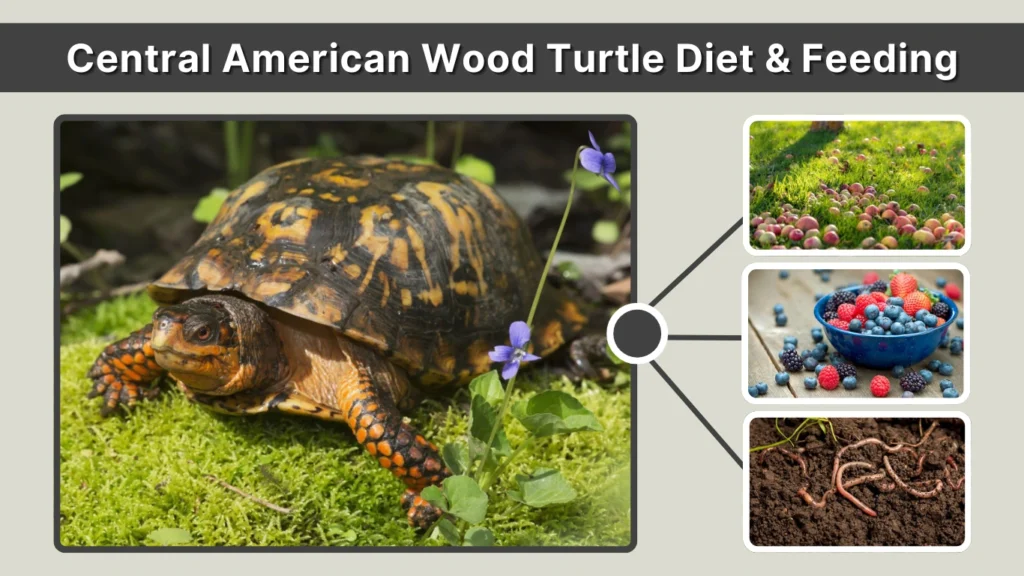
The Central American wood turtle is omnivorous and benefits from a varied, balanced diet. In the wild, they forage across the forest floor and near stream edges, eating both plant and animal matter.
In the Wild
Their natural diet may include:
- Fallen fruits
- Berries
- Leafy vegetation
- Insects
- Earthworms
- Snails
- Small invertebrates
Because they are opportunistic feeders, they adapt to seasonal food availability.
In Captivity
A proper captive diet should include:
- Dark leafy greens (collard, mustard, dandelion)
- Small portions of fruit (papaya, banana, mango)
- Earthworms or mealworms
- High-quality commercial turtle pellets
- Occasional protein such as cooked egg or feeder insects
Fruit should be offered in moderation due to sugar content. Calcium supplementation is recommended to maintain healthy shell development.
Common Health Issues
Like many tropical reptiles, Central American wood turtles are sensitive to improper care conditions.
Common health concerns include:
- Shell rot from excessive moisture without airflow
- Respiratory infections due to low temperatures
- Metabolic bone disease from lack of UVB lighting
- Parasites in wild-caught specimens
Regular enclosure cleaning, proper humidity balance, and veterinary checkups greatly reduce health risks.
Central American Wood Turtle for Sale
You may occasionally see Central American wood turtle for sale listings through exotic reptile breeders. However, it is extremely important to verify legality and source before purchasing.
Legal Considerations
Many wood turtle species are protected under international wildlife trade agreements such as CITES (Convention on International Trade in Endangered Species). Import and export restrictions may apply depending on the country.
Always ensure:
- The turtle is captive-bred
- The breeder provides documentation
- Local wildlife laws permit ownership
Wild-caught turtles often suffer stress and carry parasites, and purchasing them contributes to population decline.
Central American Ornate Wood Turtle for Sale
The ornate Central American wood turtle may command higher prices due to its attractive shell pattern. Pricing varies depending on:
- Age
- Coloration
- Rarity
- Breeder reputation
Responsible ownership includes long-term commitment and ethical sourcing.
Conservation Status
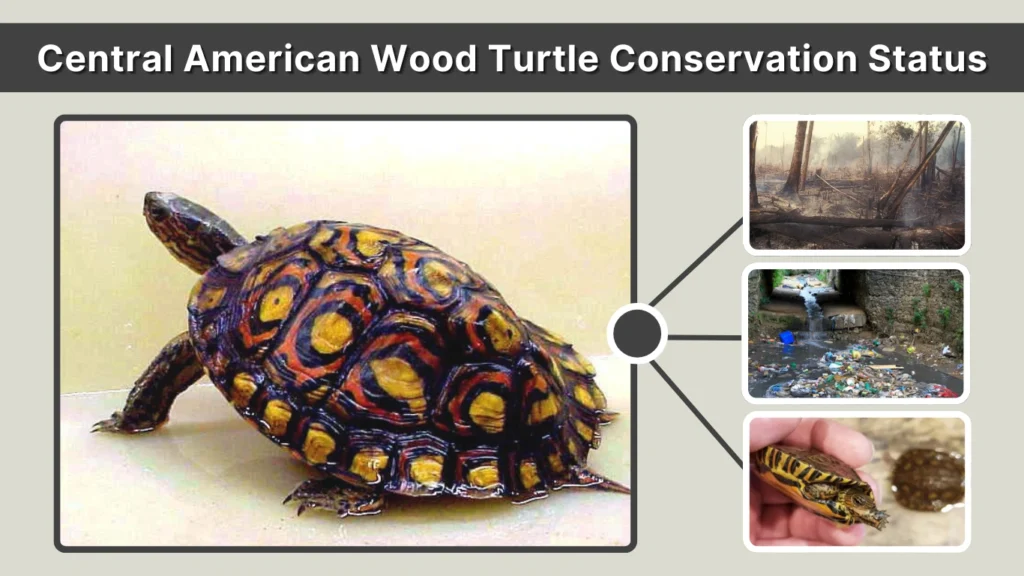
The conservation status of Central American wood turtles varies by species. Habitat destruction, deforestation, and illegal pet trade are major threats.
Primary concerns include:
- Rainforest loss
- River pollution
- Overcollection for the pet trade
Conservation efforts focus on habitat protection and sustainable breeding programs. Protecting tropical ecosystems directly supports the survival of these turtles.
Central American vs North American Wood Turtle
Although they share a common name, Central American wood turtles differ significantly from the North American wood turtle.
Climate Tolerance
- Central American species prefer tropical warmth.
- North American wood turtles tolerate cold winters.
Habitat
- Central American turtles favor humid forests.
- North American wood turtles live in cooler streams and woodlands.
Taxonomy
- Central American species belong to the genus Rhinoclemmys.
- North American wood turtle belongs to Glyptemys insculpta.
Understanding these differences is essential for proper identification and care.
Facts About the Central American Wood Turtle
Here are some interesting facts about the wood turtle species in Central America:
- They are strong climbers and may scale low vegetation.
- They often forage actively during the day.
- Their ornate shell patterns help camouflage them among leaf litter.
- They can live for several decades with proper care.
- They rely heavily on humid environments to maintain shell health.
These turtles play an important ecological role by dispersing seeds from fruits they consume.
Lifespan
The Central American wood turtle lifespan typically ranges between:
- 20 to 30 years in captivity
- Possibly longer under ideal conditions
Proper temperature control, nutrition, and veterinary care significantly influence longevity.
Because of their long lifespan, owning one is a serious commitment that requires long-term planning.
Conclusion
The Central American wood turtle is a beautiful and fascinating tropical species known for its ornate shell patterns and forest-dwelling lifestyle. From understanding Central American wood turtle habitat and size to learning proper care techniques and conservation concerns, responsible knowledge is essential. While their striking appearance makes them attractive in the reptile trade, ethical sourcing and habitat protection are critical to their survival. With proper care and commitment, Central American wood turtles can thrive for decades in captivity while remaining an important part of tropical ecosystems in the wild.