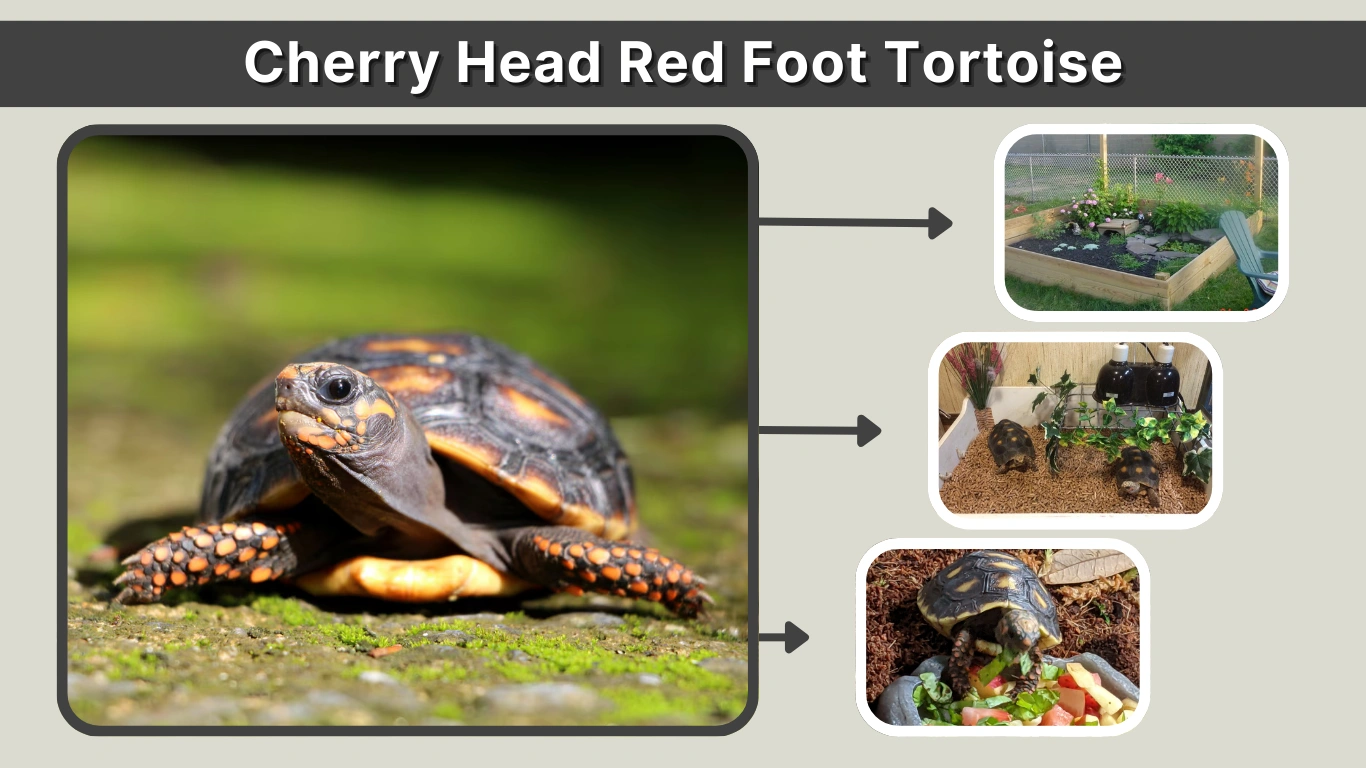
Cherry Head Red Foot Tortoises are among the most vibrant and sought-after tortoise varieties, known for their bright red or orange head markings and friendly personalities. These South American tortoises are close relatives of the classic Red-Footed Tortoise but display unique colors, smaller size, and higher collectible value. Whether you’re curious about their care, size, diet, or purchasing options, this guide covers everything new keepers and experienced enthusiasts need to know.
What Is a Cherry Head Red Foot Tortoise?
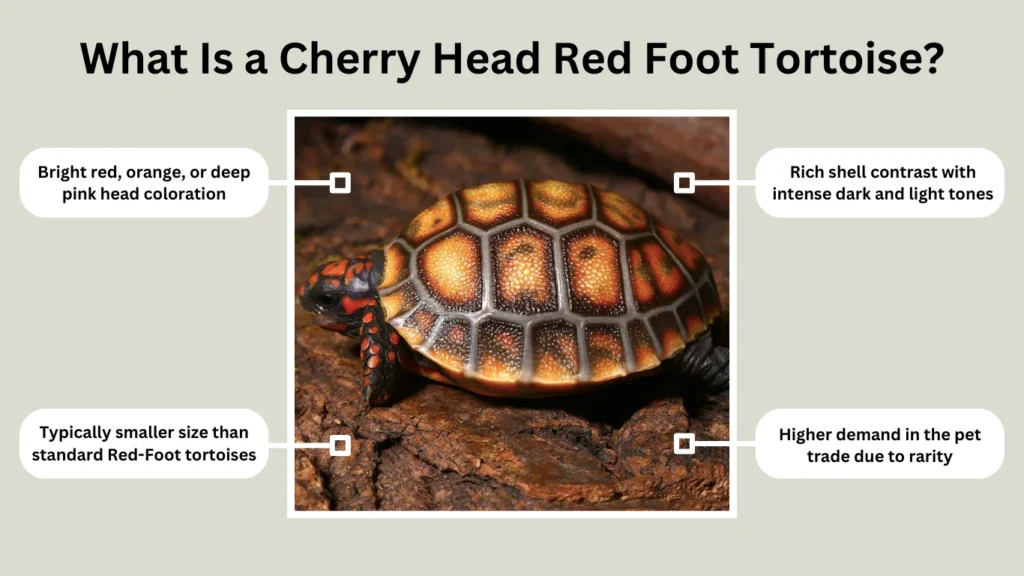
The Cherry Head Red Foot Tortoise is a regional color variant of the Red-Footed Tortoise (Chelonoidis carbonarius). They originate mostly from Brazil and parts of Bolivia, where humid forests provide the perfect environment for their high-moisture lifestyle. Cherry Heads are distinguished by:
- Bright red, orange, or deep pink head coloration
- Rich shell contrast with intense dark and light tones
- Typically smaller size than standard Red-Foot tortoises
- Higher demand in the pet trade due to rarity
These traits make them a favorite among collectors and keepers who want a visually striking tortoise.
Cherry Head vs Red Foot Tortoise
While they belong to the same species, Cherry Heads are visually and behaviorally distinct:
Key Differences
- Color – Cherry Heads have brighter red/orange heads and legs.
- Size – They are usually smaller as adults, often by a few inches.
- Origin – Many are Brazilian lineages, whereas Red Foots come from various parts of South America.
- Price – Cherry Heads cost more due to rarity and selective breeding.
- Shell Pattern – High contrast, deeper tones, and more vibrant spotting.
Similarities
- Both require warm, humid environments.
- Both have similar diets with fruits, greens, and occasional protein.
- Both are personable, calm, and active pets.
Types & Morphs of Cherry Head Red Foot Tortoises
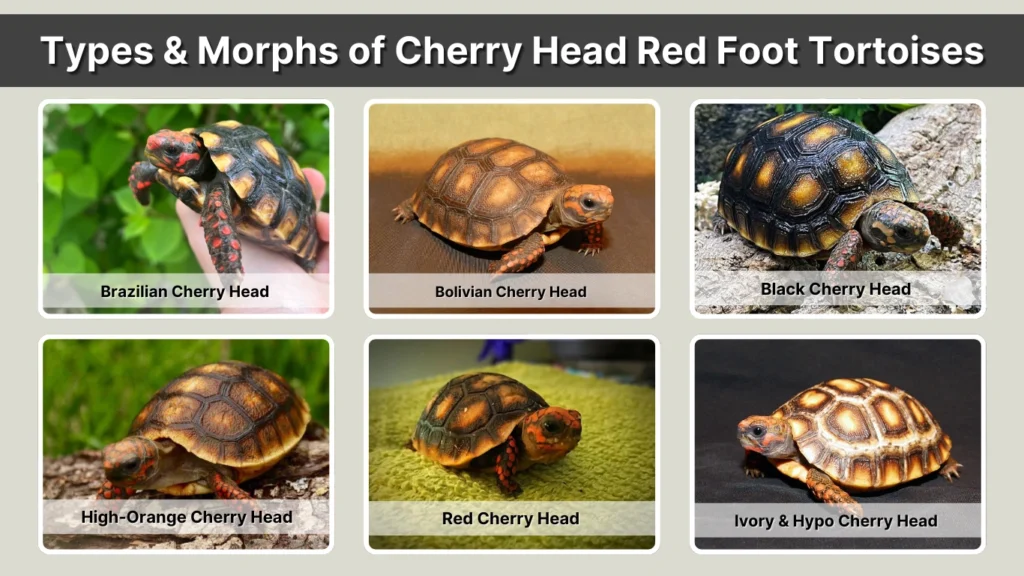
The popularity of Cherry Heads has created multiple visually unique lines:
- Brazilian Cherry Head – Brightest colors, smaller size, high demand
- Bolivian Cherry Head – Larger, darker tones
- Black Cherry Head – Very dark shell with bright red face
- High-Orange Cherry Head – Intense orange/red saturation
- Peach/Red Cherry Head – Softer peach-colored head
- Ivory & Hypo Cherry Head – Light/pale morphs with reduced pigment
Captive-bred (CB) lines produce the most consistent color patterns.
How to Tell If Your Tortoise Is a Cherry Head
Identifying a true Cherry Head is important since some Red Foot tortoises have naturally bright heads. A genuine Cherry Head typically shows:
- Deep red or orange head patches
- Distinct red scales on the legs
- More “rounded” shell shape
- Higher shell contrast with darker scutes
- Documented breeding lineage (from reputable breeders)
If the tortoise came from Brazilian stock, it is almost always considered a Cherry Head.
Cherry Head Red Foot Tortoise Size
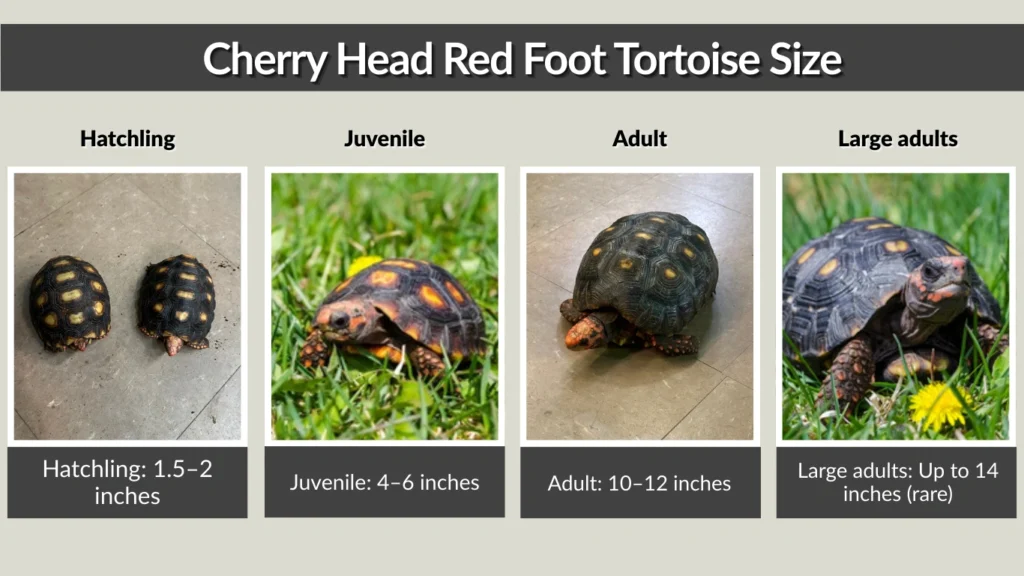
Cherry Heads stay smaller than standard Red Footed Tortoises.
Average Sizes
- Hatchling: 1.5–2 inches
- Juvenile: 4–6 inches
- Adult: 10–12 inches
- Large adults: Up to 14 inches (rare)
Cherry Head vs Red Foot Size
- Cherry Heads: 10–12 inches
- Regular Red Foots: 12–16+ inches
Their smaller size makes them easier to house indoors.
Lifespan Expectations
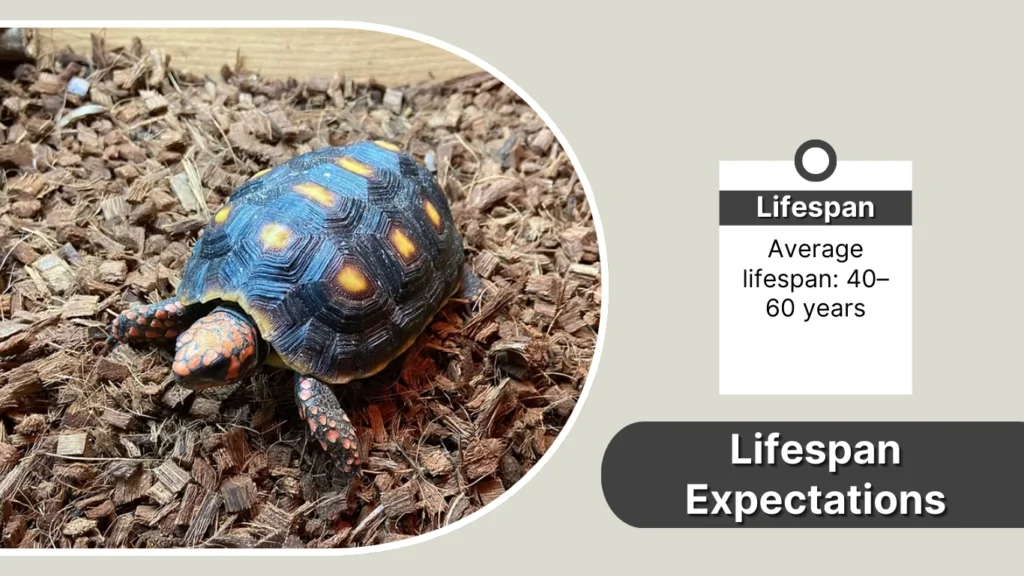
Cherry Head Red Foot Tortoises live long lives when properly cared for.
- Average lifespan: 40–60 years
- Well-kept captives: 70+ years
- Brazilian lines: Known for strong genetics and long lifespans
Good diet, proper humidity, and regular UVB exposure significantly extend lifespan.
Behavior & Temperament
Cherry Heads are known for being interactive, curious, and gentle.
- They frequently explore and forage.
- They tolerate handling better than many tortoise species.
- They recognize their keepers and may approach for food.
- They thrive in humid, forest-style enclosures that provide cover and hiding spots.
Their personality makes them one of the more engaging tortoise pets.
Cherry Head Red Foot Tortoise Enclosure Setup
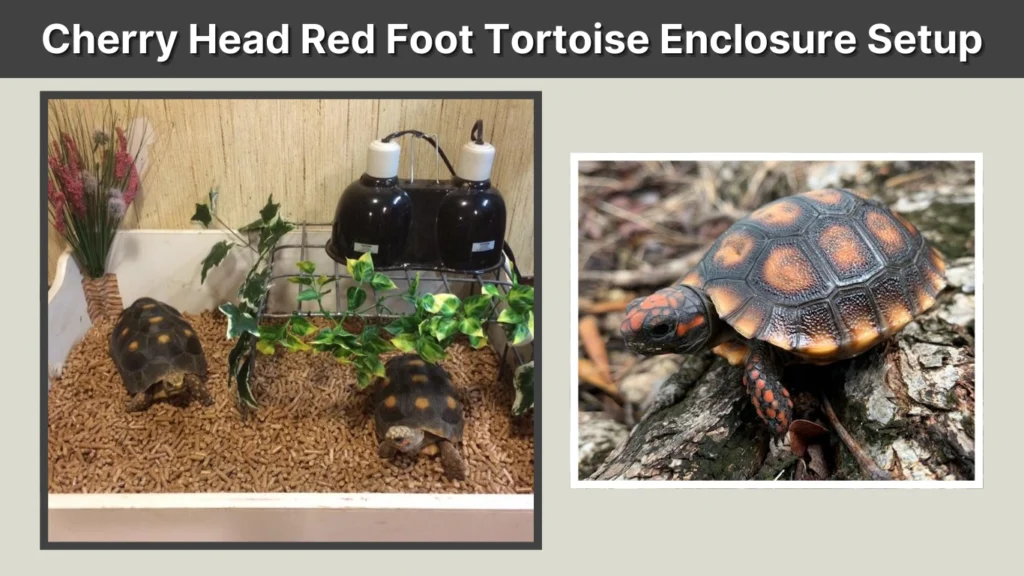
Proper housing is essential for maintaining humidity, preventing health issues, and supporting natural behavior. Cherry Heads thrive in warm, semi-humid forest environments, which can be recreated indoors or outdoors depending on climate.
Indoor Enclosures
Indoor setups are ideal for babies and juveniles or for keepers in cooler climates. A well-designed enclosure should include:
- A closed chamber or high-wall tortoise table
- Deep humid substrate (cypress mulch, coconut coir, organic soil)
- UVB lighting (10–12 hours daily)
- A warm hide and ambient humidity above 70%
- A large soaking dish for daily hydration
Minimum Indoor Sizes
- Hatchlings: 2×3 ft
- Juveniles: 3×4 ft
- Adults: 4×6 ft (bigger is always better)
Closed chambers help maintain humidity between 70–90%, reducing the risk of pyramiding and respiratory problems.
Outdoor Enclosures

Outdoor habitats are excellent for adult Cherry Heads in warm, humid regions.
Outdoor Setup Features
- Shaded areas with dense plants
- Moist substrate and mulch beds
- A heated hide box for cool nights
- Secure fencing at least 12 inches high
- Water pan for soaking and temperature regulation
Outdoor exposure naturally boosts UVB levels and encourages healthy behavior.
Temperature & Humidity Requirements
Cherry Heads need stable warmth and moisture to thrive.
Ideal Conditions
- Basking spot: 90–95°F
- Ambient temperature: 75–85°F
- Nighttime: 70–75°F
- Humidity: 70–90%
- Substrate depth: 3–6 inches for burrowing
Maintaining proper humidity prevents dehydration, shell pyramiding, poor shedding, and hind-leg weakness.
Diet & Feeding Guide
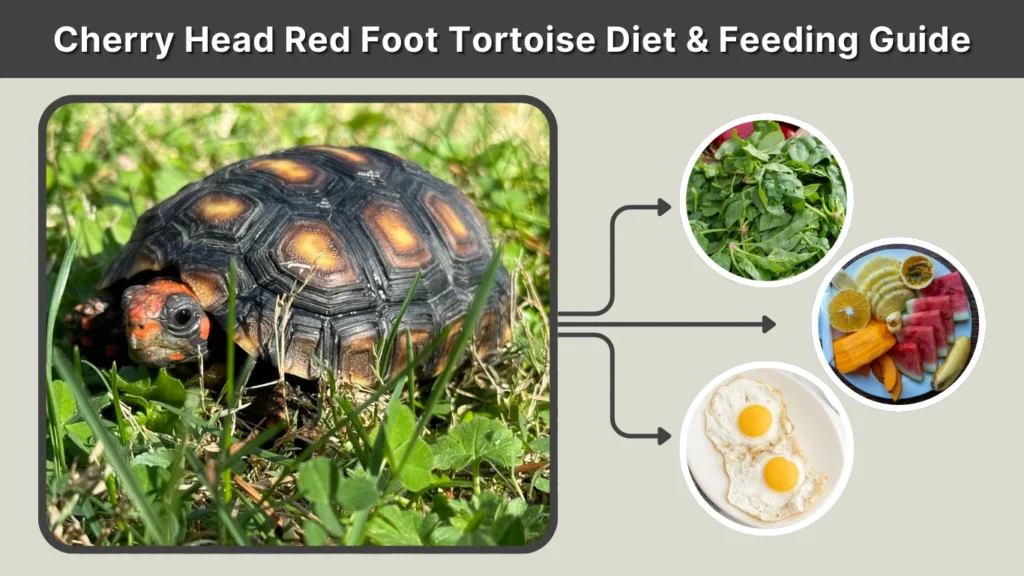
Cherry Head Red Foot Tortoises are omnivorous, meaning they eat fruits, greens, plants, and occasional protein. Their diet should mimic the humid forest floor foods found in the wild.
Daily Diet Breakdown
- Greens & leaves (40%)
- Collards, dandelion, hibiscus, grape leaves
- Collards, dandelion, hibiscus, grape leaves
- Vegetables (30%)
- Squash, carrots, bell peppers
- Squash, carrots, bell peppers
- Fruit (20%)
- Papaya, mango, berries, banana, melon
- Papaya, mango, berries, banana, melon
- Protein (10%, once weekly)
- Cooked egg, high-quality cat food, insects, pinkie mice (optional)
- Cooked egg, high-quality cat food, insects, pinkie mice (optional)
Foods to Limit or Avoid
- Broccoli (okay in small amounts, avoid excess)
- Spinach and kale (oxalates)
- Iceberg lettuce (poor nutrition)
- Citrus fruits
- Dog food (too much fat/protein)
Hydration
- Offer shallow soaking dishes
- Mist enclosure twice daily
- Provide high-moisture foods (melons, papaya)
A varied diet ensures better growth, strong shells, and long-term health.
Care Requirements & Maintenance
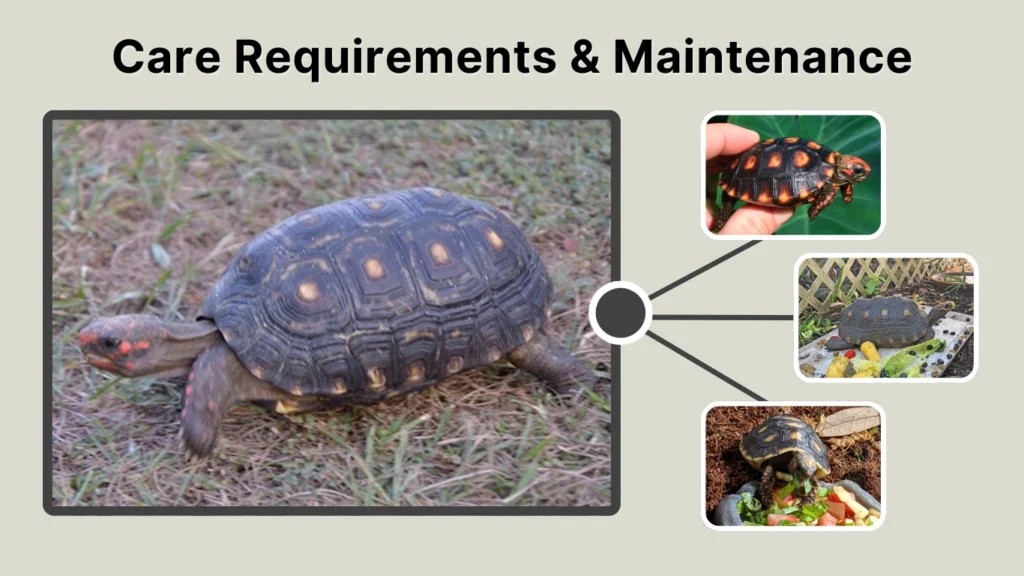
A well-maintained Cherry Head enclosure reduces stress and disease risk.
Weekly Checklist
- Spot clean waste and old food
- Refresh water bowl
- Check heat and humidity levels
- Rotate foods for variety
- Inspect shell for cracks or fungus
Monthly Checklist
- Full substrate turn or partial replacement
- Deep clean hides and feeding slate
- Replace UVB bulbs every 6–12 months
- Monitor weight and growth
Proper care keeps tortoises active, hydrated, and healthy year-round.
Common Health Issues
Cherry Heads are hardy but can develop health problems if care is inconsistent.
Health Concerns
- Hind-leg paralysis (low temps, calcium imbalance)
- Metabolic Bone Disease (MBD)
- Respiratory infections (low humidity or cold air)
- Shell rot from wet bedding without airflow
- Parasites in new imports or stressed tortoises
Warning Signs
- Lethargy
- Runny nose
- Soft shell
- Loss of appetite
- Difficulty walking
- Swollen eyes
Early veterinary care ensures fast recovery.
Breeding & Reproduction
Cherry Head breeding is popular among collectors because it produces bright, colorful offspring.
Breeding Basics
- Sexual maturity: 5–7 years
- Males have longer tails; females wider shells
- Courtship involves head bobbing and gentle nudging
- Females lay 4–10 eggs, sometimes multiple clutches
Gestation & Incubation
- Gestation: 4–8 weeks
- Incubation: 75–90 days at 86–88°F
- Lower temps = more males; higher temps = more females
Breeding should only be attempted with healthy, well-established adults.
Price & Availability
Cherry Head Red Foot Tortoises vary widely in price depending on age, color, and morph.
General Price Range
- Baby Cherry Head: $250–$450
- Juvenile: $400–$650
- Adult: $600–$1,200
- Premium morphs (Hypo, Ivory, High-Orange): $800–$2,500+
- Black Cherry Head: Often $1,000+
Captive-bred (CB) specimens are healthier, more colorful, and easier to care for than wild imports.
Where They Are Sold
- Specialty reptile breeders
- Reptile expos
- Online tortoise farms
- UK sellers
- Rare morph breeders
Avoid big-box pet stores unless the animal is confirmed captive-bred.
FAQ
How big do Cherry Head Red Footed Tortoises get?
Most adults grow to 10–12 inches, with exceptional individuals reaching 14 inches. Their smaller size compared to regular Red-Footed tortoises makes them easier to house indoors.
What is the difference between Cherry Head and Red Foot?
Cherry Heads have brighter colors, smaller adult size, and originate mostly from Brazil. Regular Red Foots can be larger and show less intense coloration.
What do Cherry Head tortoises eat?
They eat greens, leafy plants, vegetables, fruits, and light protein. Their diet should be diverse and moisture-rich.
How long do Cherry Head tortoises live?
They typically live 40–60 years, with many well-kept individuals surpassing 70 years.
Are Cherry Heads good pets?
Yes. They are interactive, hardy, colorful, and tolerant of handling—ideal for beginner and intermediate keepers.