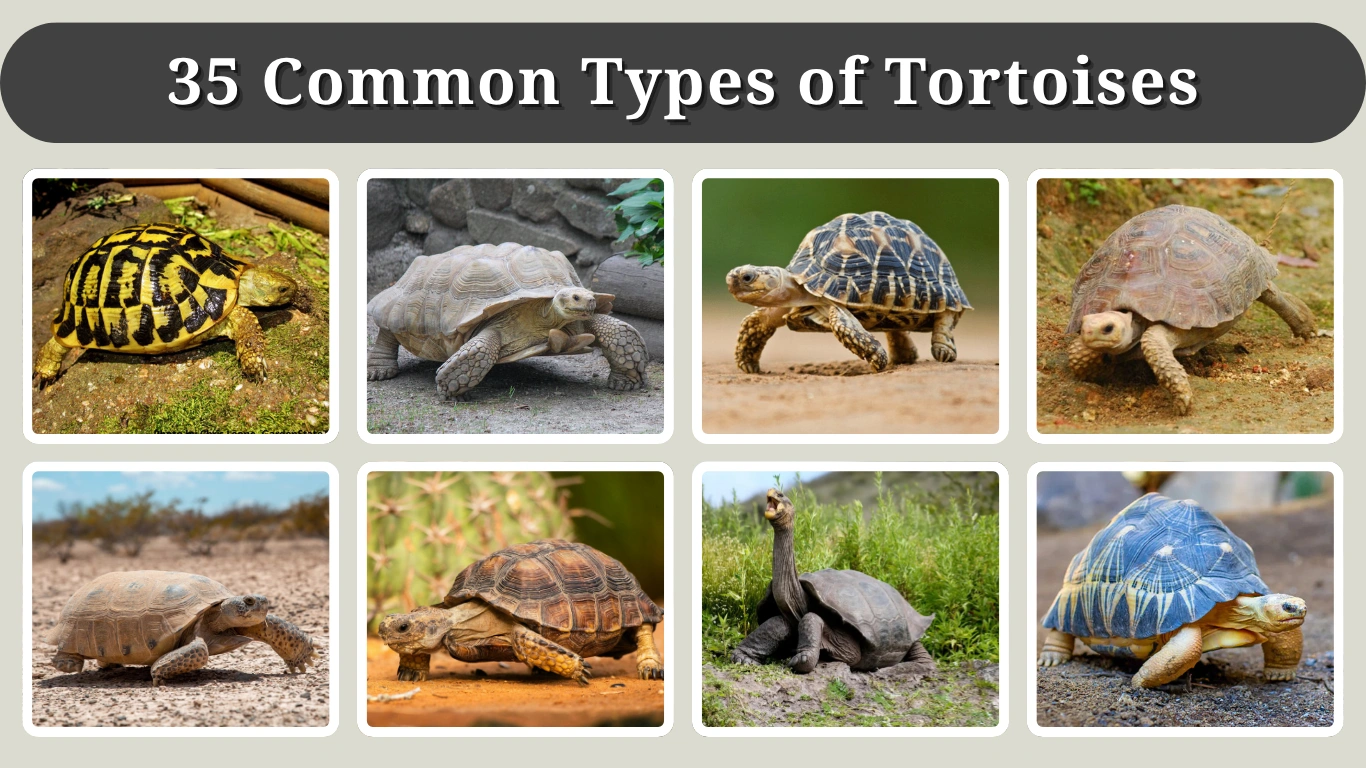
Tortoises are fascinating reptiles found in deserts, forests, grasslands, and tropical regions around the world. Each species has its own unique appearance, habitat needs, and lifespan, making them incredibly diverse. Whether you’re a pet enthusiast, a wildlife learner, or simply curious about these ancient creatures, understanding the different types of tortoises helps you appreciate their remarkable adaptations. This collection highlights 35 common tortoise species, from giants like the Aldabra to tiny gems like the Egyptian tortoise.
1. Sulcata Tortoise (African Spurred Tortoise)

The Sulcata tortoise is one of the largest and most commonly kept pet tortoises in the world. Native to the southern edge of the Sahara Desert, it is known for its impressive size, hardy nature, and long lifespan.
Identification
- Large, sandy-brown to tan shell
- Thick, rugged skin with visible scales
- Sharp, strong front legs for digging
- Two large spurs on the thighs (its name origin)
- Grows very large—up to 100+ lbs
Habitat
Sulcata tortoises are native to dry grasslands and semi-desert regions of Africa. They thrive in warm climates with low humidity and spend much of their time digging deep burrows to escape extreme heat.
Diet
Their diet is primarily made up of high-fiber grasses, weeds, and leafy greens. As strict herbivores, they rely on a steady intake of rough forage to maintain healthy digestion and shell growth.
Lifecycle & Lifespan
Sulcata tortoises grow rapidly during their first years and continue developing for decades. They reach maturity around 15–20 years of age. With proper care, they can live 70–100+ years, making them a long-term commitment for keepers.
2. Russian Tortoise

The Russian tortoise is a small, hardy species popular among pet owners for its manageable size and friendly temperament. Originating from dry regions of Central Asia, it adapts well to captive environments when provided proper care.
Identification
- Small size, typically 5–8 inches
- Smooth, rounded shell with tan and dark brown patterns
- Four toes on each front foot (a key distinguishing feature)
- Light-colored skin with subtle scaling
- Females usually larger than males
Habitat
Russian tortoises come from arid, rocky deserts and scrublands in countries like Uzbekistan, Afghanistan, and Kazakhstan. They prefer warm, dry environments and are skilled diggers, often creating burrows for shelter.
Diet
Their natural diet consists of fibrous grasses, broadleaf plants, and edible weeds. In captivity, they thrive on a mix of leafy greens, weeds, and occasional flowers. They require low-protein foods to avoid shell and kidney issues.
Lifecycle & Lifespan
Russian tortoises grow slowly and reach maturity around 10–15 years of age. With proper care, they commonly live 40–50 years, and some may exceed 60 years in ideal conditions.
3. Hermann’s Tortoise
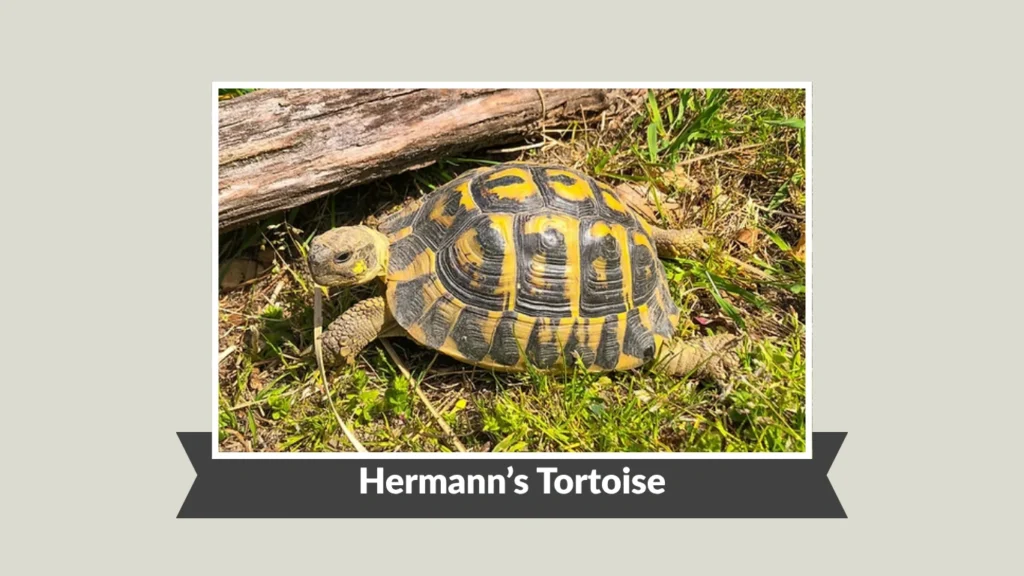
The Hermann’s tortoise is a small, colorful Mediterranean species known for its bright shell patterns and gentle behavior. It is one of the most popular tortoise species kept as pets due to its manageable size and calm nature.
Identification
- Small to medium size, 6–8 inches
- Yellow and black patterned shell
- Well-defined dark bands on the plastron (belly shell)
- Tail tip has a hardened “spur”
- Front legs covered in small, fine scales
Habitat
Hermann’s tortoises originate from Mediterranean forests, scrublands, and rocky hillsides in southern Europe. They prefer warm, sunny environments with ample vegetation and natural hiding spaces.
Diet
They feed on a variety of leafy plants, grasses, herbs, and flowers. Their diet should be high in fiber and low in protein. They enjoy dandelion, plantain, clover, and other broadleaf weeds.
Lifecycle & Lifespan
Hermann’s tortoises grow steadily and reach maturity between 10–12 years. With proper care, they can live 50–75 years, and some individuals may surpass 90 years.
4. Greek Tortoise
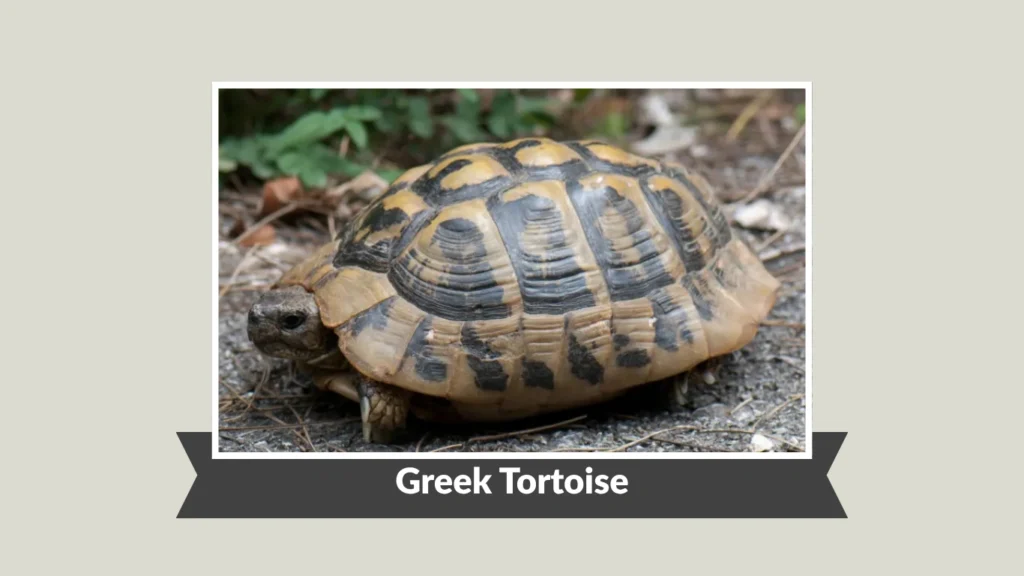
The Greek tortoise, also known as the spur-thighed tortoise, is a well-known Mediterranean species with a domed shell and gentle personality. It adapts well to outdoor enclosures in warm climates.
Identification
- Medium size, 5–10 inches
- Golden to dark brown shell with darker patches
- One large spur on each thigh
- Split or slightly indented tail scute
- Highly domed carapace
Habitat
Greek tortoises inhabit dry, rocky Mediterranean regions, including grasslands, scrub, and forest edges. They are sun-loving reptiles that require warm environments and access to shady, cool retreats.
Diet
Their diet is composed of high-fiber grasses, weeds, and flowers. In captivity, they thrive on leafy greens such as collard greens, dandelion, and hibiscus. Avoid high-protein foods to maintain proper shell health.
Lifecycle & Lifespan
Greek tortoises mature around 12–15 years of age. With optimal care, they can live 60–80 years, and some individuals may exceed a century.
5. Marginated Tortoise
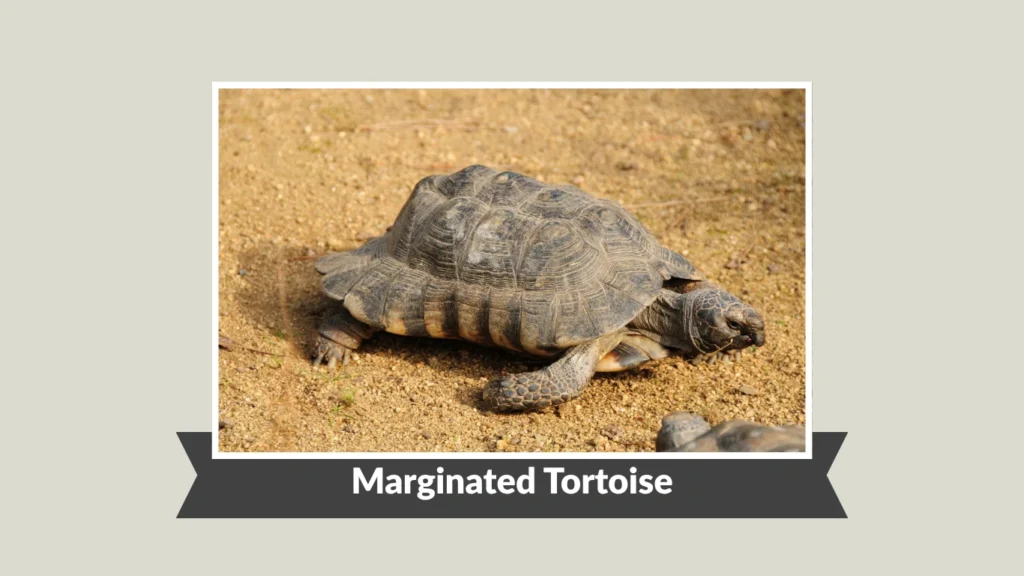
The Marginated tortoise is the largest European tortoise species, recognized by its flared rear shell edges. Native to the Mediterranean, it is hardy, active, and well-suited for outdoor habitats.
Identification
- Medium to large size, 10–14 inches
- Rear of shell flares outward like a skirt
- Dark shell with pale yellow patches
- Elongated, oval-shaped carapace
- Strong legs with noticeable scales
Habitat
Marginated tortoises live in rocky hillsides, scrublands, and open forests in Greece, the Balkans, and Italy. They thrive in warm climates with dry soil, natural hiding spots, and plenty of sunlight.
Diet
Their diet consists mainly of grasses, weeds, plants, and flowers. They require a high-fiber, low-protein diet. Safe foods include dandelion, plantain, grape leaves, and hibiscus leaves.
Lifecycle & Lifespan
Marginated tortoises reach maturity at around 12–15 years. With consistent care, they commonly live 70–100 years, making them one of the longest-lived Mediterranean species.
6. Red-Footed Tortoise
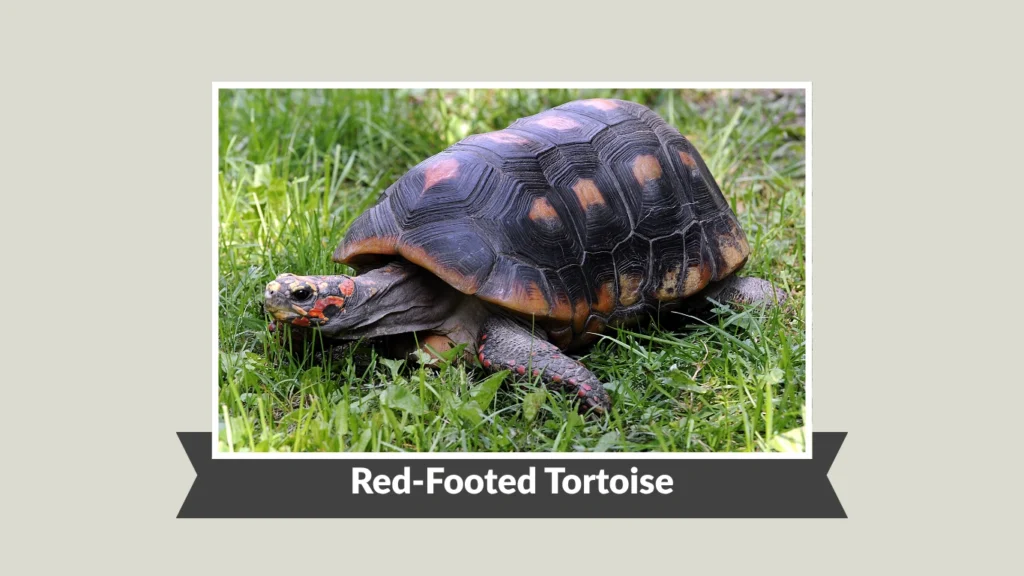
The Red-footed tortoise is a colorful tropical species popular for its bright markings and sociable nature. Native to South America, it thrives in warm, humid environments.
Identification
- Medium size, 10–14 inches
- Distinct red, orange, or yellow scales on legs
- Dark, domed shell with pale center patches
- Smooth, rounded shape
- Slightly concave plastron in males
Habitat
Red-footed tortoises inhabit tropical forests, savannas, and moist grasslands in countries like Brazil, Venezuela, and Colombia. They need warm temperatures, moderate humidity, and access to shaded spots.
Diet
They are omnivores, eating leafy greens, fruits, flowers, fungi, and occasional animal matter. In captivity, offer greens, hibiscus flowers, papaya, mango, and limited protein like cooked egg or insects.
Lifecycle & Lifespan
Red-footed tortoises mature between 10–12 years of age. With proper humidity and nutrition, they can live 40–60 years, and some individuals may reach 70+.
7. Yellow-Footed Tortoise

The Yellow-footed tortoise is a large South American species closely related to the Red-footed tortoise but generally bigger and darker in appearance. It is known for its distinctive yellow limb markings and calm temperament.
Identification
- Large size, typically 12–16 inches
- Yellow or amber scales on legs and head
- Dark, elongated shell with light center patches
- Slightly serrated rear shell edge
- Long limbs adapted for forest movement
Habitat
Yellow-footed tortoises inhabit tropical rainforests, humid lowlands, and dense jungle environments. They prefer warm temperatures, high humidity, and access to shaded, moist areas.
Diet
Their natural diet includes fruits, mushrooms, fallen leaves, flowers, and occasional animal matter. In captivity, they enjoy leafy greens, fruits like mango or papaya, and safe flowers. Protein should be offered sparingly.
Lifecycle & Lifespan
They mature around 12–15 years of age. When cared for properly, Yellow-footed tortoises can live 50–70 years, and some may exceed 80 in stable, humid environments.
8. Leopard Tortoise
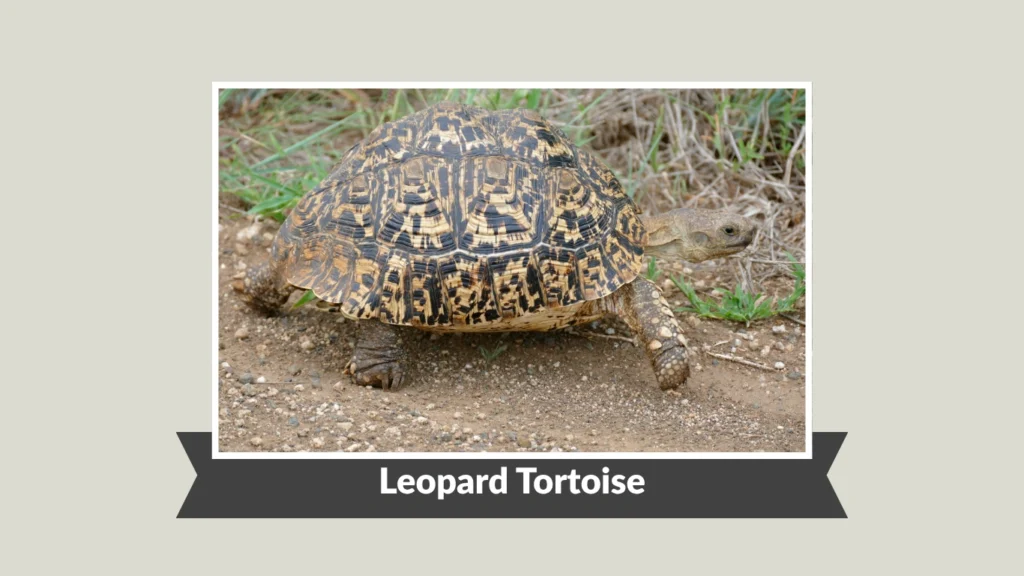
The Leopard tortoise is a striking African species named for the dark spots and blotches covering its shell. It is the fourth-largest tortoise species and is known for being hardy and gentle.
Identification
- Large size, 10–18 inches
- Golden or tan shell with black “leopard-like” markings
- High-domed, smooth carapace
- Long legs adapted for walking across open plains
- Lighter skin with subtle scaling
Habitat
Leopard tortoises inhabit savannas, grasslands, and semi-arid regions across eastern and southern Africa. They thrive in warm, dry climates with plenty of sunlight and open grazing areas.
Diet
They primarily eat grasses, weeds, and shrubs. They also consume cactus pads, succulents, and occasional fruit in the wild. In captivity, a high-fiber, grazing-style diet is essential for healthy growth.
Lifecycle & Lifespan
Leopard tortoises reach maturity at 12–20 years. With proper care, they can live 50–100 years, often remaining active and healthy well into old age.
9. Indian Star Tortoise
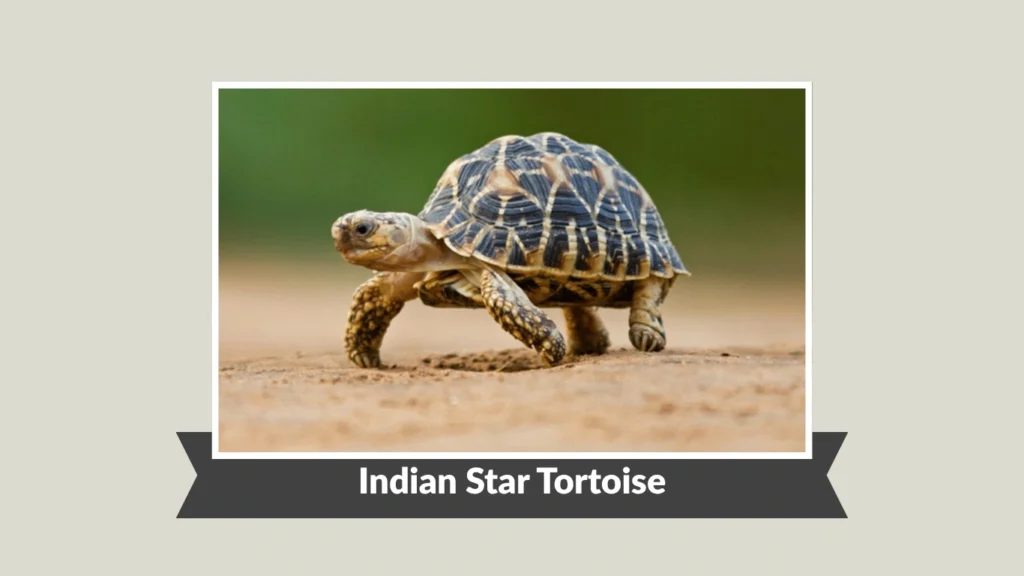
The Indian Star tortoise is a beautifully patterned species known for its radiating star-like markings. Native to India and Sri Lanka, it is prized for its striking appearance and calm temperament.
Identification
- Small to medium size, 6–10 inches
- Star-shaped yellow lines radiating from each scute
- Highly domed shell
- Smooth, glossy appearance
- Males smaller with longer tails
Habitat
Indian Star tortoises live in dry scrublands, semi-desert regions, and grasslands. They prefer warm climates with moderate humidity and access to shelter during the hottest parts of the day.
Diet
They feed on grasses, leafy plants, and flowers. In captivity, they thrive on dandelion, collard greens, hibiscus, and other low-protein greens. Avoid fruits and high-protein foods to maintain shell health.
Lifecycle & Lifespan
Indian Stars mature around 8–12 years of age. With proper care and stable temperatures, they can live 35–80 years, with some documented over 100.
10. Burmese Star Tortoise
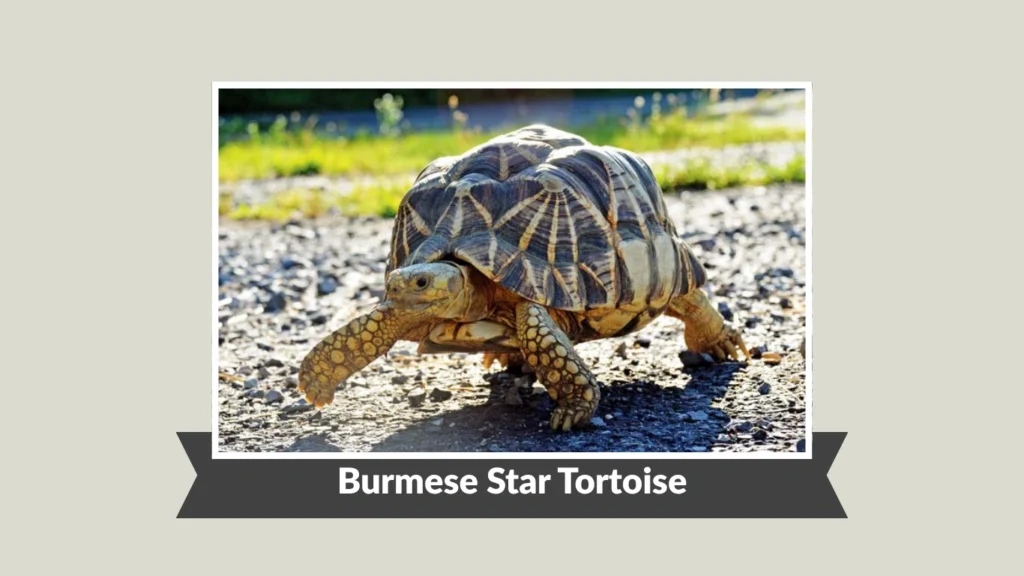
The Burmese Star tortoise is closely related to the Indian Star but larger and even more striking. Native to Myanmar, it is one of the most visually impressive tortoise species.
Identification
- Medium size, 10–14 inches
- Bright yellow star patterns on a dark shell
- More pronounced and larger star lines than Indian Star
- Smooth, tall dome
- Thick, sturdy legs
Habitat
Burmese Star tortoises inhabit dry forests, scrublands, and grasslands in Myanmar. They live in warm, dry climates with moderate humidity and plenty of natural shelters.
Diet
Their diet consists of grasses, broadleaf plants, flowers, and occasional fruit. In captivity, provide high-fiber greens such as plantain, dandelion, and mulberry leaves. Avoid high-protein items to prevent shell deformities.
Lifecycle & Lifespan
Burmese Stars reach maturity between 10–14 years. With good care, they typically live 60–80 years, and some individuals may surpass 90.
11. Egyptian Tortoise
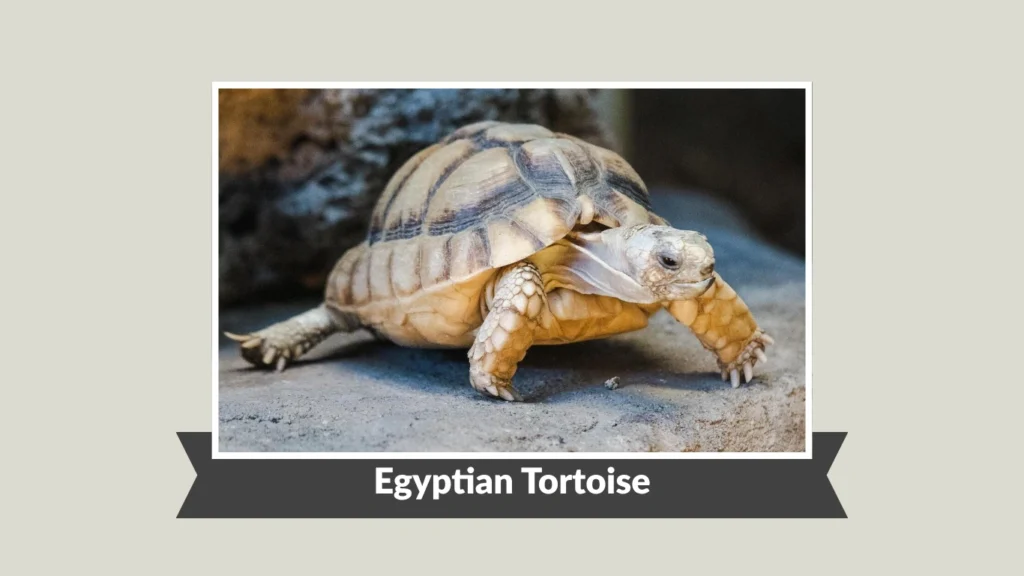
The Egyptian tortoise is one of the smallest tortoise species in the world. Known for its pale coloration and delicate features, it thrives in very dry, arid environments.
Identification
- Very small size, 3–5 inches
- Light tan to pale yellow shell
- Smooth, rounded carapace
- Darker edging on scutes
- Small head with gentle facial features
Habitat
Egyptian tortoises inhabit desert and semi-desert regions of Egypt, Libya, and Israel. They are adapted to hot, dry climates with sandy soils, sparse vegetation, and minimal moisture.
Diet
They feed on dry grasses, desert plants, flowers, and leafy weeds. In captivity, they require a low-protein, high-fiber diet with plants like dandelion, endive, and hibiscus leaves.
Lifecycle & Lifespan
They reach maturity relatively early, around 5–8 years. With proper husbandry, Egyptian tortoises can live 70–100 years, despite their tiny size.
12. Pancake Tortoise
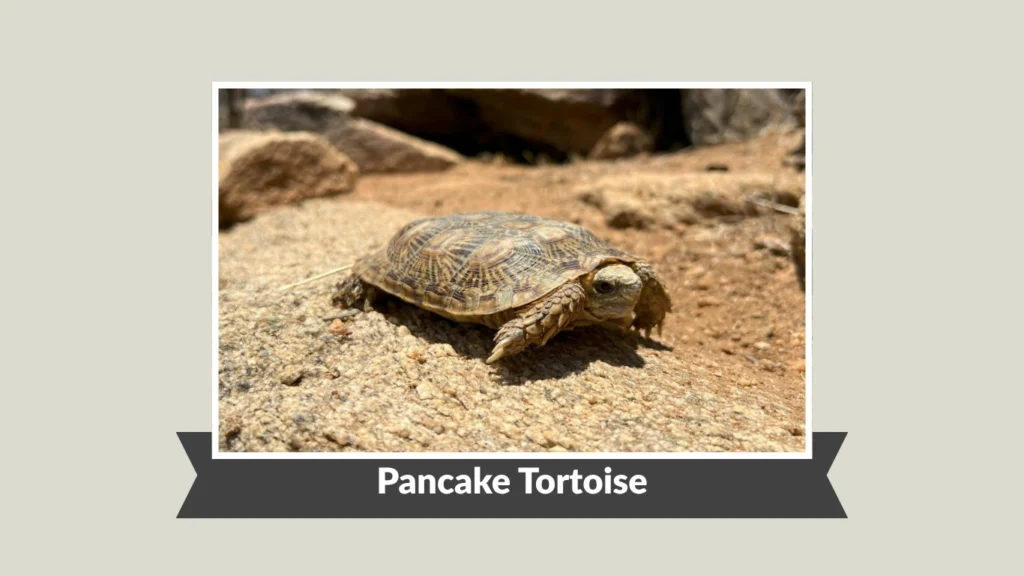
The Pancake tortoise is a unique species known for its unusually flat, flexible shell, which allows it to slip into narrow rock crevices to avoid predators.
Identification
- Flat, flexible shell unlike any other tortoise
- Light brown with dark radiating lines
- Lightweight build
- Long limbs for climbing rocky surfaces
- Fast and agile for a tortoise
Habitat
Pancake tortoises inhabit rocky outcrops and savanna regions in Kenya, Tanzania, and surrounding areas. They depend on narrow rock fissures for safety and prefer warm, dry climates.
Diet
Their diet consists of dry grasses, leafy plants, and flowers. In captivity, they enjoy a mix of fibrous weeds, grasses, and edible flowers such as hibiscus and plantain.
Lifecycle & Lifespan
Pancake tortoises grow slowly and reach maturity around 8–12 years. They typically live 30–40 years, though some may reach 50 with excellent care.
13. Radiated Tortoise
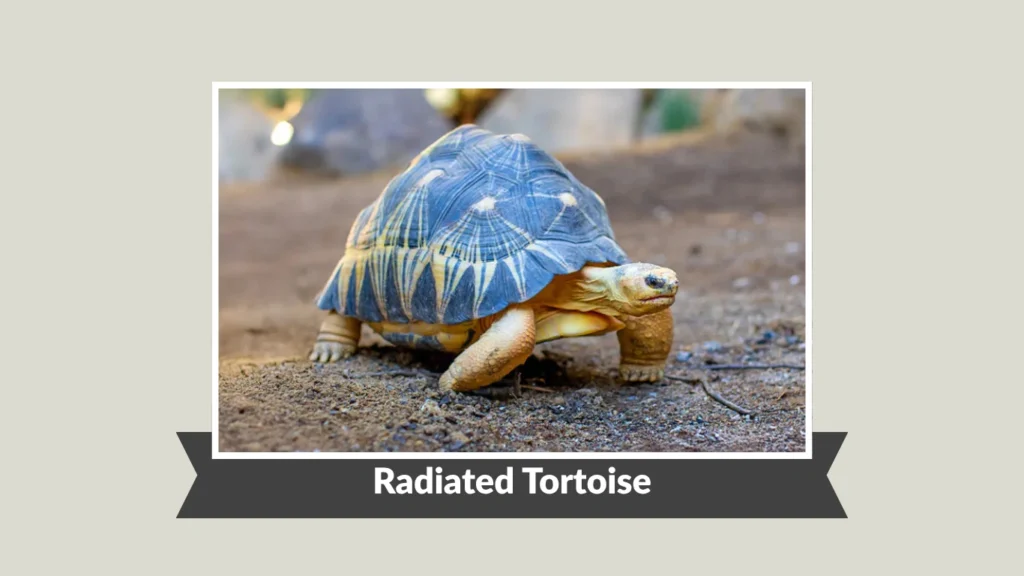
The Radiated tortoise is one of the most visually stunning tortoise species, known for its brilliant star-like radiating shell patterns. Native to Madagascar, it is highly endangered and protected worldwide.
Identification
- Medium size, 12–16 inches
- Jet-black shell with bright yellow starbursts on each scute
- Very high-domed, glossy carapace
- Strong, thick legs with yellow markings
- Females larger and rounder than males
- One of the most striking tortoise shells in the world
Habitat
Radiated tortoises live in the dry spiny forests and scrublands of southern Madagascar. They require warm temperatures year-round and moderate humidity. Their habitat includes sandy soil, thorny vegetation, and abundant sunlight.
Diet
They feed heavily on grasses, succulents, broadleaf plants, cacti, and flowers. In captivity, they need a high-fiber diet focused on grasses, hibiscus, mulberry leaves, and safe weeds. Occasional cactus pads can mimic their natural diet.
Lifecycle & Lifespan
Radiated tortoises reach maturity between 12–20 years. With stable warmth, nutrition, and humidity, they commonly live 80–100+ years. Some individuals have reportedly lived over 150 years, making them one of the longest-lived tortoise species.
14. Angonoka (Ploughshare) Tortoise
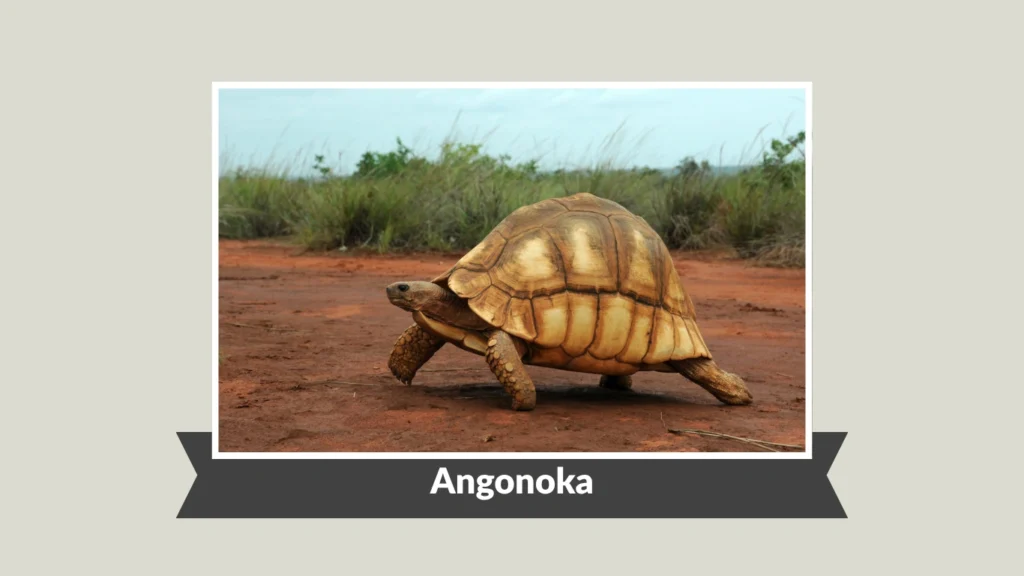
The Angonoka tortoise, also known as the Ploughshare tortoise, is one of the rarest animals on Earth. Endemic to Madagascar, it is critically endangered due to habitat loss and illegal trade.
Identification
- Medium size, 12–16 inches
- Golden-brown shell with raised, sculpted scutes
- Thick, highly domed carapace
- Distinct forward-projecting “plough” on the front of the plastron
- Dark head with pale markings
- Very slow-growing species
Habitat
Angonoka tortoises inhabit the dry bamboo scrub forests of northwest Madagascar, specifically around Baly Bay. Their environment consists of dry soils, scattered shrubs, bamboo thickets, and seasonal brush fires. They rely on warm climates and natural shelters.
Diet
Their natural diet includes dry grasses, bamboo shoots, broadleaf plants, and forest floor vegetation. In captivity, they consume high-fiber greens, weeds, cactus pads, and edible flowers. They require very low protein and stable hydration.
Lifecycle & Lifespan
Ploughshare tortoises grow slowly and mature around 15–20 years of age. With proper care, they can live 80–120 years, possibly longer. Their extremely slow reproduction rate (few eggs per clutch) is a major factor in their endangered status.
15. Galápagos Giant Tortoise
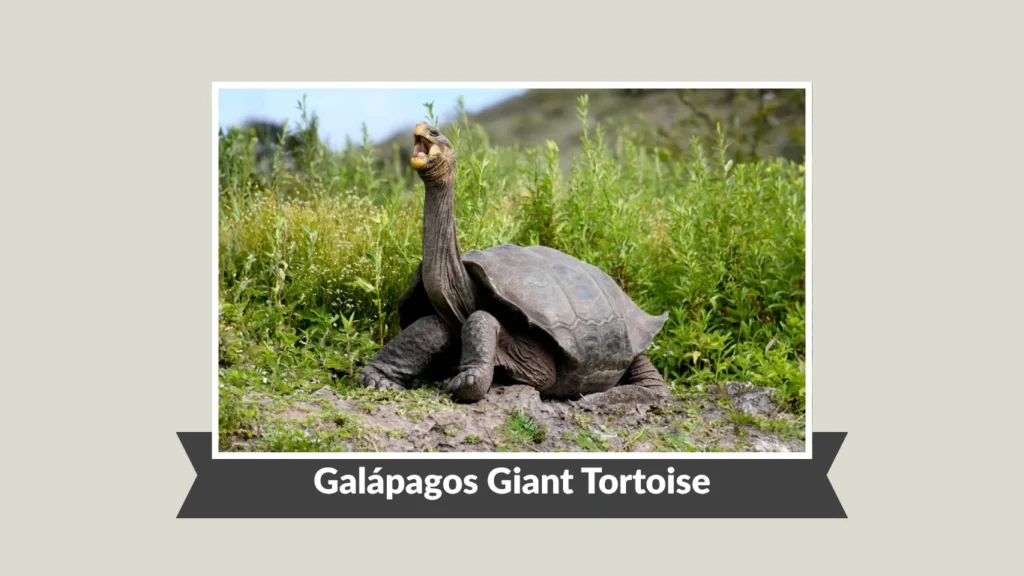
The Galápagos giant tortoise is one of the largest and most iconic tortoise species on Earth. Native to the Galápagos Islands, it is famous for its massive size, dome-shaped shell, and remarkable longevity.
Identification
- Very large size, 4–5 feet in length
- Can weigh 400–600+ lbs
- High-domed or saddle-shaped shell depending on island
- Thick, pillar-like legs
- Long neck for browsing vegetation
- Dark brown to black carapace
Habitat
Galápagos tortoises inhabit volcanic islands with diverse climates—ranging from arid lowlands to lush highlands. They occupy grasslands, shrublands, humid forests, and lava fields. Their environment includes open grazing areas and natural mud wallows for cooling.
Diet
They are strict herbivores, feeding on grasses, leaves, cactus pads, fruits, and shrub vegetation. In the wild, they can go months without food or water due to slow metabolism.
Lifecycle & Lifespan
Galápagos tortoises grow slowly and reach maturity between 20–40 years. They are among the longest-living vertebrates on Earth, with lifespans of 100–150+ years, and some individuals living over 170 years.
16. Aldabra Giant Tortoise
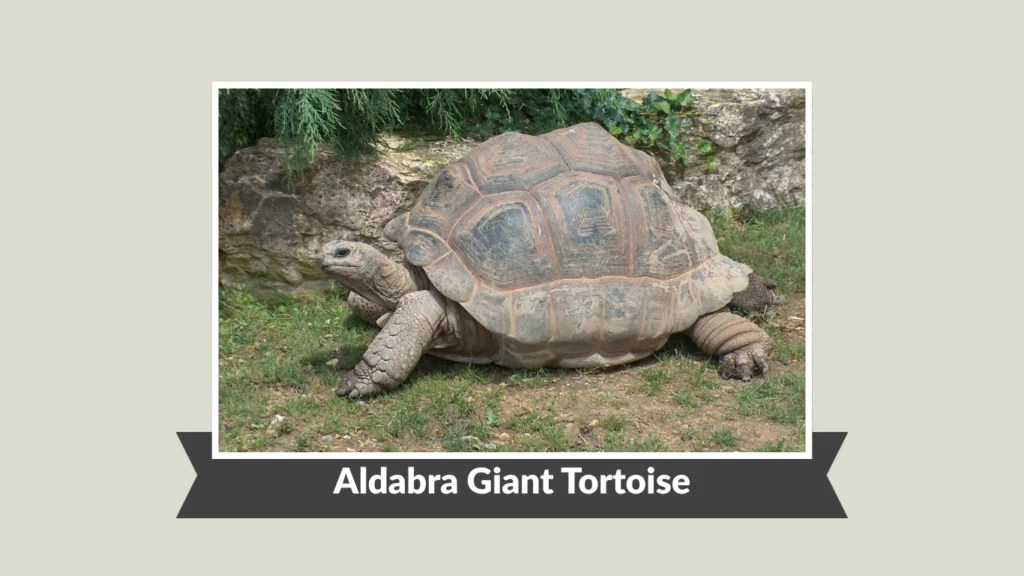
The Aldabra giant tortoise is one of the world’s largest tortoise species, second only to the Galápagos tortoise. It is native to the Aldabra Atoll in the Seychelles and is known for its impressive size and gentle nature.
Identification
- Very large size, 3–4 feet long
- Weight ranges from 300–550 lbs
- Thick, dome-shaped shell
- Stout, sturdy legs
- Long neck for browsing shrubs and low tree branches
- Dark gray to black carapace
Habitat
Aldabra tortoises live in grasslands, scrub forests, mangrove swamps, and coastal dunes on the Aldabra Atoll. They thrive in hot, humid island environments with abundant sunlight and open grazing areas.
Diet
Their diet consists of grasses, leaves, woody plants, and fruits. They also consume fallen vegetation and sometimes chew on bark or stems. In captivity, they require high-fiber greens and occasional fruits.
Lifecycle & Lifespan
Aldabra tortoises mature slowly, around 20–30 years of age. Like the Galápagos tortoise, they are extremely long-lived, commonly reaching 100–150 years. Some individuals may exceed 180 years, making them one of the longest-living land animals.
17. Hingeback Tortoise
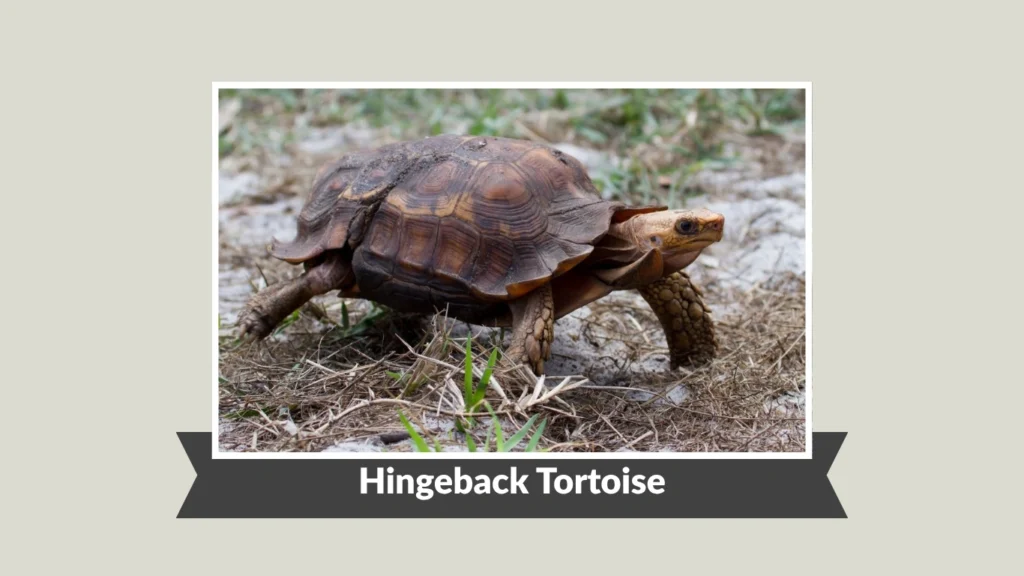
The Hingeback tortoise is a small to medium African tortoise known for the unique hinge on its shell, allowing the rear portion to close partially for protection. Several species exist within the Kinixys genus.
Identification
- Small to medium size, 6–12 inches
- Distinct movable hinge at the back of the shell
- Dark brown to black carapace
- Slightly elongated, flattened shell shape
- Long, narrow head with pointed snout
- Males typically have longer tails
Habitat
Hingeback tortoises inhabit forests, savannas, and humid woodland areas across Central and West Africa. They prefer moist environments with plenty of leaf litter, hiding spots, and moderate shade.
Diet
They are omnivorous, feeding on leafy plants, fruits, fungi, snails, and insects. In captivity, they thrive on greens, mushrooms, fruits like mango, and occasional protein sources such as worms.
Lifecycle & Lifespan
Hingeback tortoises reach maturity around 8–12 years. With varied diet and stable humidity, they typically live 30–50 years, though some may reach 60+.
18. Elongated Tortoise
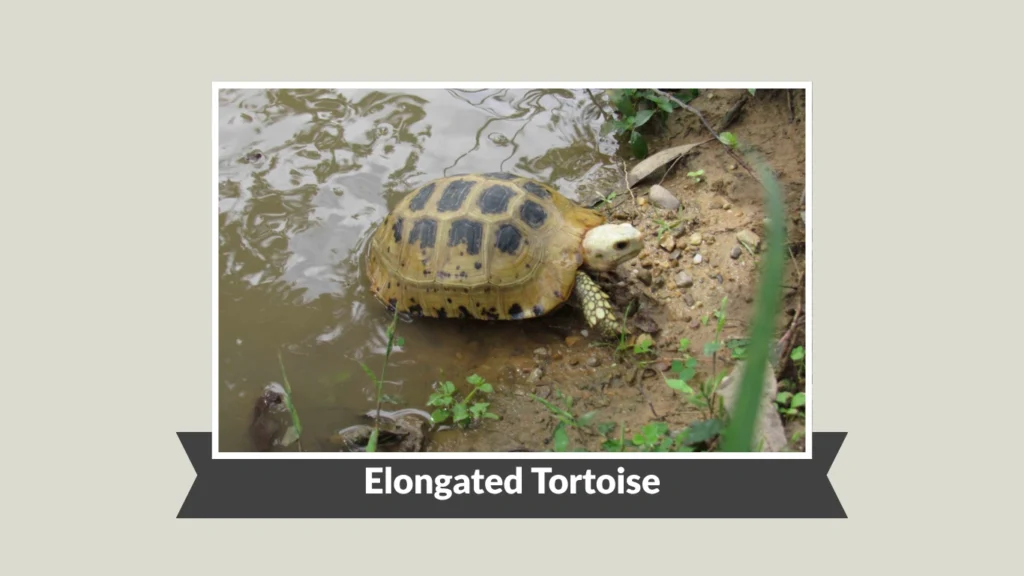
The Elongated tortoise is a Southeast Asian species known for its long, narrow shell and gentle behavior. It is commonly found in forested regions with high humidity.
Identification
- Medium size, 10–12 inches
- Long, narrow, lemon-shaped shell
- Yellowish to tan carapace with brown patterns
- Pale head with distinct dark patches
- Relatively smooth shell surface
- Males have more concave plastrons
Habitat
Elongated tortoises live in tropical forests, moist leaf-littered grounds, and shaded woodland areas across Thailand, India, Myanmar, and Bangladesh. They require warm temperatures and consistent humidity.
Diet
They are omnivores, eating fruits, leaves, mushrooms, flowers, and small invertebrates. In captivity, offer leafy greens, fruits like banana or papaya, and occasional protein such as boiled egg or worms.
Lifecycle & Lifespan
They mature around 10–12 years of age. With proper care and humidity, they generally live 40–60 years, though individuals kept in ideal conditions may surpass 70.
19. Gopher Tortoise
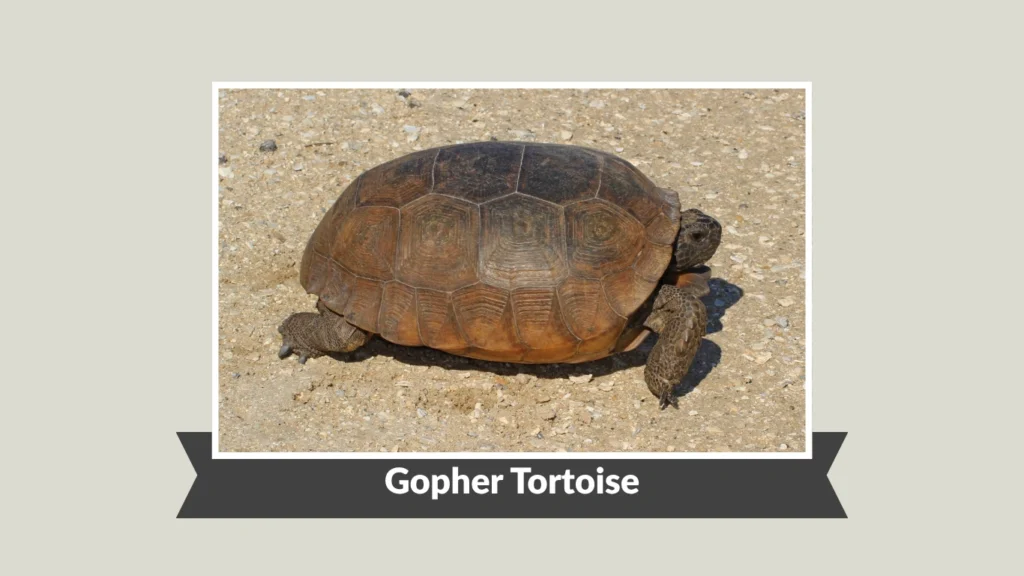
The Gopher tortoise is a North American species famous for its deep burrows, which provide shelter for hundreds of other animals. It is an important keystone species found in the southeastern United States.
Identification
- Medium size, 9–11 inches
- Dark brown to gray shell
- Flattened, rugged carapace
- Elephant-like front legs adapted for digging
- Thick, scaly skin
- Short, sturdy tail
Habitat
Gopher tortoises live in dry, sandy habitats such as pine flatwoods, scrublands, and coastal dunes. Their deep burrows—often 10–40 feet long—help them stay cool, avoid predators, and survive wildfires.
Diet
They are herbivores, eating grasses, wildflowers, cactus pads, berries, and leafy plants. They rely heavily on native vegetation and require a high-fiber, low-protein diet.
Lifecycle & Lifespan
Gopher tortoises mature slowly, around 15–20 years. With proper protection and habitat stability, they can live 60–80 years, and some reach 90+ in the wild.
20. Texas Tortoise
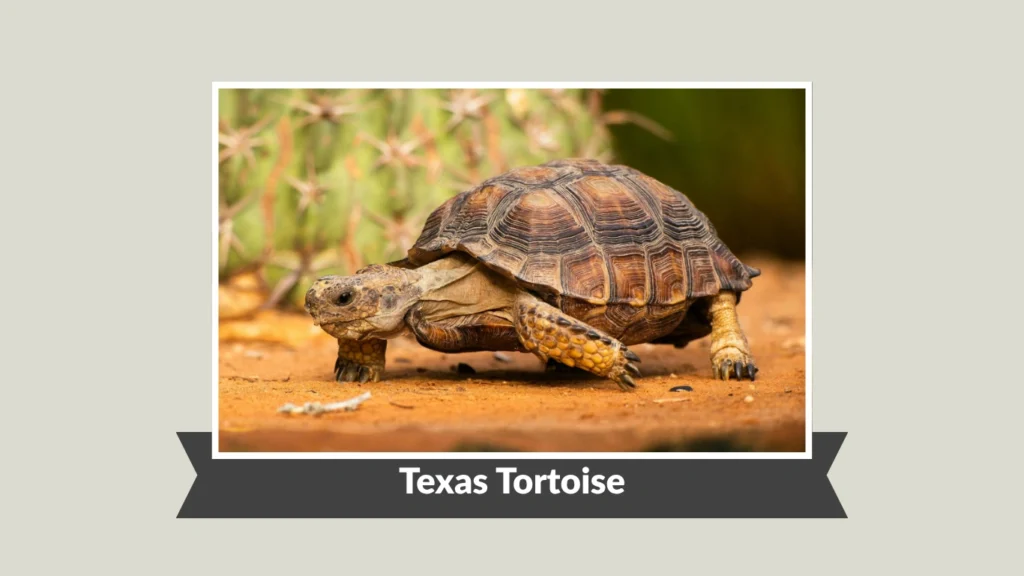
The Texas tortoise is a small, tough tortoise species native to the southern United States and northern Mexico. It thrives in hot, dry environments and is known for its calm behavior.
Identification
- Small size, 6–8 inches
- Yellowish-brown shell with distinct raised scutes
- Flattened, oval-shaped carapace
- Thick, strong legs
- Pale head with scattered dark markings
Habitat
Texas tortoises inhabit semi-arid scrublands, thorn forests, cactus-filled plains, and dry grasslands. They prefer sandy or gravelly soils and often shelter under shrubs or inside shallow scrapes.
Diet
They feed on grasses, prickly pear cactus pads and fruits, wildflowers, and leafy plants. In captivity, they require high-fiber greens, edible cactus, and low-protein vegetation.
Lifecycle & Lifespan
Texas tortoises reach maturity around 10–15 years. They typically live 40–60 years, with some individuals documented at over 70 years in stable, protected environments.
21. Desert Tortoise

The Desert tortoise is a hardy North American species adapted to extreme desert conditions. Known for its resilience and burrowing habits, it plays a vital role in dry ecosystems.
Identification
- Medium size, 9–14 inches
- High-domed, brown to tan shell
- Thick, scaly front legs for digging
- Rough skin adapted to arid climates
- Males have longer gular (front shell) extensions
Habitat
Desert tortoises inhabit the Mojave and Sonoran deserts of the United States and Mexico. Their environment includes rocky hillsides, sandy flats, desert scrub, and dry washes. They survive intense heat through burrows that regulate temperature.
Diet
They consume desert grasses, wildflowers, cactus pads, succulents, and leafy plants. Their seasonal diet shifts depending on rainfall and plant availability. In captivity, they require a high-fiber mix of weeds and grasses.
Lifecycle & Lifespan
Desert tortoises mature at 15–20 years. Their lifespan ranges from 50–80 years, though some individuals may exceed 90 with stable conditions and low predation.
22. Bolson Tortoise
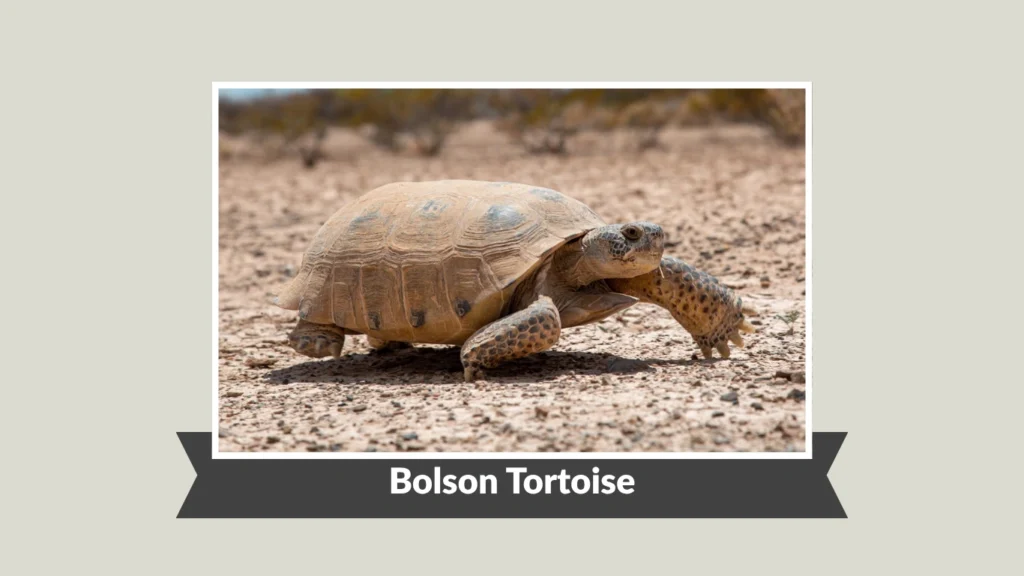
The Bolson tortoise is the largest North American tortoise species and is native to the Chihuahuan Desert. It is considered rare and endangered due to habitat loss and limited range.
Identification
- Large size, 12–18 inches
- Tall, domed shell with pale brown to golden coloration
- Thick, elephant-like legs
- Broad head with dark markings around the eyes
- Deep growth rings on scutes
Habitat
Bolson tortoises inhabit desert grasslands, scrublands, and semi-arid valleys in northern Mexico. They prefer regions with loose soil for digging extensive burrows and access to hardy vegetation.
Diet
They feed on grasses, herbs, leafy weeds, prickly pear cactus, and desert wildflowers. Their diet must remain low in protein and rich in fiber to support shell and digestive health.
Lifecycle & Lifespan
Bolson tortoises grow slowly and reach maturity at 15–20 years. With adequate protection, they can live 70–100 years, similar to other desert-adapted tortoise species.
23. Forest Hingeback Tortoise

The Forest Hingeback tortoise is a member of the Kinixys genus, known for its hinged shell and preference for dense, humid forest environments. It is more secretive than savanna species.
Identification
- Small to medium size, 6–10 inches
- Movable hinge on rear shell section
- Dark brown to black carapace with subtle patterns
- Longer, narrow head with pointed snout
- Smooth, slightly flattened shell shape
Habitat
Forest Hingeback tortoises inhabit tropical rainforests, dense woodlands, and swampy forest edges across Central and West Africa. They prefer high humidity, deep leaf litter, and shaded environments.
Diet
They naturally feed on mushrooms, fruits, leaves, flowers, and small invertebrates. In captivity, provide leafy greens, mushrooms, berries, and occasional worms or insects.
Lifecycle & Lifespan
They mature around 8–12 years. With proper humidity and nutrition, they generally live 30–50 years, though individuals may reach 60+ in ideal conditions.
24. Speke’s Hingeback Tortoise
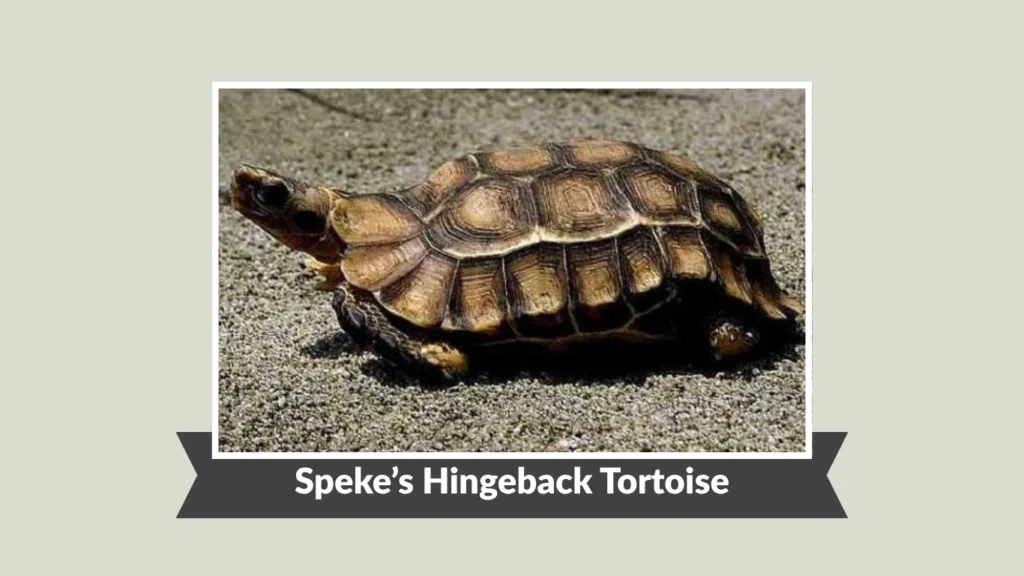
The Speke’s Hingeback tortoise is a dry-habitat member of the Kinixys family, distinguished by its patterned shell and strong survival skills in semi-arid regions.
Identification
- Small to medium size, 6–8 inches
- Distinct hinge at the back of the shell
- Tan to dark brown carapace with spotted or streaked patterns
- Narrow, elongated body shape
- Males have longer tails and more concave plastrons
Habitat
Speke’s Hingeback tortoises come from savannas, dry woodlands, and scrublands in East Africa, especially Kenya, Tanzania, and Ethiopia. They prefer warm, moderately dry habitats with scattered shade.
Diet
They are omnivores, consuming grasses, leaves, fruits, flowers, fungi, and small insects. In captivity, they require greens, edible weeds, mushrooms, and occasional protein like worms.
Lifecycle & Lifespan
Speke’s Hingeback tortoises mature at around 7–10 years. With good care, they typically live 25–40 years, though some individuals may exceed 50 with stable conditions.
25. Home’s Hingeback Tortoise

The Home’s Hingeback tortoise is one of the larger species within the Kinixys genus and is known for its strong hinge mechanism and forest-dwelling habits. It is more robust than many other hingeback species.
Identification
- Medium size, 8–12 inches
- Prominent hinge on the rear shell
- Dark brown to black carapace with subtle patterning
- Broad, slightly elongated shell
- Strong limbs adapted for moving through dense vegetation
Habitat
Home’s Hingeback tortoises inhabit tropical rainforests, dense woodlands, and moist savanna edges in West and Central Africa. They prefer deeply shaded, humid environments with soft soil and heavy leaf litter.
Diet
They feed on fruits, fungi, leaves, flowers, and occasional invertebrates. In captivity, they thrive on greens, berries, mushrooms, hibiscus flowers, and limited protein sources.
Lifecycle & Lifespan
Home’s Hingeback tortoises mature around 10–12 years. With proper humidity and nutrition, they often live 40–60 years, and some individuals may reach 70.
26. Chaco Tortoise
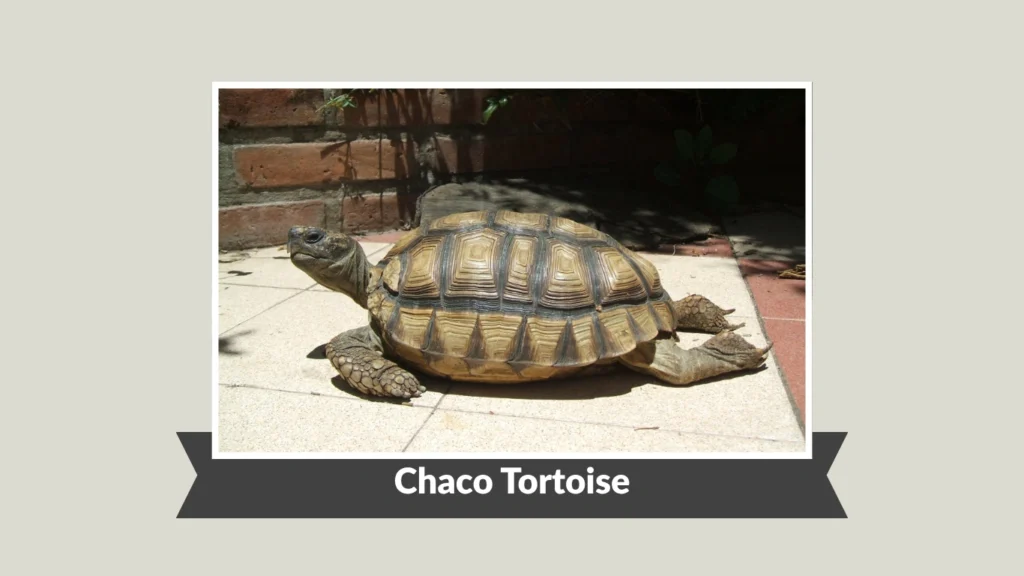
The Chaco tortoise, also known as the Argentine Chaco tortoise, is a South American species adapted to dry forest and scrub environments. It closely resembles the more famous Red-footed tortoise but is smaller and lighter in color.
Identification
- Small to medium size, 7–10 inches
- Yellowish-brown shell with light, radiating patterns
- High-domed, smooth carapace
- Light-colored head with dark markings
- Short, sturdy limbs
Habitat
Chaco tortoises inhabit dry forests, scrublands, and savanna regions of Argentina, Paraguay, and Bolivia. They prefer warm climates, moderate humidity, and plenty of ground cover for hiding.
Diet
They consume grasses, leafy plants, flowers, cactus pads, and occasional fruits. In captivity, a diet of greens, hibiscus, grape leaves, and limited fruit works best.
Lifecycle & Lifespan
They mature between 8–12 years. With consistent care and proper diet, Chaco tortoises typically live 40–60 years, though captive individuals may reach 70+.
27. Impressed Tortoise
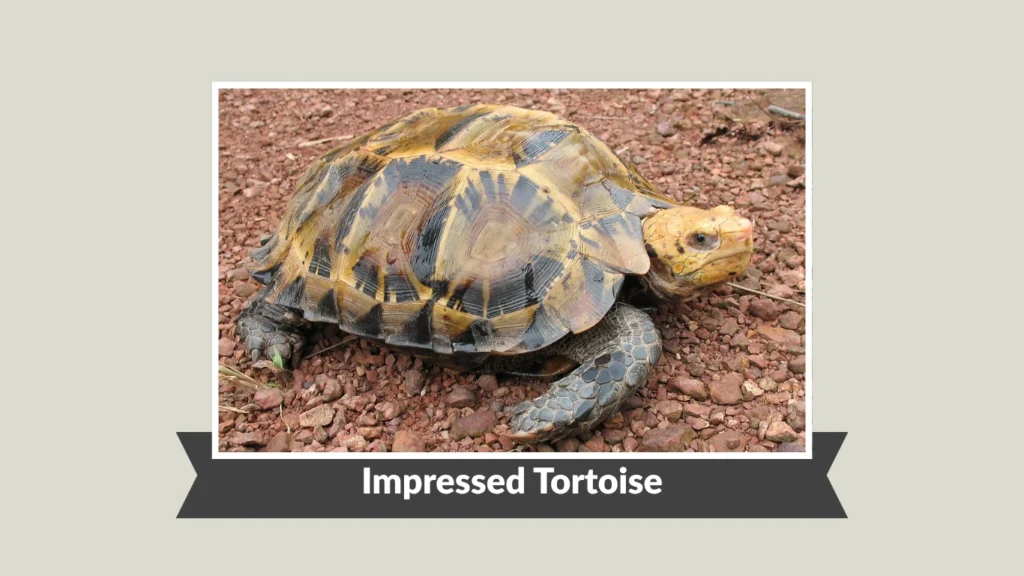
The Impressed tortoise is an elegant, forest-dwelling species from Southeast Asia. It is known for its uniquely sculpted shell and gentle temperament but is sensitive to environmental changes.
Identification
- Medium size, 10–14 inches
- Deeply grooved, sculpted scutes (unique “impressed” appearance)
- Rich brown to orange-brown shell
- Smooth, elongated carapace
- Pale head with soft facial features
- Thin limbs compared to many other species
Habitat
Impressed tortoises inhabit mountainous forests, bamboo thickets, and humid woodland regions across Myanmar, Thailand, Laos, Vietnam, and parts of southern China. They prefer cool, moist environments with lots of shade and leaf litter.
Diet
They feed on mushrooms, leaves, bamboo shoots, ferns, fruits, and forest flowers. In captivity, mushrooms are especially important, along with greens, fruits in small amounts, and edible flowers.
Lifecycle & Lifespan
These tortoises reach maturity around 10–15 years. With stable humidity and cool forest-like conditions, they can live 40–60 years, and some individuals may reach 70.
28. Asian Brown Tortoise
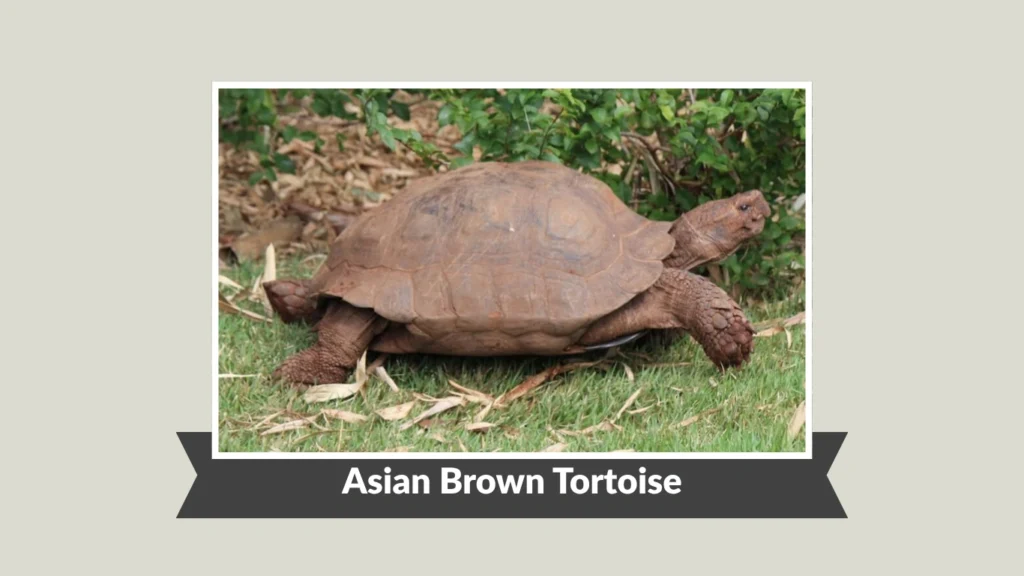
The Asian Brown tortoise, also known as the Asian Forest tortoise or Manouria emys, is one of the largest Asian tortoise species. It is strong, hardy, and adapted to dense forests.
Identification
- Large size, 16–24 inches
- Dark brown to nearly black shell
- Rugged, heavily textured scutes
- Powerful limbs with large scales
- Head and neck covered with thick, armored skin
- One of the world’s most primitive tortoise species
Habitat
Asian Brown tortoises inhabit humid tropical forests, bamboo jungles, and high-rainfall regions across India, Myanmar, Thailand, Malaysia, and Indonesia. They prefer cool, shaded environments and thrive in moist soil.
Diet
They consume leaves, forest vegetation, bamboo shoots, fruits, fungi, and occasionally carrion. In captivity, they require leafy greens, mushrooms, edible bamboo, fruits in moderation, and hydrated vegetation.
Lifecycle & Lifespan
These tortoises mature slowly, around 15–20 years. They commonly live 60–80 years, though some can surpass 100 in stable, moisture-rich conditions.
29. Sulawesi Forest Tortoise
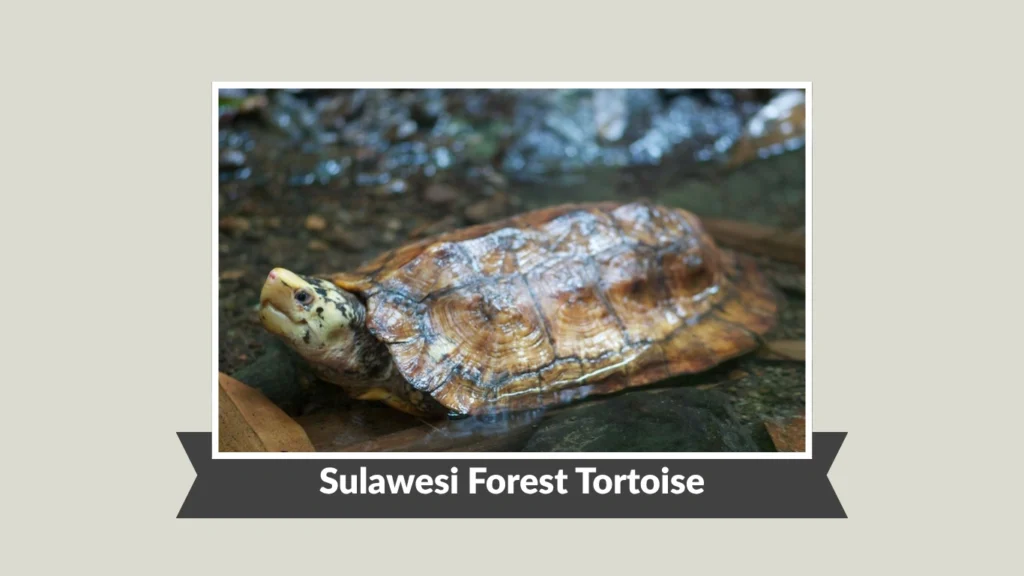
The Sulawesi Forest tortoise is a rare and distinctive species from Indonesia, known for its rugged appearance and preference for humid forest environments. It is less commonly kept in captivity compared to many others.
Identification
- Medium size, 10–14 inches
- Dark, heavily textured shell with raised scutes
- Wide, elongated carapace
- Thick, muscular legs with pronounced scales
- Dark head with lighter facial markings
- Often appears “rough” or rugged in overall shape
Habitat
Sulawesi Forest tortoises inhabit tropical rainforests, swampy lowlands, and humid forest floors on the island of Sulawesi. They prefer shaded, moist environments with abundant leaf litter and natural hiding spots.
Diet
In the wild, they consume leaves, fallen fruits, mushrooms, and forest vegetation. In captivity, they require leafy greens, mushrooms, hibiscus, and fruits in small amounts. Maintaining humidity is vital for their digestive and shell health.
Lifecycle & Lifespan
They typically reach maturity around 10–15 years. With proper humidity and forest-like conditions, they generally live 40–60 years, though some may exceed 70 in well-maintained environments.
30. Travancore Tortoise
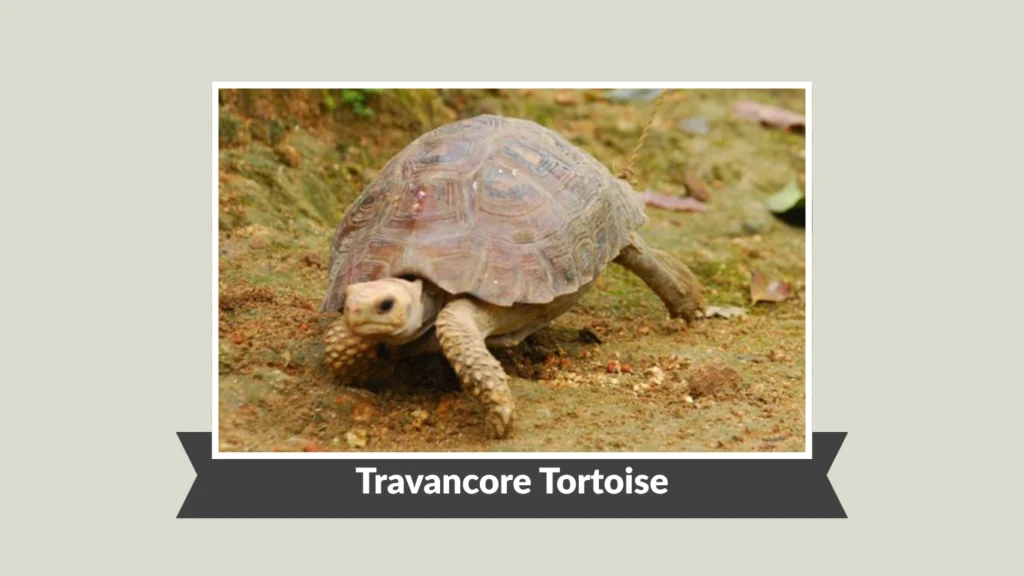
The Travancore tortoise is a South Indian species known for its bold shell pattern and preference for hilly, forested environments. It is active and hardy but requires specific conditions to thrive.
Identification
- Medium size, 10–13 inches
- Yellowish-brown shell with dark blotches or radiating streaks
- Moderately domed, smooth carapace
- Strong legs adapted for climbing hilly terrain
- Dark head with yellow or cream patches
Habitat
Travancore tortoises live in hilly forests, bamboo groves, and moist woodland areas across the Western Ghats of India. They prefer warm climates, high humidity, and forest floors with plenty of vegetation.
Diet
Their diet includes leaves, fruits, bamboo shoots, mushrooms, and flowers. In captivity, they thrive on leafy greens, hibiscus flowers, mushrooms, and limited fruit.
Lifecycle & Lifespan
These tortoises mature around 10–12 years. With proper humidity and diet, they commonly live 40–60 years, though some individuals may reach 70+.
31. Yellow-Margin Tortoise
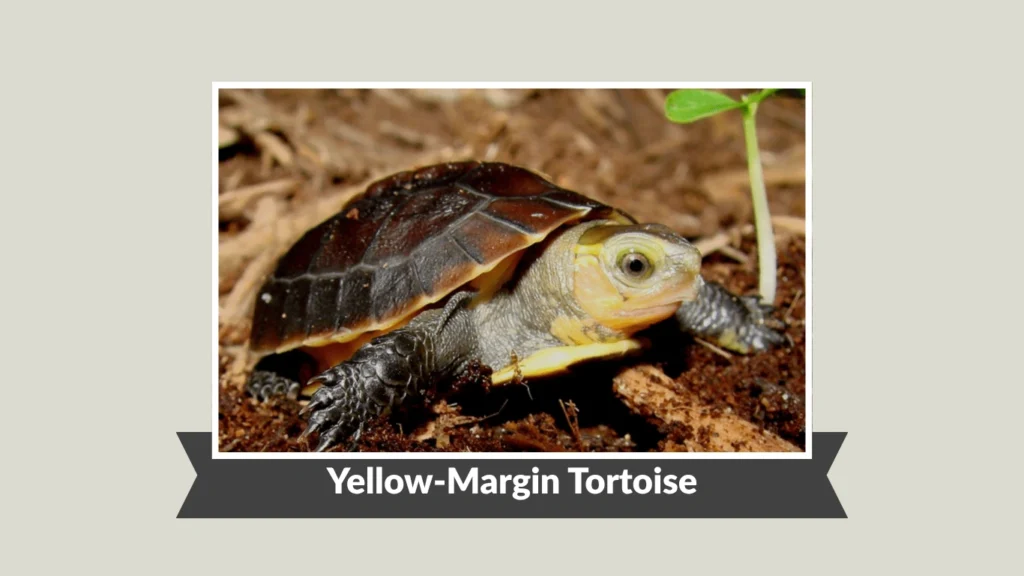
The Yellow-Margin tortoise, also known as the Chinese Yellow-Margin or Cuora flavomarginata, is a semi-forest species known for its distinctive yellow-edged shell and shy temperament.
Identification
- Small to medium size, 6–10 inches
- Dark brown to black shell with yellow margins around each scute
- Smooth, slightly domed carapace
- Pale face with dark streaks
- Strong legs adapted for forest floor movement
Habitat
Yellow-Margin tortoises inhabit forested regions, bamboo thickets, and moist mountain slopes in China, Taiwan, and Okinawa. They prefer high humidity, shaded areas, and abundant leaf litter.
Diet
Their natural diet includes mushrooms, fruits, leaves, flowers, and small invertebrates. In captivity, they thrive on greens, mushrooms, hibiscus flowers, berries, and occasional protein such as earthworms.
Lifecycle & Lifespan
They reach maturity between 8–12 years. With consistent humidity and proper diet, they typically live 40–60 years, and some individuals reach 70+.
32. Steppe Tortoise

The Steppe tortoise, also known as the Central Asian tortoise or Horsfield’s tortoise, is a hardy species adapted to dry, harsh environments. It is popular in the pet trade due to its small size and gentle behavior.
Identification
- Small size, 5–8 inches
- Tan to olive shell with dark patches
- Four toes on each front foot (key identifier)
- Smooth, rounded, high-domed carapace
- Light-colored skin with fine scales
Habitat
Steppe tortoises inhabit dry deserts, rocky hills, and grasslands across Uzbekistan, Afghanistan, Iran, Pakistan, and Kazakhstan. They prefer warm, dry climates with soft soil for burrowing.
Diet
They eat grasses, flowers, leafy weeds, and tough desert plants. In captivity, they require high-fiber greens such as dandelion, plantain, collard greens, and mulberry leaves.
Lifecycle & Lifespan
Steppe tortoises mature around 8–12 years. With proper care, they commonly live 40–60 years, and some may reach 70+ in ideal conditions.
33. Madagascan Spider Tortoise
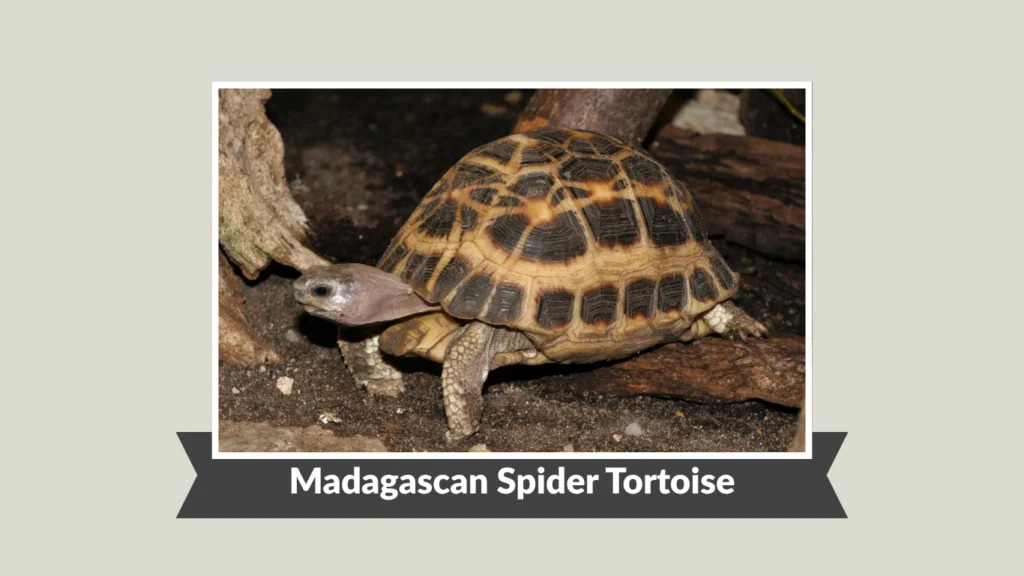
The Madagascan Spider tortoise is a small, beautifully patterned species known for its delicate “spiderweb” shell markings. Native to Madagascar, it is highly endangered due to habitat loss and illegal collection.
Identification
- Very small size, 4–6 inches
- Yellow to tan shell with fine black “spiderweb” lines
- Smooth, rounded, high-domed carapace
- Pale head with dark markings
- Slender limbs suited for sandy terrain
Habitat
Spider tortoises inhabit dry coastal forests, scrublands, and sandy dunes of southwestern Madagascar. They prefer warm, dry climates with scattered vegetation and loose soil for digging shallow shelters.
Diet
Their diet consists of dry grasses, leaves, desert plants, flowers, and occasional fruits. In captivity, they require fibrous greens, edible flowers, cactus pads, and minimal fruit.
Lifecycle & Lifespan
Spider tortoises reach maturity around 8–12 years. With proper arid conditions and diet, they can live 50–70 years, and some may reach 80+.
34. Western Hermann’s Tortoise
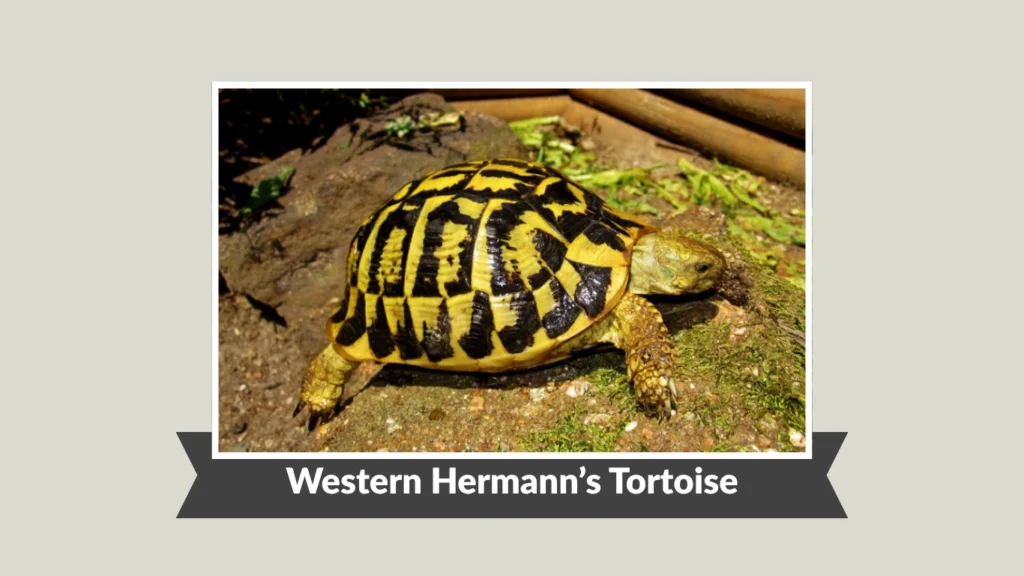
The Western Hermann’s tortoise is a subspecies of the Hermann’s tortoise, known for its vivid coloration and smaller size. It is native to Mediterranean regions and is popular among keepers for its calm temperament.
Identification
- Small size, 5–7 inches
- Bright yellow and black patterned shell
- Two clearly defined dark bands on the plastron
- Tail tip has a hardened spur
- Smooth, rounded carapace
Habitat
Western Hermann’s tortoises live in Mediterranean scrublands, open woodlands, and rocky hillsides across Italy, France, and surrounding regions. They prefer warm, sunny environments with scattered shrubs and natural hideaways.
Diet
They feed on grasses, leafy weeds, flowers, and herbs. In captivity, they require high-fiber greens such as dandelion, plantain, clover, and hibiscus leaves.
Lifecycle & Lifespan
They reach maturity around 8–12 years. With stable temperatures and low-protein diets, Western Hermann’s tortoises typically live 50–75 years, and some may exceed 90.
35. Sri Lankan Star Tortoise
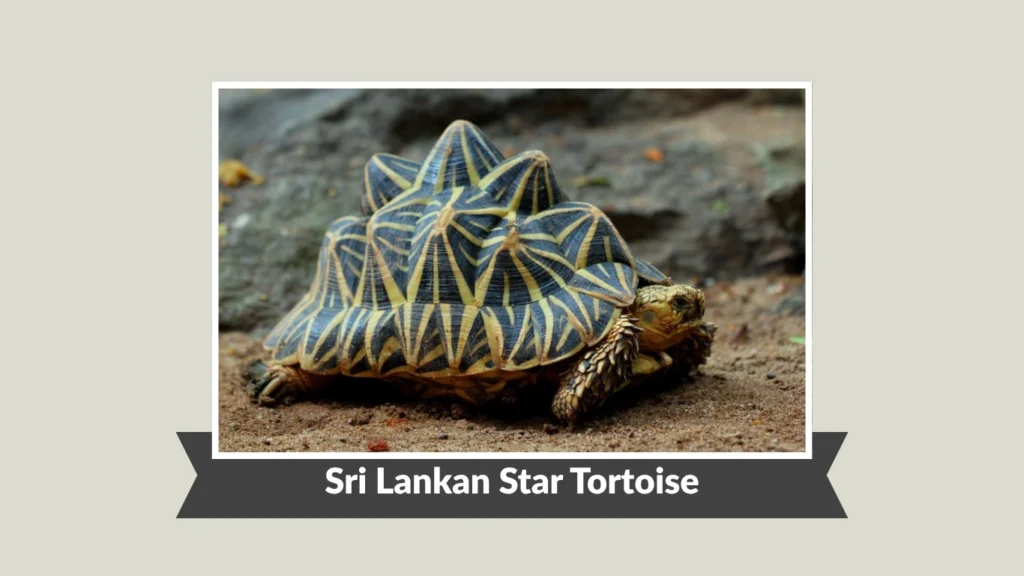
The Sri Lankan Star tortoise is a larger, more brightly patterned relative of the Indian Star tortoise. It is known for its striking star-like shell markings and gentle nature, making it a prized species among tortoise enthusiasts.
Identification
- Medium size, 8–12 inches
- Bright yellow star patterns radiating from each shell scute
- Taller, more domed shell than the Indian Star
- Darker base coloration with sharper contrast
- Males are smaller with longer, thicker tails
Habitat
Sri Lankan Star tortoises inhabit dry forests, scrublands, and grasslands across Sri Lanka. They prefer warm climates with moderate humidity, access to shade, and dry soil areas for nesting.
Diet
Their diet includes grasses, leafy plants, flowers, and a small amount of fruit. In captivity, they thrive on high-fiber greens such as dandelion, plantain, collard greens, hibiscus leaves, and edible flowers. Avoid protein-rich foods to maintain a healthy shell.
Lifecycle & Lifespan
Sri Lankan Star tortoises reach maturity around 10–15 years. With proper care and consistent warm conditions, they typically live 50–80 years, and some individuals may exceed 100 years.