Turtles are one of the oldest and most diverse reptile groups on Earth, living in oceans, rivers, lakes, swamps, and forests across the world. They vary widely in size, appearance, and behavior—from giant sea turtles that migrate thousands of miles to tiny freshwater turtles that thrive in ponds and wetlands. This list highlights 25 of the most common turtle species, including sea turtles, terrapins, and freshwater varieties. Each species has unique traits, habitats, and lifecycles that make turtles some of the most fascinating reptiles on the planet.
1. Green Sea Turtle
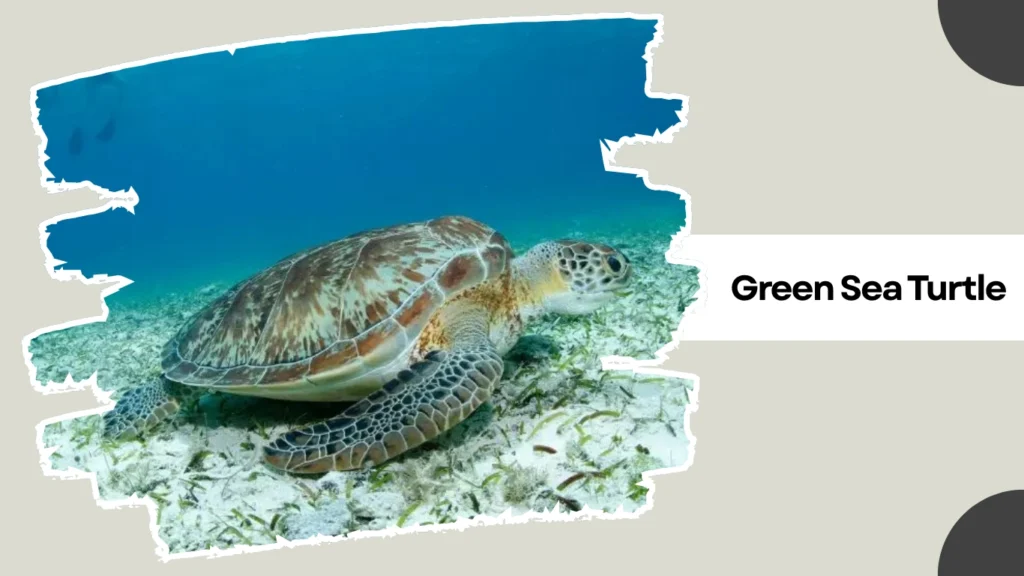
The Green Sea Turtle is one of the most iconic marine turtles, known for its graceful swimming, smooth shell, and herbivorous adult diet. Found in tropical and subtropical oceans, it is a vital species in maintaining healthy seagrass beds and coral reef ecosystems.
Identification
- Large size, 3–4 feet in shell length
- Weight ranges from 200–500 lbs
- Smooth, oval-shaped shell (carapace)
- Shell color ranges from olive brown to dark green
- Single pair of scales between the eyes (key identifier)
- Paddle-like flippers for efficient swimming
Habitat
Green sea turtles inhabit coastal waters, coral reefs, seagrass meadows, and shallow lagoons worldwide. They prefer warm oceans and often migrate long distances between feeding and nesting grounds.
Diet
Juveniles eat algae, small invertebrates, and seagrass. Adults are mostly herbivores, feeding primarily on seagrass and marine algae, which helps maintain ocean ecosystems.
Lifecycle & Lifespan
Green sea turtles reach maturity between 20–35 years. They nest on sandy beaches, laying multiple clutches of eggs per season. With minimal predators in adulthood, they can live 60–80 years, and some individuals may exceed 100 years.
2. Loggerhead Sea Turtle
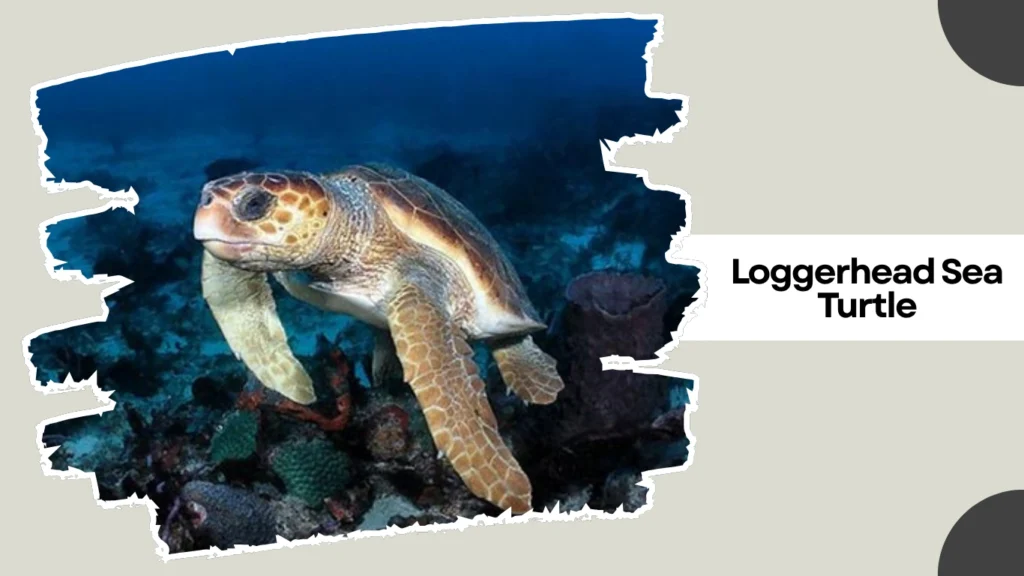
The Loggerhead Sea Turtle is a powerful marine species known for its large head and strong jaws. It is one of the most widespread sea turtles and migrates thousands of miles across the oceans.
Identification
- Large head with strong, crushing jaws
- Shell length 2.5–3.5 feet
- Reddish-brown carapace
- Two pairs of prefrontal scales between the eyes
- Flippers with two claws each
Habitat
Loggerheads inhabit coastal bays, coral reefs, open oceans, and estuaries in tropical and temperate waters. They often rest in shallow areas and feed in rich coastal habitats.
Diet
They are mainly carnivorous, feeding on crabs, mollusks, jellyfish, shrimp, and other hard-shelled marine animals.
Lifecycle & Lifespan
They mature slowly, around 25–35 years. With proper conditions, Loggerhead turtles can live 50–70 years, and some may reach 80+.
3. Hawksbill Sea Turtle
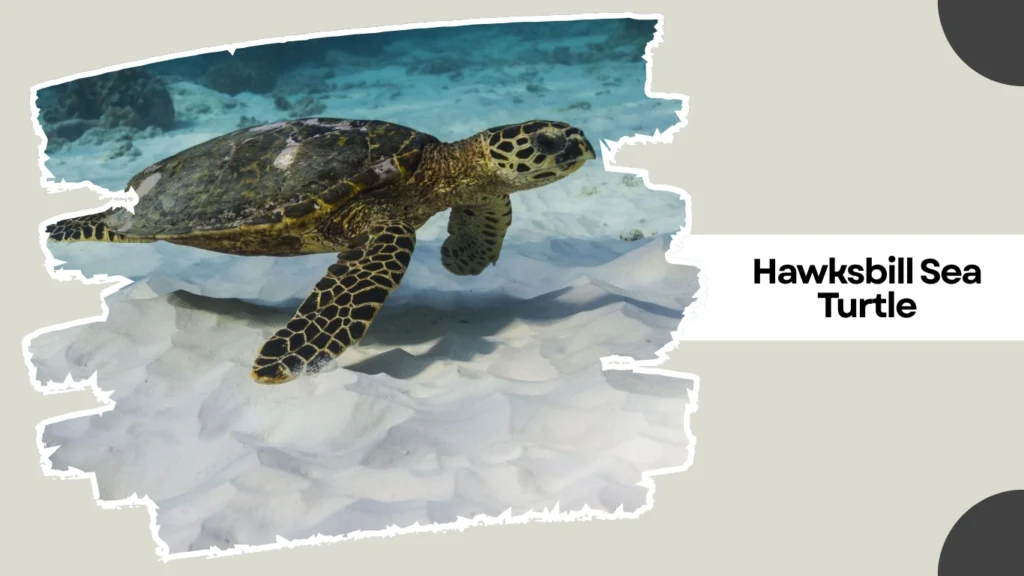
The Hawksbill Sea Turtle is famous for its beautifully patterned shell and sharp, hawk-like beak. This species plays a key role in coral reef health by eating sponges that compete with corals.
Identification
- Narrow, pointed “hawksbill” beak
- Shell length 2–3 feet
- Amber-colored carapace with overlapping scutes (tortoiseshell pattern)
- Distinctly serrated rear edge of the shell
- Two pairs of scales between the eyes
Habitat
Hawksbill turtles inhabit tropical coral reefs, rocky coastlines, and lagoon areas. They prefer warm, shallow waters with abundant coral structures.
Diet
They primarily eat sponges, but also consume sea anemones, jellyfish, algae, and small invertebrates.
Lifecycle & Lifespan
Hawksbills mature at 20–30 years. They can live 40–60 years, though some wild individuals may exceed 70 with stable habitats.
4. Leatherback Sea Turtle
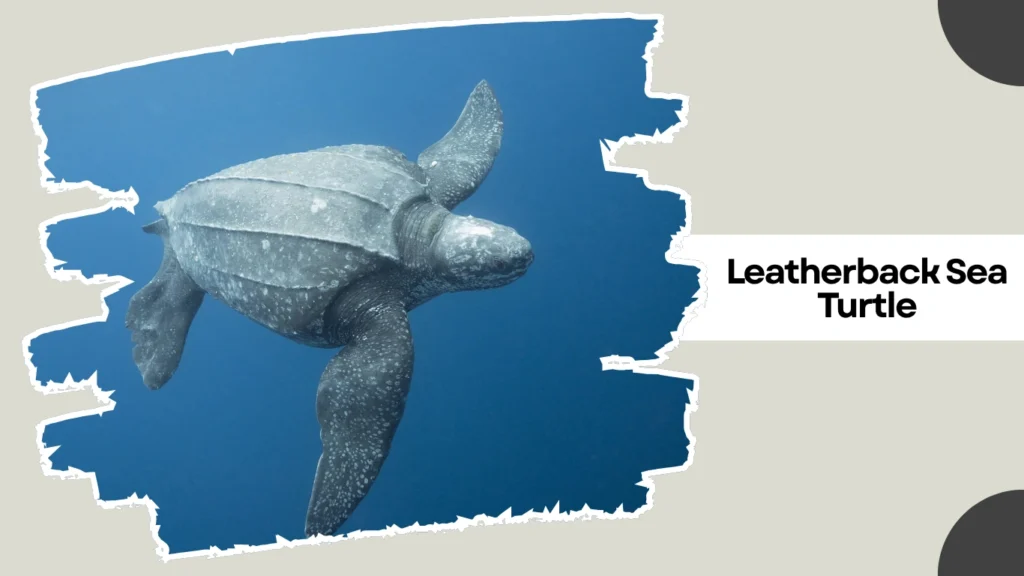
The Leatherback Sea Turtle is the largest turtle on Earth and the only sea turtle without a hard shell. Instead, its back is covered by a thick, leathery skin. It is a powerful long-distance swimmer, capable of crossing entire oceans during migration.
Identification
- Largest sea turtle: 4–7 feet long, up to 1,500 lbs
- Soft, leathery shell with seven raised ridges
- Dark bluish-black body with white or pink spotting
- Long, powerful front flippers—longest of any turtle
- No scales or hard scutes on the shell
- Streamlined shape built for deep diving
Habitat
Leatherbacks inhabit open oceans, deep pelagic waters, and coastal feeding areas. They are highly migratory, traveling from cold northern waters to tropical nesting beaches. They tolerate colder waters better than any other sea turtle due to their unique physiology.
Diet
Leatherbacks feed almost exclusively on jellyfish, but also eat soft-bodied marine animals like tunicates and salps. Their throat and mouth contain backward-facing spines to help swallow slippery prey.
Lifecycle & Lifespan
They reach maturity between 20–30 years. Females return to tropical beaches to lay eggs every 2–3 years. Leatherbacks can live 45–70 years, though some may reach 90+.
5. Olive Ridley Sea Turtle
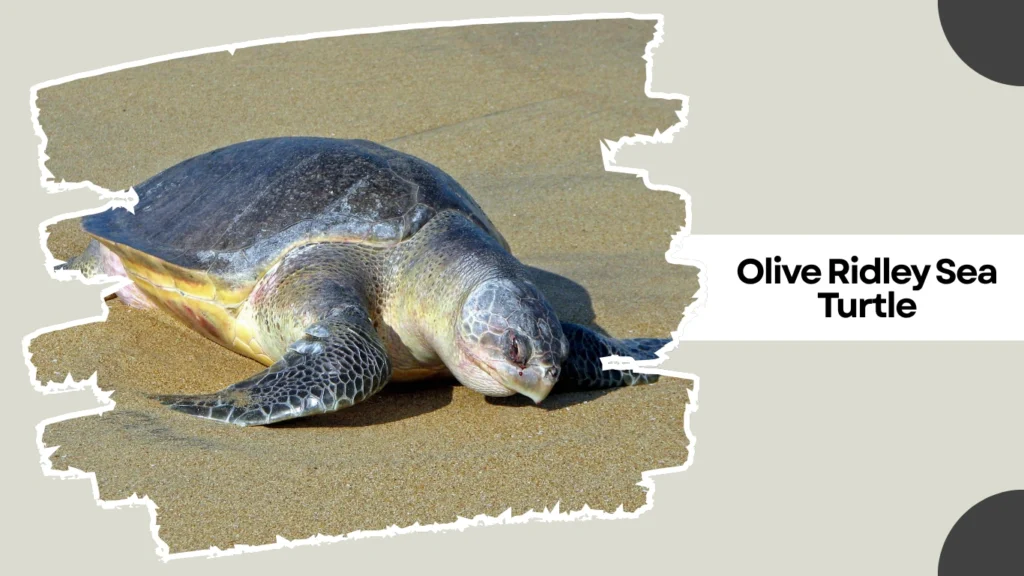
The Olive Ridley Sea Turtle is one of the smallest sea turtles, known for its mass nesting events called arribadas, where thousands of females come ashore simultaneously to lay eggs.
Identification
- Small to medium size, 2–2.5 feet long
- Round, olive-colored shell
- Heart-shaped carapace
- Usually has five or more pairs of costal scutes
- Dark grayish flippers and head
Habitat
Olive Ridleys inhabit warm tropical oceans, including coastal waters, bays, and estuaries. They are found worldwide in the Pacific, Atlantic, and Indian Oceans. They often swim long distances between feeding and nesting areas.
Diet
They are omnivores, feeding on jellyfish, shrimp, crabs, sea urchins, fish, algae, and small invertebrates. Their flexible diet helps them adapt to various marine environments.
Lifecycle & Lifespan
Olive Ridleys reach maturity around 10–15 years. They nest annually or biannually, often participating in massive synchronized nesting events. Their lifespan is typically 50–60 years, though some may live longer in undisturbed environments.
6. Kemp’s Ridley Sea Turtle
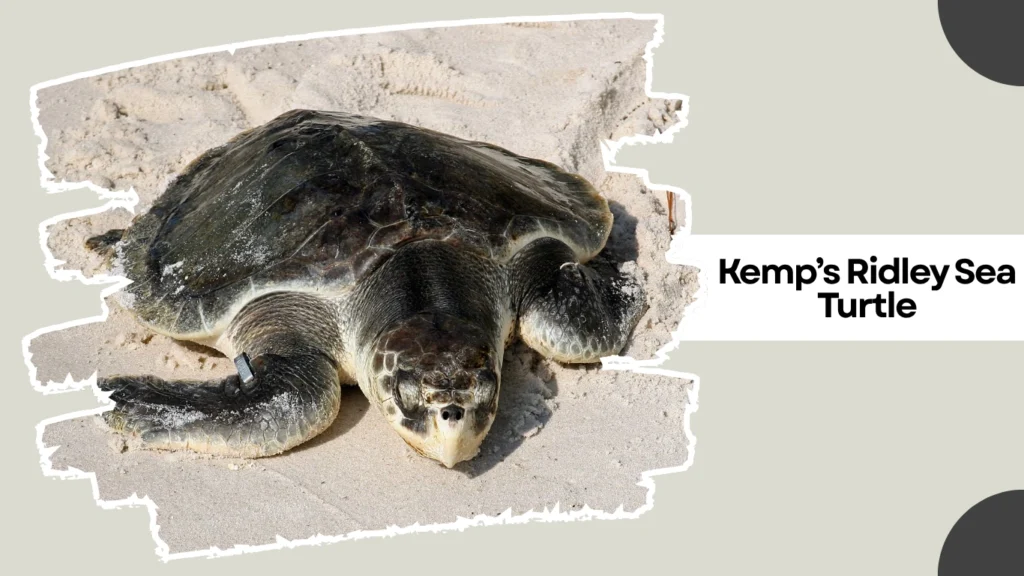
The Kemp’s Ridley Sea Turtle is the smallest and rarest sea turtle species in the world. It is famous for its synchronized mass nesting events, similar to the Olive Ridley, but on a much smaller scale.
Identification
- Smallest sea turtle: 1.5–2 feet long
- Round, grayish-green carapace
- Heart-shaped shell, smooth and compact
- Pale yellow plastron
- One of the rarest marine turtles globally
Habitat
Kemp’s Ridleys inhabit coastal and shallow marine waters in the Gulf of Mexico and along the U.S. Atlantic coast. Juveniles are often found in floating seaweed beds, while adults prefer shallow coastal areas with rich feeding grounds.
Diet
They are primarily carnivorous, feeding on crabs, shrimp, mollusks, jellyfish, and small fish. Blue crabs are one of their most important food sources.
Lifecycle & Lifespan
They mature around 10–15 years of age. Most nesting occurs on a single beach in Rancho Nuevo, Mexico. With protection and stable habitats, they live 30–50 years, sometimes longer.
7. Flatback Sea Turtle
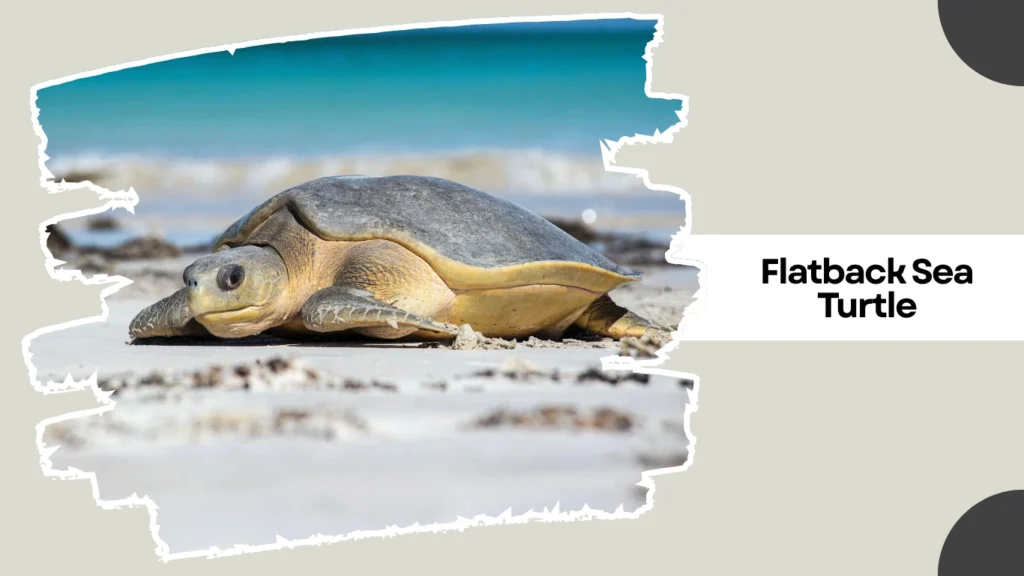
The Flatback Sea Turtle is a unique species found only around Australia. Its shell is flatter and softer than other sea turtles, giving it its name.
Identification
- Medium size, 2.5–3.5 feet long
- Pale yellow to olive-gray carapace
- Flat, smooth, relatively soft shell
- Wide body shape with large flippers
- Lighter underside compared to most sea turtles
Habitat
Flatbacks inhabit shallow coastal waters, bays, lagoons, and continental shelf regions of northern Australia. They do not travel far into the deep ocean, unlike most other sea turtle species.
Diet
They feed on soft-bodied invertebrates such as jellyfish, sea cucumbers, and soft corals. They also eat seagrass, crustaceans, and small fish. Their diet is diverse due to their nearshore lifestyle.
Lifecycle & Lifespan
Flatbacks reach maturity around 15–20 years. They nest exclusively on Australian beaches. Their estimated lifespan is 50–60 years, though some individuals may live longer under stable environmental conditions.
8. Eastern Box Turtle
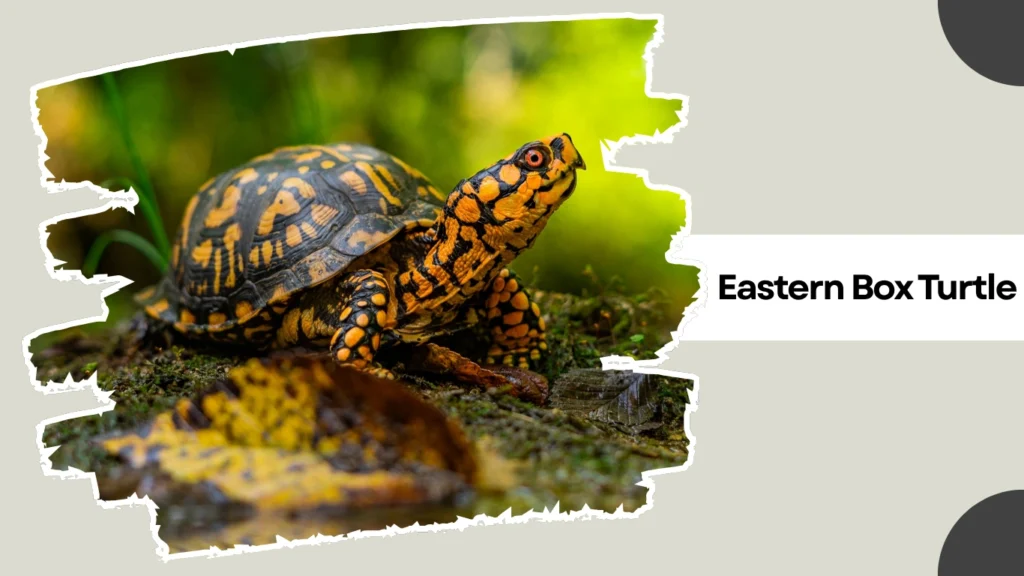
The Eastern Box Turtle is a well-known North American land turtle, famous for its domed shell and ability to completely close itself inside using its hinged plastron. It is a long-lived species often found in forests and meadows.
Identification
- Small to medium size, 4–6 inches
- High-domed shell with bright yellow or orange patterns
- Hinged plastron allowing full enclosure
- Dark skin with yellow or orange spots
- Males have red eyes; females usually brown
Habitat
Eastern Box Turtles inhabit forests, wetlands, meadows, and woodland edges. They prefer moist soil, dense vegetation, and shaded areas. They often stay close to water sources such as ponds, streams, and marshes.
Diet
They are omnivores, eating mushrooms, berries, insects, worms, flowers, slugs, and plant material. Their diet varies with seasons and availability of food.
Lifecycle & Lifespan
They mature slowly, around 8–10 years. Eastern Box Turtles are incredibly long-lived, often reaching 50–70 years, and some documented individuals surpass 100 years.
9. Western Box Turtle
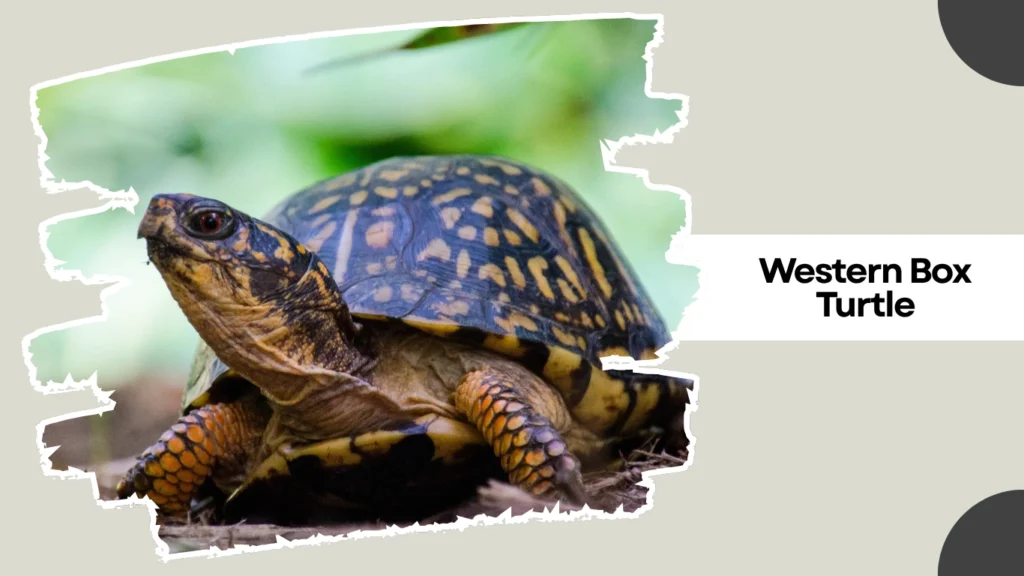
The Western Box Turtle is a hardy North American species known for its patterned shell and adaptability. It is divided into two subspecies: the Ornate Box Turtle and the Desert Box Turtle.
Identification
- Small size, 4–6 inches
- Brown carapace with bright yellow radiating lines
- Highly domed shell with hinged plastron
- Dark skin with yellow striping
- Distinctive star-like shell patterns (especially in the Ornate type)
Habitat
Western Box Turtles inhabit grasslands, prairies, shrublands, and semi-arid environments. They prefer open sunny areas but require access to burrows or shade to avoid heat.
Diet
They are omnivorous, feeding on insects, earthworms, berries, flowers, carrion, and leafy plants. Their flexible diet helps them survive in both moist and dry environments.
Lifecycle & Lifespan
They reach maturity around 7–10 years. With proper habitat and minimal predators, Western Box Turtles typically live 40–60 years, though many survive longer in protected areas.
10. Painted Turtle
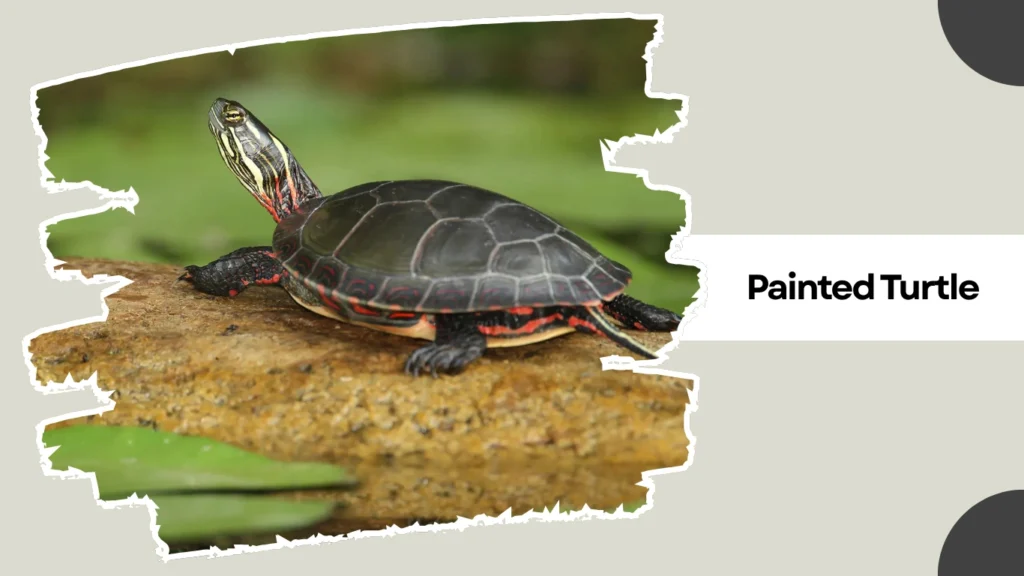
The Painted Turtle is one of the most widespread and recognizable freshwater turtles in North America. It is known for its brightly colored markings and adaptability to ponds, lakes, and slow-moving rivers.
Identification
- Small to medium size, 4–10 inches
- Smooth, dark shell with red and yellow markings on the edges
- Yellow stripes on the head and neck
- Bright red patterns on the plastron and undersides
- Flattened carapace suited for swimming
Habitat
Painted Turtles live in ponds, marshes, lakes, and slow streams with soft bottoms and abundant aquatic plants. They prefer areas with sunny basking spots such as logs and rocks.
Diet
They are omnivores, eating aquatic plants, algae, insects, snails, tadpoles, small fish, and carrion. Juveniles tend to eat more animal matter, while adults consume more plant material.
Lifecycle & Lifespan
They mature around 6–10 years depending on climate. Painted Turtles typically live 20–40 years, but some individuals in the wild have been recorded at 50+ years.
11. Red-Eared Slider
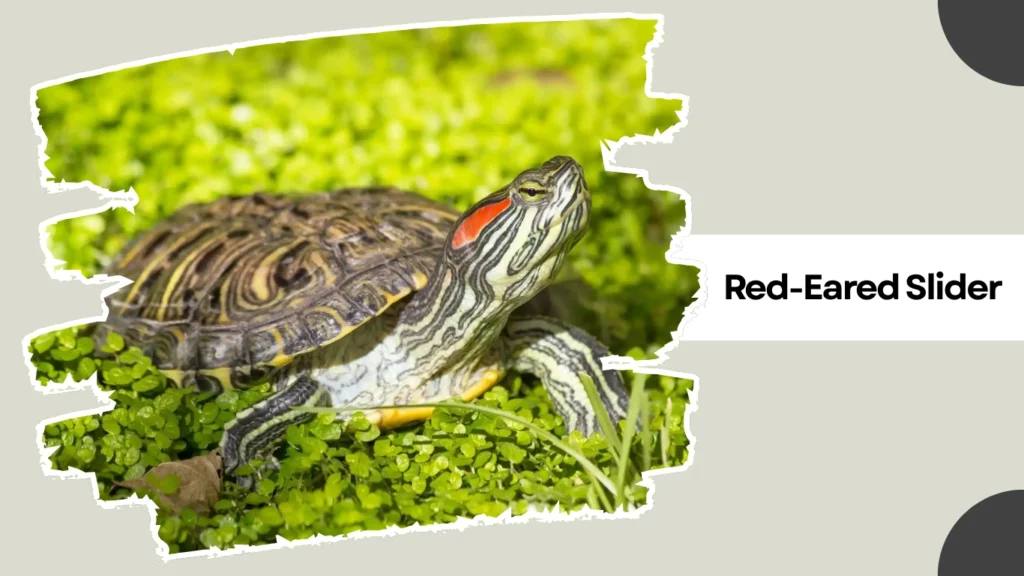
The Red-Eared Slider is one of the most popular pet turtles worldwide and is easily recognized by the red stripe behind each eye. It is a strong swimmer and highly adaptable to many freshwater environments.
Identification
- Medium size, 6–12 inches
- Dark green shell with yellow streaks
- Distinctive red stripe behind the eyes
- Light yellow plastron with dark blotches
- Webbed feet for efficient swimming
Habitat
Red-Eared Sliders inhabit ponds, lakes, rivers, marshes, and slow-moving freshwater bodies. They prefer warm waters with plenty of basking spots and aquatic vegetation.
Diet
They are omnivorous, eating insects, fish, snails, aquatic plants, algae, fruits, and commercial turtle pellets. Juveniles eat more protein, while adults shift toward plant matter.
Lifecycle & Lifespan
They reach maturity around 5–7 years. In captivity, Red-Eared Sliders often live 25–35 years, while wild individuals may reach 40 years or more under ideal conditions.
12. Yellow-Bellied Slider
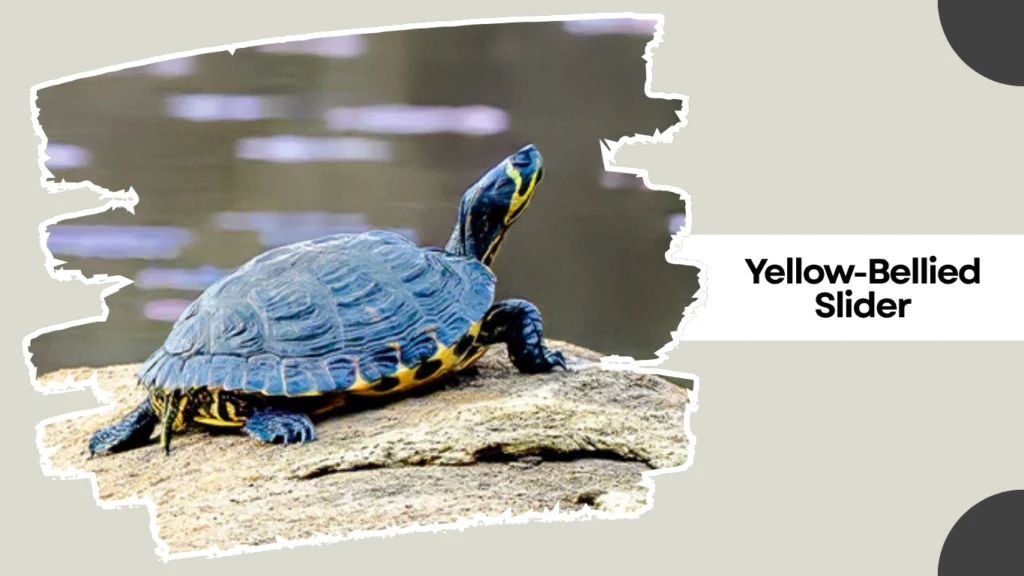
The Yellow-Bellied Slider is a common freshwater turtle native to the southeastern United States. It is closely related to the Red-Eared Slider but is distinguished by its bright yellow markings and vibrant plastron.
Identification
- Medium size, 6–12 inches
- Olive to dark brown shell with yellow streaks
- Bright yellow plastron (underside)
- Prominent yellow patch behind each eye
- Webbed feet for strong swimming
Habitat
Yellow-Bellied Sliders live in ponds, lakes, marshes, rivers, and swamps with slow-moving water. They thrive in warm environments with abundant basking spots, vegetation, and shallow areas.
Diet
They are omnivores, eating aquatic plants, algae, insects, tadpoles, crustaceans, and small fish. Young sliders consume more animal matter, while adults shift toward a plant-based diet.
Lifecycle & Lifespan
They mature around 5–8 years. In captivity, they often live 30–40 years, while wild individuals may live even longer with stable environments.
13. Northern Map Turtle
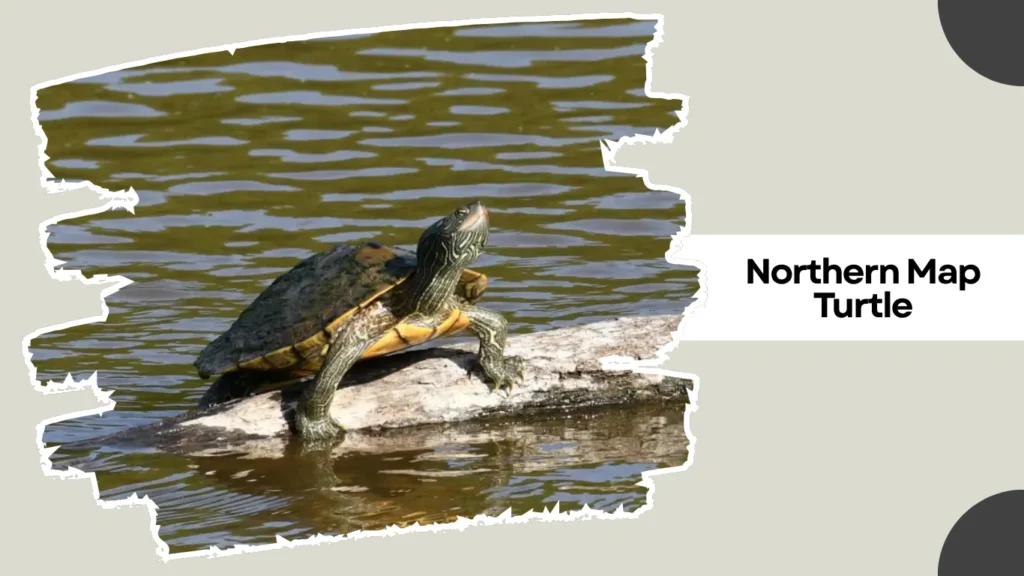
The Northern Map Turtle is named for the map-like patterns on its shell. It is a freshwater species found primarily in rivers and large lakes with clean, clear water.
Identification
- Medium size, 6–10 inches
- Olive or brown shell with thin yellow “map lines”
- Saw-toothed rear edge of the carapace
- Yellow stripes on the head, neck, and limbs
- Females significantly larger than males
Habitat
Northern Map Turtles inhabit rivers, large lakes, and deep ponds with rocky or sandy bottoms. They require clean water, abundant basking spots, and areas with strong currents.
Diet
They are carnivorous, especially females, eating snails, mussels, crayfish, insects, and small fish. Males eat smaller prey like insects and aquatic invertebrates.
Lifecycle & Lifespan
Map turtles mature slowly, typically between 8–12 years. They commonly live 20–30 years, with some individuals reaching 40+ years in protected habitats.
14. Common Snapping Turtle

The Common Snapping Turtle is a large freshwater turtle known for its powerful jaws, long tail, and aggressive behavior on land. It is one of the most widespread and adaptable turtle species in North America.
Identification
- Large size, 10–18 inches (shell length)
- Can weigh 10–35+ lbs
- Rugged, dark brown to black shell
- Long, saw-toothed tail resembling a dinosaur tail
- Large head with strong, hooked jaws
- Webbed feet built for strong swimming
Habitat
Common Snapping Turtles inhabit ponds, lakes, rivers, swamps, and marshes. They prefer muddy bottoms, warm waters, and areas with dense vegetation. They often bury themselves in mud with only their eyes and nose exposed.
Diet
They are omnivores and opportunistic feeders. Their diet includes fish, frogs, insects, aquatic plants, small mammals, birds, carrion, and even other turtles. They play an important role in maintaining aquatic ecosystem balance.
Lifecycle & Lifespan
They reach maturity around 12–15 years. Common Snappers typically live 30–50 years in the wild, but captive individuals may surpass 60+ years.
15. Alligator Snapping Turtle
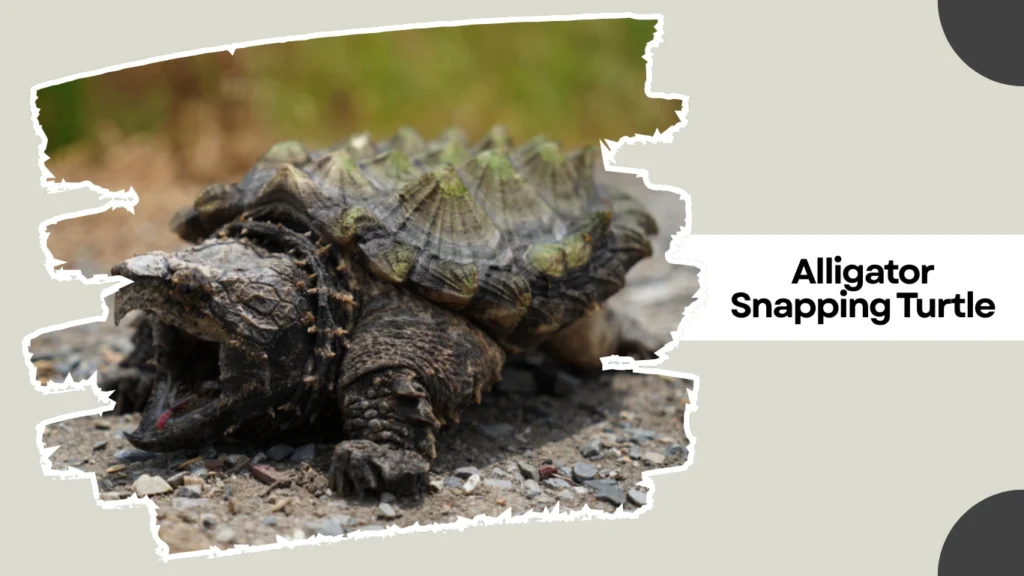
The Alligator Snapping Turtle is the largest freshwater turtle in North America and is known for its prehistoric appearance and extremely powerful bite. It is a mostly sedentary ambush predator.
Identification
- Massive size, 15–26 inches (shell)
- Can weigh 70–200+ lbs
- Three distinct ridges on the shell, giving a dinosaur-like look
- Huge head with extremely powerful jaws
- Worm-like lure on the tongue to attract prey
- Dark, rugged, heavily textured carapace
Habitat
Alligator Snapping Turtles inhabit deep rivers, swamps, bayous, lakes, and slow-moving waters in the southeastern United States. They prefer underwater logs, deep channels, and muddy bottoms where they can remain hidden.
Diet
They are carnivorous ambush predators, eating fish, amphibians, snakes, crustaceans, birds, small mammals, and carrion. They often lie still with their mouth open, using their tongue lure to attract prey.
Lifecycle & Lifespan
They mature slowly, around 12–20 years. Alligator Snapping Turtles are long-lived, typically reaching 70–100 years, with some believed to exceed 120 years in the wild.
16. Musk Turtle (Common Musk / Stinkpot)
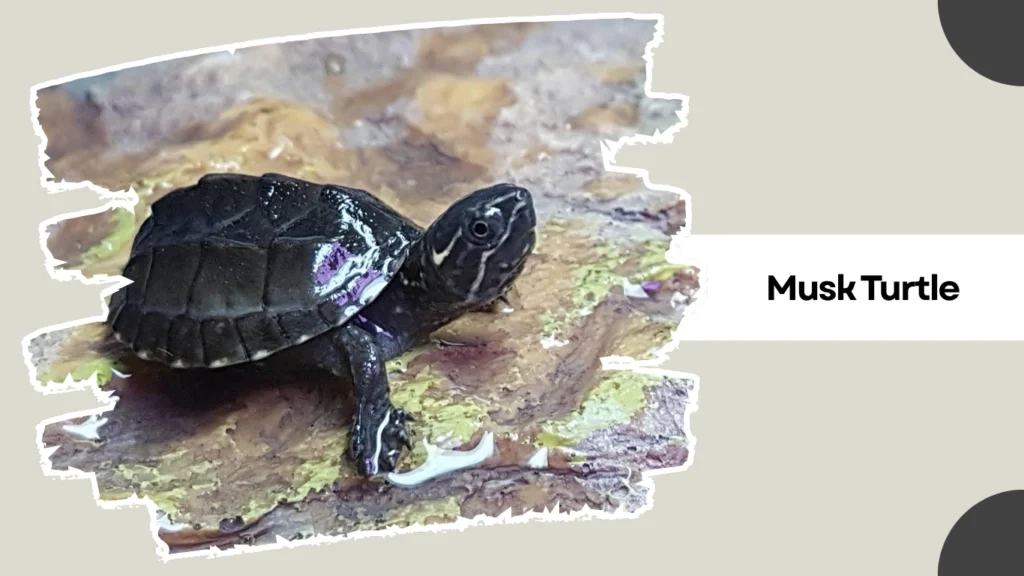
The Musk Turtle, often called the Stinkpot, is a small freshwater turtle known for the musky odor it can release when threatened. Despite its size, it is tough, adaptable, and popular in the pet trade.
Identification
- Small size, 3–5 inches
- Dark brown to black domed shell
- Two light stripes on the head
- Short legs with long claws
- Smooth, oval-shaped carapace
- Emits musky scent when stressed (its name origin)
Habitat
Musk Turtles inhabit ponds, lakes, streams, and slow rivers with soft, muddy bottoms. They prefer shallow waters rich in aquatic vegetation and debris where they can hide easily.
Diet
They are omnivores, feeding on insects, snails, worms, tadpoles, small fish, algae, and aquatic plants. They forage actively along the bottom.
Lifecycle & Lifespan
Musk turtles mature around 4–7 years. They typically live 30–50 years, though many captive individuals live longer with proper care.
17. Mud Turtle
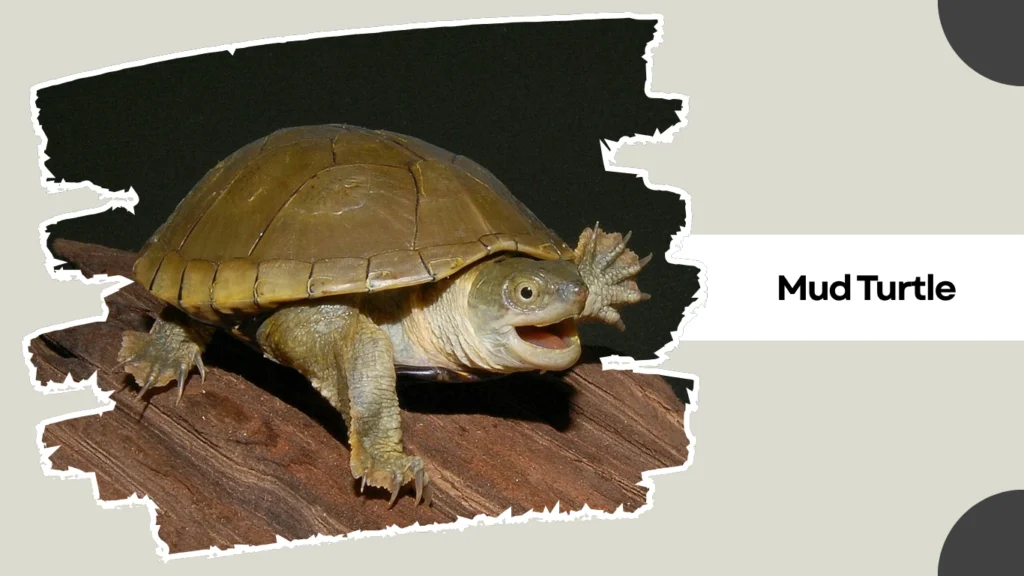
The Mud Turtle is a small, hardy freshwater species found throughout the Americas. It is known for its simple shell shape and preference for shallow, muddy environments.
Identification
- Small size, 3–6 inches
- Smooth, oval, low-domed shell
- Dark brown, olive, or black carapace
- Two hinges on the plastron depending on species
- Short tail and sturdy limbs
Habitat
Mud Turtles inhabit shallow ponds, marshes, ditches, slow streams, and swampy wetlands. They prefer muddy or sandy bottoms and often burrow to escape heat or drought.
Diet
They are omnivores, eating insects, worms, snails, small fish, algae, carrion, and aquatic vegetation. Their varied diet makes them highly adaptable.
Lifecycle & Lifespan
Mud turtles reach maturity around 5–8 years. Depending on species, they live 25–50 years, though some individuals can reach 60+ with ideal conditions.
18. Softshell Turtle

The Softshell Turtle is a unique freshwater species known for its flat, leathery shell and remarkable speed both in water and on land. Several species exist worldwide, all sharing the same soft, flexible carapace structure.
Identification
- Medium to large size, 6–24 inches depending on species
- Flat, smooth, leathery shell instead of hard scutes
- Long snorkel-like nose
- Webbed feet for powerful swimming
- Olive to brown coloration, often with spots or mottling
- Very fast swimmers and surprisingly quick on land
Habitat
Softshell turtles live in lakes, rivers, ponds, and sandy-bottomed waterways. They prefer soft mud or sand for burying themselves with only their nose exposed. Clean, shallow water with open space is ideal for them.
Diet
They are carnivorous, feeding on fish, insects, crustaceans, mollusks, amphibians, and carrion. Their speed allows them to ambush or chase down prey easily.
Lifecycle & Lifespan
They mature around 8–12 years. Softshell turtles typically live 20–40 years, but larger species may reach 50+ years in protected environments.
19. Diamondback Terrapin
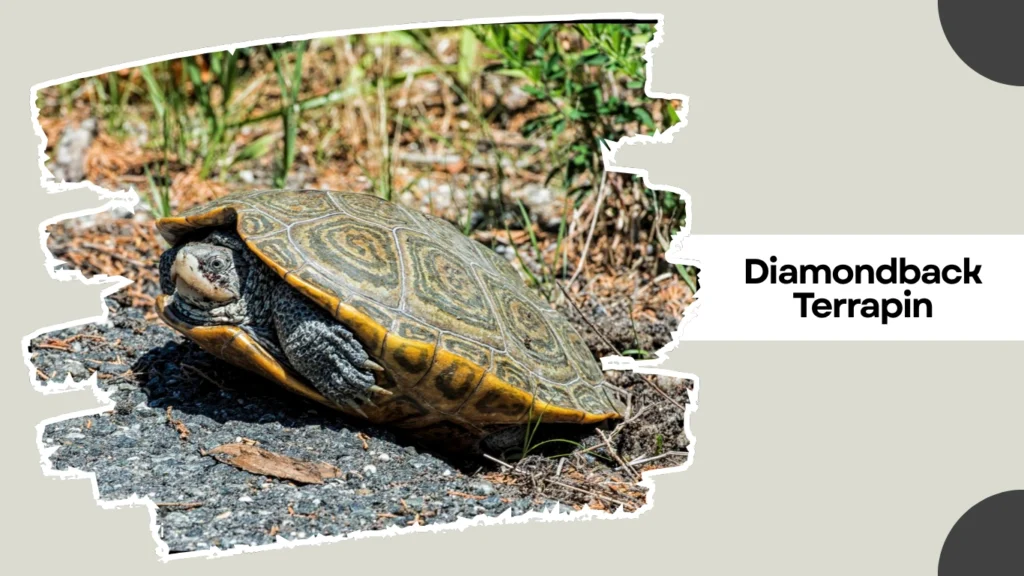
The Diamondback Terrapin is a coastal turtle species found in brackish waters along the eastern and southern United States. It is famous for its beautifully patterned skin and shell.
Identification
- Medium size, 5–9 inches (males smaller, females larger)
- Light to dark gray skin with black spots or speckles
- Shell patterned with diamond-shaped scutes
- Carapace usually gray, brown, or greenish
- Strong, webbed feet adapted for swimming
Habitat
Diamondback Terrapins inhabit marshes, tidal creeks, estuaries, mangroves, and coastal bays with brackish (slightly salty) water. They are uniquely adapted to tolerate both salt and freshwater.
Diet
They are carnivorous, feeding on crabs, clams, shrimp, snails, small fish, and marine invertebrates. Their strong jaws help crush hard shells.
Lifecycle & Lifespan
Terrapins reach maturity around 6–8 years. They typically live 25–40 years, though some individuals have been recorded at 50+ years.
20. Spotted Turtle
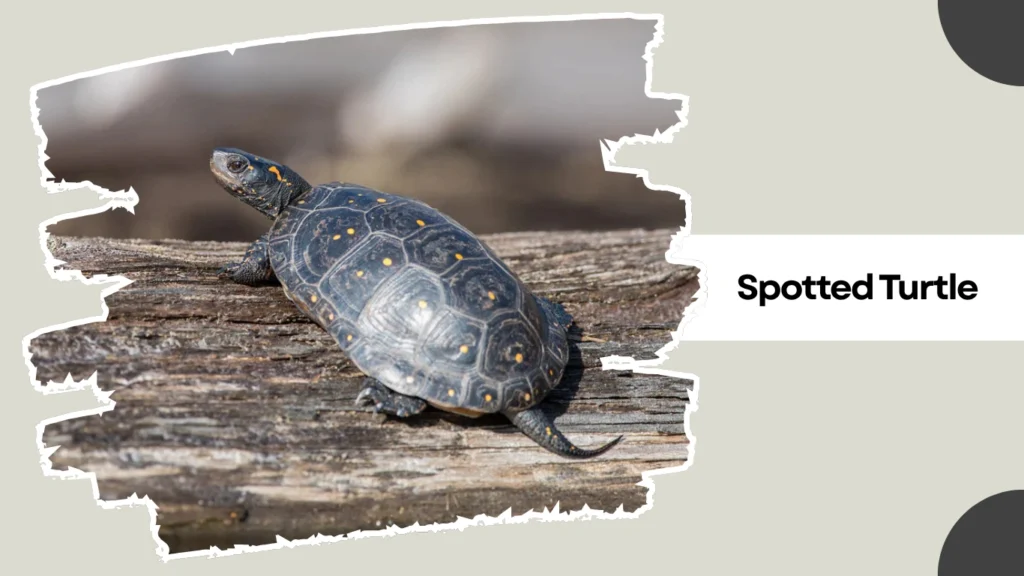
The Spotted Turtle is a small, beautifully patterned freshwater turtle known for its bright yellow spots scattered across a dark shell. It is a semi-aquatic species often found in shallow wetlands.
Identification
- Small size, 3.5–5 inches
- Black shell with distinctive yellow spots
- Smooth, low-domed carapace
- Orange or red markings on limbs and head
- Males have brown eyes; females have orange eyes
Habitat
Spotted Turtles live in marshes, bogs, swamps, shallow ponds, and slow-moving streams. They prefer clean, shallow water with abundant vegetation and muddy bottoms.
Diet
They are omnivores, feeding on insects, worms, snails, tadpoles, aquatic plants, algae, and carrion. They also forage on land during damp weather.
Lifecycle & Lifespan
They reach maturity around 7–10 years. Spotted Turtles generally live 25–50 years, with some individuals reaching 70+ years in protected habitats.
21. Wood Turtle
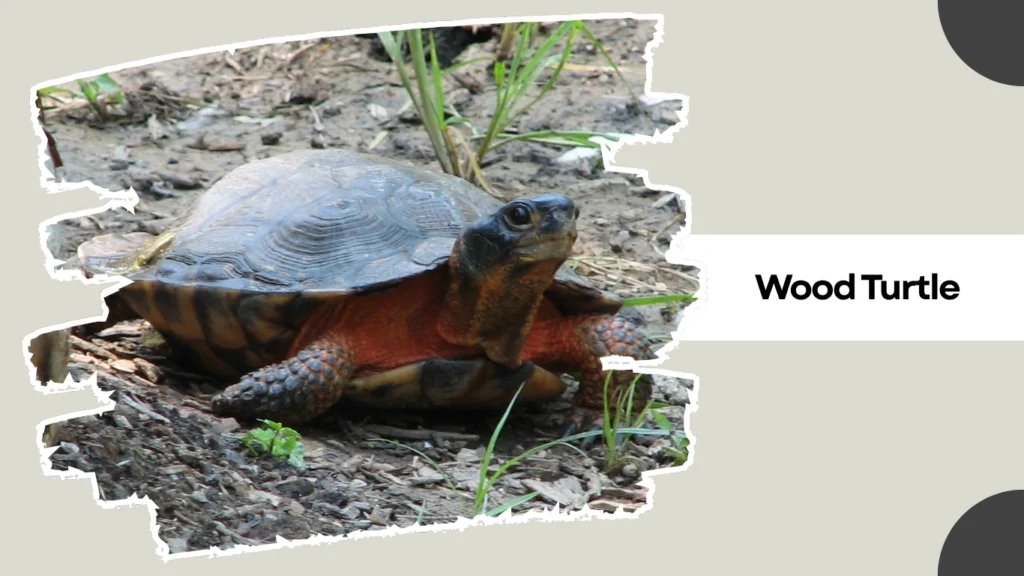
The Wood Turtle is a semi-terrestrial species native to North America, known for its sculpted, pyramidal shell that resembles carved wood. It is one of the most intelligent turtle species, capable of learning and problem-solving.
Identification
- Medium size, 6–10 inches
- Rough, ridged shell with engraved, wood-like pattern
- Orange or reddish skin on legs and neck
- Brown to gray carapace with raised scutes
- Broad head with dark eyes
Habitat
Wood Turtles inhabit rivers, forest streams, floodplains, meadows, and woodlands. They split their time between land and water, requiring clean streams and rich vegetation.
Diet
They are omnivores, eating berries, leaves, worms, insects, mushrooms, slugs, and carrion. They also use clever behavior, such as stomping the ground to lure worms to the surface.
Lifecycle & Lifespan
Wood Turtles mature around 10–15 years. With stable environments, they typically live 40–60 years, and some individuals exceed 70+ years.
22. Bog Turtle
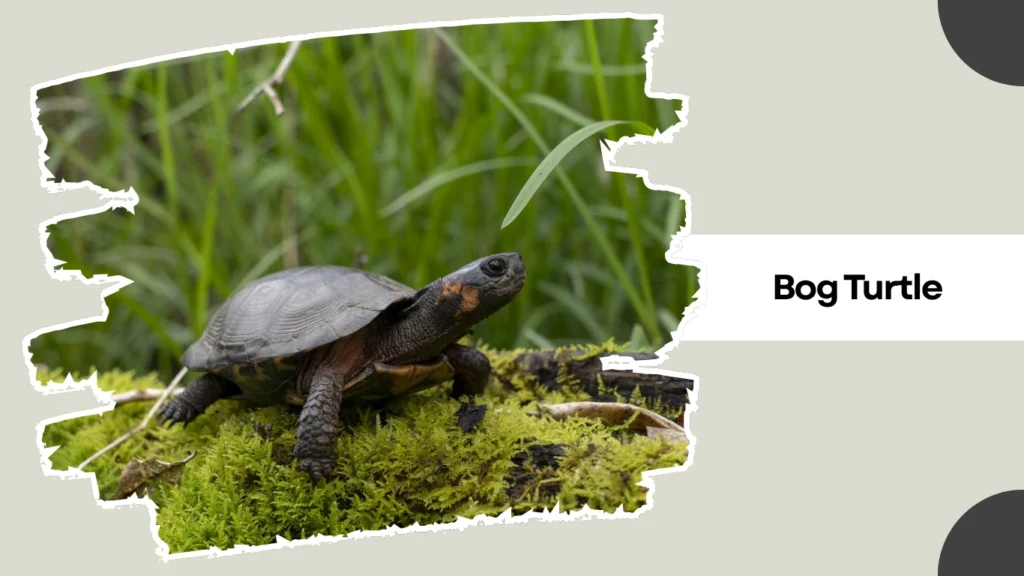
The Bog Turtle is one of the smallest and rarest turtle species in North America. It is easily recognized by the bright orange patches on the sides of its head and its preference for soft, marshy habitats.
Identification
- Very small size, 3–4.5 inches
- Dark brown to black shell
- Bright orange or yellow patches on both sides of the head
- Smooth, slightly domed carapace
- Slender limbs and short tail
Habitat
Bog Turtles live in wet meadows, marshes, spring-fed bogs, and shallow wetlands with soft mud and dense vegetation. They rely on pristine, slow-flowing waters and are highly sensitive to habitat disturbance.
Diet
They are omnivores, feeding on insects, spiders, worms, snails, slugs, tadpoles, and aquatic plants. They forage actively along wet soil and shallow water.
Lifecycle & Lifespan
Bog Turtles reach maturity around 7–10 years. With proper habitat, they live 30–40 years, though some individuals may reach 50+ years.
23. African Sideneck Turtle
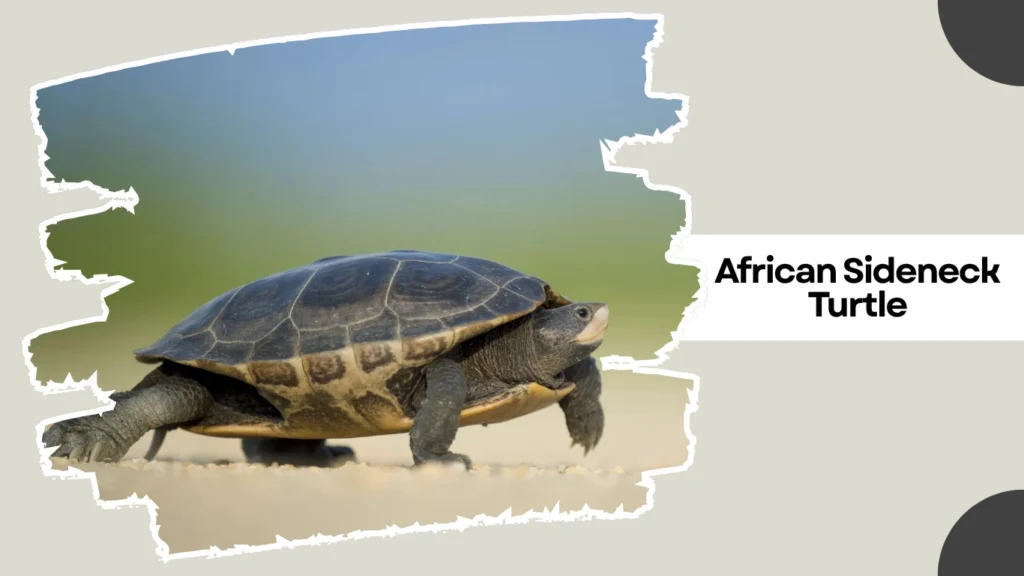
The African Sideneck Turtle is a unique freshwater turtle known for its sideways neck-bending motion, as it cannot tuck its head straight into its shell. It is a popular species in the pet trade due to its expressive face and hardy nature.
Identification
- Medium size, 8–12 inches
- Oval, domed brown or olive shell
- Long neck that folds sideways under the shell
- Large, expressive eyes
- Strong webbed feet for swimming
Habitat
African Sideneck Turtles inhabit rivers, lakes, swamps, and wetlands across sub-Saharan Africa. They prefer warm, slow-moving freshwater with muddy bottoms and abundant plant life.
Diet
They are omnivores, eating fish, insects, worms, snails, aquatic plants, and fruits. In captivity, they thrive on pellets, greens, insects, and occasional fish.
Lifecycle & Lifespan
They mature around 5–7 years. African Sidenecks typically live 25–50 years, though many captive turtles reach 60+ years with proper care.
24. Chinese Pond Turtle
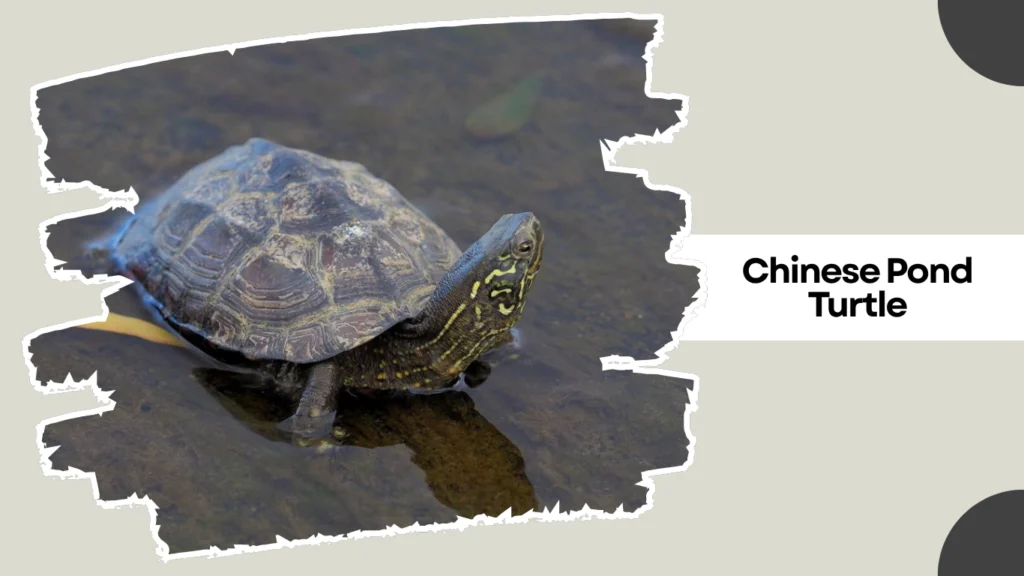
The Chinese Pond Turtle, also known as the Asian Yellow Pond Turtle, is a hardy freshwater species found throughout East Asia. It is adaptable and commonly kept in captivity due to its manageable size and resilience.
Identification
- Small to medium size, 5–8 inches
- Dark brown to black shell, slightly domed
- Yellow streaks on the head and neck
- Light-colored plastron, sometimes with dark blotches
- Strong, clawed limbs for swimming and walking
Habitat
Chinese Pond Turtles inhabit ponds, rivers, marshes, rice fields, and slow-moving streams in China, Taiwan, Korea, and Japan. They prefer shallow waters with muddy or sandy bottoms and plenty of vegetation.
Diet
They are omnivores, feeding on insects, small fish, crustaceans, aquatic plants, algae, and carrion. Their flexible diet makes them successful in a wide range of environments.
Lifecycle & Lifespan
They reach maturity around 5–8 years. Chinese Pond Turtles typically live 25–40 years, with some captive individuals reaching 50+ years.
25. Reeves’ Turtle
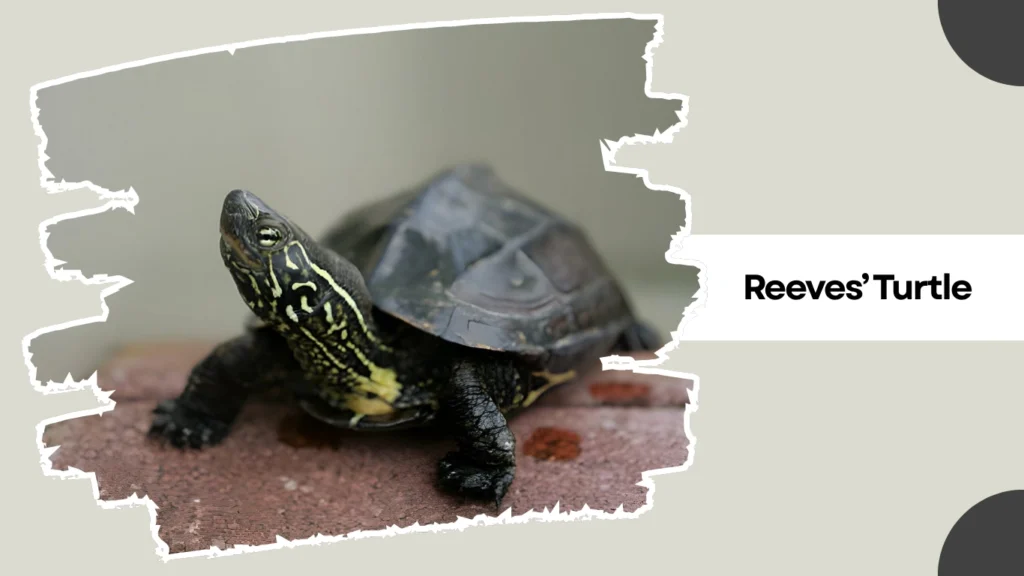
The Reeves’ Turtle, also called the Chinese Three-Keeled Turtle, is a small freshwater species known for its three raised ridges running down its shell. It is popular in the pet trade due to its small size and friendly behavior.
Identification
- Small size, 4–7 inches
- Dark brown to black shell with three distinct keels
- Square-shaped carapace
- Yellow or cream stripes on the head
- Rough-textured skin and limbs
Habitat
Reeves’ Turtles inhabit ponds, ditches, marshes, canals, and slow rivers in China, Taiwan, Korea, and Japan. They prefer shallow waters with soft bottoms and areas for basking.
Diet
They are omnivores, eating insects, worms, snails, small fish, aquatic vegetation, and algae. In captivity, they thrive on pellets, greens, insects, and occasional protein.
Lifecycle & Lifespan
Reeves’ Turtles mature around 4–6 years. They typically live 15–25 years, but well-cared-for individuals may reach 30–40 years.