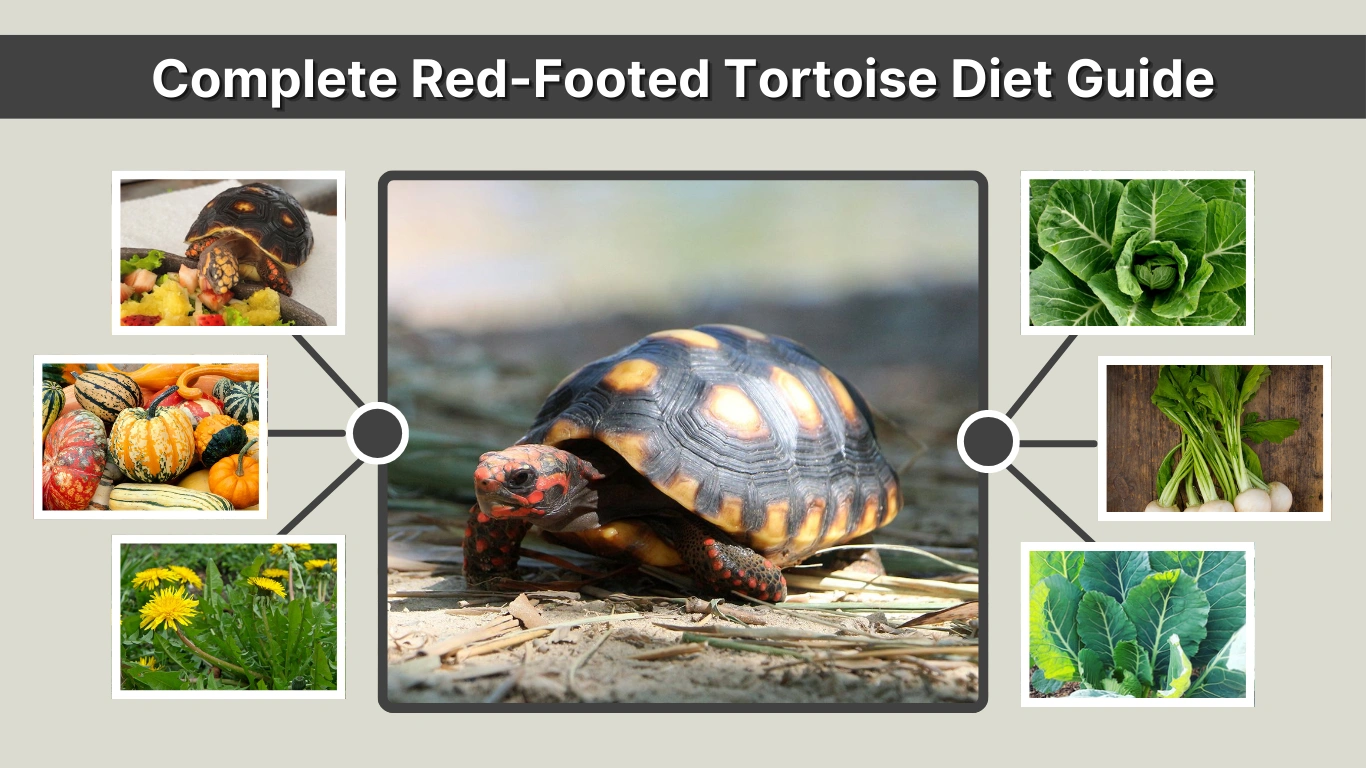
A balanced, varied diet is essential for keeping red-footed tortoises healthy, active, and properly hydrated. These South American tortoises are natural omnivores, eating a mix of greens, vegetables, fruits, fungi, and occasional protein. In captivity, the goal is to recreate that variety while maintaining the right ratios and avoiding harmful foods. This guide covers wild feeding behavior, diet ratios, food lists, baby and cherry-head variations, and an easy-to-follow diet sheet you can print or save.
Understanding the Red-Footed Tortoise Diet
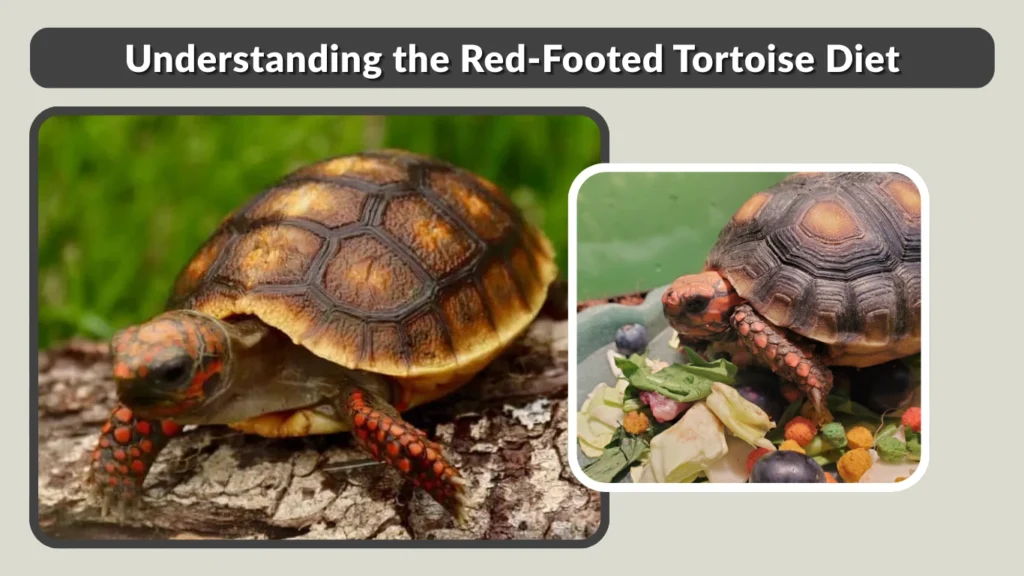
Red-footed tortoises thrive on a diverse, moisture-rich diet that mimics what they naturally encounter in tropical forests. In the wild, they eat fallen fruit, leafy plants, flowers, mushrooms, and sometimes carrion. Their opportunistic foraging style allows them to consume a wide range of foods depending on seasonal availability.
Because they come from humid rainforest habitats, their digestive systems are adapted to food with higher moisture and softer textures. This is why red-foots tolerate more fruit than many other tortoise species and can safely consume moderate levels of animal or plant proteins, which would be harmful to strictly herbivorous tortoises like sulcatas.
Cherry-head red-footed tortoises—considered a regional variant—have similar dietary needs but often show slightly stronger tolerance for fruits, likely due to natural access to more fruit-bearing plants in their local environment. However, the core nutritional requirements remain the same.
Ideal Diet Ratio for Red-Footed Tortoises
Creating a proper feeding ratio is one of the most important steps in maintaining a healthy tortoise. Red-foots need a mix of leafy greens, vegetables, fruits, and protein in proportions that support shell development, organ health, and hydration.
A widely accepted adult diet ratio includes:
- 50–60% leafy greens and vegetables
- 20–30% fruits
- 10–20% protein
- Supplements as needed (calcium, vitamins)
Leafy greens provide the fiber and minerals required for healthy digestion and a strong shell. Vegetables supply additional vitamins and moisture. Fruits, while higher in sugar, replicate the fallen fruits they naturally eat, contributing to hydration and energy. Protein—offered sparingly—supports muscle development and is especially important for younger tortoises.
Baby red-footed tortoises benefit from slightly more protein and higher-moisture foods to support growth. However, their overall variety should still follow the same balanced principles.
Red-Footed Tortoise Food Lists
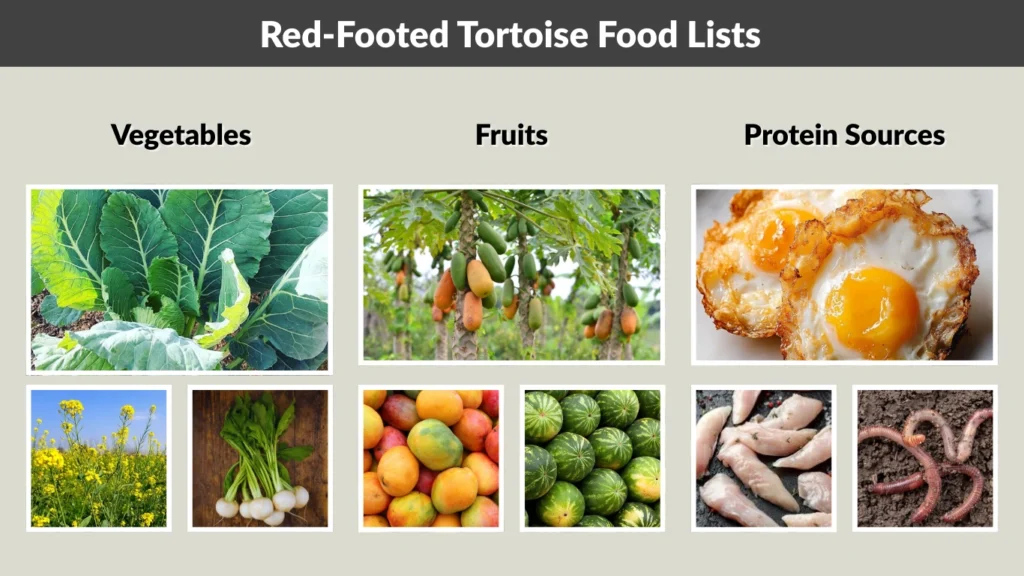
Below is a categorized list of safe, healthy foods you can rotate throughout the week to build a balanced diet.
Vegetables (Daily Staples)
These foods form the bulk of meals and add important vitamins and hydration:
- Collard greens
- Mustard greens
- Turnip greens
- Squash (butternut, acorn, yellow)
- Green beans
- Dandelion greens
- Endive and escarole
- Cactus pads (nopales)
Fruits (Offered in Moderation)
Red-foots can tolerate more fruit than many species, but still feed in controlled portions:
- Papaya
- Mango
- Melon
- Kiwi
- Berries (strawberry, blueberry, raspberry)
- Banana (very limited due to binding effect)
- Figs
Protein Sources (Occasional)
Provide once weekly for adults and twice weekly for growing juveniles:
- Cooked egg
- Lean poultry (tiny amounts)
- Earthworms
- High-quality tortoise-safe insects
- Plant proteins such as lentils or legumes (well cooked)
Foods to Avoid
Some foods look harmless but can cause long-term health issues. Avoid:
- Spinach (high oxalates)
- Iceberg lettuce (nutritionally empty)
- Rhubarb
- Onions and garlic
- Processed meats
- Dog or cat food (too high in fat and protein)
Red-Footed Tortoise Diet Sheet
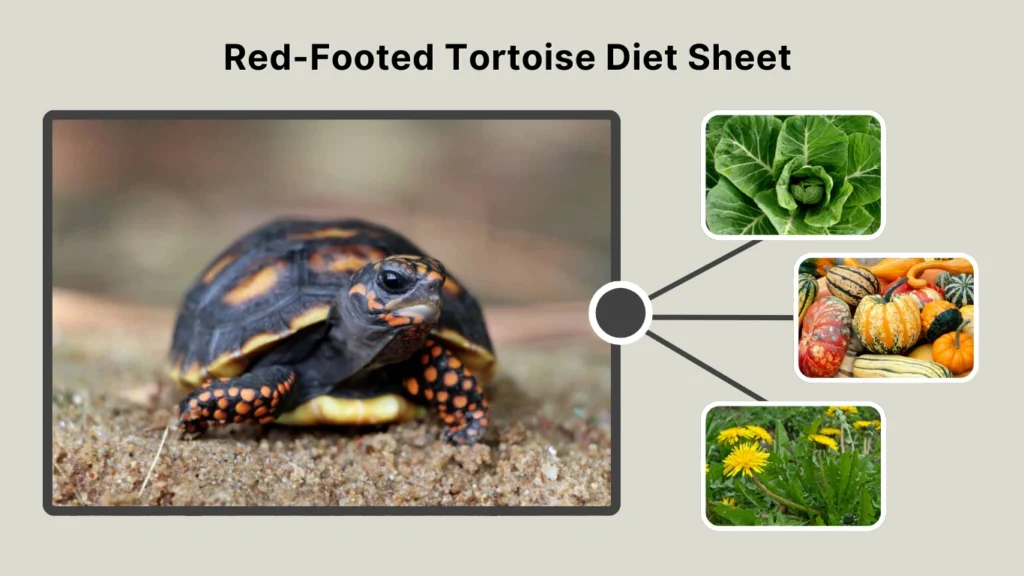
Use this simple diet sheet as a daily or weekly reference. It can also be converted into a PDF if you want a downloadable version.
Daily Feeding Ratio
- 50–60% leafy greens & vegetables
- 20–30% fruits
- 10–20% protein (once weekly for adults, twice weekly for juveniles)
- Calcium 2–3× weekly (light dusting)
Approved Vegetables
- Collard, mustard, turnip greens
- Squash, green beans, okra
- Dandelion, endive, escarole
Approved Fruits
- Papaya, mango, melon, berries, figs
Protein Options
- Boiled egg, insects, earthworms, small amounts of lean poultry
Avoid
- Spinach, iceberg lettuce, rhubarb, onions, processed foods
Baby Red-Footed Tortoise Diet
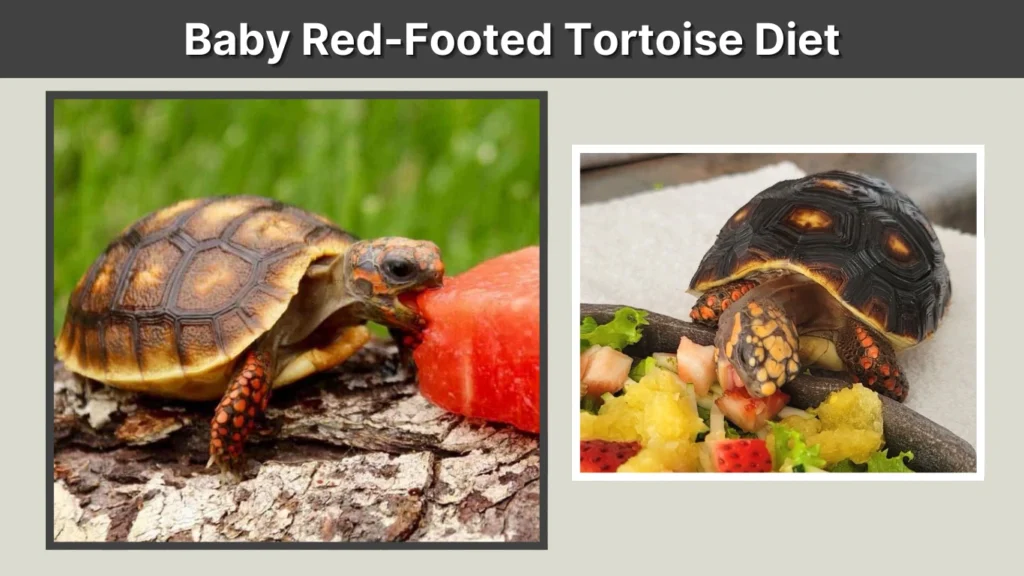
Baby red-foots require higher hydration and slightly increased protein to support rapid growth and shell development. Their meals should be softer and more frequent, usually offered daily in small, moist portions.
They thrive on finely chopped greens, shredded vegetables, and small amounts of soft fruits such as melon or papaya. Protein twice a week is appropriate, but avoid heavy meats. Calcium supplementation is essential to prevent early shell deformities. Babies also benefit from occasional mushrooms, which mimic natural forest foods and add moisture.
Regular misting and offering food with high moisture content help babies stay hydrated, which is vital for digestion and smooth shell growth.
Cherry-Head Red-Footed Tortoise Diet
Cherry-heads share the same essential dietary needs as standard red-foots. However, keepers often observe that cherry-heads enjoy and tolerate slightly more fruit due to their regional origins where fruiting plants are more common.
Their color may appear brighter when they consume foods high in beta carotene—such as papaya, mango, carrots, and squash. These foods are not necessary for color health but may naturally enhance it. Regardless of minor differences, maintain the same balanced ratio to avoid obesity or shell issues.
Weekly Diet Plan (7-Day Rotation)
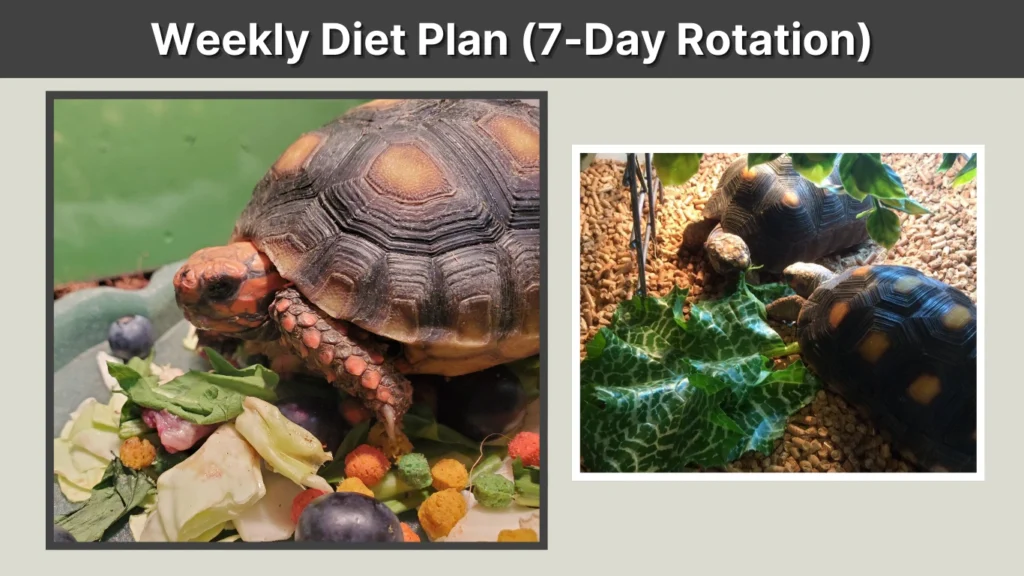
Here is a balanced example you can rotate or adjust:
Day 1: Collard greens, squash, papaya
Day 2: Mustard greens, dandelion, mixed berries
Day 3: Escarole, green beans, mushroom mix
Day 4: Turnip greens, butternut squash, mango
Day 5: Mixed leafy greens, banana slice, cooked egg (protein day)
Day 6: Cactus pads, melon, carrots (shredded)
Day 7: Endive, okra, kiwi
This rotation mimics the natural diversity of their habitat and ensures balanced nutrition.
UK-Specific Diet Notes
UK keepers may struggle to find tropical fruits year-round, but there are easy substitutions. Mango, papaya, and melons are normally available in major supermarkets, but when they’re not, use berries, kiwi, figs, and stone fruits instead.
For greens, UK-grown options such as spring greens, curly kale (in moderation due to oxalates), cabbage (limited), and dandelion leaves are excellent. Many UK gardens provide safe edible plants like plantain weeds and clover. However, avoid pasture plants treated with pesticides, herbicides, or fertilizers.
Commercial tortoise foods sold in the UK can supplement the diet but shouldn’t replace fresh produce. Always choose low-protein, natural-ingredient formulas.
Red-Footed Tortoises in the Wild
In the wild, red-footed tortoises roam humid forests in South America, feeding on whatever they can find on the forest floor. Their diet includes fallen fruits, various leaves, flowers, fungi, and occasionally carrion. They are one of the few tortoise species naturally adapted to eating fungus, which adds unique nutrients and moisture.
Seasonal changes greatly impact their wild diet. During rainy seasons, fruits and mushrooms are plentiful. During dry seasons, they rely more on hardy greens and slow-decaying plant material. Understanding this pattern helps replicate a naturalistic feeding routine in captivity.
Diet Problems to Watch For
Feeding too much fruit can cause diarrhea, weight gain, or digestive imbalance. Overfeeding protein may lead to kidney strain, pyramiding, and shell deformities. Insufficient calcium will cause soft shell syndrome, while poor hydration slows digestion and increases impaction risk.
A varied diet and proper humidity prevent most of these issues. Watch for changes in appetite, weight, droppings, or shell texture.
FAQs
Do red-footed tortoises need protein?
Yes, but in limited amounts. Red-foots naturally encounter carrion and insects in the wild, so offering protein once weekly for adults supports muscle and organ health. Babies may need it twice weekly.
Can red-foot tortoises eat fruit daily?
They can eat fruit more often than many tortoise species, but not daily in large amounts. Too much fruit leads to digestive issues. Offer several times weekly in small portions.
What is the best diet for a baby red-foot tortoise?
A baby’s diet should be moisture-rich with finely chopped greens, soft fruits, and slightly elevated protein. Daily feeding is ideal, with calcium added 3–4 times per week.
Is a UK diet different from a US or tropical diet?
Not significantly—just use locally available produce. UK keepers often rely more on berries, figs, and spring greens instead of tropical fruits.
Do cherry-heads eat differently from standard red-foots?
Only slightly. Cherry-heads may handle a bit more fruit and respond well to beta-carotene-rich foods, but they should still follow the same core feeding ratio.