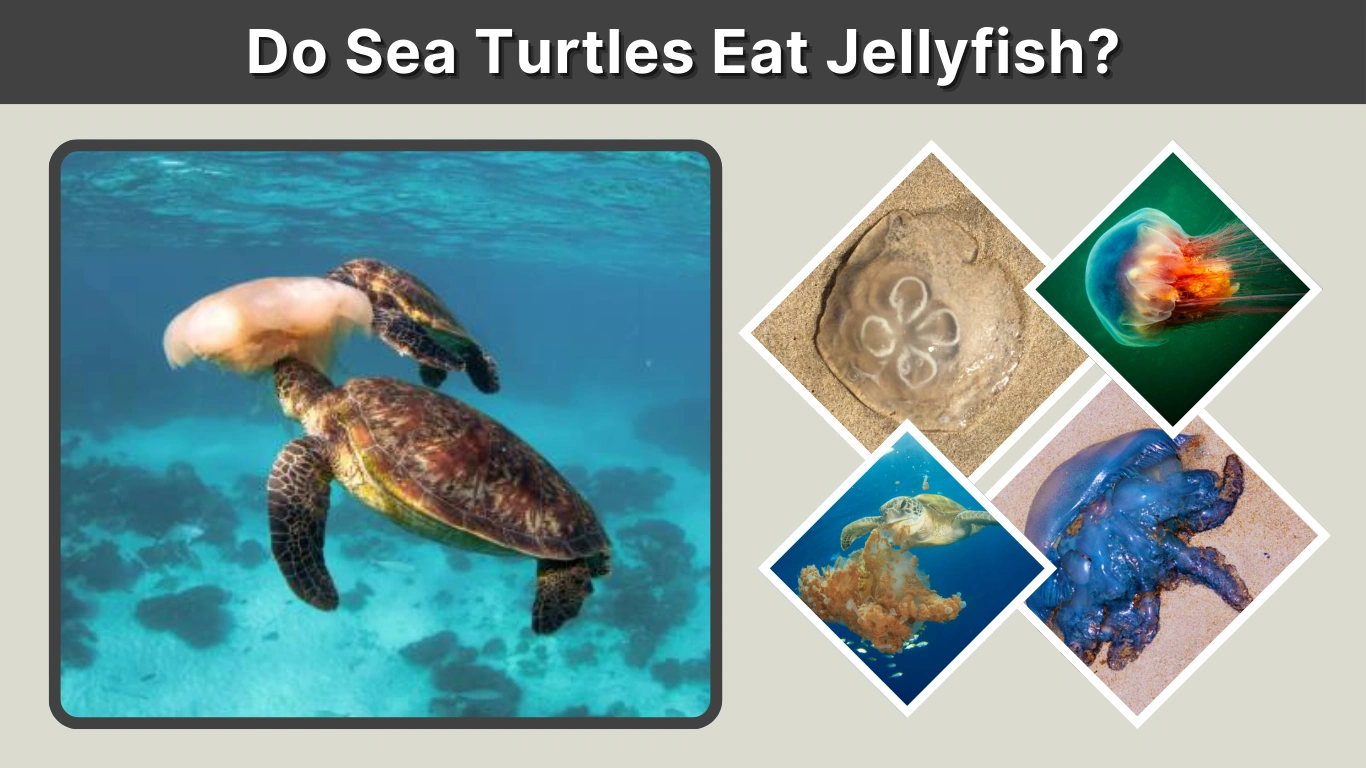
Sea turtles and jellyfish have a fascinating predator–prey relationship that sparks countless questions, especially about how turtles manage to eat such dangerous, stinging animals. While not all sea turtles rely heavily on jellyfish, several species—most notably the leatherback—depend on them as a primary food source. Understanding why and how sea turtles eat jellyfish offers insights into marine ecology, species behavior, and the surprising myths that surround these ancient reptiles.
Do Sea Turtles Eat Jellyfish?
Yes, many sea turtles do eat jellyfish, but the extent varies by species and age. Leatherback sea turtles are the most specialized jellyfish predators, consuming them as their main food source. Loggerheads, hawksbills, and green turtles may also eat jellyfish, although it is far less central to their diets.
Eating jellyfish helps maintain ecological balance by reducing large jellyfish blooms, which can disrupt marine food webs. This natural predation is especially important in regions where jellyfish populations expand rapidly during warm seasons.
Species-Specific Feeding Behavior
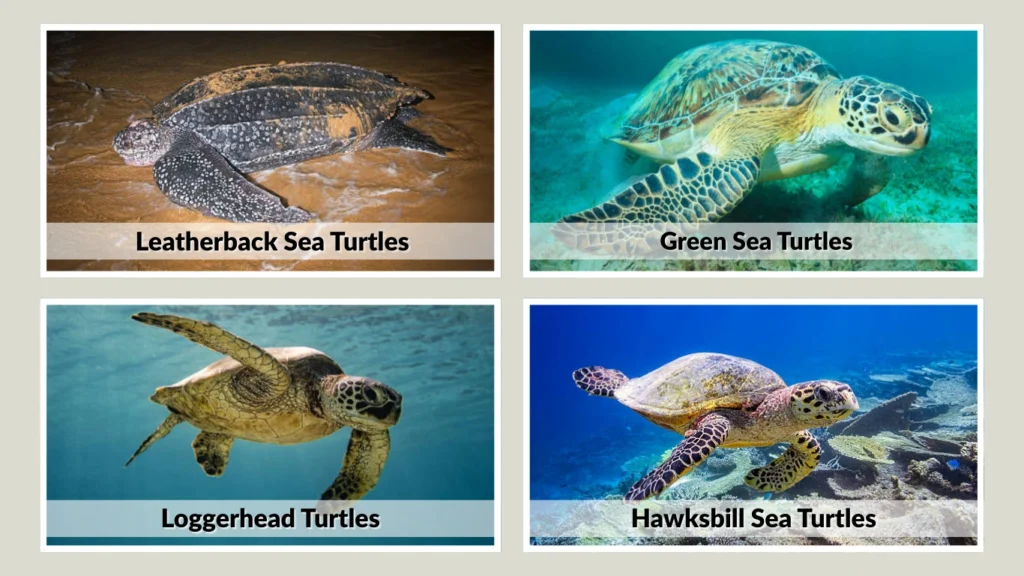
Leatherback Sea Turtles
Leatherbacks are the world’s largest sea turtles and the most dependent on jellyfish. Their entire physiology is adapted for this diet: soft bodies, long esophagi lined with backward-facing spines, and a hunting style that emphasizes slow, controlled biting. Leatherbacks primarily eat lion’s mane, moon jellyfish, and other large gelatinous species abundant in temperate and tropical oceans.
One of the most remarkable facts about leatherbacks is the sheer volume they consume. Because jellyfish are about 95% water and low in calories, leatherbacks must eat hundreds of jellyfish per day to meet their energy needs. This constant feeding supports their massive size and long oceanic migrations.
Green Sea Turtles
Green sea turtles can and do eat jellyfish, particularly as juveniles. At younger stages, they are more carnivorous and opportunistic, eating small fish, invertebrates, and jellyfish. As adults, however, greens shift toward a primarily herbivorous diet, feeding on seagrass and algae. When they eat jellyfish, it is usually opportunistic rather than essential.
Loggerhead and Hawksbill Sea Turtles
Loggerheads may consume jellyfish occasionally, but their strong jaws are better suited for crushing crabs, whelks, and mollusks. Hawksbills specialize in eating sponges but also take jellyfish when available. For both species, jellyfish are more supplemental than central to their diets.
How Sea Turtles Eat Jellyfish Without Getting Stung
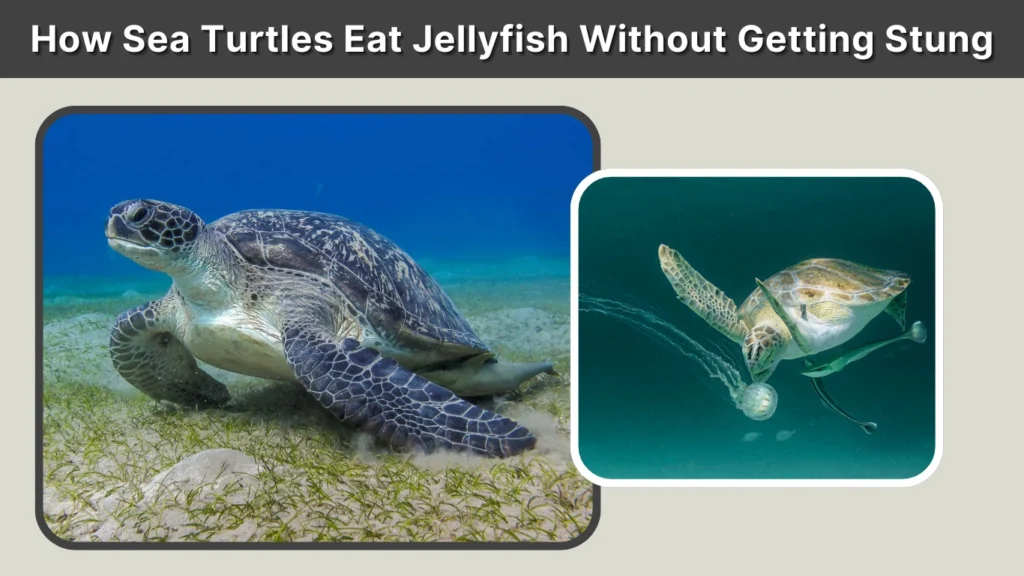
It may seem dangerous for sea turtles to bite into animals lined with venomous nematocysts, but they have evolved multiple adaptations to handle jellyfish safely.
- Thick Skin and Scales
The skin on a turtle’s face and neck is thick enough to resist most stings, reducing the impact of venom. - Papillae-Lined Esophagus
Inside a turtle’s throat are backward-pointing spines called papillae. These protect against stings and help grip slippery jellyfish as they swallow. - Strategic Eating Behavior
Sea turtles often attack jellyfish from the top, avoiding tentacles. This minimizes contact with the most dangerous parts. - Natural Immunity and Reduced Sensitivity
While not completely immune, turtles are much less sensitive to jellyfish venom than humans or other predators.
These adaptations make it possible for even the largest, most poisonous jellyfish to be consumed safely, including species like the box jellyfish—although this varies by turtle species and region.
Why Sea Turtles Eat Jellyfish
Sea turtles eat jellyfish for both nutritional and ecological reasons. Jellyfish are abundant, easy to spot, and soft-bodied, making them an accessible prey item. For leatherbacks, a jellyfish-based diet is an evolutionary specialization: their bodies and migration patterns are built around tracking jellyfish-rich waters. For other turtles, jellyfish serve as occasional protein-rich meals that supplement more diverse diets.
Do Sea Turtles Eat Box Jellyfish?
Box jellyfish are among the most venomous animals on Earth, yet some sea turtles can eat them with little harm. Leatherbacks and larger juvenile turtles may consume box jellyfish when available, though this depends on species distribution and opportunity. Their thick skin, protective papillae, and reduced sensitivity to venom allow them to handle these dangerous prey items more safely than most marine predators. However, box jellyfish are not a primary food source for any turtle species.
Do Jellyfish Eat Sea Turtles?
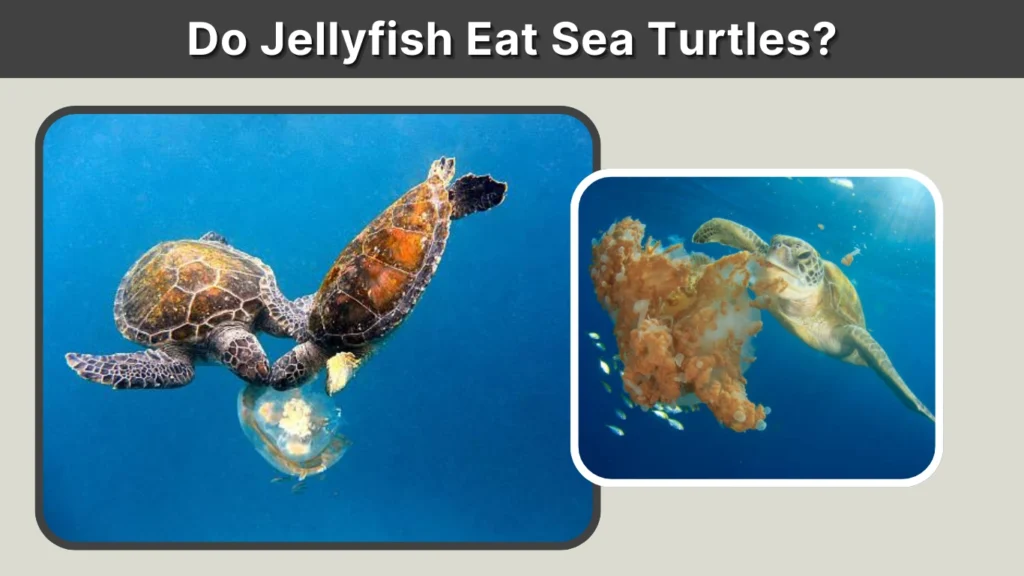
Despite occasional claims online, jellyfish do not eat sea turtles. They lack the anatomy, strength, and intelligence to actively prey on large animals. What can happen, however, is an accidental sting when a turtle swims through a tentacle-covered area. The sting is usually mild due to the turtle’s natural defenses. Predation is impossible—jellyfish simply do not have the structure or capability to consume a turtle.
Juvenile Sea Turtles and Jellyfish Consumption
Young sea turtles often rely on small gelatinous organisms such as hydromedusae, comb jellies, and miniature jellyfish. Juveniles are more opportunistic feeders, and jellyfish offer easy-to-catch meals in open water. As they grow, their diets diversify dramatically based on species. For instance:
- Juvenile greens: eat more jellyfish than adults.
- Juvenile loggerheads: consume small jellies but shift to crustaceans as jaws strengthen.
- Juvenile leatherbacks: feed extensively on small jellyfish before targeting larger species.
Jellyfish play an important role during early growth, providing soft, digestible nutrition for young turtles.
What Kind of Jellyfish Do Sea Turtles Eat?
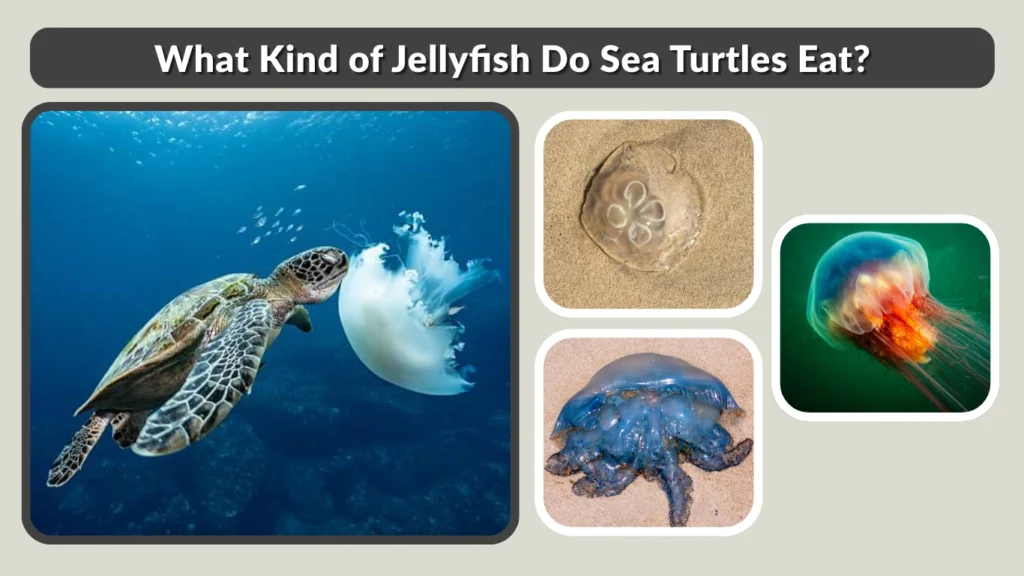
Sea turtles consume a wide variety of jellyfish species depending on habitat and size. Common types include:
- Moon jellyfish (Aurelia spp.)
- Lion’s mane jellyfish
- Blue blubber jellyfish
- Cannonball jellyfish
- Sea nettles
Leatherbacks, the most specialized jellyfish feeders, track seasonal blooms. Their feeding migrations often align with jellyfish-rich regions in the Pacific, Atlantic, and Southern Oceans. Other turtle species digest jellyfish easily but do not rely on them exclusively.
Ecological Importance of Sea Turtles Eating Jellyfish
By consuming large quantities of jellyfish, sea turtles help maintain ecological balance. When turtle populations decline, jellyfish blooms can grow unchecked, disrupting fisheries, clogging power plant intakes, and altering plankton communities. Leatherbacks are especially vital—each adult reduces jellyfish biomass significantly during migration.
Healthy turtle populations contribute to ocean stability, preventing jellyfish overpopulation and ensuring more balanced interactions throughout marine ecosystems.
Myth-Busting: Do Sea Turtles Get High From Eating Jellyfish?
A popular viral myth suggests that sea turtles “get high” from jellyfish. This idea likely emerged from humorous cartoons and social media posts, but there is no scientific evidence supporting the claim.
Reasons the myth is false:
- Jellyfish venom does not have psychoactive effects.
Their toxins target nerve cells and tissue, not receptors associated with euphoria. - Turtle physiology is adapted to resist stings.
Their reduced sensitivity doesn’t produce altered mental states. - Feeding behavior is normal and instinctive.
Turtles show no erratic or euphoric changes after eating jellyfish.
While entertaining online, the “high turtle” myth is purely fictional and not grounded in biology.