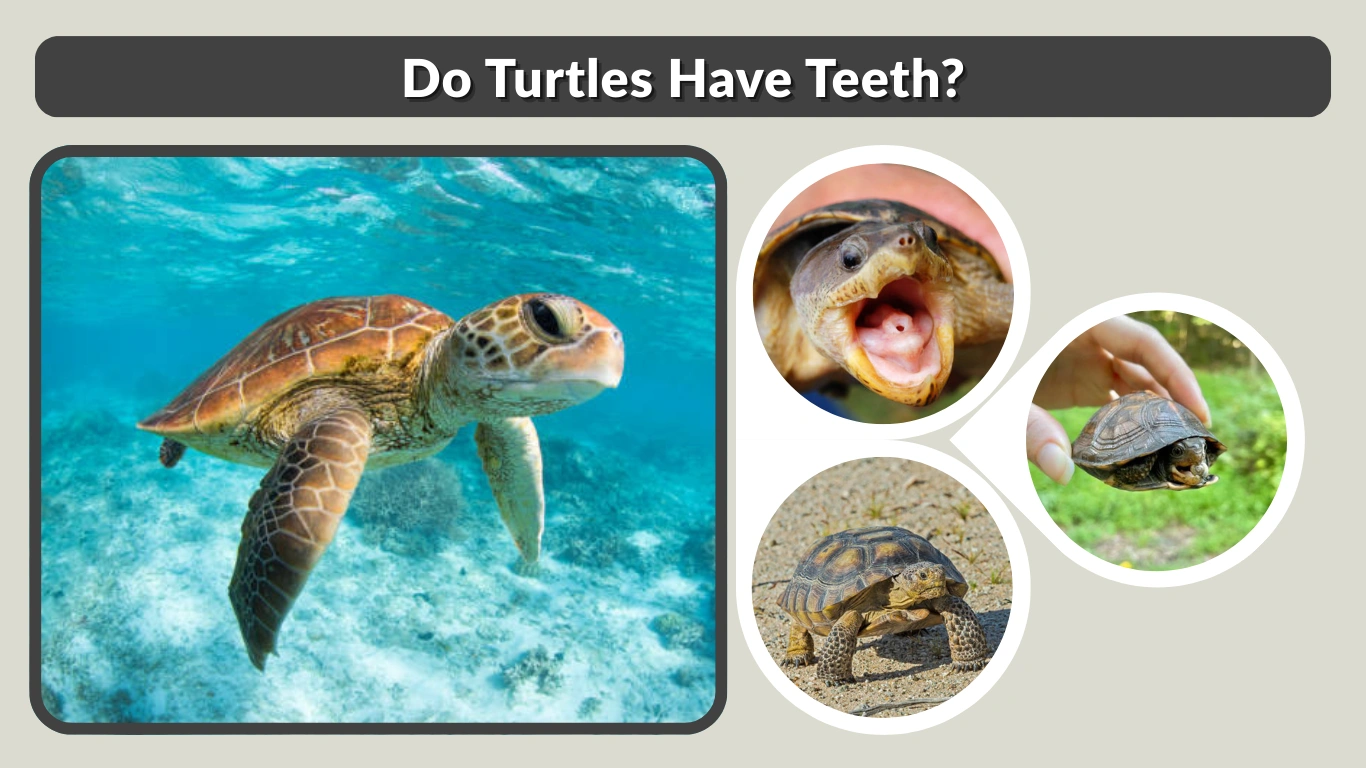
Many people wonder whether turtles have teeth, especially after seeing how powerfully some species bite. Their mouths look sharp, and their feeding behavior can seem tooth-like. However, turtles are very different from mammals and reptiles like lizards or crocodiles. Understanding how a turtle’s mouth works reveals fascinating evolutionary adaptations that allow these ancient reptiles to eat plants, crush shells, and catch prey—without having a single true tooth.
Do Turtles Really Have Teeth?
The simple scientific answer is no—turtles do not have true teeth. Unlike mammals, sharks, or crocodilians, turtles lack enamel-covered, root-based teeth. Instead, all living turtles, including sea turtles, freshwater turtles, and tortoises, have toothless jaws covered by a tough, sharp beak.
This means turtles cannot chew food the way humans do. Rather than grinding with teeth, they rely on powerful jaw muscles and razor-edged beaks to slice, crush, or tear their food into swallowable pieces.
The Simple Scientific Answer
From a biological standpoint, turtles lost their teeth over 150 million years ago. Fossil evidence shows that early turtle ancestors had small teeth, but modern turtles evolved a lightweight, horn-covered beak instead. This beak is made of keratin—the same material found in human fingernails and bird beaks.
Why People Think Turtles Have Teeth
Many turtles have jagged ridges, pointed edges, or crushing surfaces inside their mouths. When they bite, these hard, sharp structures can look and feel like teeth. Snapping turtles, for example, have extremely strong jaws and hooked beaks that easily cut through meat, plants, and even small bones, creating the illusion of true teeth.
What Do Turtles Have Instead of Teeth?
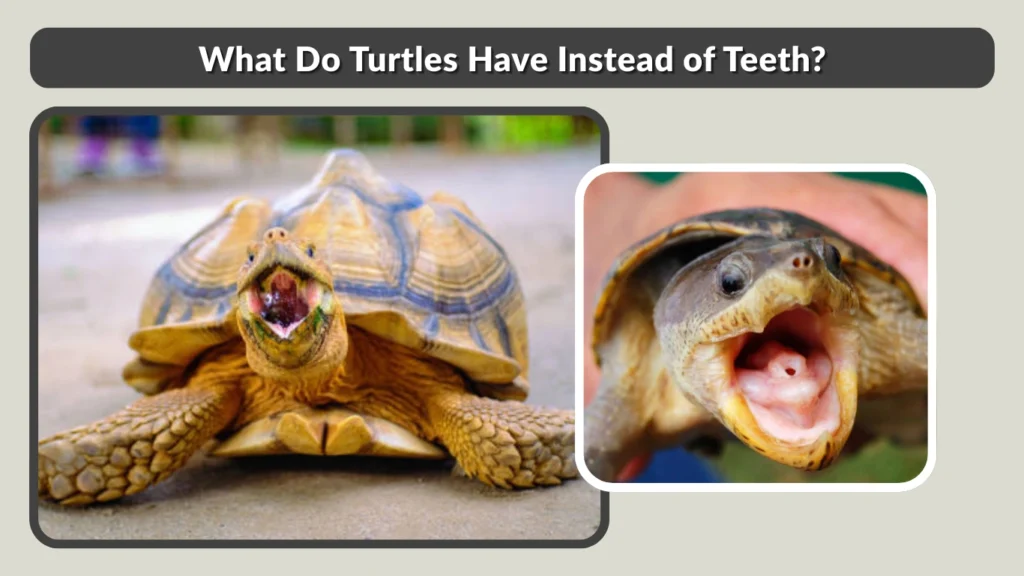
Instead of teeth, turtles have a beak-like mouth structure called a rhamphotheca. This beak covers the upper and lower jaws and forms sharp cutting edges or flat crushing plates, depending on the turtle’s diet.
The Turtle Beak Explained
The turtle beak grows continuously and wears down naturally as the animal feeds. Herbivorous turtles usually have sharper, serrated beaks for slicing vegetation. Carnivorous species often have powerful, hooked beaks for gripping prey, while some turtles develop broad, flat surfaces ideal for crushing shells and hard-bodied animals.
Jaw Strength and Bite Force
Although turtles lack teeth, their jaw muscles are extremely strong. Some large turtles can generate enough force to crush crab shells, cut through thick plants, or severely injure predators. The beak focuses this force into narrow edges, making their bites surprisingly effective.
Turtle Mouth Anatomy
A turtle’s mouth is specially adapted to its feeding lifestyle and includes several important structures:
- Keratin beak covering both jaws
- Sharp cutting edges or crushing plates
- Strong jaw bones fused into a solid skull
- Thick jaw muscles for powerful bites
- A muscular tongue for moving food
- Hard ridges that help grip prey
- A throat adapted for swallowing large pieces
These features work together to replace the function of traditional teeth.
Do Baby Turtles Have Teeth?
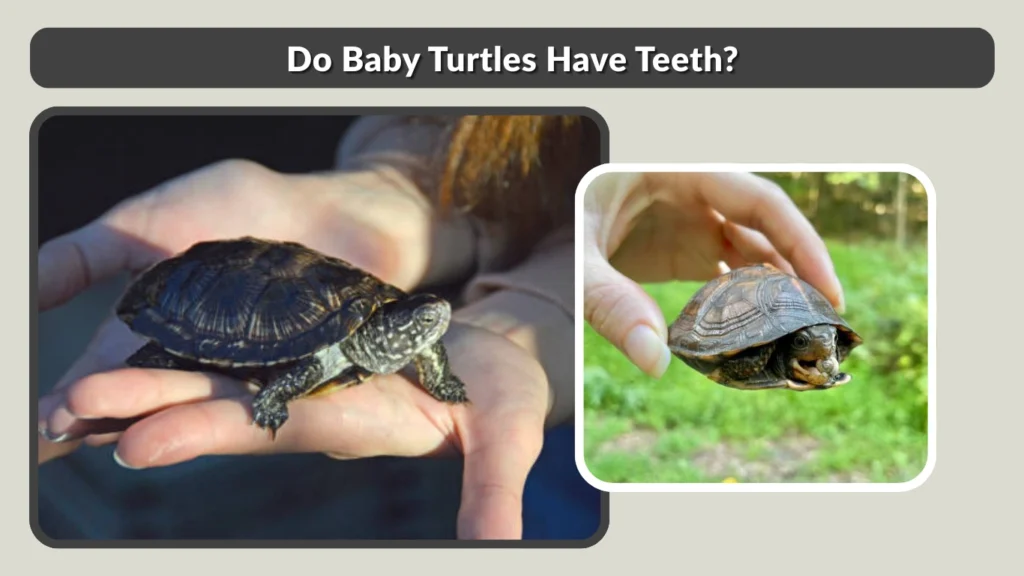
Baby turtles do not have real teeth either, but they are born with a temporary structure known as an egg tooth.
What Is an Egg Tooth?
An egg tooth, also called a caruncle, is a small, sharp projection on the turtle’s beak. Hatchlings use it to cut through the eggshell when they are ready to emerge.
What Happens to It After Hatching?
Soon after the baby turtle breaks free from the egg, the egg tooth falls off or is reabsorbed. It is never replaced with real teeth, and the turtle relies on its developing beak for feeding.
How Different Turtles Eat Without Teeth
Even without teeth, turtles are highly effective feeders. Their beaks and jaw shapes are specialized according to what they eat, allowing them to survive in oceans, rivers, lakes, and on land.
Herbivorous Turtles
Plant-eating turtles, such as green sea turtles and many tortoises, have sharp, finely edged beaks. These work like scissors, slicing through seagrass, algae, leaves, flowers, and fruit. Some tortoises also have slightly serrated edges that help them tear tough vegetation into manageable pieces.
Carnivorous Turtles
Meat-eating turtles, including snapping turtles and softshell turtles, have strongly hooked beaks. These allow them to grip slippery prey such as fish, frogs, and invertebrates. Instead of chewing, they use quick head movements and powerful jaws to rip food into chunks they can swallow whole.
Omnivorous Turtles
Many freshwater turtles are omnivores. Their beaks are shaped to both cut plants and crush animals. They may eat insects, worms, snails, plants, and small fish. Their flexible feeding strategy is one reason these turtles thrive in so many different habitats.
Sea Turtles vs Freshwater Turtles vs Tortoises
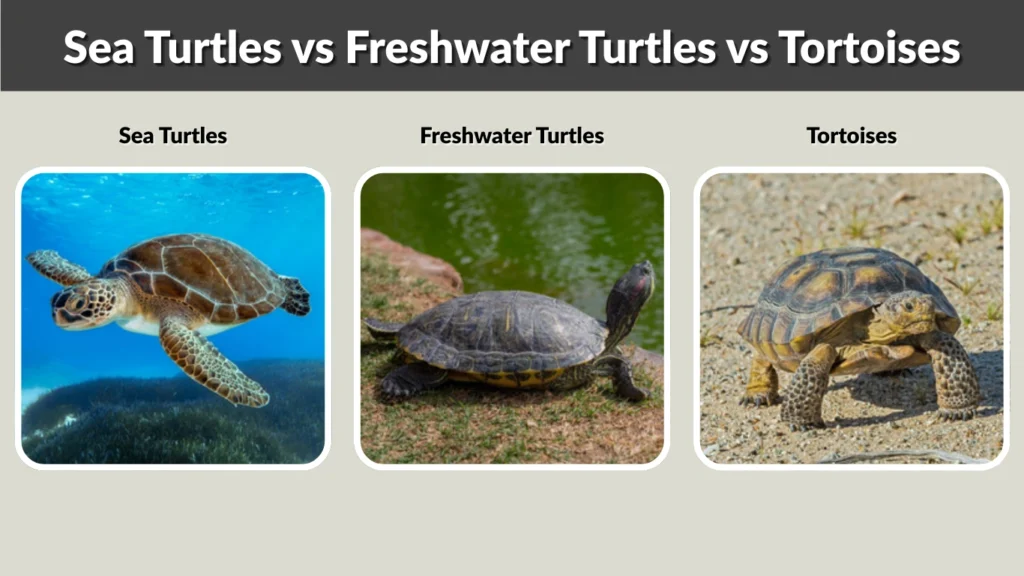
While all turtles lack true teeth, their mouths look quite different depending on lifestyle.
Sea turtles usually have streamlined heads and sharp beaks adapted for grazing, gripping jellyfish, or crushing hard-shelled prey. Freshwater turtles often have broader mouths and stronger bite forces, especially species that feed on snails, clams, and fish. Tortoises, which live on land, tend to have blunt but sharp-edged beaks designed for cutting fibrous plants. These differences show how the same toothless design can be modified for very different diets.
Can Turtles Bite Without Teeth?
Yes—turtles can bite, and some bites can be very painful even without teeth.
Are Turtle Bites Dangerous?
Most small pet turtles can deliver a sharp pinch that may break skin. Larger species, especially snapping turtles, can cause serious injuries. Their bites can lead to deep wounds, and because turtles often carry bacteria such as Salmonella, any bite should be cleaned thoroughly and treated properly.
Why Turtle Bites Hurt
Turtle beaks are extremely hard, and their jaw muscles are strong. When they bite, the beak concentrates force into a narrow edge, acting much like a pair of heavy-duty shears. This is why a turtle bite can cut skin and even damage bone despite the absence of teeth.
Why Turtles Evolved Without Teeth
Early turtle ancestors had small teeth, but over millions of years, turtles evolved beaks instead. One major advantage of losing teeth is weight reduction. A lighter skull improves swimming efficiency and head movement.
Beaks are also durable and continuously renewed. Teeth can break or rot, but a keratin beak wears down and regrows naturally. This made turtles more adaptable to a wide range of diets, from crushing shellfish to grazing plants, giving them a strong evolutionary advantage.
Interesting Facts About Turtle Mouths
Turtle beaks never stop growing. Wild turtles naturally wear them down through feeding, but captive turtles sometimes need special diets to prevent overgrowth. Some snapping turtles use their tongues like lures to attract fish. Leatherback sea turtles have backward-pointing spines in their throats to trap slippery jellyfish. These features show how complex turtle mouths really are, even without teeth.
FAQs
Do any turtles have real teeth?
No living turtle species has true teeth. All modern turtles have toothless jaws covered by keratin beaks. Fossil turtles once had teeth, but these disappeared millions of years ago as beaks evolved to replace them.
Do snapping turtles have teeth?
Snapping turtles do not have real teeth, but their beaks are extremely sharp and powerful. The hooked edges and crushing surfaces in their mouths often look like teeth, which is why many people think they have them.
Do baby turtles bite?
Yes, baby turtles can bite, although their bites are much weaker than those of adults. Hatchlings use their beaks to grip food and may nip defensively if handled, even though they have no teeth.
What is a turtle’s beak made of?
A turtle’s beak is made of keratin, the same tough protein found in human nails and bird beaks. This material forms a hard covering over the jaws, creating sharp cutting edges or flat crushing surfaces.
Can a turtle bite off a finger?
Large turtles, especially snapping turtles, have extremely strong jaws and can cause severe injuries. While rare, serious damage to fingers is possible. This is why wild turtles should never be handled without proper knowledge and care.