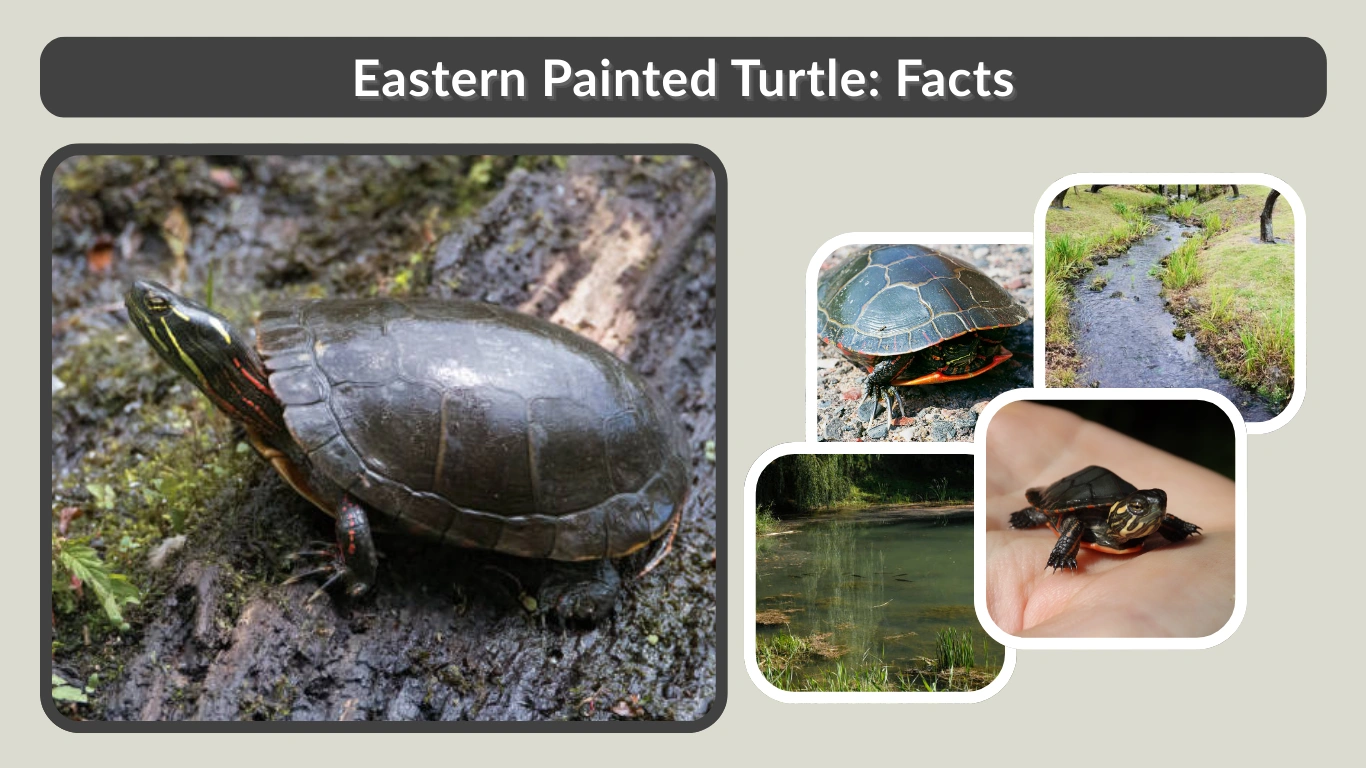
The eastern painted turtle (Chrysemys picta picta) is one of the most colorful and widespread freshwater turtles in North America. Known for its smooth dark shell trimmed with bright red and yellow markings, this small aquatic turtle is a favorite among wildlife watchers and reptile enthusiasts. Whether you’re researching for school or considering one as a pet, this guide covers essential facts about its appearance, habitat, lifespan, diet, and natural behavior.
What Is the Eastern Painted Turtle?
The eastern painted turtle is one of four subspecies of the painted turtle (Chrysemys picta). It is the smallest subspecies and is commonly found in calm freshwater environments throughout the eastern United States and parts of southeastern Canada.
Scientific Classification
- Kingdom: Animalia
- Phylum: Chordata
- Class: Reptilia
- Order: Testudines
- Family: Emydidae
- Genus: Chrysemys
- Species: Chrysemys picta
- Subspecies: Chrysemys picta picta
Painted turtles are closely related to other pond turtles and share similar aquatic lifestyles. However, each subspecies has distinct shell markings and regional ranges.
Physical Appearance
The eastern painted turtle is easily recognized by its vibrant coloring. Its upper shell (carapace) is smooth, dark olive to black, and edged with red or orange markings. The lower shell (plastron) is typically yellow and usually lacks the large central pattern seen in other painted turtle subspecies.
Its head, neck, and legs feature bold yellow stripes, while red markings often appear along the shell’s edges. These bright colors help distinguish it from similar species like the red-eared slider.
Males are generally smaller than females and have longer front claws and thicker tails. Females tend to grow larger, especially when reaching maturity.
Eastern Painted Turtle Size and Lifespan
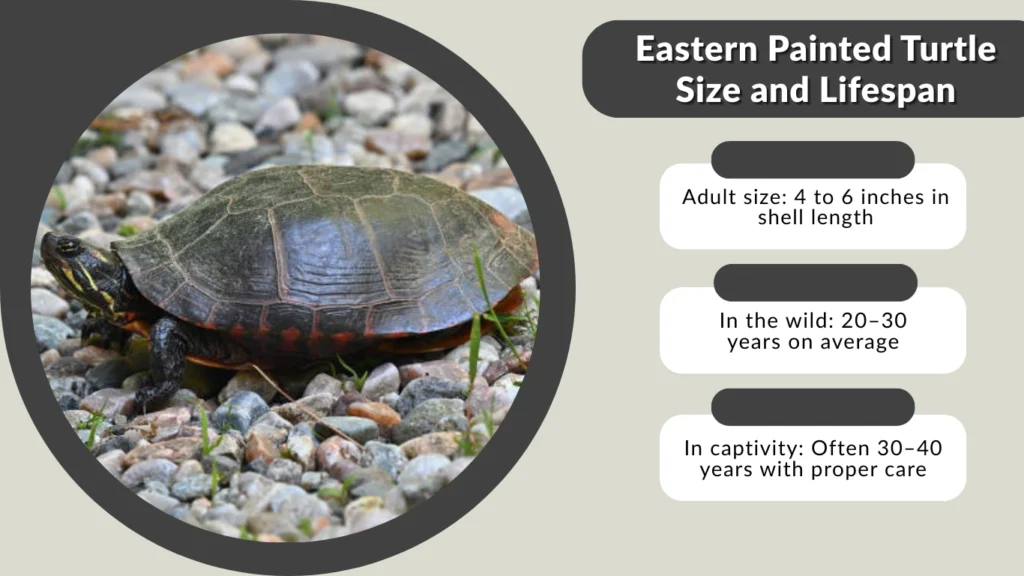
Understanding the size and lifespan of the eastern painted turtle helps both researchers and pet owners prepare for long-term care.
How Big Do They Get?
Eastern painted turtles are relatively small compared to many other freshwater turtles.
- Adult size: 4 to 6 inches in shell length
- Females: Usually larger than males
- Males: Slightly smaller with longer front claws
Growth depends on diet, habitat quality, and environmental conditions. In captivity, turtles with proper nutrition and care may reach the upper end of their size range.
How Long Do They Live?
Eastern painted turtles are long-lived reptiles.
- In the wild: 20–30 years on average
- In captivity: Often 30–40 years with proper care
Lifespan depends on factors such as water quality, predator exposure, diet, and overall health. In captivity, consistent veterinary care and a balanced diet can significantly increase longevity.
Eastern Painted Turtle Habitat and Range
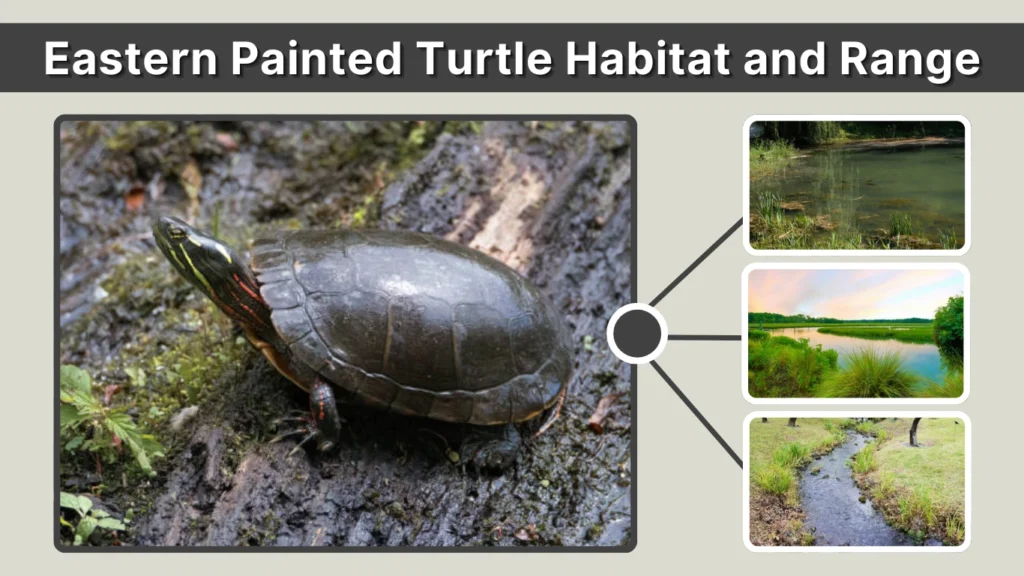
The eastern painted turtle thrives in calm freshwater environments where it can easily swim, feed, and bask.
Natural Habitat
These turtles prefer:
- Shallow ponds
- Marshes
- Slow-moving streams
- Lakes with soft, muddy bottoms
They favor areas with plenty of aquatic vegetation for feeding and hiding. Fallen logs, rocks, and branches are essential because they provide basking spots. Basking in sunlight helps regulate body temperature and supports healthy shell development.
Eastern painted turtles are excellent swimmers and spend most of their time in water. However, they frequently climb onto logs or rocks to warm themselves in the sun.
Geographic Range
The eastern painted turtle is native to:
- The eastern United States
- Parts of the Mid-Atlantic region
- Southeastern Canada
Its range stretches from southern Canada down through states such as New York, Pennsylvania, Virginia, and the Carolinas. This wide distribution makes it one of the most commonly encountered turtles in the region.
Seasonal Behavior
During colder months, eastern painted turtles enter a period called brumation, which is similar to hibernation. They settle at the bottom of ponds or bury themselves in mud, where they remain inactive until temperatures rise in spring.
In warmer seasons, they become highly active—basking, feeding, and breeding. Spring and early summer are especially important for mating and nesting activities.
Eastern Painted Turtle Diet
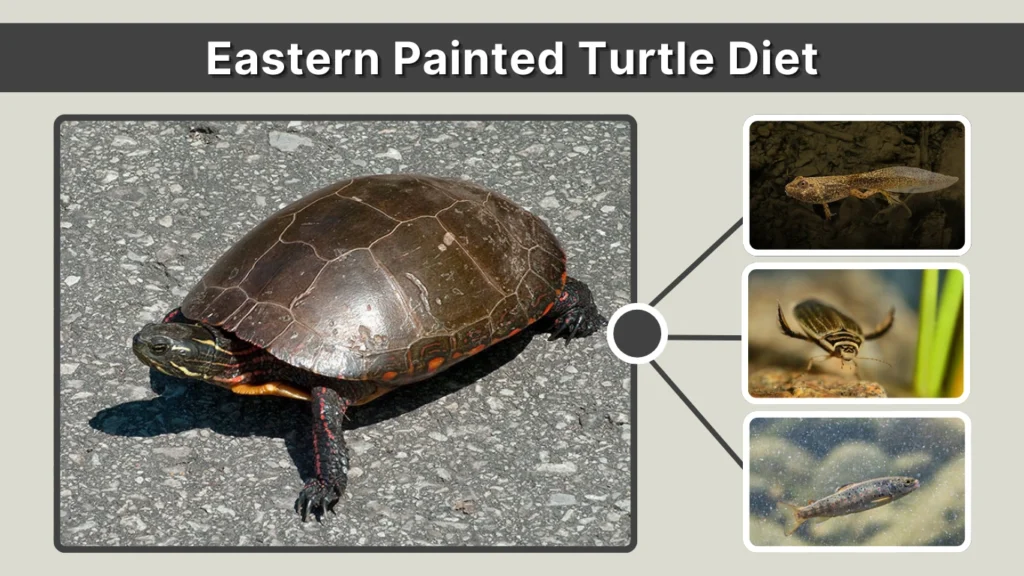
Eastern painted turtles are omnivores, meaning they eat both plant and animal matter. Their diet changes slightly as they grow.
What Do They Eat in the Wild?
In natural habitats, their diet includes:
- Aquatic plants and algae
- Insects and insect larvae
- Small fish
- Tadpoles
- Crustaceans
- Snails
Young turtles tend to eat more protein to support growth, while adults consume more plant material.
Their hunting strategy is simple: they actively swim through vegetation and snap up small prey. They rely heavily on sight to locate food.
What Do They Eat in Captivity?
In captivity, eastern painted turtles require a balanced diet that closely mimics what they would eat in the wild. High-quality commercial turtle pellets should form the foundation of their diet because they are formulated to provide essential nutrients, including calcium and vitamin D3. Fresh leafy greens such as romaine lettuce, dandelion greens, and aquatic plants can be offered regularly. Protein sources like mealworms or small feeder fish may be given in moderation. A varied diet helps maintain proper shell growth and overall health.
Eastern Painted Turtle Behavior
Eastern painted turtles are active, alert reptiles that spend much of their time swimming and basking. They are diurnal, meaning they are most active during daylight hours. Basking is a critical part of their routine because exposure to sunlight allows them to regulate body temperature and metabolize nutrients efficiently. In the wild, it is common to see several turtles sharing the same log, stacked one on top of another to access the best sunlight.
Despite their colorful appearance, these turtles are naturally cautious. When approached, they quickly slide off logs into the water to escape potential threats. In captivity, they may become accustomed to human presence but generally prefer minimal handling. Like most aquatic turtles, they may withdraw into their shells or attempt to swim away if they feel stressed.
Eastern Painted Turtle as a Pet
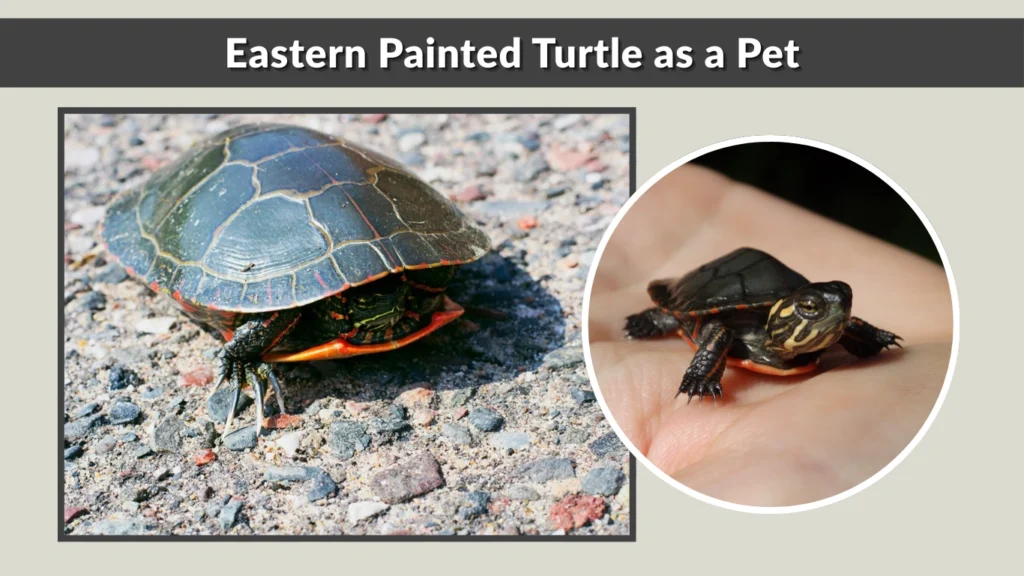
The eastern painted turtle is sometimes kept as a pet due to its manageable size and attractive markings. However, owning one requires a long-term commitment. Because they can live for several decades, prospective owners should be prepared for years of consistent care.
A proper tank setup is essential for their well-being. They need a spacious aquatic enclosure with clean, filtered water deep enough for swimming. A dry basking area must be provided where the turtle can fully leave the water and warm itself under a UVB light. Adequate lighting is critical because it supports calcium absorption and prevents shell deformities.
Water quality plays a major role in preventing illness. Poor filtration can lead to bacterial growth, which increases the risk of shell rot and respiratory infections. Regular cleaning and monitoring of water temperature help maintain a healthy environment. When properly cared for, eastern painted turtles can thrive in captivity and display natural behaviors similar to those seen in the wild.
Reproduction and Nesting
Eastern painted turtles typically mate in spring after emerging from brumation. Courtship occurs in the water, where males use their elongated front claws to gently stroke the female’s face. If receptive, the female allows mating to take place underwater.
Later in late spring or early summer, the female searches for a suitable nesting site on land. She prefers sandy or soft soil areas exposed to sunlight. Using her hind legs, she digs a small cavity where she deposits her eggs. After laying the eggs, she carefully covers the nest and leaves them to incubate without further parental care.
Incubation usually lasts several weeks, depending on temperature. Warmer conditions can influence hatchling development and may even affect the sex of the young. Once hatched, the tiny turtles instinctively make their way toward water, where they begin life independently.
Conservation Status
The eastern painted turtle is not currently considered endangered and remains common throughout much of its range. Its adaptability to various freshwater habitats has helped maintain stable populations. However, certain threats still impact local groups.
Habitat destruction, wetland drainage, and road mortality during nesting season pose risks. Pollution in freshwater systems can also affect turtle health and food availability. In some areas, collection for the pet trade has reduced local populations. Conservation efforts that protect wetlands and promote responsible pet ownership contribute to the long-term survival of this species.
FAQs
How big do eastern painted turtles get?
Eastern painted turtles typically grow between four and six inches in shell length. Females are usually slightly larger than males, especially when fully mature. Their relatively small size compared to other freshwater turtles makes them easier to manage in captivity, though they still require spacious aquatic enclosures.
What do eastern painted turtles eat?
Eastern painted turtles are omnivores that consume both plant and animal matter. In the wild, they feed on aquatic vegetation, insects, small fish, and snails. In captivity, a diet of commercial turtle pellets combined with leafy greens and occasional protein sources helps ensure balanced nutrition.
How long do eastern painted turtles live?
In the wild, eastern painted turtles commonly live between twenty and thirty years. With proper care in captivity, including clean water, UVB lighting, and a balanced diet, they can live thirty to forty years or more. Their long lifespan makes them a significant long-term commitment for owners.
Are eastern painted turtles endangered?
Eastern painted turtles are not currently classified as endangered. They are widespread and adaptable across much of the eastern United States and southeastern Canada. However, habitat loss, pollution, and road accidents during nesting season can impact local populations.
Can you keep an eastern painted turtle as a pet?
Yes, eastern painted turtles can be kept as pets, but they require proper aquatic housing, UVB lighting, and consistent maintenance. Because they can live for decades, potential owners should carefully consider the long-term responsibility before bringing one home.