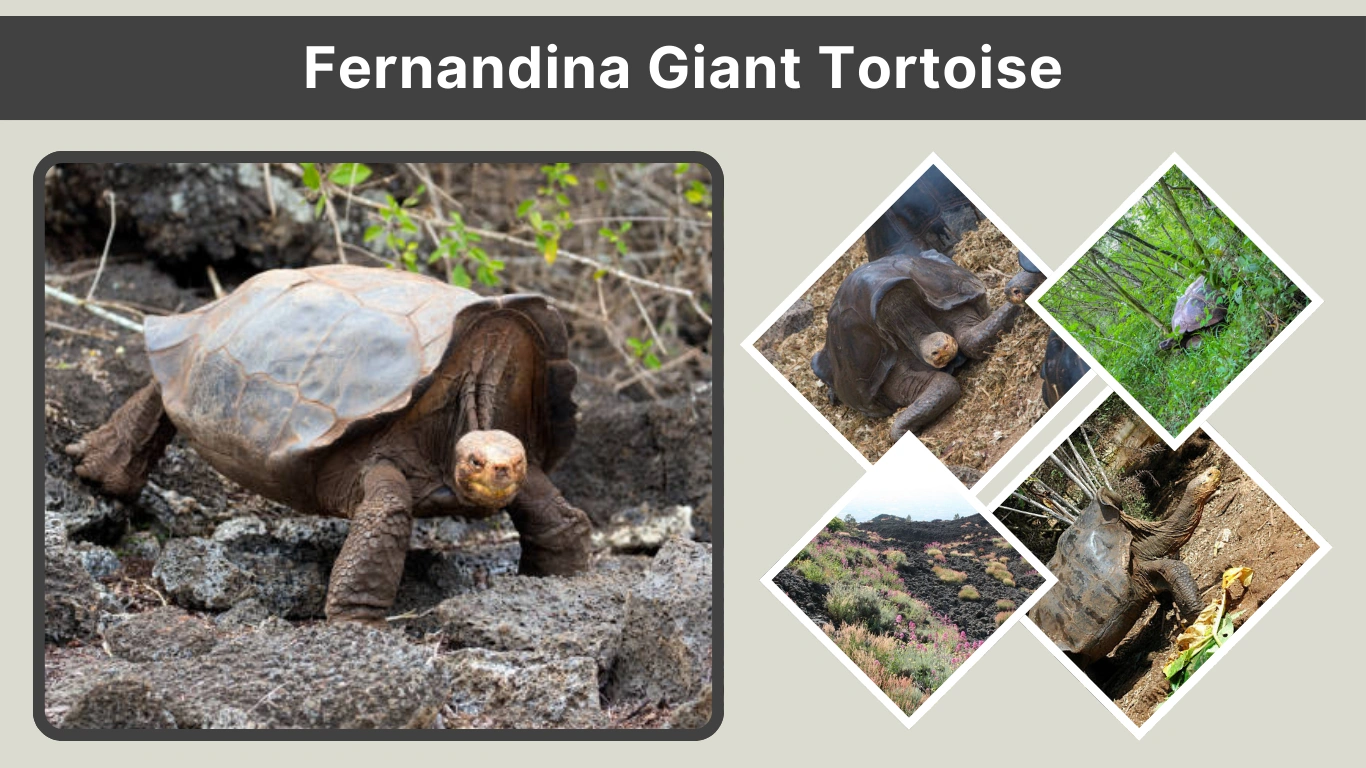
The Fernandina giant tortoise is one of the rarest and most mysterious reptiles in the world. Native exclusively to Fernandina Island in the Galapagos archipelago, this tortoise was long believed to be extinct due to the island’s harsh volcanic environment and lack of confirmed sightings for over a century. Its dramatic rediscovery shocked the scientific community and renewed global interest in giant tortoise conservation. Known for its distinctive appearance and extreme rarity, the Fernandina giant tortoise represents both the resilience of nature and the fragility of isolated species. This article explores its identity, physical traits, history, and habitat, offering insight into why this tortoise is considered one of the most remarkable animals on Earth.
What Is the Fernandina Giant Tortoise?
The Fernandina giant tortoise, scientifically known as Chelonoidis phantasticus, is a critically endangered species of giant tortoise endemic to Fernandina Island, the westernmost island of the Galapagos. It belongs to the broader group of Galapagos giant tortoises but is genetically distinct from other island populations.
This species evolved in extreme isolation, adapting to an environment shaped by active volcanoes, sparse vegetation, and limited freshwater sources. Due to these conditions, the Fernandina giant tortoise developed unique physical and behavioral traits that set it apart from other Galapagos tortoises. For decades, scientists believed the species had vanished entirely, earning it the nickname “the phantom tortoise.” Its confirmed survival has since become one of the most important conservation discoveries in recent history.
Identification of the Fernandina Giant Tortoise
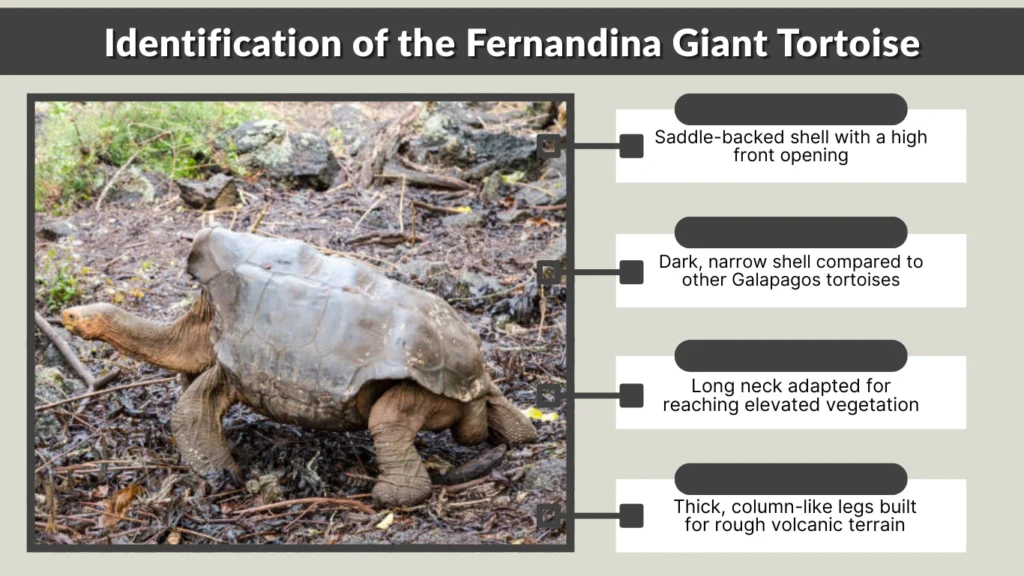
The Fernandina giant tortoise can be identified by a combination of physical traits shaped by its harsh volcanic environment. These features help distinguish it from other Galapagos giant tortoises and are critical for scientific identification and conservation work.
Key Identification Features:
- Saddle-backed shell with a high front opening
- Dark, narrow shell compared to other Galapagos tortoises
- Long neck adapted for reaching elevated vegetation
- Thick, column-like legs built for rough volcanic terrain
- Dark, wrinkled skin that reduces moisture loss
- Large body size, typical of giant tortoises
- Genetically distinct from other Galapagos tortoise species
These traits reflect the tortoise’s adaptation to Fernandina Island’s extreme conditions and make it one of the most unique giant tortoises in the world.
How to Distinguish It from Other Galapagos Tortoises
The Fernandina giant tortoise can be distinguished from other Galapagos tortoises by its sharply saddle-backed shell, longer neck, and darker overall appearance. Genetic analysis has also confirmed its uniqueness, separating it from neighboring island species. These identifying features are essential for accurate monitoring and protection.
Discovery and Rediscovery History
The Fernandina giant tortoise was first described in the early 20th century, based on a single specimen collected by explorers. After that, no confirmed sightings occurred for more than 100 years, leading scientists to declare the species extinct. Fernandina Island’s active volcano and inhospitable terrain made exploration difficult, limiting research opportunities.
This long-standing assumption changed dramatically when a live individual was discovered during a survey expedition. The rediscovery confirmed that the species had survived undetected for generations, reigniting hope for its recovery and underscoring the importance of continued exploration and conservation in remote regions.
Natural Habitat and Distribution
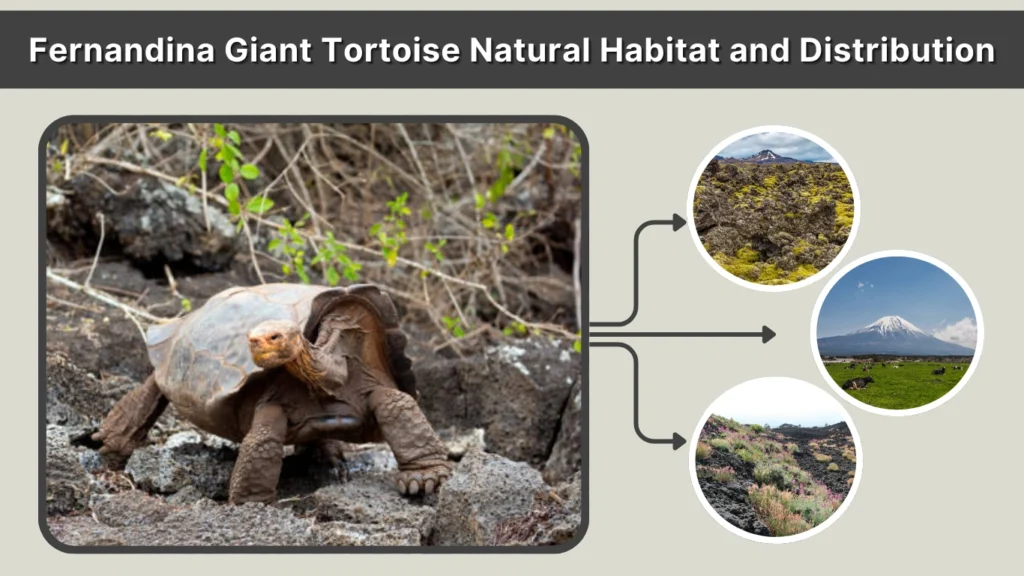
The Fernandina giant tortoise is found only on Fernandina Island, one of the most geologically active islands in the Galapagos. The island is dominated by lava fields, volcanic slopes, and sparse vegetation, creating an extremely challenging environment for large animals.
Despite these harsh conditions, the tortoise survives by moving between feeding areas and higher elevations where moisture and vegetation are more available.
Why Fernandina Island Is Unique
Fernandina Island has no permanent human settlements and minimal invasive species, which has helped preserve its natural ecosystems. However, frequent volcanic eruptions and limited plant growth make survival difficult, explaining the tortoise’s low population and elusive nature.
Behavior and Lifestyle
The Fernandina giant tortoise leads a quiet and largely solitary life, shaped by the extreme conditions of its volcanic home. Like other giant tortoises, it follows a slow daily routine that includes feeding, resting, and moving gradually between areas with available vegetation. Activity levels are generally higher during cooler parts of the day, such as early morning and late afternoon, when temperatures are more manageable.
To regulate body temperature, the tortoise may seek shade among lava rocks or rest in areas where moisture collects. Its slow metabolism allows it to conserve energy, an essential adaptation in an environment where food and water can be scarce. Although not highly social, individuals may tolerate one another in areas where resources are temporarily abundant.
Diet and Feeding Habits
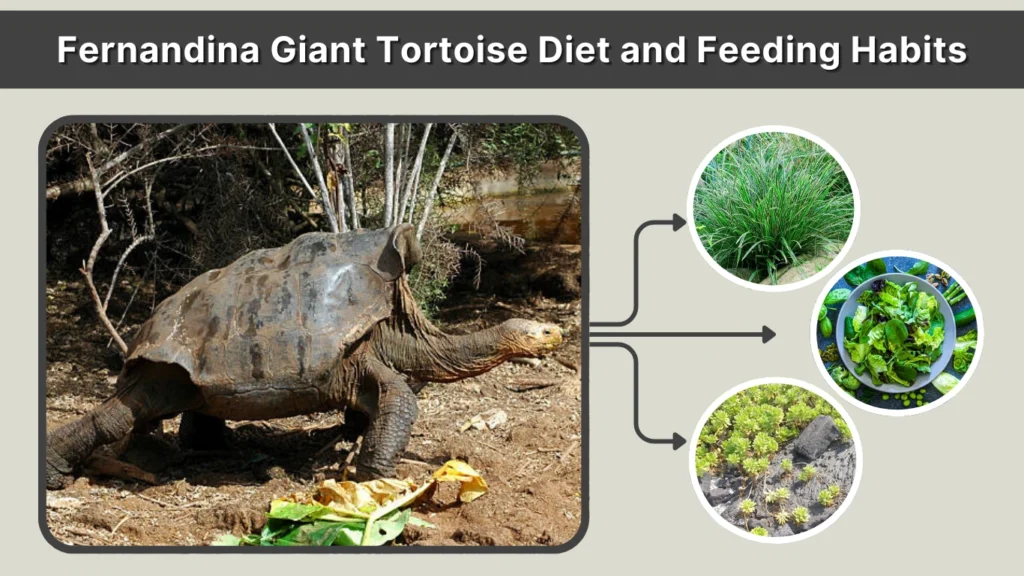
The Fernandina giant tortoise is strictly herbivorous, feeding on the limited plant life available on Fernandina Island. Its diet mainly consists of grasses, shrubs, leaves, and other low-growing vegetation that can survive in volcanic soil. During periods when ground plants are scarce, the tortoise relies on its long neck to reach higher vegetation.
Seasonal changes strongly influence feeding patterns. After rainfall, plant growth increases, allowing the tortoise to feed more actively and build energy reserves. During dry periods, food becomes limited, and the tortoise reduces its activity to conserve energy.
Population Status and Threats
The Fernandina giant tortoise is considered one of the rarest vertebrates in the world. For decades, the species was believed to be extinct, with no confirmed sightings since the early 1900s. The rediscovery of a living individual confirmed that the species still survives, but the total population remains extremely small and uncertain.
Natural threats play a significant role in limiting population growth. Fernandina Island is home to an active volcano, and periodic eruptions can destroy vegetation and alter the landscape. Lava flows and ash deposits reduce available habitat and food sources, making survival even more challenging.
Is the Fernandina Giant Tortoise Extinct?
While the species is no longer considered extinct, it remains critically endangered. The rediscovery has shifted scientific focus toward locating additional individuals and determining whether a viable breeding population still exists. Until more tortoises are found, the species will remain at extreme risk of extinction.
Conservation and Protection Efforts
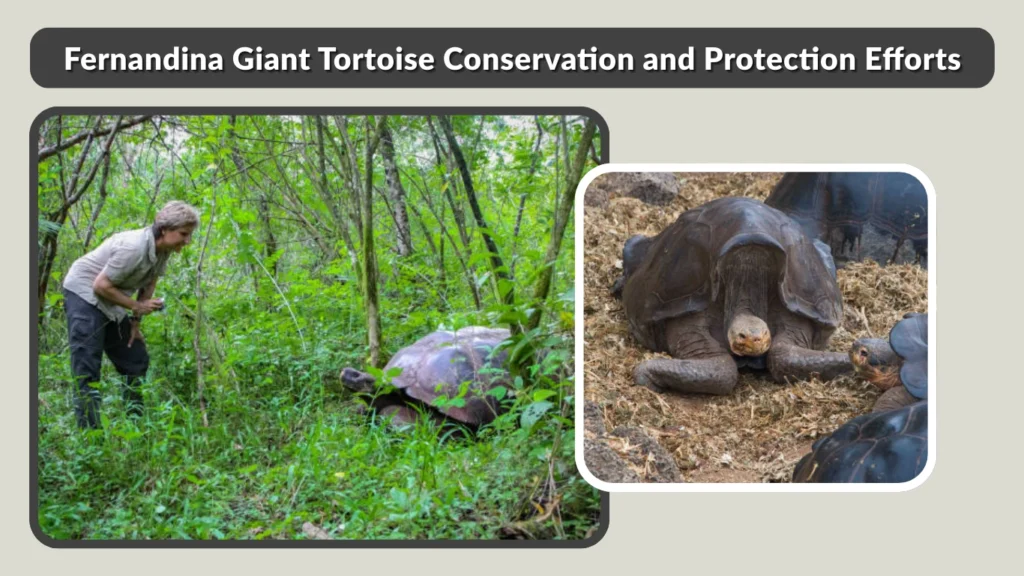
Conservation efforts for the Fernandina giant tortoise focus primarily on research, monitoring, and habitat protection. Survey expeditions are conducted to search for additional individuals and signs of reproduction. Scientists also use genetic analysis to better understand the species’ relationship to other Galapagos tortoises.
Protected status within the Galapagos National Park has helped reduce human-related threats. Strict regulations limit access to Fernandina Island, preventing habitat disturbance and the introduction of invasive species. In some cases, conservationists may consider controlled breeding or protective care if more individuals are discovered, though such efforts depend on population findings.
Ecological Importance
Despite its rarity, the Fernandina giant tortoise plays an important ecological role within its environment. Like other giant tortoises, it acts as a natural seed disperser, spreading plant seeds across the landscape as it moves and feeds. This process supports plant regeneration in an otherwise harsh environment.
The tortoise also influences vegetation structure by grazing, helping maintain a balance between plant species. Its presence contributes to the overall health and stability of the island’s ecosystem, making its survival crucial beyond the species itself.
Fernandina Giant Tortoise vs Other Galapagos Tortoises
Compared to other Galapagos giant tortoises, the Fernandina giant tortoise is more specialized for survival in extreme volcanic conditions. Its sharply saddle-backed shell and long neck reflect adaptation to limited and elevated food sources. Other island tortoises often inhabit more vegetated environments and may have dome-shaped shells.
In terms of conservation status, the Fernandina giant tortoise faces greater risk than most other Galapagos tortoises due to its extremely small population and restricted range. This makes it one of the highest conservation priorities within the archipelago.
Conclusion
The Fernandina giant tortoise stands as a powerful reminder of nature’s resilience and vulnerability. Once believed lost forever, its rediscovery offers hope while also highlighting the urgent need for conservation. With continued research, protection, and global awareness, there remains a possibility that this remarkable species can survive and recover. Preserving the Fernandina giant tortoise is not only about saving a single animal but about protecting the fragile ecosystems of the Galapagos Islands for future generations.
FAQs
What is the Fernandina giant tortoise?
The Fernandina giant tortoise is a critically endangered species of Galapagos giant tortoise, scientifically known as Chelonoidis phantasticus, found only on Fernandina Island.
Why was the Fernandina giant tortoise thought to be extinct?
The species had no confirmed sightings for more than 100 years due to its extremely small population and the harsh, volcanic environment of Fernandina Island.
Where does the Fernandina giant tortoise live?
It lives exclusively on Fernandina Island in the Galapagos archipelago, one of the most volcanically active islands in the region.
How can the Fernandina giant tortoise be identified?
It is identified by its saddle-backed shell, long neck, dark coloration, and genetic differences from other Galapagos tortoises.
Is the Fernandina giant tortoise still endangered?
Yes, it remains critically endangered due to its very small population size, restricted range, and environmental threats such as volcanic activity.